

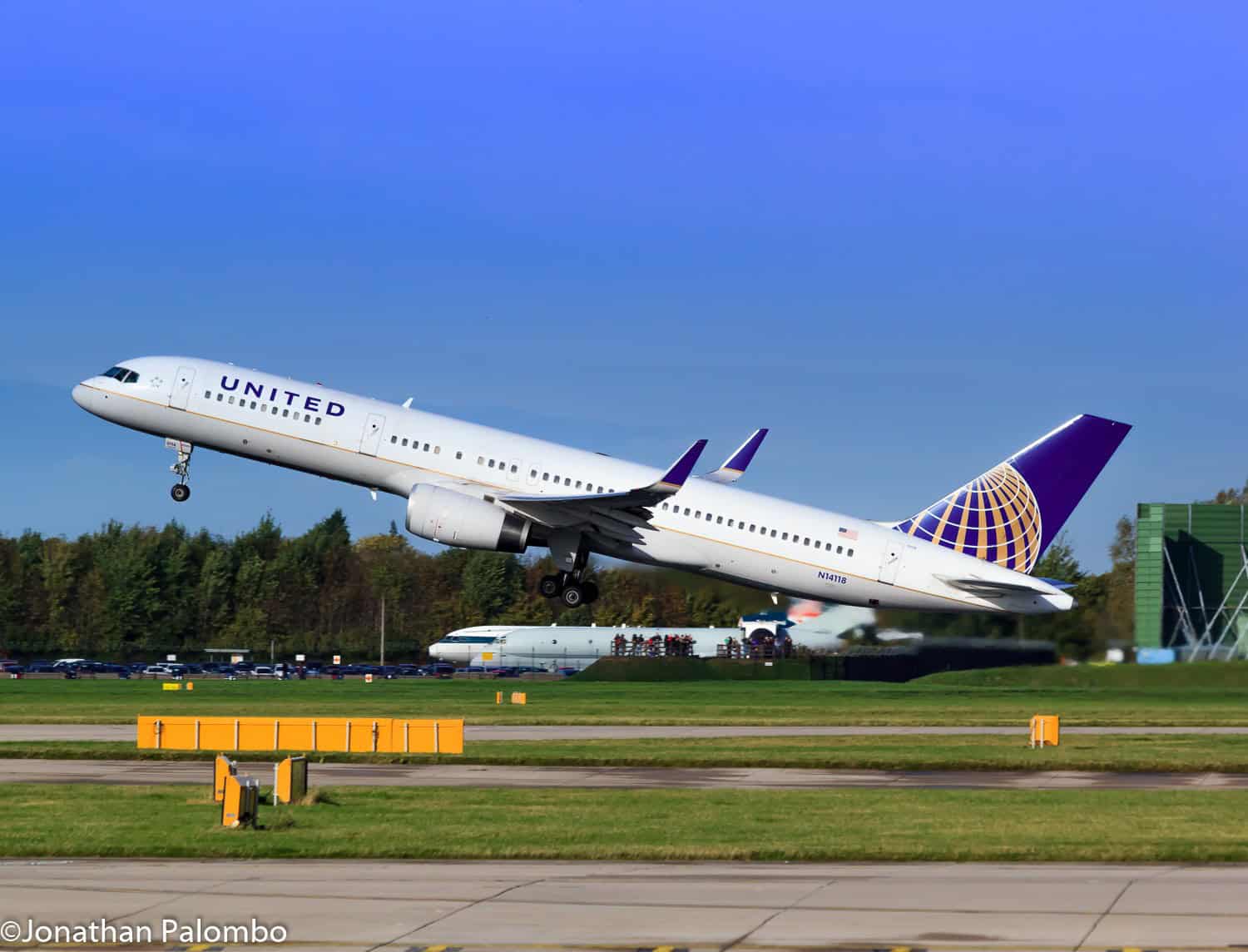
United Airlines flight UA316, a Boeing 757 flying from Dublin to Newark, turned back to Dublin on Sunday, October 4, 2026, after a strong smell of fuel filled the cabin and gave a number of passengers and crew headaches.
The crew found no sign of an actual fuel leak, but they requested medical help on the ground and landed the jet well above its normal landing weight. The flight was canceled.
What happened on board
The aircraft, a Boeing 757-200 registered N14118, departed Dublin Airport’s runway 28R at 13:10 UTC. It climbed to its initial cruising altitude of 31,000 feet and leveled off for about three minutes before the crew decided to go back, according to The Aviation Herald, which tracks aviation incidents worldwide.
The crew reported a strong smell of fuel on board that was giving a number of cabin crew and passengers headaches, the outlet said, but the pilots had no indication of an actual leak. Air traffic control vectored the jet back toward Dublin.
Because the 757 had just taken off with a full load of fuel for the Atlantic crossing, the crew told controllers they would be carrying out an overweight landing rather than burning down fuel first. It touched down safely on runway 28R about 55 minutes after departure, flight-tracking site AIRLIVE reported.
Paramedics met the aircraft on the apron and treated a number of cabin crew and passengers, The Aviation Herald reported. United removed the jet from service for maintenance inspections to find the source of the odor and canceled the rest of the flight.
Why land heavy instead of burning off fuel?
A jet that turns back minutes after a long-haul departure is carrying far more fuel than it would normally land with. Crews can hold to burn it down, dump it overboard on aircraft built for that, or land heavy. Boeing treats an overweight landing as an accepted procedure, but it calls for a special structural inspection of the skin, fasteners and other components afterward, regardless of how smooth the touchdown felt.
Why a fuel smell, not smoke, triggers the same response
An odor on board does not have to come with visible smoke to be taken seriously. Airliners draw cabin air from the engines through a bleed air system, and oil, hydraulic fluid or de-icing fluid can occasionally leak into that air supply and carry its smell into the cabin.
Under 14 CFR 121.703(a)(5), US airlines must file a Service Difficulty Report whenever a component failure causes smoke, vapor or toxic or noxious fumes to accumulate in the flight deck or cabin in flight. Congress reinforced that reporting duty in Section 326 of the 2018 FAA Reauthorization Act, which directs the FAA to issue crew guidance on recognizing and reporting fume events, according to FAA guidance on the rule.
How often these events happen, and how serious the long-term exposure risk is, remains disputed between regulators, unions and researchers; AeroCorner covered that debate in August after a peer-reviewed lab study renewed scrutiny of the chemicals involved.
Part of a steady run of odor turnbacks
UA316 is the latest in a string of cabin-odor diversions across several carriers this year, including a Lufthansa 747 that diverted to Manchester in September and a Delta A330 that diverted to Porto, Portugal, in late September after smoke filled its cabin over the Atlantic, AeroXplorer reported.
None of these events has been tied to a common cause, and United has not said what produced the fuel smell on N14118. A series of unrelated incidents on different aircraft is not evidence of a wider mechanical problem, but each one adds to the data regulators and researchers are using to judge how often, and how seriously, fume events affect passengers and crews.
Sources and references used for research and fact-checking.
Get the Newsletter
The latest aviation news and stories sent to your inbox.
About the Author

Tim is the owner and lead editor of AeroCorner since 2019, overseeing aviation content covering aircraft, airlines, airports, and the broader aviation industry. Through years of researching, writing, editing, and publishing aviation-focused content, he has developed extensive practical knowledge of commercial aviation and air travel. Based in Asia and a frequent traveler himself, Tim also brings firsthand passenger experience to AeroCorner’s coverage. Outside of publishing, he has also explored aviation firsthand through hands-on flight training in New Zealand.