

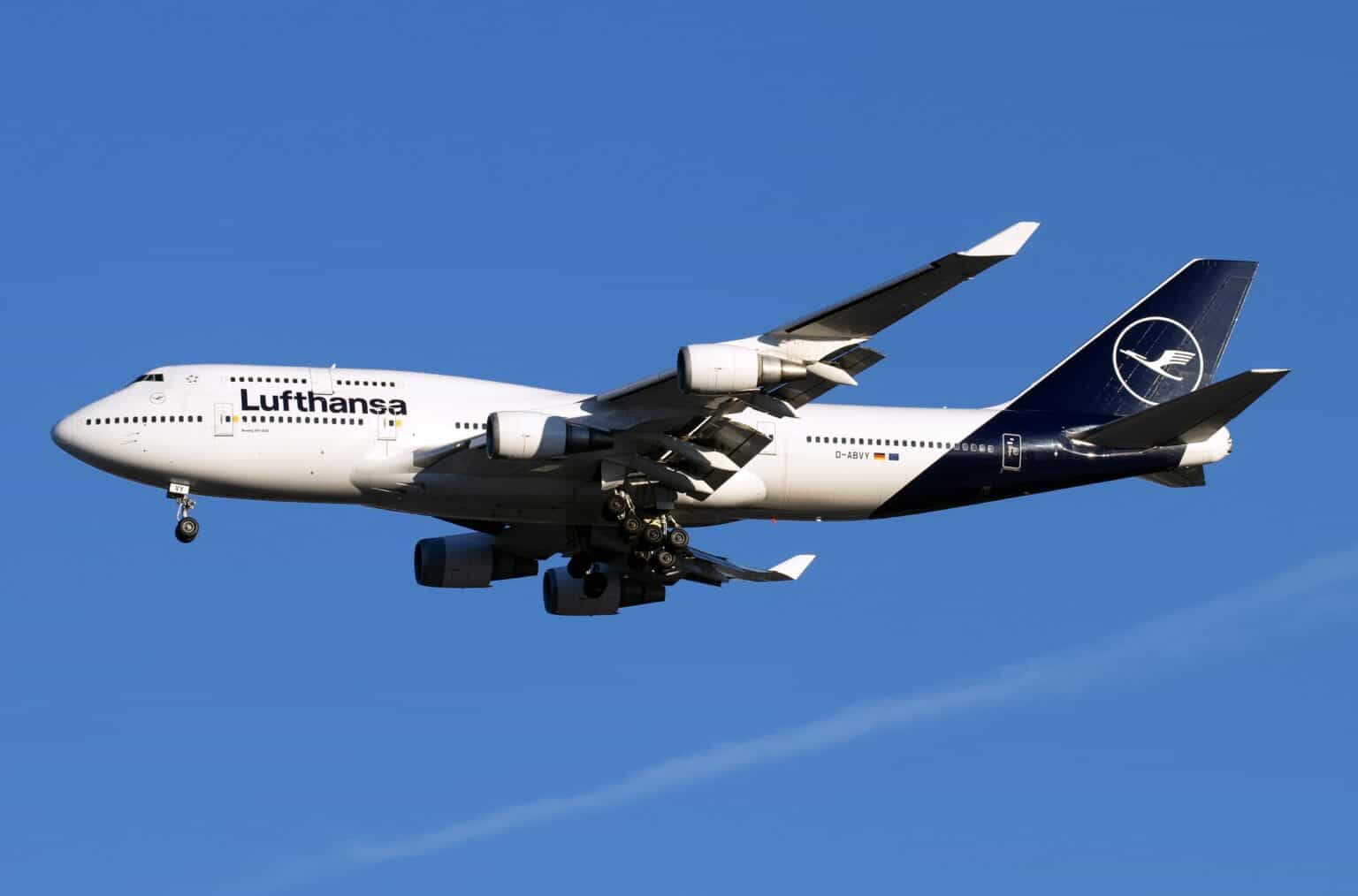
Lufthansa flight LH470 from Frankfurt to Toronto diverted to Manchester on Saturday, September 26, 2026, after the crew reported an odor in the cabin. The Boeing 747-400 was carrying 371 passengers, according to Lufthansa.
The airline said the jumbo turned back over Scotland and that the crew declared an emergency to get a priority landing. Flight-tracking data showed the transponder set to squawk 7700, the general emergency code.
What happened on board
The aircraft was D-ABVY, a Boeing 747-400 delivered to Lufthansa in December 2000. It left Frankfurt at 15:00 local time, and it touched down on runway 23R at Manchester at about 15:57 local time, according to AIRLIVE, which described the smell as a burning odor.
Lufthansa itself has confirmed only an odor in the cabin. It has not said whether there was any smoke, and the aircraft is being examined to find the source.
A passenger who said they were on board described the flight on Reddit, as t-online reported. By that account, the 747 turned around north of Glasgow about an hour and 20 minutes after takeoff, and parts of the cabin power were switched off, taking out the lavatory lights and the in-flight entertainment.
The same passenger said the jet landed without dumping fuel and was parked on a taxiway. Neither the crew nor the fire service could at first say where the smell came from, according to that account, which Lufthansa has not addressed.
Why the fire crews checked the brakes
Lufthansa said the fire service inspected the aircraft as a precaution because it landed heavy, still carrying much of the fuel loaded for the Atlantic crossing. Passengers then left the aircraft normally.
A 747 that turns back early is well above the weight it would normally land at in Toronto. The crew then has three choices: hold to burn fuel off, dump fuel overboard through the 747’s jettison system, or land heavy.
Boeing’s own guidance to airlines leaves that call to the captain. It calls both an overweight landing and fuel jettison “safe procedures,” and notes that the brakes are sized to stop a rejected takeoff at maximum takeoff weight.
A heavy jet still carries more energy into the stop, so the brakes run hotter. AIRLIVE reported that fire vehicles surrounded D-ABVY on the taxiway to watch its brakes and landing gear for overheating.
If a landing exceeds the maximum design landing weight, Boeing’s guidance calls for an overweight landing inspection before the jet flies again. Lufthansa has not said whether D-ABVY did.
The airline put the 371 passengers in hotels overnight and said they would continue to Toronto on Sunday, September 27, on a replacement flight.
“We apologize to our guests for the situation and the disruption to their journey,” a Lufthansa spokesperson said. “The safety of our passengers and crew is our top priority at all times.”
Not the first odor diversion for a Lufthansa 747
The same flight number has turned back for a smell before. On July 12, 2025, another Lufthansa 747-400, D-ABVM, returned to Frankfurt from over the North Sea after the crew noticed an odor like hot plastic, Aviation A2Z reported.
It also follows another Lufthansa jumbo diversion for a smell less than two months ago. On August 6, a Lufthansa 747-8 on flight LH573 from Johannesburg to Frankfurt diverted to Brazzaville after an unidentifiable smell in the cabin, AeroInside reported.
Three events on three different aircraft, spread over more than a year and two 747 variants, are not evidence of a pattern on their own.
What makes LH470 notable is the aircraft. Lufthansa still flies the 747-400 on passenger routes, and its jumbos are living on borrowed time.
In April, the Lufthansa Group said two of its 747-400s would be grounded from October for the winter, citing jet fuel prices that had more than doubled since before the Iran war. AirlineGeeks reported that the airline plans to retire the type for good in 2027.
Sources and references used for research and fact-checking.
Get the Newsletter
The latest aviation news and stories sent to your inbox.
About the Author

Tim is the owner and lead editor of AeroCorner since 2019, overseeing aviation content covering aircraft, airlines, airports, and the broader aviation industry. Through years of researching, writing, editing, and publishing aviation-focused content, he has developed extensive practical knowledge of commercial aviation and air travel. Based in Asia and a frequent traveler himself, Tim also brings firsthand passenger experience to AeroCorner’s coverage. Outside of publishing, he has also explored aviation firsthand through hands-on flight training in New Zealand.