

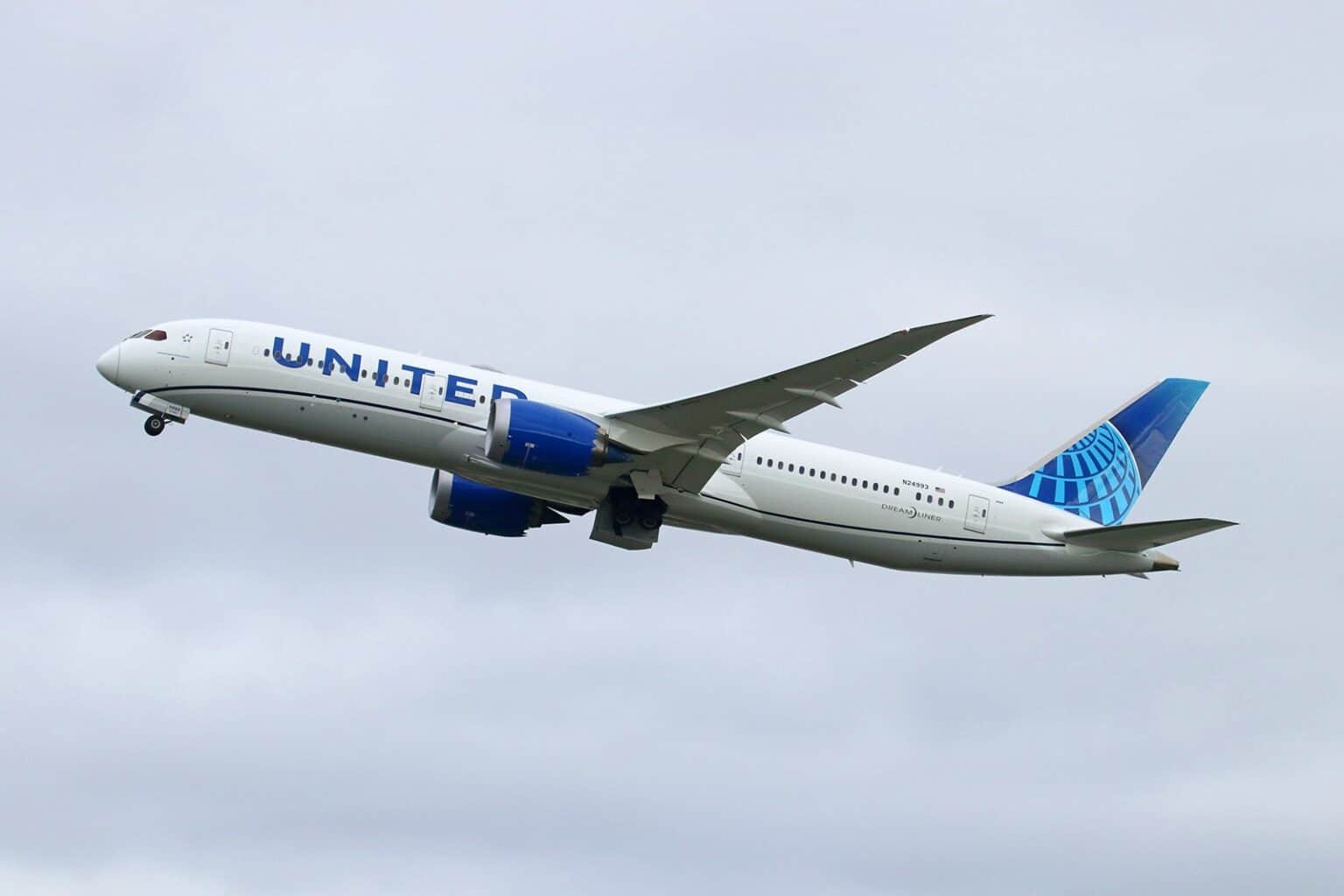
United Airlines flight UA168 from Tel Aviv to Newark diverted to Athens on the evening of Sunday, November 8, 2026, US Eastern time, after the crew reportedly declared an emergency. It was already the early hours of Monday, November 9, in Israel and Greece, and the Boeing 787-9 touched down in Athens at 2:51 a.m. local time, according to FlightAware.
United had not confirmed a cause at the time of writing. The Yeshiva World reported that passengers and crew noticed a burning smell resembling smoke, apparently linked to an electrical issue, and that there was no fire on board.
What the tracking shows
UA168 took off from Ben Gurion Airport at 1:00 a.m. Israel time, which was 6:00 p.m. on Sunday in New York, according to FlightAware’s track. The jet climbed to 32,000 feet and headed west over the eastern Mediterranean toward Greece.
About 75 minutes into the flight, over the Aegean Sea roughly 150 miles (240 km) east of Athens, the 787 left its cruising altitude and began a steady descent. The tracking shows it flying a full loop as it descended from about 21,000 to 12,000 feet.
It then held 12,000 feet for about six minutes before its final descent into Athens International Airport. FlightAware logs the trip as 1 hour 50 minutes, on a route that normally takes about 11 hours.
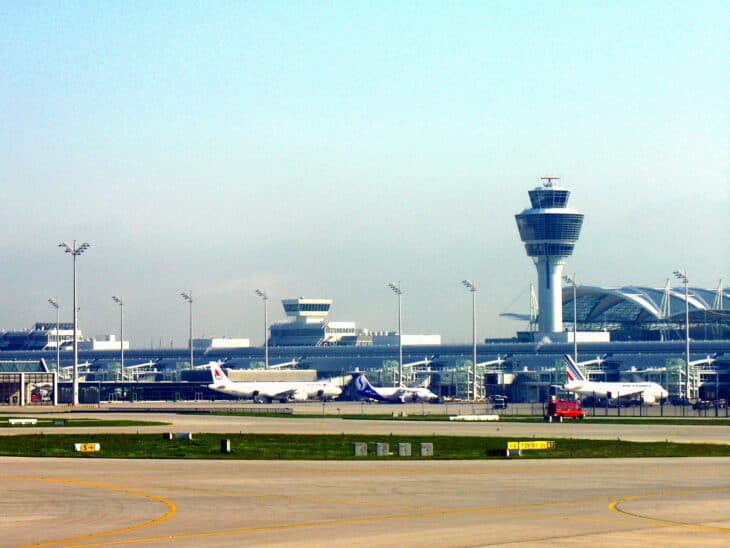

Flightradar24 lists the aircraft as N24993. The FAA’s aircraft registry shows that tail number as a Boeing 787-9 built in 2025 and registered to United Airlines.
An emergency, a fuel dump and fire trucks on the runway
The Yeshiva World reported that the crew declared a general emergency, dumped fuel before landing, and that fire trucks were positioned along the runway in Athens as a precaution. It said there were no immediate reports of injuries.
The Mirror also reported the emergency declaration and cited unconfirmed reports that the jet squawked 7700, the transponder code for a general emergency. It said the reason for the diversion had not been disclosed.
The public tracking data does not show whether fuel was jettisoned. The loop and the level stretch at 12,000 feet are, however, the kind of holding pattern a crew can use to burn or dump fuel while preparing for landing.
A widebody fueled for a long overwater flight can weigh more than its maximum landing weight soon after takeoff. Dumping fuel brings it down toward that limit, a step another 787 crew took when an Alaska Airlines Dreamliner turned back to Rome.
What is not known yet
United has not said what caused the smell, how many people were aboard, or when passengers will continue to Newark. The cause, the fuel dump and the emergency declaration come from news reports, not from United or Greek authorities. FlightAware and Flightradar24 list an Athens to Newark leg for UA168, but neither showed it departing at the time of writing.
Why a smell is enough to divert
A burning odor with no visible smoke can sound minor, but crews are trained to treat it as a possible hidden fire. The FAA’s advisory circular on in-flight fires tells crewmembers to “never ignore a strange odor,” calling fumes possibly one of the first signs of an impending fire.
The same guidance says fire tests have shown a fire that spreads into the overhead area can become uncontrollable in as few as 8 to 10 minutes. In the event of a cabin fire, it tells flight crews to plan an immediate descent and landing at the nearest suitable airport.
That puts timing at the center of the decision. Over the Aegean, UA168 had a major airport within reach, while the rest of its route ran across Europe and then hours of North Atlantic.
Athens again, six weeks after UA85
It is not the first United flight from Tel Aviv to Newark to end up in Athens this fall. On September 25, United UA85 diverted to Athens about 90 minutes into the same route, and its onward flight that day was canceled.
The two events involved different aircraft, a 787-10 on UA85 and a 787-9 on UA168. United has not linked them, and no common cause has been reported.
Sources and references used for research and fact-checking.
Get the Newsletter
The latest aviation news and stories sent to your inbox.
About the Author

AeroCorner News is the aviation news desk of AeroCorner.com. It covers accidents and incidents, safety rulings, airline and airport disruption, and new aircraft. It works from primary sources such as the NTSB, FAA, EASA and the manufacturers' own announcements.