

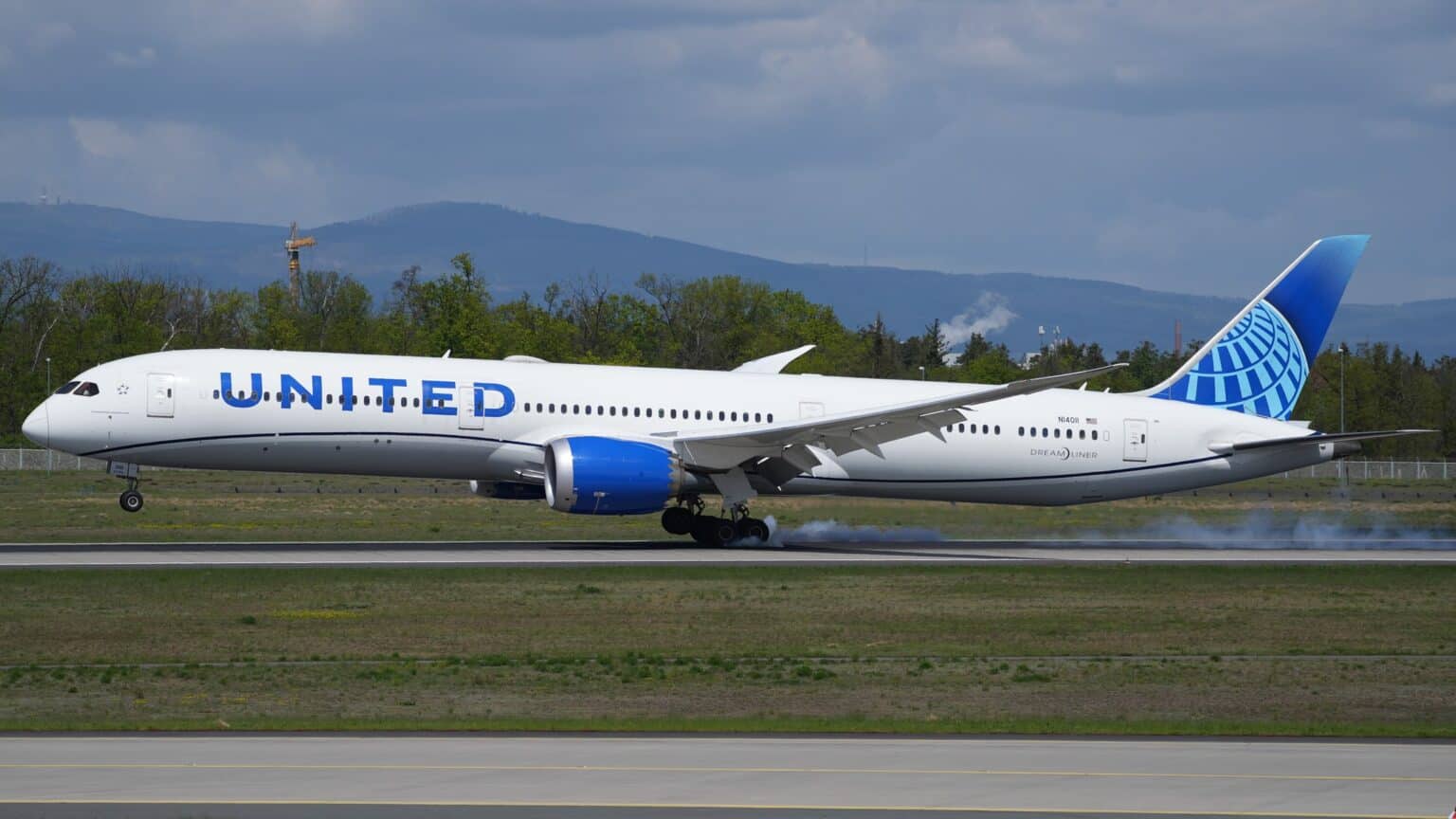
United Airlines flight UA85 from Tel Aviv to Newark diverted to Athens on Friday, September 25, 2026, landing there just over two hours after takeoff. The Boeing 787-10, registration N14011, was about 90 minutes into a flight scheduled to last close to 12 hours.
The reason has not been made public. At the time of writing, AeroCorner had found no statement from United or from Greek aviation authorities explaining the turn.
What the tracking shows
UA85 left Ben Gurion Airport late on Friday morning, local time. It climbed to 32,000 feet and tracked northwest past Antalya on Turkey’s southern coast, according to flight data published by AIRLIVE.
Shortly after entering Greek airspace, the jet made a sharp turn and began to descend. Controllers then vectored it to Athens International Airport, where AIRLIVE says it landed on Runway 3R.
The two trackers differ by a few minutes on the times. AIRLIVE puts the landing at 1:24 p.m. local time, while FlightAware logs the Tel Aviv to Athens leg as 2 hours 7 minutes, arriving at 1:35 p.m.
A night in Athens
The flight did not continue on Friday. FlightAware lists the Athens to Newark leg of UA85 on September 25 as canceled.
The same aircraft, N14011, is listed on an Athens to Newark departure scheduled for the afternoon of Saturday, September 26. That suggests passengers who stayed with the flight faced a wait of about a day, though United has not published rebooking details.
How many people were on board has not been reported. AIRLIVE described the landing in Athens as safe.
What is not known yet
United has not said why UA85 diverted, whether a technical, medical or other issue was involved, or how many passengers were aboard. It is also unknown whether the crew declared an emergency. Until United explains the diversion, any cause is speculation.
Why Athens, and why land at all
When UA85 turned, it had tracked northwest past southern Turkey and just entered Greek airspace, with the rest of Europe and the North Atlantic still ahead. It landed at Athens, Greece’s main international airport.
That timing matters on a long-haul flight. Once past Europe, a twin-engine jet like the Boeing 787 spends hours over the ocean, where suitable airports are far apart and a problem is harder to handle.
That is one reason crews facing an issue early in an ocean crossing often choose to land at a large airport while one is still close. Our guide to how flight diversions work covers who makes that call and what happens to passengers afterward.
A diversion also does not by itself signal a serious fault. Airlines divert for mechanical warnings, sick passengers and unruly behavior, and many of those cases end with an uneventful landing and a delayed trip.
A route United only just restarted
UA85 is part of a route United resumed on September 8, after suspending Israel flights when the conflict with Iran escalated in late February, Aviation A2Z reported. The airline restarted with two daily Boeing 787 flights from Newark.
Chicago O’Hare and Washington Dulles service to Tel Aviv is due back on October 24 and October 25. The restart came two days after Delta resumed its New York service to Tel Aviv on September 6.
It was not United’s only diversion that day. A few hours later, a United 737-900ER bound for Washington declared an emergency after leaving Orlando and landed in Jacksonville.
Get the Newsletter
The latest aviation news and stories sent to your inbox.
About the Author

Tim is the owner and lead editor of AeroCorner since 2019, overseeing aviation content covering aircraft, airlines, airports, and the broader aviation industry. Through years of researching, writing, editing, and publishing aviation-focused content, he has developed extensive practical knowledge of commercial aviation and air travel. Based in Asia and a frequent traveler himself, Tim also brings firsthand passenger experience to AeroCorner’s coverage. Outside of publishing, he has also explored aviation firsthand through hands-on flight training in New Zealand.