


Table of Contents
The captain’s announcement comes without much warning. “Ladies and gentlemen, we’ve decided to divert to Shannon.” Or Reykjavik. Or Kansas City. Somewhere that is definitely not where you were going. Within seconds, the cabin fills with the sound of people checking their phones, calculating connections, and wondering how long this is going to take.
What passengers rarely see is what is happening at the same time in the operations centre on the ground. A flight dispatcher has just been notified. Phones are ringing to alert ground handling at the diversion airport. A gate agent somewhere is being briefed on an unexpected arrival. A fuel order is being placed. The hotel desk at three properties near the airport is already fielding a call. All of this within minutes of the captain’s announcement, and much of it started before the passengers even heard the PA.
Diversions happen on roughly 0.2 to 0.3 percent of commercial flights in the United States, which sounds rare until you consider that US carriers operate around 45,000 flights a day. That works out to somewhere between 90 and 135 diversions every 24 hours. They are uncommon enough to feel dramatic when they happen to you, but routine enough that airlines have detailed procedures for handling them. Here is what those procedures actually look like.
Who makes the call, and why
The decision to divert is formally the captain’s. Under FAA regulations, the pilot in command has the authority to deviate from any rule or clearance to the extent necessary in an emergency. But in practice, the decision is rarely made in isolation. Under Part 121 of the Federal Aviation Regulations, which governs US airline operations, captains and flight dispatchers share what the FAA calls “operational control” of every flight. Neither can legally override the other on a safety decision. In most diversions, the conversation between the cockpit and the dispatch desk has been going on for some time before the captain picks up the PA handset.
Weather is the most common reason a flight diverts. The destination airport may have been clear when the aircraft departed, but a fast-moving storm system or unexpected fog can make landing impossible by arrival time. Sometimes the runway is temporarily closed due to an incident on the field. Sometimes conditions improve while the aircraft holds, and the diversion never happens. Sometimes they do not.
Medical emergencies are the second most common cause. About one in every 212 flights experiences a medical event serious enough to require crew intervention, and roughly 1.7 percent of those events lead to a diversion. Cardiac emergencies and suspected strokes are the most likely to prompt a diversion decision, because time to hospital care matters enormously. Technical faults, low fuel, and security incidents round out the list, each with its own calculus.
The dispatcher’s role in all of this is to give the captain the best possible picture of the options available. They can see weather at every potential alternate airport, know which runways are open, and have a sense of where the ground handling resources are. They will often have already begun making calls to the diversion airport by the time the captain makes the formal decision. They are also tracking how the diversion affects other flights: if this aircraft was supposed to be the inbound for a connecting departure in three hours, someone in scheduling needs to know right now.
The airport you didn’t plan on
One thing passengers rarely realise is that the alternate airports in a diversion are not improvised on the spot. Every commercial flight is dispatched with at least one alternate airport already named in the flight release document, as required by FAA Part 121. The dispatch team selects alternates before departure based on the forecast weather along the route and at the destination. If conditions at both the destination and the primary alternate look marginal, a second alternate must be named as well. The dispatcher and captain both sign off on this before the aircraft pushes back from the gate.
This pre-planning matters most when the decision has to be made quickly. There is a concept in flight planning called the Last Point of Diversion: the point in the flight beyond which there is no longer enough fuel to reach the pre-planned alternate. It is calculated before departure and updated as the flight progresses. Once a flight passes that point, the pre-planned alternate is no longer an option. A closer airport must be selected. This is where the dispatcher’s real-time monitoring becomes critical. They will have been watching weather at every airport within range, so when the captain needs an answer, the dispatcher has one ready.
What makes an airport suitable as a diversion destination is not simply whether it has a long enough runway. The airport needs weather above minimum landing limits, the correct instrument approach procedures for the aircraft type, available fuel, and some capacity to handle the passengers. A major wide-body aircraft diverting to a small regional airport can quickly overwhelm the facility’s resources. Not every airport has jet bridges that fit every aircraft. Not every airport has customs and immigration facilities if the flight is international. Dispatchers weigh all of this when selecting or confirming an alternate, often under significant time pressure.
Five common reasons a flight diverts
Weather: The most frequent cause. Fog, storms, or crosswinds at the destination can make landing unsafe or impossible. Medical emergency: A passenger or crew member requires hospital-level care urgently, and the nearest suitable airport is not the destination. Technical issue: A fault the crew cannot resolve in the air that may affect the landing, requiring an immediate stop. Fuel: An unexpected headwind, extended hold, or reroute has reduced fuel reserves to the point where continuing safely is not possible. Security or disruptive passenger: A threat to the aircraft or crew that requires landing at the nearest available airport.

What actually happens when you land somewhere else
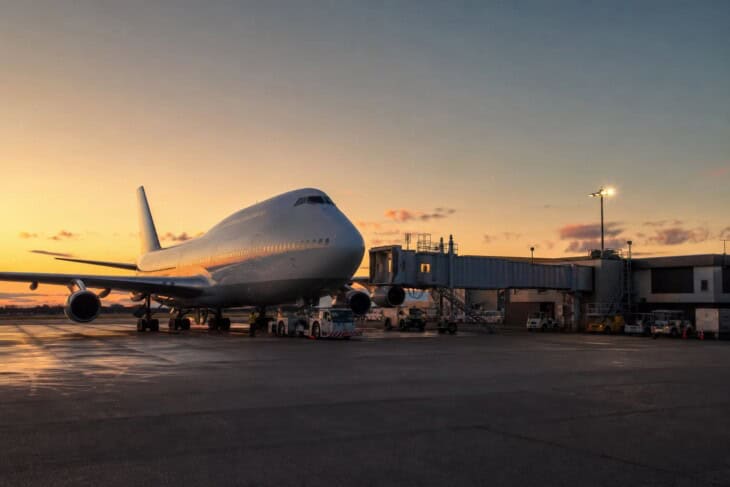
The experience on the ground after a diversion depends heavily on why it happened and where you ended up. In some diversions, particularly weather holds that eventually resolve, passengers never leave the aircraft. The aircraft refuels, the crew receives an updated weather picture, and the flight continues to its original destination within an hour or two. In others, everyone deplanes and the original flight is effectively cancelled. The passengers are then at an airport that may have limited facilities, no established handling contract with their airline, and potentially very few available aircraft to continue their journey.
One constraint that passengers rarely factor in is crew duty time. Pilots and cabin crew are subject to strict legal limits on how many hours they can work before they must rest, under FAA Part 117. These limits do not pause because the aircraft is sitting on a tarmac in an unplanned city. If a diversion adds several hours to a crew’s day, they can reach their legal limit before getting to the original destination. When that happens, the airline needs a fresh crew, and getting one to a small diversion airport can take many hours. This is one of the reasons a diversion that sounds minor can turn into an overnight situation.
Under US Department of Transportation rules, airlines are required to rebook diverted passengers on the next available flight to their destination at no extra cost, and to provide meals and hotel accommodation if the delay extends overnight. In practice, the experience varies considerably depending on the airline, the size of the diversion airport, and the time of day. A large carrier with an operations team that handles diversions regularly will have hotel blocks pre-negotiated in many cities. A diversion to a small regional airport at 2am is a genuinely different logistical challenge. The average cost of an unplanned diversion to an airline ranges from $15,000 to over $800,000, depending on the aircraft size, location, and duration, so airlines are motivated to resolve the situation quickly.
United Airlines Flight 173, December 28, 1978
One of the most studied cases in aviation history began as a routine approach to Portland, Oregon. The crew noticed an abnormality with the landing gear indicator and elected to hold southeast of the airport to troubleshoot the problem and prepare passengers for a possible emergency landing. Over approximately 90 minutes, the crew’s attention remained fixed on the gear problem while the fuel gauges continued to fall. Despite warnings from the flight engineer, the captain did not initiate an approach in time. The aircraft ran out of fuel and crashed into a Portland suburb, killing 10 of the 189 people on board. The NTSB found the probable cause was the captain’s failure to monitor fuel state and respond to his crew’s concerns. The accident directly prompted the development of crew resource management training across the aviation industry, and remains a permanent reminder that the decision to put an aircraft on the ground, even before every question is answered, is almost always the right call.
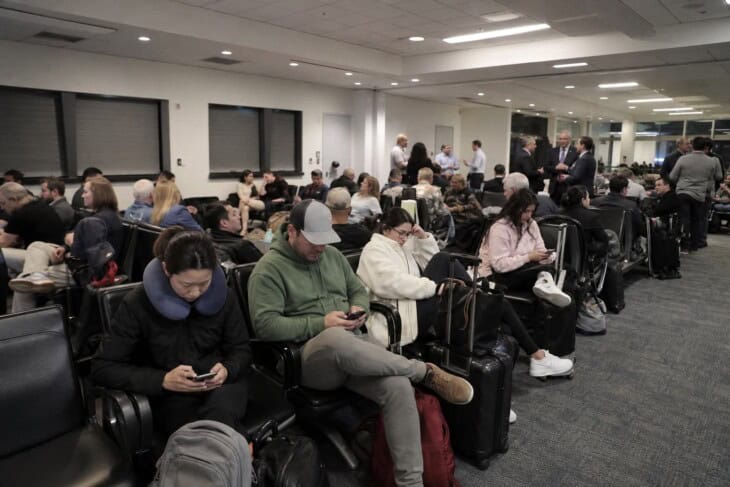
If you have ever been on a diverted flight and spent time wondering why it took so long for anyone to tell you what was happening next, the answer is usually that the operations team on the ground is still working it out. Coordinating rebooking for 180 passengers, finding hotel rooms in a city where your airline may have no established contract, arranging ground transport, and sourcing a replacement crew, all at the same time and potentially in the middle of the night, is a genuinely difficult logistical problem. The gate agents you see are often waiting on the same information you are.
What the diversion does not change is the one thing that mattered most: the aircraft landed safely. For all the inconvenience of a missed connection or an unplanned night in a hotel, a diversion is the system working as it should. The captain, the dispatcher, the air traffic controllers, and the ground teams all coordinated to put the aircraft down before a manageable problem became something worse. To understand more about the person on the ground who makes that coordination possible, the article on the airline flight dispatcher explains their role in full. For the connection between fuel planning and the diversion decision, why planes carry more fuel than they need covers the reserve fuel rules that give crews options when a destination becomes unavailable. Both are part of the How Airlines Actually Work series.
FAQ
Sources and references used for research and fact-checking.
- 14 CFR § 121.619 — Alternate airport for destination: IFR or over-the-top: Domestic operations - Electronic Code of Federal Regulations (eCFR)
- 14 CFR Part 121 Subpart U — Dispatching and Flight Release Rules - Electronic Code of Federal Regulations (eCFR)
- NTSB Accident Report AAR-79-07: United Airlines Flight 173 - National Transportation Safety Board
- Diversion | SKYbrary Aviation Safety - SKYbrary
- Last Point of Diversion (LPD) | SKYbrary Aviation Safety - SKYbrary
- Alternate Aerodrome | SKYbrary Aviation Safety - SKYbrary
- In-Flight Medical Events on Commercial Airline Flights - PubMed Central (PMC)
- How Airlines Handle Flight Diversions: Inside OCC Decisions - Aeruxo
- When Flights Are Diverted: What Are Passengers' Rights? - Simple Flying
- Everything You Wanted to Know About Flight Diversions - Eurojet Service
Get the Newsletter
The latest aviation news and stories sent to your inbox.
About the Author

Tim is the owner and lead editor of AeroCorner since 2019, overseeing aviation content covering aircraft, airlines, airports, and the broader aviation industry. Through years of researching, writing, editing, and publishing aviation-focused content, he has developed extensive practical knowledge of commercial aviation and air travel. Based in Asia and a frequent traveler himself, Tim also brings firsthand passenger experience to AeroCorner’s coverage. Outside of publishing, he has also explored aviation firsthand through hands-on flight training in New Zealand.