

Table of Contents
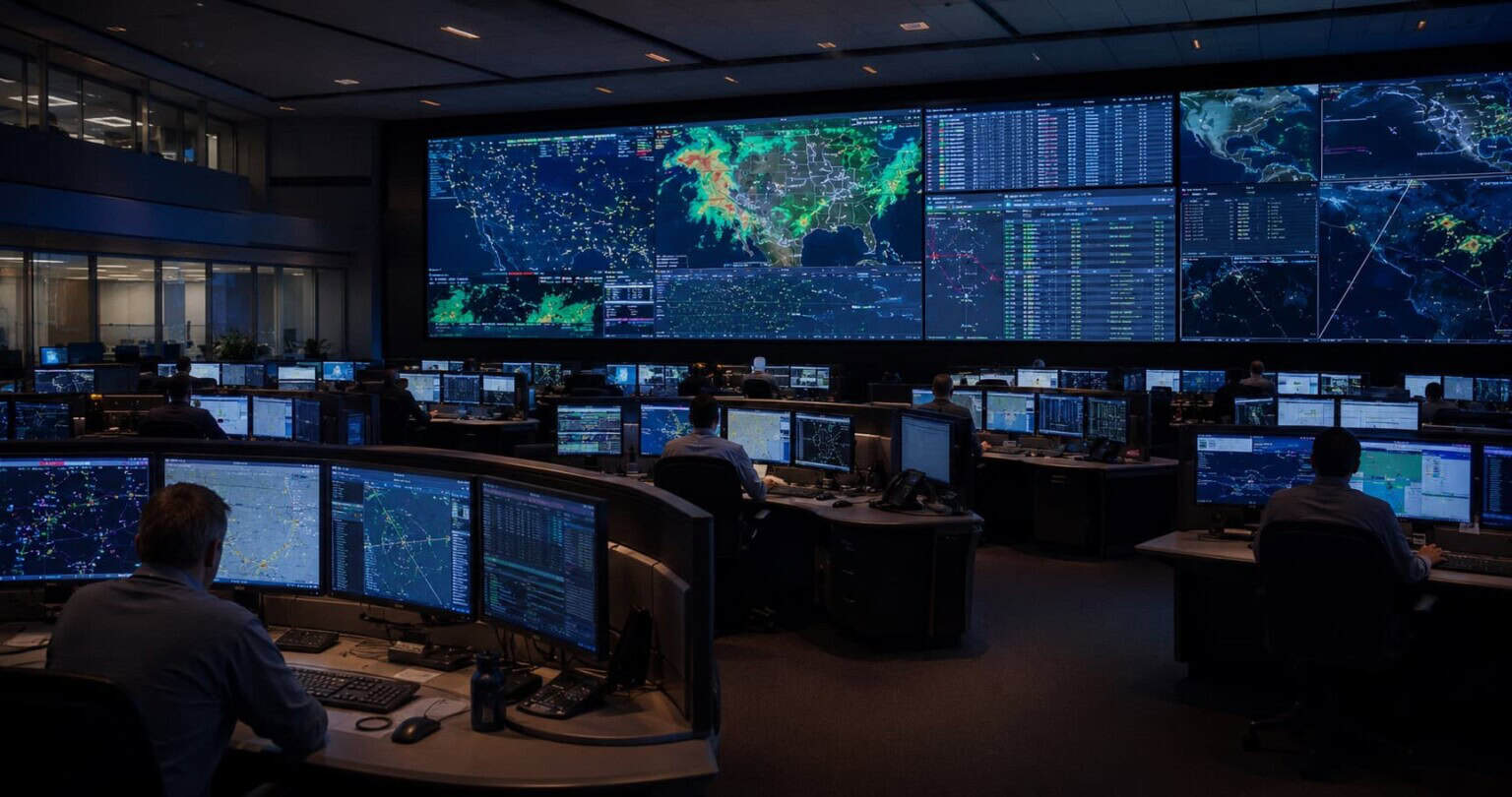
Somewhere between the moment you book a ticket and the moment your aircraft pushes back from the gate, someone you will never meet has already spent the better part of an hour working on your specific flight. They have pulled the weather forecasts for your departure and arrival airports, selected an optimal route through the day’s wind patterns, calculated how much fuel the aircraft needs, chosen an alternate airport in case your destination becomes unusable, and prepared a legal document authorising the flight to operate. By the time your pilot walks onto the aircraft, that document is waiting: the flight release, signed by two people. One of them is the captain. The other is an airline dispatcher — and most passengers have never heard of them.
The dispatcher is not a travel agent, not an air traffic controller, and not a scheduling coordinator. They are a federally certificated aviation professional who, under US law, shares equal legal responsibility for the safety of every flight they release. That is not a loose description. Title 14 of the Code of Federal Regulations, Part 121.533, states it plainly: the pilot in command and the aircraft dispatcher are jointly responsible for the preflight planning, delay, and dispatch release of a flight. Either one can stop it. Neither one can release it alone.
This article explains what a dispatcher actually does, how that joint-responsibility system works in practice, and what happens when a flight encounters serious problems in the air. The dispatcher’s role is one of the least visible parts of commercial aviation — and one of the most consequential.
What a dispatcher does before your flight leaves the gate
A dispatcher’s shift begins hours before their flights depart. For each scheduled departure, they build a flight plan from scratch: choosing a route, calculating performance data, building a fuel load, and assessing the weather picture at both ends of the journey and everywhere in between. This is not clerical work. It requires a detailed understanding of aircraft performance, meteorology, airspace structure, and the regulatory framework that governs how much fuel an aircraft must carry and when a flight can legally operate.
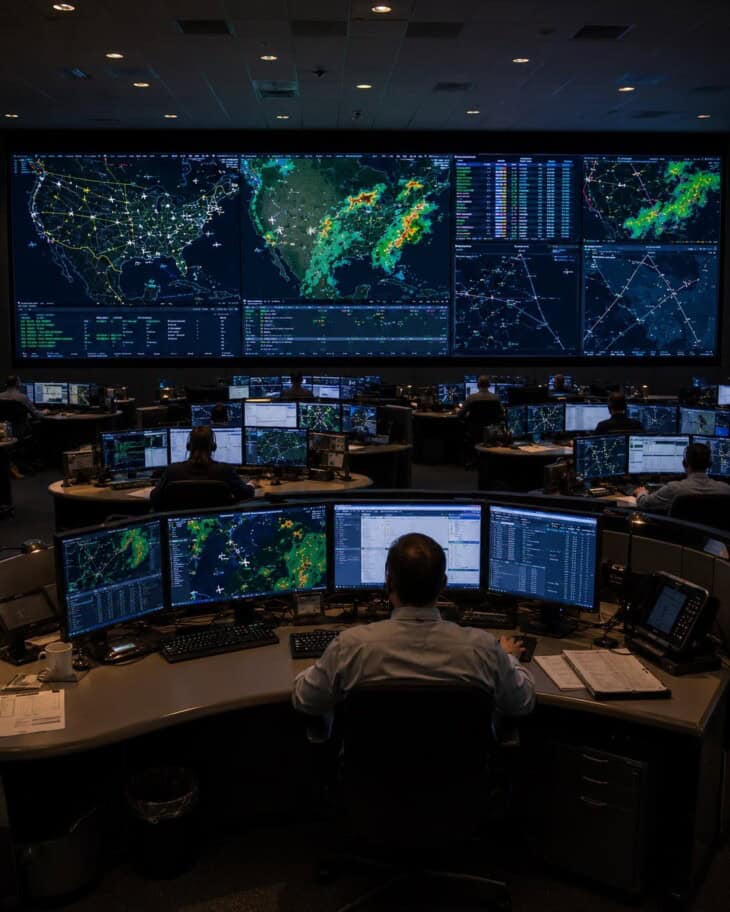
The fuel calculation alone involves several distinct components. There is trip fuel — what the flight needs to reach the destination — plus contingency fuel to cover unexpected routing changes or headwinds, alternate fuel to reach the designated backup airport if the destination becomes unavailable, and a final reserve that must remain on board when the aircraft lands, untouched.
On top of all of that, the dispatcher and captain together decide whether to add discretionary extra fuel for specific reasons: a destination with a history of holding delays, a forecast that looks marginal, or a fuel price differential that makes it worth carrying more from a cheaper departure airport. That final calculation — how much fuel to load — is signed off jointly before a single drop is pumped.
When the planning is complete, the dispatcher issues a flight release: a formal document that authorises the specific flight to operate on that day, with that load, via that route, to that destination, with that alternate. The captain reviews it, agrees to it, and co-signs. If either party believes the flight cannot operate safely as planned — because the weather is too severe, the aircraft has a known defect that affects the mission, or the fuel load is insufficient — they can refuse to release it. The flight does not go.
What goes into a flight release
A flight release authorises a specific departure and includes: the planned route and altitude, the total fuel load and its breakdown (trip, contingency, alternate, reserve), weather conditions at departure and arrival airports, the designated alternate airport, any relevant NOTAMs (Notices to Air Missions) affecting the route, and aircraft performance data. Both the dispatcher and the captain must review and agree to the release before departure. Under 14 CFR 121.533, either party has the authority to delay, modify, or cancel the release.
Shared authority: what “50/50 responsibility” means in practice
The equal-responsibility framework is not a formality. It reflects a deliberate design in US aviation regulation: two independent, trained professionals must independently assess a flight’s safety before it departs, and either one can stop it. This is structurally different from how aviation works in many other countries, where the captain holds sole authority and the dispatcher role is more administrative. In the US system under Part 121, the dispatcher is a legal equal to the pilot in command on the question of whether the flight should go.
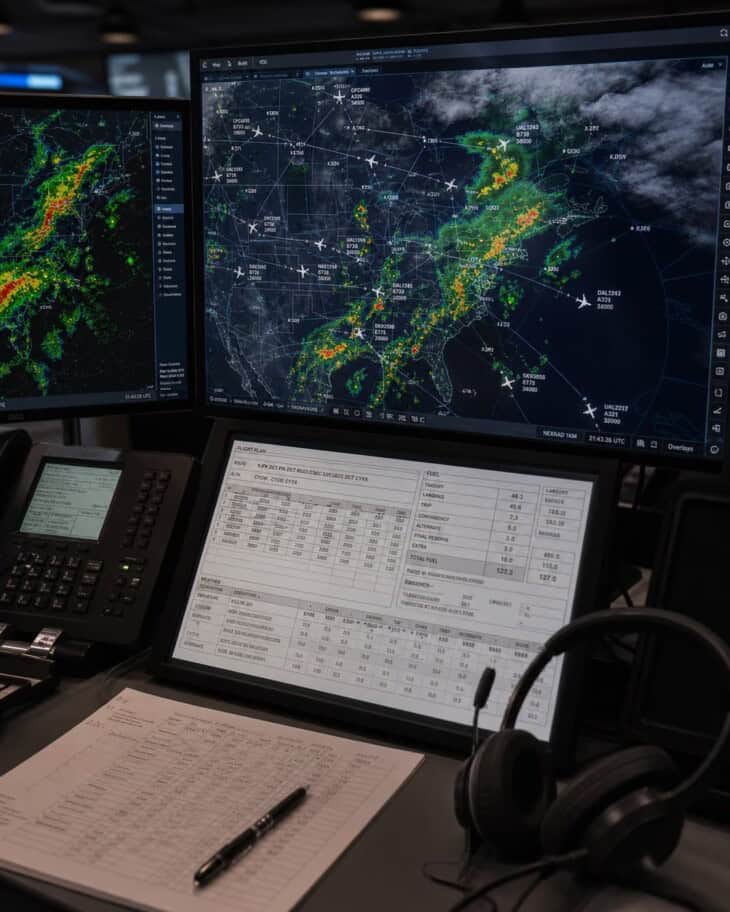
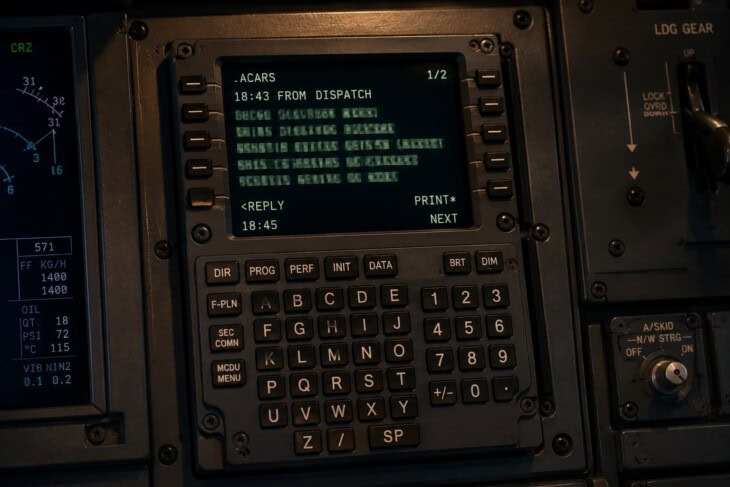
Once the flight is airborne, the dispatcher’s job does not end. They continue to monitor every flight in their portfolio — typically between 10 and 25 aircraft simultaneously, depending on the airline and the complexity of the operation. The primary tool for staying in contact with airborne flights is ACARS: the Aircraft Communications Addressing and Reporting System. ACARS is a digital datalink that has been transmitting short messages between aircraft and ground stations since 1978. It runs over VHF radio for domestic operations and satellite for transoceanic routes.
Through ACARS, dispatchers receive automatic position reports, fuel readings, and engine data, and they can send text messages to the cockpit that appear on a dedicated display in front of the crew. When the weather picture changes at the destination, the dispatcher sends a message. When ATC issues a ground stop that will delay arrivals, the dispatcher sends a message. When a new route is needed to avoid developing thunderstorms, the dispatcher and crew work it out via ACARS before any change is made.
This continuous monitoring is one of the reasons the dispatcher carries legal responsibility for the flight throughout its duration, not just at the moment of release. If a flight encounters a situation that the dispatcher believes warrants a diversion — destination weather collapsing, a reported mechanical issue, a fuel situation that no longer supports reaching the alternate — the dispatcher has the authority and the obligation to communicate that to the crew.
The captain retains final authority in the cockpit; the dispatcher is not able to override the crew. But the captain cannot simply ignore a dispatcher’s recommendation, and if the dispatcher believes the flight is unsafe, they can formally withdraw the release. The system is designed so that neither party ever has to act entirely alone.
When the flight encounters trouble
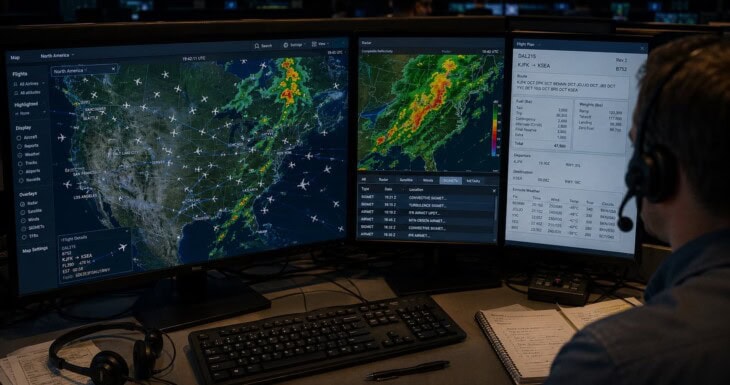
The dispatcher’s role becomes most visible — and most critical — when something goes wrong in the air. A diversion, a medical emergency, a serious mechanical problem: in any of these situations, the crew is managing the aircraft while the dispatcher is managing everything else.
Within minutes of a diversion being decided, the dispatcher is recalculating fuel to confirm the aircraft can reach the new destination with required reserves, contacting the ground handling agent at the diversion airport to arrange a gate and parking, coordinating with customs and immigration if the flight has crossed an international border, and relaying all relevant information to the crew via ACARS. The pilots are flying. The dispatcher is handling the ground consequence.
The joint-responsibility system exists precisely because these situations are easier to manage when someone on the ground has the full picture. The crew in the cockpit are dealing with an immediate problem. The dispatcher, sitting at a workstation with access to every weather feed, every airport NOTAMfeed, every fuel price database, and a direct line to ground handling at hundreds of airports, can work the problem from a different angle simultaneously. Neither perspective is sufficient on its own.
United Airlines Flight 173, 28 December 1978
United Airlines Flight 173, a McDonnell Douglas DC-8 on approach to Portland, Oregon, entered a holding pattern to diagnose a suspected landing gear problem. The crew spent approximately 68 minutes circling while preparing for an emergency landing, losing track of the fuel state as they did so. Contact with company dispatch came late — around 28 minutes into the hold — and was not sufficient to interrupt the crew’s fixation on the gear problem. Both engines flamed out from fuel exhaustion on final approach. The aircraft struck trees and crashed in a Portland suburb, killing 10 of the 189 people on board. The NTSB cited the captain’s failure to monitor and respond to the fuel state as the probable cause. The accident became a landmark case in crew resource management and reinforced the operational value of an engaged, proactive dispatcher as an external check on the cockpit.
Modern dispatchers operate with tools and training that did not exist in 1978. Real-time fuel telemetry feeds directly to the dispatch workstation. ACARS messages create a timestamped record of every communication between the dispatcher and the crew. Alert thresholds in flight monitoring software flag any flight that is burning fuel outside predicted parameters. The structures that were absent or underused on Flight 173 are now standard — but they only work if the dispatcher is actively engaged with the flights in their portfolio, not just monitoring them passively.
To become an aircraft dispatcher in the United States, a candidate must complete an FAA-approved course of at least 200 hours covering meteorology, navigation, aircraft performance, federal regulations, and emergency procedures, then pass both a written knowledge exam and a practical test administered by an FAA examiner.
The certificate — issued under 14 CFR Part 65 — is not a minor qualification. It is a professional aeronautical licence, in the same regulatory family as pilot and mechanic certificates. There are roughly 30,000 certificated dispatchers in the United States, compared to around 160,000 active airline transport pilots. Every commercial flight in the US domestic system has one. Most passengers board without knowing they exist.
The next time your flight is delayed because of weather, or arrives early because of a favourable tailwind that someone planned around, or diverts smoothly to an airport with a gate already waiting: that is partly the dispatcher. For the full picture of how decisions like the fuel load are made in detail, see Why Planes Carry More Fuel Than They Need. And for what happens when a flight does divert and everything that needs to be coordinated in the following hour, see What Actually Happens When a Flight Diverts. Both are part of How Airlines Actually Work.
FAQ
Sources and references used for research and fact-checking.
- 14 CFR Part 65 — Certification: Airmen Other Than Flight Crewmembers - Electronic Code of Federal Regulations (eCFR)
- 14 CFR § 121.533 — Responsibility for Operational Control: Domestic Operations - Electronic Code of Federal Regulations (eCFR)
- Flight Dispatcher - Wikipedia
- ACARS — Aircraft Communications Addressing and Reporting System - Wikipedia
- ACARS Explained: How It Keeps Aircraft Connected - Pilot Institute
- Aircraft Dispatchers: The Invisible Crew Members Keeping Your Flight On Schedule - Simple Flying
- How Flight Dispatchers Ensure Flight Safety - Airways Magazine
- United Airlines Flight 173 — NTSB Accident Report AAR-79/07 - National Transportation Safety Board
- United Airlines Flight 173 - Wikipedia
- How Airline Dispatchers Manage Flights: A Task Analysis in Distributed and Heterogeneous Network Operations - ResearchGate
Get the Newsletter
The latest aviation news and stories sent to your inbox.
About the Author

Tim is the owner and lead editor of AeroCorner since 2019, overseeing aviation content covering aircraft, airlines, airports, and the broader aviation industry. Through years of researching, writing, editing, and publishing aviation-focused content, he has developed extensive practical knowledge of commercial aviation and air travel. Based in Asia and a frequent traveler himself, Tim also brings firsthand passenger experience to AeroCorner’s coverage. Outside of publishing, he has also explored aviation firsthand through hands-on flight training in New Zealand.