

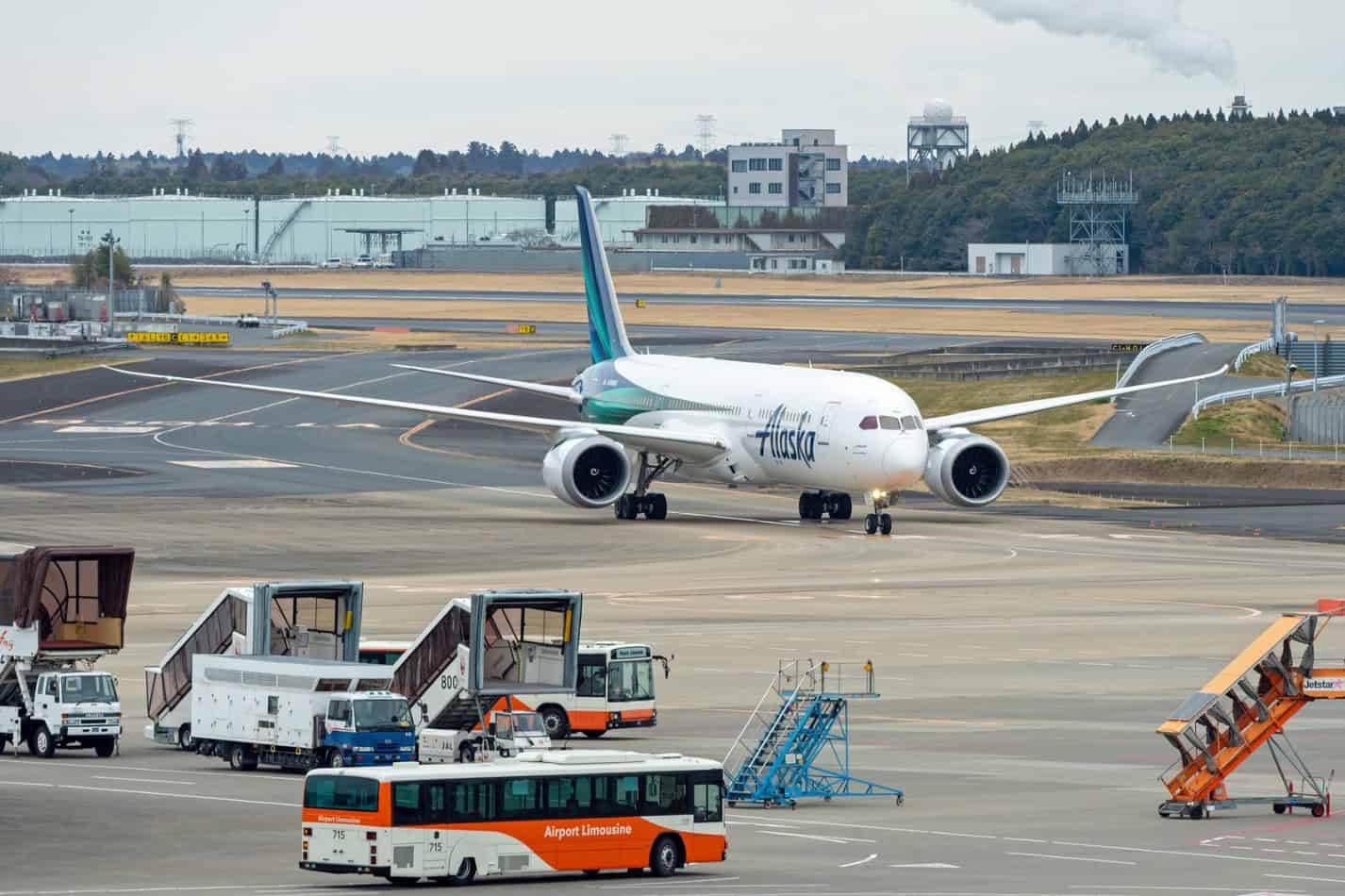
Alaska Airlines Flight AS181, a Boeing 787-9 Dreamliner bound for Seattle, turned back to Rome on July 19, 2026, after the crew received an engine-vibration warning about two hours into the transatlantic crossing. The widebody dumped fuel and landed safely at Rome Fiumicino Airport, and no injuries were reported.
What happened on Flight AS181
The aircraft, registered N780HA, left Rome Fiumicino Airport for Seattle-Tacoma at around 15:45 local time. Roughly two hours later, over southeastern England, the pilots broke off the ocean crossing and turned back toward Italy.
As the jet recrossed western France, the crew set the transponder to squawk 7700, the code for a general emergency, and descended to about 25,000 feet. Flight-tracking data reviewed by aviation observers showed the Dreamliner jettisoning fuel over open water before lining up for its approach.
AS181 landed on Runway 16R at Fiumicino after roughly five and a half hours airborne. Alaska arranged a replacement departure later that evening to carry passengers on to Seattle.
One passenger later described the crew announcing that the aircraft would have to dump fuel before it could land, an account first reported by IBTimes UK. The airline has said everyone was rebooked onward.
Alaska Airlines has not published a detailed cause. Early accounts point to an engine-vibration indication as the trigger, and any formal review will confirm the precise fault before the aircraft returns to service.
Why a Dreamliner dumps fuel to come home
A fully fueled Boeing 787-9 leaves for a ten-hour flight far heavier than it is certified to land. To touch down safely a short time after departure, a widebody often has to shed that weight, either by burning it off in a holding pattern or by jettisoning it in flight.
Long-haul jets like the 787 carry a fuel-jettison system for exactly this situation, and crews use it over water or sparsely populated areas. Our explainer on how and when airliners dump fuel covers why most narrowbodies cannot do the same.
An engine-vibration alert does not mean an engine has failed. It is usually a precautionary signal, and returning to a large, well-equipped airport like Fiumicino gives the crew maintenance support and a long runway rather than committing to hours over the open Atlantic.
The 787 has become central to Alaska’s long-haul plans since its merger with Hawaiian Airlines. N780HA is one of the ex-Hawaiian Dreamliners now flying under the Alaska code on routes like Rome to Seattle.
Why turn back rather than press on
Over the ocean, a twin-engine jet operates under ETOPS rules that keep it within a set flying time of a diversion airport. With a possible engine issue only two hours out, returning to the airport it just left is the conservative, standard choice, not a sign of a worse problem.
Get the Newsletter
The latest aviation news and stories sent to your inbox.
About the Author

Tim is the owner and lead editor of AeroCorner since 2019, overseeing aviation content covering aircraft, airlines, airports, and the broader aviation industry. Through years of researching, writing, editing, and publishing aviation-focused content, he has developed extensive practical knowledge of commercial aviation and air travel. Based in Asia and a frequent traveler himself, Tim also brings firsthand passenger experience to AeroCorner’s coverage. Outside of publishing, he has also explored aviation firsthand through hands-on flight training in New Zealand.