

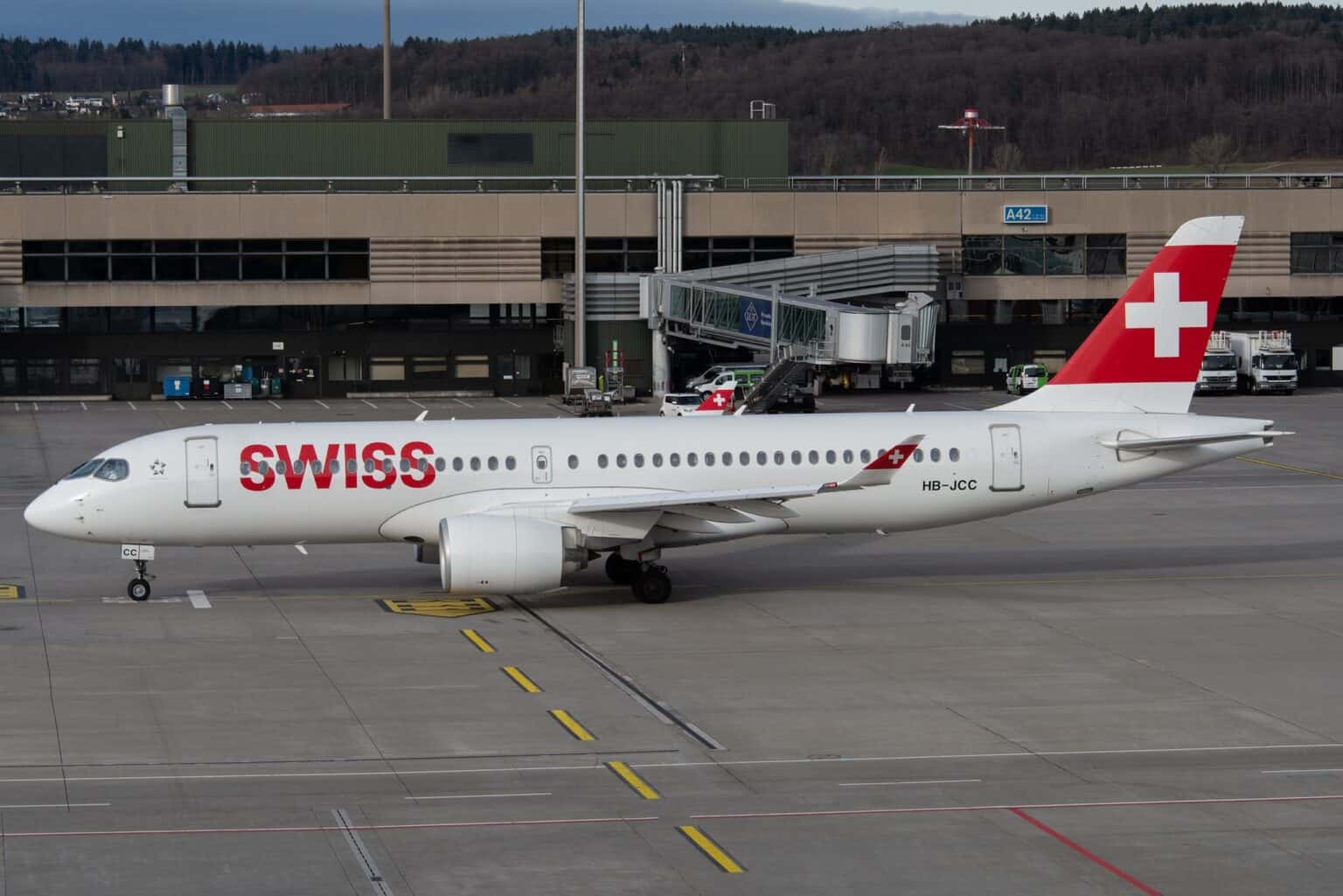
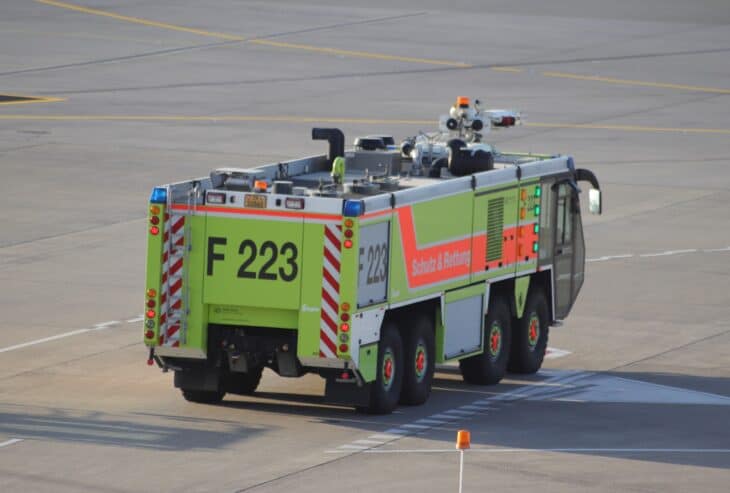
SWISS flight LX1417 from Belgrade landed safely in Zurich on November 6, 2026, after its crew received a fault indication on the A220’s brake system. Passengers were told to take the brace position for the landing, a step the airline describes as purely precautionary.
Fire crews escorted the jet to its parking position, and passengers left the aircraft normally, according to the airline.

What happened on LX1417
The aircraft was an Airbus A220-300 registered HB-JCC. Flightradar24 tracking data shows HB-JCC flying the Zurich to Belgrade rotation that day, LX1416 out and LX1417 back.
The crew reported brake problems during the descent into Zurich, The Aviation Herald reported. It says the jet landed on runway 16 and left the runway with emergency services following it.
SWISS confirmed the fault to the Swiss newspaper Blick, which put the number of passengers at 134. The flight deck asked the cabin crew to instruct passengers to adopt the brace position as a precaution, the airline said.
“This was purely a precautionary measure,” SWISS spokesperson Nicole Meier told Blick in German, adding that the safety of employees and passengers always has top priority. The airline said its specialists were examining the aircraft’s brake system, and it praised the crew’s conduct.
A passenger’s account
A 23-year-old passenger told Blick that the pilot announced about 30 minutes before landing that one of four brakes had failed. In the French edition of the story, he adds that the crew warned of a difficult landing.
He said the cabin was calm until just before touchdown, when the crew shouted “Brace for impact” and panic broke out. Support was offered to passengers afterward, and he said one person accepted it.
As of November 9, the airline has not said what caused the indication. HB-JCC was flying again the next morning, on LX1016 from Zurich to Düsseldorf, according to Flightradar24 data.
Why a brake fault leads to a brace call
A fault on one of the jet’s wheel brakes does not leave it without brakes, and the passenger’s own account describes one of four failing, not all of them.
What a crew cannot know in the air is exactly how the remaining brakes will behave on the runway. A brace instruction covers that uncertain final minute, which is why it can be given even when the landing is expected to be routine.
Parker Aerospace’s electrically actuated Ebrake system is in use on the A220, engineering.com reported, and Parker says the design does away with hydraulic oil.
Transport Canada sets out the purpose of bracing in its advisory circular on brace positions. Leaning forward reduces flailing, and pre-positioning the body, especially the head, against the surface it is most likely to strike reduces impact injuries.
The same guidance says passengers should brace when it becomes obvious that a problem could lead to a possible impact, and not prematurely. It also notes that a shouted “brace” can make people tense up, and suggests plainer commands such as “bend down.”
Not the first scare on SWISS’s A220 fleet
SWISS’s A220 fleet has had a run of high-profile technical events, including one on this same Belgrade route in 2025.
October 15, 2019
Fleet grounded for engine checks. SWISS pulled all 29 of its A220s for inspections after technical problems forced a London to Geneva flight to divert to Paris, swissinfo.ch reported. Pratt & Whitney recommended extra low-pressure compressor inspections on PW1500G and PW1900G engines.
December 23, 2024
LX1885 diverts to Graz. A220-300 HB-JCD lost an engine at 40,000 feet on a Bucharest to Zurich flight, smoke entered the cabin, and the jet was evacuated at Graz. A cabin crew member died a week later.
July 7, 2025
LX1413 diverts to Friedrichshafen. An A220-300 on the Belgrade to Zurich route landed in Germany after multiple warning indications, with 115 passengers and 5 crew on board, SWISS said.
March 13, 2026
LX2258 turns back with brakes trouble. An A220-100 bound for Budapest returned to Zurich after the airline reported a technical problem with some of its brakes.
November 6, 2026
LX1417 lands with a brace call. HB-JCC lands in Zurich after a brake-system fault indication, escorted by fire crews.
Brake indications do not always mean failed brakes. In a separate case, an A220 on LX2254 to Budapest turned back to Zurich with a brake-overheat indication, and blue News reported that the culprit was a defective sensor, with the brakes themselves in order.
Whether LX1417’s fault was a real loss of braking or a false indication is not yet public. It came the same day another SWISS flight, LX632 to Paris, turned back to Zurich over a cabin odor.
Sources and references used for research and fact-checking.
Get the Newsletter
The latest aviation news and stories sent to your inbox.
About the Author

AeroCorner News is the aviation news desk of AeroCorner.com. It covers accidents and incidents, safety rulings, airline and airport disruption, and new aircraft. It works from primary sources such as the NTSB, FAA, EASA and the manufacturers' own announcements.