

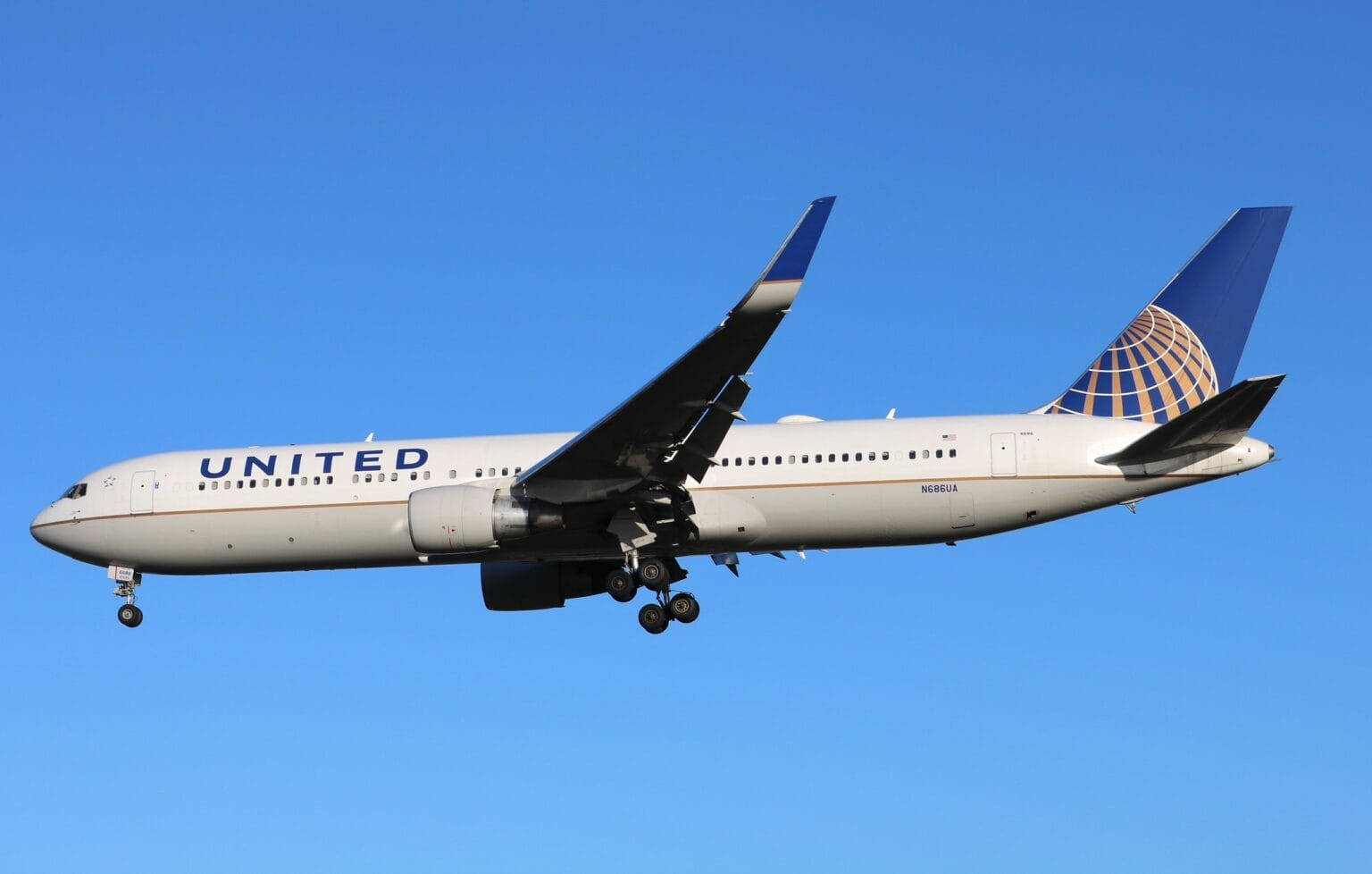
United Airlines flight UA941 from London Heathrow to Newark declared an emergency on Thursday, October 15, 2026, and returned to Heathrow less than 90 minutes after takeoff. United said the Boeing 767-300ER came back “to address an odor in the cabin” and that passengers got off normally.
The airline canceled the flight and began rebooking travelers. No source has said what caused the smell, and the number of people on board has not been published.
What the tracking data shows
The aircraft was N686UA, a 767-300ER that FlightAware’s history for the registration places on UA941 that afternoon. FAA registry records show it is owned by United, powered by Pratt & Whitney PW4060 engines and was certified airworthy in February 2003, which makes it about 23 years old.
FlightAware logged the departure from Heathrow at 4:33 p.m. local time. The jet climbed north over the Midlands and leveled off at about 32,000 feet (9,750 m) north of Manchester shortly before 5 p.m.
According to AIRLIVE, the crew reported a technical problem at that point, declared an emergency and asked to go back to Heathrow. TheTravel reported that the aircraft squawked 7700, the transponder code for a general emergency.
The track shows the 767 continuing northwest toward the Lancashire coast before it swung south. It then descended and flew level at about 15,000 feet (4,600 m) over the Midlands for roughly 10 minutes before heading back toward London.
FlightAware recorded the landing at 5:57 p.m., an hour and 23 minutes after departure. AIRLIVE reported a touchdown on runway 27R, where airport fire crews met the jet, and a brief switch of landings to the other runway while 27R was inspected.
The aircraft then taxied to a remote stand south of the airfield, AIRLIVE said. FlightAware lists its gate arrival at 6:40 p.m.
The fuel dump that did not happen
AIRLIVE and Aviation A2Z both reported that the crew first planned to dump about 20 tons of fuel, then dropped the plan and returned directly. Neither outlet gave a reason for the change, and United has not commented on it.
The reason a fuel dump comes up at all is weight. An airliner’s maximum takeoff weight is almost always higher than its maximum landing weight, because a normal flight burns off the difference on the way.
A widebody fueled for a crossing of more than seven hours to New Jersey can still be well above its landing limit an hour after takeoff. The crew can jettison fuel if the aircraft has the system, circle to burn it off, or land overweight if the situation calls for it.
Modern airliners are designed with overweight landings in mind, but they are reserved for emergencies and are followed by maintenance inspections. Whether UA941 landed above its limit has not been reported.
What is still unconfirmed
United has said only that the jet returned for an odor in the cabin. Online claims of a burning smell have not been confirmed by the airline, and no source has identified where the odor came from or whether any passengers or crew needed medical help.
A busy week for United’s older 767s
UA941’s return came three days after another United 767 cut a transatlantic trip short. Early on October 12, United flight UA946 from Washington Dulles to Amsterdam diverted to St. John’s after an engine problem on a 35-year-old 767-300.
The two events involve different aircraft and different reported problems, and nothing published links them. FlightAware shows a Boeing 767-300 on every UA941 departure from London Heathrow since early October.
A smell in the cabin also turned back another United transatlantic flight this month. On October 4, a United 757 bound for Newark turned back to Dublin after a strong fuel smell gave a number of passengers and crew headaches.
United told TheTravel it was working to rebook customers, and the outlet reported that passengers received hotel vouchers. At the time of writing on October 16, FlightAware listed N686UA for a Heathrow to Newark departure scheduled for that afternoon.
Sources and references used for research and fact-checking.
Get the Newsletter
The latest aviation news and stories sent to your inbox.
