

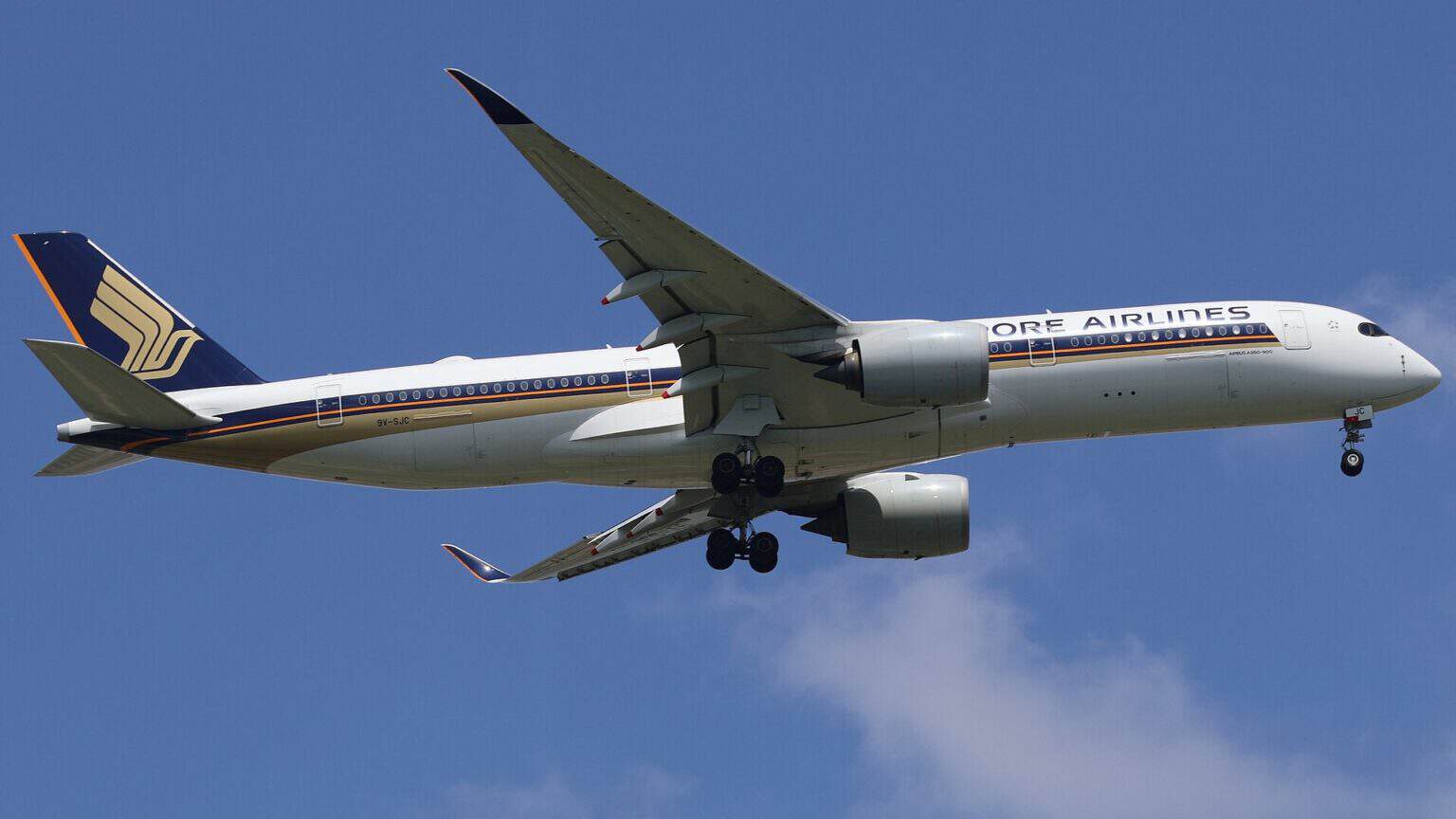
Singapore Airlines flight SQ31 from San Francisco to Singapore returned to San Francisco on Wednesday, October 14, 2026, because of an unruly passenger. The airline said the man was handed to local authorities after landing and had injured himself during the incident.
The Airbus A350-900, registered 9V-SJC according to Flightradar24, landed back at San Francisco International Airport at about 8:40 p.m. local time, an SIA spokesperson told The Straits Times.
What Singapore Airlines has said
“The pilots assessed the situation and decided to return to San Francisco,” the spokesperson said in a media reply on October 15. SIA did not describe what the passenger did, and it has not said how many people were on board.
The airline said it is “working closely with the relevant authorities,” without naming the agency that took the man into its care. It also thanked “customers and crew members who assisted in managing the situation on board.”
The delayed flight left San Francisco again at around 11:20 p.m. with a new crew, according to SIA, which apologized and said it is helping customers rebook missed connections. Flightradar24 shows the same A350 flying that service as SQ9031.
At the time of writing, we could find no announced charges and no public comment from a law enforcement agency.
Where SQ31 turned around
The SIA spokesperson put the landing “close to nine hours” after takeoff, which matches the 11:51 a.m. departure time The Straits Times reported. FlightAware’s track log shows that was when the jet left the gate, and that after a 57-minute taxi it took off at 12:49 p.m.
That puts the time in the air at about 7 hours and 45 minutes. The tracking data shows the A350 cruising at 36,000 to 37,000 feet on its way west across the Pacific.
It reversed course roughly four hours after takeoff, over the North Pacific south of the Alaska Peninsula. By the track log’s coordinates, that point is about 1,780 nautical miles (3,290 km) from San Francisco.
It then flew about three and a half hours back east. SQ31 is normally a flight of roughly 16 hours, so the jet had covered only about a quarter of the 7,330-nautical-mile (13,580 km) route.
Why fly all the way back
SIA has not explained why the crew chose San Francisco. By the same tracking coordinates, Anchorage was about 880 nautical miles (1,620 km) away when the jet turned, half the distance back to California.
A diversion to a nearer airport is the fast option, but it is not always the practical one when nobody on board needs urgent medical care. San Francisco is on SIA’s own network, and the airline could put a fresh crew on the jet there, which it did.
That crew change mattered. By the time the A350 landed, the original crew had been on board for close to nine hours since the jet left the gate, and SIA restarted the 16-hour trip only with a new set of crew members.
It is the airline’s second long-haul turnback in a month. On September 14, SQ24 returned to Changi about four hours into its flight to New York after a medical emergency.
Which law applies on a Singapore jet
The Airbus A350-900 is registered in Singapore, but US federal law can still reach this flight. Federal statute defines the “special aircraft jurisdiction of the United States” to include an aircraft in flight outside the US whose last place of departure was in the US, if it next lands in the US.
SQ31 left San Francisco and landed there again, so it fits that definition. Inside that jurisdiction, assaulting or intimidating a crew member to interfere with their duties carries a penalty of up to 20 years in prison under 49 U.S.C. 46504.
The FAA runs a zero-tolerance policy on unruly passengers and can propose fines of up to $43,658 per violation. It says it has civil authority only and cannot prosecute, although passengers can still face criminal charges separately.
None of that means a case will follow here. SIA’s statement does not say the passenger threatened or struck anyone, and a jurisdiction rule is not an accusation.
Disruptive passengers can cut short a short-haul trip too: last month, Jet2 LS721 turned back to Edinburgh 30 minutes after takeoff, and police charged a man with endangering the aircraft.
Sources and references used for research and fact-checking.
Get the Newsletter
The latest aviation news and stories sent to your inbox.
About the Author

Tim is the owner and lead editor of AeroCorner since 2019, overseeing aviation content covering aircraft, airlines, airports, and the broader aviation industry. Through years of researching, writing, editing, and publishing aviation-focused content, he has developed extensive practical knowledge of commercial aviation and air travel. Based in Asia and a frequent traveler himself, Tim also brings firsthand passenger experience to AeroCorner’s coverage. Outside of publishing, he has also explored aviation firsthand through hands-on flight training in New Zealand.