

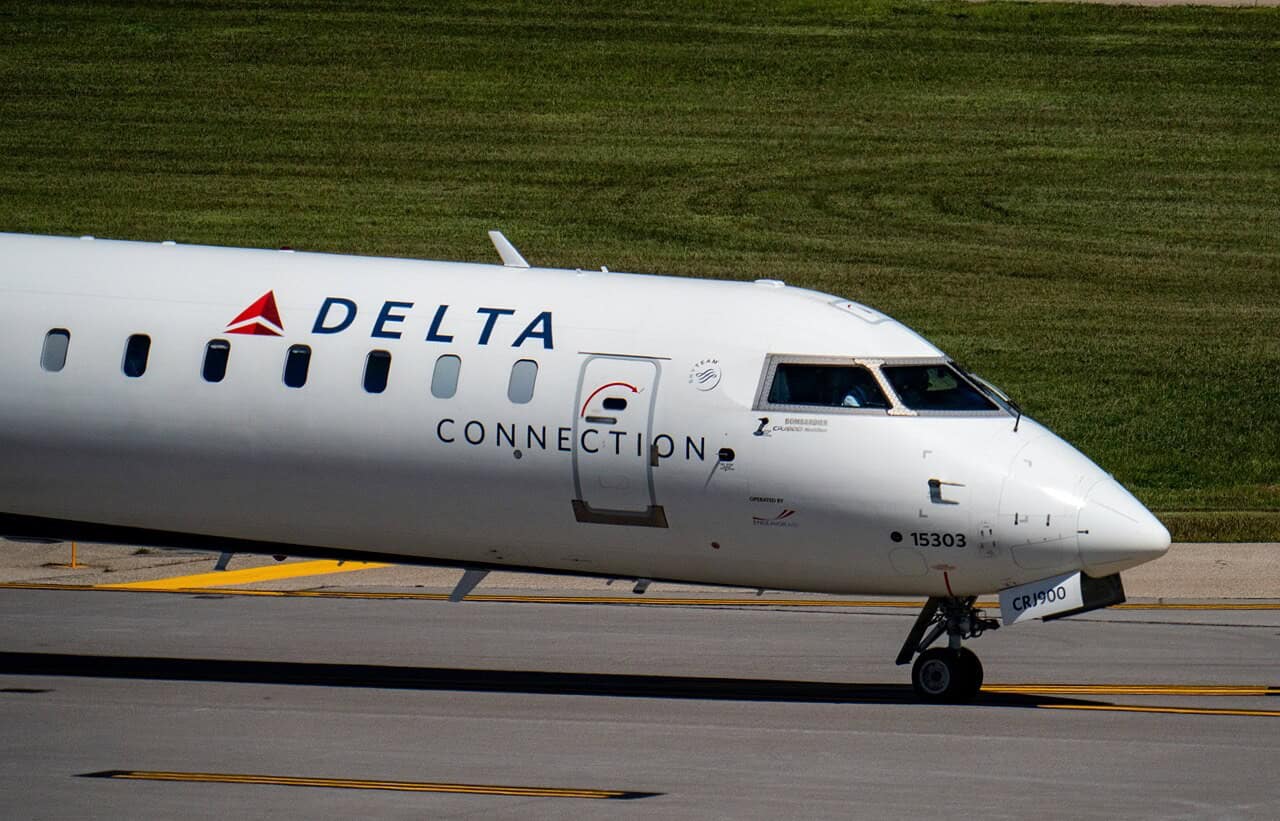
Delta Connection flight DL5415 abandoned its landing at New York’s LaGuardia Airport on the afternoon of October 7, 2026, after a business jet took off on an intersecting runway without permission from air traffic control. The Federal Aviation Administration confirmed the event and said it is investigating.
The close call came to light six days later, on October 13, when ABC7 New York reported it.
What the FAA and Delta have said
“The crew of Endeavor Air Flight 5415 performed a go-around at LaGuardia Airport after ExecJet Flight 398 departed on an intersecting runway without air traffic control authorization,” the FAA said in a statement to PEOPLE. PEOPLE put the time at around 3:55 p.m. local time.
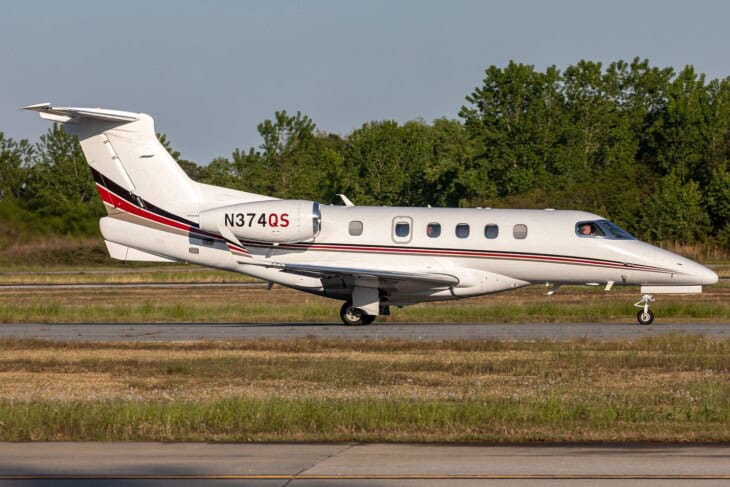
ExecJet is the radio callsign of NetJets Aviation, the business jet operator. FlightAware’s record for flight EJA398 that day shows a NetJets Embraer Phenom 300 lifting off from LaGuardia at 3:56 p.m. on a short hop to Teterboro, New Jersey.
Flight 5415 was an Endeavor Air Bombardier CRJ900 flying for Delta from Omaha, Nebraska. Delta said “the crew initiated a go-around to ensure safe spacing with a departing aircraft on a nearby runway.” ABC7 reported that the jet landed safely.
Neither aircraft’s registration appears on FlightAware, where both tail numbers are blocked from public display. None of the reports so far carries a comment from NetJets.
How close the two jets came
Flightradar24 data cited by ABC7 put the aircraft about 1,000 feet apart at their closest point. The regional jet was moving at about 147 mph and the Phenom at about 103 mph, by the same data.
FlightAware’s track log puts the CRJ900 on final approach from the northeast in line with Runway 22, while the Phenom rolled southeast along Runway 13; the airport’s two runways cross each other.
In that log, the CRJ900 reaches about 100 feet over the runway at almost the same moment the Phenom shows on its takeoff roll. Sixteen seconds later it is back up at about 600 feet, and it touched down about 12 minutes after that.
“Line up and wait” versus cleared for takeoff
Tower audio quoted by PEOPLE shows the two sides disagreeing over the clearance. “I believe you were never cleared for takeoff, sir. You were cleared to line up and wait,” the controller told the business jet crew.
“No, I believe we were cleared for takeoff. We were told that the United was ahead, wake turbulence and everything,” the pilot answered. The controller replied: “Uh, negative. I never even said anything about wake turbulence.”
That exchange matters because of how “line up and wait” works. The FAA’s Aeronautical Information Manual describes it as an instruction to taxi onto the departure runway and hold there, and states plainly that it “is not an authorization to takeoff.”
The same manual says a controller may give a reason for the hold, citing wake turbulence and traffic on an intersecting runway as examples. Once that condition clears, the pilot should expect a takeoff clearance soon, but the hold itself is still not one.
The manual singles out holding on the runway while crossing runways are in use as a moment for extra vigilance. It tells crews who are unsure whether a takeoff clearance was meant for them to ask the tower before they roll.
What the investigation will decide
The FAA has not said how it will classify the event. Its runway incursion scale runs from Category D, with no immediate safety consequence, to Category A, a serious incident in which a collision was narrowly avoided. It also sorts incursions by source: a pilot deviation or a controller’s operational incident. That is the question the tower audio leaves open.
Under the FAA’s definitions, a pilot deviation is a pilot action that violates a federal aviation regulation. A controller action that leaves less than the required separation between aircraft is counted as an operational incident instead.
A second runway scare at LaGuardia this year
This is not LaGuardia’s first runway event this year. In March, an Air Canada Express CRJ900 hit an airport fire truck that had been cleared to cross its runway, killing both pilots, and the NTSB is still investigating.
In August, the FAA moved to fire two controllers who had left their shifts early before that crash. The October 7 close call gives investigators a second LaGuardia runway event to examine.
At the time of writing, the FAA has released no finding on whether the Phenom crew misheard a clearance, acted on one meant for another aircraft, or was cleared at all.
Sources and references used for research and fact-checking.
Get the Newsletter
The latest aviation news and stories sent to your inbox.
About the Author

Tim is the owner and lead editor of AeroCorner since 2019, overseeing aviation content covering aircraft, airlines, airports, and the broader aviation industry. Through years of researching, writing, editing, and publishing aviation-focused content, he has developed extensive practical knowledge of commercial aviation and air travel. Based in Asia and a frequent traveler himself, Tim also brings firsthand passenger experience to AeroCorner’s coverage. Outside of publishing, he has also explored aviation firsthand through hands-on flight training in New Zealand.