

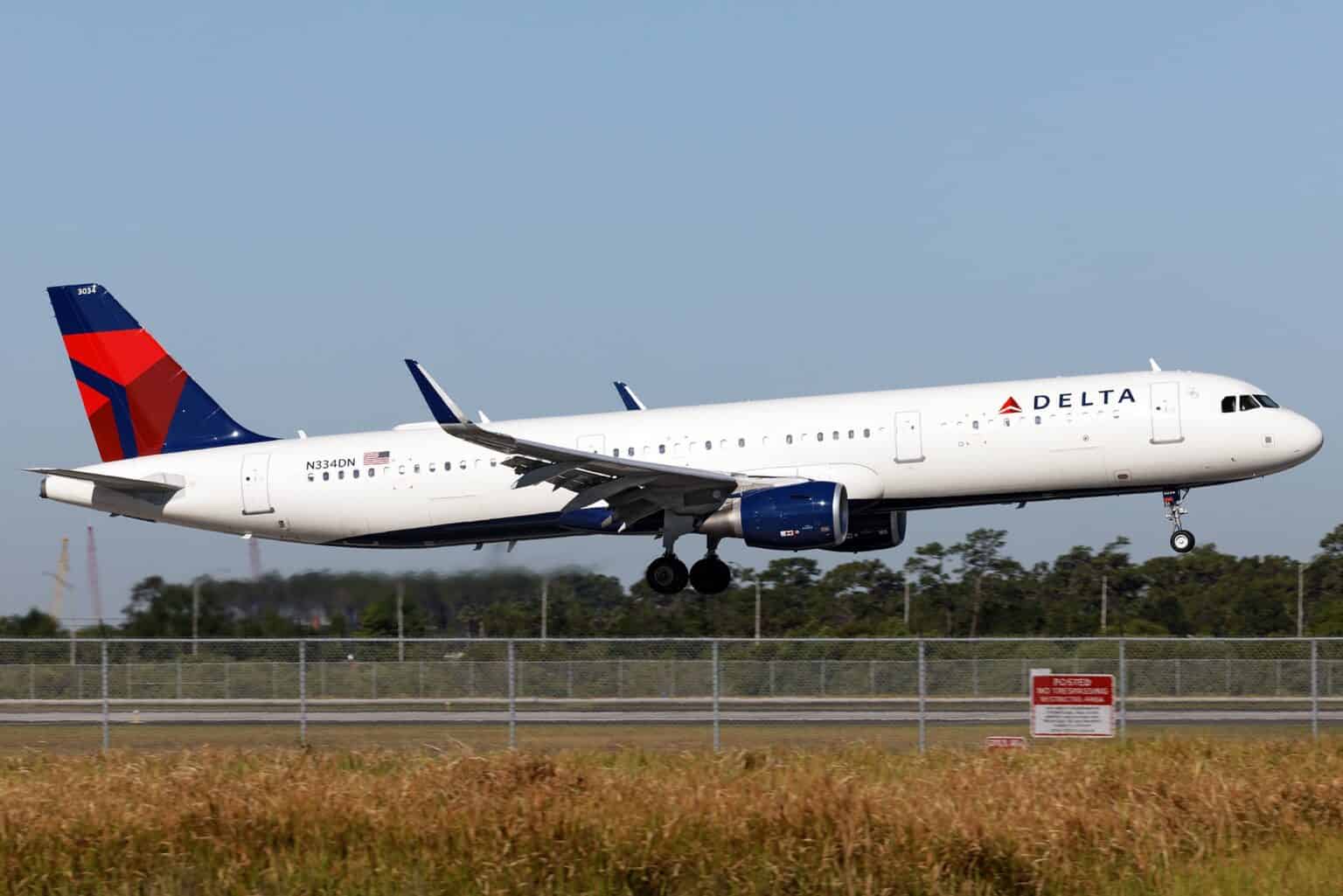
Delta Air Lines flight DL2050 from Buffalo declared a Mayday on final approach to Atlanta on the evening of Friday, October 9, 2026, after the crew reported they were losing the Airbus A321’s left engine. The jet landed safely at Hartsfield-Jackson, turned off the runway and stopped, and the crew asked emergency services to check the engine.
The pilots told emergency services the engine had suffered a compressor stall. Flight attendants reported seeing fire from the engine, but the crew had no fire indication and responders saw no fire, The Aviation Herald reported on October 10.
What happened on DL2050
The aircraft was N334DN, a 2017-built Airbus A321-200 (model A321-213) with two CFM International CFM56-5B engines, according to its FAA registration record.
FlightAware’s tracking shows the jet leaving Buffalo Niagara International Airport at 6:59 p.m. and arriving in Atlanta at 8:44 p.m. local time, a trip of 1 hour 44 minutes.
The Mayday came on final approach to runway 9R. Emergency services responded, and once the A321 was clear of the runway the crew asked them to look at the left engine.
The jet was then towed to the apron at Hartsfield-Jackson Atlanta International. The number of passengers on board has not been published.
Neither Delta nor the FAA had issued a statement on the flight as of October 11. The FAA’s accident and incident statements page, where the agency posts short notes on airline emergencies, listed nothing newer than October 7 at the time of writing.
The aircraft flew again the next afternoon. FlightAware shows N334DN leaving Atlanta for Minneapolis at 5:05 p.m. on October 10, a little over 20 hours after the Buffalo flight arrived.
Why the cabin saw fire and the cockpit did not
A compressor stall, also called a compressor surge, happens when air stops flowing smoothly over the compressor blades at the front of a jet engine, much as air can stall over a wing. The FAA calls it “a rare event” in modern turbofans in its engine malfunction guide for flight crews.
The compressor can then no longer squeeze the incoming air, and the high-pressure air further back in the engine rushes forward and out of the inlet. The FAA says this often sounds like a loud bang similar to an explosion, and it can push visible flames forward out of the inlet and rearward out of the tailpipe.
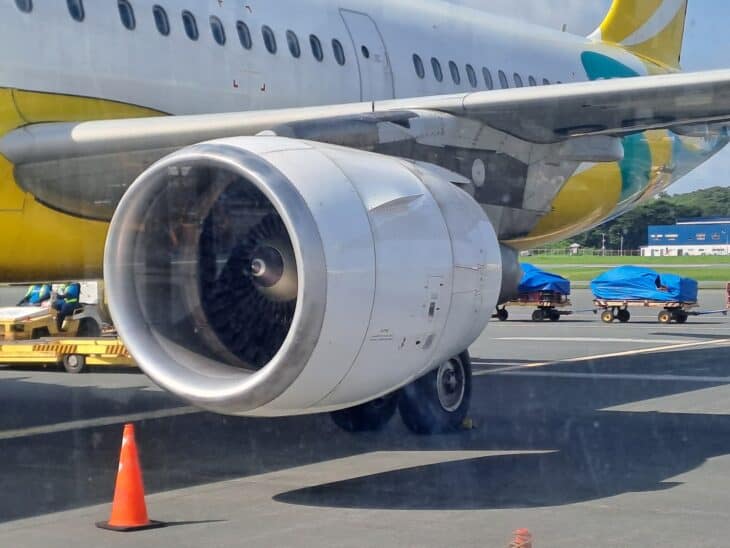
_(CFM56-5B_engine)_2023-08-05.jpg)
Residents near Buenos Aires heard those bangs in September, when an Aerolíneas Argentinas A330 suffered compressor stalls climbing out of Ezeiza and its bangs carried across the city’s southern suburbs.
An engine fire is a different event. The FAA guide says engine fire “almost always refers to a fire outside the engine but within the nacelle,” and that each engine has its own fire warning on the flight deck.
So flames seen from the cabin and a quiet fire warning are not necessarily a contradiction. The FAA guide notes that control towers have mistakenly reported the flames from a surge as an engine fire.
A surge can clear on its own, usually within fractions of a second, repeat several times, or keep going until the pilots pull the thrust lever back. The FAA says the cause is “often complex” and may or may not involve severe engine damage, and that a single surge rarely causes severe damage by itself.
What set off the stall on DL2050 has not been made public. The jet was back on the schedule within a day, but Delta has not said what its inspection of the engine found.
It is not the first Delta compressor stall this fall. On September 25, an A330 operating flight DL195 returned to Barcelona after flames and bangs from its left engine, an event The Aviation Herald also logged as a compressor stall.
Sources and references used for research and fact-checking.
Get the Newsletter
The latest aviation news and stories sent to your inbox.
About the Author

Tim is the owner and lead editor of AeroCorner since 2019, overseeing aviation content covering aircraft, airlines, airports, and the broader aviation industry. Through years of researching, writing, editing, and publishing aviation-focused content, he has developed extensive practical knowledge of commercial aviation and air travel. Based in Asia and a frequent traveler himself, Tim also brings firsthand passenger experience to AeroCorner’s coverage. Outside of publishing, he has also explored aviation firsthand through hands-on flight training in New Zealand.