

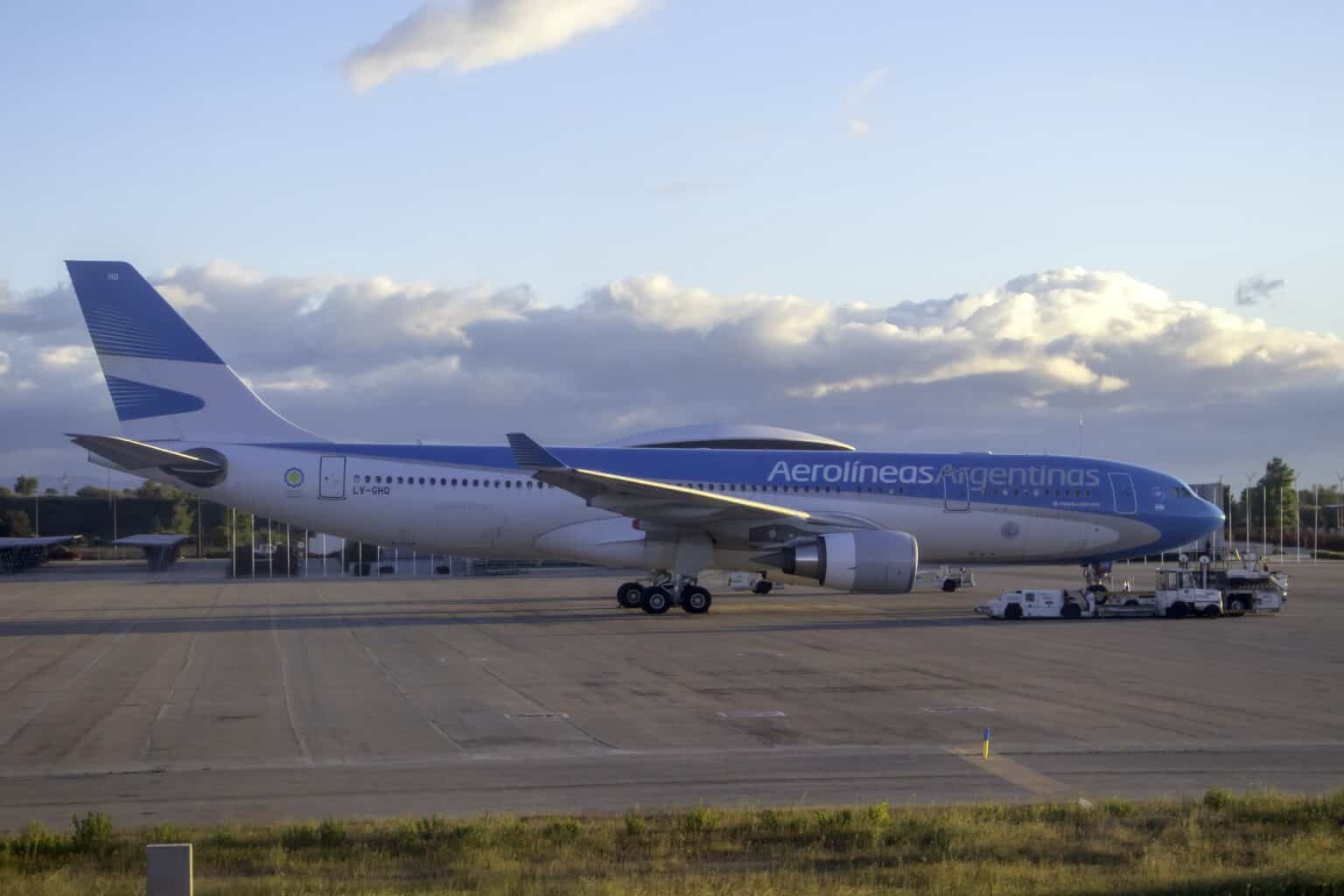
Aerolíneas Argentinas flight AR1132 from Buenos Aires to Madrid returned to Ezeiza shortly after midnight on Friday, September 25, 2026, after one of its engines suffered a compressor stall during the climb. The Airbus A330-200, registered LV-GHQ, landed safely and no passengers were hurt, according to La Nación.
Residents across the southern suburbs of Greater Buenos Aires reported loud bangs as the jet flew overhead. The airline says the cause of the engine problem is under analysis.
What happened on the flight
The A330 left Ezeiza International Airport just before midnight on Thursday, September 24. La Nación put the departure at 11:56 p.m. local time, while Infobae reported 11:52 p.m.
The crew stopped the climb at flight level 50, about 5,000 feet, when the left engine began suffering compressor stalls, The Aviation Herald reported. That engine is a General Electric CF6.
The jet landed back at Ezeiza at 12:30 a.m., the airline said. La Nación put its time in the air at 34 minutes and Infobae at 36, while The Aviation Herald, which said the landing was on runway 11, estimated about 25 minutes.
Aerolíneas Argentinas told La Nación that the aircraft was not declared an emergency. It said the jet landed without problems and taxied to its stand under its own power, without any emergency code being activated.
Rescue services from Argentina’s National Civil Aviation Administration (ANAC) stood by on the ground, La Nación reported. Infobae said airport staff and firefighters attended the aircraft.
The passengers continued on another aircraft, an A330-243, which left Ezeiza at about 4:30 a.m. and was due in Madrid at 9:25 p.m. Spanish time, according to Infobae. The Aviation Herald reported that LV-GHQ was still on the ground at Ezeiza about 14 hours after it landed.
What is not known yet
The airline says the cause of the engine fault is under analysis. Its statements to the press did not say what triggered the stall, how many people were on board, or whether the engine was damaged.
Why a compressor stall sounds like an explosion
Residents of Ezeiza, Luis Guillón, Monte Grande, Burzaco, Lanús and neighboring suburbs posted about loud bangs and rattling windows, Infobae reported. La Nación described security camera video showing startled residents leaving the street as the aircraft passed overhead.
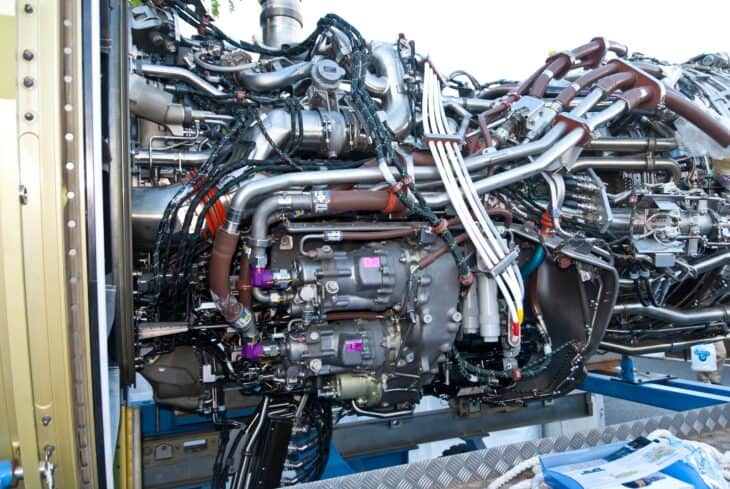
Aerolíneas Argentinas said the noise came from a compressor stall, which it described as a momentary disruption of the airflow inside the engine’s compressor. Official sources quoted by Infobae added that the phenomenon can produce sounds similar to detonations.
The FAA’s Pilot’s Handbook of Aeronautical Knowledge explains the mechanism. Each compressor blade is a small airfoil, and when its angle of attack exceeds the critical angle, smooth airflow breaks down and the air in the compressor slows, stagnates and sometimes reverses direction.
A transient stall usually announces itself with an intermittent bang as backfire and flow reversal take place, the handbook says. If the stall becomes steady, strong vibration and a loud roar can follow.
Most transient stalls do not harm the engine and often correct themselves after one or two pulsations, according to the FAA. A steady stall is different: the handbook warns that the possibility of severe engine damage is immediate, and it tells pilots to follow the procedure in the aircraft’s flight manual.
The Airbus A330-200 comes with a choice of engines, and the model number shows which. LV-GHQ is an A330-202, the version certified with General Electric CF6-80E1 engines, while the A330-243 that flew the replacement service uses Rolls-Royce Trent 700s.

AR1132 was not the only A330 to turn back with an engine compressor stall that day. Later on September 25, Delta flight DL195 returned to Barcelona after bangs and flames from its left engine, an event The Aviation Herald also logged as a compressor stall.
Sources and references used for research and fact-checking.
Get the Newsletter
The latest aviation news and stories sent to your inbox.
About the Author

Tim is the owner and lead editor of AeroCorner since 2019, overseeing aviation content covering aircraft, airlines, airports, and the broader aviation industry. Through years of researching, writing, editing, and publishing aviation-focused content, he has developed extensive practical knowledge of commercial aviation and air travel. Based in Asia and a frequent traveler himself, Tim also brings firsthand passenger experience to AeroCorner’s coverage. Outside of publishing, he has also explored aviation firsthand through hands-on flight training in New Zealand.