

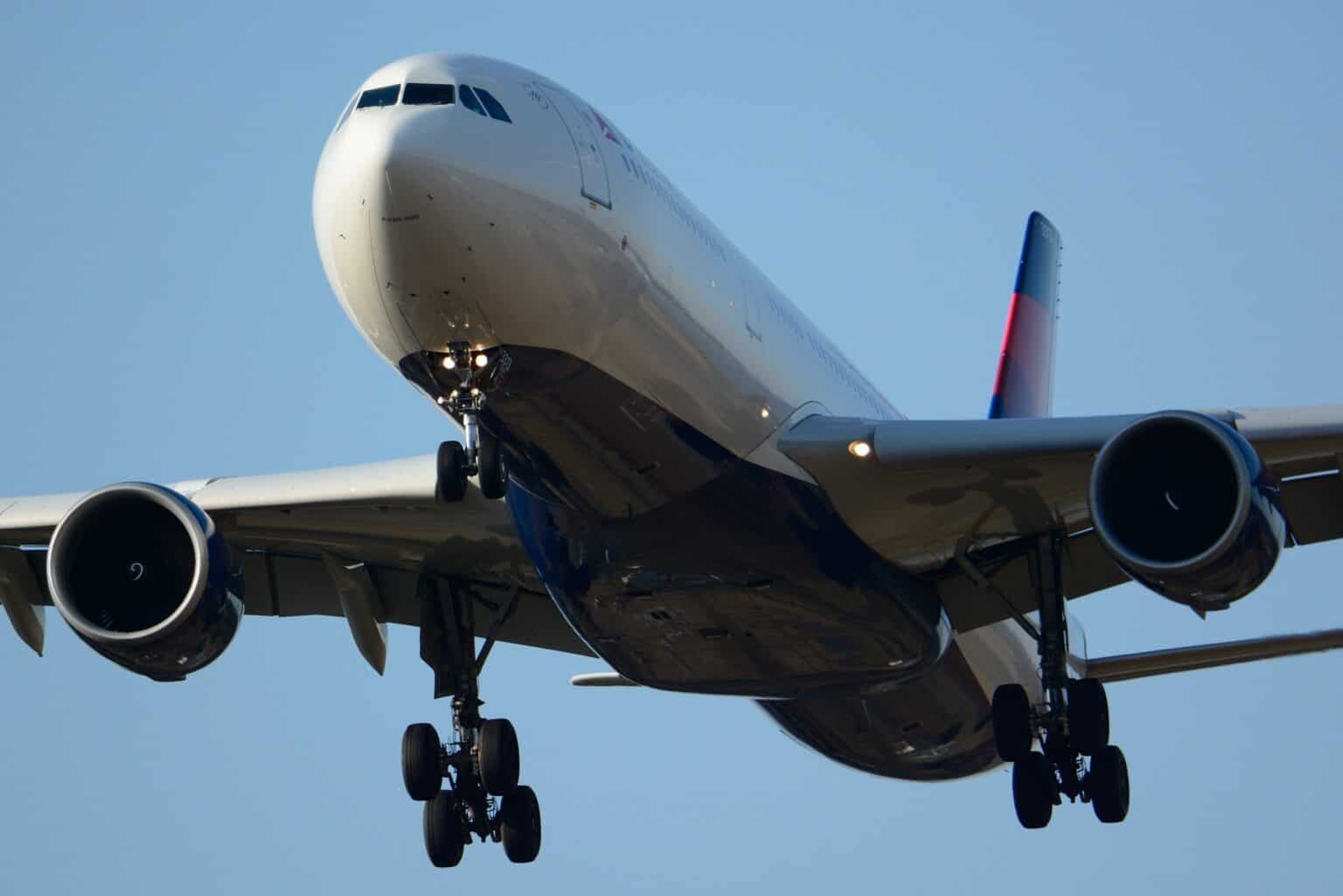
Delta Air Lines flight DL195 from Barcelona to Atlanta returned to Barcelona-El Prat on Friday, September 25, 2026, after its left engine produced bangs and streaks of flame shortly after takeoff. The Airbus A330-300, registered N813NW, landed safely, and airport and civil protection sources told Spain’s EFE news agency that no one was hurt.
Six months earlier, the same jet turned back with a problem in the same engine position. On March 29, flying out of São Paulo, its number one engine failed just after takeoff, an event Brazil’s accident investigators classify as a serious incident.
What happened over Barcelona
The A330 was climbing out of runway 24R when the left engine let out bangs and flames, and the crew stopped the climb at 4,000 feet, according to The Aviation Herald. Air traffic controllers said they saw flames coming from the engine from the tower and that the crew asked to return, Nació Digital reported.
Approach control put the jet in a hold so the pilots could work through their calculations and checks, while departing traffic was kept clear and other arrivals were moved to a different runway. The A330 landed back on runway 24R about 30 minutes after it took off, and the runway stayed blocked until the jet had cleared it.
The aircraft was moved off the runway at about 1:30 p.m. local time, EFE reported. Catalonia’s civil protection agency put its AEROCAT air-emergency plan on alert during the return.
None of the Friday reports AeroCorner reviewed gave the number of people on board or said how passengers would continue to Atlanta. The Aviation Herald said the aircraft was still on the ground at Barcelona-El Prat about six and a half hours after landing.
The cause has not been announced. Some passengers believed a bird had hit the engine, Metrópoli Abierta reported, while Catalan broadcaster 3Cat said a bird strike and an internal engine problem were both being examined.
Why an engine can bang and throw flames
The Aviation Herald logged the event as a compressor stall. The FAA’s crew guidance on turbofan malfunctions calls this a compressor surge, noting that it is sometimes called a stall: an instability in the compressor that lets high-pressure air behind it escape forward out of the inlet, with a bang “similar to an explosion.”
A surge can bring visible flames out of the inlet and the tailpipe, the same guidance says. It also notes that control towers have at times mistaken those flames for an engine fire, and none of the reports on DL195 says whether a fire warning sounded on the flight deck.
The FAA calls surges rare in modern turbofans and lists three possible causes: a worn engine, a swallowed bird or ice, or the last sound of an engine suffering severe damage. The flames seen from the ground therefore say little on their own about how badly the engine is hurt.
A surge can clear itself in a fraction of a second, repeat, or need the crew to pull the thrust back, and some never recover. Whether DL195’s crew shut the engine down has not been reported.
N813NW is an A330-323 in the FAA aircraft registry, the model code for the Pratt & Whitney PW4000-powered A330-300, and it was built in 2006. Some of Delta’s other A330-300s, such as N822NW, are -302s with General Electric CF6-80E1 engines, as was the Delta A330 that diverted to St. John’s with an engine problem in August.
The São Paulo engine failure in March
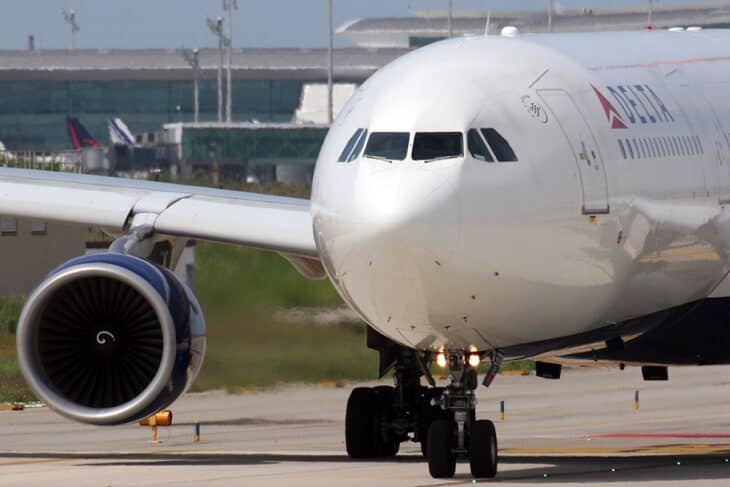
On March 29, N813NW was departing São Paulo-Guarulhos for Atlanta when its number one engine developed technical problems just after takeoff, according to the occurrence record of Brazil’s investigation agency, CENIPA. The crew returned and landed without further trouble, and CENIPA has published a preliminary report and released the aircraft.
That flight, DL104, carried 272 passengers and 14 crew, and cabin video showed flames and sparks trailing the left engine, AeroTime reported. Engine debris fell onto the runway and the grass beside it, starting a small fire, and later photos appeared to show catastrophic damage to the low-pressure turbine, Brazilian outlet AeroIn reported.
Whether the two events are connected is not known. Which engine was fitted to N813NW’s left wing on Friday, and whether it is the unit that failed in March, has not been made public.
Sources and references used for research and fact-checking.
Get the Newsletter
The latest aviation news and stories sent to your inbox.
About the Author

Tim is the owner and lead editor of AeroCorner since 2019, overseeing aviation content covering aircraft, airlines, airports, and the broader aviation industry. Through years of researching, writing, editing, and publishing aviation-focused content, he has developed extensive practical knowledge of commercial aviation and air travel. Based in Asia and a frequent traveler himself, Tim also brings firsthand passenger experience to AeroCorner’s coverage. Outside of publishing, he has also explored aviation firsthand through hands-on flight training in New Zealand.