

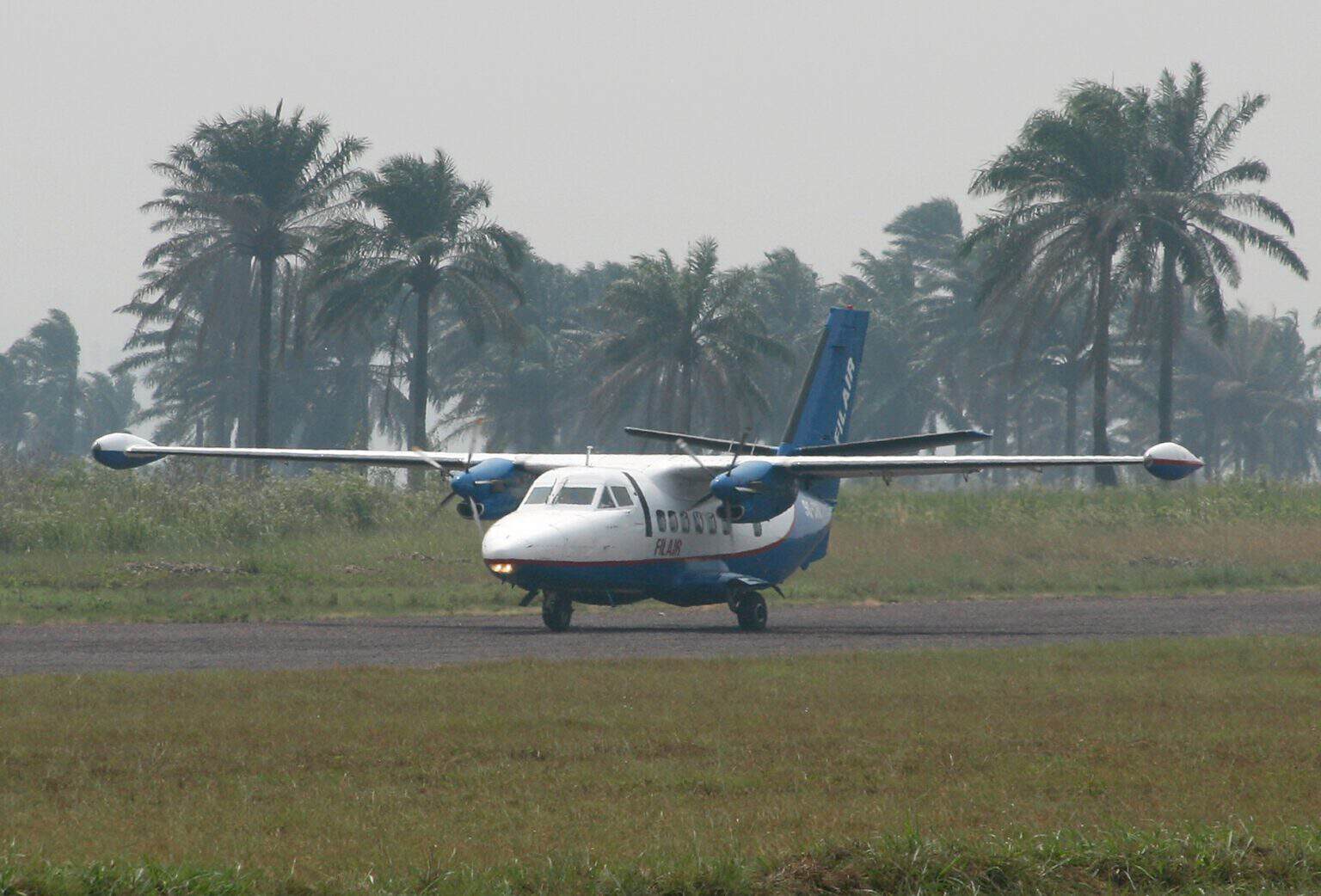
Tracep Congo Aviation Let L-410 9S-GUC crashed in Kenge, the capital of the Democratic Republic of the Congo’s Kwango province, on September 25, 2026, after the crew tried to put down there with a technical problem. The aircraft was flying from Kikwit to Kinshasa, and no one on board survived.
Among the dead were two of the most senior figures in Congo’s military justice system: Lieutenant General Lucien-René Likulia Bakumi, auditor general of the armed forces (FARDC), and Lieutenant General Joseph Mutombo Katalayi Tiende, first president of the High Military Court.
What happened over Kenge
Kenge’s mayor, Noël Kuketuka Mbemba, told Radio Okapi that the aircraft left Kikwit at 1:50 p.m. and came down in Kenge at about 2:05 p.m. local time. Kwango’s vice-governor, Rémy Saki, said the pilot circled the town several times looking for somewhere to land before the aircraft hit a residential plot in the Manzao area.
A fire followed the impact. Provincial authorities told Radio Okapi that no one in the plot where the aircraft fell was hurt.
There was nowhere suitable to land. The Aviation Herald reports that the Kenge aerodrome fell out of use in 2023 and that streets and houses have since been built over the former runway, citing satellite imagery.
What the technical problem was, and why the crew chose Kenge over continuing toward Kinshasa, has not been established. The vice-governor told Actualite.cd he had no information on either question.
Why the death toll has moved
Saki first gave a toll of 13, based on the flight manifest. Later that day he revised it to 17: 13 military personnel, including the two generals, and four civilians, one of them a child, according to Actualite.cd.
A third figure also circulated. Flight data posted on X by Tryphon Kin-Kiey Mulumba, board chairman of the national airports authority RVA, showed 16 people aboard, including four crew, and said the flight had not been coordinated by Kikwit airport.
In a statement, the FARDC confirmed the deaths of two general officers, members of their delegation and the crew, who were returning from an official mission in Kikwit. Twelve of the bodies were burned, the vice-governor said in his first account, according to AlerteNews.
Still unconfirmed
The number of people on board (13, 16 or 17 in official and semi-official counts), the nature of the technical problem, and why the crew diverted to a disused airfield are all unresolved. The flight recorder had not been recovered on the evening of September 25, according to provincial authorities.
A 43-year-old airframe and Tracep’s second L-410 loss in two months
According to the Aviation Safety Network, 9S-GUC was an L-410UVP, serial number 831110, built in 1983. ASN’s history shows it flying in Congo earlier as 9Q-CUC for Goma Express.
It is the operator’s second fatal L-410 accident in two months.
On July 24, 2026, Tracep’s L-410UVP-E 7Q-GMR lost contact about 10 minutes after leaving Beni on a cargo flight, after the crew reported losing power on one engine, and crashed into forest near Buruko in Walikale territory. The co-pilot was killed; the pilot and a mechanic survived, ASN’s record shows.
The L-410 Turbolet is a Czech twin turboprop from Let Kunovice, now Aircraft Industries, in service since 1970, with more than 1,200 built by 2016. It can operate from short and unpaved strips, one reason turboprops are still used on routes jets cannot serve, and the UVP version seats about 15 passengers.
What the EU air safety list says about Congo
Tracep Congo Aviation is named on the European Union’s Air Safety List, in the version dated June 9, 2026, which bans it from flying to, from or over the EU. The ban is country-wide: it covers every carrier certified by the DRC’s aviation authorities, including Serve Air Cargo, whose 737 had its right main gear collapse on takeoff at Kindu on September 17.
The European Commission applies a country-wide listing when a state’s aviation authority is shown to be unable to meet its international safety oversight obligations. The judgment falls on the regulator as well as on the airlines it certifies.
The Kenge crash follows a DC-8 runway excursion at Kinshasa on September 8 and the Kindu gear collapse, both involving Congolese-certified operators.
The investigation
The DRC’s accident investigation bureau, the BPEA, sent investigators to Kenge on the day of the crash, Netic News reported from a BPEA statement that named Tracep Congo Aviation as the operator and barred anyone from moving wreckage. The provincial government separately ordered security and technical services to secure the wreckage, preserve evidence and help identify the victims.
A helicopter from Kinshasa reached Kenge by that evening, and the air force was sent to help recover the bodies. At the time of writing on September 26, no cause had been given.
Sources and references used for research and fact-checking.
Get the Newsletter
The latest aviation news and stories sent to your inbox.
About the Author

Tim is the owner and lead editor of AeroCorner since 2019, overseeing aviation content covering aircraft, airlines, airports, and the broader aviation industry. Through years of researching, writing, editing, and publishing aviation-focused content, he has developed extensive practical knowledge of commercial aviation and air travel. Based in Asia and a frequent traveler himself, Tim also brings firsthand passenger experience to AeroCorner’s coverage. Outside of publishing, he has also explored aviation firsthand through hands-on flight training in New Zealand.