

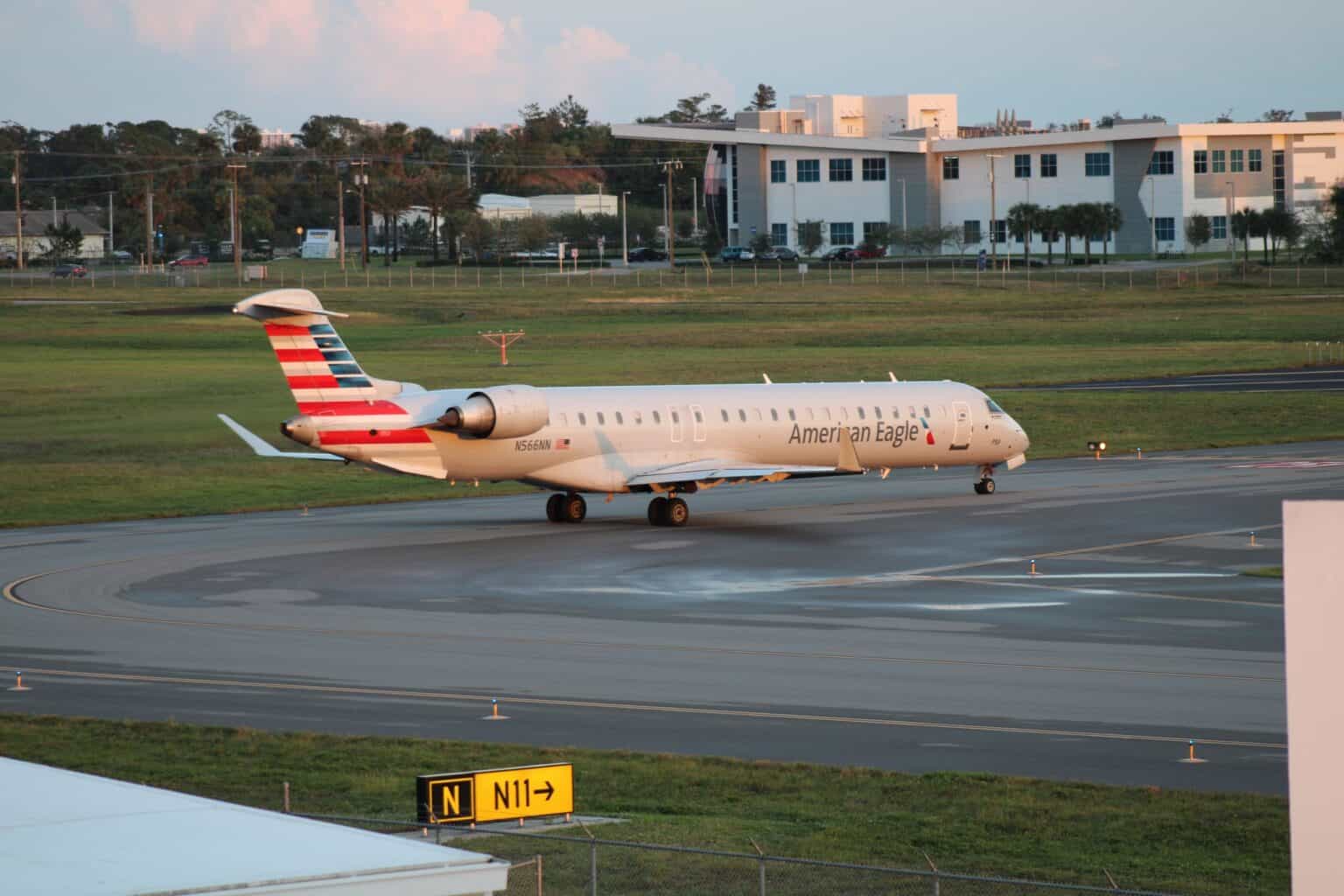
American Eagle flight AA5206 from Baton Rouge landed safely at Ronald Reagan Washington National Airport on Tuesday morning, November 17, 2026, after the pilot reported a problem with the nose landing gear. The FAA said the incident happened around 9:45 a.m. local time and that it is investigating.
The aircraft was a Bombardier CRJ-900 regional jet that had departed Baton Rouge Metropolitan Airport in Louisiana, according to the FAA’s statement. The agency referred further questions to the airline.
What happened on the approach
The crew got an unsafe indication for the nose gear while approaching runway 01, The Aviation Herald reported. They continued the approach rather than breaking it off.
On short final, according to the same report, the tower told the crew that the main gear and the nose gear both appeared to be down. The jet landed without further trouble and taxied to the apron.
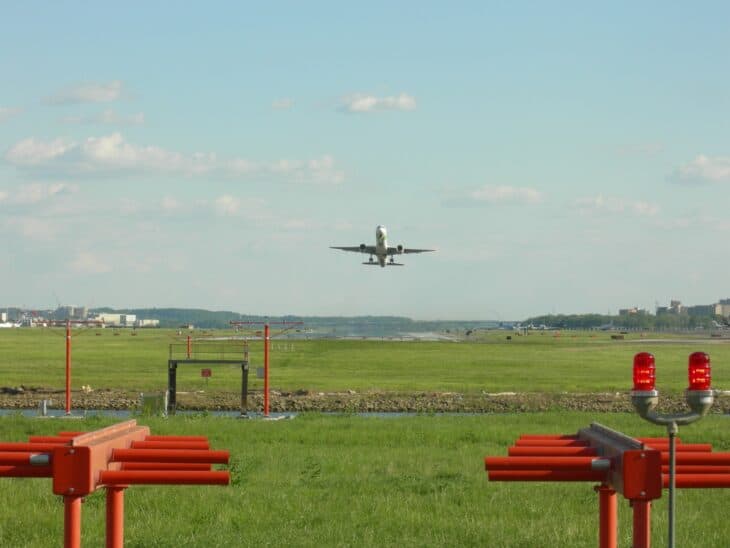

Tracking data from FlightAware show the flight operating as PSA Airlines 5206. It left the gate in Baton Rouge at 6:17 a.m. Central time and reached gate E49 at Reagan National at 9:54 a.m. Eastern.
The Aviation Herald identified the jet as N566NN. The FAA aircraft registry lists that tail as a 2015 Bombardier CRJ900 (model CL-600-2D24) registered to American Airlines.
What an unsafe gear indication means
An unsafe indication means the cockpit display could not confirm that a gear leg was down and locked. On its own, it does not show whether the gear or the indication is at fault.
That is why a visual check from the tower is useful. Controllers can see whether a leg is extended, but not whether it is mechanically locked, so a sighting reassures without settling the question.
Airline crews work through the manufacturer’s checklist for their specific type. The FAA’s Airplane Flying Handbook stresses that its own emergency guidance is generic and that the manufacturer’s procedures take precedence.
The handbook’s advice shows what is at stake when a gear leg will not respond to the normal or alternate extension methods. It tells pilots to pick an airport with crash and rescue services and not to hesitate to ask for emergency equipment to stand by.
For a landing with the nose wheel retracted, the handbook says to hold the nose off the runway as long as possible, then let it settle slowly, and to avoid braking unless needed to miss an obstacle. None of that was needed on AA5206.
What is still unknown
The FAA statement does not say how many people were on board or whether anyone was hurt, and AeroCorner found no statement from American Airlines or PSA at the time of writing. The cause of the indication has not been published.
It is also not known whether the indication came from a gear problem or a sensor fault, or when the jet returned to service.
A busy month for American’s regional fleet
AA5206 is the latest in a run of American Eagle incidents this month. On November 14, passengers on PSA flight AA5230, another CRJ900, were evacuated at Dallas Fort Worth after the crew reported smoke in the cockpit before takeoff.
A week earlier, an Envoy Air Embraer E175 flying as AA3618 lost a nose wheel while turning off the runway at Miami.
PSA is also the operator of flight 5342, the CRJ700 that collided with an Army Black Hawk helicopter near Reagan National on January 29, 2025. According to the NTSB, all 64 people on the jet and the 3 crew members on the helicopter were killed.
That crash still shapes US aviation safety policy, most recently through the ADS-B In deal in Congress. Tuesday’s landing was a far smaller event, and the FAA’s investigation will establish what the gear indication was.
Sources and references used for research and fact-checking.
- FAA, Statements on Accidents and Incidents (American Eagle Flight 5206, Washington, D.C., Nov. 17, 2026)
- FAA, Aircraft Registry: N566NN
- FAA, Airplane Flying Handbook (FAA-H-8083-3C), Chapter 18: Emergency Procedures
- NTSB, Midair Collision PSA Airlines Bombardier CRJ700 Airplane and Sikorsky UH-60 Military Helicopter (DCA25MA108)
Get the Newsletter
The latest aviation news and stories sent to your inbox.
About the Author

AeroCorner News is the aviation news desk of AeroCorner.com. It covers accidents and incidents, safety rulings, airline and airport disruption, and new aircraft. It works from primary sources such as the NTSB, FAA, EASA and the manufacturers' own announcements.