

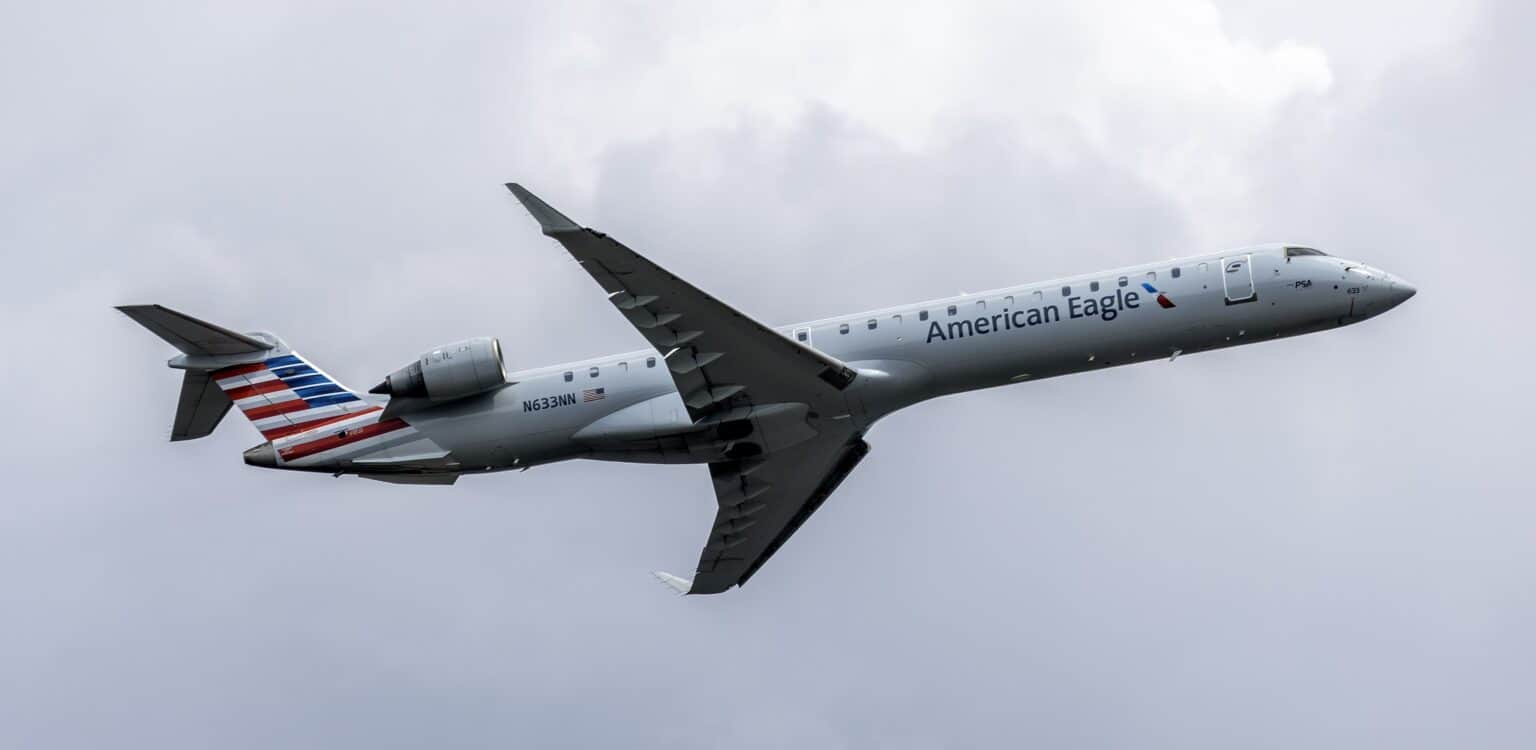
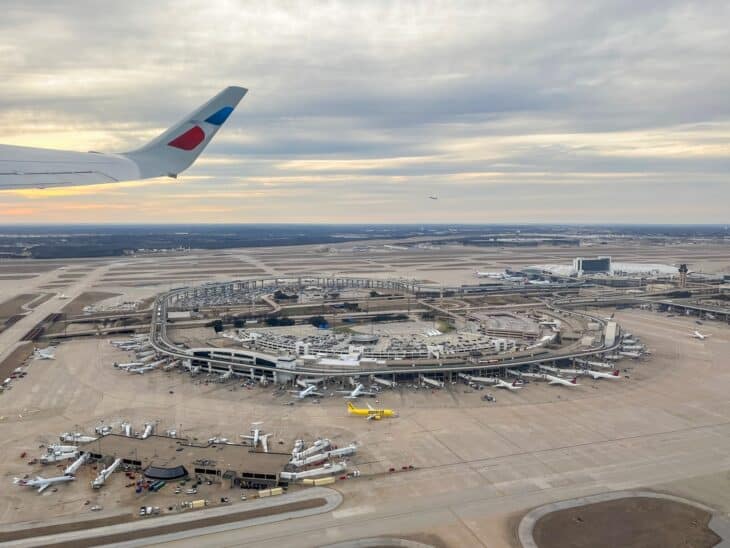
The jet assigned to American Eagle flight AA5230 never got airborne from Dallas Fort Worth on Saturday, November 14, 2026. Its crew reported smoke in the cockpit before departure, and the passengers were evacuated and taken back to the terminal by bus.
The FAA said the crew reported the smoke while on the runway around 2 p.m. local time. The CRJ-900 was bound for General Downing-Peoria International Airport in Illinois, and the agency said it will investigate.
What American and DFW Airport say
American Airlines told CBS Texas that flight 5230, operated by PSA Airlines, had a mechanical issue while taxiing before takeoff. It said 64 passengers and four crew members were on board, and that no injuries were reported.
The airport’s account, also given to CBS Texas, is that the airplane aborted its takeoff. Passengers were then evacuated and carried to the terminal by bus.

American said the Bombardier CRJ900 was taken out of service for inspection by its maintenance team. The flight to Peoria left later on a different aircraft.
Flightradar24 data show AA5230 landing in Peoria at 6:41 p.m. local time, nearly three hours after its scheduled 3:48 p.m. arrival. Its record for the day lists the CRJ900 N633NN, but it does not show whether that is the jet the crew stopped or the replacement.
Three descriptions of where the jet was
The official accounts do not quite line up. The FAA places the jet “on the runway prior to departure,” American says the problem came “while taxiing,” and DFW Airport says the takeoff was aborted.
The difference matters, because an aborted, or rejected, takeoff means the crew had begun the takeoff roll and then stopped, while a jet still taxiing has not started it. None of the statements gives the jet’s speed or says how far it had rolled.
Nobody has said how the passengers got off, either. The statements do not say whether slides or overwing exits were used, or whether people left through the boarding door to the waiting buses.
That gap is familiar. When PSA-operated American Eagle AA5089 was evacuated at St. Louis in October after its pilot reported cockpit fumes, the method came out only through passengers who described jumping from the wing.
Still unknown
What produced the smoke, how far the jet had rolled, how the passengers left it, and which aircraft was involved have not been published. No result from the inspection had been published at the time of writing.
Why the way out matters to investigators
The FAA’s statement names the FAA as the investigating agency and mentions no NTSB role. Whether the NTSB has to be told at all can turn on how the cabin was emptied.
Federal rule 49 CFR 830.5 requires operators to notify the NTSB immediately of certain serious incidents. One of them, for multiengine aircraft above 12,500 pounds (5,670 kg), is an evacuation “in which an emergency egress system is utilized.”
The CRJ900 has a maximum takeoff weight of 84,501 pounds (38,329 kg), well above that threshold. An in-flight fire is also on the list, but this smoke was reported on the ground, so the egress question is the one to watch.
It is not the first smoke or fumes report on PSA’s American Eagle flying this year. In August, a PSA CRJ700 operating AA5501 diverted to Harrisburg after its crew reported smoke in the cockpit and a pressurization problem.
Saturday’s event also came as Dallas Fort Worth International was still digging out from Friday’s nationwide FAA ground stop. CBS Texas noted lingering delays at DFW, but nothing on record links the ground stop to the smoke.
FAA Administrator Bryan Bedford said on Saturday that the US schedule should be back to normal by the end of Sunday. For the 64 passengers on AA5230, the disruption came from the jet itself.
Sources and references used for research and fact-checking.
Get the Newsletter
The latest aviation news and stories sent to your inbox.
About the Author

AeroCorner News is the aviation news desk of AeroCorner.com. It covers accidents and incidents, safety rulings, airline and airport disruption, and new aircraft. It works from primary sources such as the NTSB, FAA, EASA and the manufacturers' own announcements.