

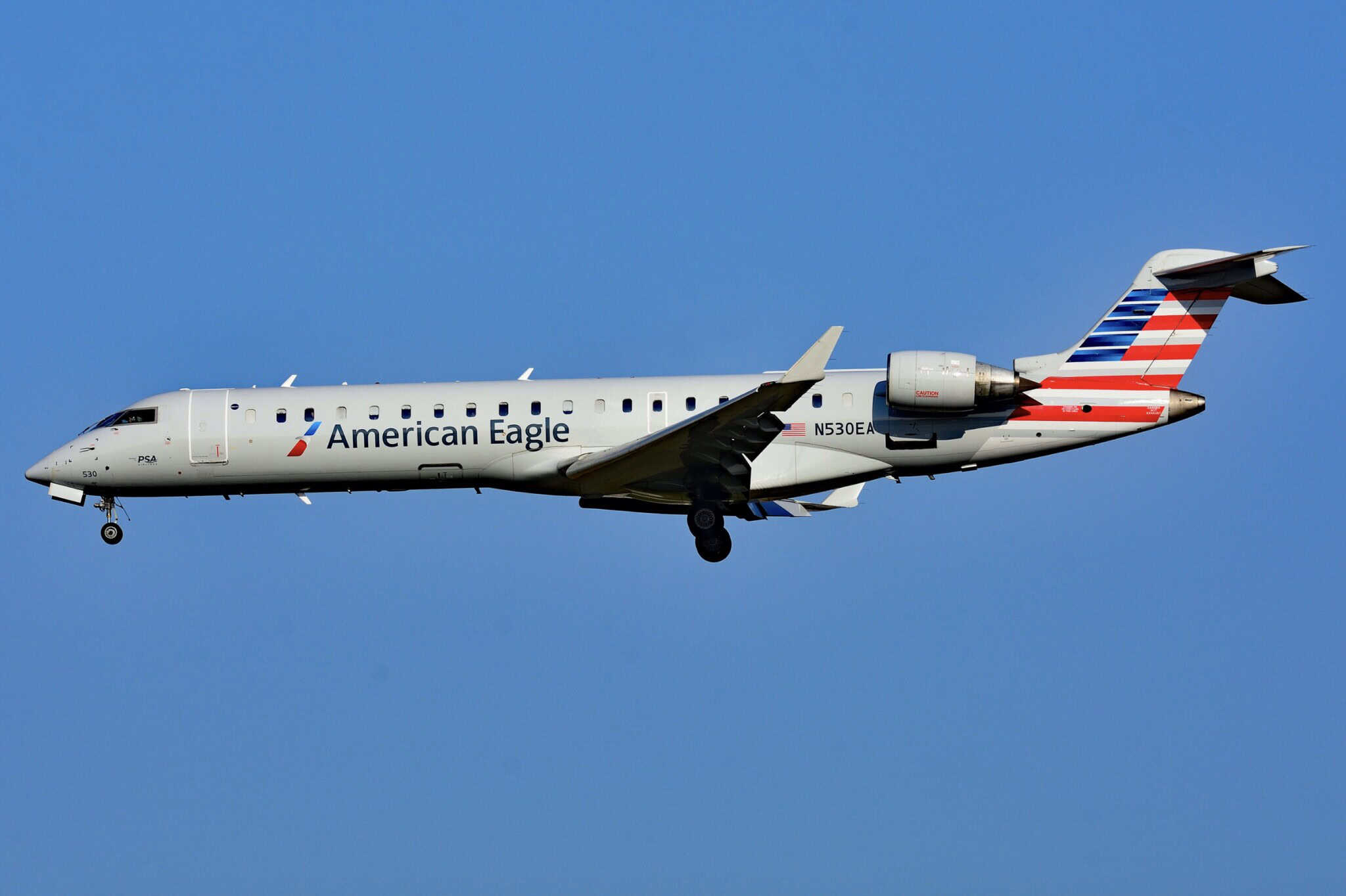
On the night of August 17, 2026, an American Eagle flight operated by PSA Airlines declared an emergency and diverted to Harrisburg, Pennsylvania, after the crew reported smoke in the cockpit and a pressurization problem.
A Fast Descent Out of Cruise Altitude
Flight AA5501, a Bombardier CRJ-700 registered N530EA, had just left Washington Reagan National Airport for Albany, New York, with 63 passengers and 4 crew aboard.
Climbing through roughly 24,000 feet, the crew reported smoke in the cockpit along with the pressurization trouble and requested an emergency descent. The FAA said the aircraft “declared an emergency due to pressurization and smoke in the cockpit,” a statement first carried by Aviation Herald.
The crew leveled off around 10,000 feet and diverted to Harrisburg International Airport, landing safely on runway 31 about 35 minutes after the emergency began, close to 9:45 p.m. local time.
Why 10,000 feet
Below 10,000 feet, cabin and outside air both carry enough oxygen to breathe without a mask, so crews handling smoke or a pressurization fault descend there fast, well before landing is even in sight.
No Injuries, but a Long Night for Passengers
Firefighters were staged before the jet touched down, but no injuries were reported. Passengers left the aircraft onto the taxiway and were bused to the terminal, according to Local21News.
Harrisburg International’s runway closed for about an hour while crews cleared the jet. A replacement CRJ-900 eventually carried the stranded passengers on to Albany, arriving more than 16 hours behind schedule.
It is at least the second time this summer American’s system has diverted over a suspected smoke event, after a 737 turned back to Houston in late July for reported engine smoke.
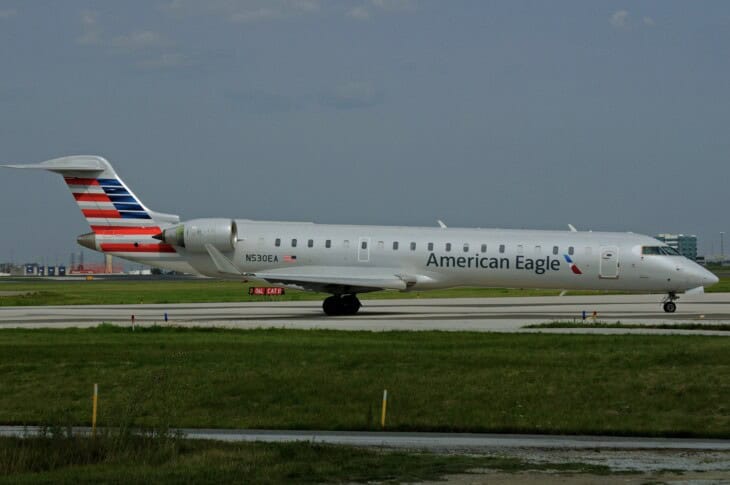
American Eagle is the regional brand American Airlines uses for shorter routes flown by contracted carriers like PSA, and the CRJ-700 is one of the smaller jets in that fleet, seating around 65 passengers in a single class.
What Usually Causes Smoke Like This
Regional jets like the CRJ-700 pressurize the cabin using hot compressed air bled from the engines, a system explained in AeroCorner’s guide to why airplanes are pressurized. A fault in that bleed air path, an overheating duct, or a failing pack, is one of the most common sources of a smoke smell reported near a pressurization fault.
Crews are trained to treat any smoke report as a fire until proven otherwise, running a checklist that isolates suspect systems, dons oxygen masks, and gets the aircraft down and on the ground quickly. That is exactly the sequence flight AA5501’s crew appears to have followed.
Smoke and fume events like this one are reported to the FAA several times a week across the US airline fleet. The vast majority end the same way this one did, with an uneventful landing and no fire ever found, but crews cannot know that in the moment.
Cause not yet confirmed
Neither the FAA nor American Airlines has said what triggered the smoke and pressurization warning. The aircraft remained on the ground in Harrisburg after the diversion.
Get the Newsletter
The latest aviation news and stories sent to your inbox.
About the Author

Tim is the owner and lead editor of AeroCorner since 2019, overseeing aviation content covering aircraft, airlines, airports, and the broader aviation industry. Through years of researching, writing, editing, and publishing aviation-focused content, he has developed extensive practical knowledge of commercial aviation and air travel. Based in Asia and a frequent traveler himself, Tim also brings firsthand passenger experience to AeroCorner’s coverage. Outside of publishing, he has also explored aviation firsthand through hands-on flight training in New Zealand.