Light Passenger Jets
Bombardier CRJ 705
ICAO: CRJ9
Bombardier's 70-seat stretch of the CRJ, still a US regional mainstay.
Updated: by Tim de Vries

The latest aviation news and stories sent to your inbox.
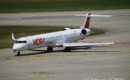
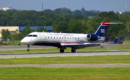
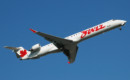
The Bombardier CRJ700, also listed as the Canadair Regional Jet 700, is a four-abreast regional jet that seats 68 to 78 passengers. A stretched development of the 50-seat CRJ200, it entered service in 2001, and 330 were delivered before production ended in 2020. It still flies for American Eagle, Delta Connection and United Express.
Live Fleet Activity (CRJ7)
Fetching live data…


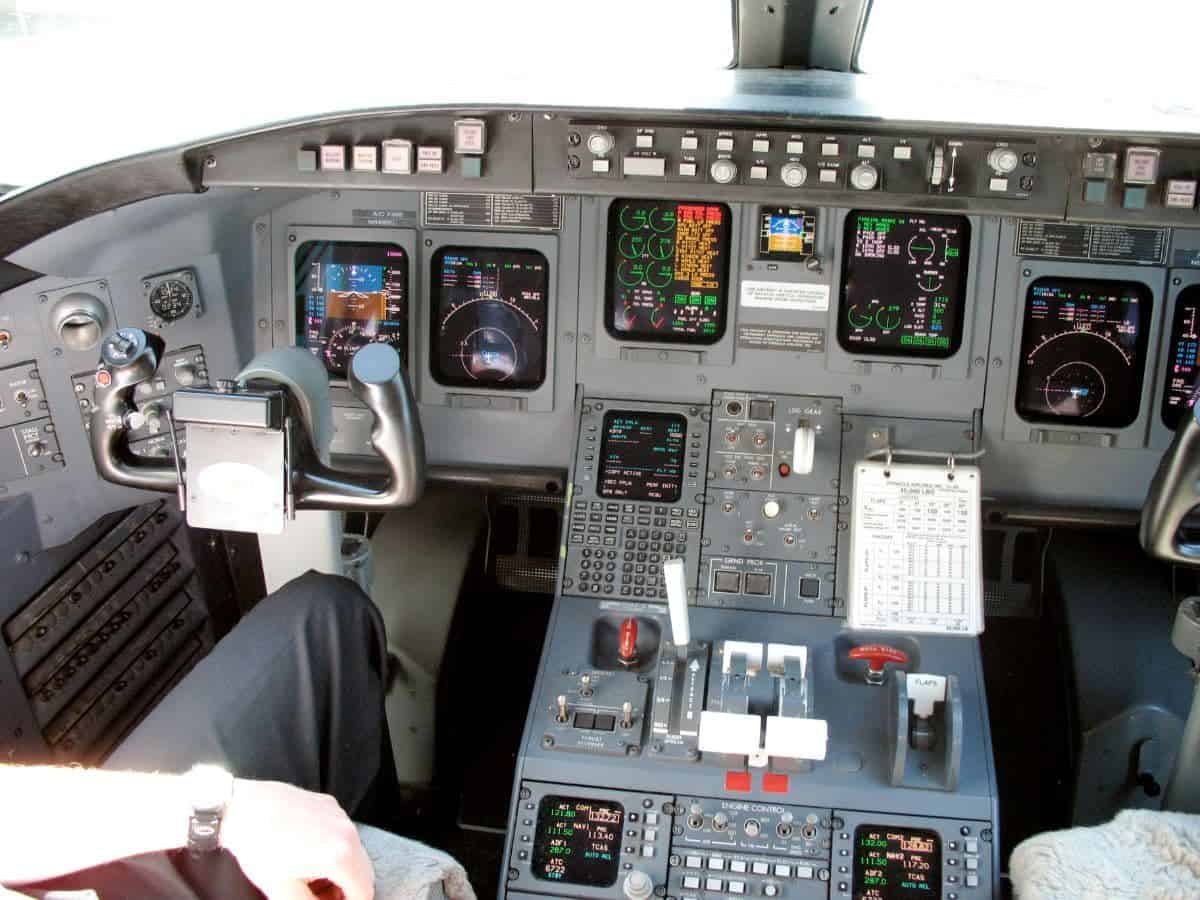

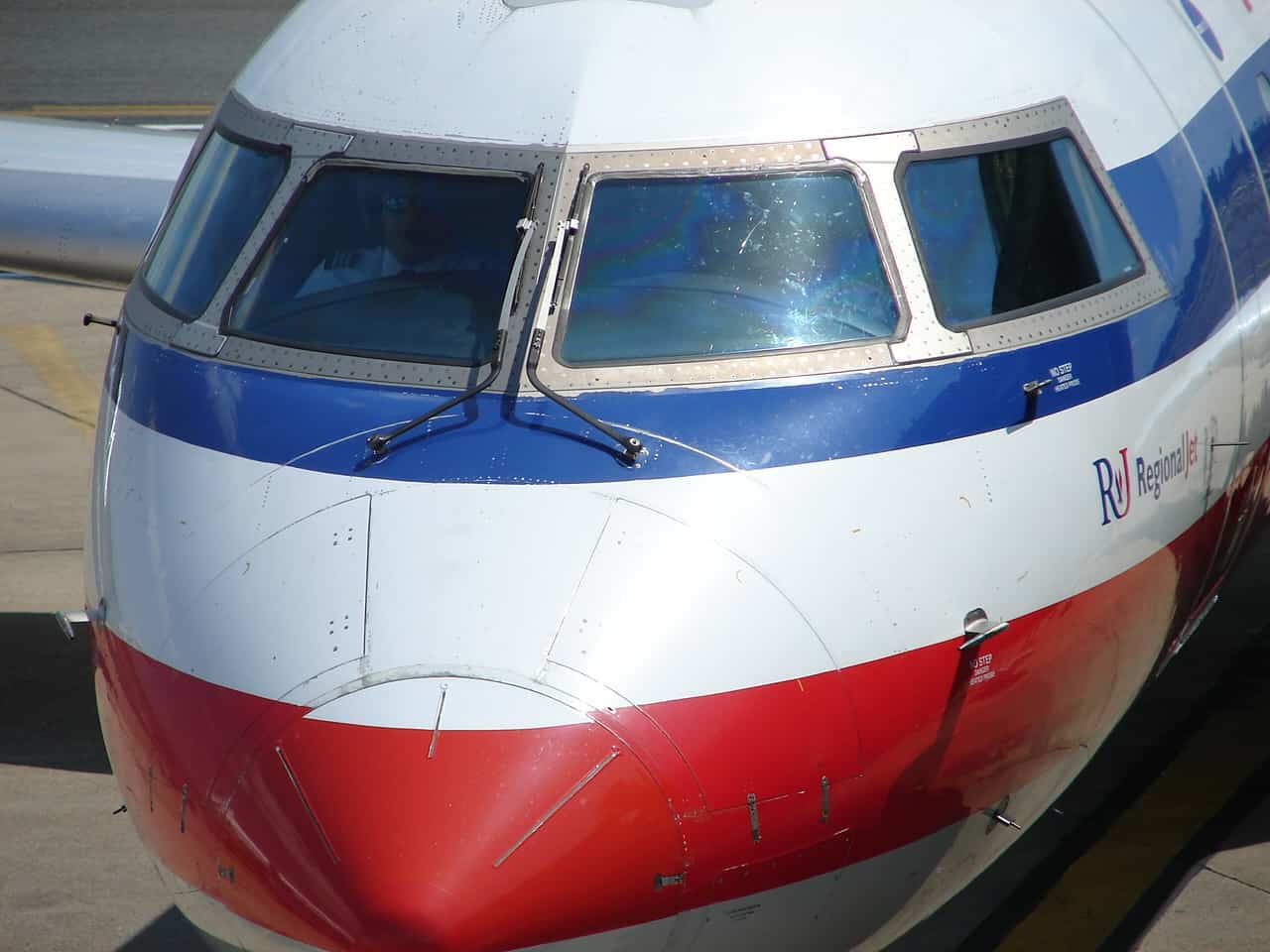

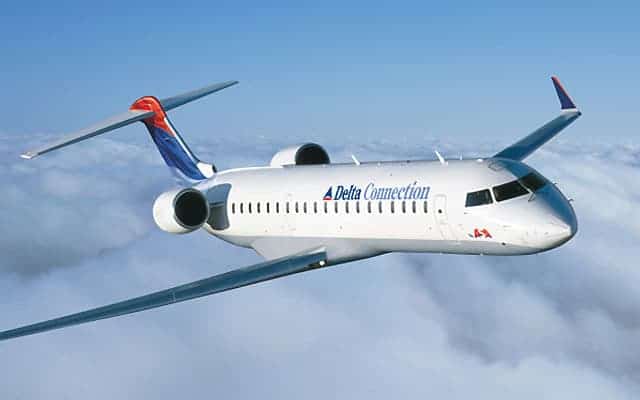


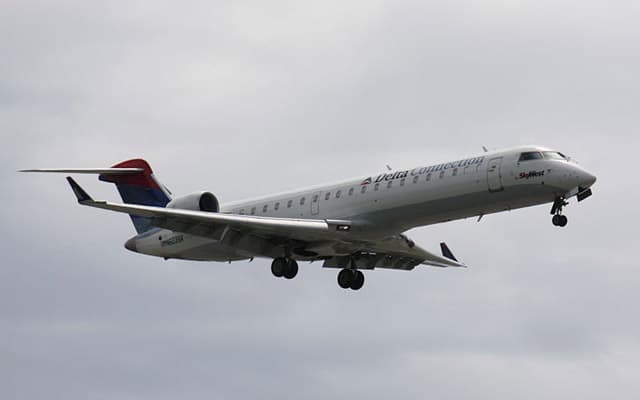
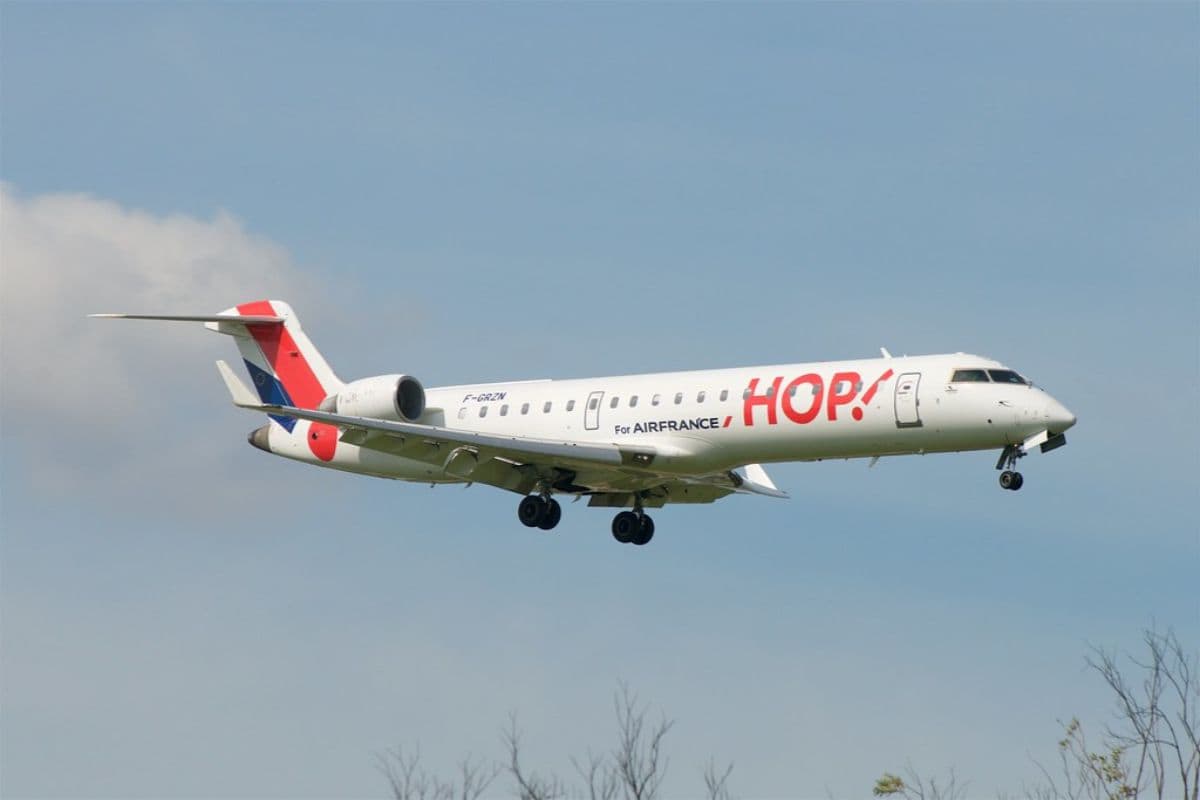
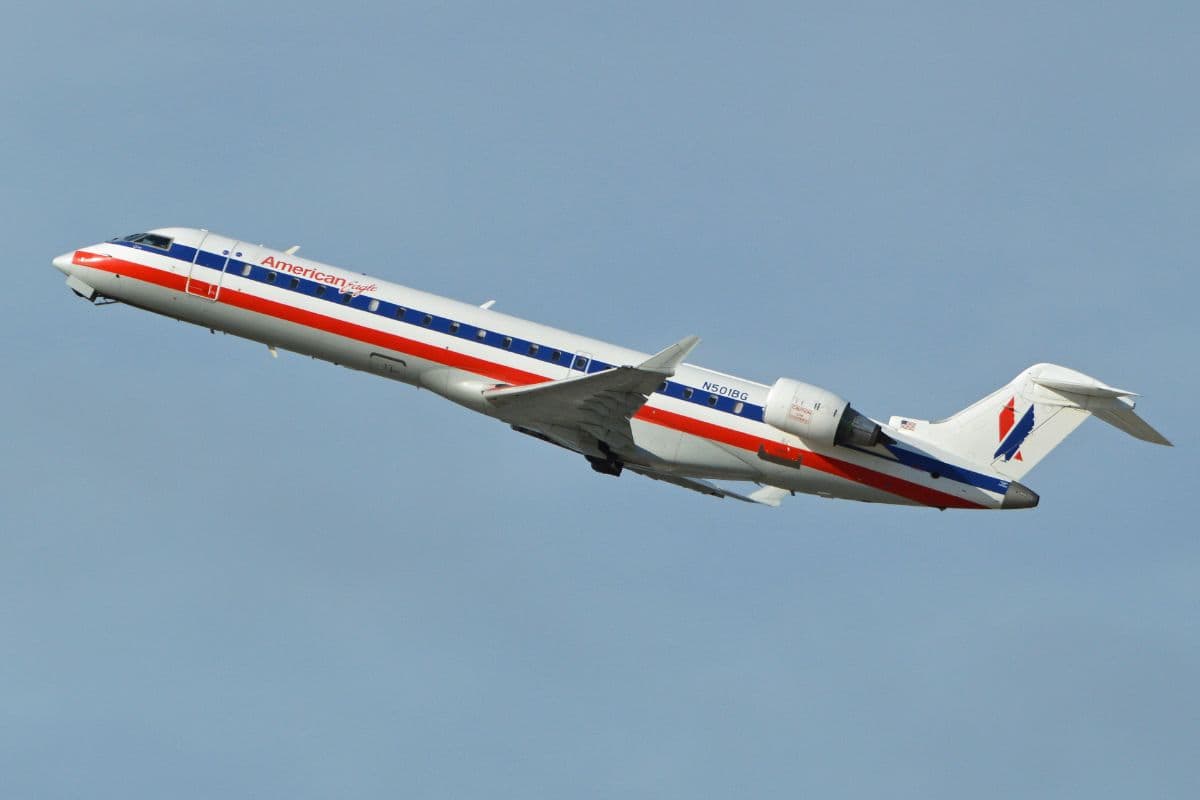
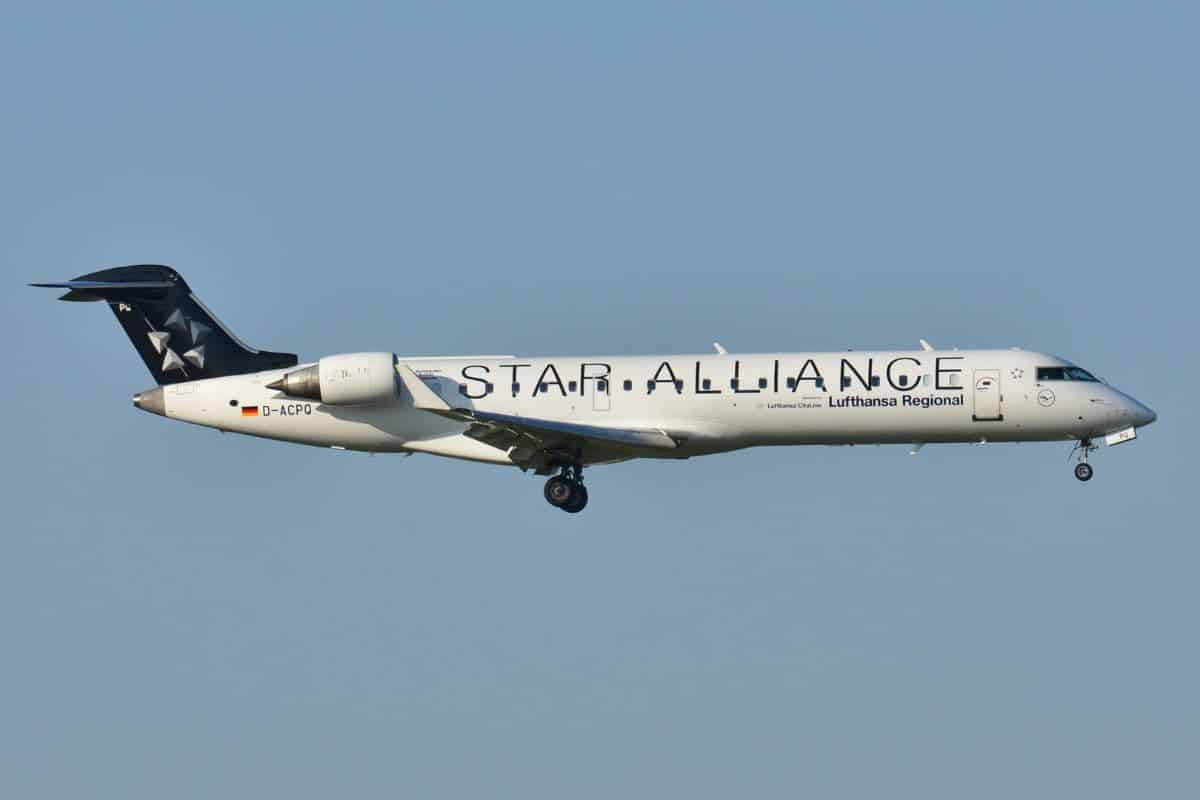
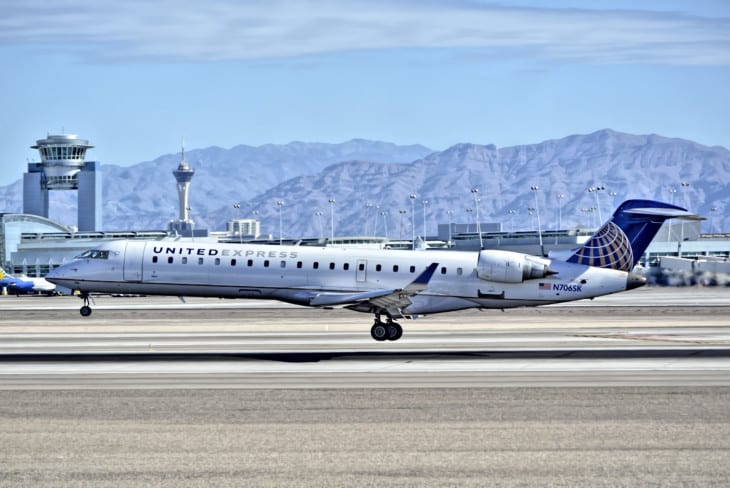
The Bombardier CRJ700 is a twin-engine regional jet that seats 68 to 78 passengers four abreast, and it is also listed as the Canadair Regional Jet 700 or Canadair RJ-700. It is a stretched, re-winged development of the 50-seat Bombardier CRJ200, built for short and medium regional routes.
The first CRJ700 flew on May 27, 1999, and Brit Air put the type into service in 2001. Bombardier delivered 330 before production ended in 2020, and the jet still flies under the American Eagle, Delta Connection and United Express brands.
The CRJ family began at Canadair, which started studying a 50-seat regional jet in 1986 and later ran the program as part of Bombardier. That is why databases such as EUROCONTROL’s still list this aircraft as the Canadair RJ-700 Regional Jet.
On its type certificates the aircraft is the CL-600-2C10, a model number in the same CL-600 series as the CL-600-2B19 of the original 50-seat CRJ. “CRJ700” is the marketing name.
Mitsubishi Heavy Industries bought the CRJ program in 2020, including its type certificate. That is why newer documents, including the NTSB’s, call the aircraft a Mitsubishi or MHI RJ CRJ700.
Bombardier began work on larger CRJ variants in the mid-1990s under the name CRJ-X. The target was a jet of about 70 seats to take on the Fokker 70, the Fokker 100 and the British Aerospace 146.
The CRJ-X kept a common type rating with the CRJ100 and CRJ200 but little of their structure. It got a stretched, slightly widened fuselage with a lowered floor, a new wing with leading-edge slats and more powerful General Electric CF34-8C engines, and only about 15% of the CRJ200 airframe carried over.
Bombardier formally launched the program in January 1997 and set up a new final assembly line at Montréal-Mirabel International Airport, because the CRJ100/200 line lacked the capacity. The first CRJ700 flew on May 27, 1999.
By then Bombardier had invested C$650 million (US$440 million) in the 70-seat jet, which it listed at $24 million to $25 million. In April 2000 Delta Air Lines ordered 500 CRJ700s and CRJ200s, with options on 406 more, in a deal valued at US$10 billion.
Transport Canada certified the 68- and 70-seat versions on December 22, 2000, and European validation followed in January 2001. Brit Air, a regional subsidiary of Air France-KLM, put the CRJ700 into service in 2001, and the 78-seat Series 702 was certified in January 2005.
Bombardier kept refining it. A NextGen package reached the CRJ700 in 2008 with SkyWest Airlines as launch customer, and the 2016 Atmosphere cabin brought larger overhead bins, bigger windows set higher in the fuselage and longer maintenance intervals across the CRJ series.
In June 2019 Bombardier agreed to sell the program to Mitsubishi Heavy Industries, and the deal closed on June 1, 2020. Bombardier kept building CRJs on Mitsubishi’s behalf until it had filled every existing order in December 2020.
Every CRJ700 is a CL-600-2C10 on paper, and the number after “CRJ” sets the certified seat limit. The Series 700 is certified for up to 68 passengers, the Series 701 for 70 and the Series 702 for 78, each plus five crew members.
Each came in a standard version and an ER (Extended Range) version. The ER raises the maximum takeoff weight by 2,250 lb (1,020 kg), which buys more range.
The CRJ701ER is the 70-seat model at the higher weight. The aircraft lost in American Eagle Flight 5342 in January 2025 was a CRJ701ER.
The CRJ550 is a CRJ700 converted to 50 seats in three classes, with its maximum takeoff weight cut to 65,000 lb (29,484 kg). It was launched in 2019 for United Express to fit United’s pilot-contract scope clauses, which limit the jets regional partners may fly.
Bombardier also marketed a business-jet version of the CRJ700 as the Challenger 870.
The cabin is four abreast, with two seats on each side of the aisle in economy and no middle seat. First class, where fitted, is three abreast, with a single seat on one side of the aisle.
Seat counts depend on the airline. Delta Connection CRJ700s carry 65 or 69 seats, both with nine in First Class, while United Express lists 70 seats: 6 in United First, 16 in Economy Plus and 48 in Economy.
American Eagle CRJ700s flown by PSA Airlines have 65 seats, nine in First and 56 in the main cabin, including extra-legroom Main Cabin Extra rows.
Delta lists a First Class seat 19.6 in wide with 36 in of pitch, and a Main Cabin seat 17.3 in wide with 30 to 31 in of pitch. Delta lists Wi-Fi and USB power in every cabin class of its CRJ700s, while United’s aircraft page listed no Wi-Fi, power outlets or USB ports on its CRJ700s in September 2026.
Overhead storage is the cabin’s weak point. Bombardier’s airport planning manual gives 114 cu ft (3.23 m³) of overhead bin volume for the whole cabin, less than the 126 cu ft (3.57 m³) under the seats, and the CRJ550 conversion adds floor-standing closets for carry-on bags to compensate.
There is a lavatory on board. Endeavor Air lists one per aircraft, and Bombardier’s planning manual shows the standard lavatory toward the rear of the cabin, with a forward lavatory as an option.
Two General Electric CF34-8C turbofans are mounted on the rear fuselage below a T-tail, managed by FADEC, a full-authority digital engine control. Early aircraft had the CF34-8C1, and GE says more than 200 CRJ700s were delivered with it before the CF34-8C5B1 took over.
GE describes the CF34-8C5B1 as a derated version of the CF34-8C5 used on the CRJ900 and fully interchangeable with it, which suits airlines that fly both types.
The swept wing carries polished leading-edge slats and canted winglets. Two pilots fly the aircraft from a glass cockpit built on the Rockwell Collins Pro Line 4 avionics suite, with six display screens.
The CRJ700 shares a type rating with the CRJ100 and CRJ200, and with the CRJ900, which pilots can move to after a three-day cross-crew qualification course.
The full specification table for the aircraft is on this page. Its maximum takeoff weight is the higher ER limit from the type certificate, and a standard CRJ700 is certified at 72,750 lb (32,999 kg).
Range follows the same pattern. The 1,985 nautical miles (2,284 miles, 3,676 km) in the table is Bombardier’s figure for the CRJ700ER at Mach 0.74, from its 2005 training manual, which gives 1,685 nm for the standard-weight CRJ700.
Airlines publish their own, lower figures for their configured aircraft. SkyWest lists 1,467 nm (1,693 miles) for its United Express CRJ700s, and Delta quotes 1,730 miles or 1,611 miles depending on the cabin.
The maximum speed row shows 473 kt (544 mph, 876 km/h). That is the CRJ700’s maximum cruise speed of Mach 0.825, not its design limit: the type certificate’s maximum design speed is Mach 0.85. SkyWest gives normal cruise as Mach 0.78, which is the cruise speed row’s 447 kt (514 mph, 828 km/h).
Thrust is listed as 13,790 lbf per engine, the flat-rated takeoff figure with automatic performance reserve that Bombardier publishes. Forecast International rates the CF34-8C5B1 at 12,670 lbf for takeoff, and EUROCONTROL lists both ratings, which is why both numbers circulate.
Published length and height vary by source. Bombardier’s airport planning manual, used for the table, gives 106 ft 1 in (32.3 m) and 24 ft 8 in (7.51 m), while its earlier training manual, SkyWest and EUROCONTROL list 106 ft 8 in (32.51 m) and 24 ft 10 in (7.57 m).
The baggage figure is the underfloor hold: 437.5 cu ft (12.39 m³) aft and 109 cu ft (3.09 m³) forward, per the same planning manual.
The CRJ200 is the 50-seat jet the CRJ700 grew from. The stretch added 18 to 28 seats, a new wing with slats and a forward cargo compartment.
The CRJ900 is a CRJ700 stretched again, with fuselage plugs ahead of and behind the wing, for up to 90 seats. Endeavor Air, the largest CRJ900 operator, also flies the CRJ700 for Delta Connection.
The CRJ1000 stretches the family to 104 seats and has a separate type rating.
The CRJ700 competed directly with the Embraer 170, which typically seats 70. Airlines already flying the CRJ200 could add the CRJ700 without a new pilot type rating.
In the US, the CRJ700 flies under the regional brands of American, Delta and United, operated by regional airlines under contract. SkyWest Airlines is the largest operator of the CRJ700 family and flies it for Delta Connection, American Eagle and United Express.
Endeavor Air flies CRJ700s for Delta Connection, and PSA Airlines flies them for American Eagle.
Part of the fleet is being converted rather than replaced. Every CRJ550 began life as a CRJ700. SkyWest began flying CRJ550s for Delta Connection in July 2024, agreed that October to fly 40 for United Express, and ordered 60 more conversion kits in November 2024.
American Eagle Flight 5342 is the only fatal accident involving a CRJ700 in the family’s accident record. On January 29, 2025, the PSA Airlines jet collided with a U.S. Army Sikorsky UH-60 Black Hawk on approach to Ronald Reagan Washington National Airport.
All 64 people on the airplane and the three crew members on the helicopter died.
In January 2026 the NTSB attributed the collision to systemic failures in airspace design, safety oversight and risk management. The CRJ700’s collision avoidance system worked as designed, but existing altitude limits prevented it from issuing the higher-level alerts called resolution advisories.
The Board added that a collision avoidance system using ADS-B In could have given the crew its first alert about the helicopter 59 seconds before the collision.
Two other widely reported CRJ accidents, at Toronto in February 2025 and at New York LaGuardia in March 2026, involved the larger CRJ900, not the CRJ700.
In 25 years of airline service, the only fatal CRJ700 accident in the type’s accident record is the January 2025 midair collision of American Eagle Flight 5342 with an Army helicopter near Washington. The NTSB traced it to systemic failures in airspace design, safety oversight and risk management, and found that the jet’s collision avoidance system worked as designed.
Yes. Endeavor Air, which flies the type for Delta Connection, lists one lavatory per aircraft, and Bombardier’s planning manual shows the standard lavatory toward the rear of the cabin, with a forward lavatory as an option.
It is a small airliner. It seats 68 to 78 passengers four abreast, and its aisle ceiling is about 6 ft 2 in (1.89 m). It is larger than the 50-seat CRJ200 it was developed from.
It has been in airline service since 2001, and American Eagle, Delta Connection and United Express all still fly it. Bombardier’s 2016 Atmosphere update extended CRJ maintenance intervals to 800 flight hours between A-checks and 8,000 between C-checks, and Mitsubishi still supplies parts to operators.
The CRJ family began at Canadair, which started work on a 50-seat regional jet in 1986, so databases such as EUROCONTROL’s still list this aircraft as the Canadair RJ-700 Regional Jet. Bombardier sold the program to Mitsubishi Heavy Industries in 2020, so newer documents may call it a Mitsubishi or MHI RJ CRJ700.
The type certificate allows up to 68 on the Series 700, 70 on the Series 701 and 78 on the Series 702. US airlines fly them with 65 to 70 seats in two or three cabins: 65 or 69 at Delta Connection, 65 on PSA’s American Eagle jets and 70 at United Express.
CR7 is the three-character aircraft code airlines use for the CRJ700 on seat maps and aircraft pages. United, for example, lists it as the Bombardier CRJ 700 (CR7). Flight plans use the four-character ICAO designator, CRJ7.
It is the 70-passenger Series 701 CRJ700 at the optional higher takeoff weight of 75,000 lb (34,000 kg), which gives it more range. Since Mitsubishi Heavy Industries took over the program, the model can appear as a Mitsubishi or MHI RJ CRJ-701ER, and the aircraft in American Eagle Flight 5342 was one.
No. Bombardier sold the CRJ program to Mitsubishi Heavy Industries in 2020 and finished building CRJs in December 2020. Mitsubishi supports the existing fleet with parts and has announced no plans to build new CRJs.
The CRJ900 is a stretched CRJ700, lengthened with fuselage plugs ahead of and behind the wing to seat up to 90 passengers against the CRJ700’s 78. The two share a pilot type rating, and a CRJ700 pilot can move across with a three-day cross-crew qualification course.
Forecast International put the CRJ700’s price at $43.5 million in its 2021 report, up from a list price of $24 million to $25 million in 1999. No new CRJ700 has been built since 2020, so any CRJ700 bought today is a used aircraft.
Yes, on US regional flights. Delta Connection, American Eagle and United Express CRJ700s all have a first-class cabin at the front, with nine seats at Delta and on PSA’s American Eagle jets and six at United, typically three abreast.
Sources and references used for research and fact-checking.