
Light Passenger Jets
Bombardier CRJ 705
ICAO: CRJ9
The largest CRJ built for high-capacity regional service
The latest aviation news and stories sent to your inbox.
The Bombardier CRJ 1000 was developed to extend the CRJ family into the 100-seat category. Designed to offer greater capacity while preserving the efficiency and cockpit commonality of earlier models, it became the final and most capable member of the long-running CRJ regional jet series. Its introduction allowed airlines to increase revenue potential without stepping into full narrowbody territory.
Live Fleet Activity (CRJX)
Fetching live data…



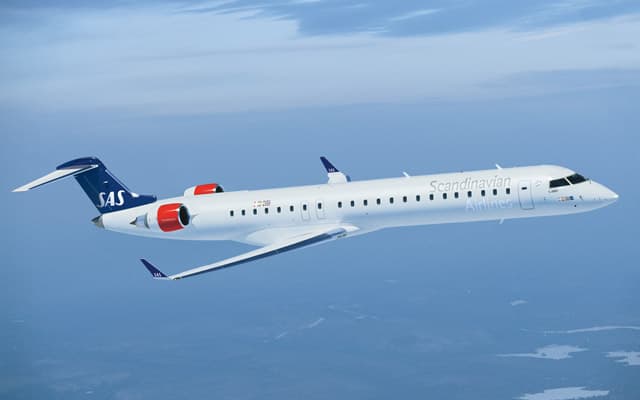
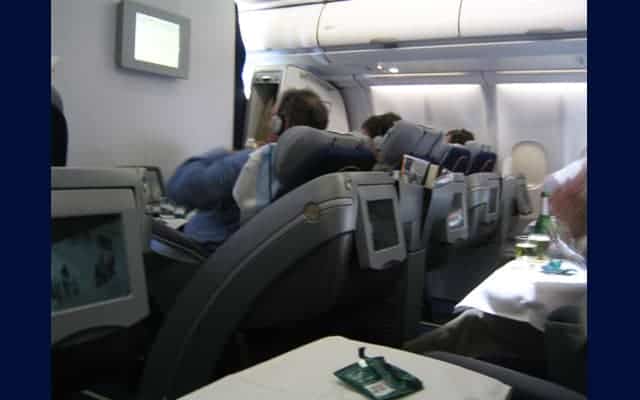
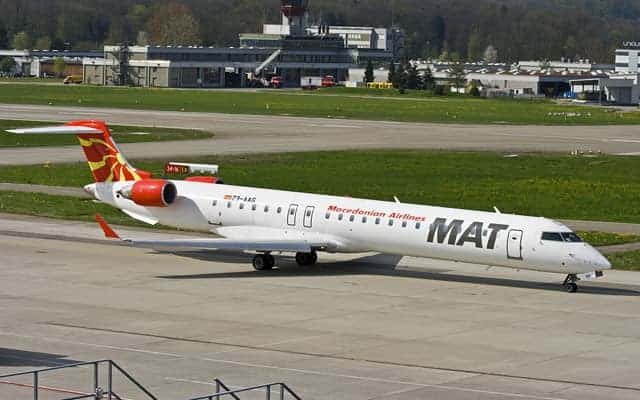

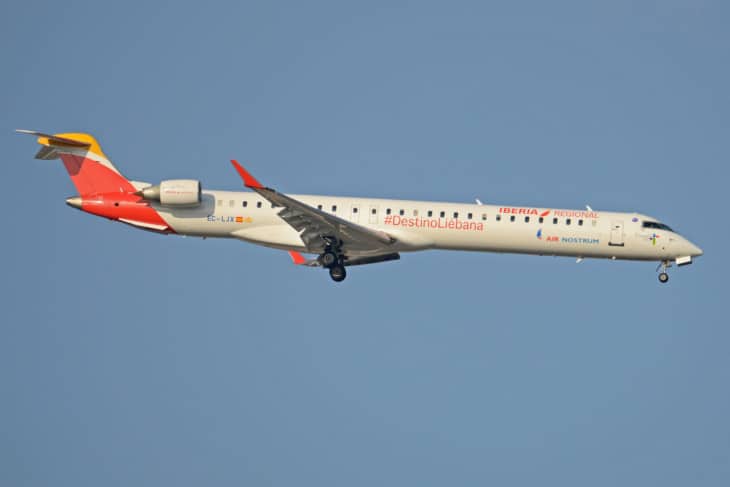
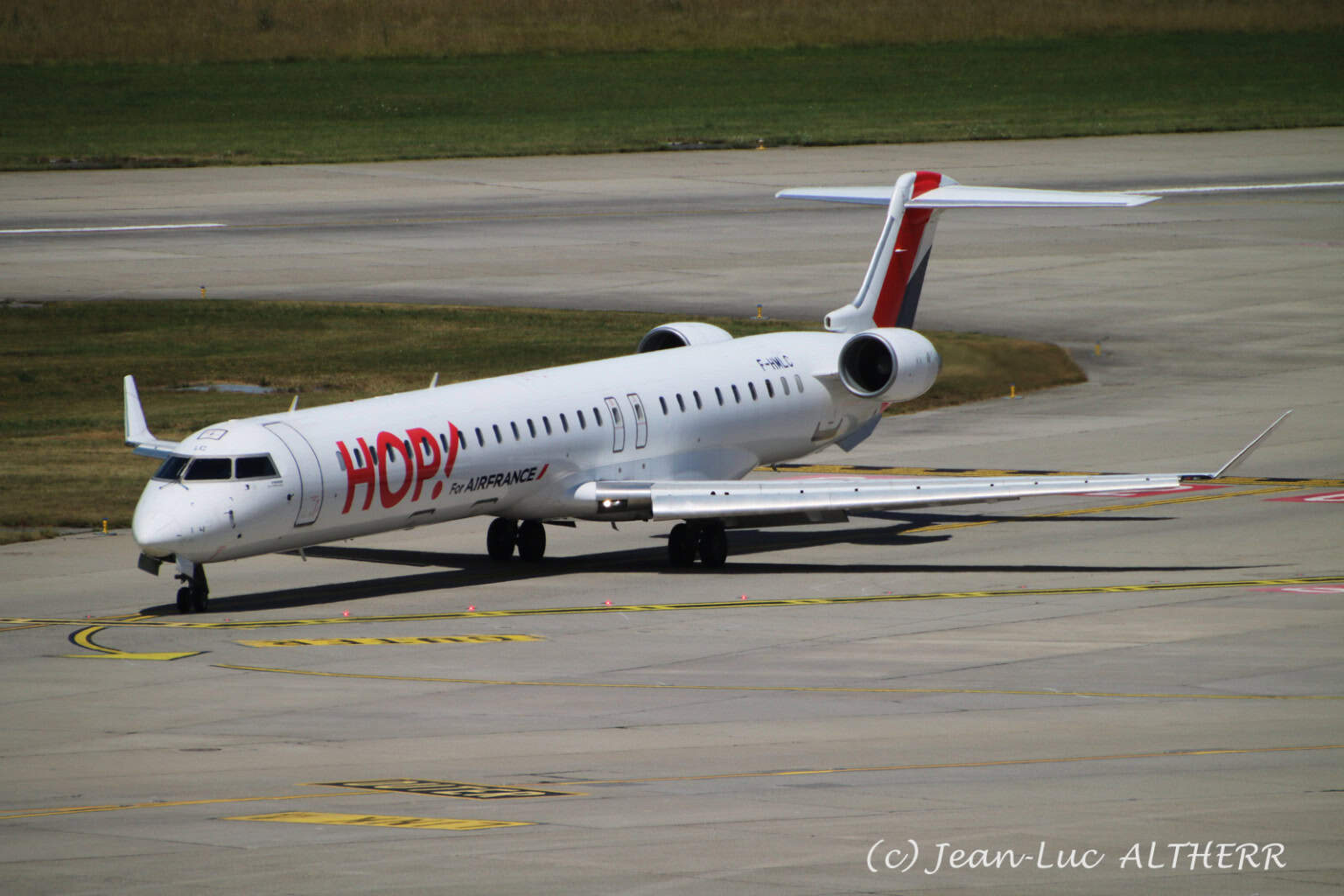
The CRJ 1000 is a stretched development of the CRJ 900 and represents the largest variant in the CRJ family. It first flew in 2008 and entered commercial service in 2010. The aircraft was created to compete in the 90- to 104-seat segment, offering airlines additional capacity on high-demand regional routes.
Compared to the CRJ 900, the CRJ 1000 features a longer fuselage, strengthened landing gear, and aerodynamic refinements to support higher maximum takeoff weights. It is powered by General Electric CF34-8C engines, providing performance consistent with the rest of the family while carrying more passengers. Typical seating ranges from 97 to 104 passengers depending on configuration and regulatory requirements.
The cabin incorporates Bombardier’s NextGen interior enhancements, including larger overhead bins, improved lighting, and updated sidewalls designed to improve passenger comfort within the narrow fuselage constraints of the CRJ platform.
Although it offered improved economics on certain routes, the CRJ 1000 entered service during a period of shifting market dynamics, including fuel price volatility and increased competition from newer-generation regional jets. Production of the CRJ series concluded in the early 2020s after Bombardier exited the commercial aircraft business.
The CRJ 1000 remains in service with several operators, representing the final evolution of a regional jet family that played a defining role in late-20th- and early-21st-century airline networks.
The CRJ 1000 was first announced in February 2007, and the initial flight of the prototype was on September 3, 2008, which is incredibly fast and shows the company’s commitment to creating this jet. The first flight was 3.5 hours long and the aircraft reached an impressive 30,000-foot altitude during that time.
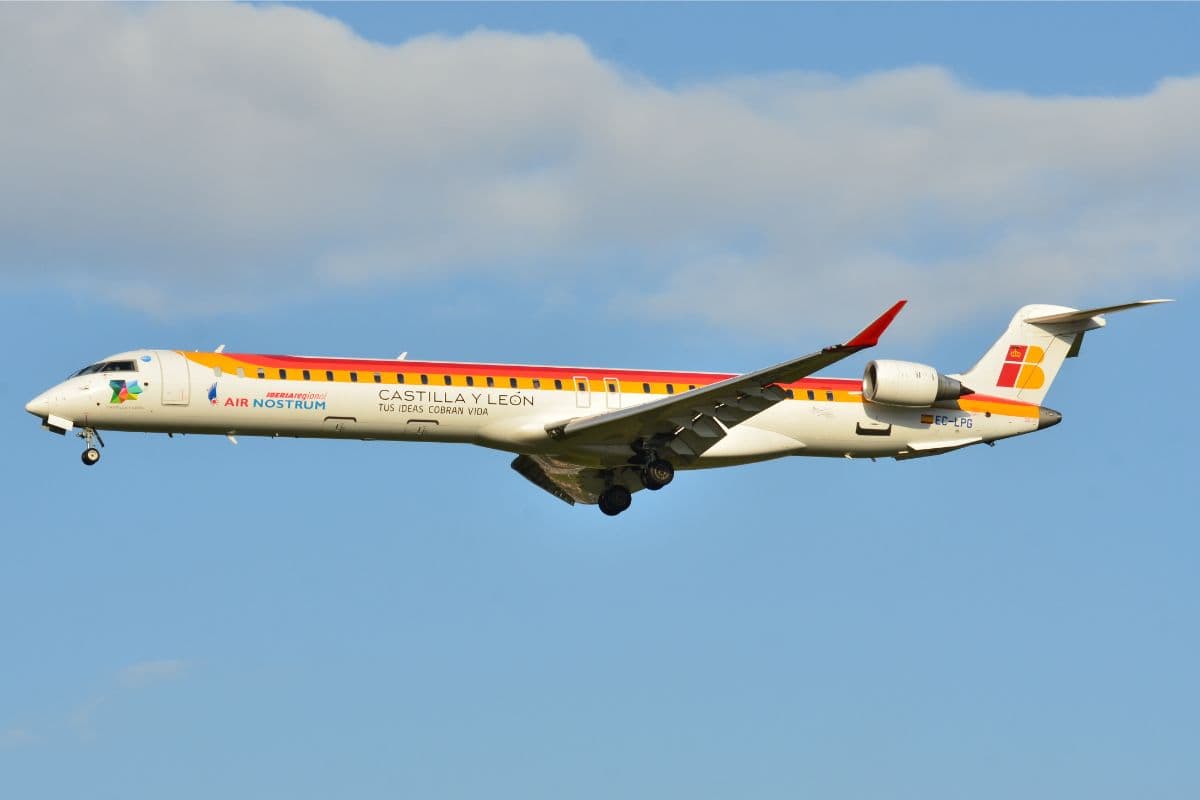
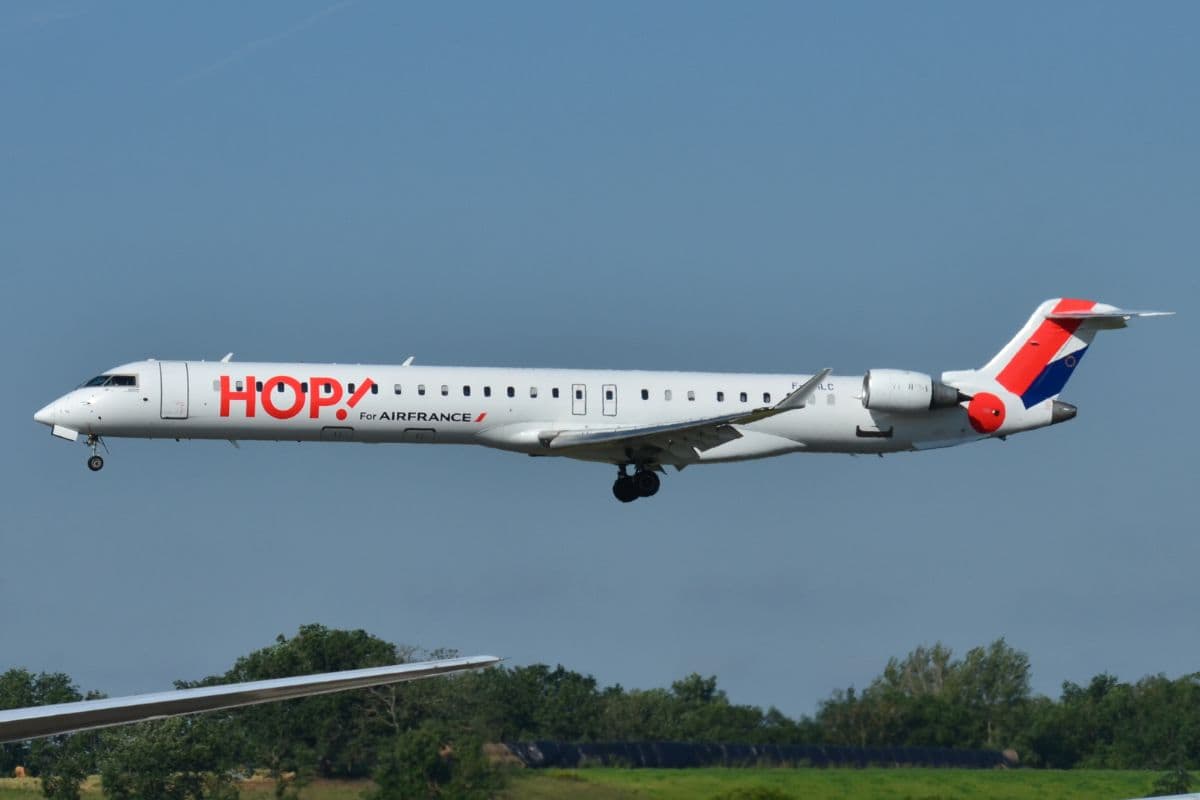
Even though MyAir was one of the first companies to order the CRJ-1000, they soon filed for bankruptcy, so Brit Air was the first launch customer. Other orders soon flooded in, including from Air Nostrum for 35 jets and Adria Airways for one.
After a fault in the rudder controls during a flight test in 2009, the jet was put on hold to fix the problem before resuming again in February 2010.
There is a Honeywell auxiliary power unit installed in the tailcone of the CRJ 1000. Hamilton Standard provides the electrical generators, both providing an impressive 40kVA. Engine nacelles are provided by Bombardier Aerospace of Belfast.
There is a redesigned wing tip on the CRJ 1000 as well as an improved wing leading edge. This allows for reduced approach speeds and improves the lift-to-drag ratio. The overall length of the aircraft is 39.15 meters, and the fuselage has a semi-monocoque design.
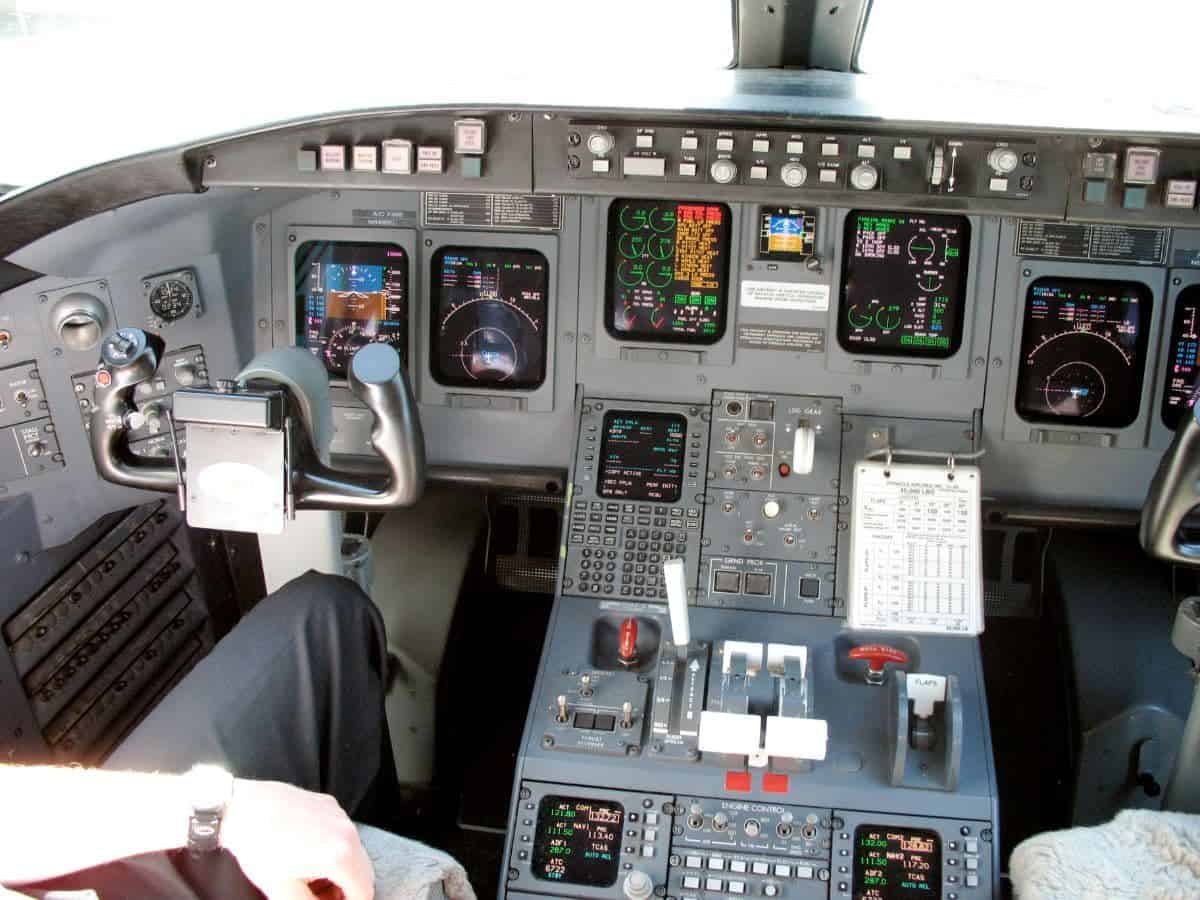
The flight deck configuration in the CRJ 1000 is the same as in the CRJ 900. It is equipped with a powerful Rockwell Collins Pro Line 4 avionics system and has a crew alerting system, engine indication system, and electronic flight and info system.
Additionally, the instrument panel features six cathode ray tube displays. There is an impressive guidance system as well as multiple other advanced systems to help avoid collisions and to check the weather and heading.
De-icing systems on the cockpit side windows and the windscreen prevent ice from building up during cold international flights.
This jet features a spacious and comfortable cabin, which is great as it is used for international flights, and the extra room ensures that passengers are as comfortable as possible when flying.
The main cabin is 27.6 meters long and is about 101 cubic meters in volume. Between 100 and 104 passengers can comfortably ride in the plane in a four-across seating arrangement.
There are other interior layouts, as well. One is a two-class interior that offers a mixed seat pitch.
Inside the cabin, the lighting is provided by Hella Aerospace GmbH. A powerful Liebherr management system controls the air conditioning in the cabin.
All of the CRJ series aircraft are powered by powerful and durable General Electric engines. Each CRJ 1000 features one of two versions – the CF34-8C5A1 or its new derivative version, the A2.
Both the A2 and the original have the same thrust rating of 60.6kN each, but the A2 has improved and modified software. This allows the engines to offer 5% greater thrust during take-off and 3% higher max thrust for taking off from low-altitude runways.
Additionally, the A2 engine has an improved turbine. This reduces the maintenance cost of the engine and also increases its durability. Modifications include an improved cooling system as well as updated airfoil coating.
The engines are, as usual, mounted in the rear of the fuselage and have full digital control.
This jet can cruise at 829km/h and has a service ceiling of 12,479 meters. With an impressive 3,004 kilometer range, it can go the farthest out of the aircraft in this series.
The CRJ 1000 only needs 2,212 meters for take-off and just 1,750 meters for landing.
This is a large jet that requires high-quality landing gear to ensure that there won’t be issues when the plane is coming in to the landing strip. That’s why it’s been outfitted with Menasco Aerospace landing gear. This gear is a retractable tricycle-type gear.
One of the major competitors of the CRJ-1000 is the Embraer E-190. This plane can easily carry between 66 and 124 passengers, but the CRJ-1000 is thought to have a better profit per seat than this competition. Other competitors include the Boeing 737-700 and the Airbus A319.
Sources and references used for research and fact-checking.