

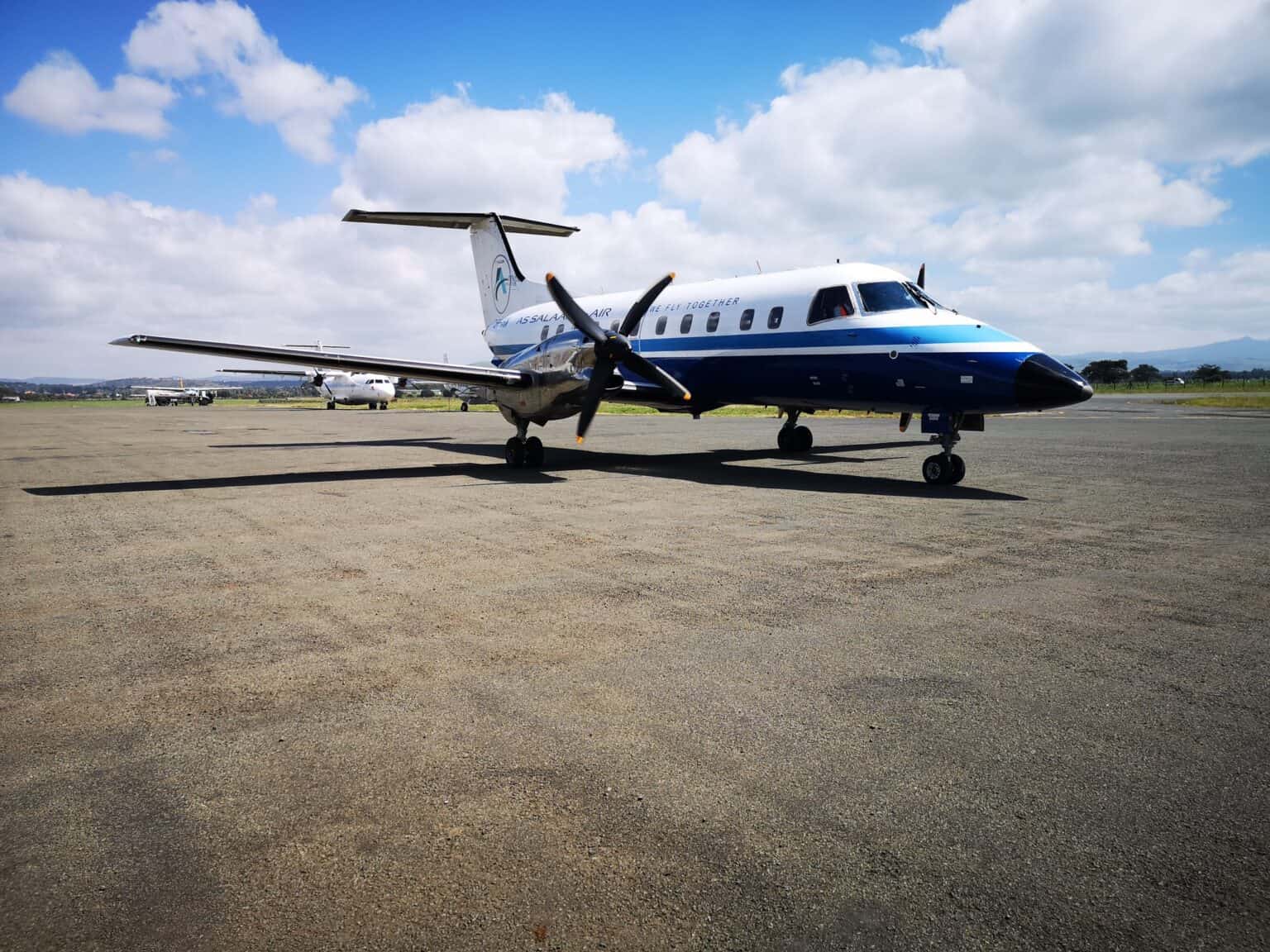
An Embraer EMB 120 Brasilia registered 5H-HLL struck and killed a zebra while taking off from Seronera airstrip in Tanzania’s Serengeti National Park on Sunday, October 4, 2026. The crew diverted to Kilimanjaro International Airport and landed there with the main landing gear still retracted.
All 26 passengers and four crew members got off, and there were no injuries, according to The Aviation Herald. The turboprop was operated by Sindbard Air and was bound for Zanzibar.
What happened to 5H-HLL
The aircraft hit the zebra on its departure run from Seronera, the main airstrip inside the Serengeti. The Aviation Herald reports that the crew then chose to divert to Kilimanjaro but could not lower the main landing gear.
The Tanzania Airports Authority said the plane had been “forced to make an emergency landing in Kilimanjaro, after hitting an ungulate in Serengeti,” in a statement quoted by The Tanzania Times. The paper puts the landing between 11 a.m. and noon local time.
The Brasilia came down on Kilimanjaro’s runway 09 and was substantially damaged, The Aviation Herald says. Kilimanjaro is about 170 miles (270 km) east of Seronera in a straight line.
The airport closed for about five hours while the aircraft was cleared and reopened at 4:30 p.m., according to The Tanzania Times and aeroTELEGRAPH. Both report that Tanzania’s civil air accident investigation branch has opened an investigation.
The authorities have not said publicly what the zebra damaged or why the main gear would not come down. Several outlets spell the operator “Sindbad Air”; the Planespotters registry and The Aviation Herald list it as Sindbard Air.
Why a zebra is a bigger threat than a bird
Birds account for the vast majority of wildlife strikes, but large animals on the ground do far more harm per hit. In the FAA’s wildlife strike report covering US civil aviation from 1990 to 2015, 30 percent of reported strikes with land mammals damaged the aircraft, against 8 percent of bird strikes.
In that data, deer were the main culprit, involved in 87 percent of the damaging land-mammal strikes. Most land-mammal strikes happen on the ground, during the takeoff or landing roll, which puts the landing gear directly in the path.
Seronera is run by the Tanzania National Parks Authority and has a gravel runway of 7,480 feet (2,280 m), at 5,080 feet above sea level. It sits inside the park itself, among the animals visitors fly in to see.
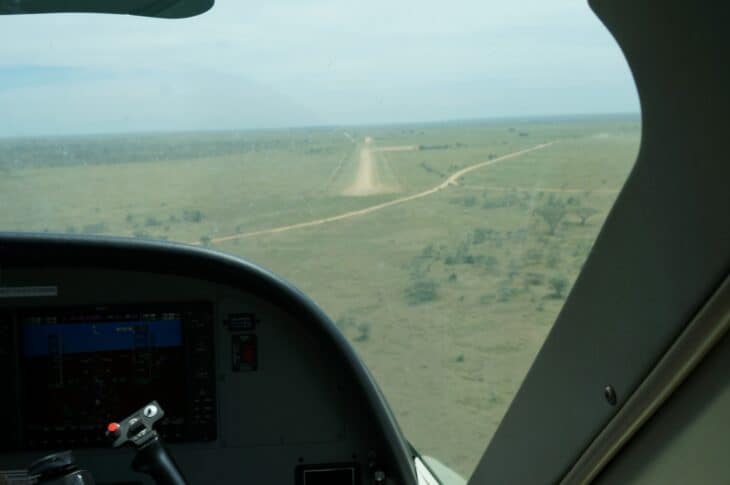

Kilimanjaro, by contrast, has a paved runway of almost 11,811 feet (3,600 m) and handles jets as large as the Boeing 747, a far longer, paved surface than the gravel strip the flight left.
The aircraft and the operator
The EMB 120 Brasilia is a 30-seat twin turboprop powered by Pratt & Whitney Canada PW118 engines. Embraer built it from 1983 to 2001.
This is not Sindbard Air’s first Brasilia mishap. In November 2023, 5H-FLM, an EMB 120 the Planespotters registry lists under Sindbard Air, was damaged beyond repair at Kikoboga airstrip in Mikumi National Park when its nose gear collapsed on takeoff. All 34 people on board got out.
A landing with gear retracted does not have to end in injury. In August, a NetJets Citation Longitude landed nose-gear-up in Ohio after its gear failed to extend, and both pilots were unhurt.
Sources and references used for research and fact-checking.
Get the Newsletter
The latest aviation news and stories sent to your inbox.
About the Author

Tim is the owner and lead editor of AeroCorner since 2019, overseeing aviation content covering aircraft, airlines, airports, and the broader aviation industry. Through years of researching, writing, editing, and publishing aviation-focused content, he has developed extensive practical knowledge of commercial aviation and air travel. Based in Asia and a frequent traveler himself, Tim also brings firsthand passenger experience to AeroCorner’s coverage. Outside of publishing, he has also explored aviation firsthand through hands-on flight training in New Zealand.