

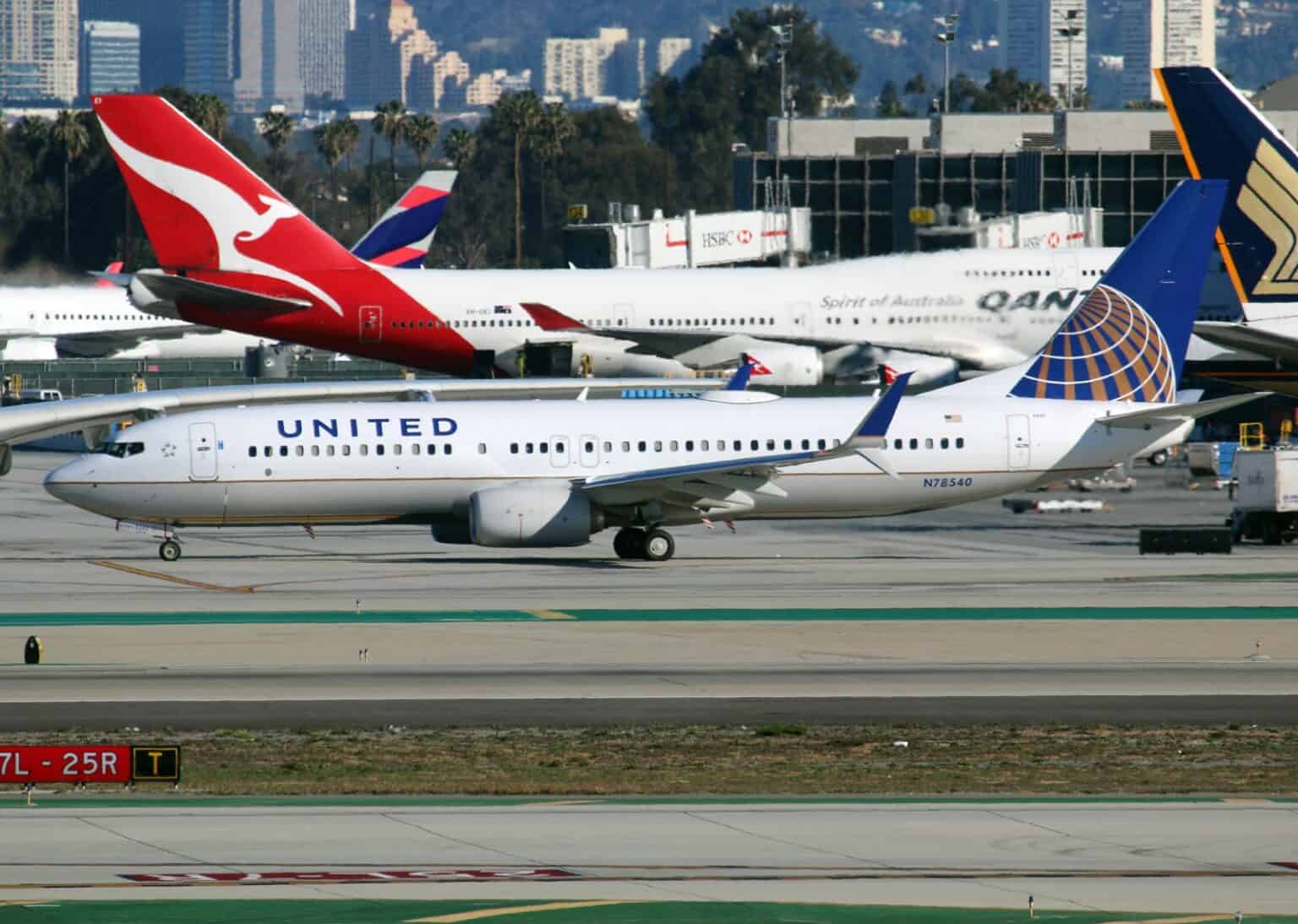
United Airlines flight UA653, a Boeing 737-800 bound for San Francisco, rejected its takeoff at Santa Ana on Monday morning, October 5, 2026, after the pilots reported smoke in the cockpit during the takeoff roll.
The jet stopped on the runway, was checked by emergency services and taxied back to the apron. The flight finally left about seven and a half hours late.
What happened on the runway
The aircraft, registered N78540, was accelerating on runway 20R at John Wayne Airport when the pilots abandoned the takeoff and told air traffic control they had smoke in the cockpit, according to The Aviation Herald.
The jet slowed safely and came to a stop about 1,500 feet (450 m) down the runway, the outlet reported. The crew then asked for emergency services to inspect the aircraft.
The pilots told responders the smoke and fumes had stayed on the flight deck and had already cleared. They suspected the source was bleed air from the left engine, a CFM56, and had switched the left bleed air off, The Aviation Herald reported.
After the checks, the 737 taxied back to the apron. Flight-tracking data from FlightAware shows UA653, scheduled out at 7:30 a.m., left the gate at 3:02 p.m. and reached San Francisco at 4:24 p.m. local time, 7 hours and 22 minutes late.
The Aviation Herald said the same aircraft flew the delayed service. No statement on the event from United or the FAA could be found at the time of writing, and the number of people on board has not been reported.
What is not known yet
The cause is the crew’s early assessment, not a confirmed finding. It is not known what maintenance found on the left engine or its bleed system, how fast the jet was going when the takeoff was rejected, or whether anyone needed medical attention. The account so far rests on a single published report.
Why a left engine problem shows up in the cockpit
The crew’s suspicion that the fumes were confined to the flight deck fits how the 737 is plumbed. In normal flight, the jet’s cabin air starts as hot, compressed bleed air taken from the engines, which two air-conditioning packs cool before it reaches the cabin and cockpit.
With both engine bleeds and both packs running, an isolation valve keeps the two sides apart, so the left engine feeds the left pack. The left pack in turn is the cockpit’s normal air supply, while the right pack’s air goes to the mixing manifold that feeds the cabin.
That is how a problem in the left engine’s bleed air can show up on the flight deck, as the crew described. Switching the left bleed off cuts that source, and the isolation valve then opens so the right engine can supply both packs.
Takeoff power can also bring out a fault that hides on the ground. A 2021 peer-reviewed study of 12,417 smoke and fume reports that US airlines filed with the FAA between 2002 and 2011 noted that a worn engine oil seal may leak only under the stress of a high power setting, and may not leak again when mechanics test it on the ground.
In that dataset, compiled by the Association of Flight Attendants’ air safety department, electrical faults were the most common source at 37%. Oil, hydraulic fluid and other bleed-air sources together came second at 26%. AeroCorner covered the wider debate over these so-called fume events in August.
How common rejected takeoffs are
Rejected takeoffs are rare but practiced. The FAA’s Takeoff Safety Training Aid, using industry data through 2003, puts the rate at about one for every 3,000 takeoffs.
The same guide says more than 75% of rejected takeoffs begin at 80 knots or less, and that these low-speed stops almost never end in an accident. Only about 2% begin above 120 knots, and those high-speed rejections account for most rejected-takeoff overruns.
At 5,700 feet (1,737 m), runway 20R is the longer of John Wayne’s two runways. Stopping about 1,500 feet down it left the crew more than 4,000 feet of pavement ahead of them.
Sources and references used for research and fact-checking.
Get the Newsletter
The latest aviation news and stories sent to your inbox.
About the Author
Tim is the owner and lead editor of AeroCorner since 2019, overseeing aviation content covering aircraft, airlines, airports, and the broader aviation industry. Through years of researching, writing, editing, and publishing aviation-focused content, he has developed extensive practical knowledge of commercial aviation and air travel. Based in Asia and a frequent traveler himself, Tim also brings firsthand passenger experience to AeroCorner’s coverage. Outside of publishing, he has also explored aviation firsthand through hands-on flight training in New Zealand.