

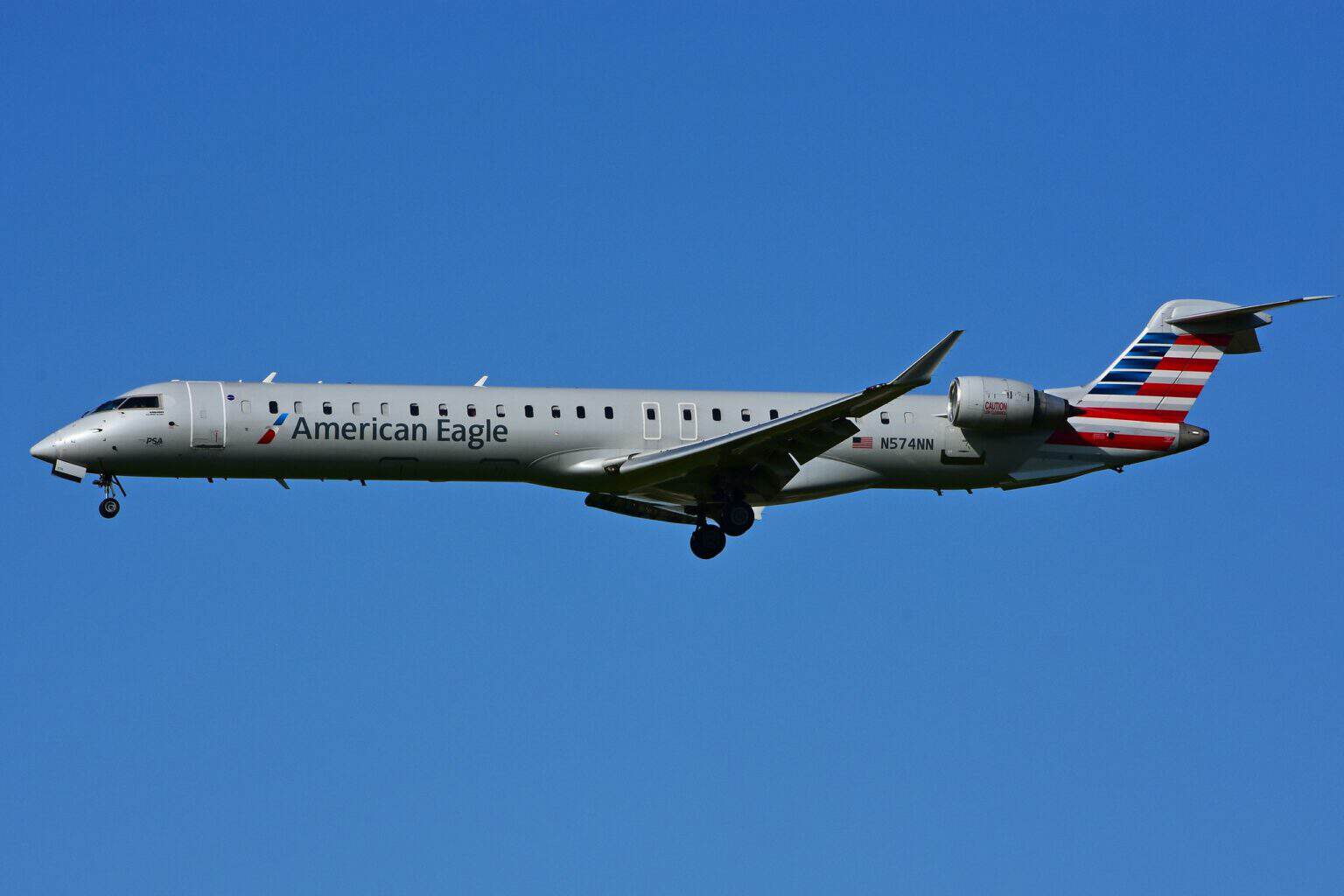
American Eagle flight AA5089 did not just turn back to St. Louis on Saturday, October 17, 2026. After it landed, passengers were ordered off the jet away from the gate, and some say they climbed out over the wing and jumped to the ground.
Air traffic control audio obtained by NBC News has the pilot reporting fumes in the cockpit and asking for fire equipment. AeroCorner covered the turnback itself on Saturday, when only the oxygen masks and the return were known.
What American and the recordings now confirm
American Airlines has now named the flight. In a statement given to FOX 2 on Saturday evening, it said “American Eagle flight 5089, operated by PSA Airlines, returned to St. Louis Lambert International Airport shortly after takeoff after a reported odor.”
The airline said the aircraft “landed safely at STL and was taken out of service to be inspected by our maintenance team,” and apologized to its customers. It told NBC News that no injuries were reported, and FOX 2 reported that everyone affected was put on later flights that Saturday.
The jet is a Bombardier CRJ900. FAA registry records list N574NN, the tail that flight tracking data show operating the flight, as a 2015 CL-600-2D24 registered to American Airlines.
The cockpit side of the story comes from the radio. In the ATC recordings described by NBC, the pilot says, “We have fumes in the cockpit, we need to expedite,” and requests fire equipment for the landing.
Philadelphia station 6abc reported that ATC recordings also have the crew being told of a flock of birds nearby as they prepared to depart. Whether the jet hit any birds is not known.
The evacuation, as passengers describe it
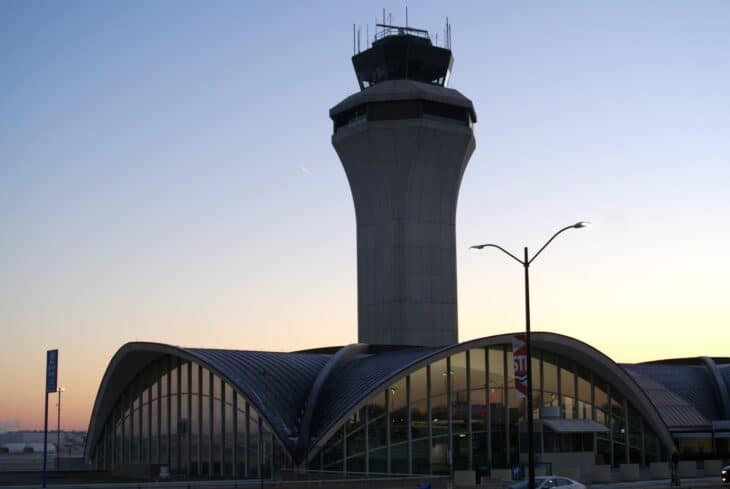
FOX 2, which had the landing times from an airport spokesperson, reported that passengers evacuated the plane after it landed just before 9 a.m. and were then led toward an exit gate. First responders were part of the response.

Passenger Olivia Clancy shared video from the cabin, according to NBC, in which flight attendants are heard shouting “evacuate, evacuate, evacuate!” and telling people to release their seat belts and leave their belongings. Clancy said that once outside, they were told to run.
Tessa and Mark Springer of Waterloo, Illinois, told First Alert 4 that they got out by jumping from the wing, with strangers catching one another at the bottom. Passengers then waited beside the runway until they were driven to the terminal.
Tessa Springer had texted her children, “Problem on our plane, love you guys,” as the cabin filled with haze. The couple said the trouble began at the gate, with a grinding noise from the back of the jet and a pilot announcement about an engine problem.
Clancy recalled the crew saying “the engines wouldn’t start,” and the flight left about two hours late. American’s statement does not say whether that start problem had anything to do with what followed.
Live and Let’s Fly, citing flight tracking data, reported that N574NN was flown to Knoxville, Tennessee, on the afternoon of October 18. Clancy told NBC that American emailed her four $12 food vouchers, which she called “a slap in the face.”
Still unknown
American has not said what caused the odor, why the oxygen masks dropped, or how many people were on board. It has not said which exits were opened or whether any slide was used, and AeroCorner found no FAA or NTSB statement on the flight at the time of writing.
What an evacuation over the wing involves
Leaving through an overwing exit is not like stepping off at the gate. A passenger removes the exit hatch, and everyone climbs onto the wing and walk along a marked escape route to its edge, then get down to the ground.
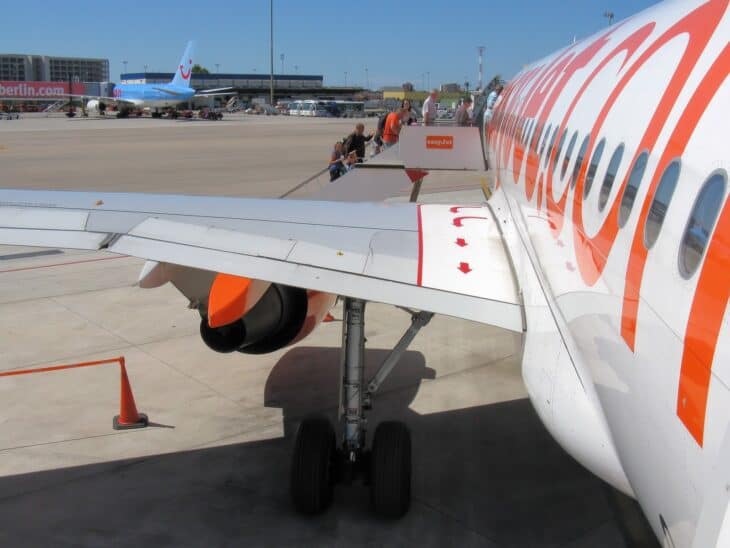

FAA design rules require that route to carry a slip-resistant surface and high-contrast markings. A slide or other assist to the ground is required only where the route ends more than 6 feet above the ground with the gear down.
Below that height, the last step is a drop from the wing to the ground. That is the step the Springers describe, with passengers catching one another at the edge.
The hatch itself is opened by a passenger, not a crew member. FAA rules on exit-row seating require airlines to seat only people able to lift out an overwing exit door, judge whether opening it would add to the danger, and pick a safe path away from the aircraft.
The design benchmark behind all of it is speed. A jet with more than 44 passenger seats, the CRJ900 included, must show that a full load can be evacuated to the ground in 90 seconds under simulated emergency conditions, using only one exit from each pair.
The same rule says evacuation design must consider the possibility of the airplane being on fire. A cockpit fume report, with haze in the cabin and masks hanging, is a case where a crew cannot rule fire out, which is why leaving bags behind and moving away matters.
A run of fume reports on American flights
AA5089 follows another American fumes diversion earlier this month. On October 11, AA2411 diverted to Memphis after its pilots went on oxygen because of fumes in the cockpit.
American has not said where the AA5089 odor came from, and the airline’s inspection will be the first place an answer could emerge. The wider debate over cabin “fume events” and their health effects remains open.
Until that inspection is reported, the airline’s own description of what happened on AA5089 remains “a reported odor.”
Sources and references used for research and fact-checking.
Get the Newsletter
The latest aviation news and stories sent to your inbox.
About the Author

AeroCorner News is the aviation news desk of AeroCorner.com. It covers accidents and incidents, safety rulings, airline and airport disruption, and new aircraft. It works from primary sources such as the NTSB, FAA, EASA and the manufacturers' own announcements.