

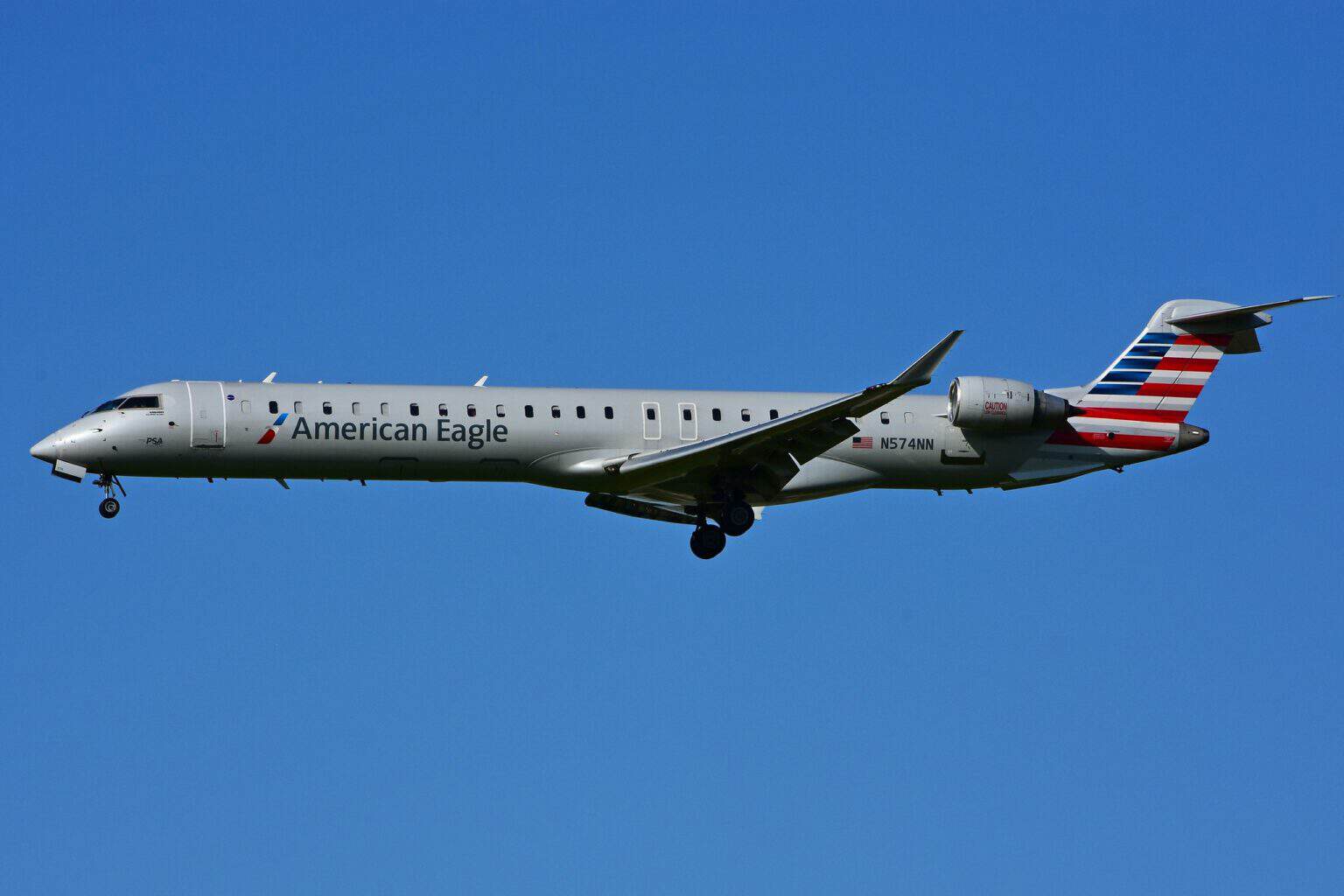
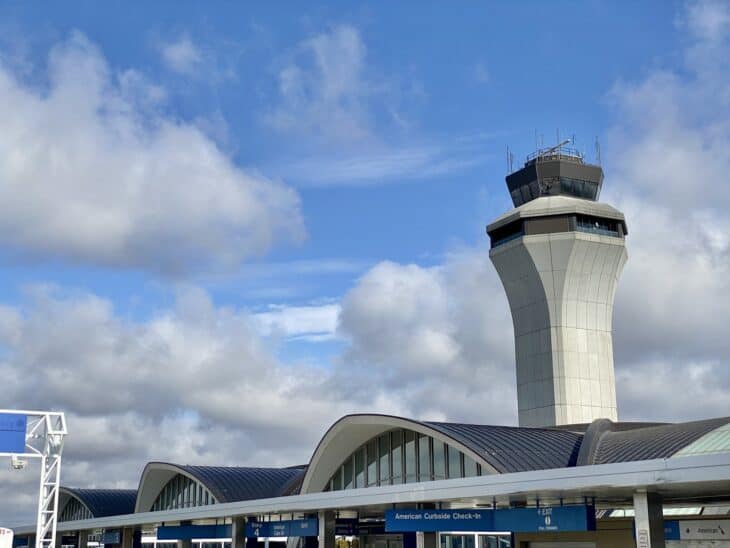
American Eagle flight AA5089, bound for Philadelphia, made an emergency landing back at St. Louis Lambert International on the morning of Saturday, October 17, 2026. A passenger said the oxygen masks dropped about 15 minutes after takeoff.
The airport confirmed the emergency landing, and an airport spokesperson said the jet landed safely. Neither the airport nor the passenger account gives a cause.
What happened on AA5089
Tracking data from FlightStats list AA5089 as diverted to St. Louis, the airport it had just left. The flight is operated for American by PSA Airlines, the airline group’s wholly owned regional carrier, and FlightStats shows a Bombardier CRJ900, registration N574NN.
FAA registry records list N574NN as a 2015 CRJ900 (model CL-600-2D24) registered to American Airlines, with GE CF34-8C5 engines.
The flight was scheduled to leave at 6:00 a.m. Central time and departed about two hours late, according to FlightStats. That fits what a passenger told First Alert 4: boarding around 5:30 a.m., a delay, takeoff at about 8, then masks falling roughly 15 minutes into the flight.
The passenger described the experience as “terrifying.” The station did not name the passenger.
The FlightStats track shows the jet climbing east over Illinois to roughly 21,000 feet. It then descended and leveled off at 10,000 feet as it turned back toward St. Louis, about 95 miles (155 km) east of the airport.
An airport spokesperson told FOX 2 that the pilot radioed the control tower around 8:43 a.m. to report the need for an emergency landing. The spokesperson said the plane landed safely around 8:59 a.m.
Passengers left the aircraft and were led toward an exit gate, the station reported. Airport workers then inspected the jet and moved it toward the gate, and those follow-up procedures ended around 9:45 a.m.
FOX 2 reported that no injuries had been reported and that it was unclear how many people were on board. The airport spokesperson did not say what caused the emergency, and did not confirm the flight’s origin or destination.
AeroCorner found no statement from American or PSA by Saturday afternoon, Central time. The airport has not named the flight; the AA5089 identification comes from the tracking data and its match with the passenger’s timeline.
Still unknown
No cause has been given publicly yet. It is not known whether the cabin lost pressure, whether the masks deployed automatically or were released by the crew, or how many people were on board.
What it means when the oxygen masks drop
On airliners certified to fly above 30,000 feet, FAA design rules require the passenger masks to be presented automatically before the cabin pressure altitude passes 15,000 feet. The crew must also have a manual way to release them if the automatic system fails, and the CRJ900, with a 41,000-foot ceiling, falls under that rule.
Under that design, the masks fall when the cabin “altitude” climbs past the system’s trigger point or when the crew releases them. The descent the AA5089 track shows, down to 10,000 feet, is the one the FAA’s oxygen rules are built around.
Those operating rules size the pilots’ oxygen supply for a descent from the jet’s maximum certificated altitude to 10,000 feet in ten minutes, followed by 110 minutes at 10,000 feet.
Altitude matters a great deal here. The FAA’s high-altitude training guidance puts the average time of useful consciousness at about 10 minutes at 22,000 feet, or 5 to 6 minutes after a rapid decompression, against 30 seconds to a minute at 35,000 feet.
The FAA stresses that these are averages with wide variation between people. AA5089 was at about 21,000 feet when it began descending, far below the 35,000-foot line in that table.
For passengers, the FAA’s briefing guidance says they must be told to put on their own mask before helping a child, and warned that the mask’s bag may not inflate even though oxygen is flowing. AeroCorner’s explainer on why planes carry oxygen masks covers how the system works.
Earlier this month, British Airways BA295 faced a more severe version of the same drill, dropping 27,000 feet in seven minutes from cruise altitude as its masks fell over the Irish Sea.
Sources and references used for research and fact-checking.
- FAA Aircraft Registry, N-Number inquiry: N574NN
- eCFR (FAA), 14 CFR 25.1447, Equipment standards for oxygen dispensing units
- eCFR (FAA), 14 CFR 121.333, Supplemental oxygen for emergency descent and for first aid
- FAA, Advisory Circular 61-107B CHG 1, Aircraft Operations at Altitudes Above 25,000 Feet MSL
- FAA, Advisory Circular 121-24E, Passenger Safety Information Briefing and Briefing Cards
Get the Newsletter
The latest aviation news and stories sent to your inbox.
About the Author

AeroCorner News is the aviation news desk of AeroCorner.com. It covers accidents and incidents, safety rulings, airline and airport disruption, and new aircraft. It works from primary sources such as the NTSB, FAA, EASA and the manufacturers' own announcements.