

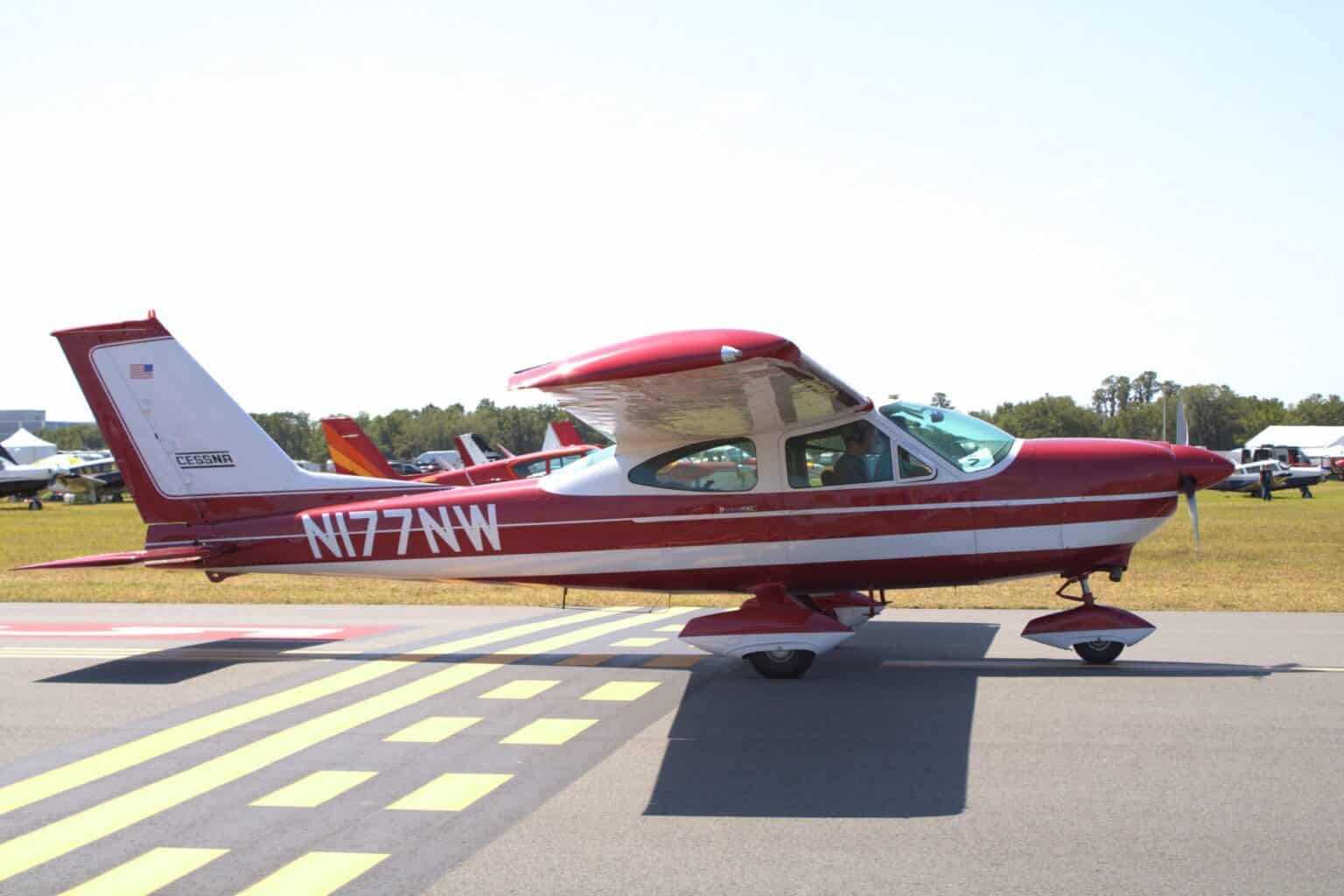
A single-engine Cessna 177A Cardinal crashed onto Capitol Expressway at Excalibur Drive in East San Jose shortly after 3 p.m. on Saturday, October 17, 2026, injuring the two adults and one child aboard. The San Jose Fire Department said all three were taken to a hospital with injuries that were not life-threatening.
Public flight-tracking data show the four-seat plane had taken off from nearby Reid-Hillview Airport less than two minutes before its track ended at the crash site. It was the second small-plane crash in San Jose in two days: on Friday evening, an aircraft crash-landed at Reid-Hillview itself.
What happened on Capitol Expressway
The fire department said it received the report just before 3:10 p.m. and found the plane on the roadway at Capitol Expressway and Excalibur Drive. No vehicles were involved, and a minor fuel spill was absorbed at the scene, the department said.
All three injured people were on the plane, according to the fire department as quoted by ABC7 and the San Jose Police Department as quoted by KTVU. No other injuries were reported.
The fire department said the three were taken to the hospital “out of an abundance of caution,” The Mercury News reported. Police also said drugs and alcohol did not appear to be factors, according to KTVU.
The cause of the crash has not been released. Officials have not named the people aboard or said who was at the controls.
The aircraft and its short flight
FAA records cited by ABC7 identify the plane as a 1968 Cessna 177A Cardinal registered to Flying Twenty Inc., a nonprofit flying club for San Jose State University students, alumni and faculty. The FAA registry lists a single aircraft under that owner name: Cardinal N30544, with an airworthiness certificate dated December 5, 1968.
No official statement has yet confirmed that registration for the crashed plane. But the public ADS-B record for N30544 on adsb.lol shows the Cardinal taxiing at Reid-Hillview, lifting off toward the northwest at about 3:06 p.m. and ending its track about 95 seconds later near Capitol Expressway and Excalibur Drive.
That spot is roughly 1.5 miles (2.4 km) northwest of the airfield. The plane’s altitude reports in that data never went above about 400 feet, though those readings are uncorrected pressure altitude in coarse steps, so they show only that the flight stayed low.
The Cessna 177 Cardinal is a high-wing four-seater that Cessna built from 1968 to 1978 as a would-be successor to the 172, with a cantilever wing that has no lift struts. The 177A version added a 180 hp Lycoming O-360 to fix the original model’s lack of power.
Two crashes in two days
Friday’s crash was a separate event: around 6:25 p.m. on October 16, a small plane crash-landed at Reid-Hillview “due to faulty landing gear,” the fire department said. Its two occupants got out on their own without injury, The Mercury News reported, though reports have not identified that aircraft.
Both follow a June 29, 2026, gyrocopter crash near the airport that disrupted traffic on Tully Road and left one of its two occupants with moderate injuries. In November 2017, a Cessna 172 that had taken off from Reid-Hillview hit a converted garage about 300 yards northwest of the field, with three people aboard.
Why Reid-Hillview draws scrutiny
Reid-Hillview is one of two airports owned by Santa Clara County, set among East San Jose neighborhoods where, the county says, about 13,000 children live near the field. The airport has been at the center of a long fight over whether it should stay open.
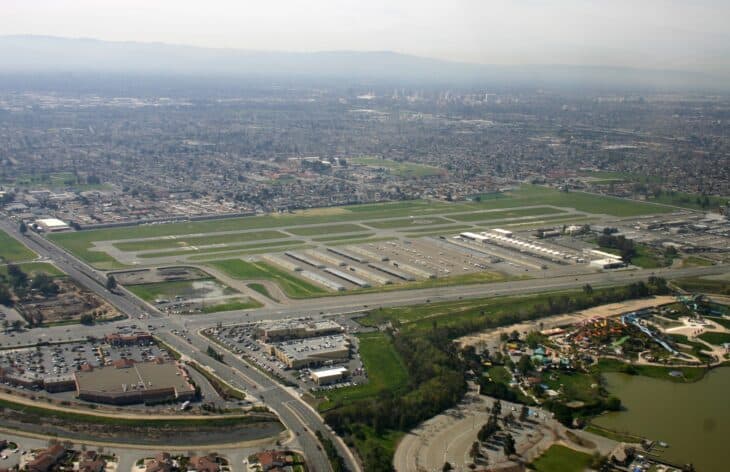

County supervisors voted in 2018 to stop accepting FAA grants for the airport and in November 2020 voted 4-1 to start planning for its closure and the reuse of its 180 acres. Commitments tied to earlier FAA grants mean the county cannot close it before 2031, San José Spotlight reported at the time.
Lead is the second front. The county stopped selling leaded 100LL avgas at Reid-Hillview and San Martin in January 2022, citing a study it commissioned that linked leaded avgas use at the airport to elevated blood-lead levels in children living nearby.
The FAA found in March 2025 that the restriction violated the county’s federal grant obligations and directed it to allow 100LL. The county appealed, and as of August 2026 neither airport sold 100LL, offering unleaded UL94 instead, Inside Climate News reported.
That dispute sits alongside the FAA’s national plan to end leaded fuel for piston aircraft. None of it explains why Saturday’s flight came down, which remains unknown.
What happens next
As of Saturday evening, the FAA’s public page of accident statements had no entry for either San Jose crash. No statement from the NTSB on whether it will investigate had been reported.
When the NTSB opens a case, it says it generally tries to complete the investigation, including a probable cause, within 12 to 24 months.
What is not yet known
The cause of the crash, who was flying and the condition of the three people aboard beyond the fire department’s description of non-life-threatening injuries have not been released. The registration N30544 comes from the FAA registry and public ADS-B data, not from an official statement on the crash.
Sources and references used for research and fact-checking.
Get the Newsletter
The latest aviation news and stories sent to your inbox.
About the Author

AeroCorner News is the aviation news desk of AeroCorner.com. It covers accidents and incidents, safety rulings, airline and airport disruption, and new aircraft. It works from primary sources such as the NTSB, FAA, EASA and the manufacturers' own announcements.