

A 16-year-old boy and an 80-year-old man died on Friday, October 16, 2026, when a light aircraft crashed north-east of Drymen, a Stirlingshire village near Loch Lomond. Police Scotland said both were pronounced dead at the scene.
Officers received the report at around 4:45 p.m. local time (BST). The force said both families have been told and that the Air Accidents Investigation Branch (AAIB) had been informed.
On Saturday morning the AAIB said a team had traveled to the accident site near Drymen, north of Glasgow, to gather evidence for a safety investigation.
What is known about the flight
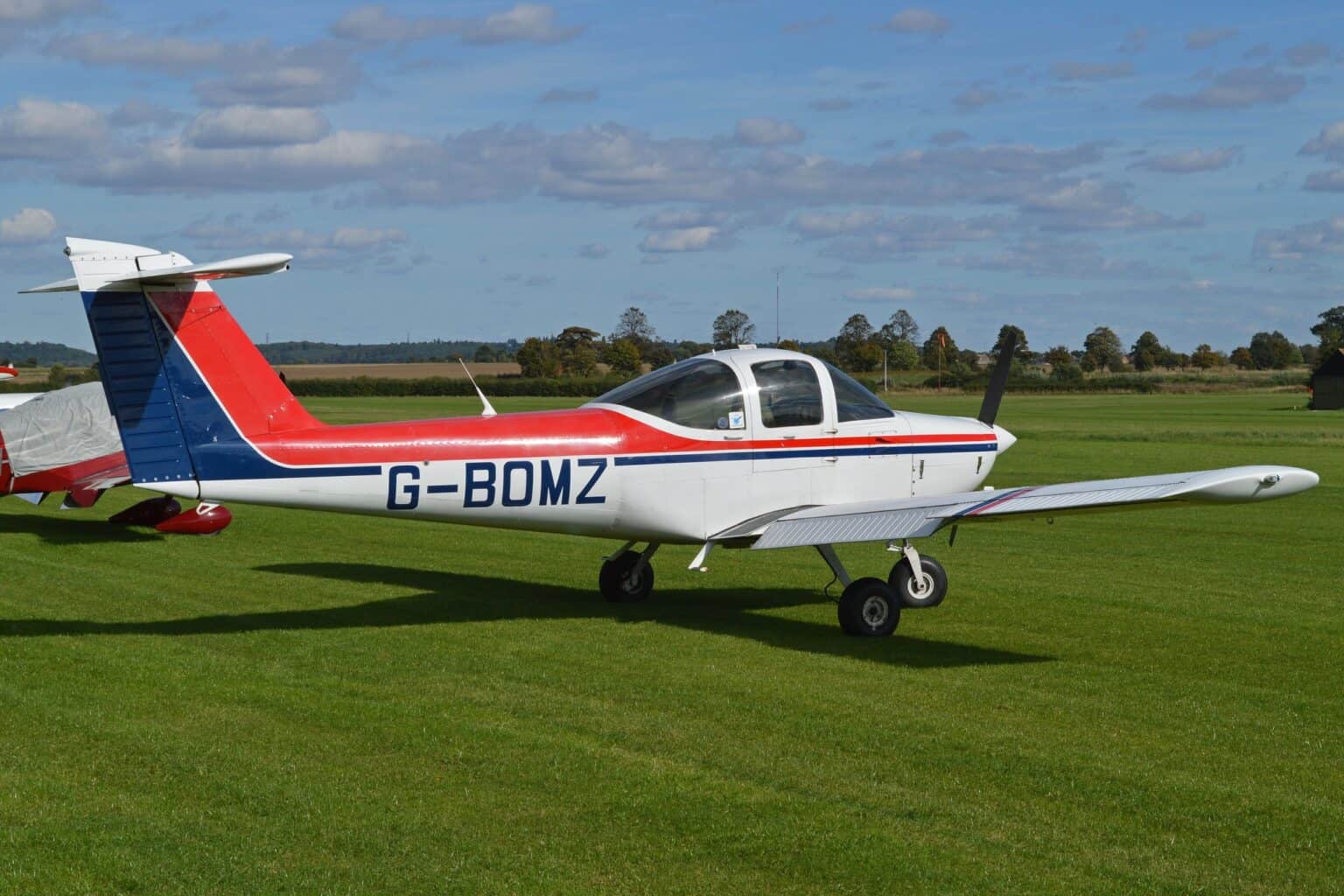
The BBC reported that the aircraft was a Piper Tomahawk II and that it took off from Glasgow Airport at 4:17 p.m. It stopped transmitting at 4:37 p.m., a few miles north-east of Drymen, about eight minutes before police received the report.
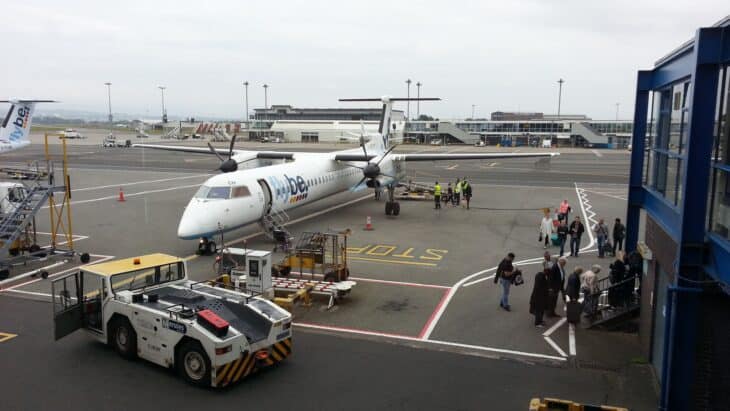

It had flown for much of the day. According to the BBC, it left Cumbernauld Airport at 11:46 a.m., flew 15 minutes to Glasgow, and departed again around 1 p.m. on a two-hour flight north-east to Newport-on-Tay before heading back to Glasgow.
It then spent just over an hour on the ground at Glasgow before the final departure.
The Piper PA-38 Tomahawk is a two-seat trainer with a single Lycoming O-235 engine. Piper built 2,484 of them between 1978 and 1982, and the 1981 and 1982 models carry the Tomahawk II name.
Police Scotland and the AAIB have not named the aircraft’s registration or operator. Public tracking data on Plane Finder logs one flight record for G-LFSU, a PA-38-112 Tomahawk, on October 16, running from 10:55 to 15:36 UTC, which is 11:55 a.m. to 4:36 p.m. BST.
It is the only flight the site lists for the aircraft in the past seven days, and it ends within a minute of the BBC’s time for the last transmission. The match has not been officially confirmed.
Police have not said which of the two was flying or how they were connected, and had not named either of them at the time of writing on Saturday, October 17. No official source has suggested a cause.
Why the airspace over Drymen is closed
Police Scotland said temporary airspace restrictions are in place over the Drymen area and are likely to stay for some time to let the AAIB work. The restrictions include drones, and the force warned that flying in restricted airspace is a criminal offence.
A recent case shows how such a closure is set in law. On September 27, 2026, the Secretary of State for Transport made emergency regulations for Whelford, Gloucestershire, under article 239 of the Air Navigation Order 2016.
They barred aircraft below Flight Level 95 within 4 nautical miles of a set point, except those flying on police directions. The explanatory note says such rules are meant to be temporary and will be revoked once the emergency has passed.
At the time of writing, no Drymen regulation had appeared on legislation.gov.uk, so the size and ceiling of the restricted zone have not been published.
The closure exists to let the AAIB work, and some of that work happens from the air. The AAIB says it uses its own drones at accident sites to map wreckage and ground marks, and that its 3D models can measure a site to within 0.4 inches (1 cm) from a height of about 130 feet (40 m).
What the AAIB investigation involves
For a field investigation, the AAIB typically sends at least two inspectors drawn from its operations, engineering, recorded data and human factors teams. At a smaller site, the on-scene phase usually lasts two to three days.
Inspectors examine the wreckage and ground marks, take fuel samples and speak to witnesses while memories are fresh. In light aircraft accidents they also collect phones, tablets and GPS units, which may hold clues to the flight.
The wreckage is then usually taken to the AAIB’s hangars at Farnborough for detailed examination. The AAIB says that phase can take several months for a light aircraft, and that it would publish a Special Bulletin sooner if an urgent safety issue emerged.
Its findings are not about blame. The AAIB states that the sole objective of its investigations is preventing future accidents and incidents, not apportioning blame or liability.
Final reports take time. A fatal Jodel D18 accident at Portmoak Airfield in Kinross on October 27, 2025, is a recent Scottish example: the AAIB published its report on July 16, 2026, almost nine months later.
Drymen is not the only open fatal case in general aviation. The AAIB’s list of current field investigations, last updated on September 29, already showed six fatal accidents from 2026 under investigation, all involving light aircraft.
The most recent of those, a Piper PA-28-161 that crashed near Trawsfynydd in Gwynedd, Wales, on August 14, was still listed as under investigation. Airline cases can take as long: the AAIB’s report on the G-OASB landing at East Midlands came 10 months after the November 2025 event.
Sources and references used for research and fact-checking.
- Police Scotland, Fatal light aircraft crash north east of Drymen
- Air Accidents Investigation Branch, The AAIB has sent a team to Stirling
- Air Accidents Investigation Branch, How we investigate
- Air Accidents Investigation Branch, AAIB Publications
- Air Accidents Investigation Branch, How we use drones at air accident sites
- Air Accidents Investigation Branch, Air Accidents Investigation Branch current field investigations
- legislation.gov.uk, The Air Navigation (Restriction of Flying) (Whelford, Gloucestershire) (Emergency) Regulations 2026 (SI 2026/1054)
Get the Newsletter
The latest aviation news and stories sent to your inbox.
About the Author

AeroCorner News is the aviation news desk of AeroCorner.com. It covers accidents and incidents, safety rulings, airline and airport disruption, and new aircraft. It works from primary sources such as the NTSB, FAA, EASA and the manufacturers' own announcements.