

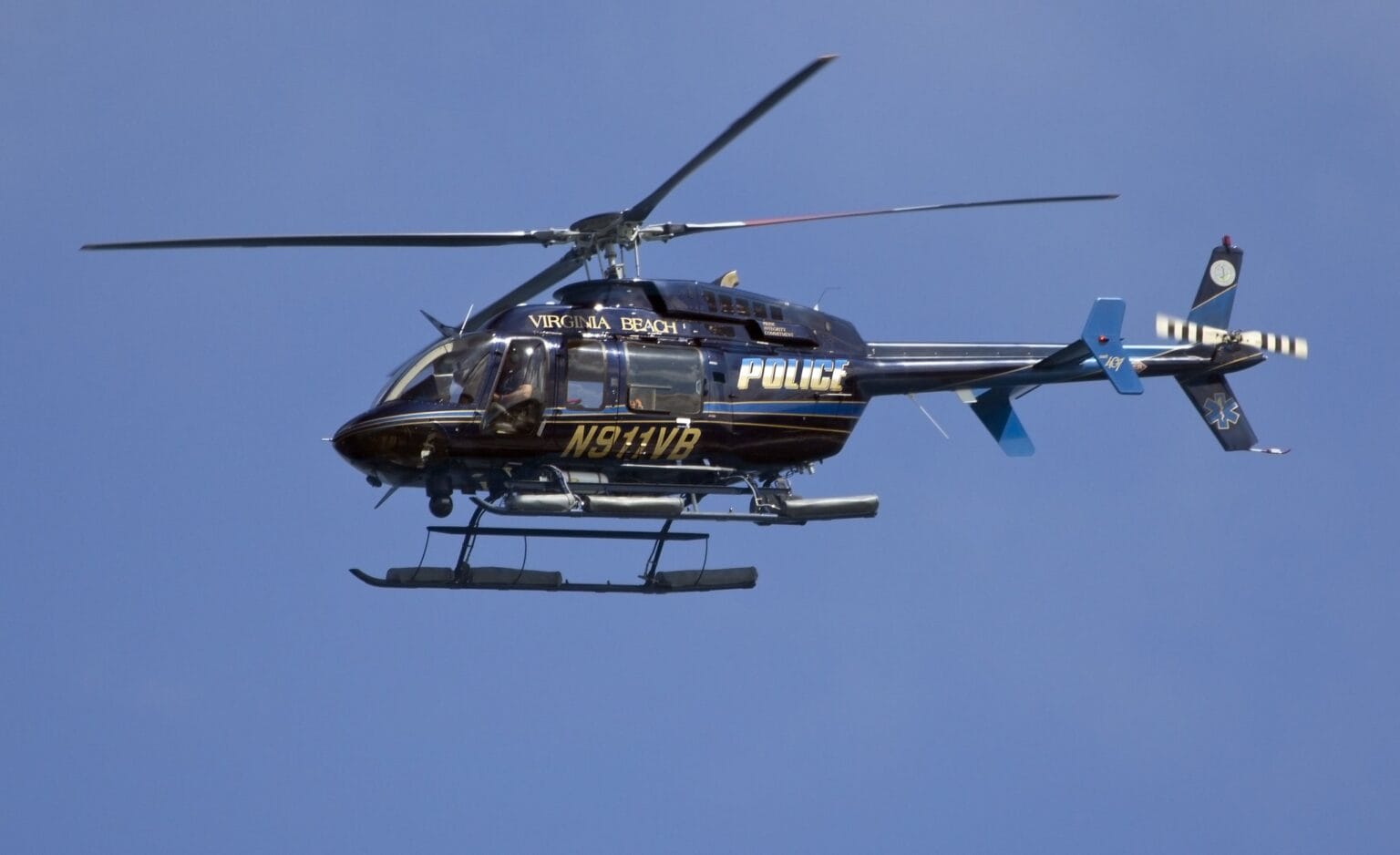
Bell 407 helicopter N618TS, flown by the Manatee County Mosquito Control District, crashed in Myakka City, Florida, shortly before 9 p.m. on Thursday, October 15, 2026. The pilot, Isaac “Ike” Moore, 63, was the only person aboard and died at the scene.
The Manatee County Sheriff’s Office says the helicopter struck a private radio tower and came down in a wooded area behind several homes near Dakin Dairy Farms. Residents pulled Moore from the wreckage before deputies, East Manatee Fire Rescue and Manatee County EMS arrived.
The tower was not lit. Sheriff’s spokesman Randy Warren told WUSF that “there are no lights on the tower,” which he estimated at about 150 feet, and noted that towers under 200 feet do not have to be lit.
Federal investigators have not yet confirmed the tower strike. The NTSB said there is damage to a tower in the area and the helicopter may have hit it, WWSB reported.
The FAA’s preliminary notice lists an aerial application flight in the maneuvering phase. It says the helicopter “crashed under unknown circumstances in the backyard of a residence” and was destroyed in a post-crash fire.
The flight and the pilot
Moore had flown his first mission of the night and was heading back to reload and refuel for a second one, the NTSB said. The Observer reported he was bound for Ellenton, where the district is based.
A second district helicopter was spraying about 2 miles (3 km) away. Warren said its pilot saw the crash and landed safely at Dakin Dairy Farms.
The district said Moore had more than 25 years of flying and about 10,000 flight hours, and he was one of three pilots in its flight department, according to the Observer. Director Christopher Lesser called him “a perfectionist at his craft who wanted to be better at his job at all times.”
Moore retired from the Columbus Division of Police in Ohio, where he flew helicopters. The department called him “an incredible officer, pilot and professional.”
The helicopter and the job
FAA registry records show N618TS is a 2004 Bell 407 registered to the district. It holds a restricted-category airworthiness certificate for agriculture and pest control, and is powered by a Rolls-Royce 250-C47B turboshaft.
The FAA notice files the flight under Part 137, the agricultural aircraft rules, whose definition covers dispensing any substance meant for pest control.
Mosquito control helicopters fly low and at night because adult mosquito sprays only work when they hit insects in flight, the Observer reported. Once the chemicals reach the ground, they break down.
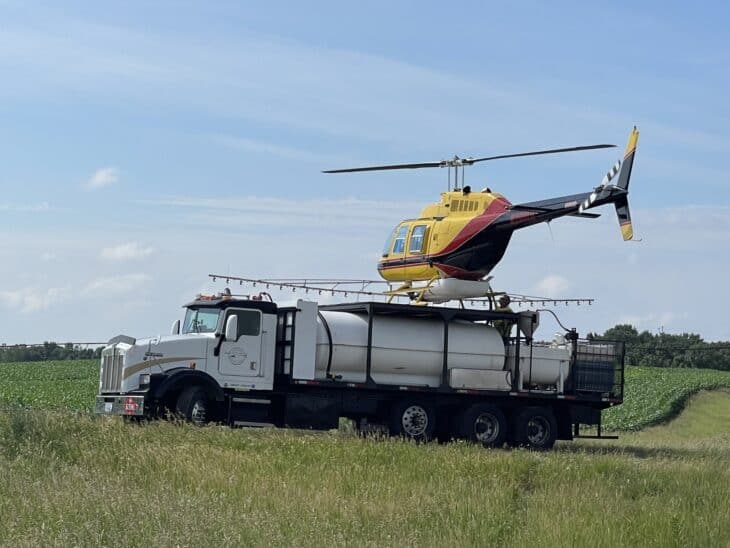

Aerial spraying around Tampa Bay has increased during a dengue fever outbreak, WUSF reported, though Manatee County has recorded no cases this year.
Why short towers are a known hazard
Structures above 200 feet must generally be marked with paint or lights, but the rules vary below that height, according to the National Agricultural Aviation Association. It says crop dusters can fly as low as 10 feet at up to 160 mph (257 km/h), where unmarked towers are extremely hard to see.
The NTSB has warned about this since a 2011 safety alert, revised in 2018, which said unmarked towers could interfere with low-flying operations from medical helicopters to agriculture. In 2013 it asked the FAA to require registration and marking of meteorological towers, the thin wind-measuring masts behind fatal crop-duster crashes in Texas in 2005 and California in 2011.
Congress acted in 2016, ordering the FAA to require marking of “covered towers” 50 to 200 feet tall on or next to rural farmland. A 2018 amendment let those towers be logged in an FAA database instead, except meteorological towers, which must be both marked and logged.
The law’s definition leaves out a tower adjacent to a house, barn or other building, or within a farmstead. The FAA’s November 2024 proposal went narrower still, applying only to meteorological towers, and no final rule had been published as of mid-October 2026.
The association, which campaigns for marking and logging all such towers, counts 21 tower accidents in Part 137 operations from 2010 to 2024, nine of them fatal. Officials have not said who owns the Myakka City tower, exactly how tall it is, or whether it appears in any FAA obstacle database.
Lights are not a full answer either. In 2024 a Houston air tour helicopter hit a lighted 1,003-foot radio tower at night, a crash the NTSB blamed on the pilot with a controller’s missed safety alert contributing.
What the NTSB will look at
NTSB air safety investigator Gene Rambo said the team will examine the pilot’s medical history, training, duty period and fatigue, the helicopter’s controls, rotor blades and transmission, and the environment, including weather, lighting and the demands of spray flying. “We’re not reaching conclusions. We’re not making decisions. We’re documenting the wreckage,” he said.
Investigators are reviewing surveillance and drone footage along with FAA radar data, WWSB reported. Bell and engine maker representatives were expected on site this weekend, before the wreckage moves to a secure location for a closer look, possibly including an engine teardown.
The NTSB usually publishes a preliminary report within a few weeks of a crash. A final report with a probable cause typically takes a year or more.
Sources and references used for research and fact-checking.
- FAA (ASIAS), Preliminary Accident and Incident Notices, entry of 16-OCT-26: Bell 407 N618TS, Myakka, FL
- FAA Aircraft Registry, N-Number inquiry: N618TS
- NTSB, NTSB Newsroom post: NTSB is investigating yesterday's crash of a Bell 407 helicopter in Myakka, Florida
- Federal Register (FAA), Requirements To File Notice for Meteorological Towers and Other Wind Energy Systems (NPRM, Docket FAA-2024-2574), Nov 18, 2024
- eCFR, 14 CFR 137.3 Definition of terms
Get the Newsletter
The latest aviation news and stories sent to your inbox.
About the Author

AeroCorner News is the aviation news desk of AeroCorner.com. It covers accidents and incidents, safety rulings, airline and airport disruption, and new aircraft. It works from primary sources such as the NTSB, FAA, EASA and the manufacturers' own announcements.