

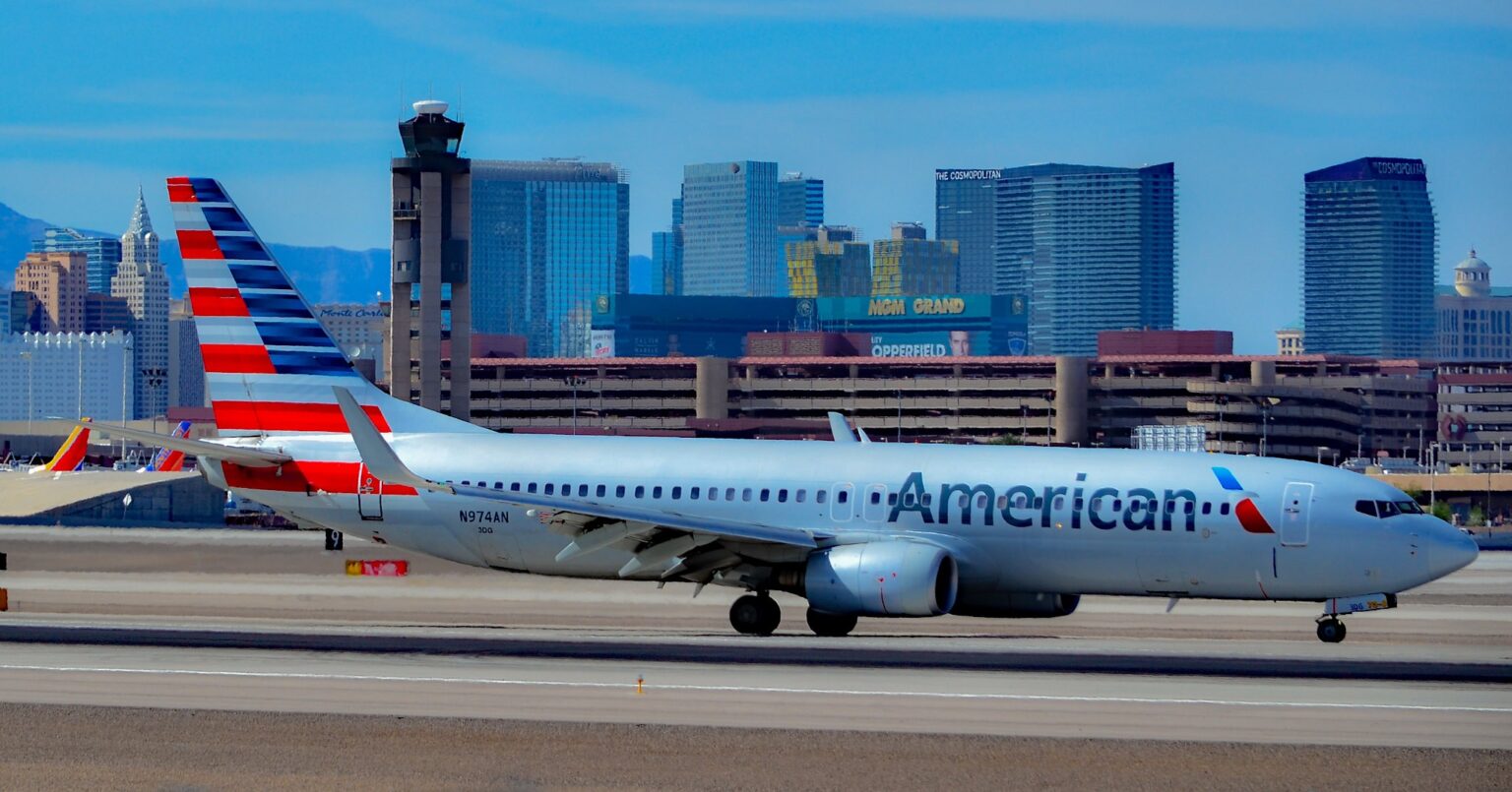
American Airlines flight AA618 from Chicago O’Hare to Dallas Fort Worth turned back on Friday, October 16, 2026, after the crew detected smoke in the cabin. The airline said the smoke was coming from a trash can in the galley.
The FAA said the flight returned to Chicago O’Hare International Airport at about 12:30 p.m. and that the incident remained under investigation, NBC 5 Chicago reported.
.jpg)
According to the station’s report, no fire extinguisher was used and no further problems were reported. The report did not say what had been smoking in the bin.
A 12-minute flight on AA618
FlightAware data shows the jet left the gate at 12:05 p.m. Central time and took off at 12:19 p.m. It climbed to about 4,900 feet south of the airport, looped back and landed at O’Hare at 12:31 p.m., 12 minutes after takeoff.
FlightStats and FlightAware’s tail history both put registration N974AN on the flight. FAA registry records list it as a Boeing 737-800 (model 737-823) built in 2001 and registered to American Airlines.
American flew AA618 to Dallas Fort Worth later that afternoon on a different 737-800, N863NN. Tracking data from FlightStats and FlightAware shows it pushed back at 3:49 p.m., more than three and a half hours behind its 12:10 p.m. schedule, and arrived at DFW at 6:18 p.m.
What is not known yet
The reported statements do not say what was in the trash can, which galley it was in, how many people were on board, or whether anyone needed medical attention. The FAA’s investigation is open, and AeroCorner found no further detail from American or the FAA at the time of writing.
How airliners are built to contain a trash fire
Certification rules treat a trash bin as a place where a fire can start. Under 14 CFR 25.853(h), every receptacle for flammable waste in the cabin must be fully enclosed, built of at least fire-resistant materials and able to contain the fires likely to occur in it in normal use.
That has to be shown by test, under the wear, misalignment and ventilation a bin can be expected to see in service. The aim is that a fire stays inside the bin rather than spreading to the galley around it.
Lavatory bins get extra protection. Under 14 CFR 25.854, each lavatory on a jet with 20 or more passenger seats needs a smoke detector and a built-in extinguisher that discharges automatically into each waste bin when a fire starts there.
The airline operating rules repeat that requirement in 14 CFR 121.308. Both are written for bins inside lavatories, not for a galley bin like the one on AA618, which falls under the general containment standard above.
Why crews head back fast
The FAA’s guidance on cabin fires, Advisory Circular 120-80B, tells crewmembers to take “immediate and aggressive action” to find the source of smoke and put out any fire. It also says flight crews should start planning an emergency landing as soon as possible after the first sign of fire.
The reason is time. Fire tests cited in the circular found that a hidden fire spreading into the overhead area can become uncontrollable in as few as 8 to 10 minutes.
The same document notes that the vast majority of cabin events are brought under control and do not need an emergency landing. On AA618, the crew never left the Chicago area and was back on the ground 12 minutes after takeoff.
The circular’s list of past in-flight fires opens with Air Canada flight 797, a DC-9 whose fire was first noticed as a strange smell and smoke in a lavatory in June 1983. After it landed at Cincinnati, 23 of the 41 passengers were unable to get out and died.
It is not the first smoke or fume event on an American flight in recent months. On October 11, flight AA2411 diverted to Memphis after its pilots put on oxygen masks over cockpit fumes.
In August, a passenger’s laptop caught fire on American flight AA2398 from Atlanta to Dallas Fort Worth, and several passengers were burned.
Sources and references used for research and fact-checking.
- FAA, Aircraft registry: N974AN
- US Code of Federal Regulations, 14 CFR 25.853 Compartment interiors
- US Code of Federal Regulations, 14 CFR 25.854 Lavatory fire protection
- US Code of Federal Regulations, 14 CFR 121.308 Lavatory fire protection
- FAA, AC 120-80B, Firefighting of General and High-Energy In-Flight Fires (March 16, 2023)
Get the Newsletter
The latest aviation news and stories sent to your inbox.
About the Author

AeroCorner News is the aviation news desk of AeroCorner.com. It covers accidents and incidents, safety rulings, airline and airport disruption, and new aircraft. It works from primary sources such as the NTSB, FAA, EASA and the manufacturers' own announcements.