

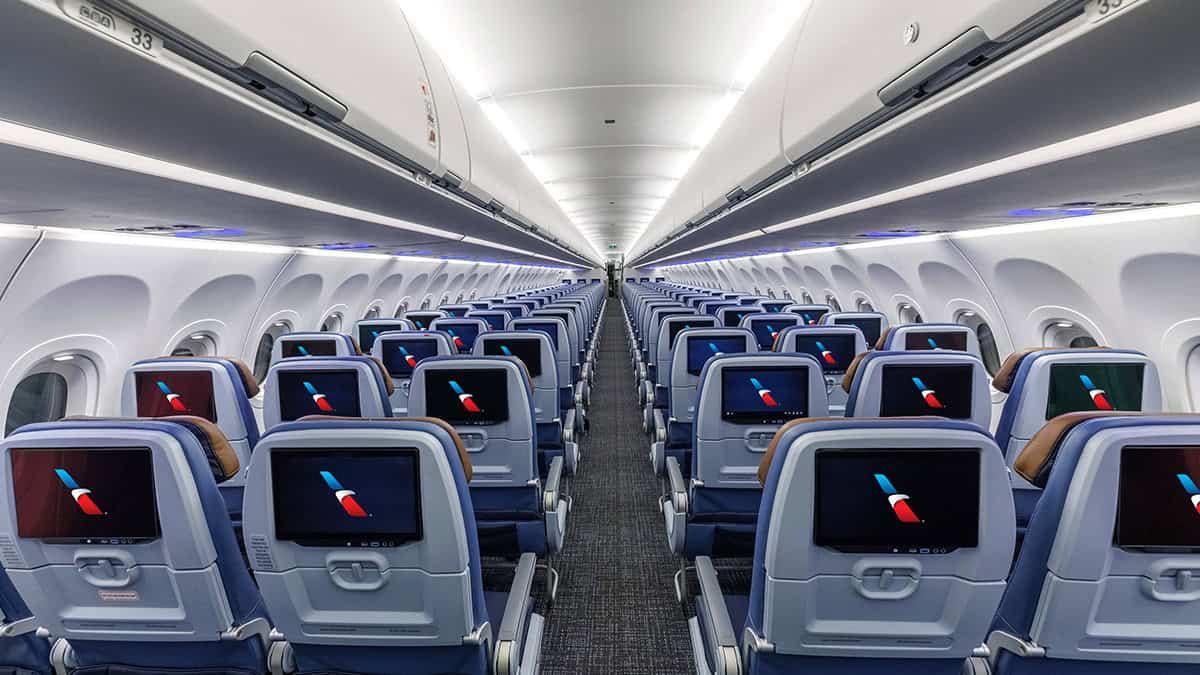
On August 21, 2026, a passenger’s laptop caught fire inside the cabin of American Airlines flight AA2398, an Airbus A321 flying from Atlanta to Dallas Fort Worth with 133 people aboard. The aircraft continued its approach and landed safely, but four to five passengers suffered burns to their hands, according to Aviation Herald.
What happened on descent into DFW
The crew reported smoke and flames from a laptop in the rear of the cabin as the jet descended toward Dallas Fort Worth, according to Aviation Herald. Flight attendants isolated the burning device inside a specialized thermal containment bag rather than diverting, and the aircraft landed on runway 17C at roughly 6:55 p.m. local time, taxiing to the gate where emergency crews met it.
One passenger was treated at the airport and released. American Airlines said in a statement carried by The Independent: “We thank our crew for their professionalism and swift response to quickly contain the device.” The airline has not said what caused the laptop’s battery to fail.
Why the bag, not the extinguisher
A lithium battery fire can reignite after it appears out, because the surrounding cells keep heating each other. A thermal containment bag smothers oxygen and traps heat and smoke, which is why cabin crews are trained to use one instead of just dousing the device and moving on.
A record year for battery fires in the cabin
The incident adds to what the FAA’s own tracking shows is already a record year: 58 lithium-battery smoke or fire events on passenger aircraft so far in 2026, on pace to beat the 97 recorded in all of 2025 and the 89 in 2024. “All lithium-ion batteries are capable of overheating and undergoing a process called thermal runaway,” the FAA has warned, a risk that grows as damaged, aged, or defective cells fail without warning.
That is why laptops, phones, and power banks must stay in the cabin rather than checked luggage: a battery that fails in an unpressurized, unmonitored cargo hold has no crew nearby to catch it early. Under FAA rules, batteries up to 100 watt-hours fly unrestricted, batteries from 101 to 160 watt-hours need airline approval, and anything over 160 watt-hours is forbidden on passenger flights.
Not an isolated incident
AeroCorner has covered two other in-flight battery fires in the past two weeks: a SWISS flight diverted to Dublin after a power bank ignited, and a baggage container caught fire before loading onto a British Airways jet in Milan. The frequency is part of why the FAA is treating the trend as a safety priority.
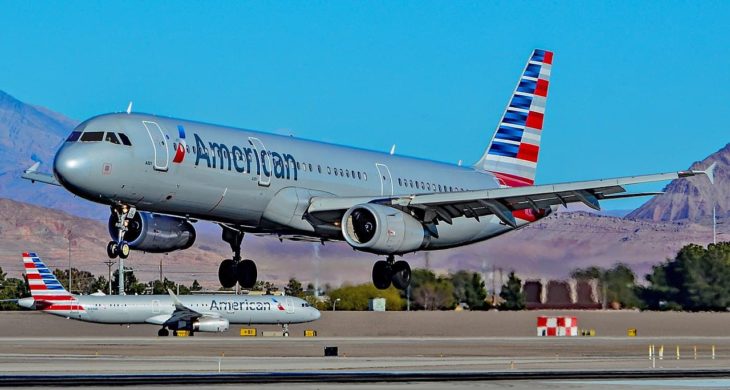
The Airbus A321-200 involved is one of American’s most common domestic narrowbodies. Its landing at Dallas Fort Worth without a diversion reflects standard guidance: if a device fire is contained and the aircraft is already close to landing, crews are trained to finish the approach rather than divert, since the ground is often the fastest way to get full firefighting support to the cabin. AeroCorner has more on how these devices become the most dangerous cargo on your flight.
Sources and references used for research and fact-checking.
Get the Newsletter
The latest aviation news and stories sent to your inbox.
About the Author

Tim is the owner and lead editor of AeroCorner since 2019, overseeing aviation content covering aircraft, airlines, airports, and the broader aviation industry. Through years of researching, writing, editing, and publishing aviation-focused content, he has developed extensive practical knowledge of commercial aviation and air travel. Based in Asia and a frequent traveler himself, Tim also brings firsthand passenger experience to AeroCorner’s coverage. Outside of publishing, he has also explored aviation firsthand through hands-on flight training in New Zealand.