

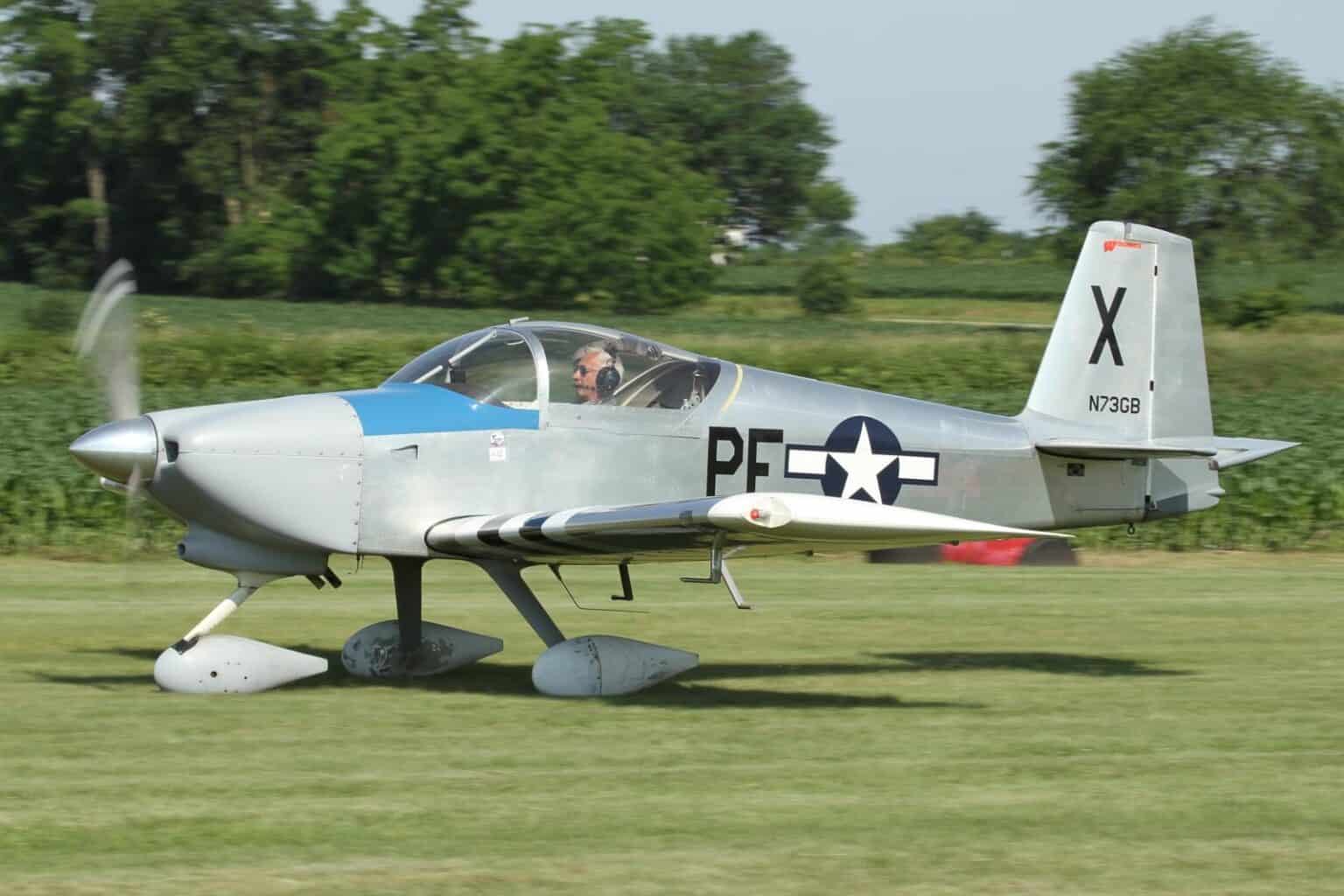
Two people were killed on the morning of Wednesday, October 7, 2026, when Van’s RV-7A N425DG crashed and burned in a field beside the Rooster Run Golf Club, moments after taking off from Petaluma Municipal Airport in Sonoma County, California.
The FAA said the homebuilt, single-engine plane went down shortly after takeoff with two people aboard. Neither person had been publicly identified at the time of writing, and the FAA and the National Transportation Safety Board are investigating.
What happened at Petaluma
Most local reports put the crash at about 10:40 a.m., though some early accounts gave 10:45 a.m. Petaluma police said the plane was fully engulfed in fire when first responders arrived, and firefighters put the fire out about three minutes after reaching it.
“After the fire was extinguished we noticed the two fatalities in the plane,” Petaluma police Lt. Zilverio Rivera said, according to CBS San Francisco. Police closed East Washington Street between Garfield Drive and Adobe Road while crews worked the scene.
Officials had not released the registration as of Wednesday afternoon. The Aviation Safety Network, which compiles accident records from news and flight-tracking data, lists the aircraft as N425DG, and the FAA registry shows N425DG as a 2007 RV-7A registered to an individual in Marin County.
That matches ABC7’s report that the plane was registered to a Marin County owner. ABC7 also reported that flight records show the plane had flown from San Rafael to Petaluma earlier that morning, and that it crashed about a minute after its 10:37 a.m. departure.
The RV-7A is a two-seat, single-engine kit plane that individuals assemble themselves from a kit sold by Van’s Aircraft, which is based in Aurora, Oregon. The FAA registry lists N425DG as experimental, amateur-built, and records its builder as a private individual rather than Van’s.
Witnesses describe a sputtering engine and a turn back
Golfers at Rooster Run were among the first to see the plane in trouble. “All of a sudden the engine kind of stops, sputtering a little bit,” Gary McClintock told KTVU, adding that the pilot appeared to be “trying to make it back to the airport.”
Goran Jelenic, a pilot who saw the crash, told ABC7 he “heard a sputtering” and that it “looked like he was trying to turn back the runway and turn really hard.” Another golfer, Andrew Sabin, told the Petaluma Argus-Courier: “There was a boom, and then a fireball.”
The Aviation Safety Network’s summary of preliminary ADS-B data says the plane took off from Runway 29, climbed to about 300 feet and then entered a descending right turn toward the field. That data is unofficial and has not been confirmed by the NTSB.
“We had an aircraft take off out of our airport, and for some reason they crashed off field,” airport manager Dash Phillips told the Argus-Courier. “We don’t know what exactly happened yet.”
What is not known yet
The names of the two people aboard, whether the engine actually lost power, and why the plane went down have not been established. The witness accounts are early and unverified, and the NTSB has not released any findings.
Why the turn back is the riskiest choice
An engine problem right after takeoff leaves a pilot low, slow and with only seconds to choose a landing spot. An FAA safety training aid says research shows a higher chance of survival when the pilot continues straight ahead rather than turning back to the airport.
The same FAA guidance points out that returning to the runway takes more than a 180-degree turn once the turning radius is counted. A turn at low altitude and low airspeed, it warns, can set up a stall/spin accident.
The FAA recommends that pilots brief an engine-failure plan before every takeoff and practice the turn back at a safe altitude with an instructor, to learn how much height it really costs in their own aircraft.
Trouble just after takeoff has been a recurring thread in recent months. Last week a pilot was killed in Washington state when a Glasair crashed after takeoff from Paine Field, and in July a Piper Cherokee whose engine failed shortly after takeoff made an emergency landing on Huntington Beach.
A similar crash at Petaluma in 2018
Petaluma Municipal is a non-towered airport with a single 3,600-foot runway, and Wednesday’s crash was not its first fatal accident just after takeoff. On May 27, 2018, a Van’s RV-6A, N4269Y, crashed shortly after departing Petaluma for Lincoln, California, killing the pilot and a passenger.
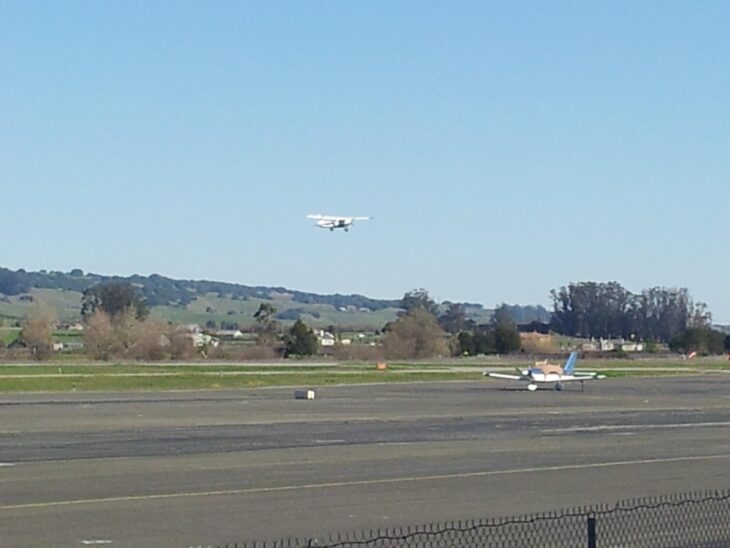

The NTSB’s factual report on that accident quotes a witness who heard the engine backfire and lose rpm at about 800 feet above the ground. The pilot appeared to turn back toward the airport, and during the turn the right wing stalled and the plane spun into the ground.
Whether Wednesday’s crash followed the same sequence is for the NTSB to determine. An airport spokesperson told ABC7 that two gyrocopters had also crashed at the airport within the past year, with no fatalities.
Sources and references used for research and fact-checking.
Get the Newsletter
The latest aviation news and stories sent to your inbox.
About the Author
Tim is the owner and lead editor of AeroCorner since 2019, overseeing aviation content covering aircraft, airlines, airports, and the broader aviation industry. Through years of researching, writing, editing, and publishing aviation-focused content, he has developed extensive practical knowledge of commercial aviation and air travel. Based in Asia and a frequent traveler himself, Tim also brings firsthand passenger experience to AeroCorner’s coverage. Outside of publishing, he has also explored aviation firsthand through hands-on flight training in New Zealand.