

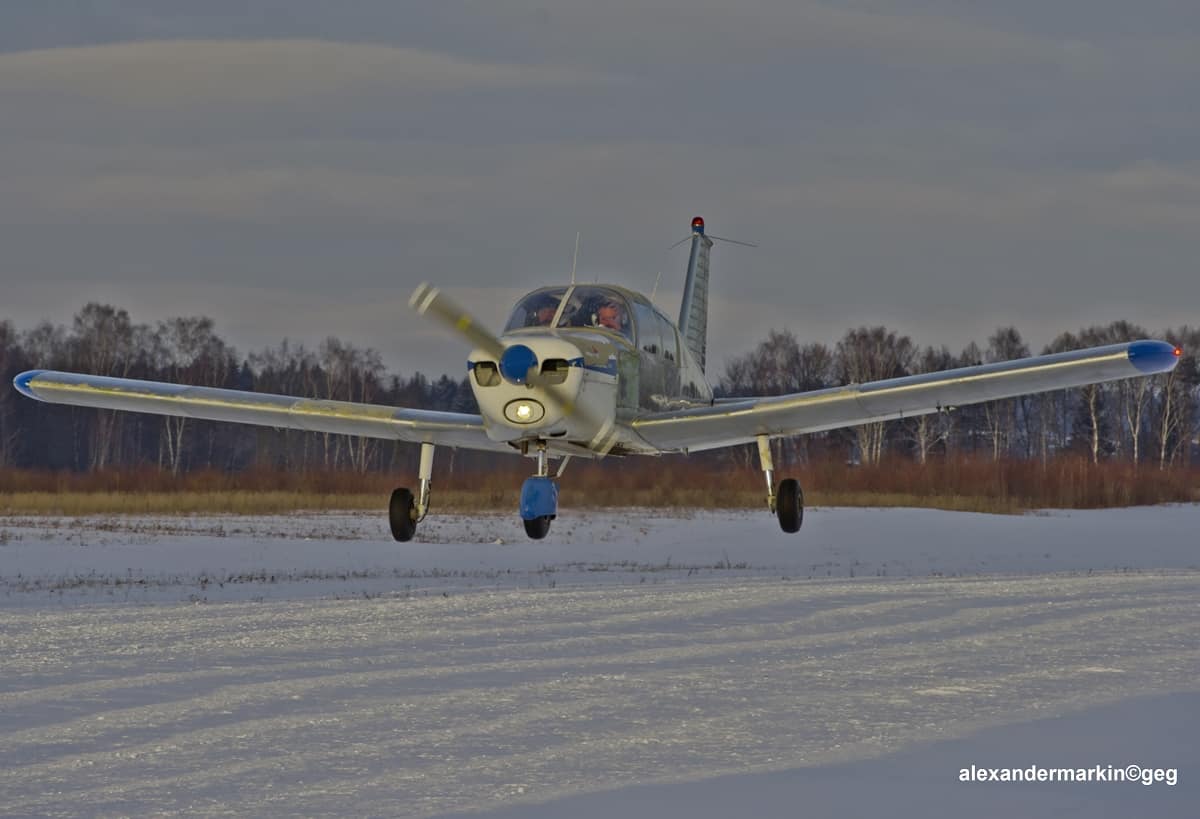
A single-engine Piper PA-28 crashed shortly after takeoff near Chandler Municipal Airport in Arizona on the evening of July 28, 2026, killing the pilot, who was the only person on board. The FAA said the aircraft went down around 8 p.m. near McQueen and Queen Creek roads, just outside the airport.
What is known so far
The aircraft was a Piper PA-28-180 Cherokee, registered N9062J, according to aviation safety records. It is a four-seat single-engine airplane, and this example was an older Cherokee C dating to the late 1960s. The airplane had just lifted off from Runway 22R when it came down.
On recordings of the departure, one air traffic controller can be heard saying the airplane “went down right off the departure end” of the runway. That places the crash moments after takeoff, at the point where a light aircraft has the least altitude to work with.
Emergency crews were called around 7:50 p.m. to reports of a downed aircraft near McQueen and Queen Creek roads, just outside the airport. Chandler Fire later confirmed that the pilot, the only person on board, had died at the scene. No one on the ground was hurt, and the victim’s identity has not been released.
The NTSB is leading the investigation with support from the FAA. Investigators were expected to begin documenting the wreckage the following morning before removing it to a secure facility for closer examination.
Investigators have not identified a cause, and it will likely be months before a probable cause is published. A preliminary report usually appears within about a month, but it lists early findings rather than conclusions.
The NTSB said its work would focus on the pilot, the aircraft, and the environment, drawing on air traffic control recordings, radar data, weather reports, maintenance records, and witness accounts. The agency asked anyone who saw the crash or captured it on video to contact it directly.
Why the minutes after takeoff carry so much risk
Takeoff and the initial climb are among the most demanding phases of any flight, and that is especially true for light aircraft. The engine is at high power, the airplane is low and slow, and there is little height to trade for time if something goes wrong.
If a piston single loses power in that window, the pilot has only seconds to react and very few options. Standard training is to lower the nose to keep flying speed and land more or less straight ahead, resisting the far more dangerous instinct to turn back toward the runway from low altitude.
The most exposed phase
Takeoff and the initial climb leave a light aircraft low, slow, and at high power, with little altitude to trade for options if the engine falters. It is one of the least forgiving phases of flight.
None of that points to a cause here. It only explains why an accident so soon after departure gives a pilot so little margin, and why investigators pay close attention to engine condition, fuel, weight, and weather when a flight ends this way.
The Piper PA-28, built by Piper Aircraft, is one of the most widely produced light aircraft in history and a fixture of flight schools and private owners since the 1960s. Its long service record cuts both ways, giving the type a deep body of safety data alongside an aging fleet.
It is the second Piper Cherokee to draw attention in recent days. On the same date, a PA-28 that lost engine power after takeoff in California landed on a beach, and everyone on board walked away unhurt.
Early stage
The investigation has only just begun and no cause has been established. Early details from an accident scene often change, so anything beyond the confirmed facts is speculation.
Get the Newsletter
The latest aviation news and stories sent to your inbox.
About the Author

Tim is the owner and lead editor of AeroCorner since 2019, overseeing aviation content covering aircraft, airlines, airports, and the broader aviation industry. Through years of researching, writing, editing, and publishing aviation-focused content, he has developed extensive practical knowledge of commercial aviation and air travel. Based in Asia and a frequent traveler himself, Tim also brings firsthand passenger experience to AeroCorner’s coverage. Outside of publishing, he has also explored aviation firsthand through hands-on flight training in New Zealand.