

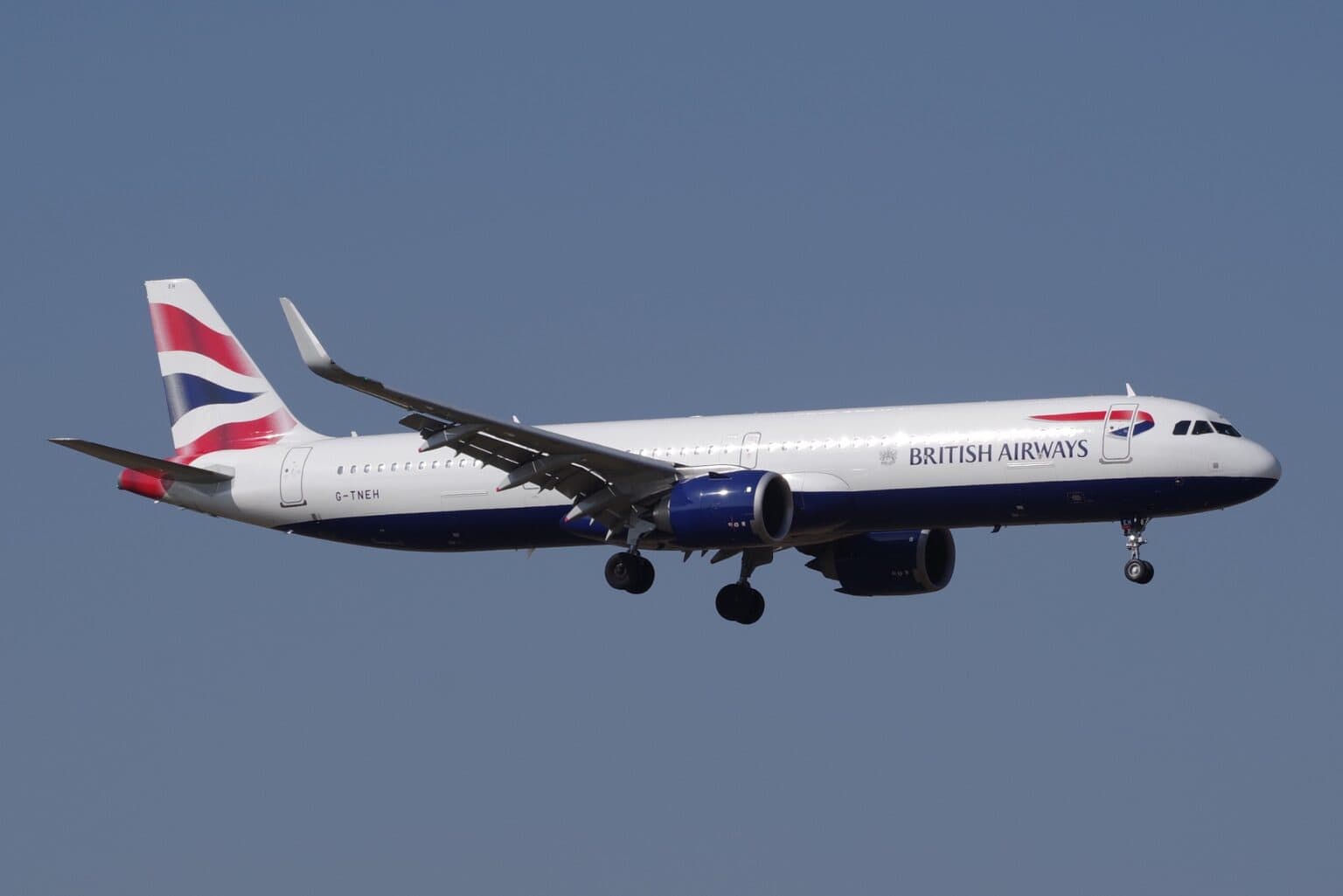
British Airways flight BA899, an Airbus A321neo flying from Paphos, Cyprus, to London Heathrow, was intercepted by two German Eurofighter Typhoons on Saturday, October 17, 2026, after air traffic control lost radio contact with it as it was about to enter German airspace. Contact was restored and the jet continued to Heathrow, where it landed safely, according to The Aviation Herald, which first reported the event.
The aircraft was the A321neo registered G-TNEH. None of the reports gives a cause for the loss of contact, and AeroCorner found no statement on the intercept from British Airways or the German air force at the time of writing.
What the tracking data shows
FlightAware’s record of the flight shows BA899 leaving the gate at Paphos at 12:07 UTC (15:07 local), 37 minutes behind schedule, and taking off at 12:42 UTC. It climbed to 34,000 feet and held that level across the Aegean, the Balkans and Austria.
The jet crossed into Bavaria from Austria at about 15:35 UTC and left German airspace at the Belgian border at about 16:13 UTC. Over Germany the track shows no change of altitude or course.
BA899 landed at Heathrow at 17:01 UTC (18:01 local) and reached the gate 38 minutes late, about the same margin it had left Paphos with. FlightAware does not list the tail number for the flight; the tracking site Plane Finder shows G-TNEH operating BA899 that day.
A listener monitoring the international emergency frequency, 121.5 MHz, told The Aviation Herald that the fighter pilots looked into the flight deck and stayed with the airliner for about 15 minutes before returning to base. AeroCorner found no military statement confirming that account, and the report does not say which base the jets came from.
Why Germany sends fighters when an airliner goes quiet
Civil aviation calls this a prolonged loss of communication, or PLOC; the military calls it COMLOSS. Since the September 11 attacks, “any aircraft silence lasting more than a few minutes is often treated as a potential security risk,” as the safety reference SKYbrary puts it.
In Germany the process is set out by the Bundeswehr. If every attempt to reach the aircraft from the ground has failed after five minutes at the latest, the control center’s supervisor hands the case to the national airspace security center, NLFZ SiLuRa, at Uedem on the Lower Rhine.
From there a pair of quick reaction alert Eurofighters, the Alarmrotte, can be sent up. The Bundeswehr says this happens about once or twice a month because a civil aircraft cannot be reached by radio.
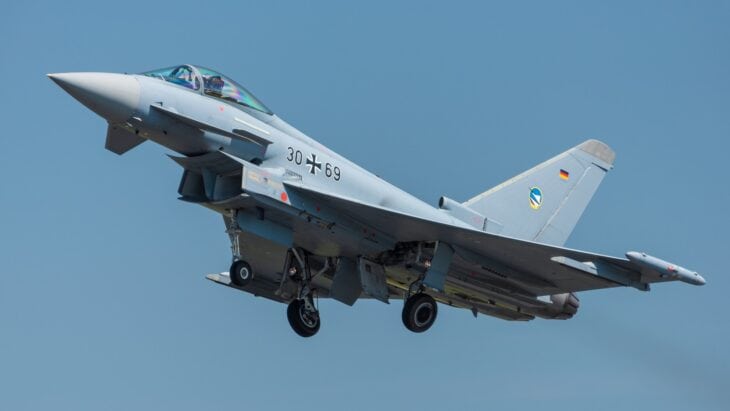

These flights stay under NATO command while the case is only a silent radio. If officials suspect the aircraft is being used for an attack, a so-called Renegade case, Germany takes national control of the fighters.
The usual cause is mundane. The Bundeswehr’s own example is a transposed digit in the frequency a pilot dials when handed to the next sector, so the crew never makes contact with the new sector’s controller.
Once alongside, the fighter pilots use internationally standardized visual signals; the civil crew is made aware of the error and fixes it. Being able to see into the cockpit matters: in one case the Bundeswehr describes, Hungarian fighters could not see into an Indian airliner’s flight deck, and with its long radio outage it was handled as a suspected Renegade all the way across Germany.
A crew that knows its radios have failed can also set code 7600 on its transponder squawk, which tells controllers the silence is a technical fault. None of the reports on BA899 mention a 7600 code.
Not the first silent airliner over Europe
In February 2017, two Luftwaffe Typhoons intercepted Jet Airways flight 9W118, a Boeing 777 with 330 passengers and 15 crew flying from Mumbai to Heathrow, after a radio gap of about 33 minutes. The Aviationist concluded the crew had likely tuned a wrong frequency after a handoff to Prague controllers.
In February 2024, RAF quick reaction alert Typhoons met SAS Connect flight SK4609, an A320neo from Oslo, as it descended toward Manchester without radio contact. Contact came back after the rendezvous and the jet landed about 30 minutes late, with an airport spokesman calling it a technical fault, AeroTime reported.
Four days before BA899, Eurofighters escorted Corendon flight XR456 into Nuremberg after it transmitted the hijack code while its crew could not be reached by radio.
Sources and references used for research and fact-checking.
Get the Newsletter
The latest aviation news and stories sent to your inbox.
About the Author

AeroCorner News is the aviation news desk of AeroCorner.com. It covers accidents and incidents, safety rulings, airline and airport disruption, and new aircraft. It works from primary sources such as the NTSB, FAA, EASA and the manufacturers' own announcements.