

Table of Contents
The German Air Force flies 231 combat aircraft, and 138 of them are Eurofighter Typhoons. That single type is the backbone of the force, equipping four of its six tactical air wings.
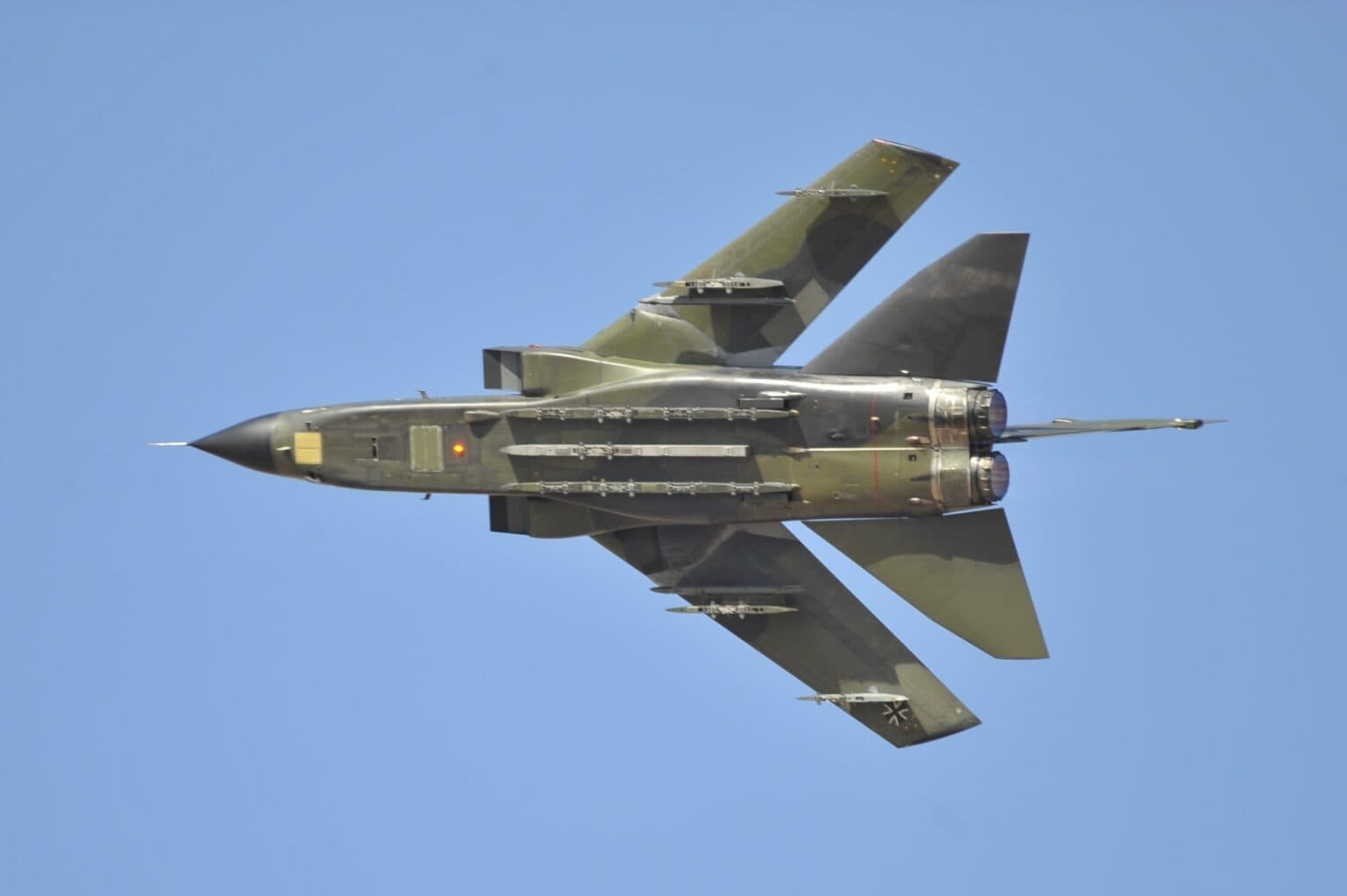
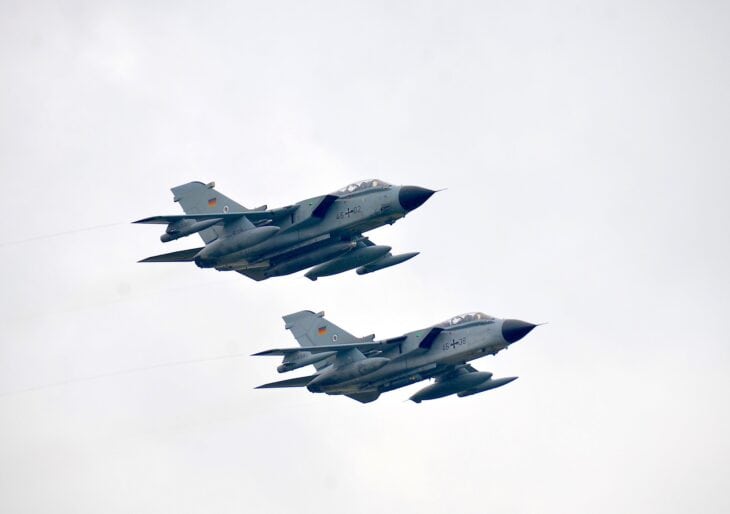
The other 93 are Panavia Tornados, and every one of them retires by 2030. Replacing what they do is the central project of the Luftwaffe right now.
This is a full inventory of what the service actually operates as of September 2026, counted by aircraft in service, not by aircraft on order. Almost 28,000 people serve in it, and its official English name is now the German Air and Space Force.
| Aircraft | Number | Role | Status |
|---|---|---|---|
| Eurofighter Typhoon | 138 | Multirole fighter | In service, 58 more ordered |
| Panavia Tornado IDS/ECR | 93 | Strike, SEAD, reconnaissance | Retires by 2030 |
| Sikorsky CH-53G family | 66 | Heavy-lift helicopter | Retires by 2030 |
| Airbus A400M Atlas | 53 | Airlift and tanker | Fleet completed April 2026 |
| Northrop T-38C Talon | About 41 | Advanced jet trainer | Based in Texas |
| Airbus H145M LUH SOF | 15 | Special forces support | 10 armed versions ordered |
| C-130J and KC-130J | 6 | Tactical airlift and tanker | French-German squadron |
| IAI Heron TP | 5 | Surveillance drone | Leased, 3 more ordered |
| Government transport fleet | About 15 | VIP and troop transport | Based at Cologne |
| Lockheed Martin F-35A | 35 on order | Stealth fighter, nuclear role | First flight September 2026 |
| Boeing CH-47F Chinook | 60 on order | Heavy-lift helicopter | Deliveries 2027 to 2033 |
| Eurodrone | 21 on order | Surveillance drone | First flight planned 2029 |
How this list counts
Aircraft are ordered by the number currently in service, with types that are on order but not yet delivered grouped at the end. Only aircraft operated by the Luftwaffe are included. Germany’s Tiger attack helicopters and most NH90s belong to the Army, and the Navy flies the P-8A Poseidon and the NH90 Sea Lion, so none of those appear here.
1. Eurofighter Typhoon: 138 aircraft
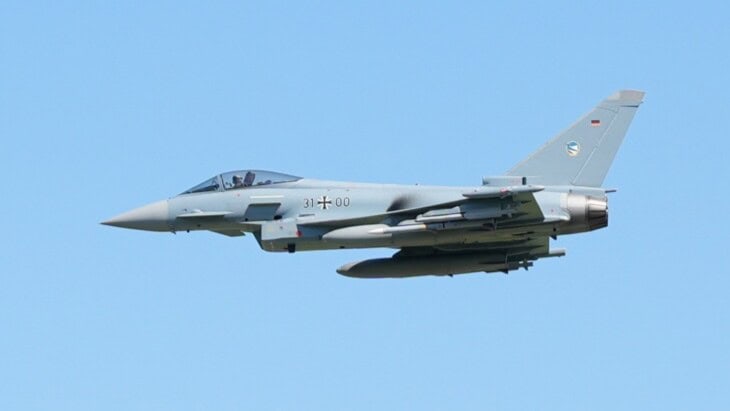
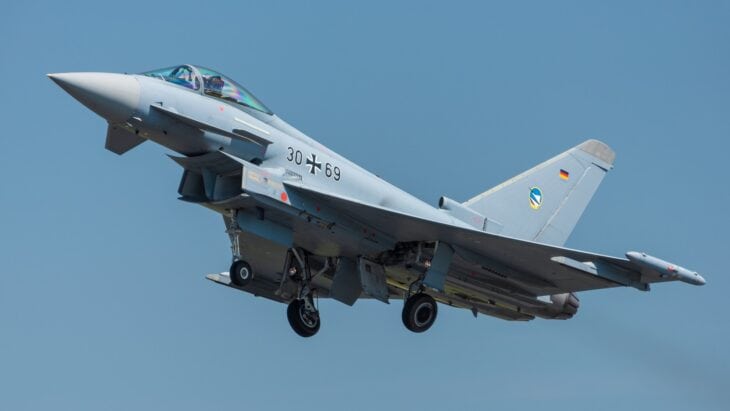
The Eurofighter is the aircraft the Luftwaffe is built around. Four of the six tactical air wings fly it, and the Bundeswehr puts the in-service figure at 138.
It is a genuine multirole fighter with a top speed of Mach 2.35, built by a four-nation consortium of Germany, Britain, Italy and Spain. Germany is one of several operators across the continent, and it sits alongside the Rafale and the Gripen in the wider family of European fighter jets.
Another 58 are on contract. A Tranche 4 order covers 38 aircraft, which will replace the 33 oldest Tranche 1 jets rather than add to the total, and a Tranche 5 order for 20 more was signed in October 2025 for delivery between 2031 and 2034.
Thirty-five of those newer jets are earmarked for conversion to the Eurofighter EK, an electronic warfare variant. EK stands for elektronische Kampfführung, and the aircraft is designed to find and destroy enemy air defenses, a job the Eurofighter Typhoon has never done for Germany before.

2. Panavia Tornado: 93 aircraft
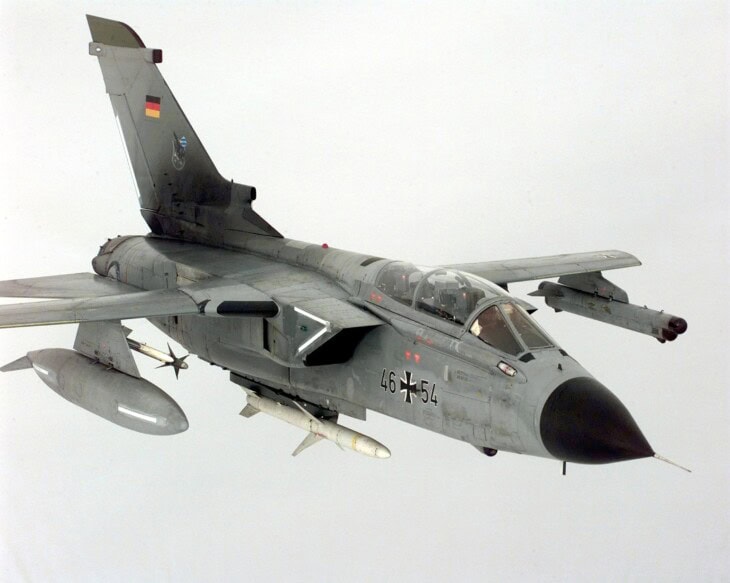
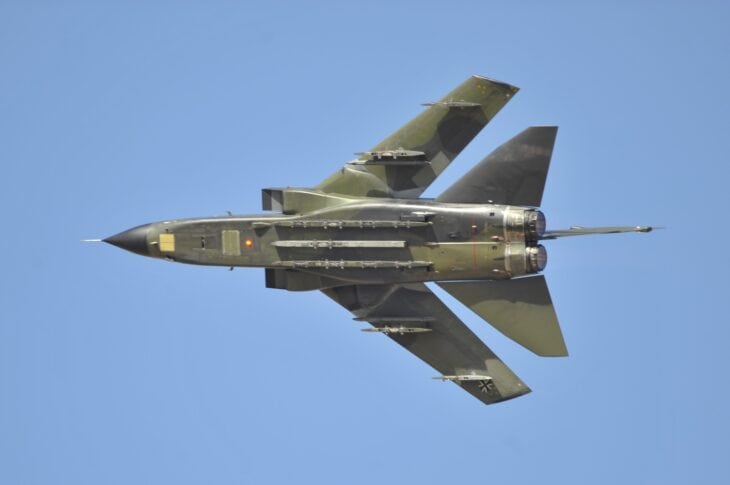
The Tornado is the oldest combat aircraft in German service and the most important one to replace. Germany still holds 93 of them in two versions.
The IDS is the baseline strike version, built for attacking ground targets. The ECR is the electronic combat and reconnaissance version, which hunts enemy radar sites.
Both versions reach the end of their service life in 2030. The Panavia Tornado IDS first flew in the 1970s, and keeping a design of that age credible against modern air defenses has become the hard part.
Germany has split the replacement across two aircraft. Deep strike, electronic warfare and tactical reconnaissance transfer to the Eurofighter, while the nuclear mission goes to the F-35A.
Germany has no nuclear weapons, but its Tornados carry them
Under NATO nuclear sharing, American B61 bombs are stored in Germany and would be delivered by German aircraft flown by German pilots. The Tornado has held that job for decades, which is the single biggest reason its replacement could not slip. The F-35A inherits the role using the B61-12.
3. Sikorsky CH-53G: 66 helicopters
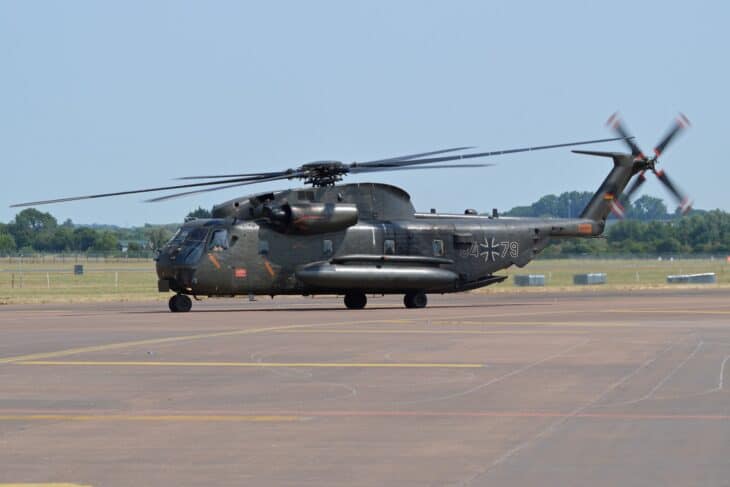
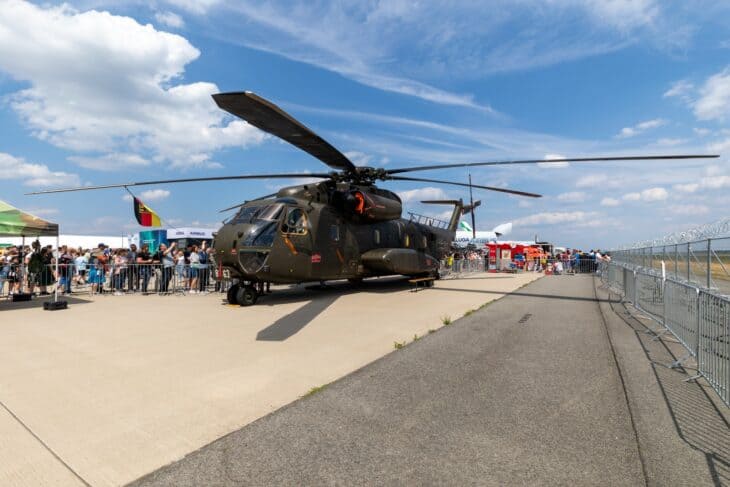
The CH-53 is the Luftwaffe’s heavy lifter and its oldest aircraft type by some distance. The first one was handed over in July 1972.
Sixty-six remain in three versions: 40 CH-53GA, 20 CH-53GS and 6 CH-53GE. All of them belong to Helicopter Wing 64.
Germany originally bought 112, so the fleet has shrunk by more than a third over five decades. Like the Tornado, it reaches the end of its usable life in 2030.
.jpg)
4. Airbus A400M Atlas: 53 aircraft

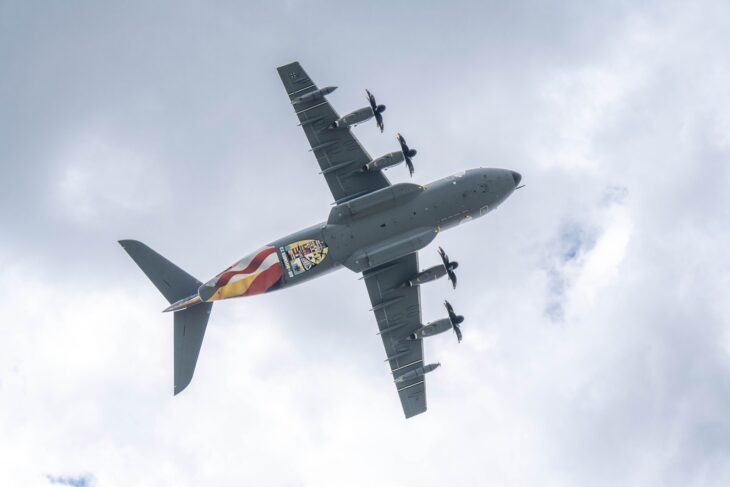
The A400M is the success story of the modern Luftwaffe, and the fleet is now complete. The 53rd and final aircraft, serial 54+63, was handed over at Wunstorf on 17 April 2026.
Every German Airbus A400M flies with Air Transport Wing 62 at Wunstorf in Lower Saxony. The programme ran for eleven years, starting with the first delivery in 2014.
It does two jobs at once, carrying tactical loads into short airstrips and refueling other aircraft in flight. Twenty-three of them are being fitted with directed infrared countermeasures to defeat heat-seeking missiles.
.jpg)
Germany flies more A400Ms than anyone else
With 53 aircraft, Germany is the largest A400M operator in the world, ahead of France, Spain, Britain and Turkey. Airbus is building a dedicated maintenance center at Wunstorf, due to open around mid-2027 with roughly 300 staff.
5. Northrop T-38C Talon: about 41 aircraft
,_21_July_2022_(221020-F-VX070-003).JPG)
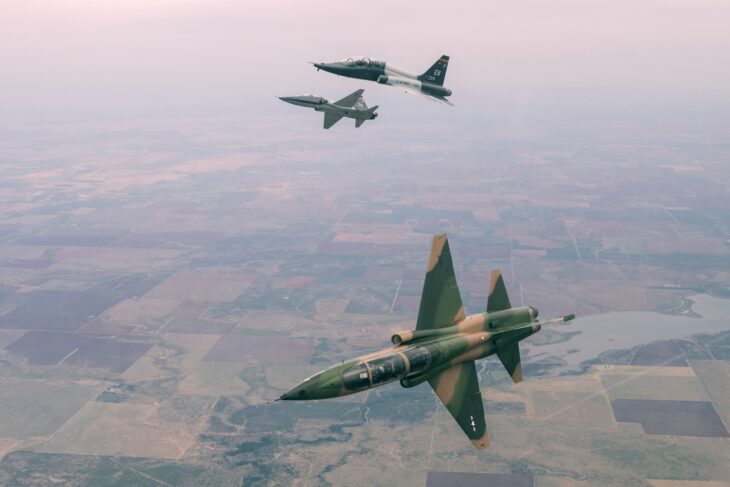
Here is the fact that surprises most people: a substantial part of the German Air Force is stationed in Texas, and has been for decades.
German fast jet pilots train on the T-38C Talon at Sheppard Air Force Base, flying American-built trainers in American airspace. The Luftwaffe holds around 41 of them.
Those aircraft reach the end of their service life in 2034, so a replacement decision is coming. Basic training happens on the Grob G 120 and the T-6 Texan II before students move to the Talon.
6. Airbus H145M LUH SOF: 15 helicopters
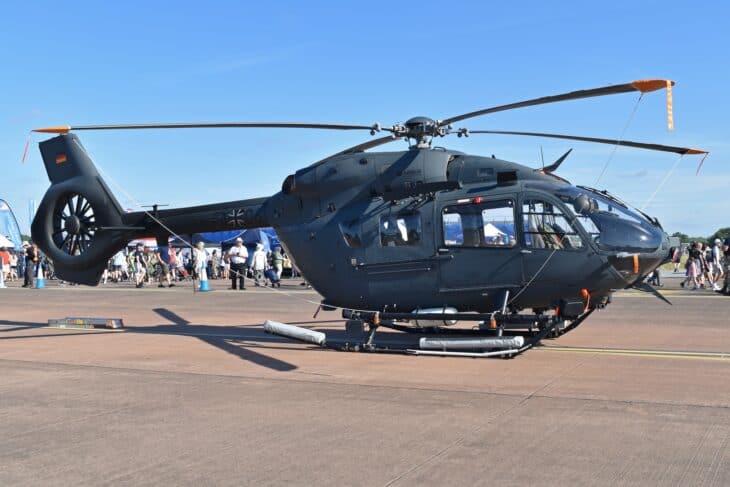
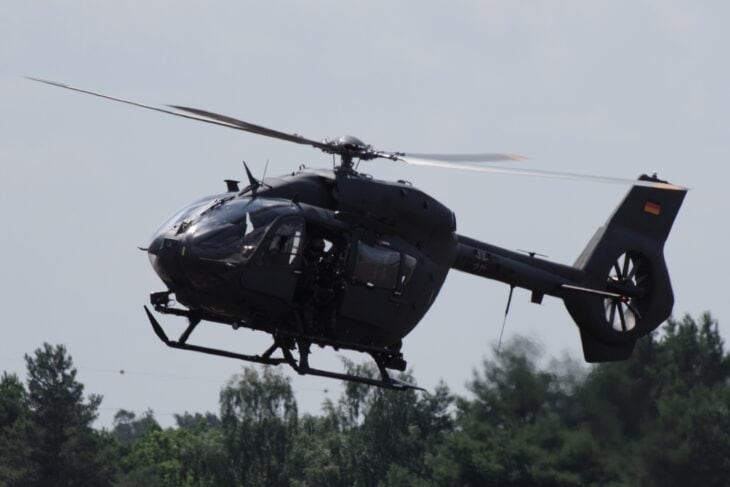
The H145M is a light, fast helicopter used to support German special forces. Fifteen are in service, also with Helicopter Wing 64.
Ten more are on order in an armed configuration called the LKH, short for leichter Kampfhubschrauber, or light attack helicopter. The first two were handed over in June 2026.
_2024-06-08_Andre_Gerwing_Collection_ID_019737.jpg)
7. C-130J and KC-130J Super Hercules: 6 aircraft
.jpg)
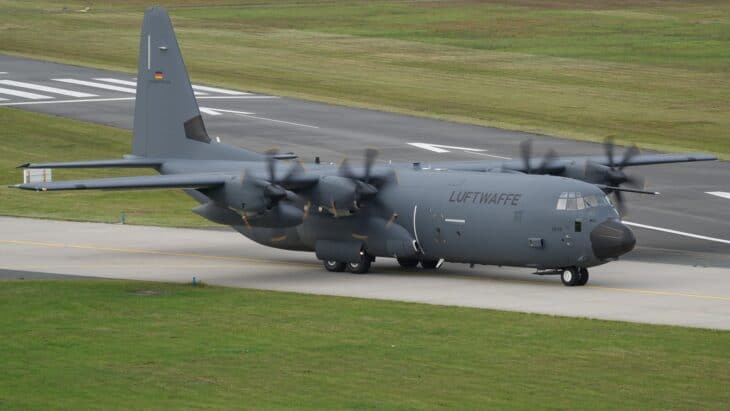
Germany operates three C-130J transports and three KC-130J tankers, and it does not operate them alone. All six belong to a binational French-German squadron based at Évreux in France.
The Hercules fills a gap the A400M leaves. It is smaller, so it can use rough or short strips that the larger Airbus cannot, which matters for special operations work.

8. IAI Heron TP: 5 drones
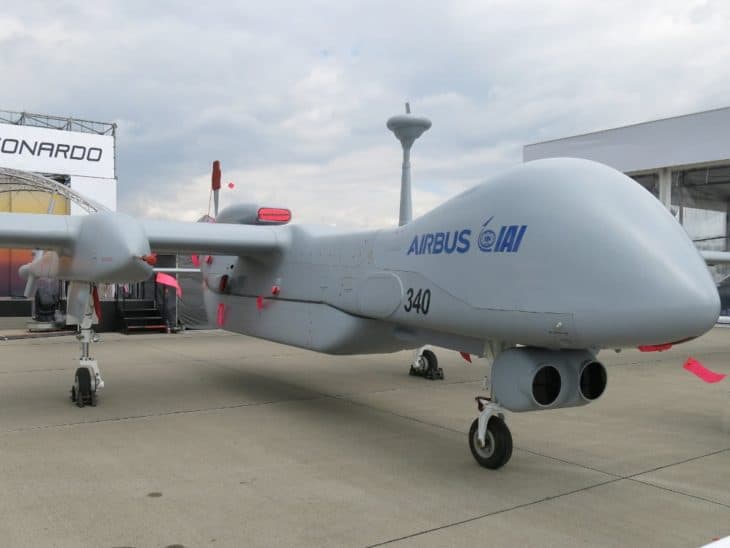
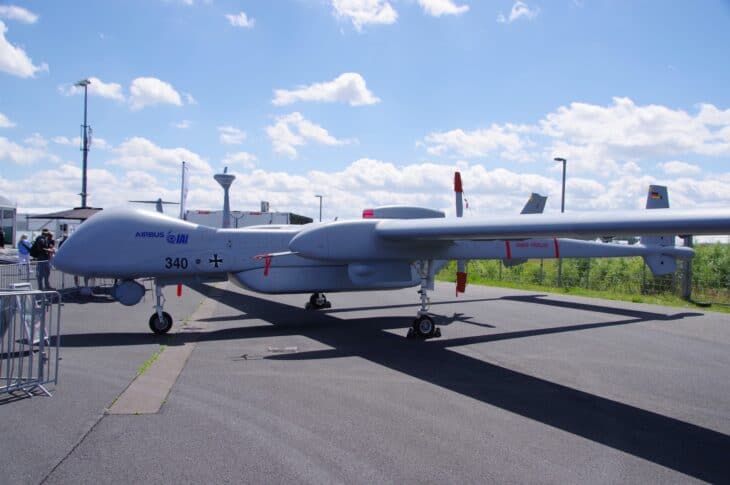
The Luftwaffe’s entire long-endurance drone force is five Heron TPs leased from Israel Aerospace Industries. They fly surveillance and reconnaissance missions, and the German parliament has approved arming them.
Three more have been ordered in a different configuration, fitted to intercept communications and radar signals. That will take the fleet to eight, which are expected to serve until at least 2034.

9. The government fleet, including the German “Air Force One”
_2025-05-15_Andre_Gerwing_Collection_ID_023683.jpg)
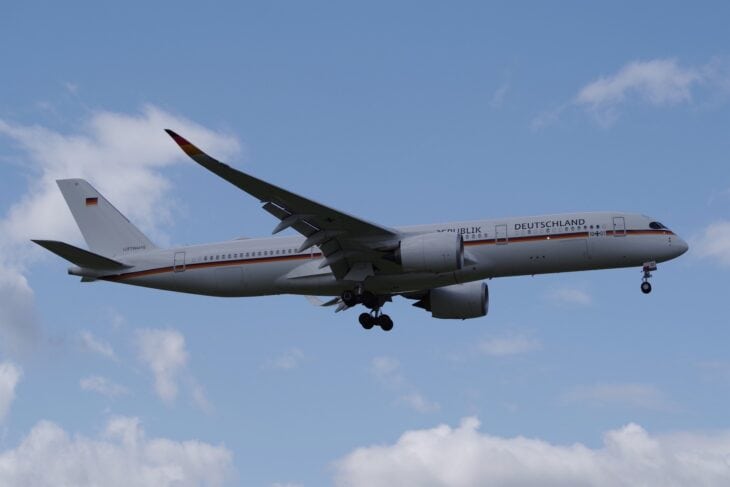
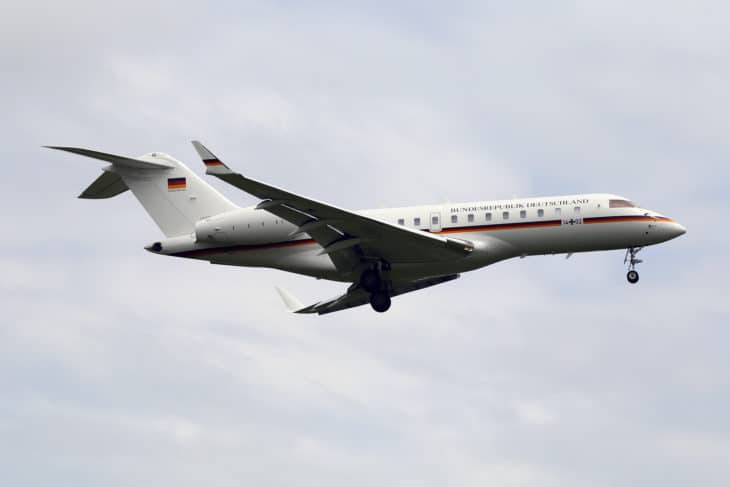
Germany’s equivalent of Air Force One is flown by the Luftwaffe, not by a civilian agency. The unit is the Flugbereitschaft, based at Cologne Bonn Airport.
Its flagships are three Airbus A350s named Konrad Adenauer, Theodor Heuss and Kurt Schumacher. They are being fitted with infrared missile defenses at a cost of around 240 million euros.
Below them sit three A319s, three Bombardier Global 5000s and three Global 6000s for shorter trips. Two A321LRs handle troop movements and medical evacuation, and one A319 was rebuilt as an observation platform for Open Skies treaty flights.
10. What is arriving: F-35A, Chinook and Eurodrone
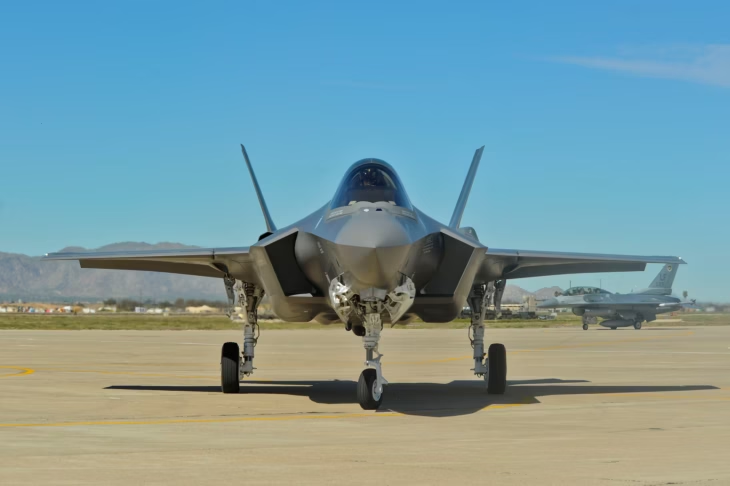
Germany has 35 F-35As on order, and the first one flew on 8 September 2026 from Fort Worth, Texas, wearing the serial 35+01. The deal was originally valued at about 8.4 billion dollars.
The first eight aircraft stay in the United States to train crews, at Ebbing Air National Guard Base in Arkansas. Deliveries to Tactical Air Wing 33 at Büchel are expected around 2027, with initial operational capability planned for 2028.
Reports that Germany will raise the order to 50 aircraft have circulated since 2025, and the defense minister has left the door open. As of September 2026 the extra 15 jets are a plan, not a signed contract, and the ministry has repeatedly played the reports down.
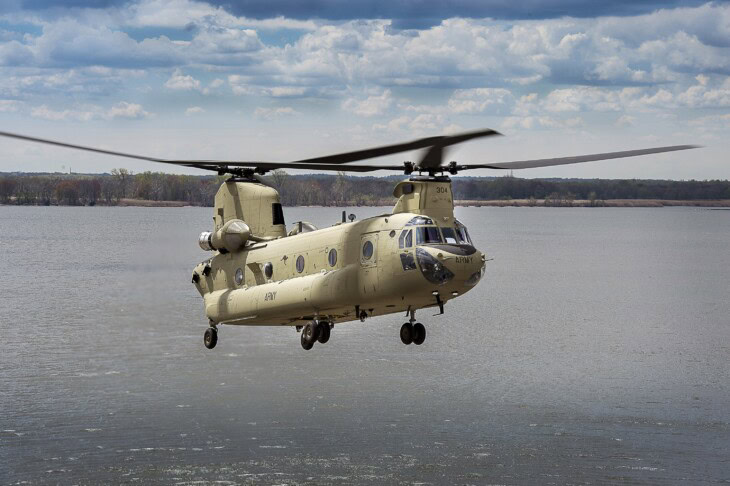
Sixty Boeing CH-47F Chinooks are on order to replace the CH-53G, with deliveries running from 2027 to 2033 and bases at Schönewalde and Laupheim. Twenty-one Eurodrones are also on order, with a first flight planned for 2029.
11. Ground-based air defense: the part people forget
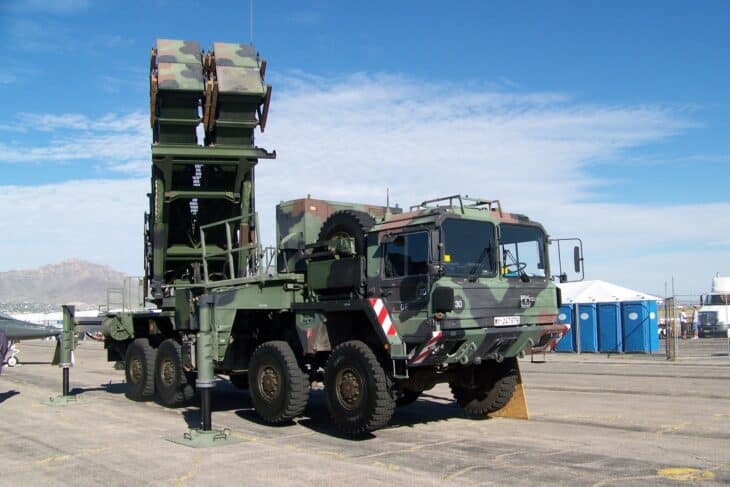

In Germany, surface-to-air missiles belong to the air force, not the army. That makes air and missile defense a core Luftwaffe job, and it currently fields eleven systems across four types.
Arrow 3 is the newest and the most significant. Its first battery entered service at the end of 2025, giving Germany the ability to intercept ballistic missiles outside the atmosphere for the first time.
Below it sit seven Patriot systems, down from twelve after five were sent to Ukraine. Eight replacements have been ordered for delivery by 2029, which would take the total to fifteen.
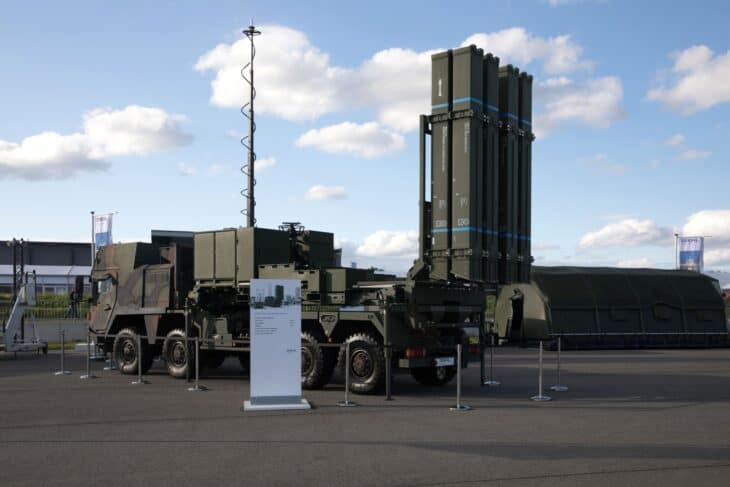
The short-range layer is the German-built IRIS-T SLM, which proved itself in Ukraine. The first unit in full German configuration was handed over in February 2026, and this layered shield is a large part of what Germany contributes to NATO air power against Russia.
.jpg)
The honest assessment: a big fleet that is about to get smaller

Counted by aircraft, Germany runs one of the more substantial air forces in Europe, and it ranks respectably among the largest air forces in the world. Counted by what it could sustain in a long fight, the picture is weaker.
The combat fleet is heading down, not up. Replacing 93 Tornados with 35 F-35As takes the total from 231 aircraft to around 198, at the same time NATO is asking members for more.
Munitions are the sharper problem. Germany holds roughly 250 Meteor air-to-air missiles and about 600 Taurus cruise missiles, stocks that would not last long in a major conflict.
There are structural gaps too. Germany has no airborne early warning aircraft of its own and relies on NATO’s ageing E-3 fleet, and it has no strategic transport aircraft, leasing Antonov An-124 capacity when it needs to move heavy loads.
The long-term fighter plan is also unsettled. Germany and France ended the FCAS programme at the ILA Berlin air show in June 2026 after Airbus and Dassault failed to agree on who would build what, leaving the sixth-generation fighter question open.
Two options are now in play. A German industry group called Team Gen 6 has proposed a national effort, and Germany could instead join the British, Italian and Japanese GCAP programme, which wants new partners committed by the end of 2026. No decision had been announced as of September 2026.
Looking for the Luftwaffe of World War II?
Luftwaffe is simply the German word for air force, and today’s service uses the same name as the one that existed from 1935 to 1945. They are not the same organization: the wartime Luftwaffe was dissolved in 1945 and the current force was founded in 1956 as part of a democratic Germany inside NATO. If you came here looking for the Bf 109 and the Fw 190, that is a different story entirely.
For that era, see our guide to German fighter planes of WW2, which covers the aircraft most people mean when they search for the Luftwaffe.
FAQ
Sources and references used for research and fact-checking.
- Bundeswehr, Organization of the German Air and Space Force
- Bundeswehr, Eurofighter
- Sicherheit & Verteidigung, Ausrüstung der Luftwaffe 2026: Bestände, Lücken, Beschaffungen
- Bundeswehr, Sikorsky CH-53
- Bundeswehr, Luftwaffe erhält den 53. und vorerst letzten A400M
- Janes, IFC 2025: Germany details Tornado capability transition to Eurofighter, F-35A
- The Aviationist, Germany's First F-35 Has Flown
- The Aviationist, France and Germany Set to End Future Combat Air System Program
- Wikipedia, List of active equipment of the German Air Force
- Wikipedia, Executive Transport Wing (German Air Force)
Get the Newsletter
The latest aviation news and stories sent to your inbox.
About the Author

Tim is the owner and lead editor of AeroCorner since 2019, overseeing aviation content covering aircraft, airlines, airports, and the broader aviation industry. Through years of researching, writing, editing, and publishing aviation-focused content, he has developed extensive practical knowledge of commercial aviation and air travel. Based in Asia and a frequent traveler himself, Tim also brings firsthand passenger experience to AeroCorner’s coverage. Outside of publishing, he has also explored aviation firsthand through hands-on flight training in New Zealand.