Military Helicopters
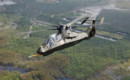
Boeing RAH-66 Comanche
ICAO: H66
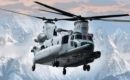
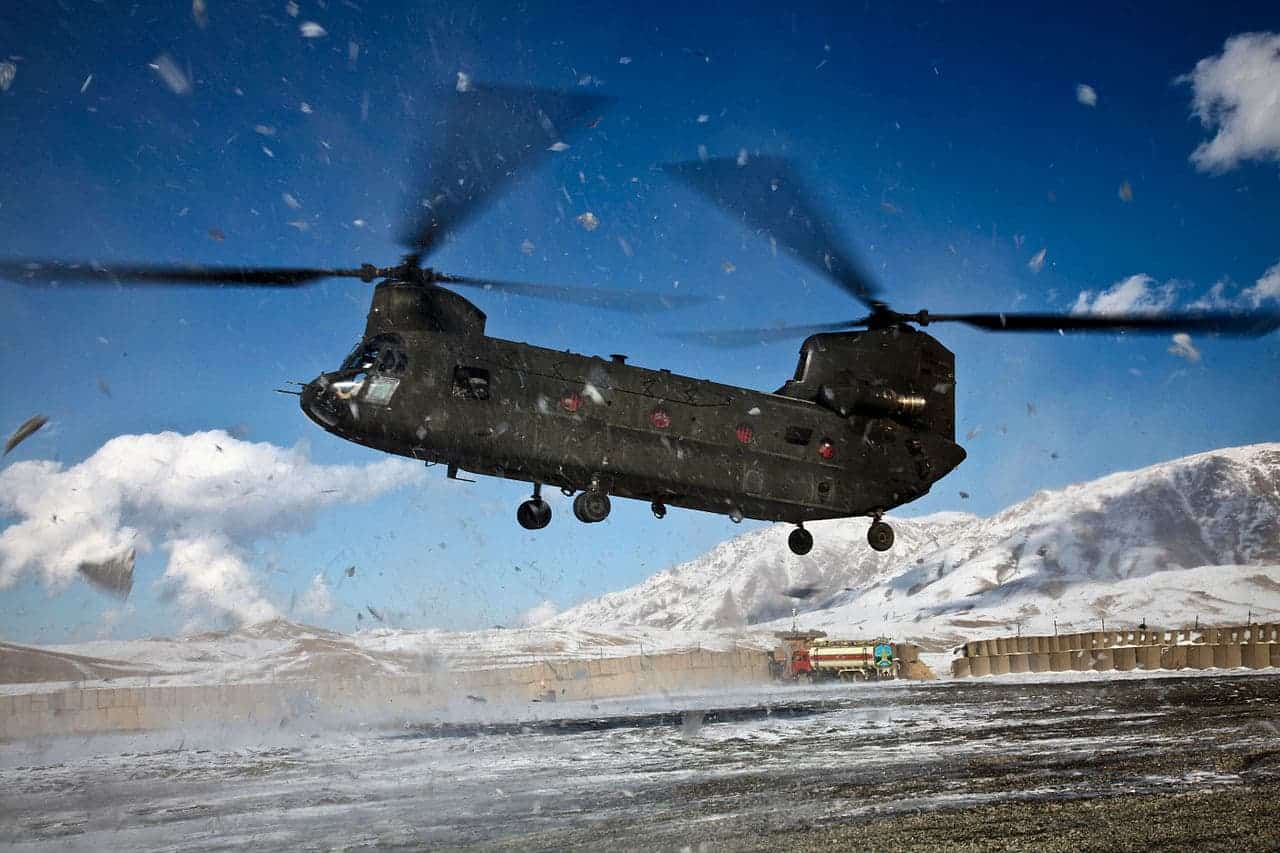
The Boeing CH-47F Chinook is the tandem-rotor heavy-lift helicopter that grew out of a small prototype the Army first found unsuitable, and it became the Army's workhorse for moving troops, artillery and supplies.
Updated: by Tim de Vries

The latest aviation news and stories sent to your inbox.
The Boeing CH-47F Chinook is the U.S. Army’s primary heavy-lift helicopter, a tandem-rotor workhorse tracing its lineage back to the original 1961 Chinook design. Twin Honeywell turboshaft engines let it carry up to 24,000 pounds (10,886 kg) of cargo or 55 troops, and the U.S. Army alone flies 465 of them. A modernized Block II version, with a stronger airframe and more powerful engines, has been reaching units since 2020.
Live Fleet Activity (H47)
Fetching live data…



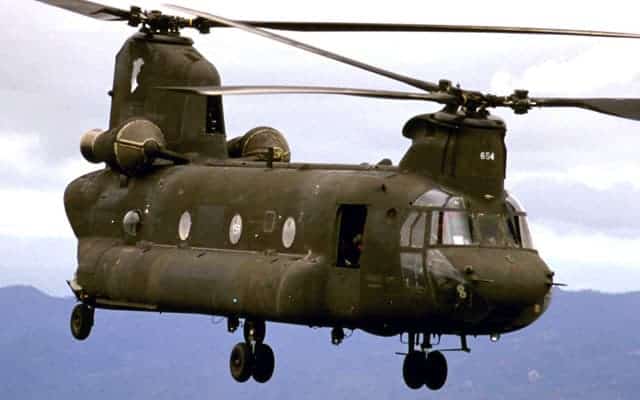
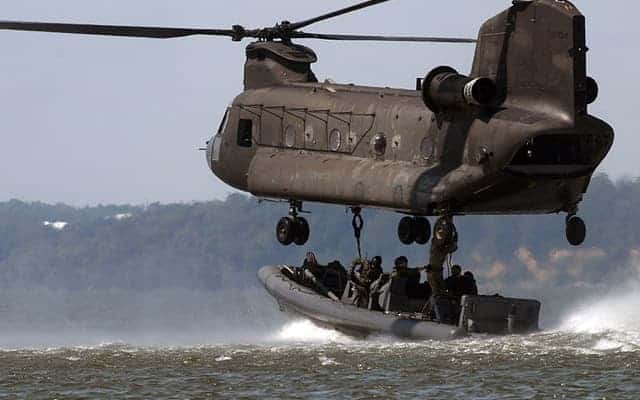
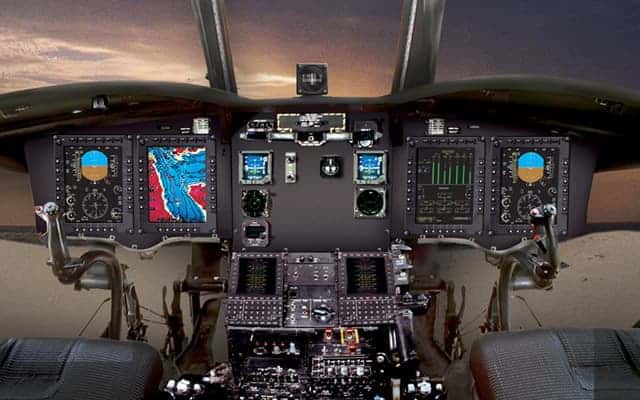
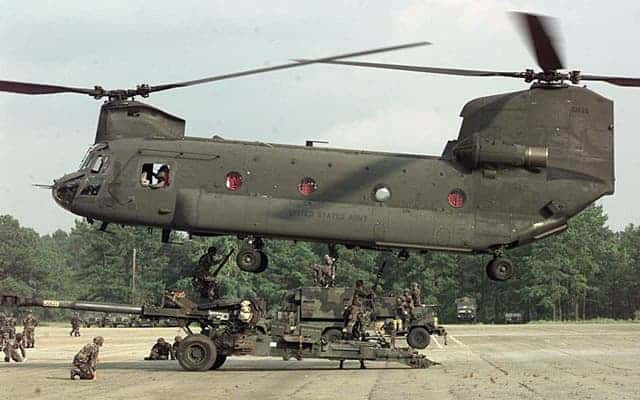
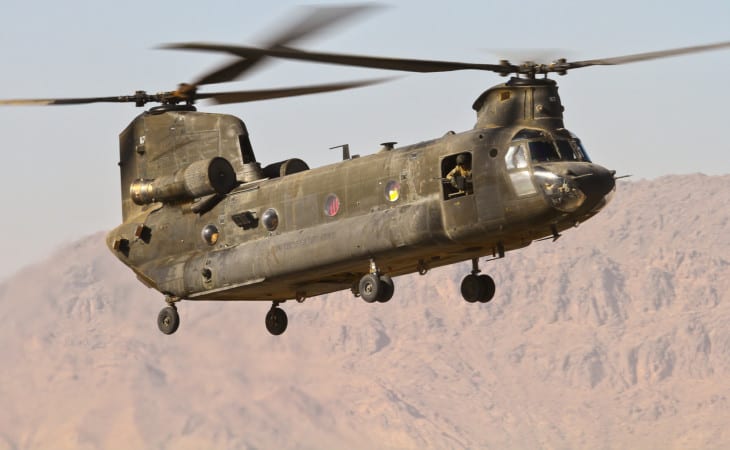
The Chinook’s story starts with a helicopter the Army didn’t want. In 1958, Vertol built a small tandem-rotor prototype called the YHC-1A, but Army testers found it too heavy for assault work and too light for general transport.
Vertol scaled the design up into the HC-1B instead. The preproduction YHC-1B made its first hovering flight on September 21, 1961, and the following year it was redesignated CH-47A and named Chinook, after the Chinook people of the Pacific Northwest.
The basic airframe has been in continuous production ever since, through the C and D models of the 1970s and 1980s and into today’s CH-47F. Boeing still builds new Chinooks at its Philadelphia plant, and export orders from Germany and others keep the line running.
The CH-47F is an upgraded CH-47D. The improved design first flew in 2001, and the first production aircraft rolled off the line and flew on October 23, 2006.
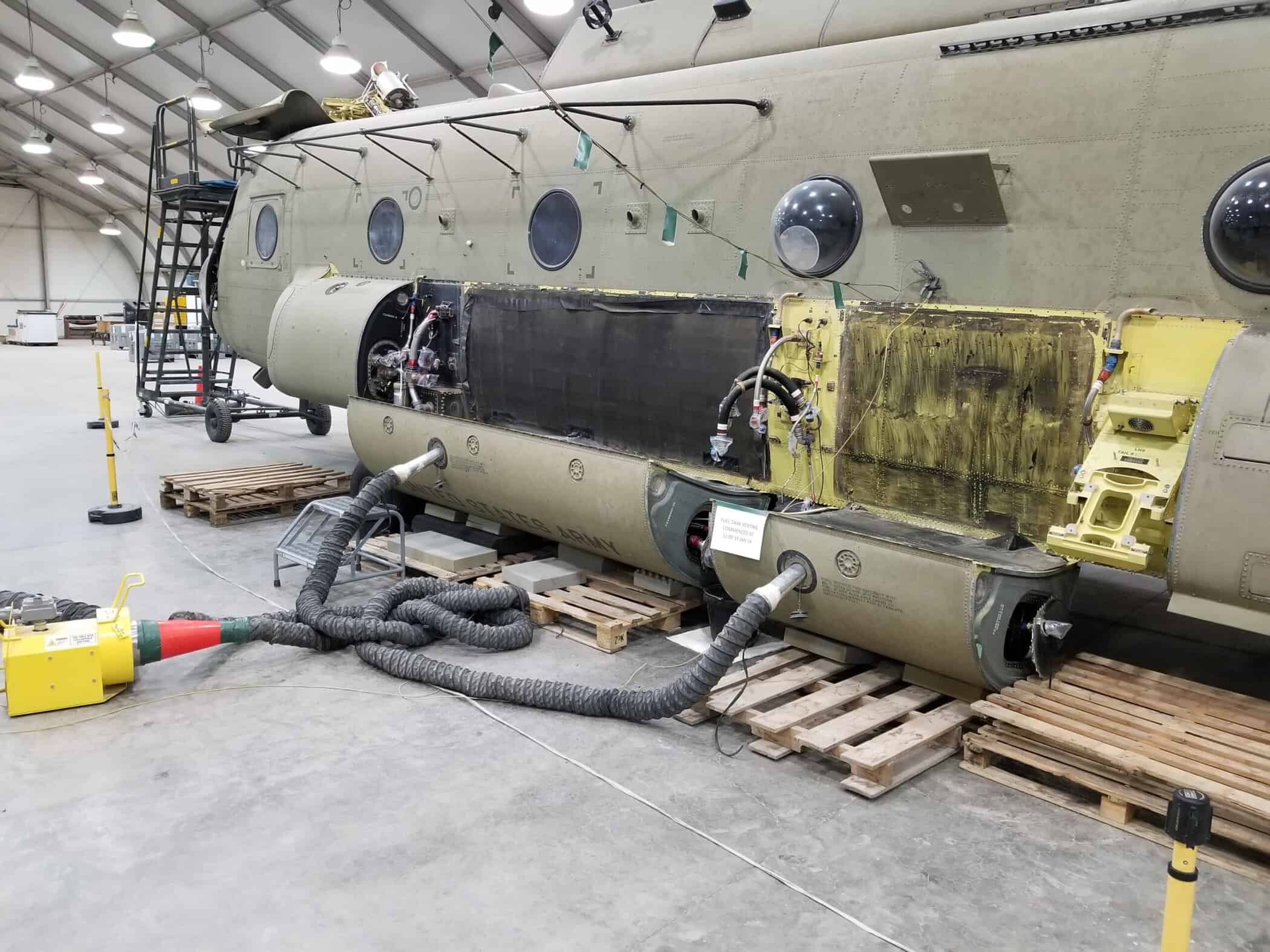
The biggest change is structural. Earlier Chinooks were riveted together from many small parts that flexed and cracked under vibration. The F model uses a monolithic, milled airframe that cuts vibration and sharply reduces inspection and repair time.
Inside, a Rockwell Collins Common Avionics Architecture System replaced the old analog instruments with a shared digital cockpit, paired with a Digital Advanced Flight Control System that helps pilots hold a stable hover in dust, brownout, or high-wind conditions.
The Army completed initial testing in 2007 and had the type fully fielded by early 2018. Boeing had delivered the first 48 CH-47Fs by August 2008, and that same year announced a separate $4.8 billion contract to build 191 more.
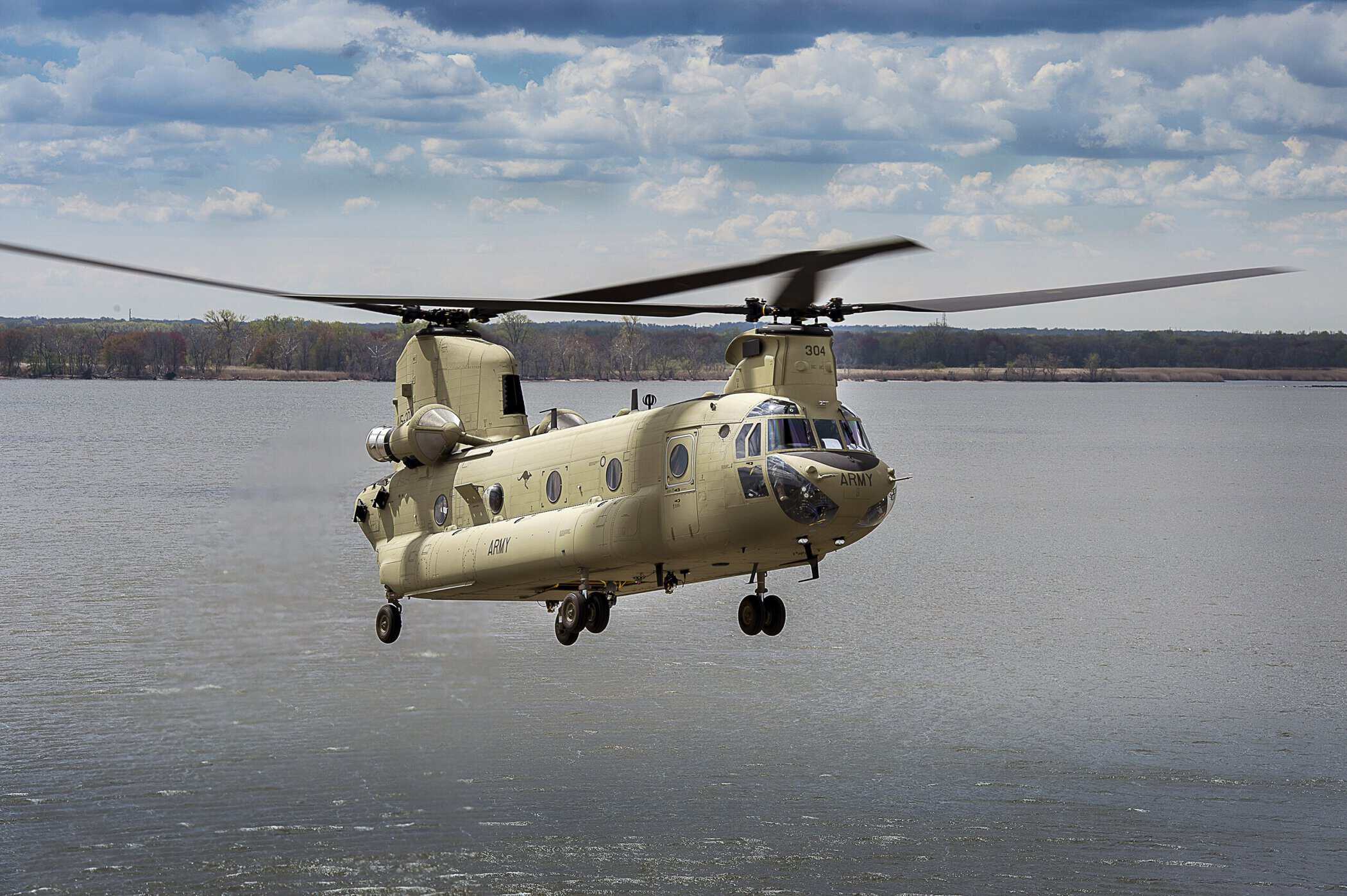
The Chinook’s tandem-rotor layout is the reason it can lift as much as it does. Every helicopter needs a tail rotor to counteract the torque of its main rotor, and that tail rotor consumes power without producing lift. The Chinook’s two counter-rotating rotors cancel each other’s torque instead, so essentially all engine power goes into lifting.
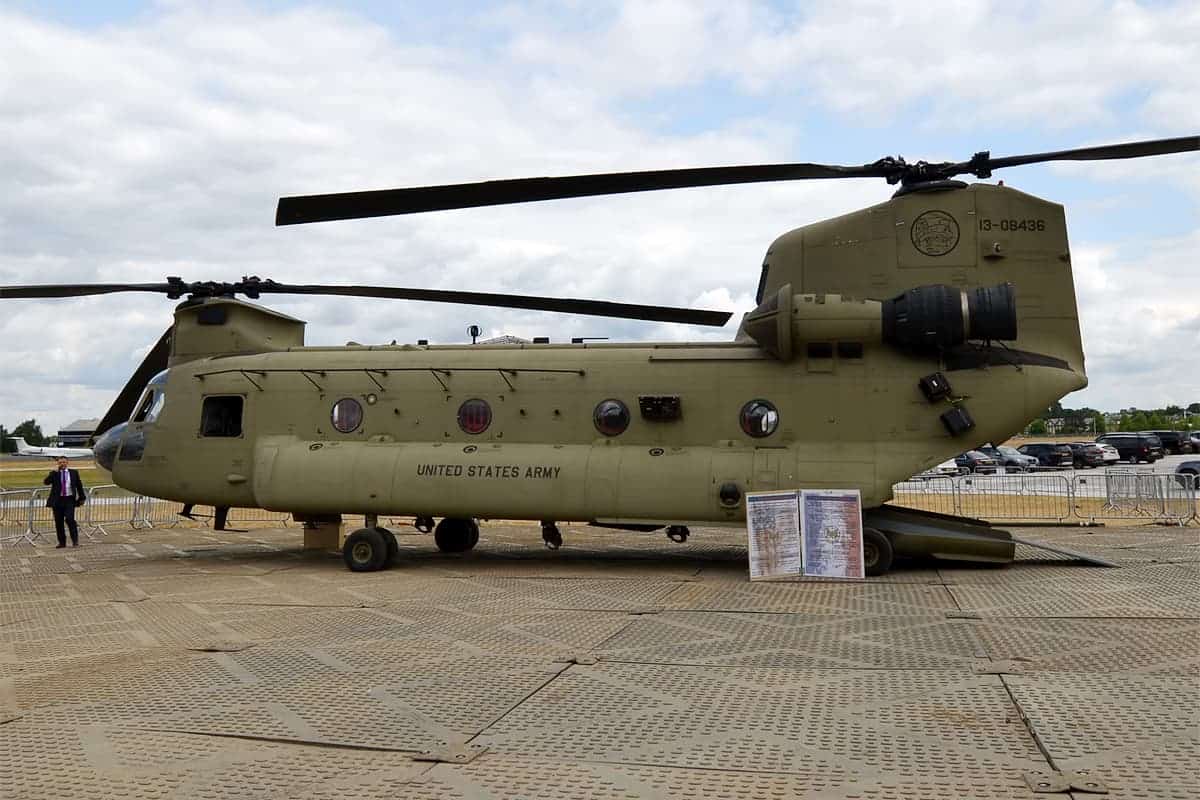
Each rotor spans 60 feet (18.3 m). Two Honeywell T55-GA-714A turboshaft engines drive them, producing 4,733 shaft horsepower apiece. A crew of three, pilot, copilot, and flight engineer, operates the aircraft, and the cargo hold can carry up to 55 troops or 24 stretcher patients on medevac runs.
The specification panel above lists the CH-47F’s range at 400 nautical miles (740 km). That figure is worth explaining, because three very different Chinook range numbers circulate and they answer three different questions.
400 nautical miles is the aircraft’s published range with standard internal fuel and no reserve, the number that describes a normal self-deployment leg. Combat radius, how far the Chinook can fly out, complete a mission, and return, is much shorter.
That combat radius is 165 nautical miles (306 km), because a round trip burns roughly double the fuel of a one-way leg. Ferry range, flown with auxiliary tanks and no cargo, stretches to roughly 1,216 nautical miles (2,252 km), the figure used when Chinooks self-deploy across an ocean.
Payload works the same way. The panel’s 24,000 lb (10,900 kg) max payload is a structural limit, not a figure the aircraft can also carry at maximum range.
On the ground, the Chinook’s sling-load hooks add capacity the panel doesn’t track at all: 26,000 lb (11,793 kg) on the single center hook, or 25,000 lb (11,340 kg) split across a tandem rig using all three hooks together.
Boeing has been rolling out a Block II upgrade to the CH-47F since 2020, and it changes two of the numbers this page’s panel reports. The panel’s 50,000 lb (22,700 kg) max takeoff weight describes the baseline CH-47F fleet the Army has flown since 2007. Block II raises that ceiling to 54,000 lb (24,494 kg).
The upgrade pairs that higher weight limit with Honeywell T55-715 engines rated about 20% more powerful than the standard CH-47F’s, a redesigned fuel system, and a stronger rotor drivetrain.
The design target is a fully loaded Chinook that can still hover at 4,000 feet (1,200 m) on a 95°F (35°C) day, an altitude-and-heat combination that limits payload on the current fleet, with a longer-term goal of pushing that to 6,000 feet (1,800 m).
Block II is also sized to carry the Army’s new Joint Light Tactical Vehicle as a sling load.
Boeing had delivered six Block II aircraft for testing as of October 2025, with the total number under contract reaching 18. The Army has not announced a date to convert its full CH-47F fleet, so for now Block II and the standard CH-47F fly side by side.
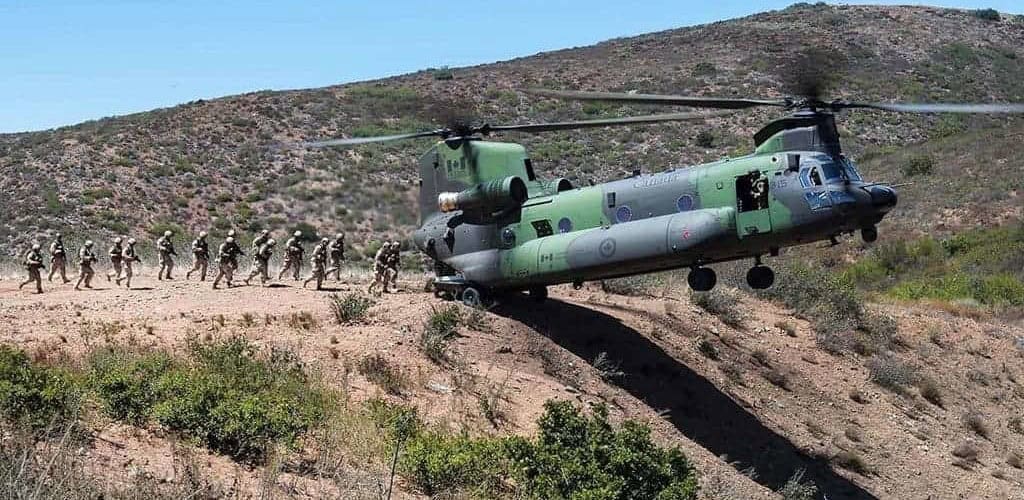
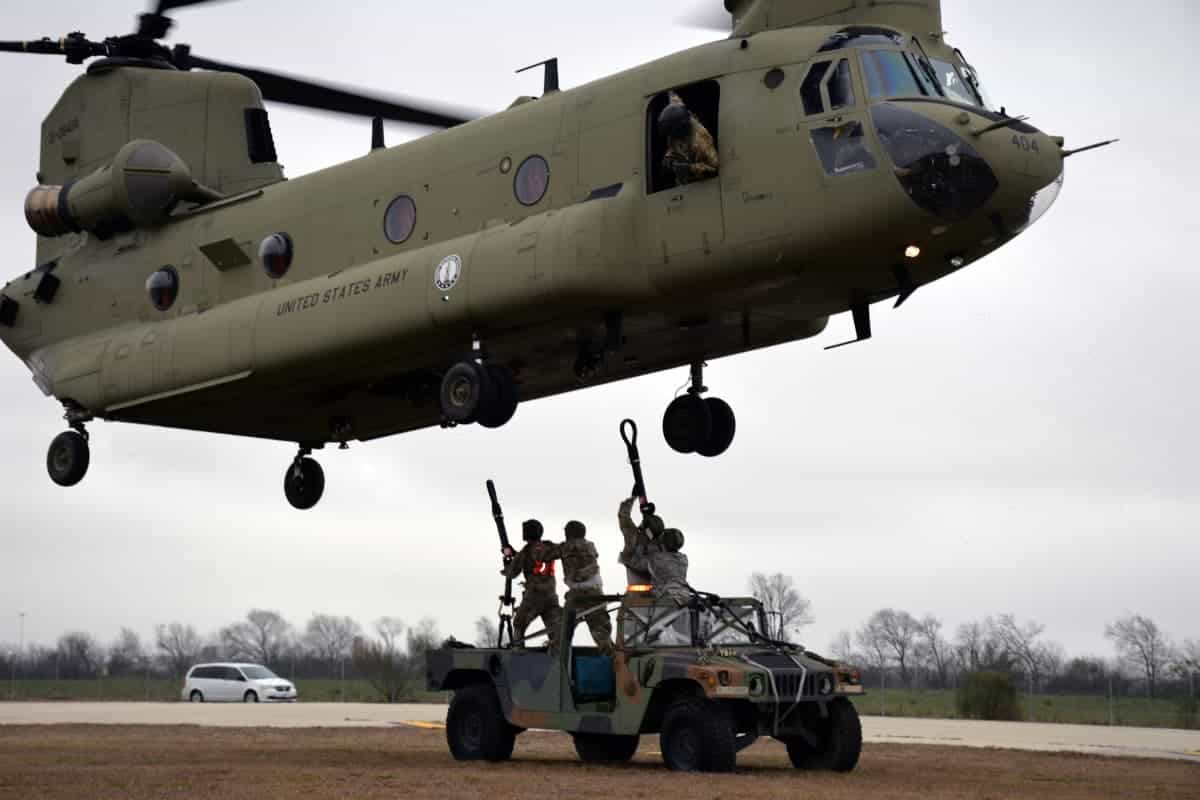
The CH-47F’s main job is moving troops, artillery, and vehicles into places without a runway. Sling loads let it carry a Humvee, a towed howitzer, or a downed helicopter underneath the fuselage without anyone having to load it through a door.
A special-operations variant, the MH-47G, shares the CH-47F’s airframe, engines, and Common Avionics Architecture System cockpit, built for U.S. Special Operations Command. The latest MH-47G Block II standard adds inflight refueling, a defensive aids suite, and terrain-following radar for low-level flying in poor weather, on top of what the standard CH-47F carries.
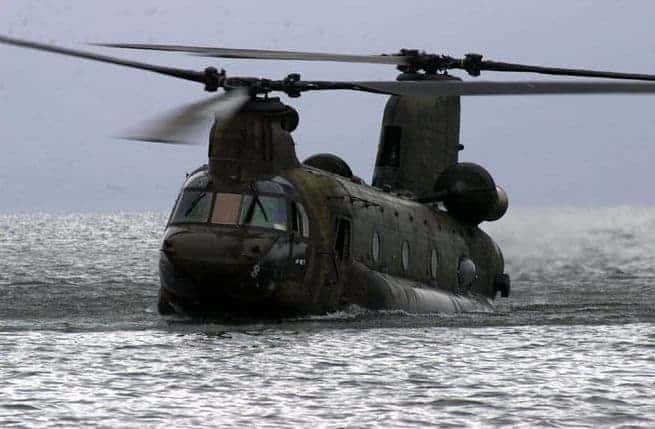
Chinooks have flown disaster relief missions too, moving aid after the 2004 Indian Ocean tsunami and the 2005 Kashmir earthquake. In Army air-assault operations, the Chinook typically works alongside the smaller UH-60 Black Hawk: the Black Hawk moves troops, while the heavier-lifting Chinook brings in the artillery, vehicles, and fuel a Black Hawk can’t carry.
The U.S. Army operated 465 CH-47F Chinooks as of January 2025, making it by far the type’s largest operator. It’s the Army’s only heavy-lift cargo helicopter, a role the smaller Sikorsky CH-53E Super Stallion fills for the Marine Corps.
Roughly a dozen other countries fly the CH-47F or a licensed equivalent. Canada operates it as the CH-147F, the United Kingdom has ordered dozens under its own Chinook designations, and Australia, India, the Netherlands, and Spain all fly CH-47Fs delivered or upgraded since 2010.
Germany selected the CH-47F Block II in 2022 to replace its aging CH-53G fleet, and Japan builds its own CH-47J variant under license from Kawasaki. For a broader look at this weight class, see AeroCorner’s guide to heavy-lift helicopters.
The Army’s own accounting, from the December 2022 Selected Acquisition Report, puts the CH-47F Block II program’s average procurement unit cost at $27.4 million per aircraft, in 2017 dollars, across 539 procurement airframes. Including research and development spread across the whole program, the figure rises to $28.7 million per aircraft.
Those numbers cover the aircraft itself. Actual Army contracts run higher: an October 2025 order for nine Block II Chinooks was valued at $461 million, or roughly $51 million per aircraft once support is bundled in.
Foreign military sales packages, which fold in training, spare parts, and ground support equipment, cost far more still. Germany’s 2023 deal for 60 Chinooks was valued at up to $8.5 billion.
The U.S. Army alone flew 465 CH-47F Chinooks as of January 2025. Add the fleets Canada, the United Kingdom, Australia, India, the Netherlands, Spain, and other operators fly or have on order, and the worldwide CH-47F fleet runs into the hundreds beyond that Army total.
Not the military CH-47F, but a civilian version exists. The Model 234, a commercial Chinook derivative, holds its own FAA type certificate, currently owned by Columbia Helicopters, and flies logging, heavy construction, and wildfire-suppression work in the United States.
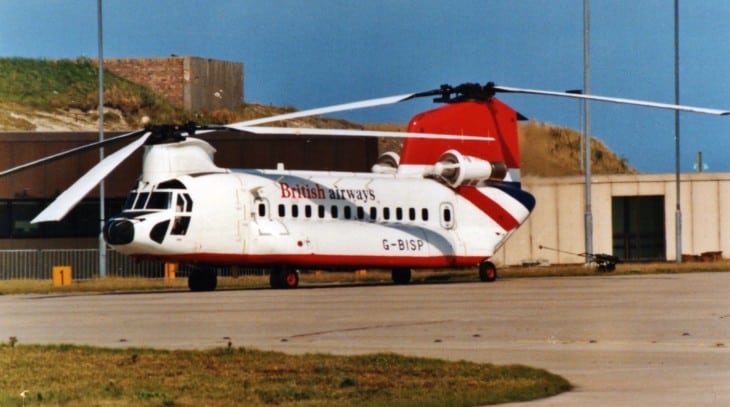
The Army’s December 2022 acquisition report puts the average procurement cost at $27.4 million per aircraft in 2017 dollars. Actual contract prices run higher with support and spares included, and export deals that bundle training and logistics cost far more per airframe.
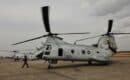
Both trace back to the same Vertol tandem-rotor prototype from the late 1950s, but they split into separate aircraft. The CH-46 Sea Knight became the Marine Corps’ smaller, lighter troop transport, retired by October 2015 in favor of the MV-22 Osprey.
The CH-47 Chinook became the larger, more powerful heavy-lift version. Unlike the Sea Knight, it remains in frontline production and service today.
Sources and references used for research and fact-checking.