

Table of Contents
Most helicopters fly about 250 to 400 miles (400 to 640 km) on a single tank of fuel, staying airborne for roughly 2.5 to 5 hours. A light piston machine like the Robinson R44 is good for around 345 miles (300 nautical miles). A heavy offshore transport like the Sikorsky S-92 covers 620 miles (539 nautical miles).
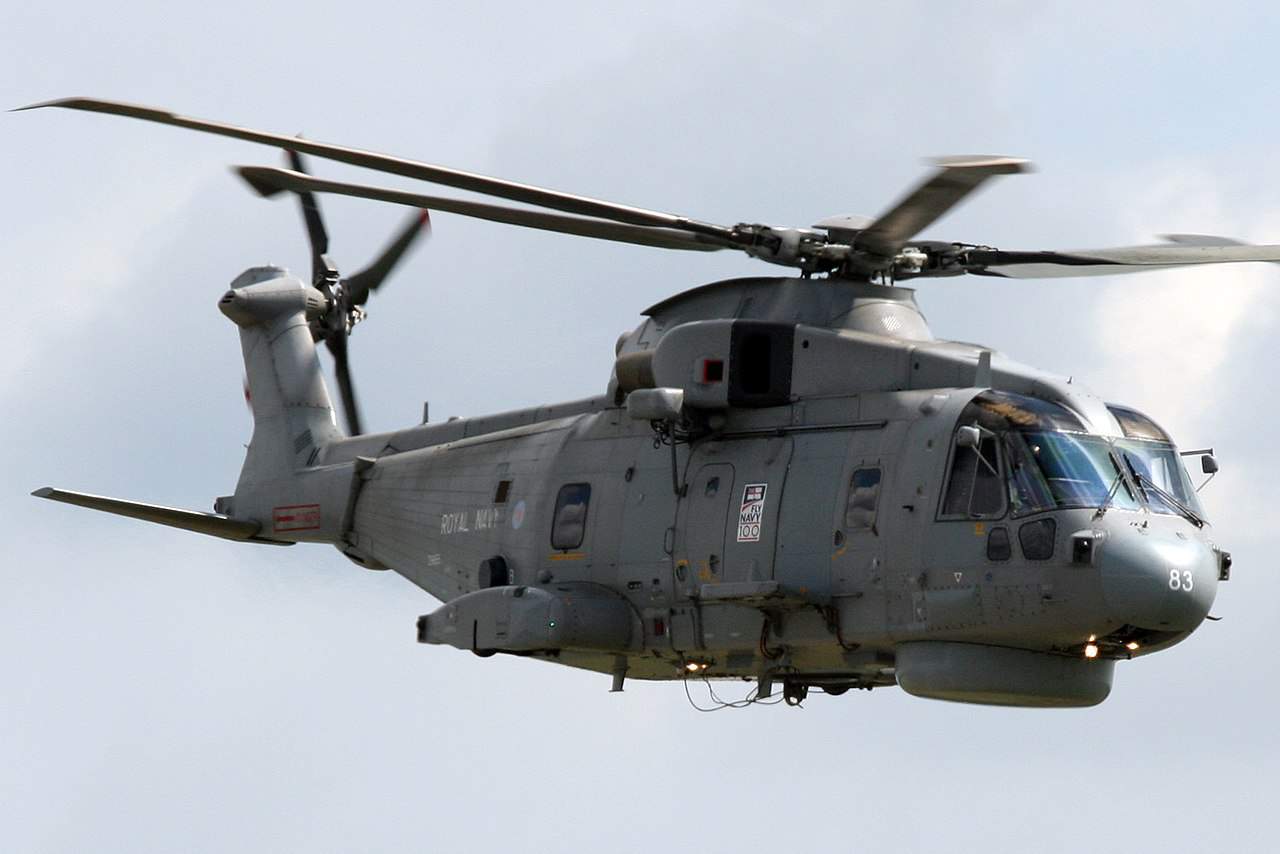
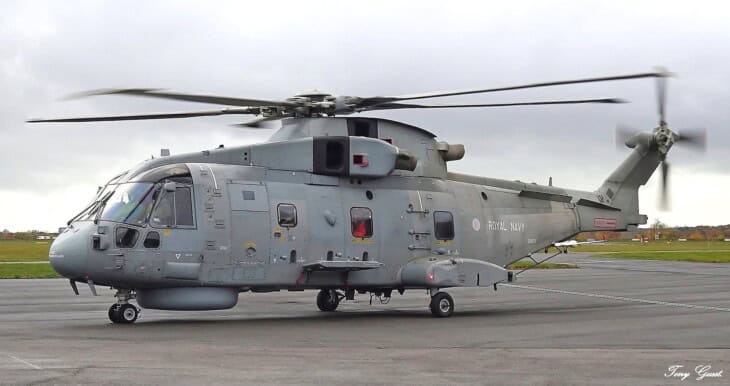
The longest range helicopter in service is the Leonardo AW101. Leonardo publishes a maximum range of 932 miles (810 nautical miles) on standard fuel tanks, with a maximum endurance of 7 hours and 40 minutes.
The all-time record is far greater. In 1966 a Hughes YOH-6A flew 2,213 miles (3,562 km) nonstop across the United States, and no helicopter has beaten it since.
| Helicopter class | Typical range | Typical cruise speed |
|---|---|---|
| Light piston (Robinson R44) | 345 miles (300 nm) | 125 mph (109 kt) |
| Light turbine (Robinson R66) | 403 miles (350 nm) | 127 mph (110 kt) |
| Medium twin (Sikorsky S-76, Bell 429) | 473 miles (411 nm) | 178 mph (155 kt) |
| Heavy transport (Sikorsky S-92, Airbus H225) | 620 to 690 miles | 174 mph (151 kt) |
| Military heavy-lift (Boeing CH-47F Chinook) | 460 miles (400 nm) | 181 mph (157 kt) |
| Record (unrefueled, Hughes YOH-6A, 1966) | 2,213 miles |
The Longest Range Helicopters in the World, Ranked
Most “longest range helicopter” lists are unusable because they compare numbers that were never measured the same way. A ferry range with belly tanks bolted into the cabin is not the same thing as the range a machine flies on the fuel it carries as standard.
So the measure here is one thing only: maximum published range on standard internal fuel, no auxiliary tanks, at maximum takeoff weight. Auxiliary-tank and ferry figures get their own section further down, where they belong.
| # | Helicopter | Max range (standard fuel) | Max cruise | Status in 2026 |
|---|---|---|---|---|
| 1 | Leonardo AW101 Merlin | 932 miles (810 nm) | 173 mph (150 kt) | In service |
| 2 | Airbus H175 | 720 miles (626 nm) | 178 mph (155 kt) | In service |
| 3 | Bell 525 Relentless | 712 miles (619 nm) | 184 mph (160 kt) | Awaiting FAA certification |
| 4 | Airbus H225 Super Puma | 690 miles (600 nm) | 175 mph (152 kt) | In service |
| 5 | Sikorsky S-92A | 620 miles (539 nm) | 174 mph (151 kt) | In service |
| 6 | Airbus H160 | 552 miles (480 nm) | 173 mph (150 kt) | In service |
| 7 | Airbus H215 | 538 miles (468 nm) | 157 mph (136 kt) | In service |
| 8 | Sikorsky CH-53K King Stallion | 530 miles (460 nm) | 196 mph (170 kt) | In service |
| 9 | Bell 429 GlobalRanger | 473 miles (411 nm) | 178 mph (155 kt) | In service |
| 10 | Sikorsky S-76C++ | 473 miles (411 nm) | 178 mph (155 kt) | In service |
| 11 | Boeing CH-47F Chinook | 460 miles (400 nm) | 181 mph (157 kt) | In service |
The AW101 wins because it was designed around a long over-water mission. It is a three-engine, 34,390 lb (15,600 kg) machine built for anti-submarine patrol and search and rescue, roles where staying up for most of a working day matters more than speed.
Second and third place tell you what the civil market wants. The Airbus H175 and the Bell 525 were both built for the offshore oil industry, which needs to reach rigs hundreds of miles out to sea and come home with fuel to spare.
Note the status column on the Bell 525. It first flew in 2015 and Bell was still working toward FAA certification through 2026, so it appears on plenty of “longest range” lists as though you could go and hire one. You cannot yet.
Why this list looks different from others
Every figure above is the manufacturer’s maximum range on standard internal fuel with no reserves. Lists that mix in ferry ranges with auxiliary tanks produce a different and much longer order, which is why the Leonardo AW139 does not appear here despite a widely quoted 738-mile figure. That number is measured with an auxiliary tank fitted.
Which Civilian Helicopter Has the Longest Range?
Among purely civilian types, the Airbus H175 leads at 720 miles (626 nautical miles), with a maximum endurance of 6 hours and 6 minutes. Airbus markets it as the longest range in its class, and on standard fuel that holds up.
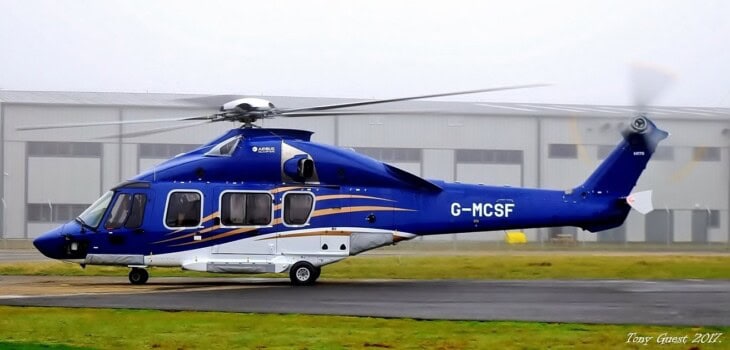
The AW101 tops the overall list, but its long-range variants are military and para-public machines rather than something a charter operator buys. The same is true of the CH-53K and the Chinook.
If you are shopping rather than reading, the practical civilian long-haul options are the H175, the H225, and the S-92. All three are offshore workhorses, and all three are expensive. Our guide to the cheapest helicopters you can buy covers the other end of that market, where range drops to around 300 miles.
The Long-Range Helicopters That Do Not Count
Three aircraft dominate search results for this question, and none of them belongs in a ranking of production helicopters. It is worth saying why, because the reasons are more interesting than the numbers.
The Lockheed AH-56A Cheyenne never entered service
The Cheyenne is listed first on several “longest range helicopter” pages at 1,223 miles (1,063 nautical miles), which would beat the AW101 comfortably. It was also fast, hitting 244 mph (212 knots).
The problem is that only 10 prototypes were ever built. Rotor vibration problems, a fatal crash, and an inter-service argument over who should fly close air support killed the production contract in 1969, and the program was terminated in 1972.

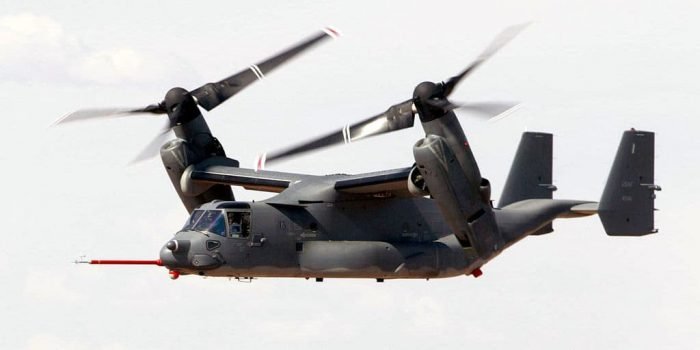
The V-22 Osprey is a tiltrotor, not a helicopter
The Bell Boeing V-22 Osprey has an operational range of about 1,266 miles (1,100 nautical miles) and a ferry range of more than 2,400 miles (2,100 nautical miles). Nothing with a rotor comes close.
It achieves that by cheating, in the nicest sense. The Osprey takes off vertically like a helicopter, then rotates its engine nacelles forward and flies on its wing like a turboprop, which is a far more fuel-efficient way to cover ground.
Rotor lift is expensive
A helicopter burns fuel to hold itself up for every second it is airborne, because the rotor generates all of the lift. An airplane gets its lift from a wing that costs nothing extra to keep working once the aircraft is moving forward. That single difference is why a 932-mile helicopter is remarkable while a 932-mile light aircraft is unremarkable.
The Mil Mi-26 trades range for payload
The Mi-26 is the heaviest helicopter in production, capable of lifting 44,000 lb (20,000 kg) internally. Carrying 17,000 lb (7,700 kg) of cargo, its range collapses to about 310 miles (270 nautical miles).
Empty it out and fit auxiliary tanks and the same airframe ferries 1,190 miles (1,040 nautical miles). Same helicopter, nearly four times the distance, and that gap is the whole story of rotorcraft range. See our guide to the biggest heavy-lift helicopters for how the rest of that class compares.
Ferry Range: How Far a Helicopter Goes With Auxiliary Tanks
Ferry range is the distance a helicopter can cover with extra fuel tanks fitted and nothing useful on board. It is how military helicopters get themselves across oceans and continents without being loaded onto a ship.
The numbers are dramatic. A Boeing CH-47F Chinook flies 460 miles (400 nautical miles) on internal fuel, and 1,399 miles (1,216 nautical miles) in ferry configuration, roughly triple the distance.
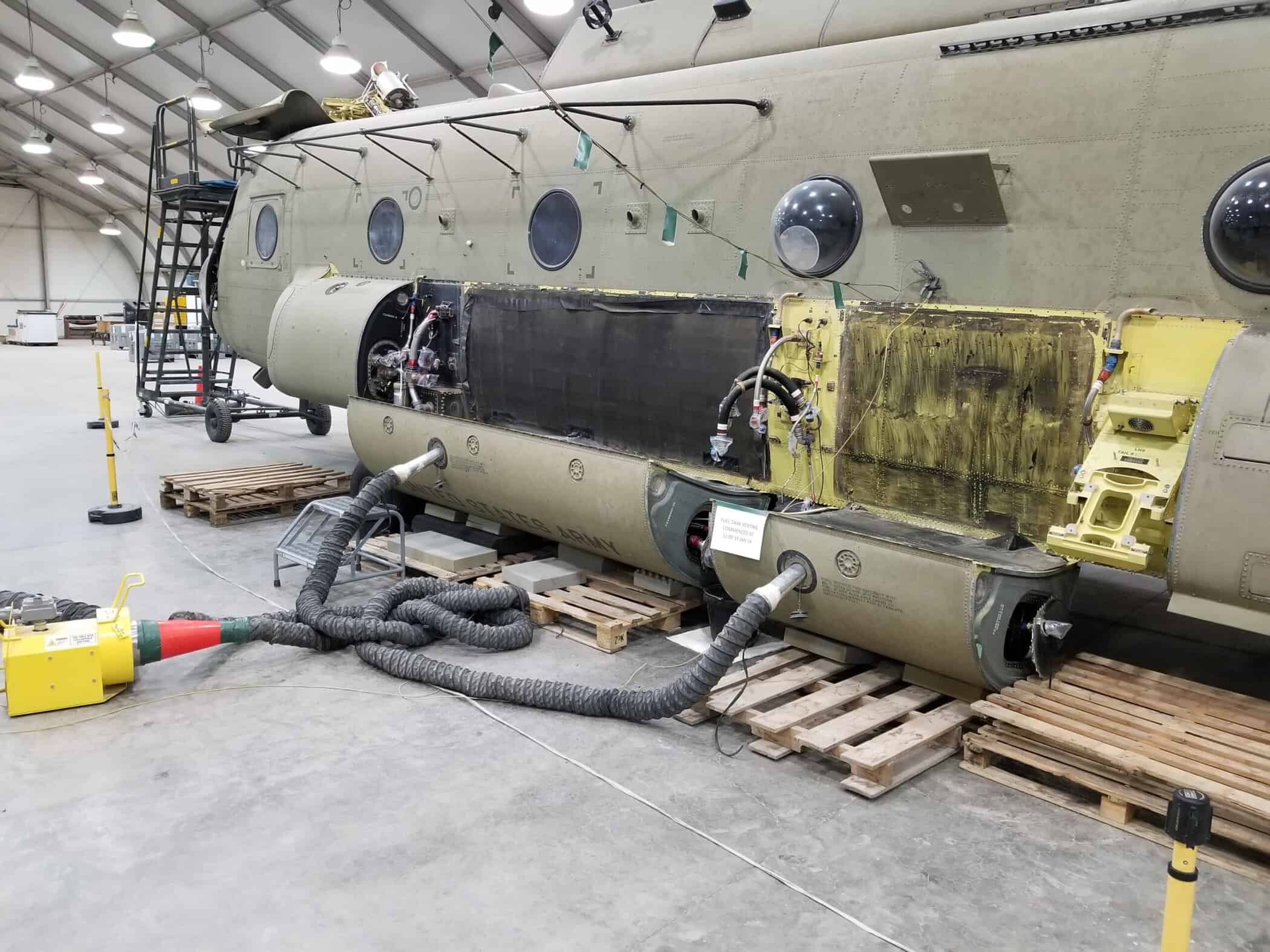
This is the single biggest reason competing range lists disagree with each other. One site quotes the standard figure, the next quotes the ferry figure, and neither says which it used.
Every mile of range is paid for in payload
Fuel and cargo compete for the same weight allowance. A helicopter flying its maximum published range is usually carrying almost nothing, and one carrying a full load is flying a fraction of that distance. That is why an offshore operator quotes range with 12 passengers aboard rather than the brochure figure, and why the Mi-26 can either lift 20 tonnes or fly 1,190 miles, but never both.
The Longest Helicopter Flight Ever Flown
On 6 April 1966, Hughes test pilot Robert Ferry flew a YOH-6A light observation helicopter from Culver City, California to Ormond Beach, Florida without refueling. The distance was 2,213.1 miles (3,561.6 km) and the flight took 15 hours and 8 minutes.
The record still stands 60 years later, for a helicopter of any size or weight. It was set in a tiny four-seat scout machine stuffed with fuel, not in anything resembling a long-range transport.
That is a good reminder that maximum range and useful range are different questions. Nobody would design an air ambulance around a 15-hour endurance flight.
How Long Can a Helicopter Stay in the Air?
Typical endurance is 2.5 to 5 hours, which is why 250 to 400 miles is the usual answer to the range question. Endurance and range are the same constraint viewed from two directions.
At the top end, the Leonardo AW101 has a published maximum endurance of 7 hours and 40 minutes, and the Airbus H175 manages 6 hours and 6 minutes. Both figures assume standard tanks and no reserves.

No pilot flies to those numbers. Under 14 CFR 91.151, a helicopter flying VFR must carry enough fuel to reach its first intended landing point plus 20 minutes at normal cruising speed, so the usable figure is always lower than the brochure.
What Actually Limits a Helicopter’s Range
Four things decide how far any given helicopter gets on a given day, and only one of them is written on the spec sheet.
- Fuel capacity. The H175 carries over two tonnes of fuel, which is more than a Robinson R44 weighs empty. That is most of the gap between 720 miles and 345 miles.
- Payload. Passengers, cargo, and rescue equipment all displace fuel. Published range figures usually assume a nearly empty cabin.
- Wind and weather. A 30 mph headwind on a 150 mph cruise costs a fifth of your ground speed and a fifth of your range.
- Mandatory reserves. The 20-minute VFR rotorcraft reserve is a legal floor, not a target, and most operators plan on considerably more.
Speed matters less than people expect. Flying faster burns more fuel per mile, which is why the manufacturer’s long-range cruise speed is usually well below the aircraft’s maximum. Our guide to the fastest helicopters in the world covers the other side of that trade.
How Far Can a Helicopter Fly in 30 Minutes or an Hour?
At a typical twin-engine cruise of 173 mph (150 knots), a helicopter covers about 86 miles in 30 minutes and 173 miles in an hour. A light piston machine cruising at 125 mph does about 62 miles and 125 miles.
Those are straight-line figures in still air. Add a departure routing, a headwind, and a hold at the destination, and a real 30-minute leg is usually closer to 70 miles.
Helicopters still beat cars over those distances because they fly point to point. That is the entire economic case for civil rotorcraft, and it is covered in more depth in our overview of civilian helicopter types and what each one is for.
How High Can a Helicopter Fly?
Most helicopters cruise below 10,000 feet, and service ceilings typically sit between 13,000 and 20,000 feet. The Sikorsky S-92 is certified to 14,000 feet, the CH-47F to 20,000 feet.
The altitude record is far higher. Fred North took a modified AS350 B2 to 42,500 feet (12,954 m) over Cape Town on 23 March 2002, in a machine stripped of 200 kg and flown wearing a compression jacket with oxygen aboard.
Altitude and range are linked, because thinner air means less rotor lift and a harder-working engine. We go into the physics in detail in our article on how high helicopters can actually fly.
FAQ
Sources and references used for research and fact-checking.
- Leonardo Helicopters, AW101 technical data
- Airbus Helicopters, H175 performance and specifications
- Airbus Helicopters, H225 performance and specifications
- Bell Textron, Bell 525 specifications
- Guinness World Records, Longest flight by helicopter
- Cornell Law School Legal Information Institute, 14 CFR 91.151 Fuel requirements for flight in VFR conditions
Get the Newsletter
The latest aviation news and stories sent to your inbox.
About the Author

Articles credited to the AeroCorner Editorial Team are created or maintained by multiple aviation contributors working under a shared editorial framework. Content is researched using authoritative aviation sources and reviewed to ensure clarity, technical accuracy, and consistency across AeroCorner.