

Large Helicopters
The 19-seat helicopter that flies North Sea oil crews and the US president
Updated: by Tim de Vries

The latest aviation news and stories sent to your inbox.
The Sikorsky S-92 is a twin-engine medium-lift helicopter built for offshore energy transport, search and rescue, and head-of-state flights. It first flew in 1998, entered service in 2004 and is still in production as the S-92A+.
Live Fleet Activity (S92)
Fetching live data…

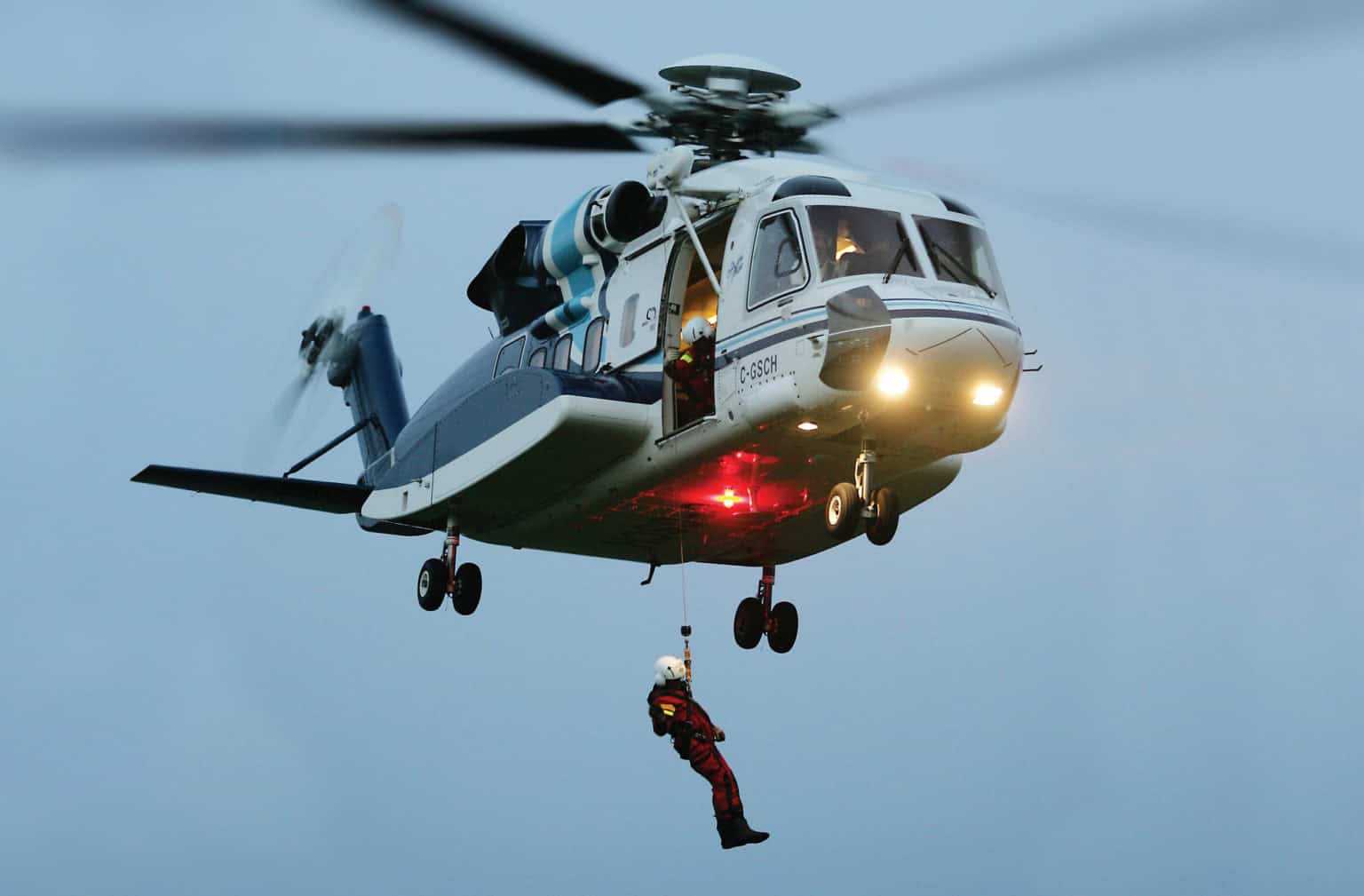




The Sikorsky S-92 is a twin-engine medium-lift helicopter built by Sikorsky Aircraft, now part of Lockheed Martin. Its core jobs are offshore oil and gas crew transport, search and rescue, and head-of-state flights.
It was developed from the S-70 (the Black Hawk family) and shares parts such as the flight control and rotor systems with that helicopter. The full specification table for the aircraft is on this page, so this article covers what the numbers do not.
Sikorsky also sells a military version, the H-92 Superhawk, and the type is the basis for the Canadian CH-148 Cyclone and the US presidential VH-92.
Sikorsky showed an S-92 mockup in 1992 and launched the program with international partners at the 1995 Paris Air Show. The first flight was on December 23, 1998, at West Palm Beach, Florida.
In 2000 Sikorsky lengthened the fuselage of the third prototype by 16 inches (40 cm), shortened the tail pylon and moved the horizontal stabilizer. Those changes fixed a pitch stability problem found in flight testing and added a row of seats.
The FAA certified the S-92 on December 19, 2002, and European certification followed on June 8, 2004. Launch customer PHI received the first aircraft in late 2004.

The S-92A is the civil version. The transport layout seats 19 passengers, and a utility layout fits 22 side-facing seats and a rear ramp.
The S-92A+ is the current production standard. Lockheed Martin said on March 6, 2026, that all new aircraft will carry the Phase IV main gearbox and upgraded GE CT7-8A6 engines.
The upgrade lifts maximum gross weight to 27,700 lb (12,565 kg), which adds 1,200 lb of payload or fuel. It is also offered as a retrofit kit for existing S-92A helicopters.
The H-92 Superhawk is the military utility version. Canada ordered 28 of the maritime variant as the CH-148 Cyclone in 2004, and the VH-92 flies the US president as Marine One.
The standard maximum takeoff weight is 26,500 lb (12,000 kg). Operators that fit the gross weight expansion, such as Bristow on four of its aircraft, fly at up to 27,700 lb (12,565 kg) .
The published range figures differ because they describe different missions. Wikipedia’s spec block gives 539 nautical miles, while Bristow quotes 458 nautical miles (848 km) with a 30-minute reserve for its own fleet.
The rotor diameter is 56 ft 4 in (17.17 m). The spec panel lists this as “wing span” because the database uses one field for all aircraft.
Cruise speed also depends on who is counting. The Wikipedia spec block gives 151 kt (280 km/h), while Bristow lists 143 knots as its operating cruise .
The S-92 became an offshore standard after the 1973 oil crisis pushed drilling farther from shore. After a fatal 2016 crash of a Eurocopter EC225, Equinor, then Statoil, said it would not use that type again and required its contractors to fly the S-92.
Search and rescue is the other big role. The UK coastguard service operated by Bristow, the Irish Coast Guard (flown by CHC) and the Republic of Korea Coast Guard all use it.

Lockheed Martin says 13 nations entrust the S-92 with head-of-state transport, and the March 2026 release adds a 14th country that ordered two aircraft. Sikorsky delivered 23 S-92A-based presidential helicopters from its Owego plant.
The cabin volume is about 700 cubic feet, enough for up to three airline-style LD3 cargo containers. A further 140 cubic feet sits in the aft ramp compartment.
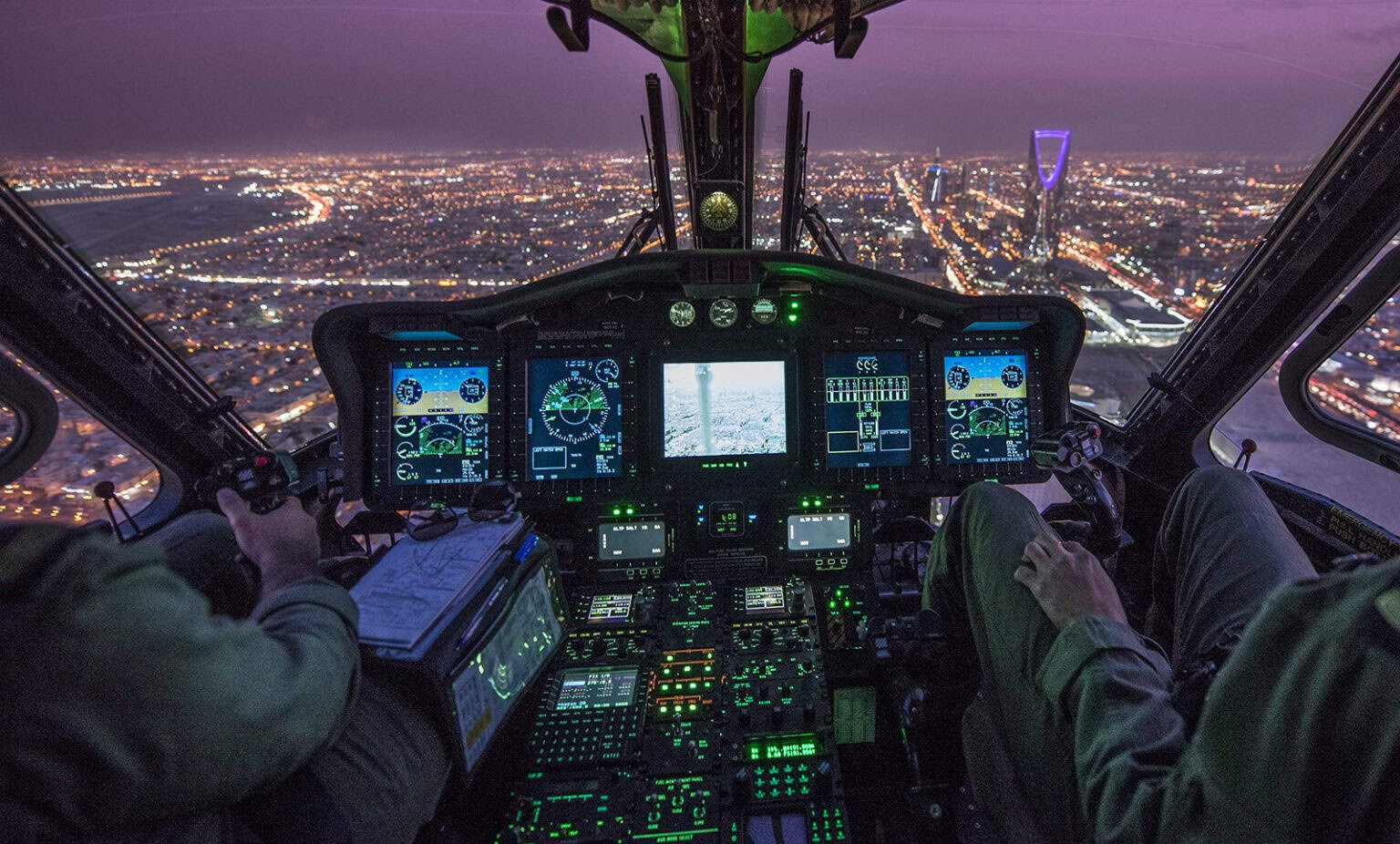
An active vibration control system uses sensors and force generators to cut cabin vibration. A 2008 Norwegian study still found vibration 42 percent above the EC225, which Sikorsky disputed.

The S-92 was certified to FAA Part 29 and Wikipedia reports that the FAA certification board called it the safest helicopter in the world. That is a regulatory description, not an accident statistic.
The type has had fatal accidents. On March 12, 2009, Cougar Helicopters Flight 91 crashed off Newfoundland during an attempted ditching, and 17 of the 18 on board died. The primary cause was fractured titanium studs in the main gearbox, which were meant to be replaced with steel.
The S-92 had been certified with an exemption from the rule requiring the gearbox to run dry after loss of oil pressure. The Phase IV gearbox adds auxiliary lubrication so a flight can finish if primary oil pressure is lost.
On March 14, 2017, a CHC S-92 operating as Rescue 116 for the Irish Coast Guard hit an unmapped island in poor weather with four crew aboard. On February 28, 2024, a Bristow S-92 crashed west of Bergen, Norway, killing one person, after a faulty pitch trim actuator.
After a December 2016 tail rotor control failure in the North Sea, Sikorsky grounded the fleet for inspections in January 2017. The inspection took about 11 man-hours per aircraft.
The panel gives the unit price as $27 million (2019). Actual prices vary a great deal with interior, mission equipment and customer, and head-of-state aircraft cost much more.
The S-92 is still in production. Lockheed Martin said in March 2026 that Sikorsky can build up to 12 S-92A+ aircraft a year, and the fleet has flown more than 2.6 million hours across more than 300 aircraft.
Timing of the first S-92A+ delivery is reported inconsistently. One trade report says 2028, while another expects FAA certification in 2026. As of October 2026 I found nothing newer.
This page lists a unit price of $27 million (2019). Real prices depend on the interior and mission equipment, and VIP or head-of-state aircraft cost more.
Yes. Sikorsky is standardizing production on the S-92A+ and said in March 2026 it can build up to 12 a year.
No. Sikorsky Aircraft is American, based in Stratford, Connecticut, and is a Lockheed Martin company. It was founded by Igor Sikorsky, a Russian-born engineer who emigrated to the United States.
No single helicopter holds that title on accident data. The FAA certification board called the S-92 the safest in the world under Part 29, but the type has still had fatal accidents.
The airline-style civil layout seats 19 passengers, and the utility layout fits 22 side-facing seats.
Sources and references used for research and fact-checking.