

Table of Contents
Military helicopters are grouped into eight types by the job they do: attack, transport, observation, utility, maritime, multi-role, search and rescue, and training. Each type is built around a specific mission, from destroying tanks to hoisting a stranded sailor out of the ocean.
This guide walks through all eight types and names 16 of the helicopters that define them, from the AH-64 Apache to the UH-60 Black Hawk. The table below is the quick version, and the sections that follow explain what each type does and show the aircraft that fly the mission.
| Type | What it does | Best-known examples |
|---|---|---|
| Attack | Destroy tanks, vehicles, and fortifications; support ground troops | AH-64 Apache, AH-1Z Viper |
| Transport | Move troops, cargo, and vehicles into and out of combat zones | CH-47 Chinook, CH-53E Super Stallion |
| Observation | Scout, gather intelligence, and mark targets for other aircraft | OH-58 Kiowa Warrior, MH-6 Little Bird |
| Utility | Handle almost any job: assault, resupply, medevac, and more | UH-60 Black Hawk, UH-1Y Venom |
| Maritime | Hunt submarines and defend ships from the air | MH-60R Seahawk |
| Multi-role | Combine several missions in one airframe | V-22 Osprey, MH-60 Jayhawk, UH-72 Lakota |
| Search and rescue | Find and recover people in dangerous conditions | MH-65 Dolphin |
| Training | Teach new pilots to fly before they move to frontline types | TH-67 Creek, UH-72 Lakota |
Helicopters have been among the military’s most versatile machines since they first saw wide use in World War II. Their rotors allow vertical takeoff and landing, hovering, and flight in any direction, which fixed-wing aircraft cannot match.
The US military names its aircraft with the Mission-Design-Series (MDS) system, in which the letter “H” marks a helicopter. A mission letter is added in front of it, so an “AH” is an attack helicopter and a “CH” is a cargo (transport) helicopter. The common mission letters are:
A – Attack
C – Cargo / Transport
O – Observation
T – Trainer
U – Utility
V – VTOL / tiltrotor
We will look at the eight main types of military helicopter below, and name some of the best-known aircraft in each along the way.
1. Military Attack Helicopters
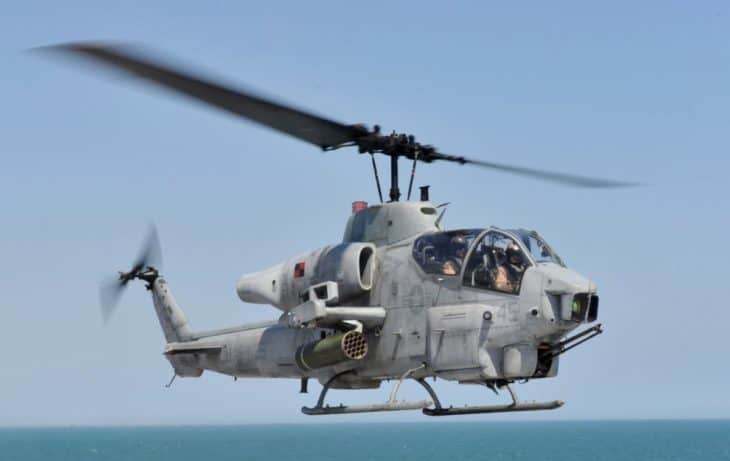
Attack helicopters, also known as helicopter gunships, exist mainly to fire on the enemy. To do that, they reach high speeds and carry an array of weaponry such as machine guns, missiles, and auto-cannons.
Equipped with advanced radar for identifying targets and guiding projectiles, the attack helicopter is used to destroy armored tanks and vehicles. It serves as close air support for ground troops and other aircraft.
AH-1W Super Cobra


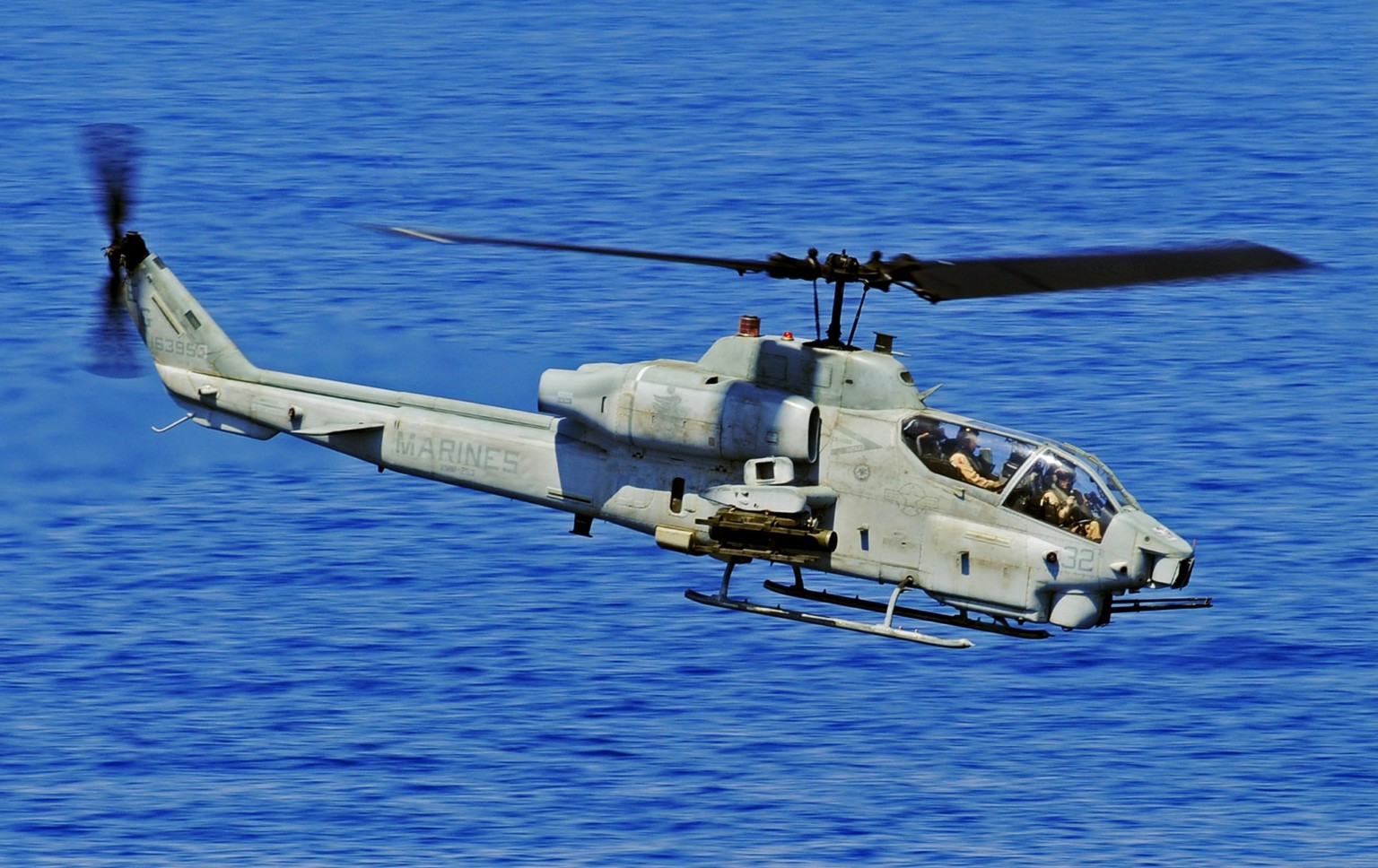
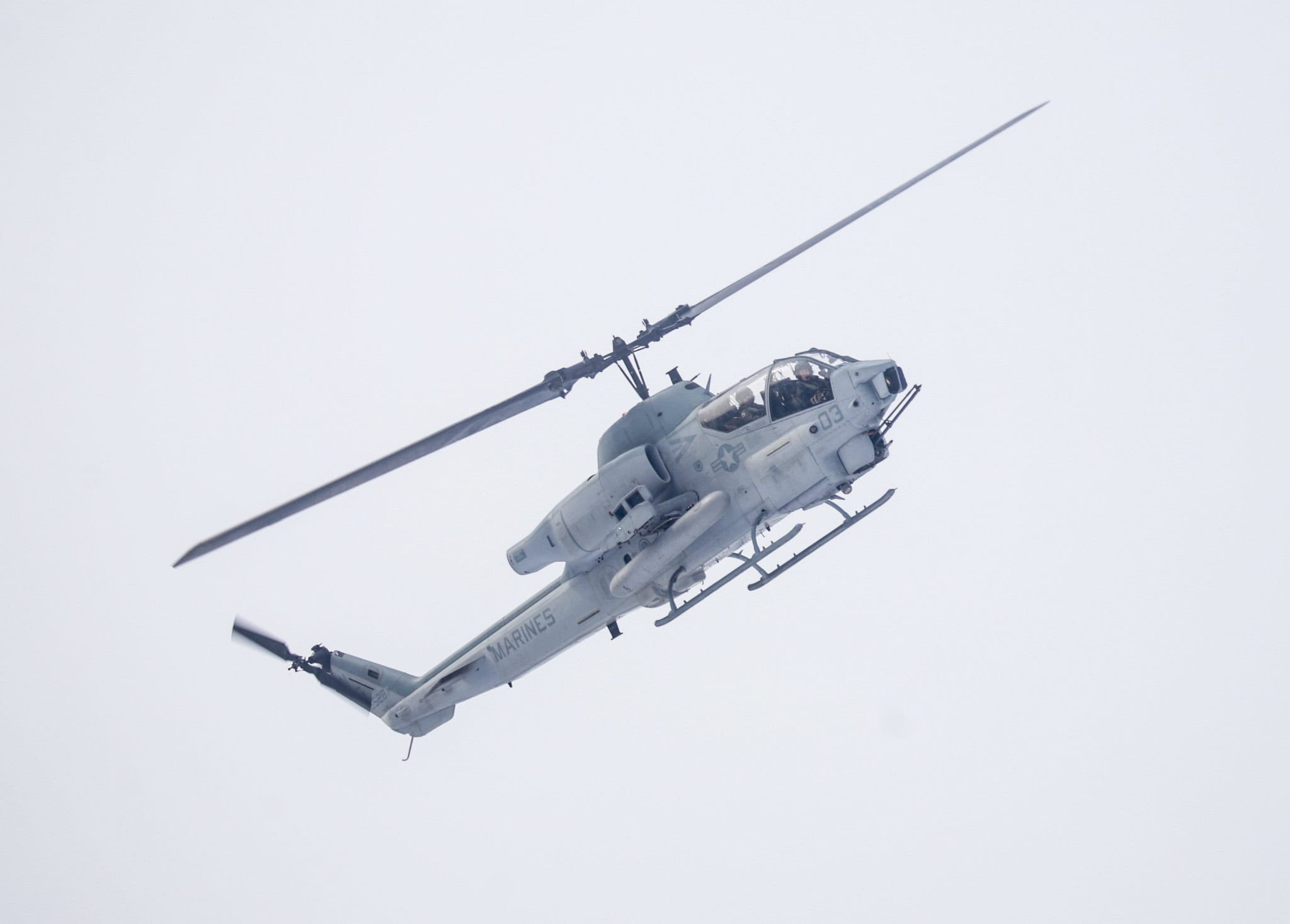
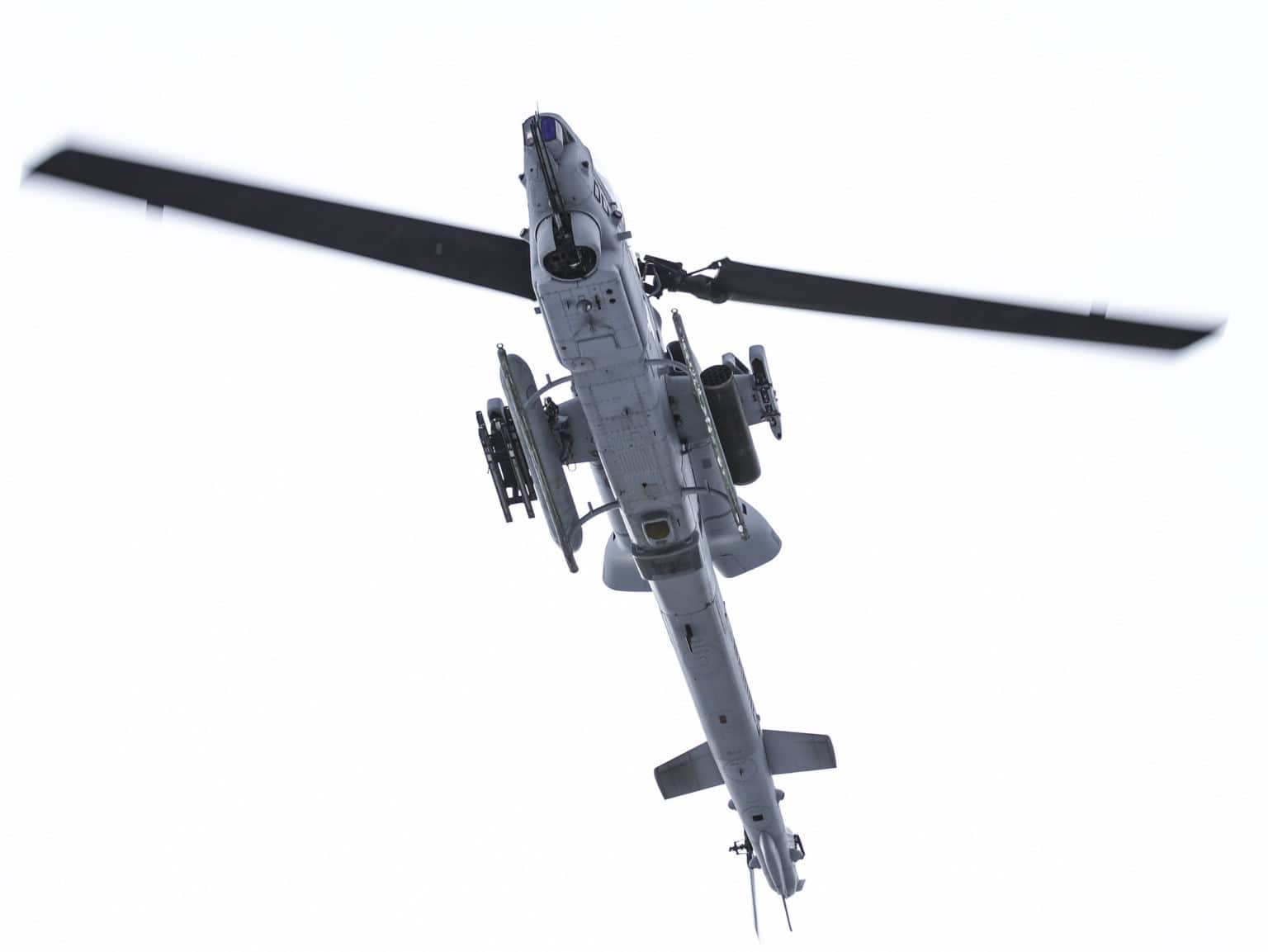
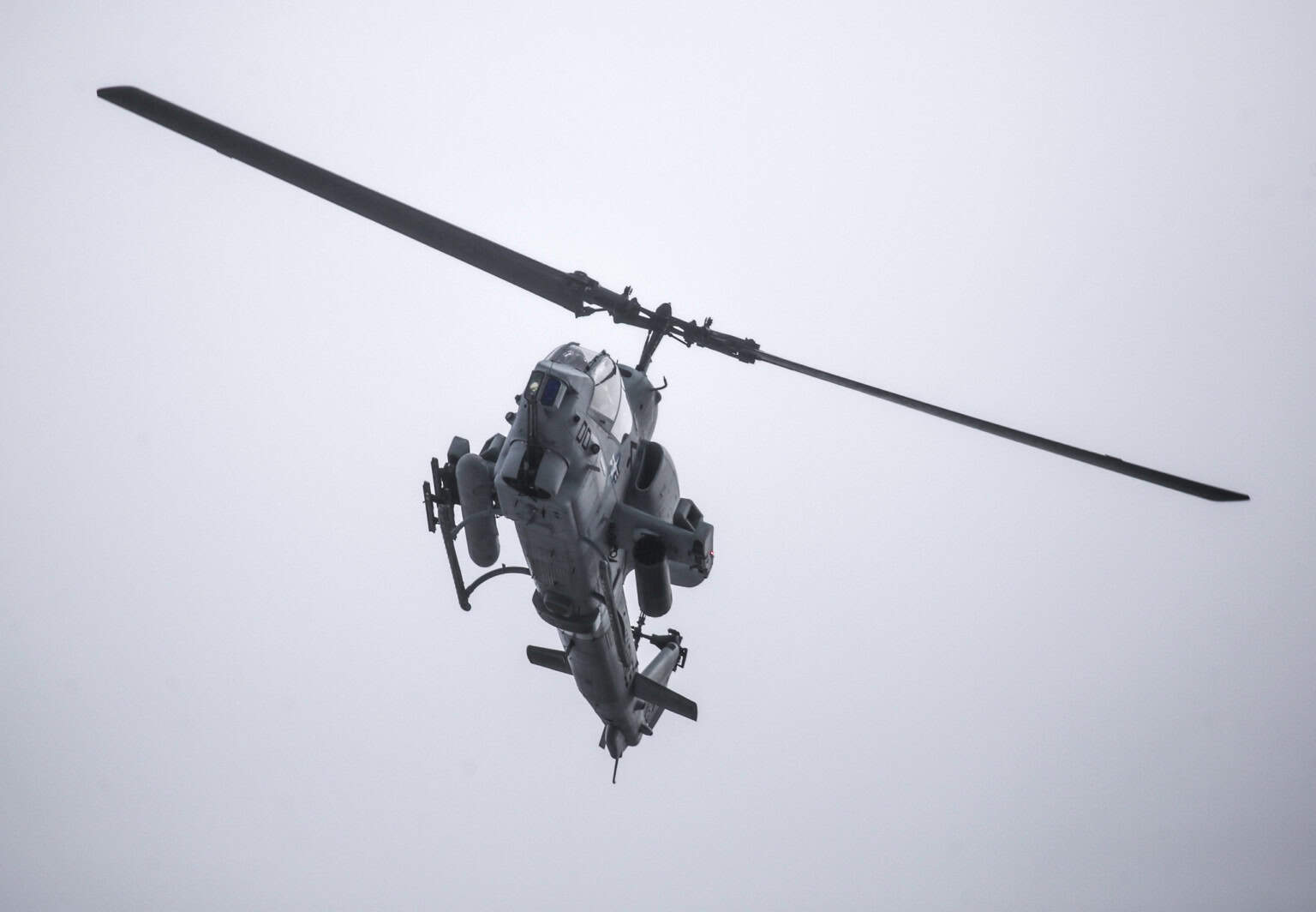


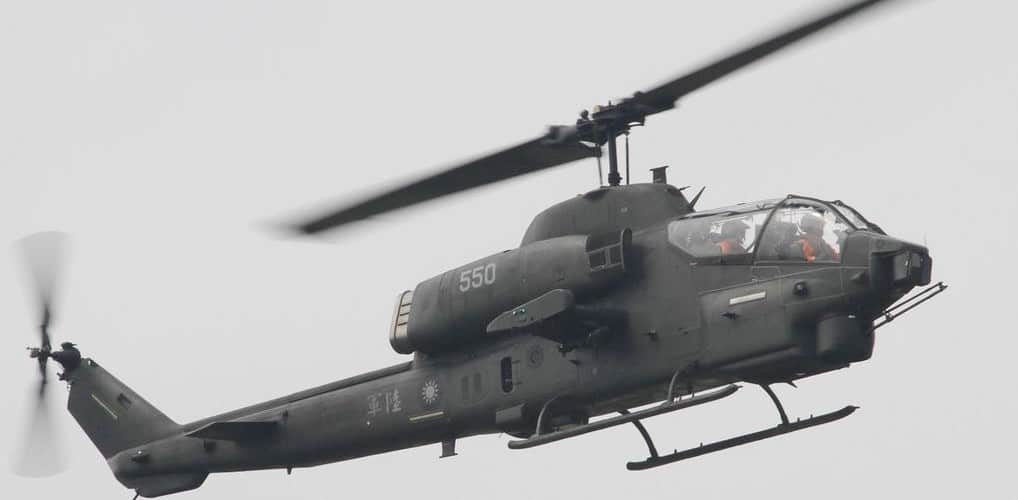
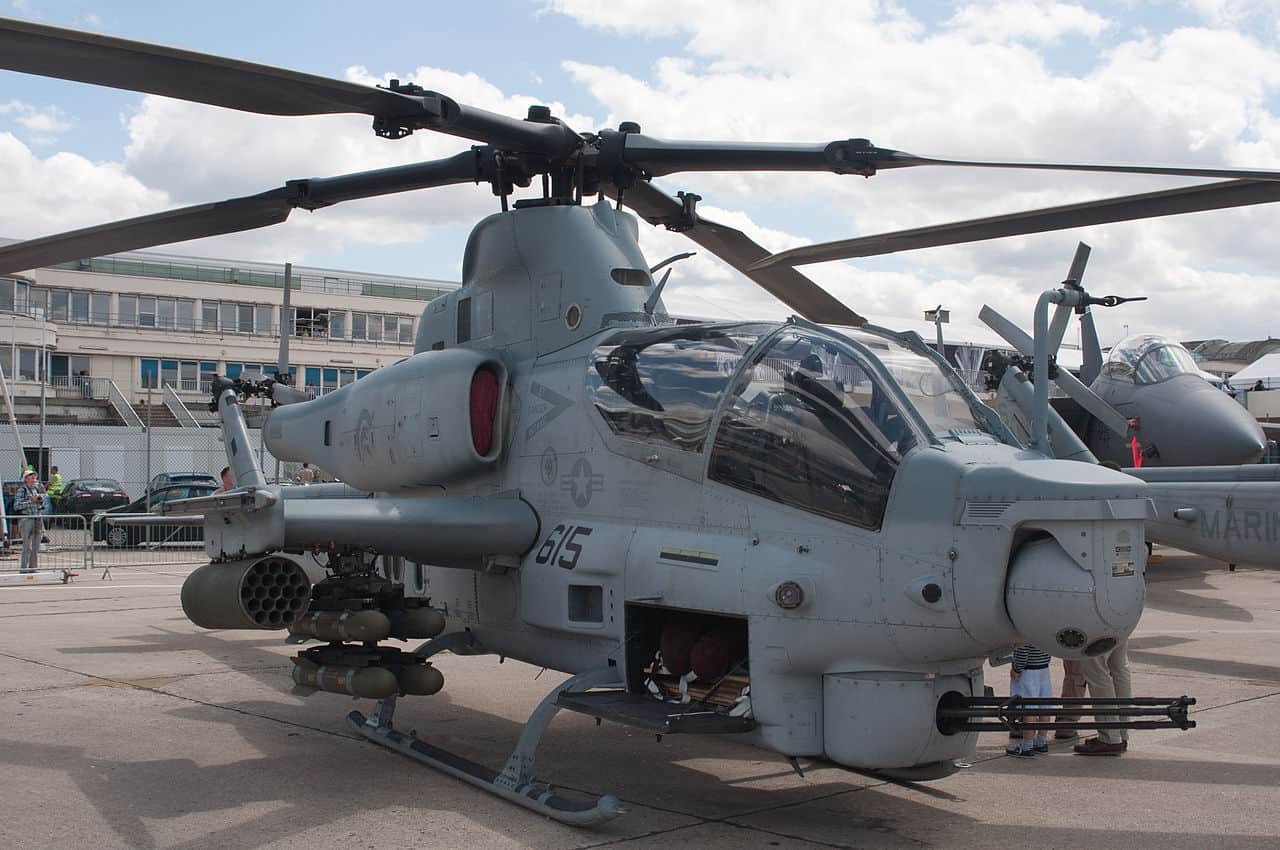


The AH-1W Super Cobra served as the Marine Corps’ main attack helicopter for decades. Manufactured by Bell Helicopter, it was derived from the Huey design. The Super Cobra was the first attack helicopter qualified for both the Sidearm anti-radiation missile and the Sidewinder air-to-air missile, and it could also carry Hellfire missiles.
The AH-1 Cobra lineage dates back to 1967, and the AH-1W Super Cobra formed the backbone of the USMC air-ground task force whenever firepower was needed, whether providing ground cover or escorting other air support. It deployed to Operation Iraqi Freedom in 2003.
AH-1Z Viper
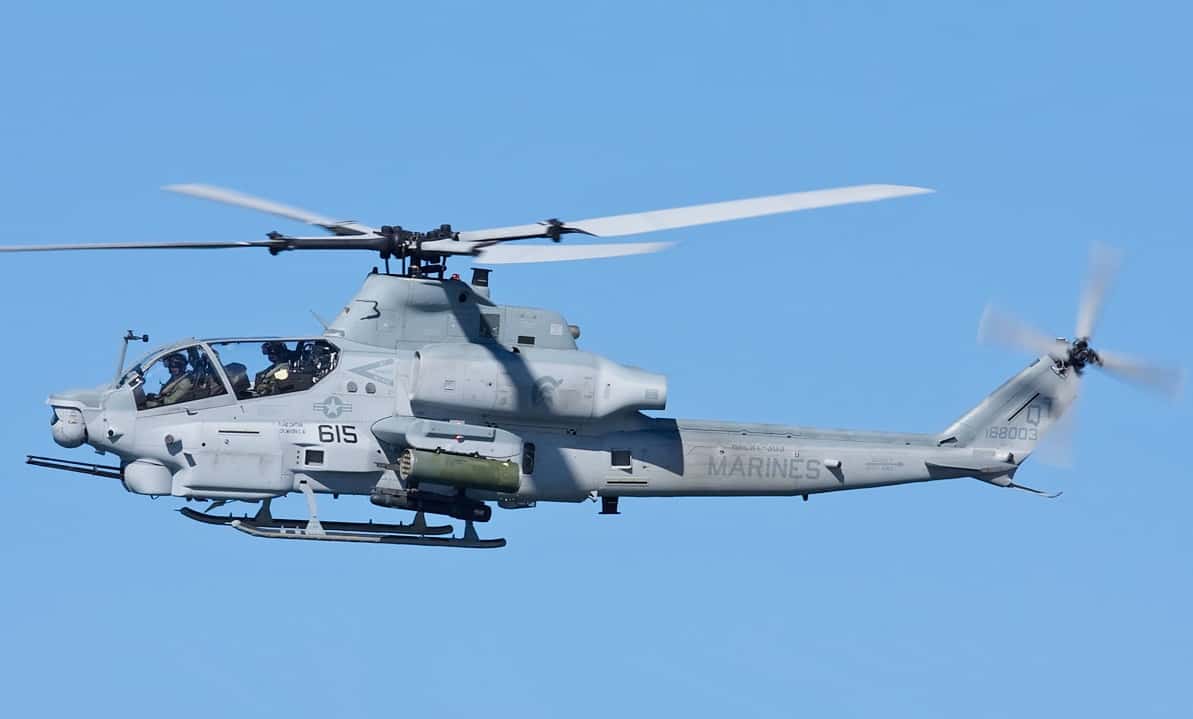


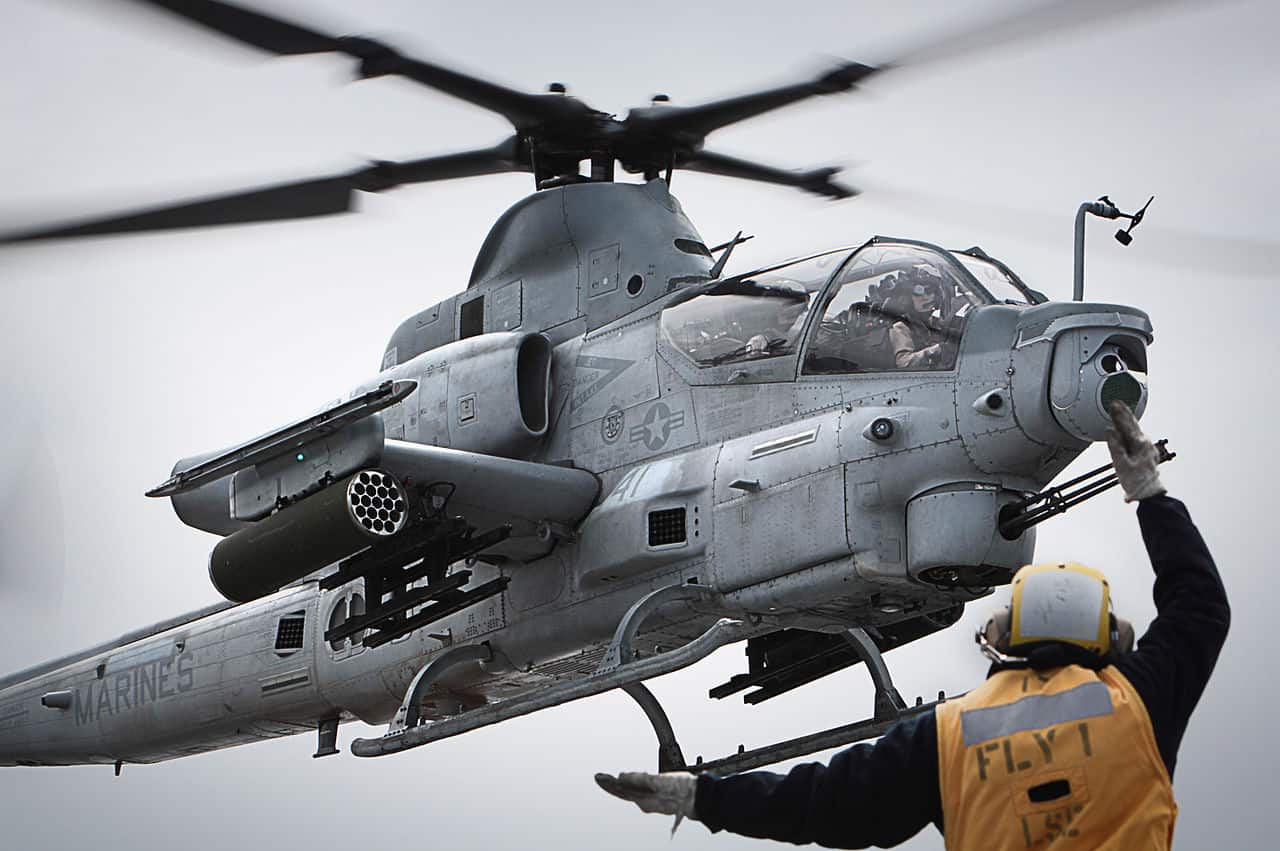
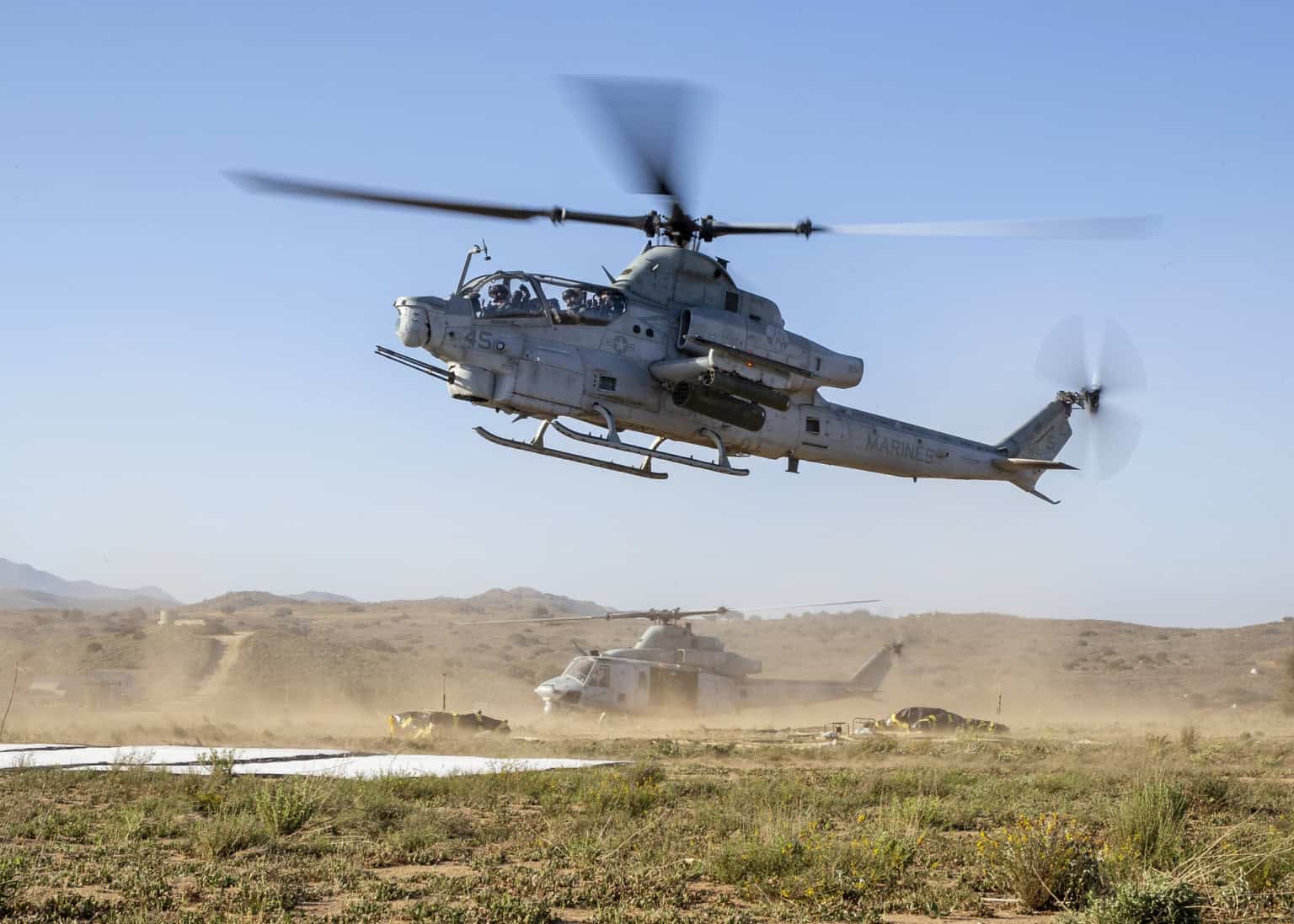


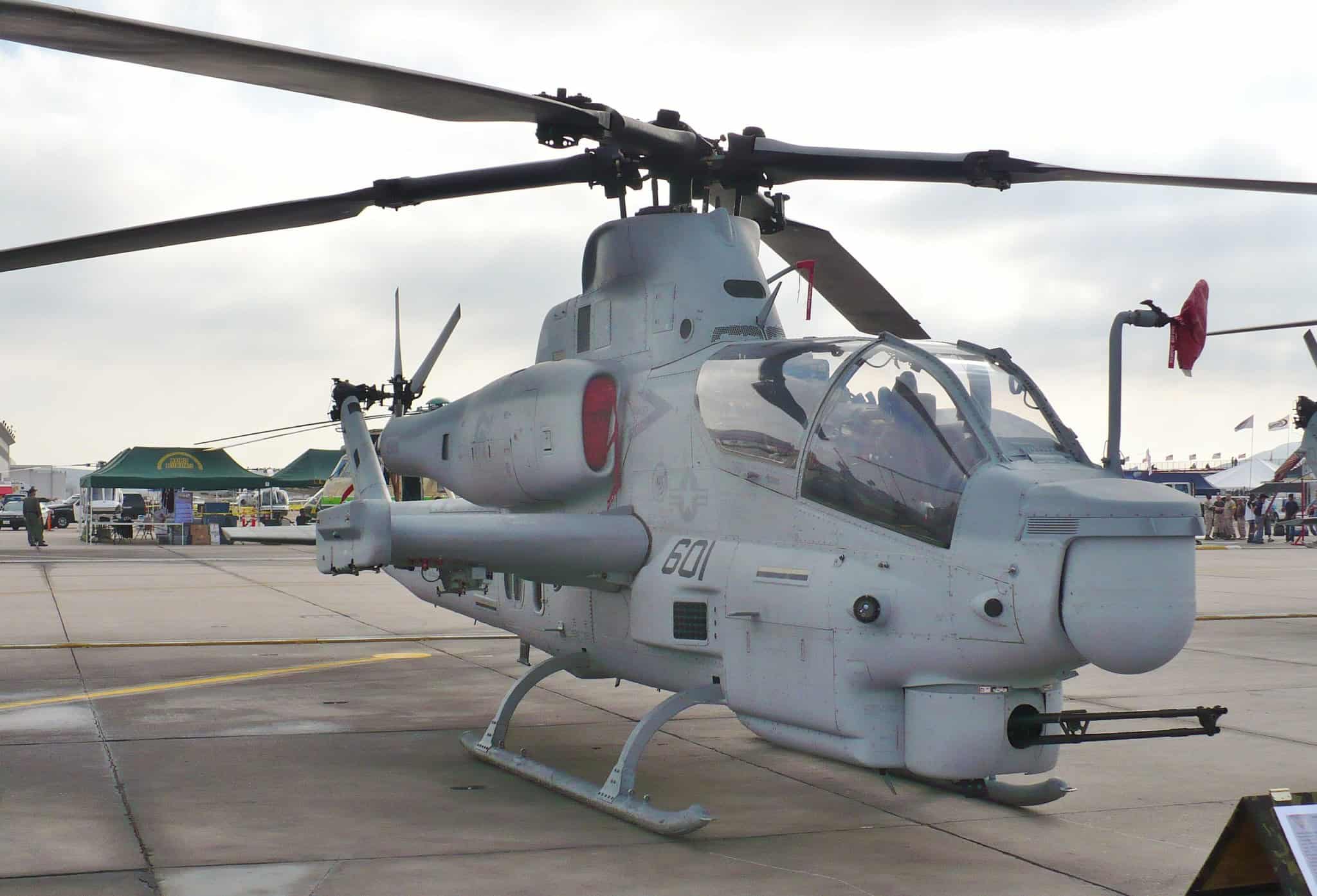
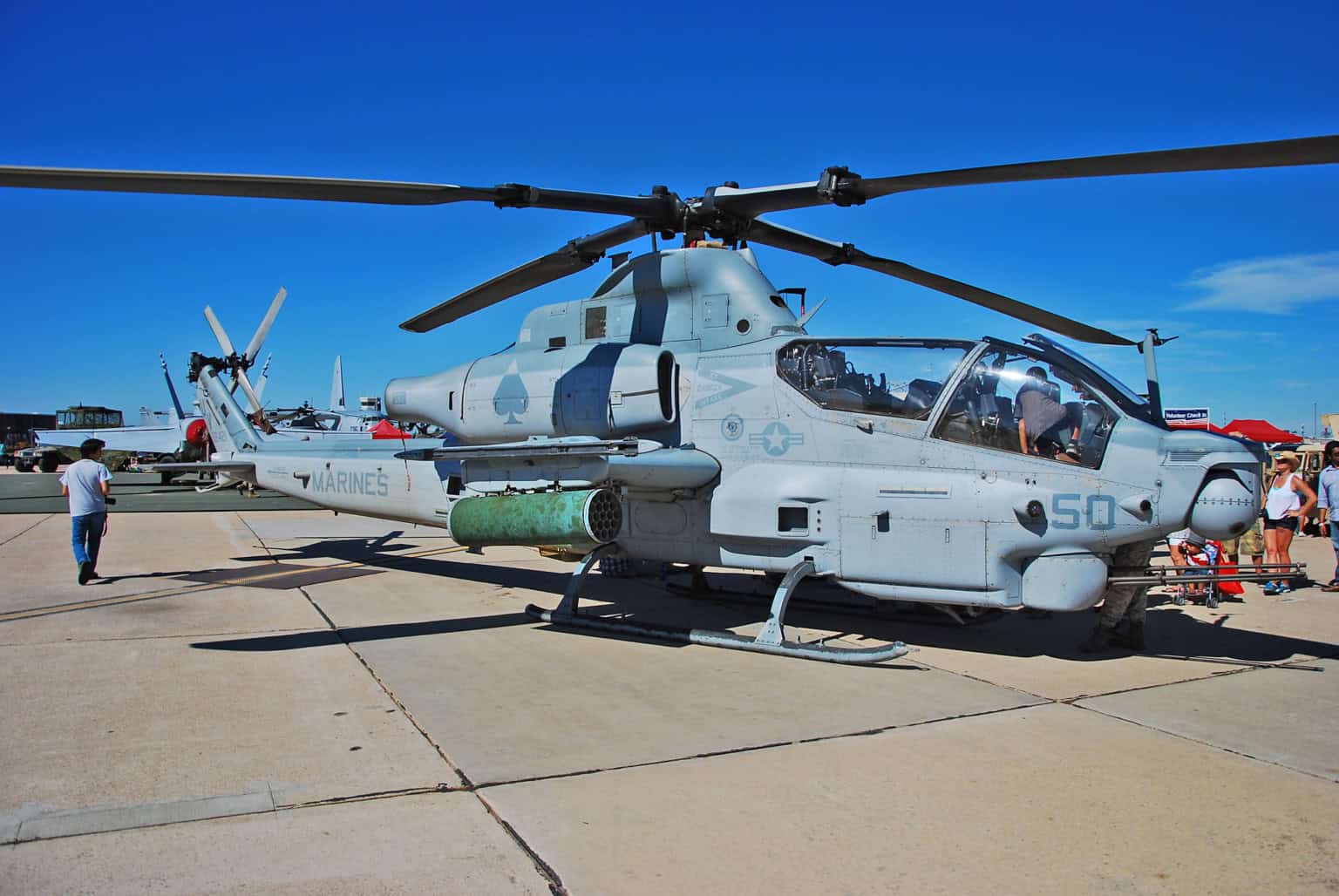
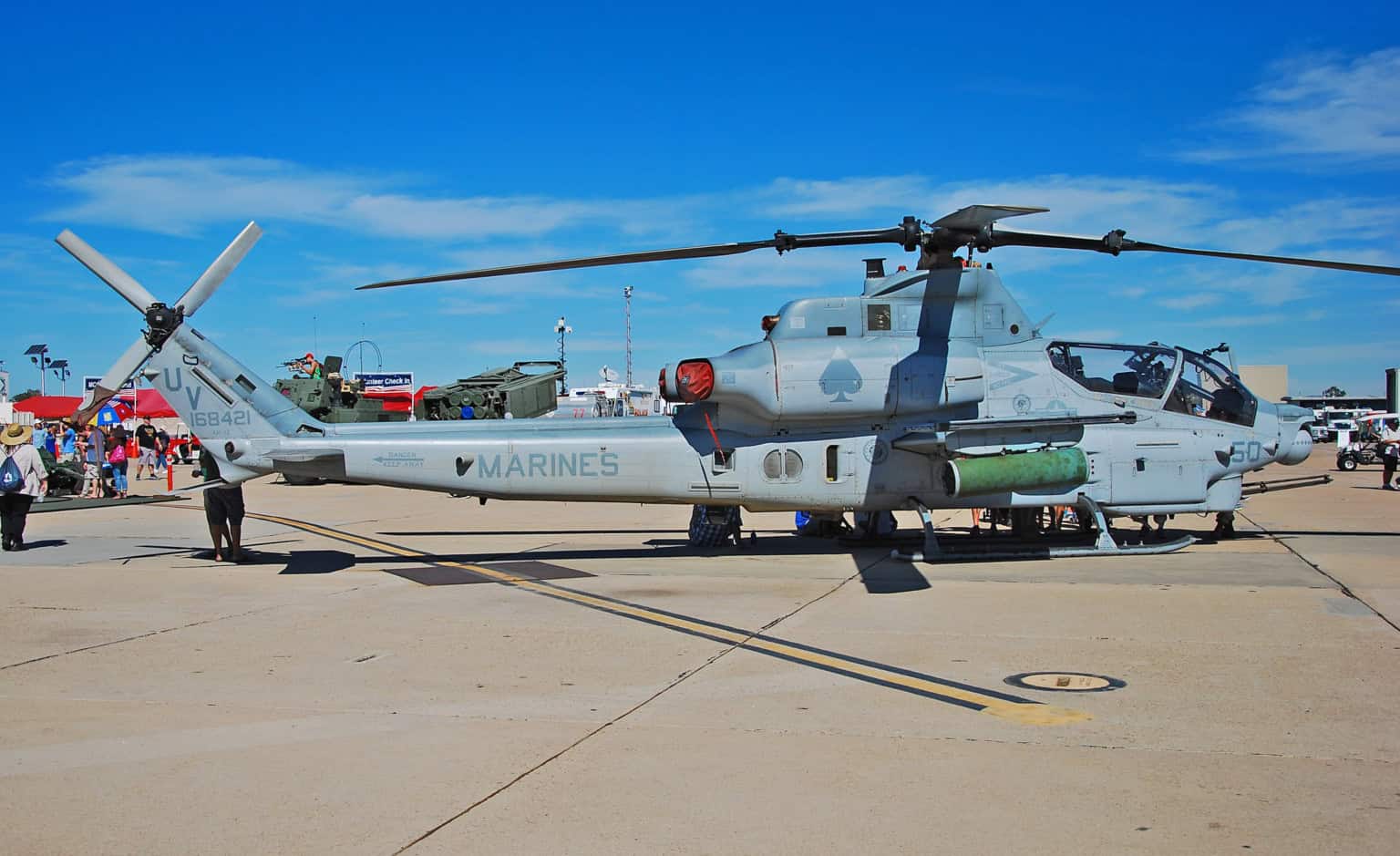

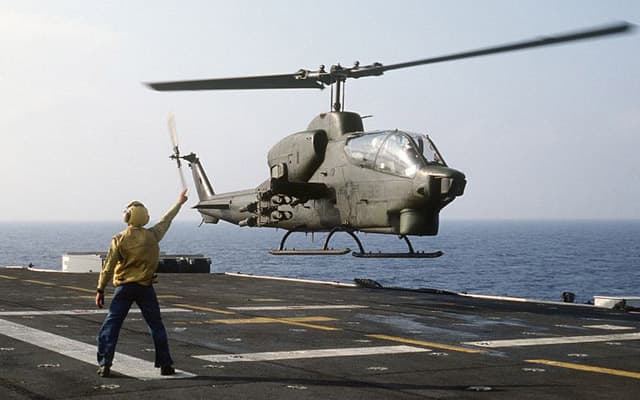
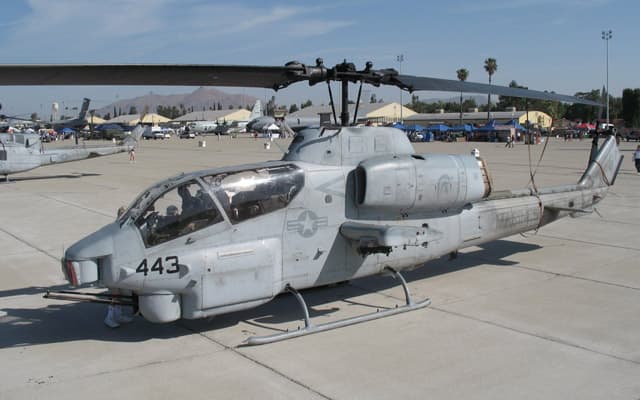

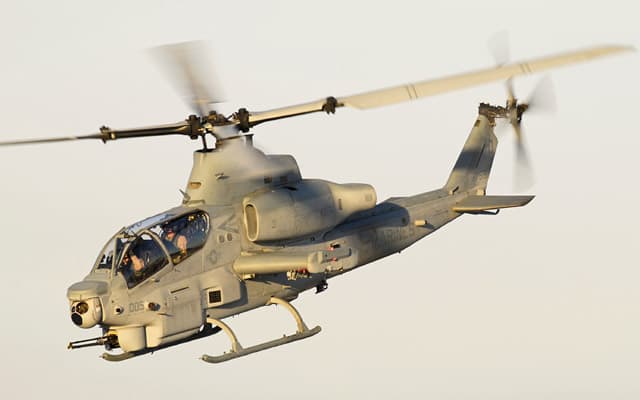
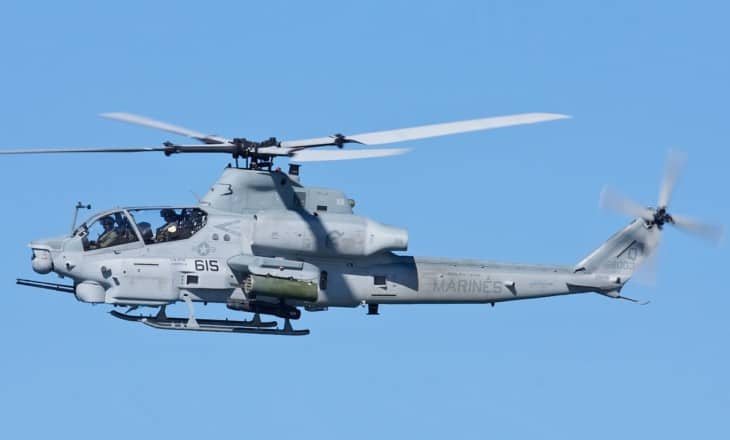
The Marine Corps flew the Super Cobra from 1986, with the last of the type delivered in 1998. The AH-1W Super Cobra had replaced the earlier AH-1 Cobra, and in turn the AH-1Z Viper replaced the Super Cobra.
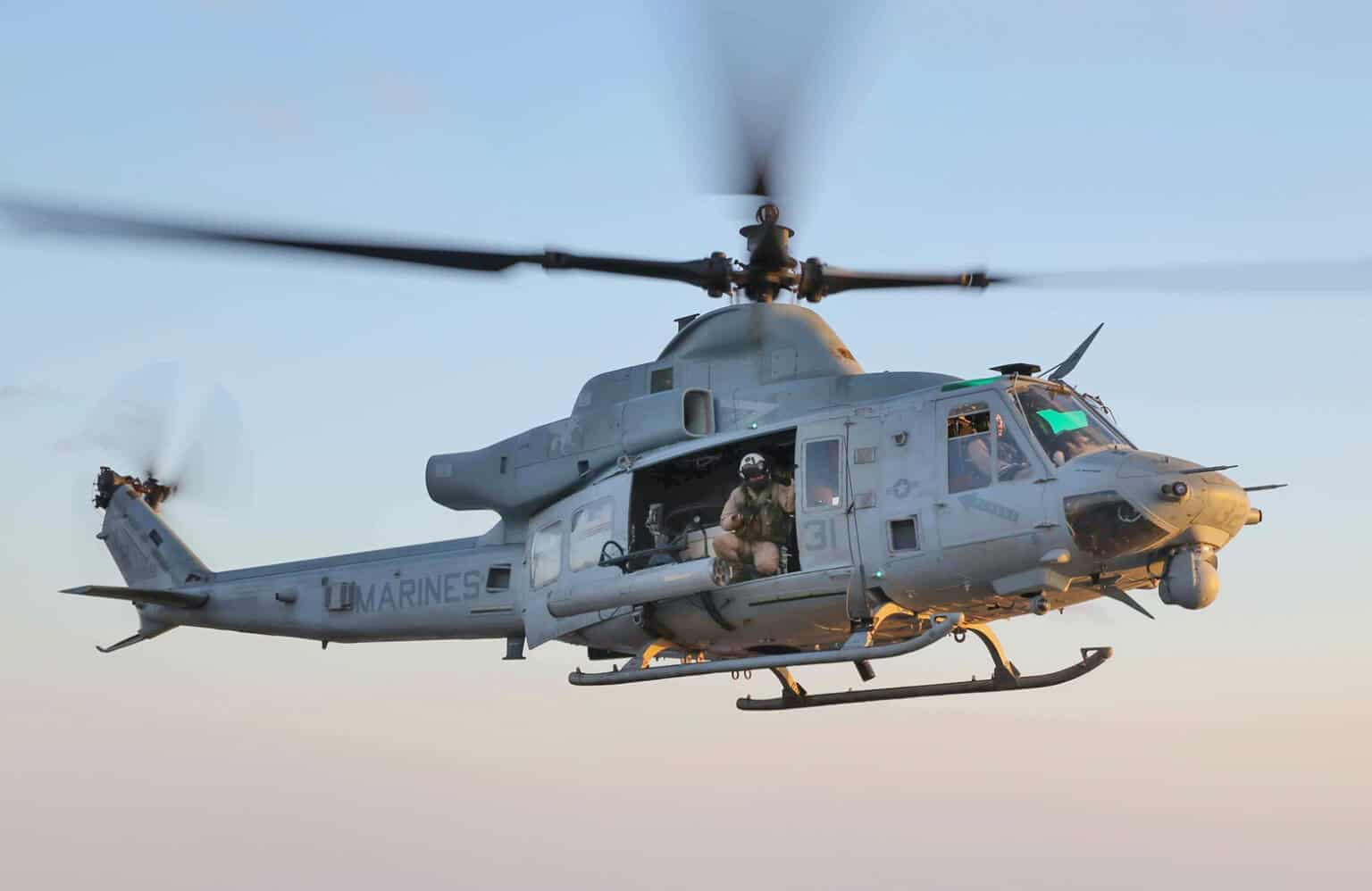
The USMC retired the last AH-1W Super Cobras in 2020, completing the transition to the Bell AH-1Z Viper. The AH-1Z is a major upgrade: it shares 85 percent parts commonality with the UH-1Y Venom utility helicopter as part of the H-1 upgrade program.
It also swaps the Super Cobra’s two-blade system for a four-blade composite rotor and carries the AN/AAQ-30 Target Sight System for longer-range targeting. The AH-1Z remains in active USMC service today.
AH-64 Apache
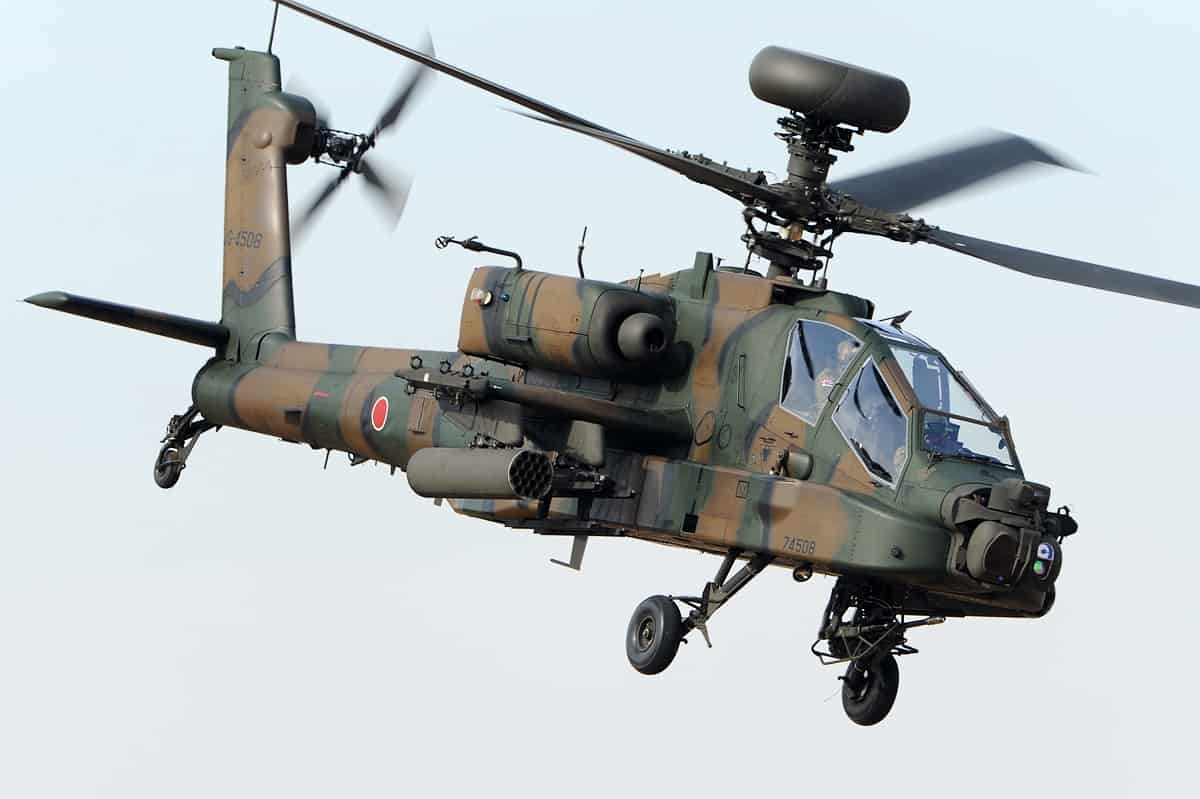


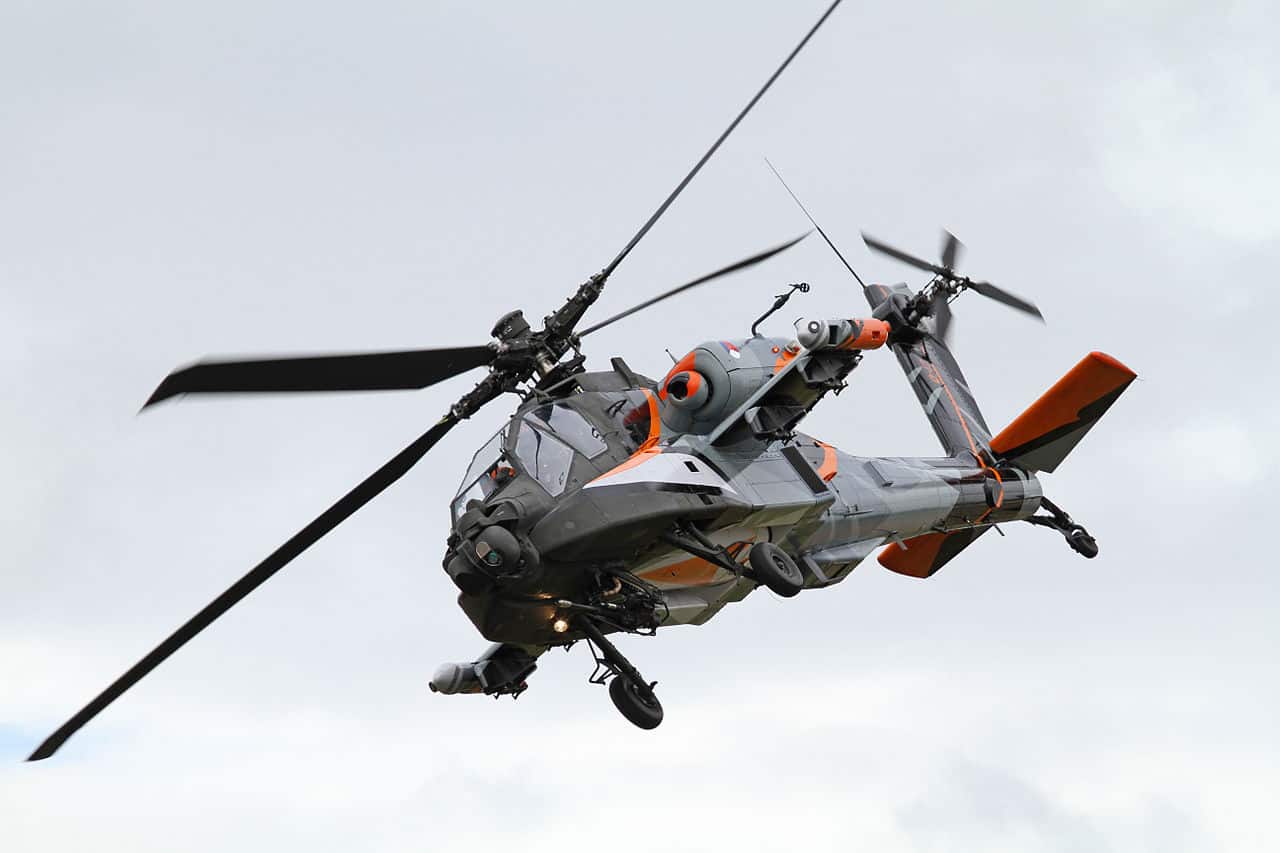
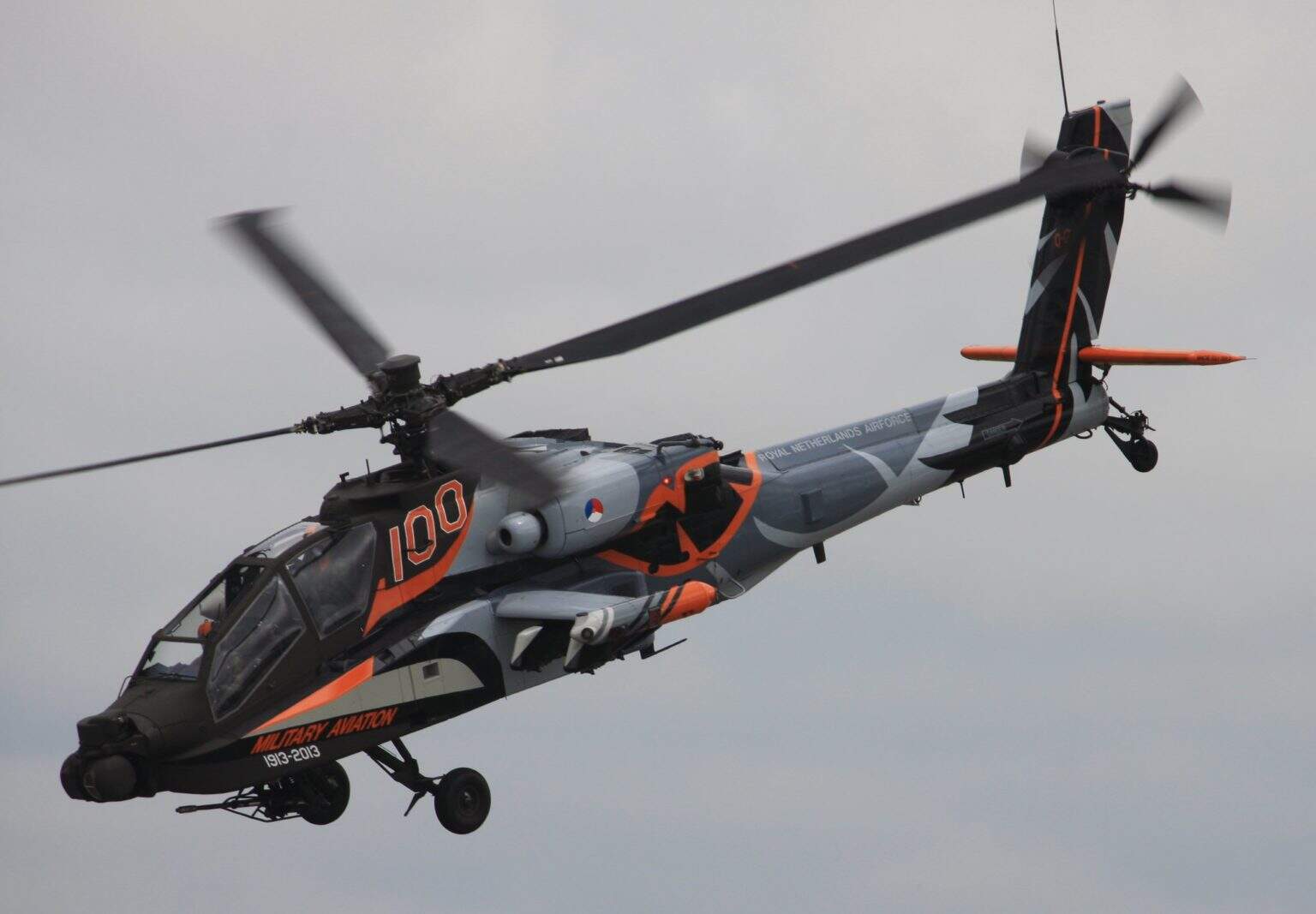

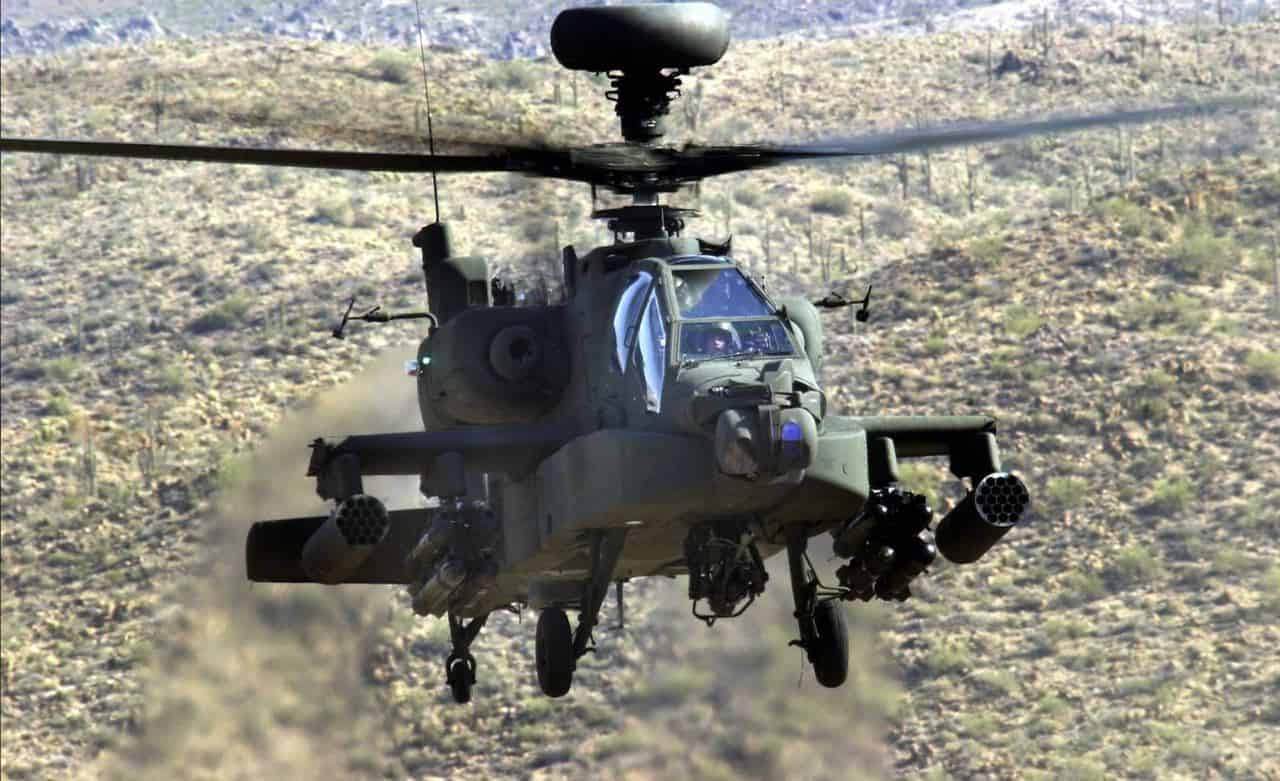


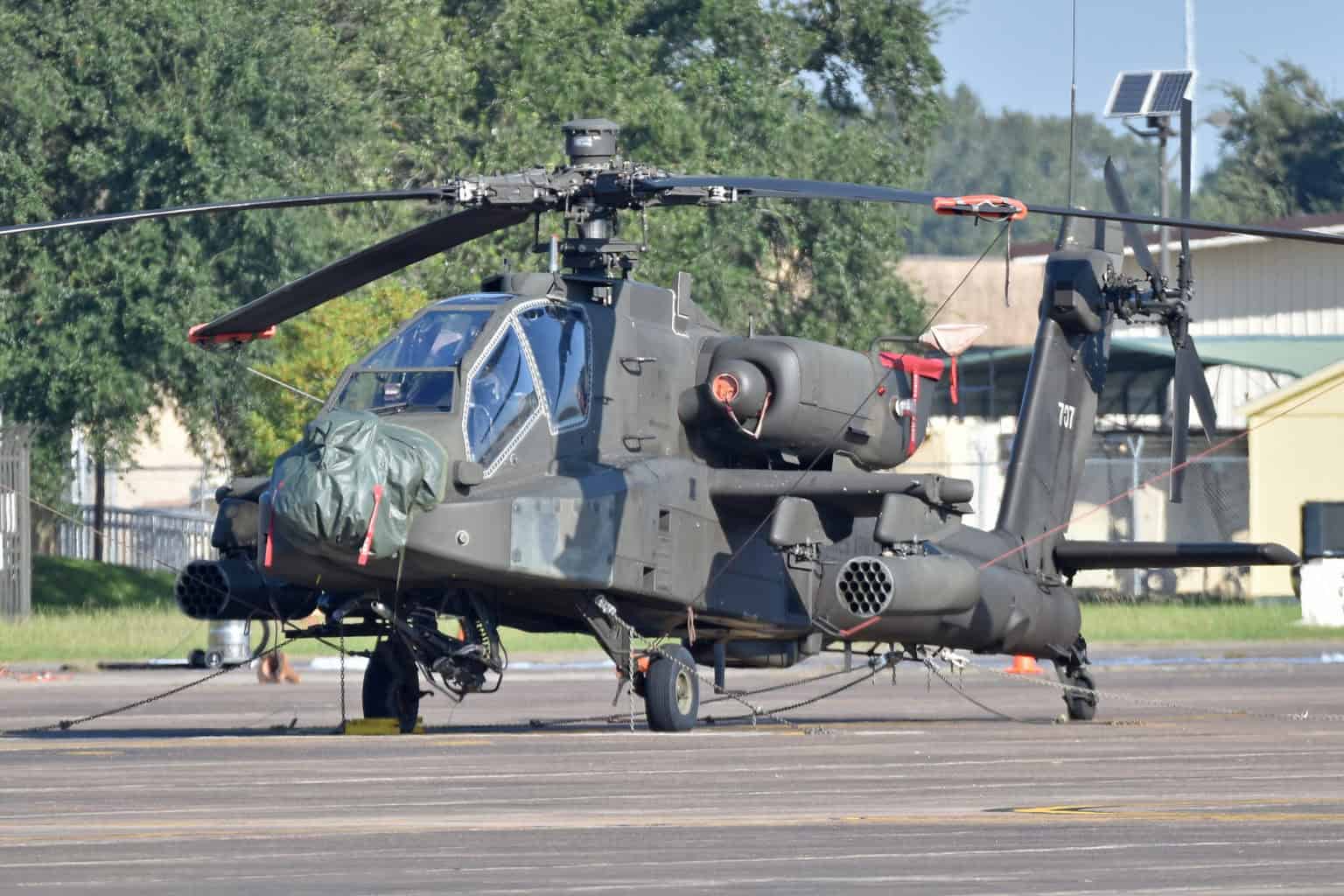
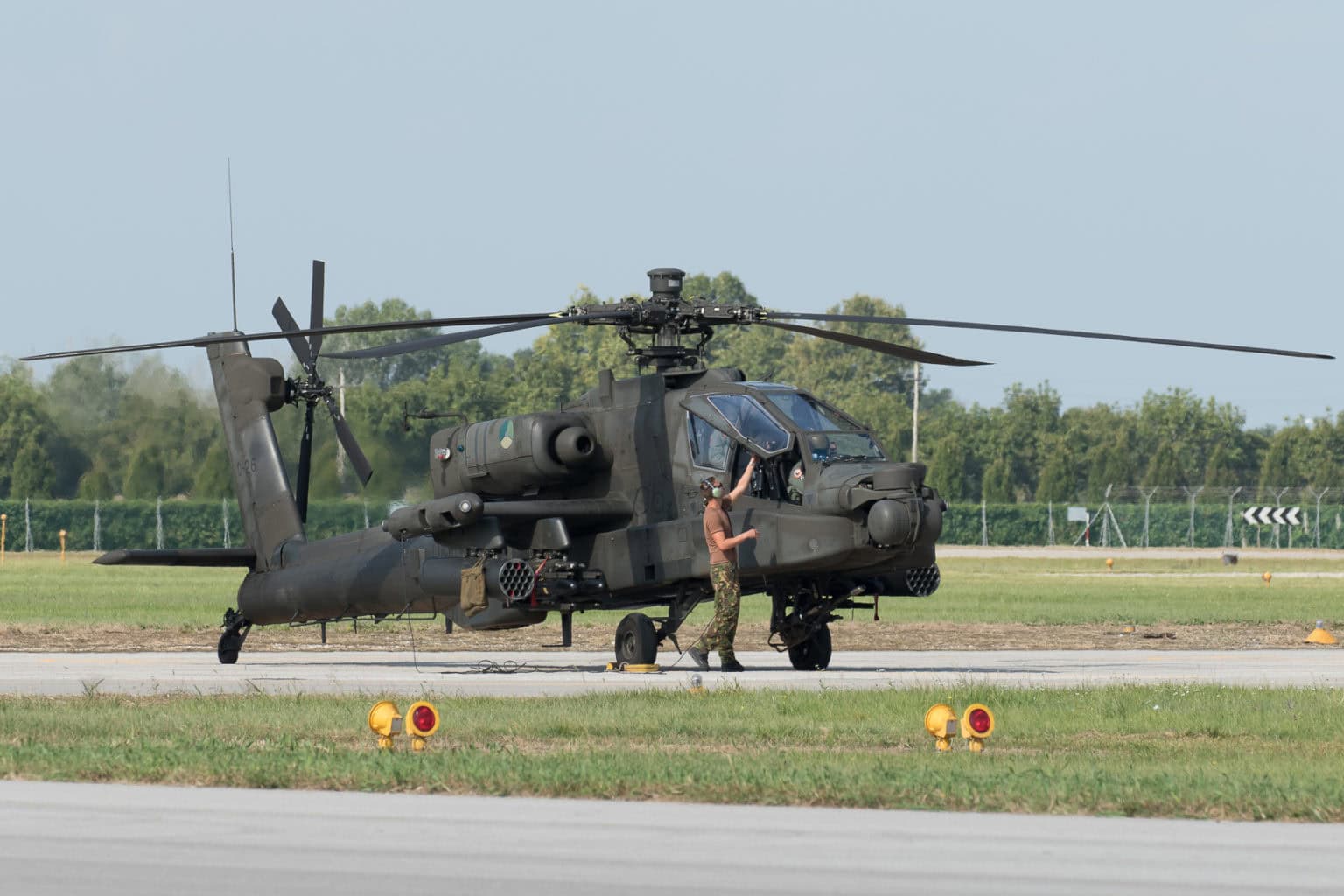
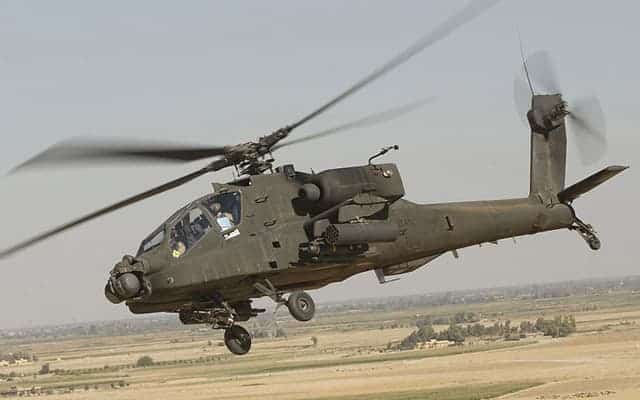
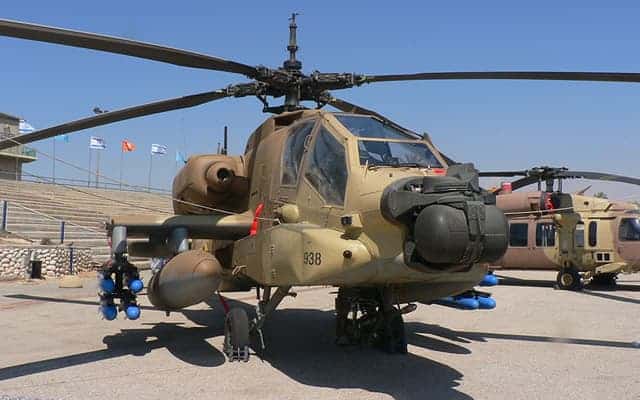

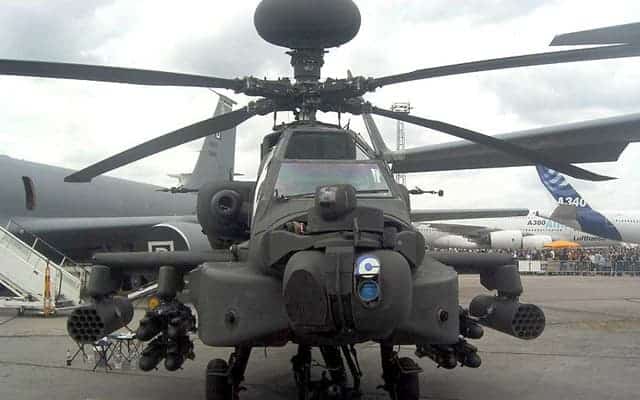
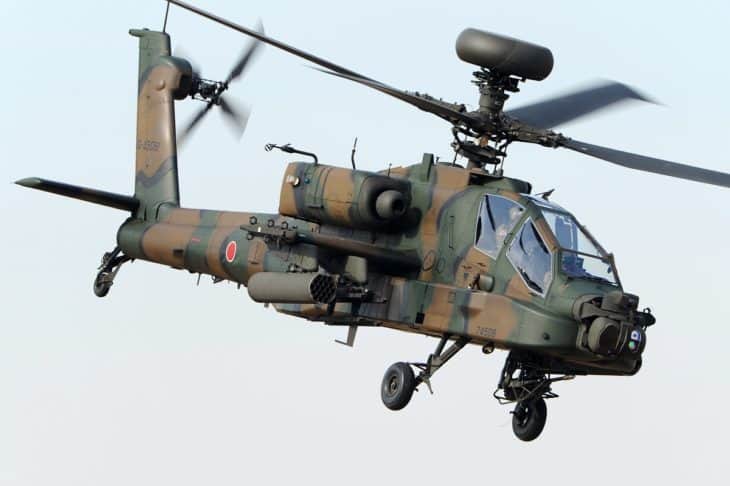
The Apache is the most recognizable attack helicopter in the world. The AH-64 Apache, built by Boeing, is a twin-engine, heavy attack helicopter with a four-bladed main rotor and a four-bladed tail rotor. The Army uses it for precision strike and armed reconnaissance, day or night and in all weather.
The Apache is packed with survivability and targeting features. Armor between the cockpits helps at least one crew member survive a hit, and the Integrated Helmet and Display Sighting System (IHADSS) slaves the automatic M230 chain gun to the pilot’s or gunner’s helmet, so it points wherever they look.
A nose-mounted sensor suite handles night vision and target acquisition. Four hardpoints carry a mix of Hydra 70 rocket pods and AGM-114 Hellfire missiles, backing up the 30 mm M230 chain gun. Since entering US Army service in 1986, the Apache fleet has logged millions of flight hours.
2. Military Transport Helicopters
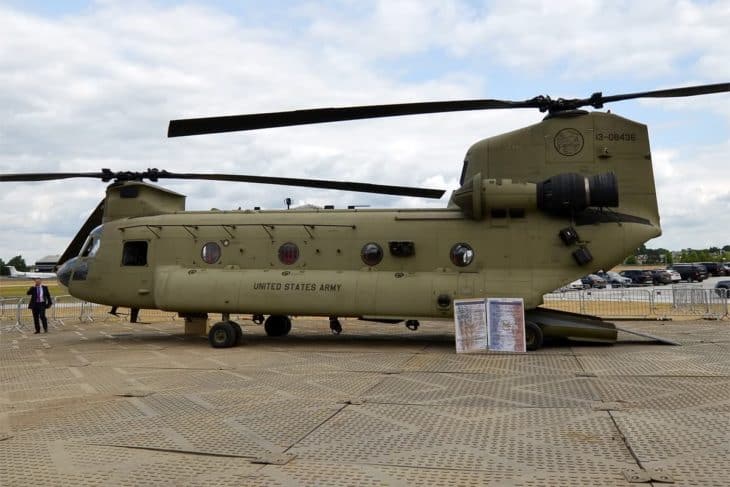
Transport helicopters are some of the largest rotorcraft in service, designed to carry heavy loads including light vehicles, large groups of troops, and cargo into combat. Despite their size, they still manage relatively high speeds.
Though cargo planes can move similar loads, the helicopter is ideal because it can land and take off vertically with no runway, and speed is critical in battlefield operations. Transport helicopters also carry specialized gear like rescue hoists and rope lines for dropping off and picking up troops in difficult terrain.
CH-47 Chinook

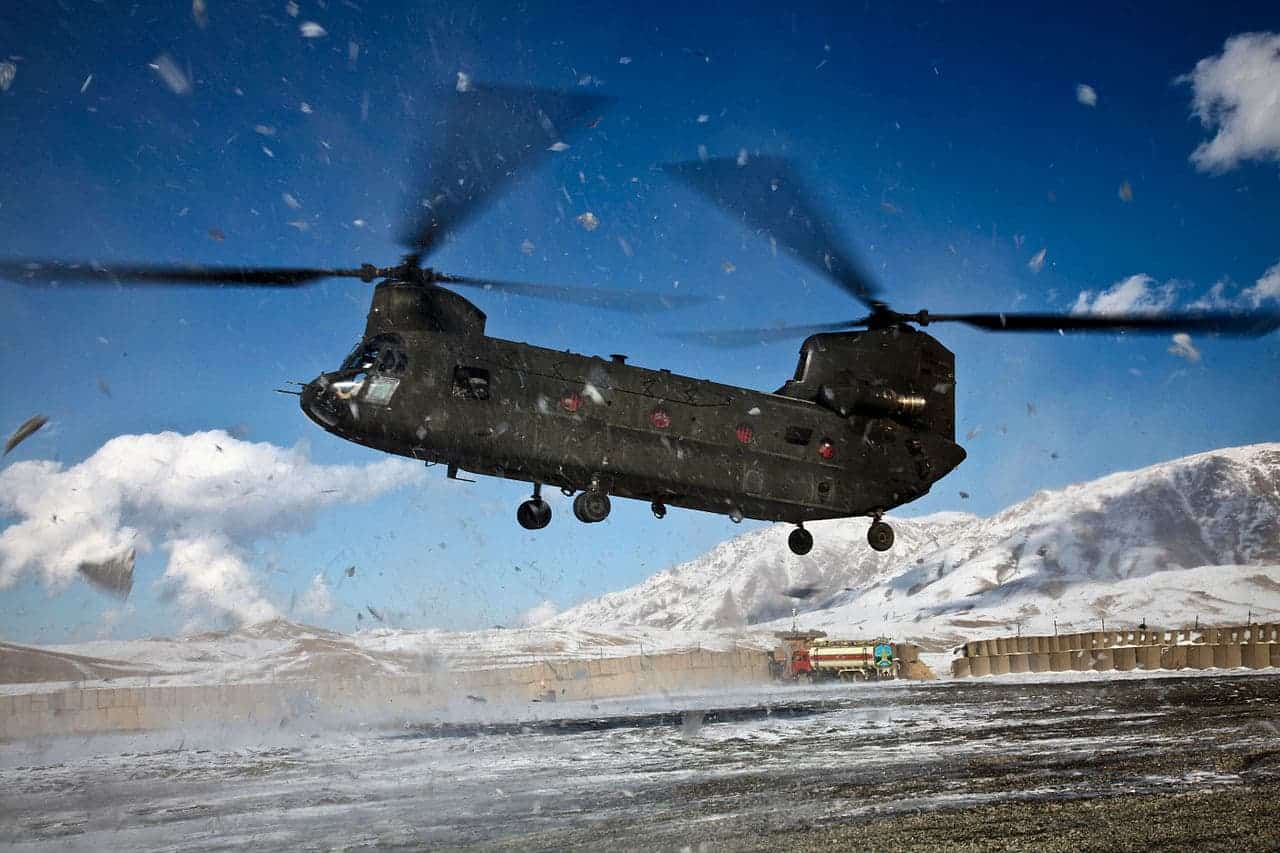

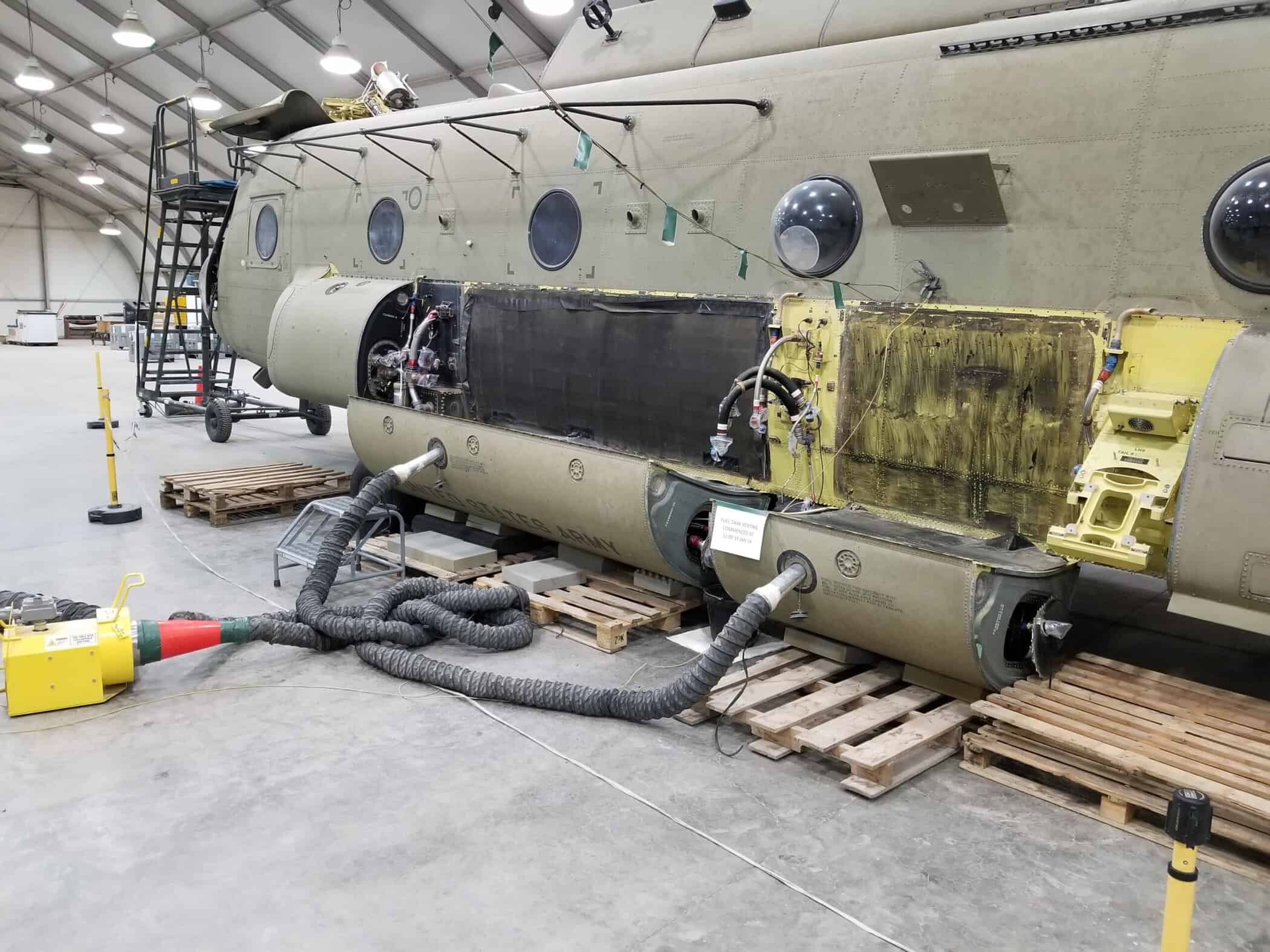

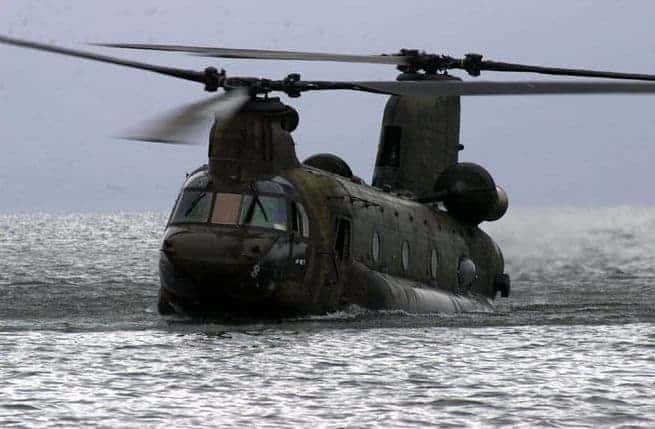
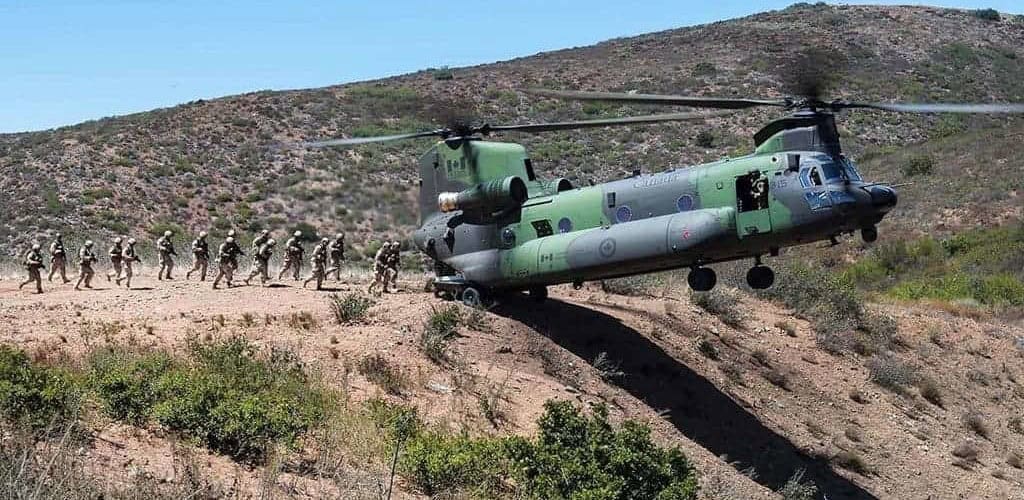

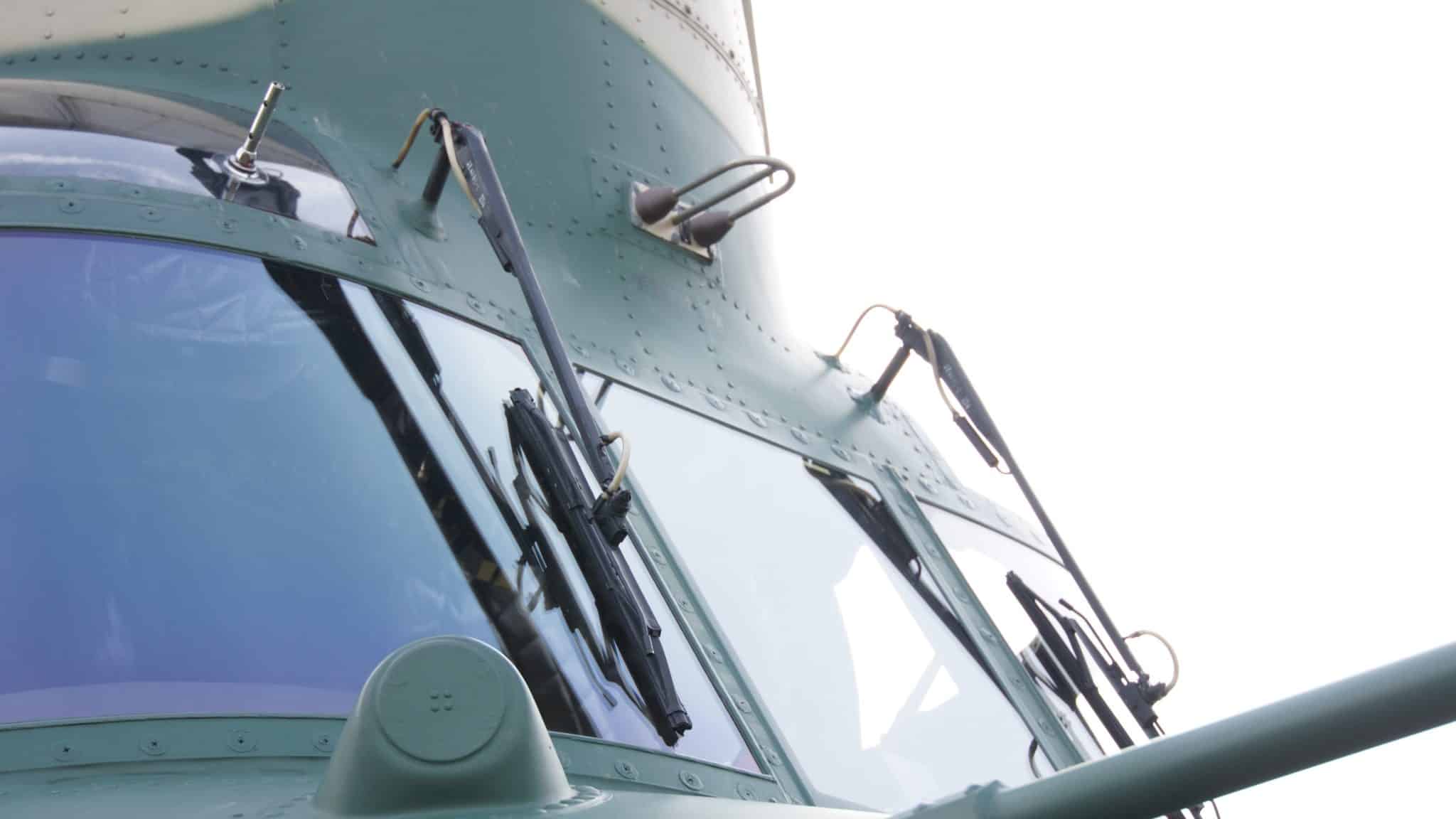
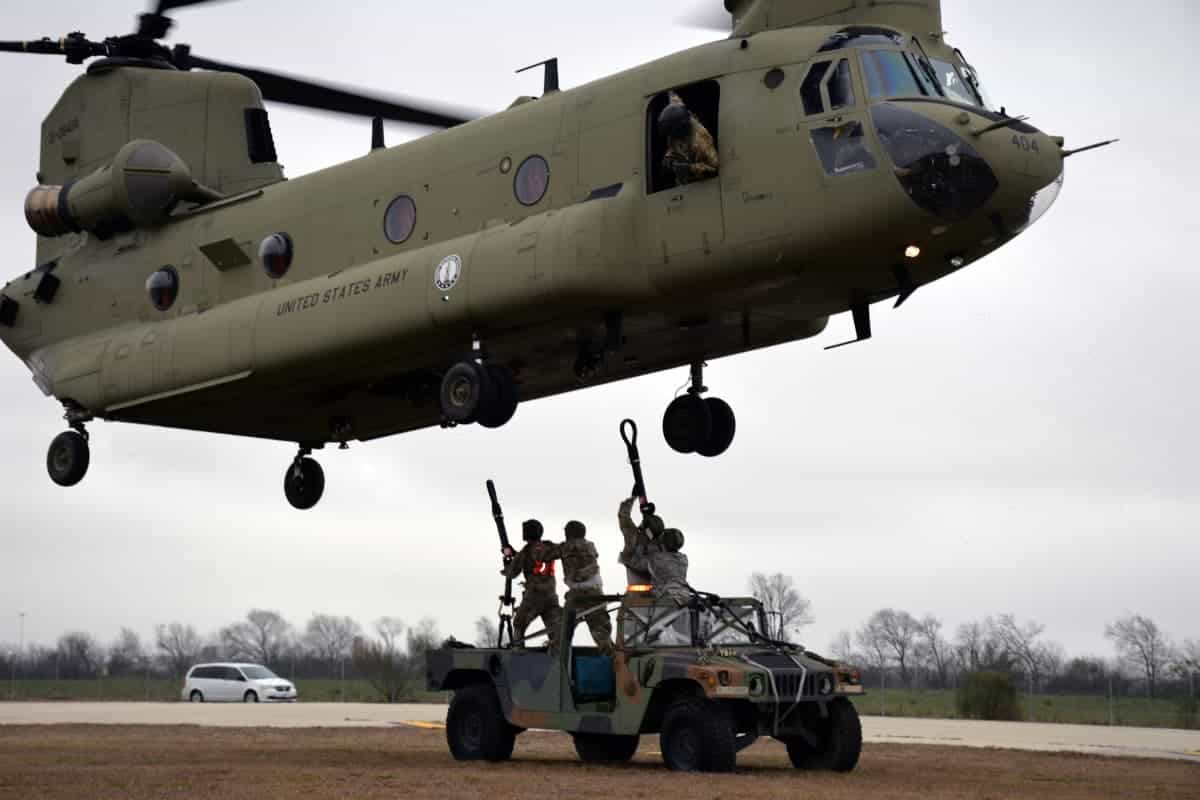
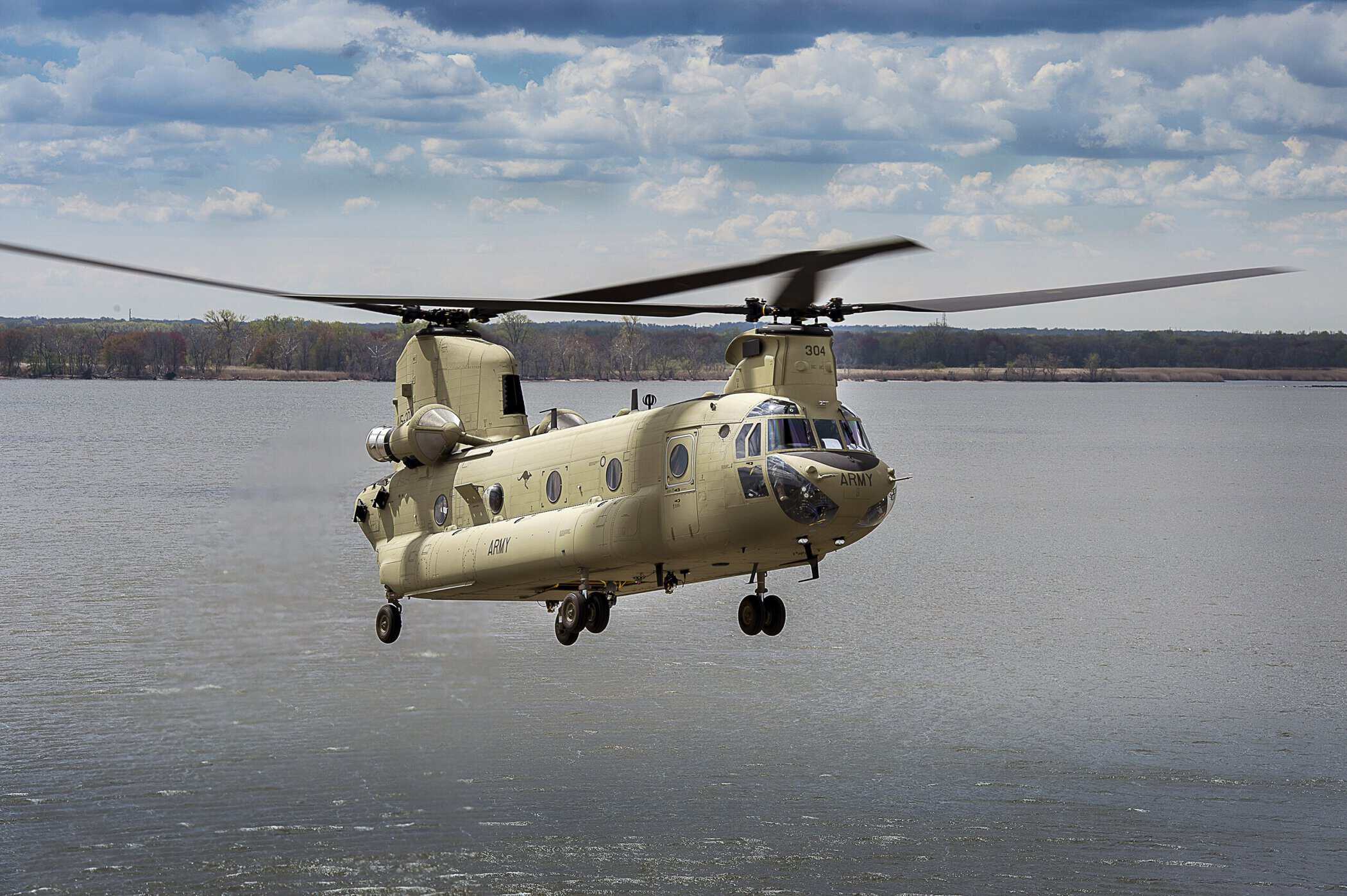
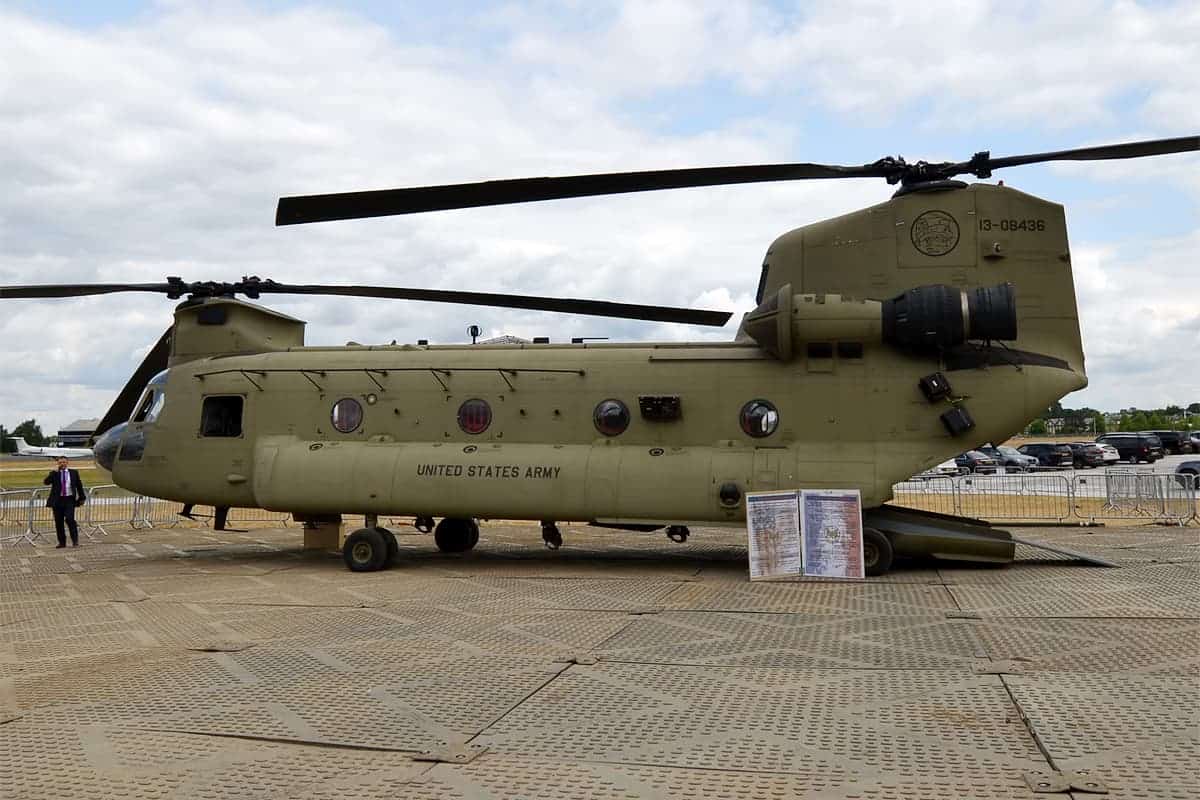
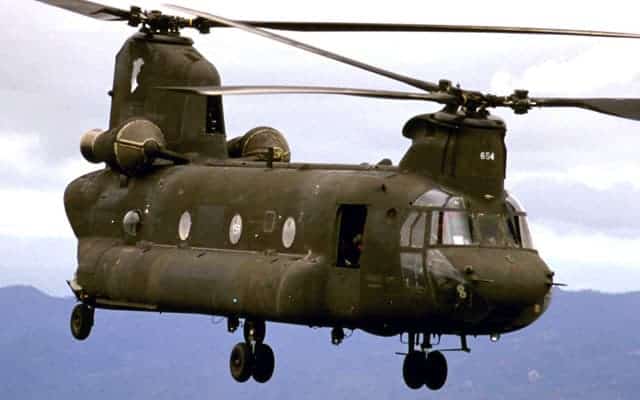
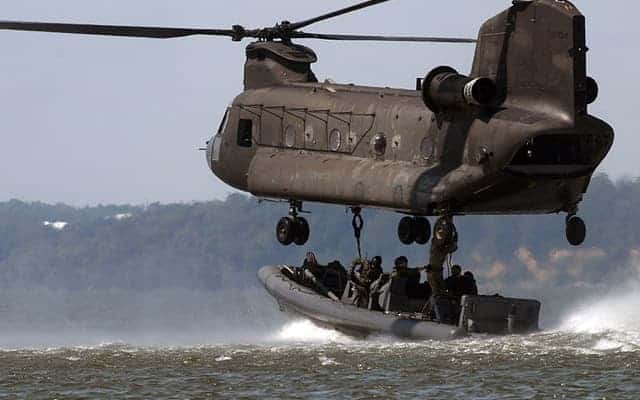
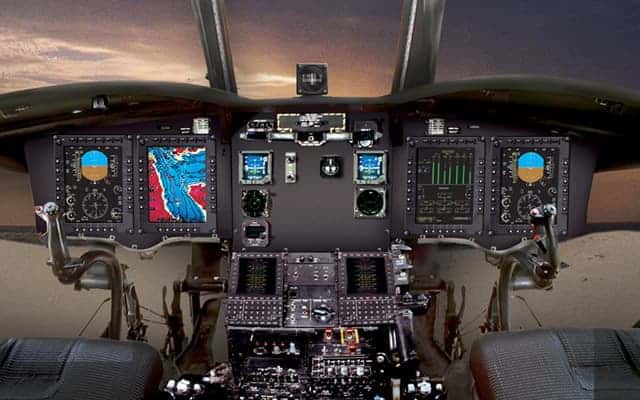
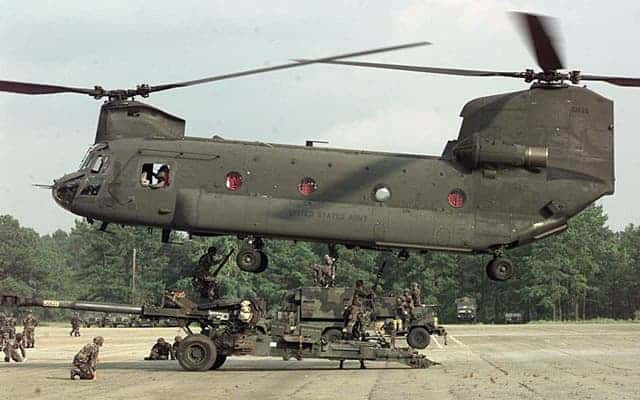
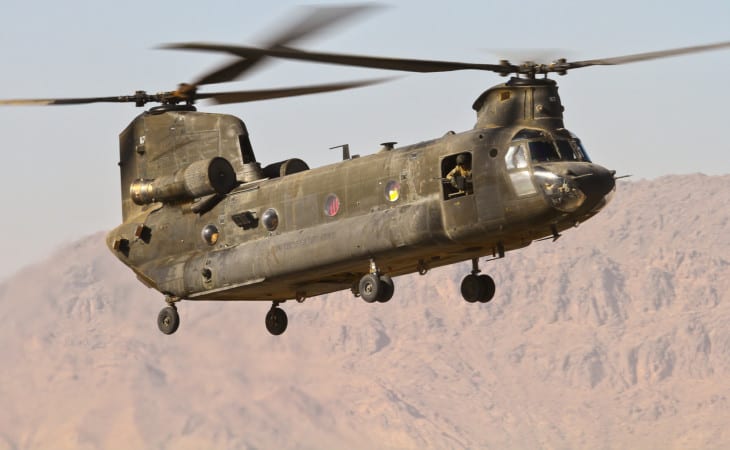
The most widely known transport helicopter is the Chinook. The CH-47 Chinook is a twin-engine helicopter built by Boeing, easily recognized by its tandem rotors. It is one of the heaviest-lifting Western helicopters and serves as the US Army’s primary supply and troop transport.
Boeing began developing the Chinook in 1956, and it was first fielded in Vietnam in 1962. Since then it has been upgraded many times and is not expected to retire until around 2060, which would make it the Army’s first aircraft to reach 100 years of service.
The latest CH-47F Block II adds stronger engines, an upgraded drivetrain, and new rotor blades to keep the Chinook flying for decades. The special-operations MH-47G variant serves US Army special operations forces with in-flight refueling and advanced avionics.
CH-53E Super Stallion

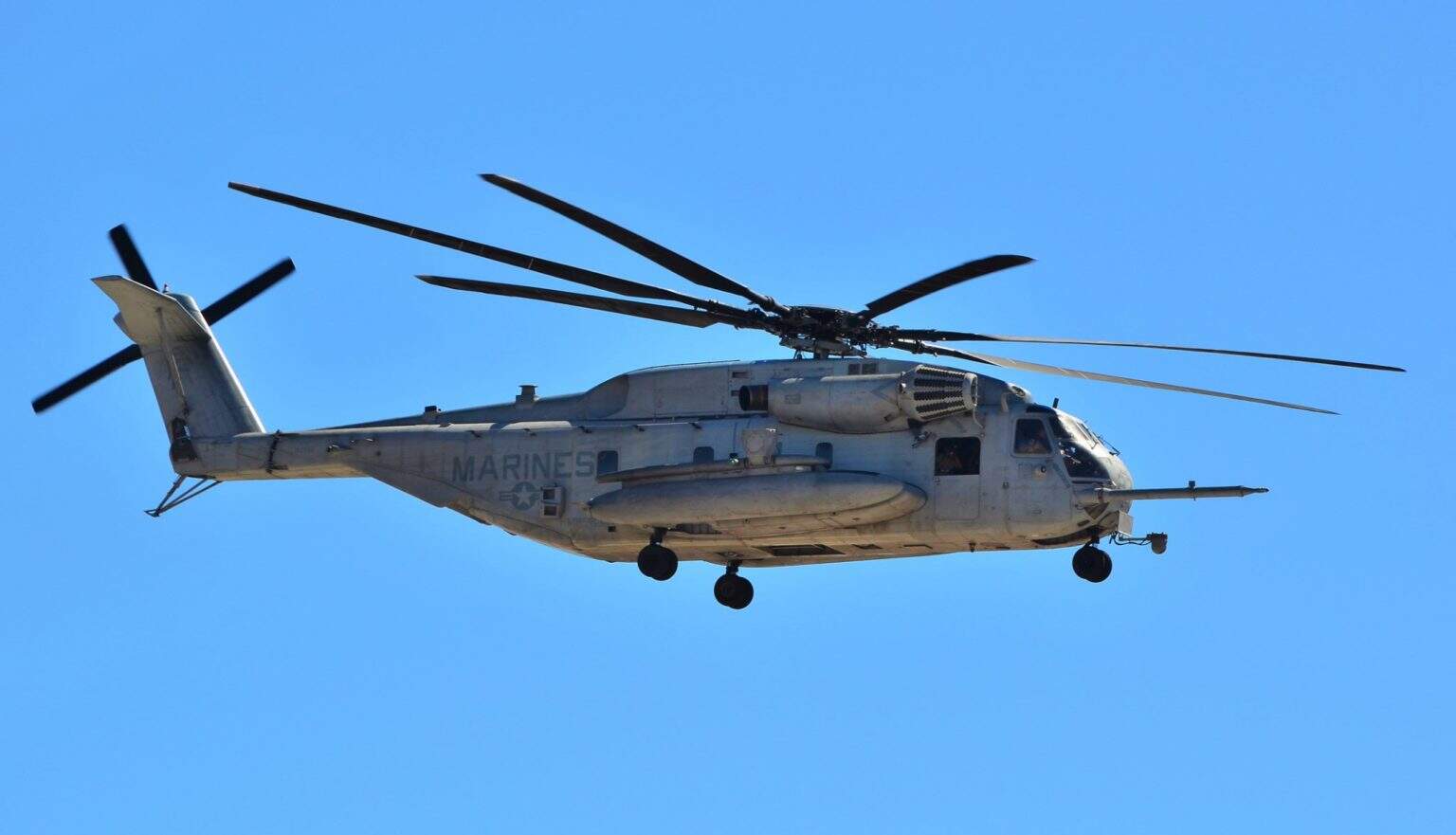

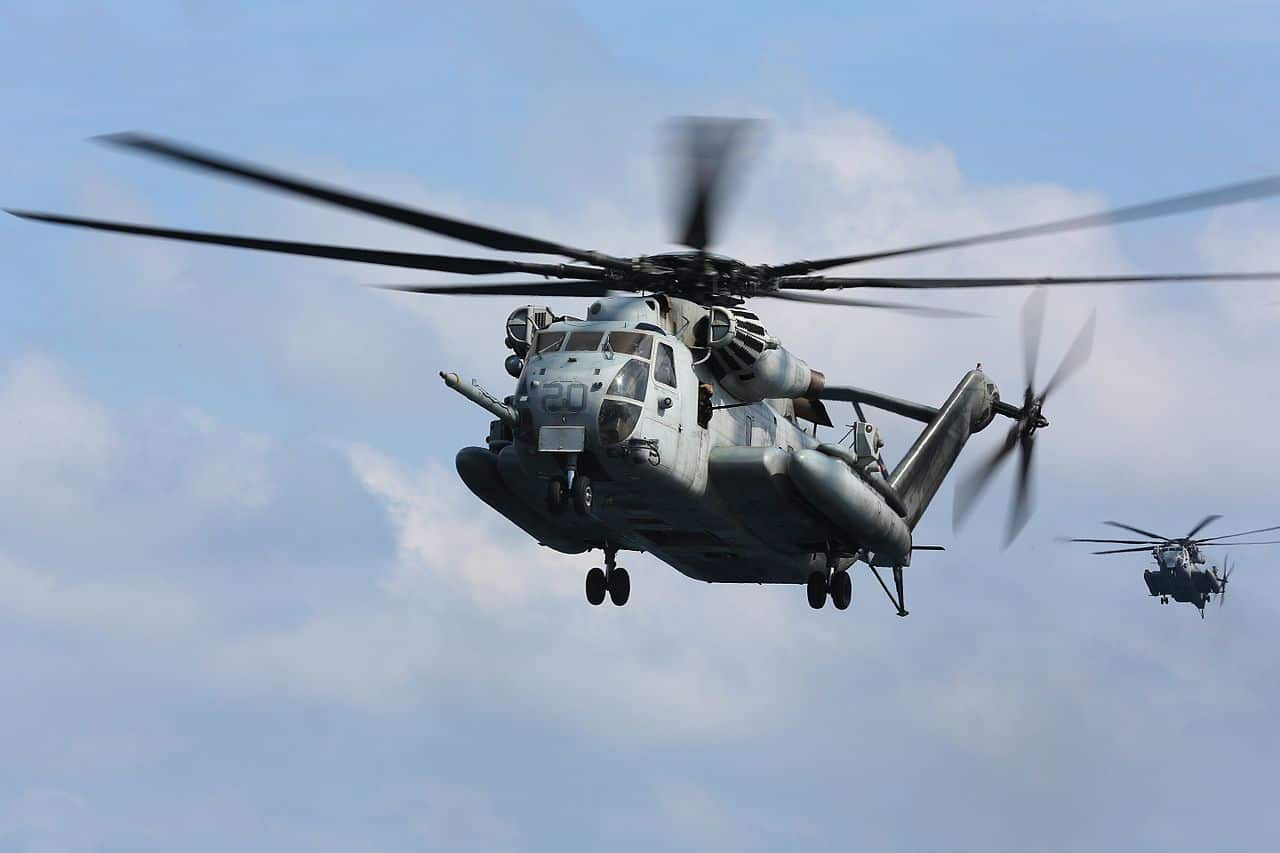
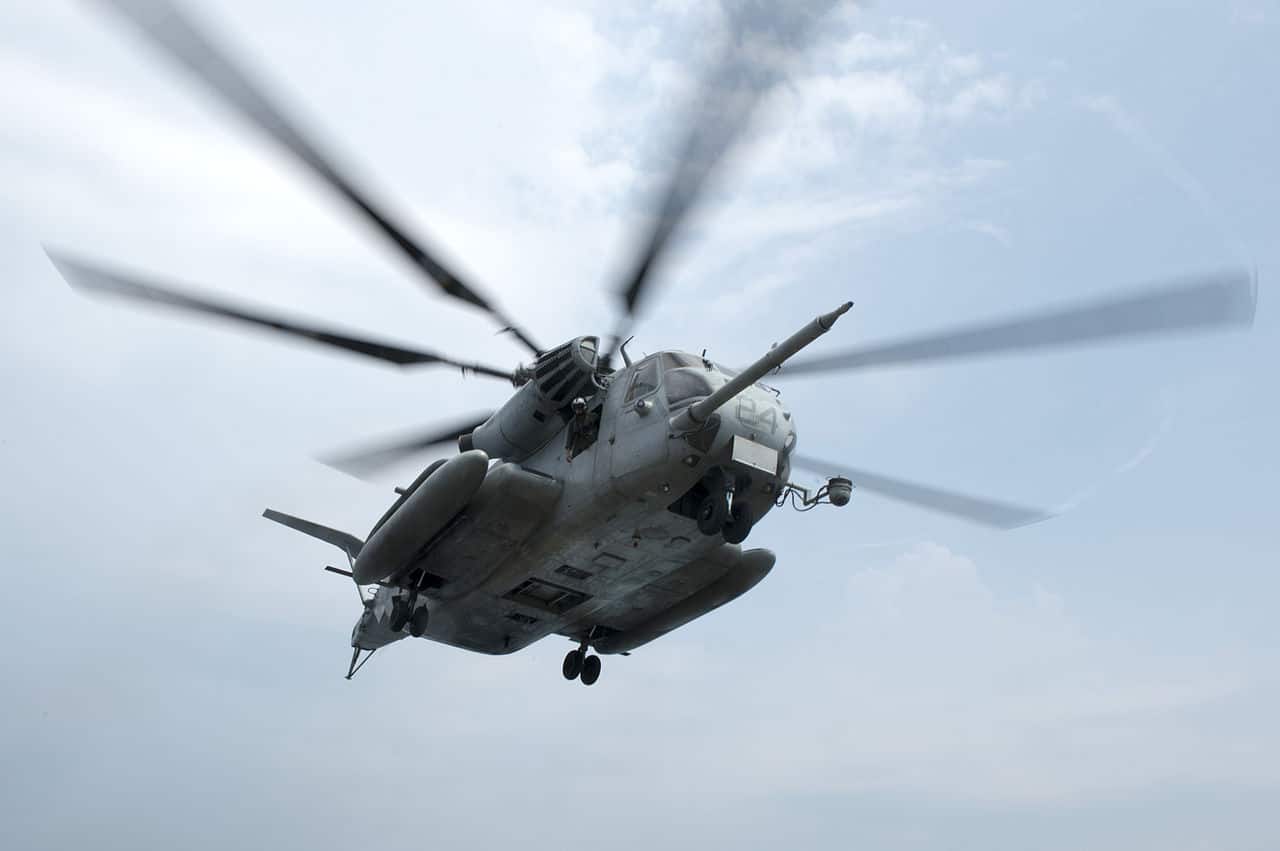
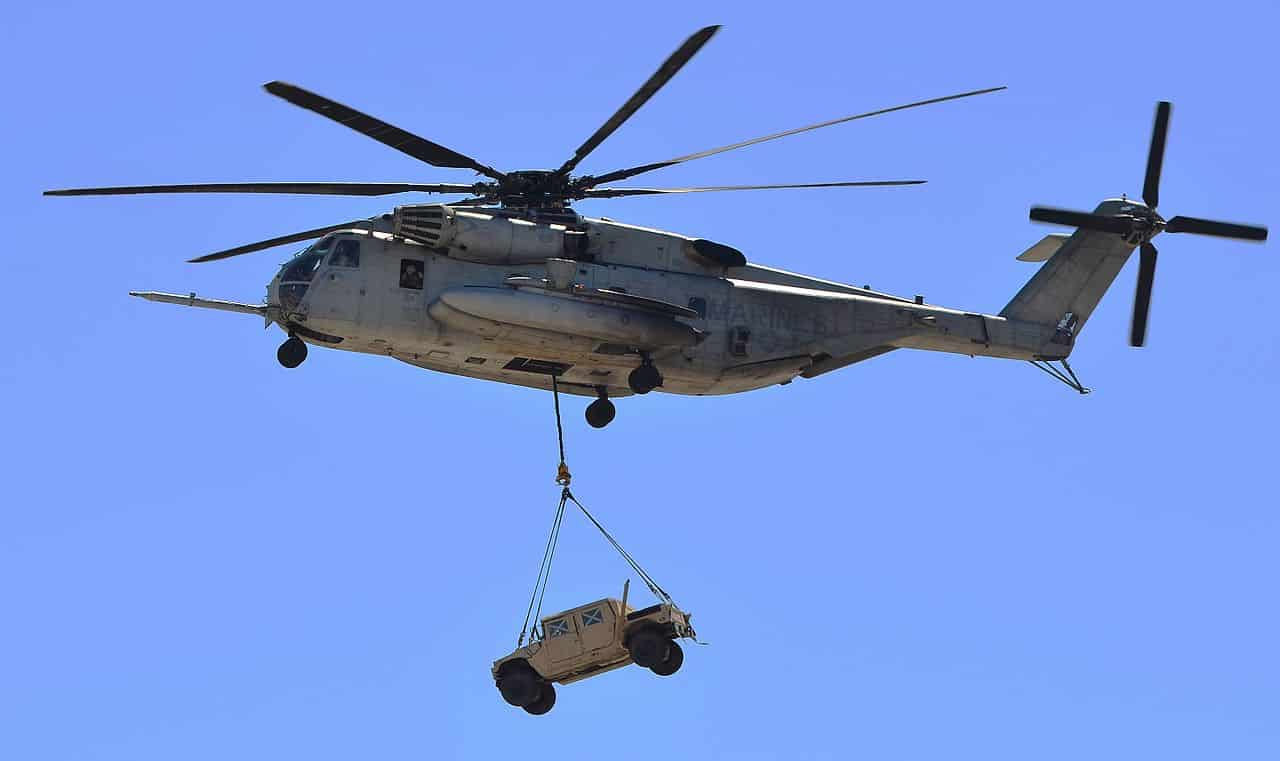


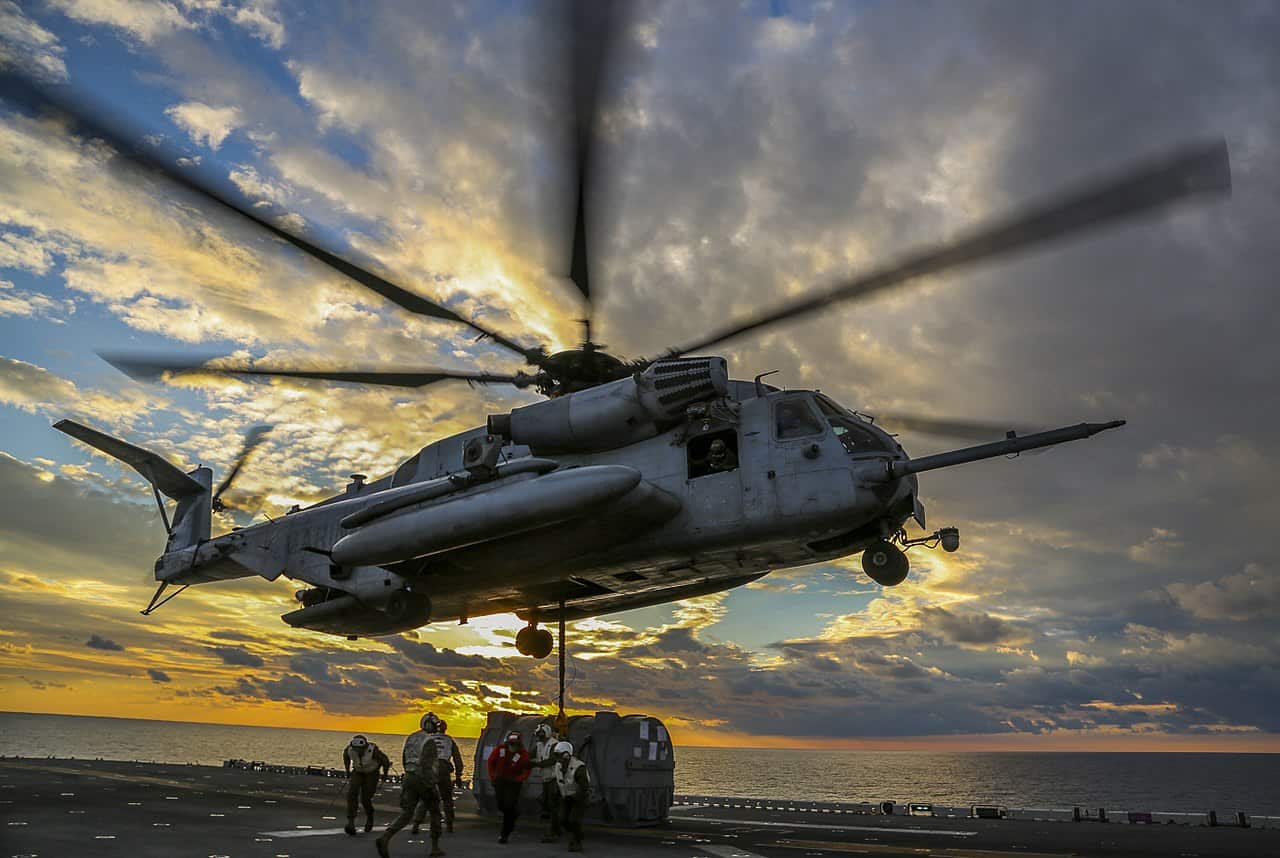
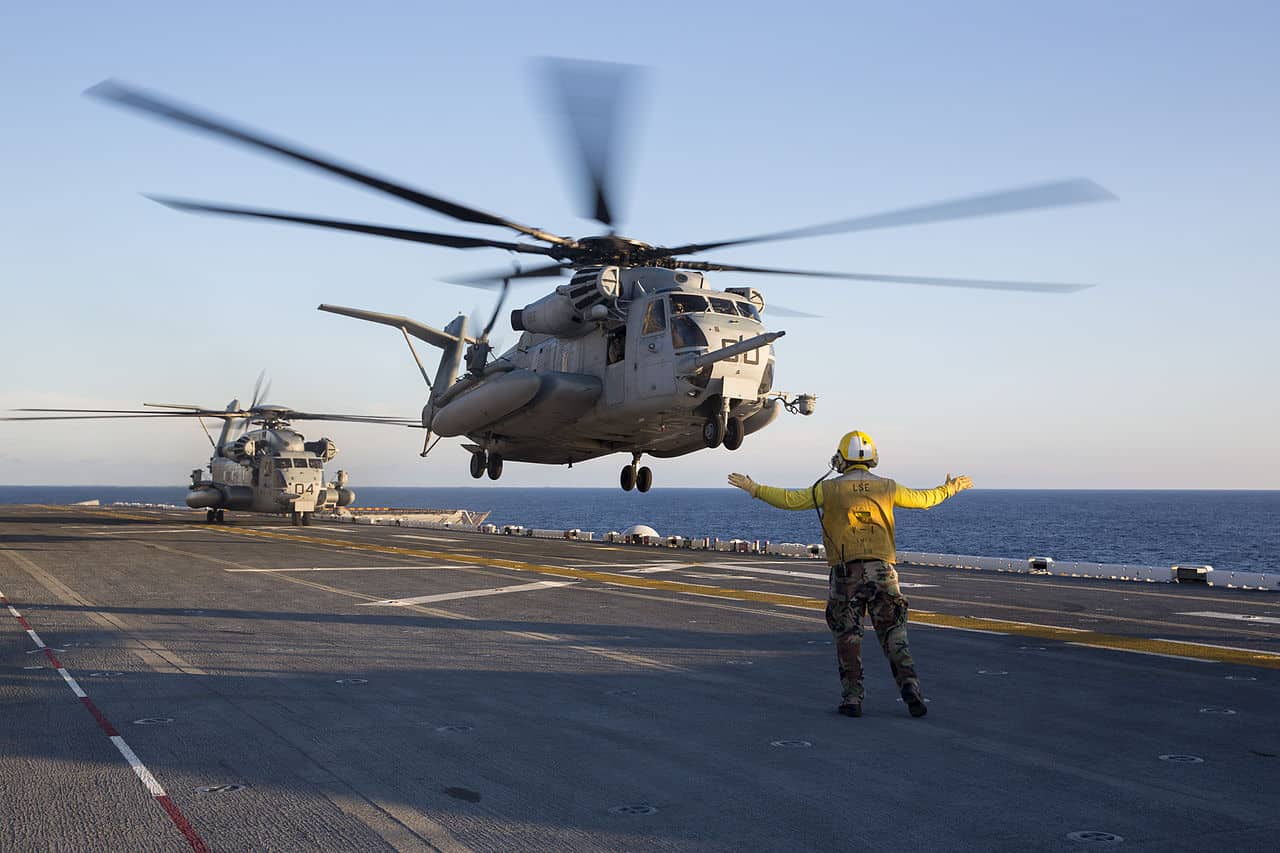
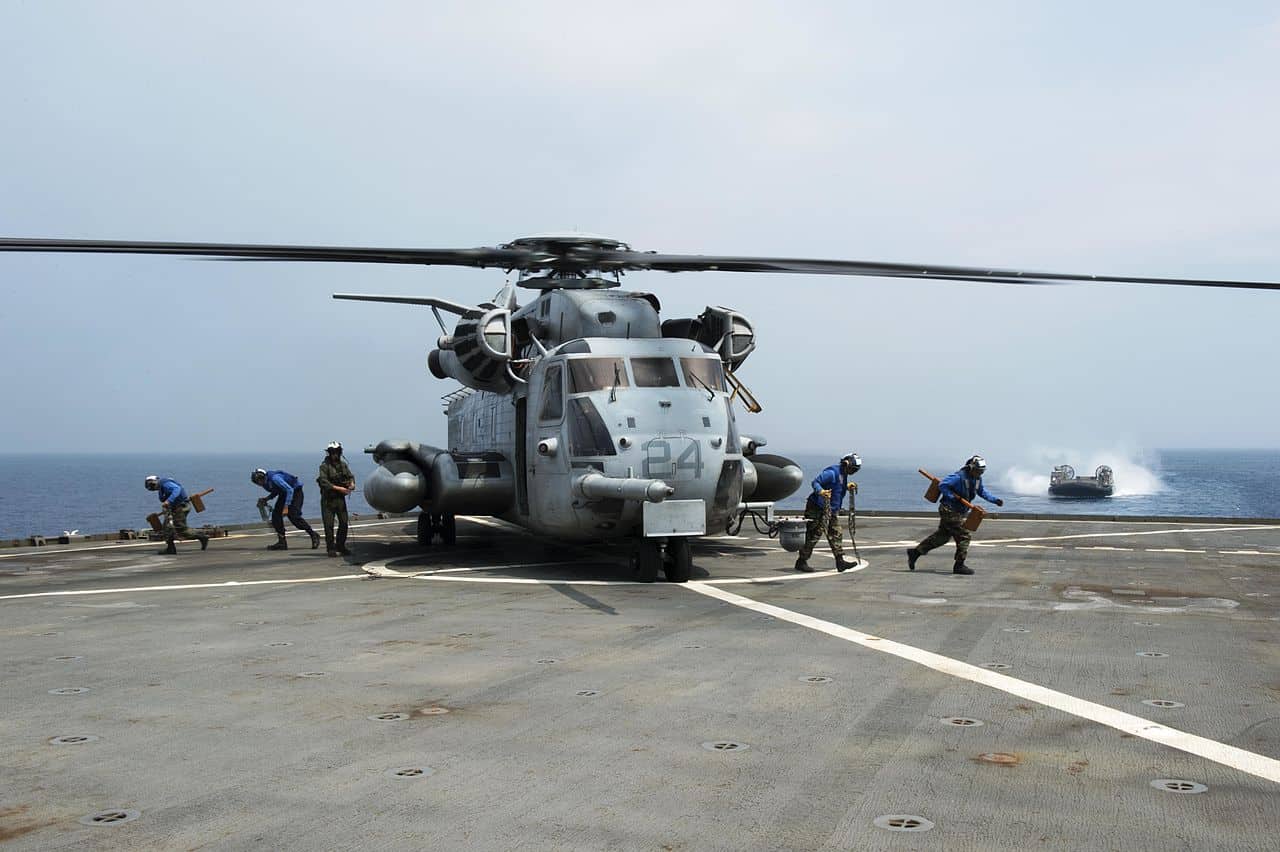

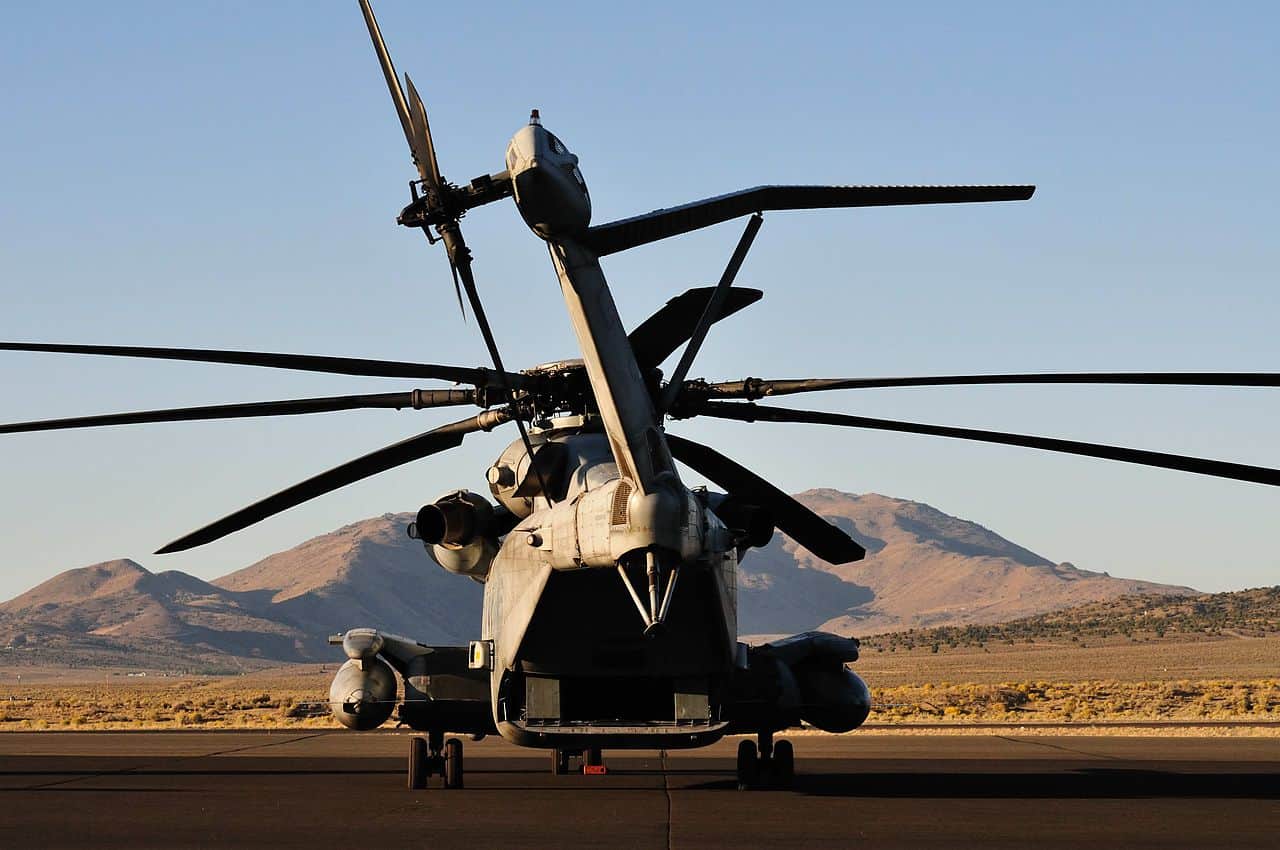
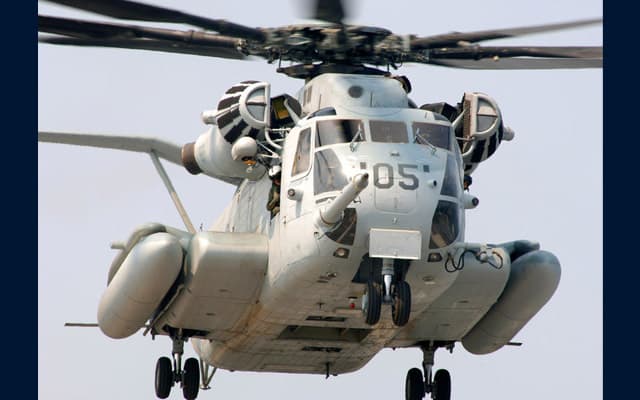
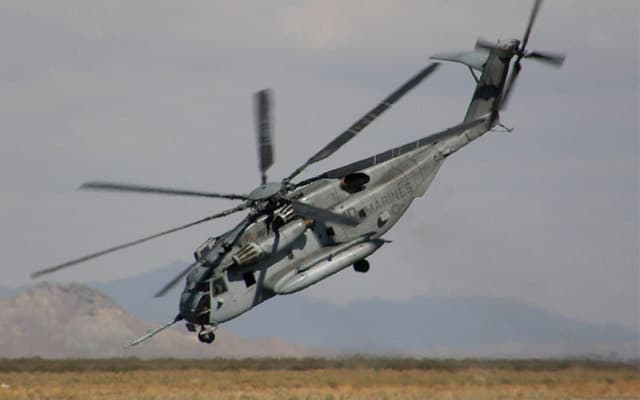
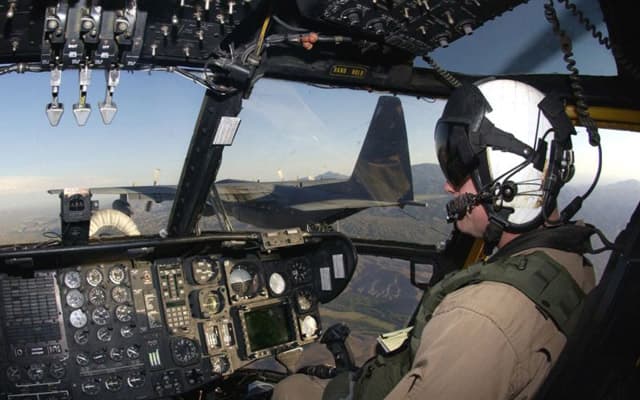

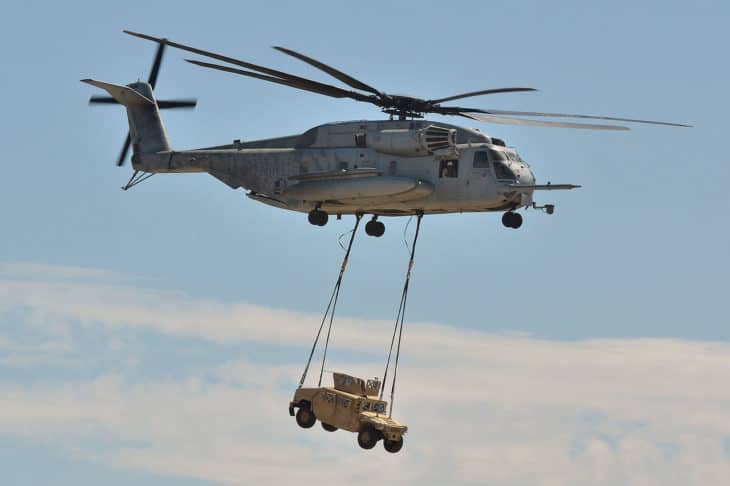
Another heavy hitter is the Super Stallion. The CH-53E Super Stallion, built by Sikorsky, has long been the largest heavy-lift transport helicopter in the US military and one of the biggest military helicopters in the world. It was designed for the Marine Corps and uses a seven-bladed main rotor.
The Super Stallion has a maximum takeoff weight of about 73,500 pounds (33,300 kg) and can carry external loads of up to 36,000 pounds (16,300 kg). The Marine Corps has flown it since the 1980s, and it grew out of the earlier HH-53 Super Jolly Green Giant used by the Air Force in the Vietnam era.
The CH-53E is now being replaced by the more powerful CH-53K King Stallion, which the Marine Corps cleared for full-rate production in 2022 and first deployed in 2025. The King Stallion roughly triples the external load of the older aircraft while sharing the same overall footprint.
3. Military Observation Helicopters
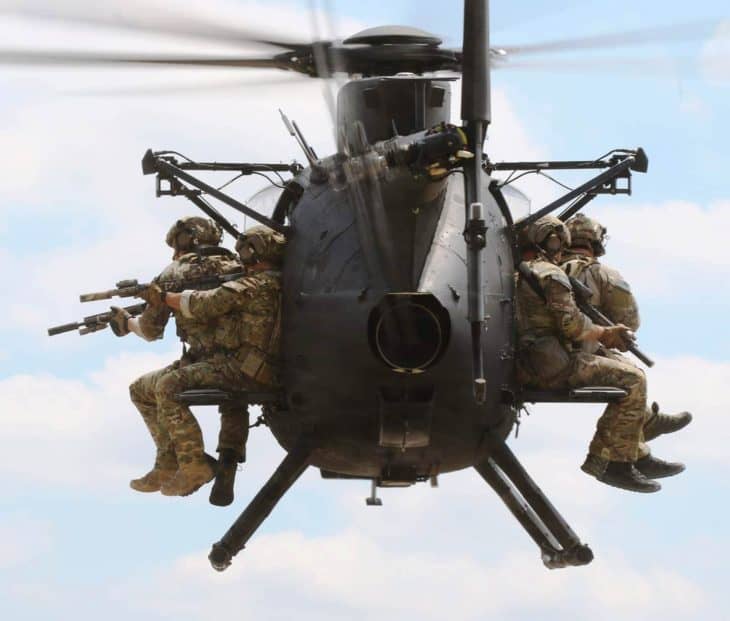
Observation helicopters carry sensor and communication equipment for intelligence-gathering and reconnaissance missions. They use sensor suites, communications gear, infrared cameras, low-light television, and laser systems to spot and identify targets. Some also guide anti-tank missiles and direct air strikes.
MH-6 Little Bird
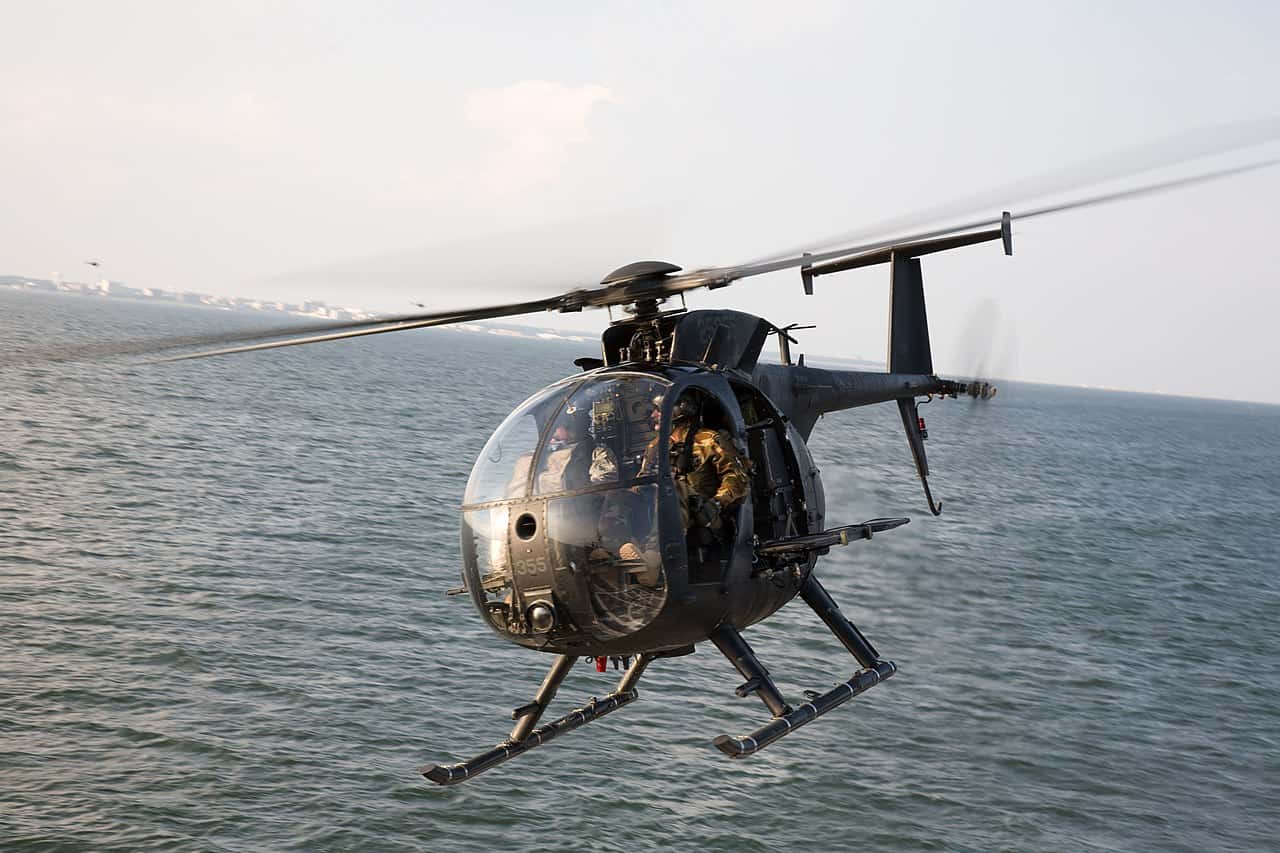


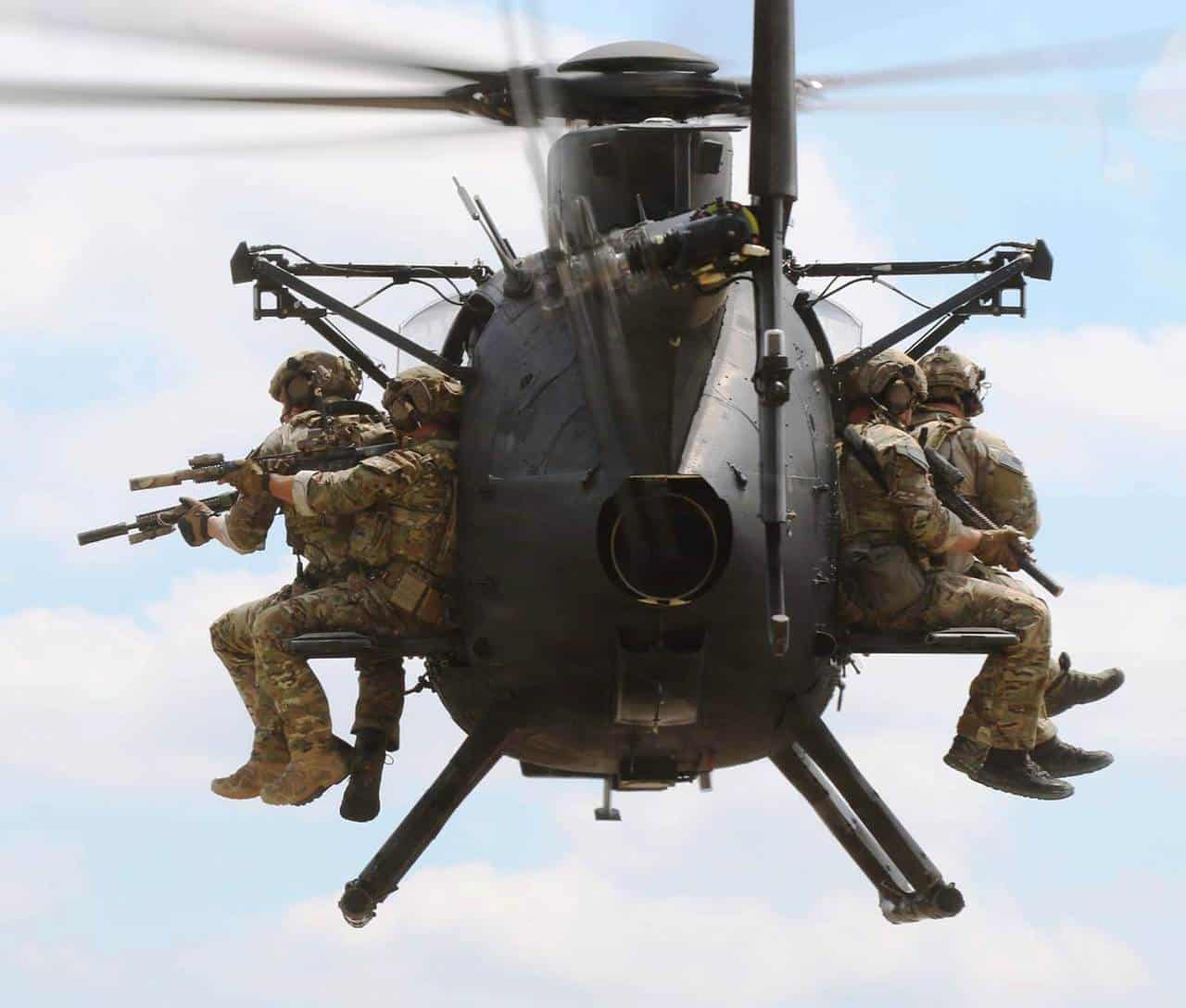
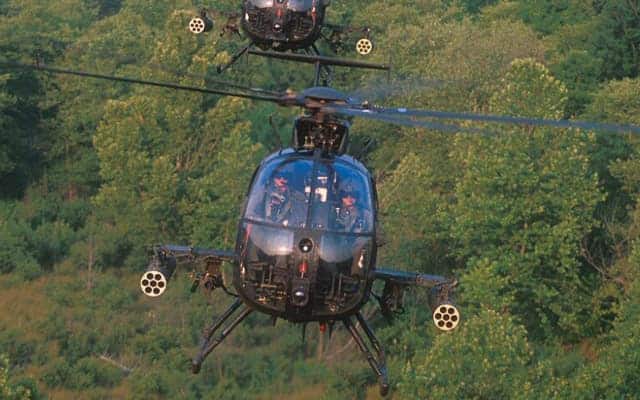
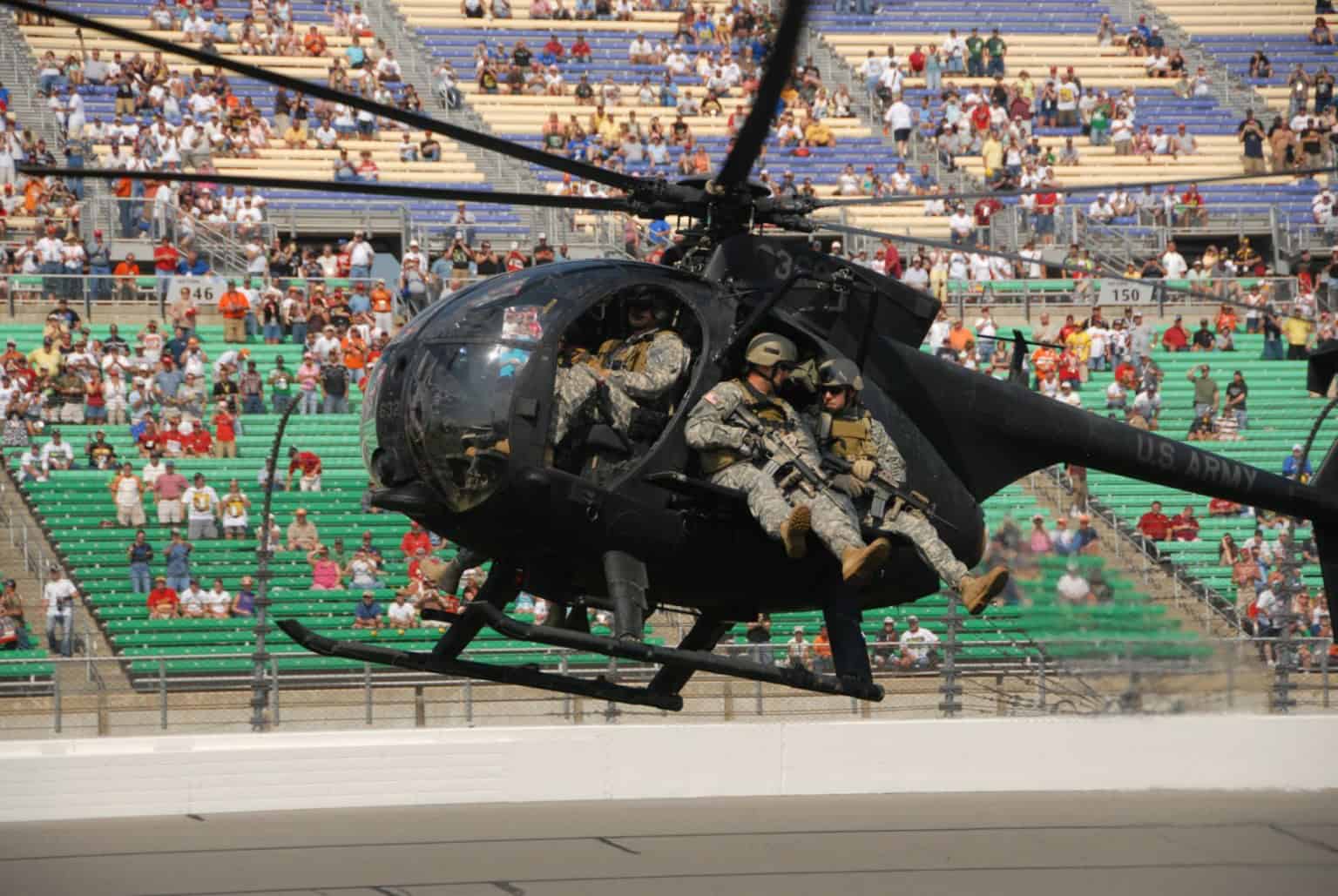

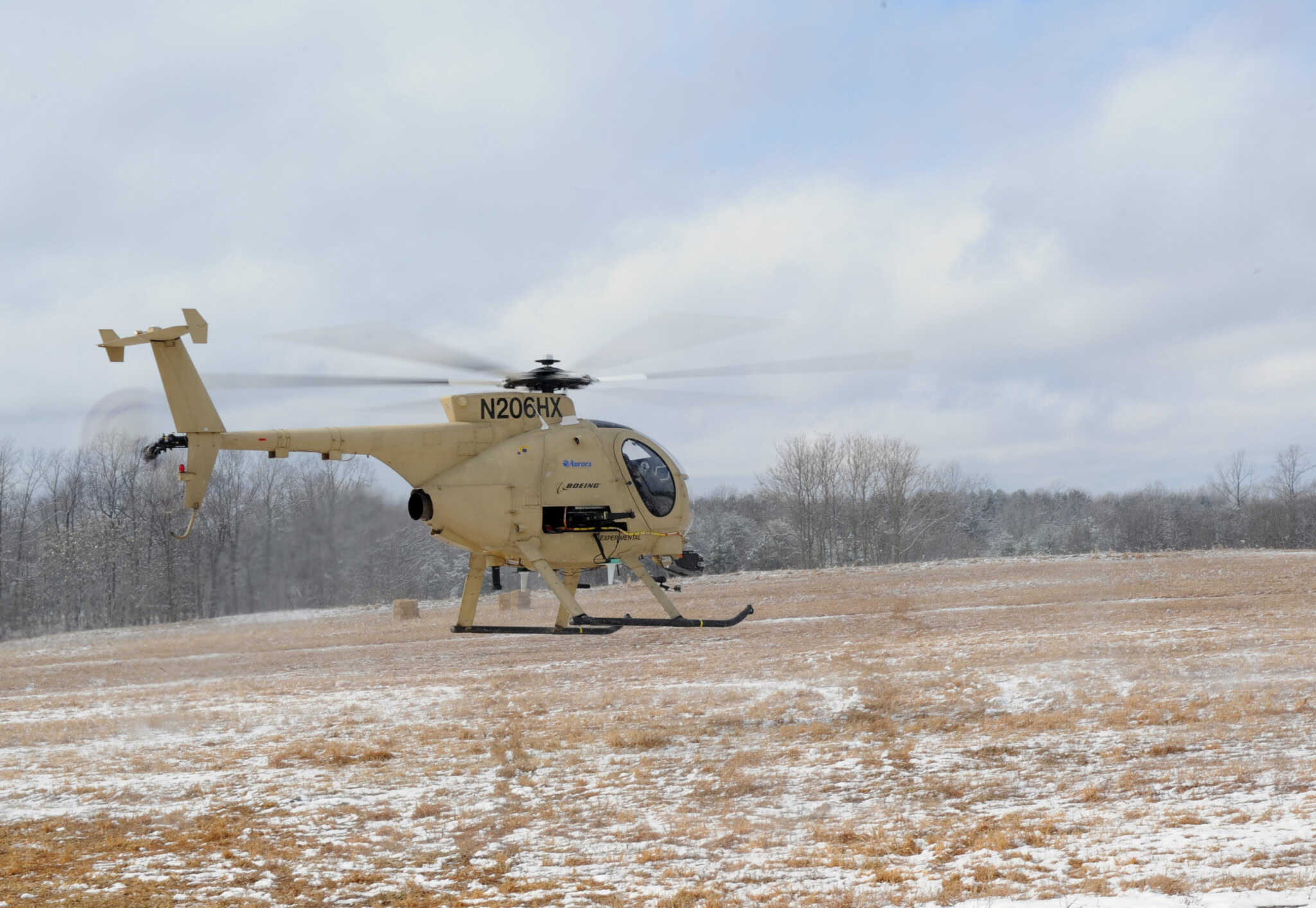
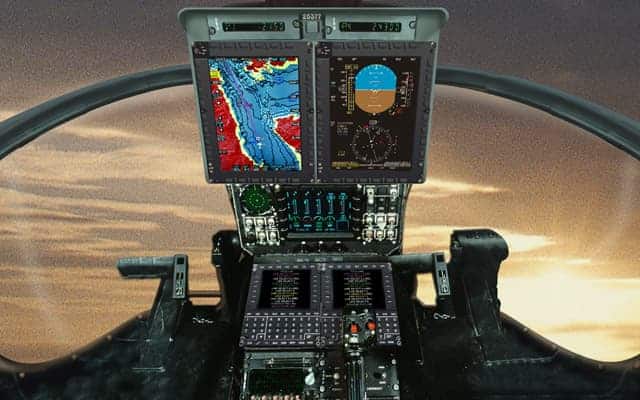
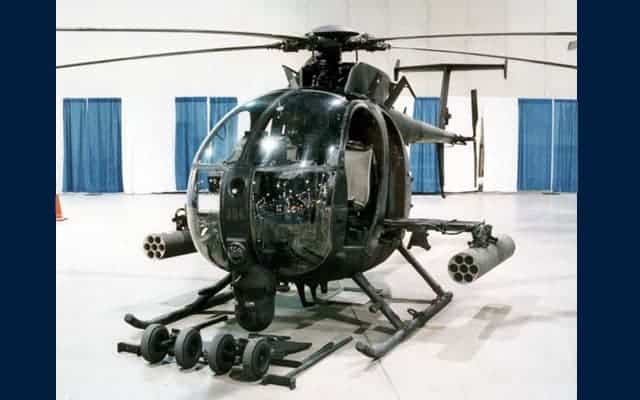
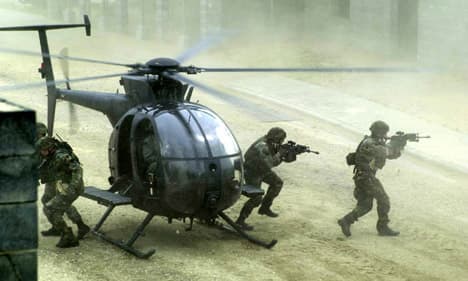
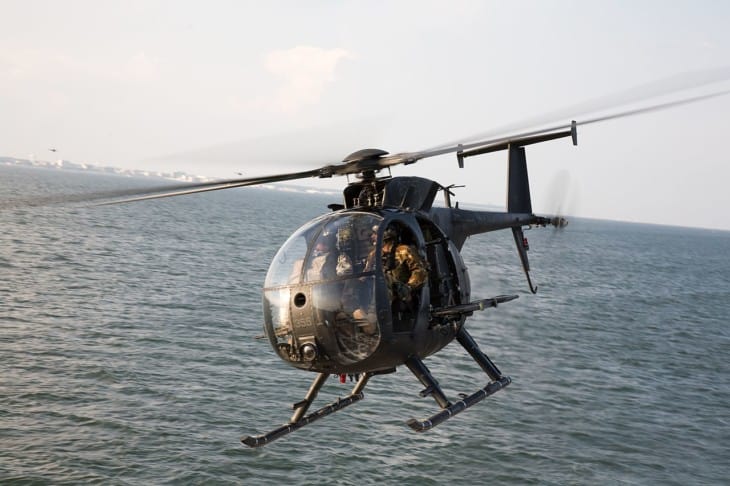
A small helicopter with an outsized reputation is the Little Bird, made famous by modern film. The MH-6 Little Bird, nicknamed “the killer egg,” is a light, manned observation and special-operations helicopter built by MD Helicopters, originally McDonnell Douglas. Its main fuel tanks resist small-arms fire, and it can mount external tanks for extended range.
Uniquely for a military aircraft, the Little Bird can be rapidly dismantled, airlifted inside a cargo plane, and reassembled on arrival. It carries a digital cockpit with navigation, sensor, night-vision, and control units, and the extensively modified MH-6M adds mission avionics and weapons provisions.
Originally designed for reconnaissance, the Little Bird proved most effective in combat during the 1980s. Today it flies almost exclusively with the US Army’s elite 160th Special Operations Aviation Regiment, the “Night Stalkers,” inserting troops onto rooftops and into tight spaces. It became widely known through the book and film “Black Hawk Down,” which showed it carrying Delta Force soldiers.
OH-58 Kiowa Warrior
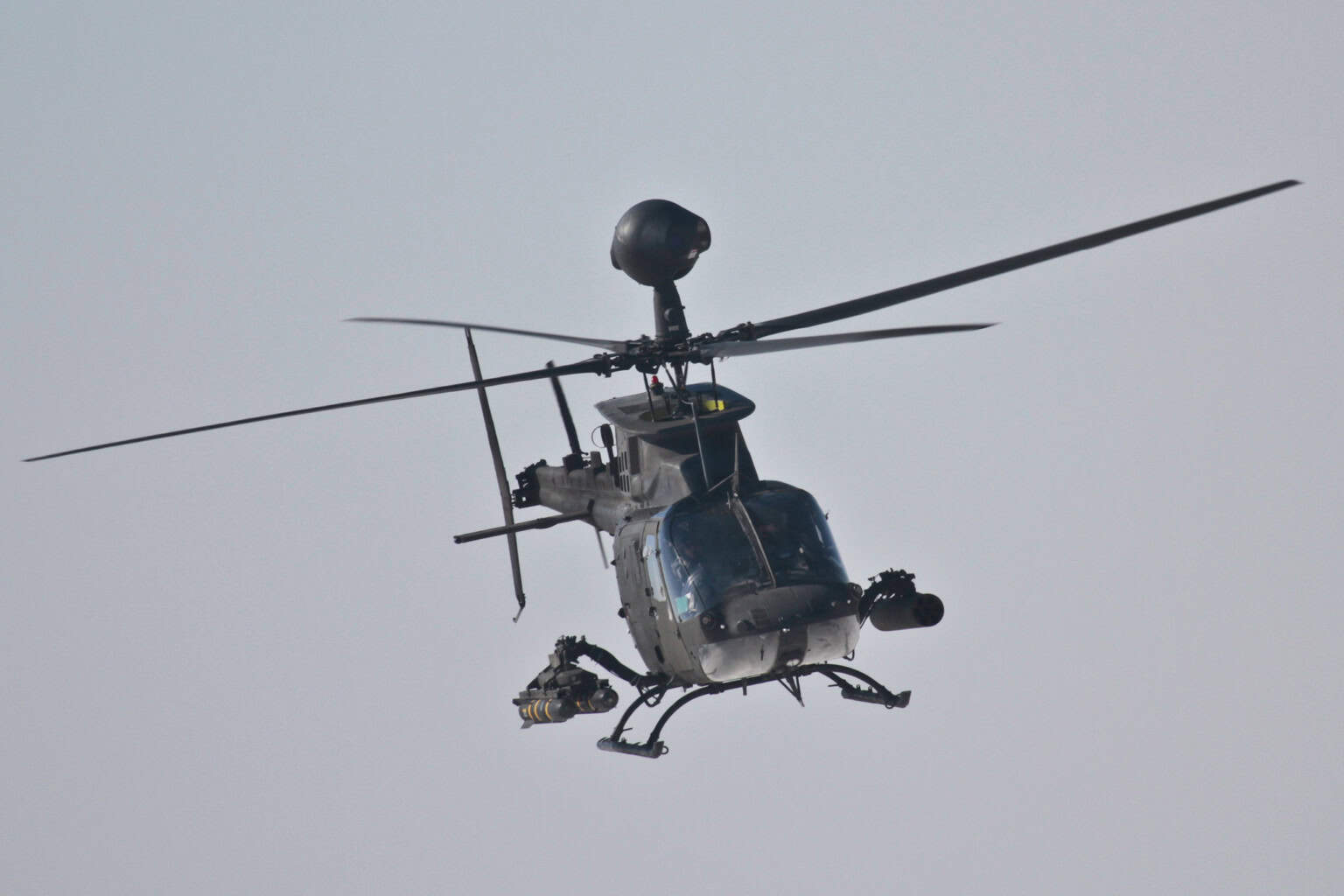


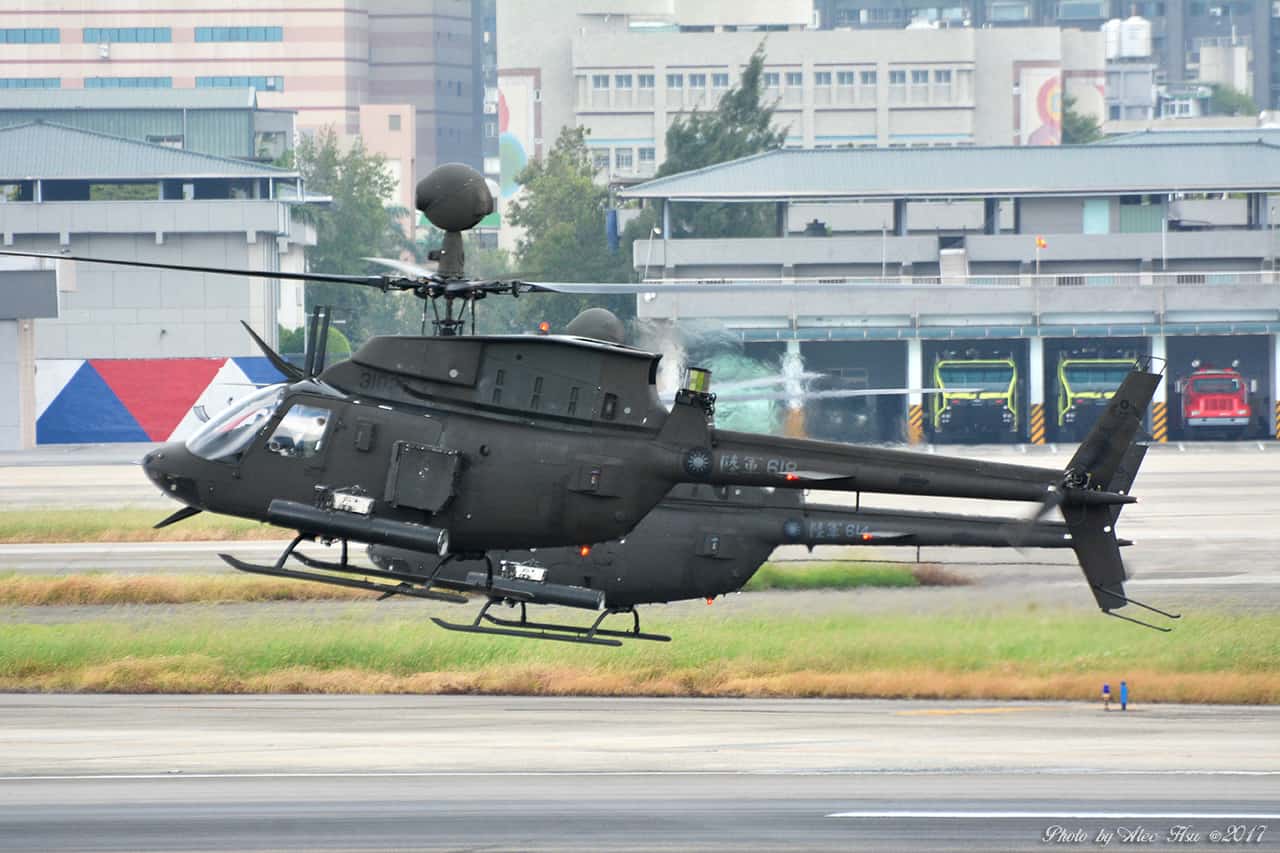
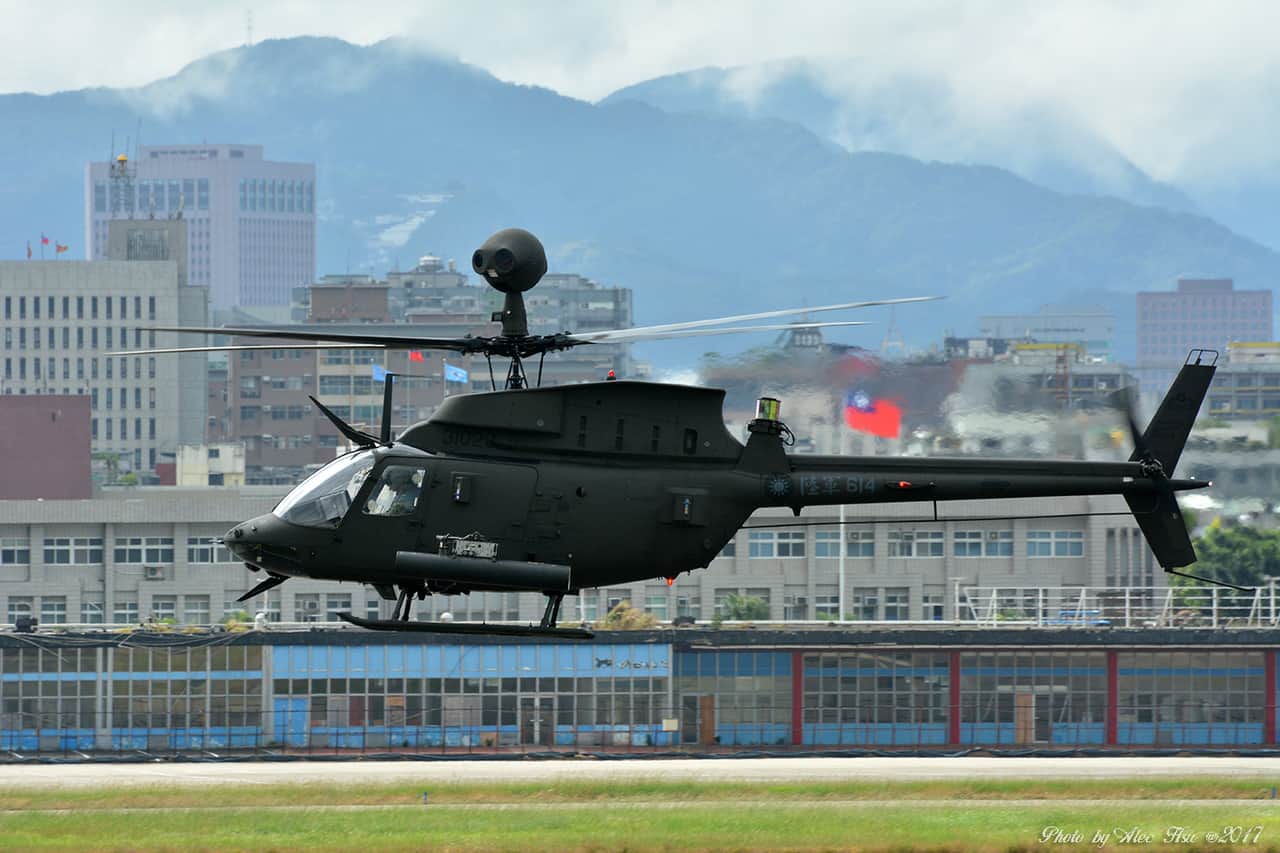

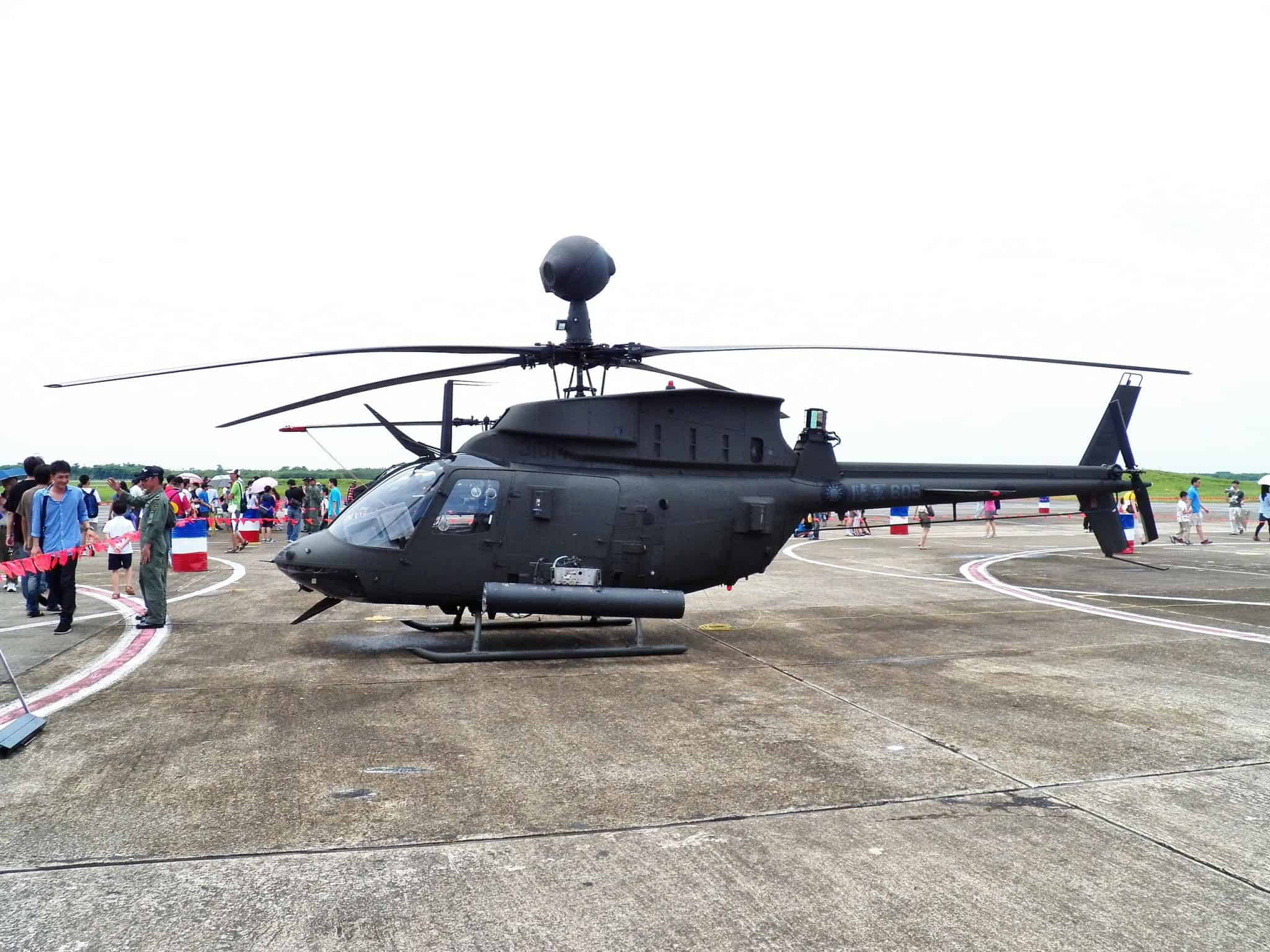
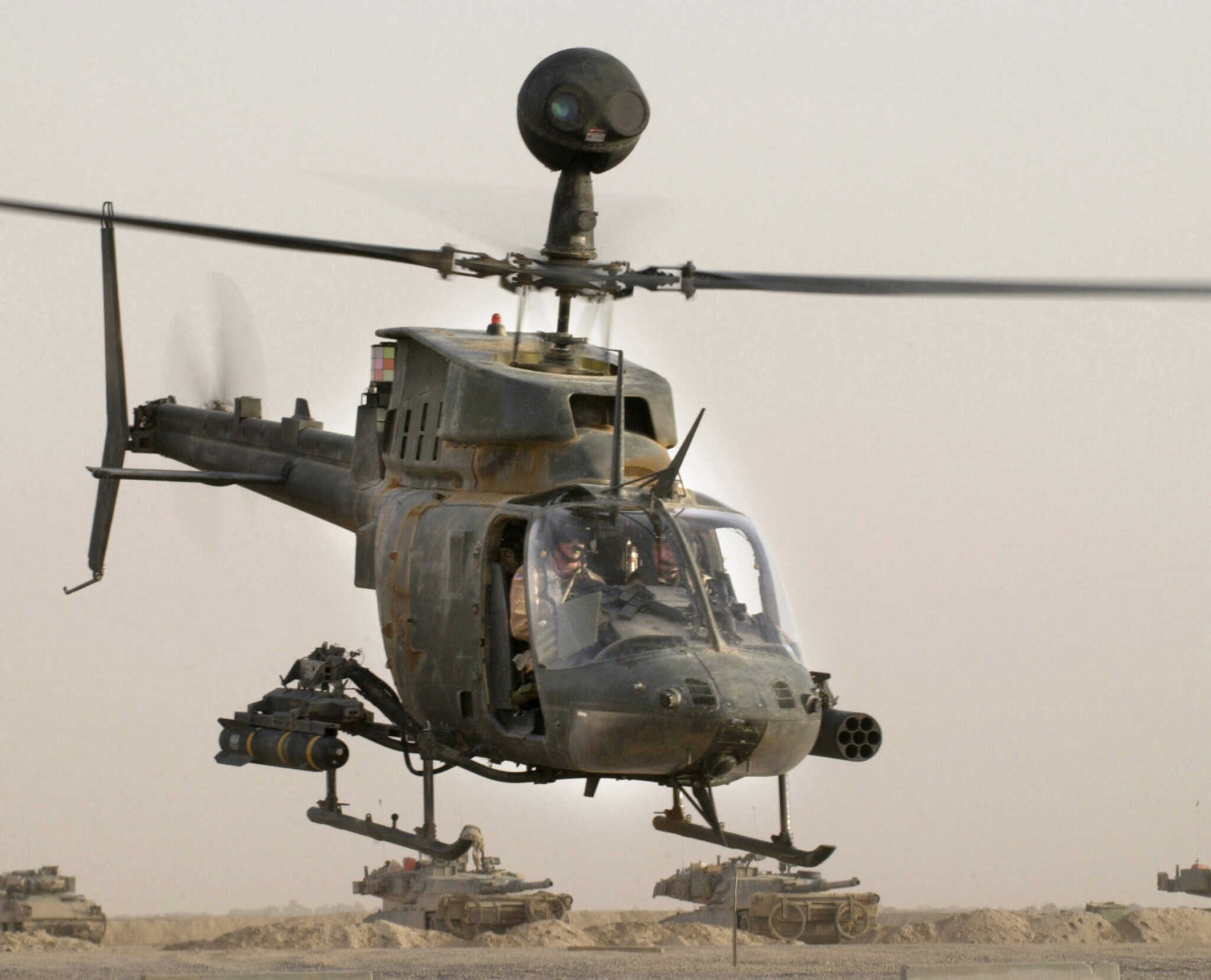

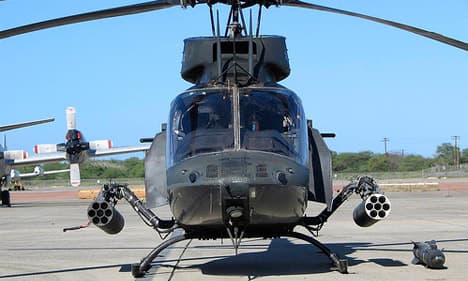
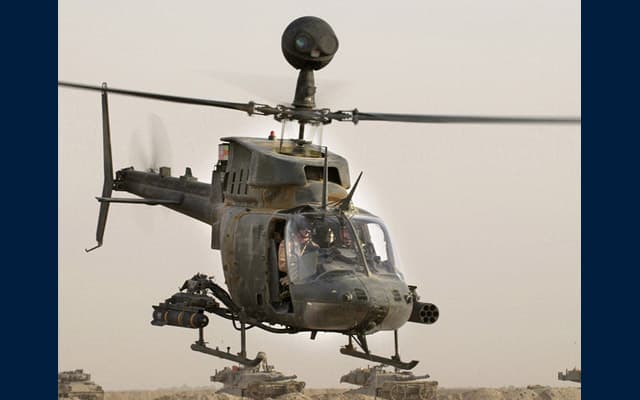
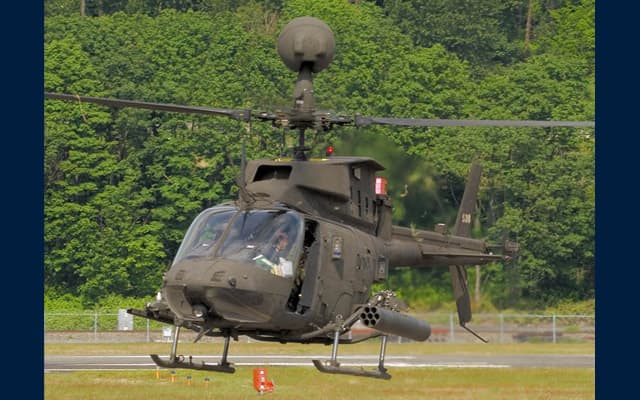

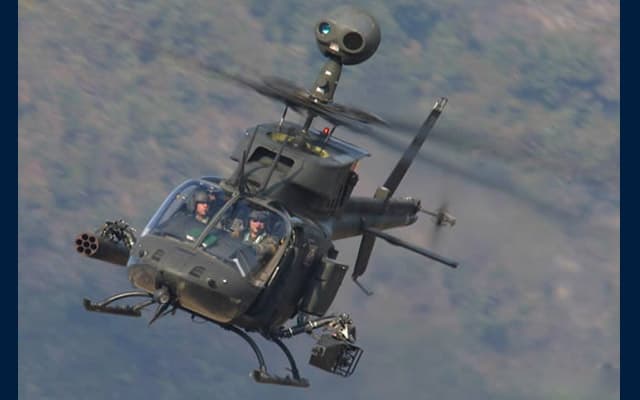
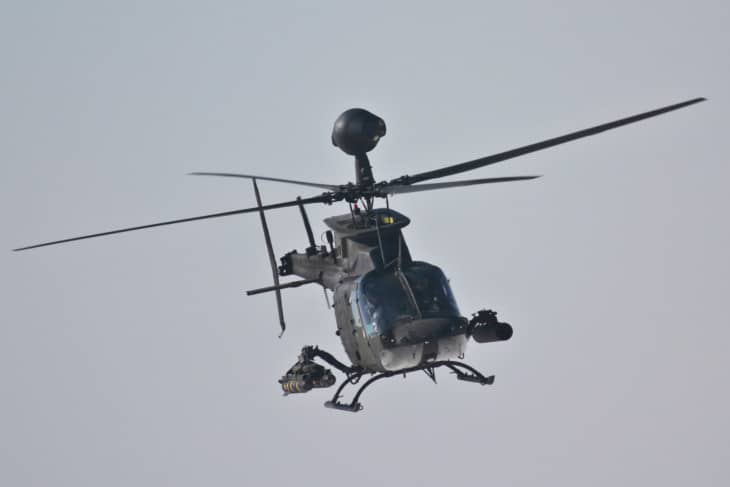
Another widely used scout helicopter is the Kiowa. The OH-58 Kiowa Warrior, built by Bell Helicopter, is a four-bladed, single-engine reconnaissance helicopter with advanced weapons, navigation, and communication systems for day and night operations in poor weather. It served the US Army as a scout, light-attack, and armed-reconnaissance aircraft, and could be flying within minutes of arrival.
The first Kiowa reached the Army in 1969, and the type went on to serve in the Vietnam War, Operation Prime Chance, and the wars in Iraq and Afghanistan. The US Army retired its last OH-58 Kiowa Warriors from active service in 2017, dividing the fleet between foreign military sales and replacement by unmanned systems and other scouts.
4. Military Utility Helicopters
Utility helicopters are highly versatile aircraft that work in almost any environment. A single utility type can handle everything from reconnaissance and light attack to transport and evacuation. The most iconic of them all is the Black Hawk.
Apache or Black Hawk: which is "better"?
They are not really rivals, because they do different jobs. The AH-64 Apache is a dedicated attack helicopter built to destroy tanks and support troops with guns and missiles. The UH-60 Black Hawk is a utility workhorse built to move troops, cargo, and casualties. Ask which is more feared and the answer is the Apache; ask which is more widely used and it is the Black Hawk.
UH-60 Black Hawk

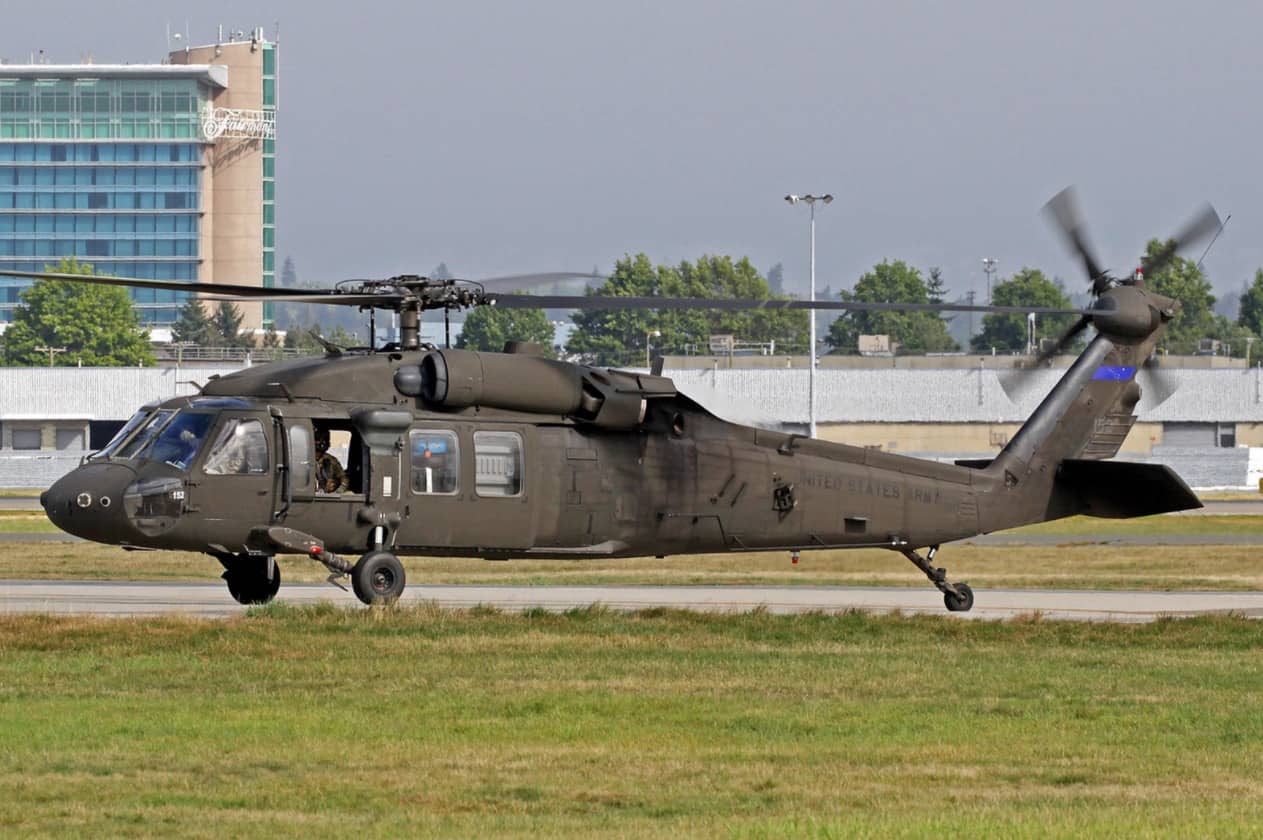
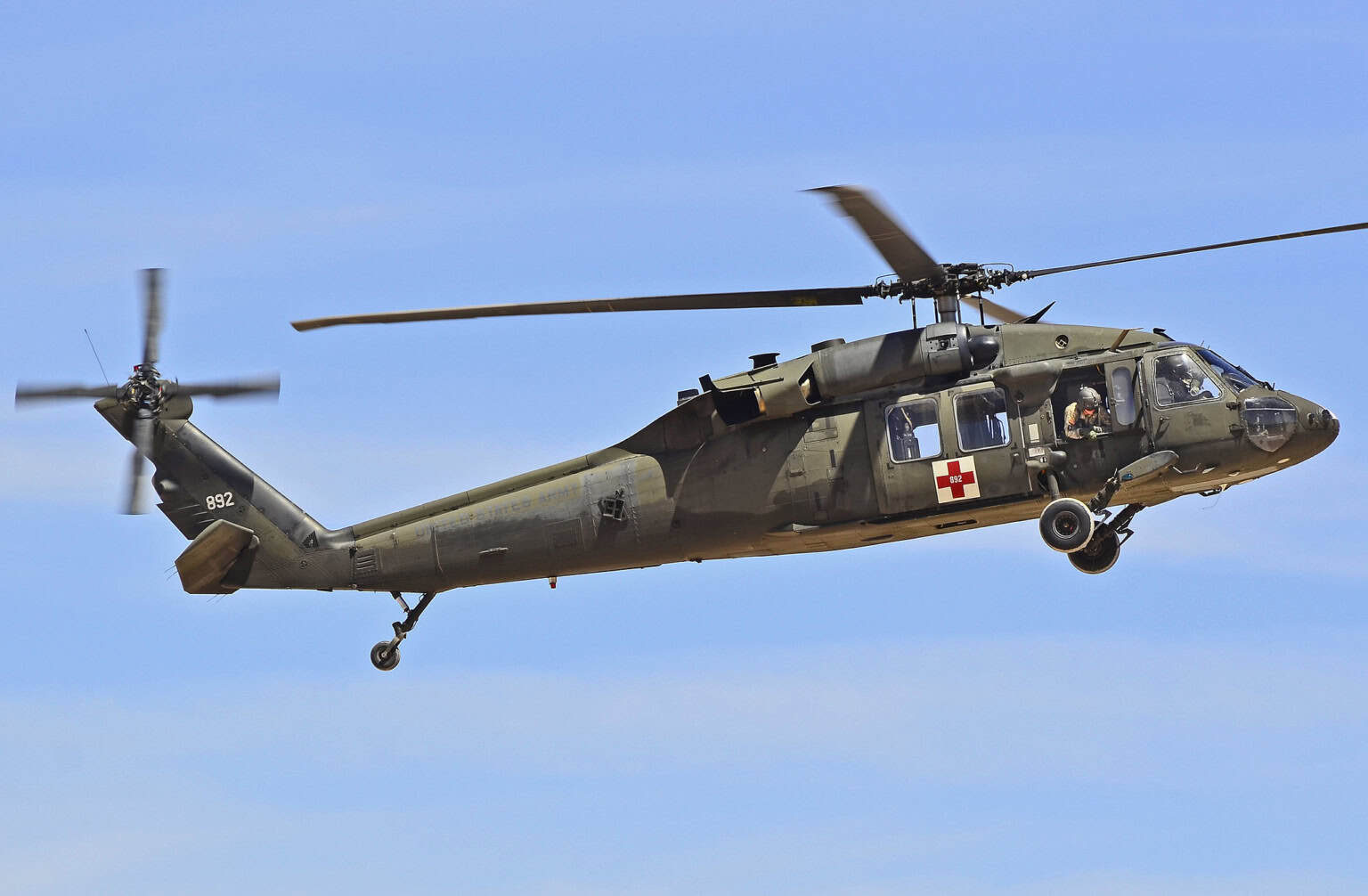

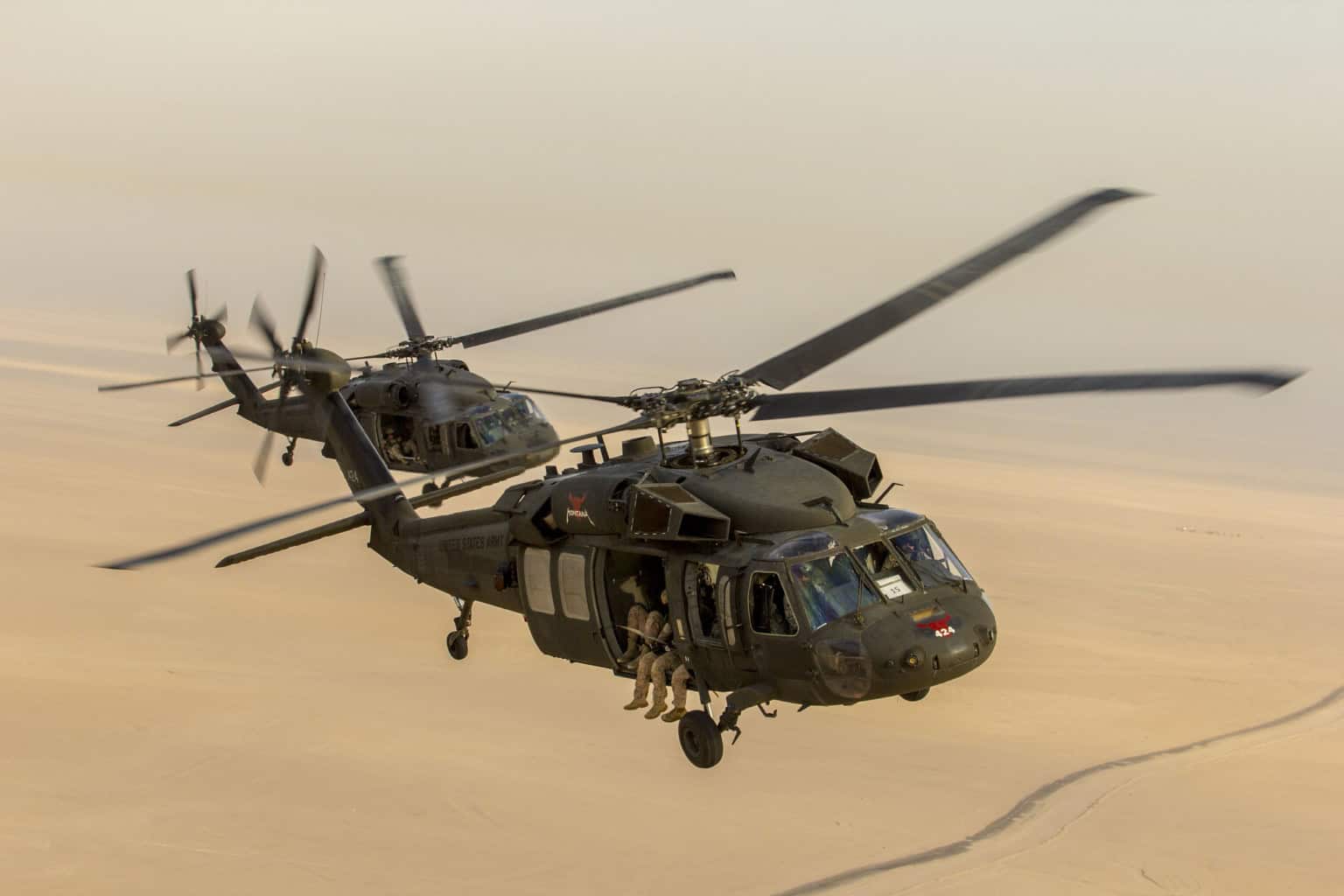

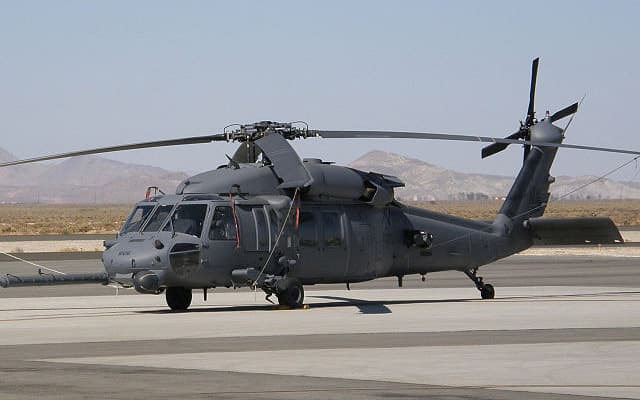
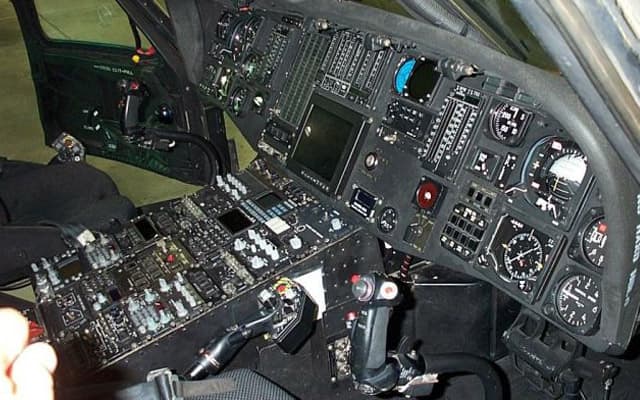
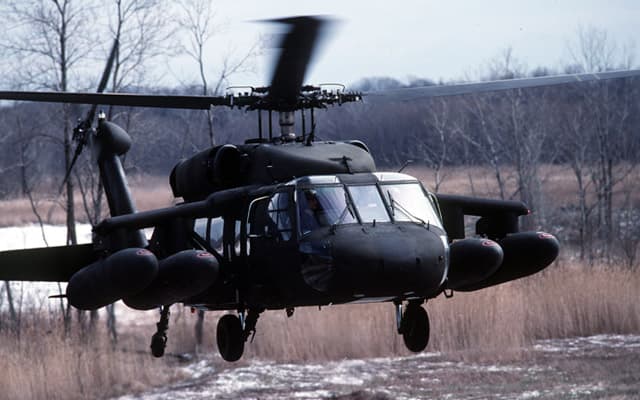
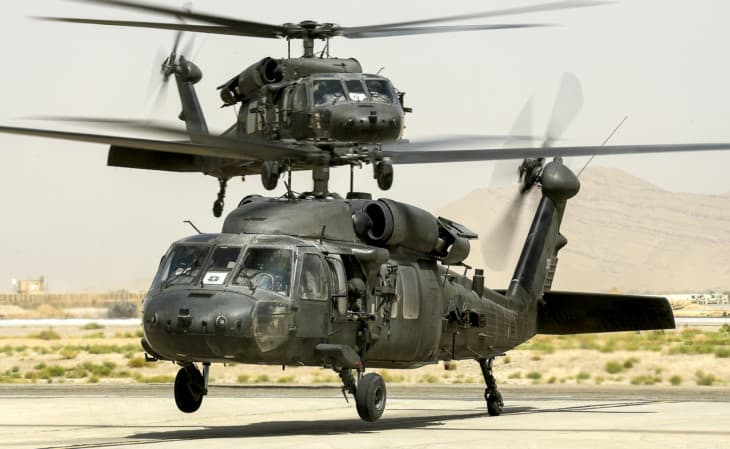
The UH-60 Black Hawk, built by Sikorsky, is a medium-lift, twin-engine, four-bladed utility helicopter. It is the US Army’s tactical transport and air-assault aircraft, operating in all weather. In arctic environments it can be fitted with landing skis.
The Black Hawk was first fielded by the Army in 1978, after Sikorsky’s design won the Utility Tactical Transport Aircraft System (UTTAS) competition in 1976. Today more than 2,000 UH-60 variants are in US military service. The type reached the wider public through the 2001 film “Black Hawk Down.”
Army Regulation 70-28 once required helicopters to be named after Native American tribes. That regulation no longer exists, but the tradition continues, with the Bureau of Indian Affairs consulted on new names. The UH-60 was named in honor of the Native American war leader Black Hawk.
UH-1Y Venom
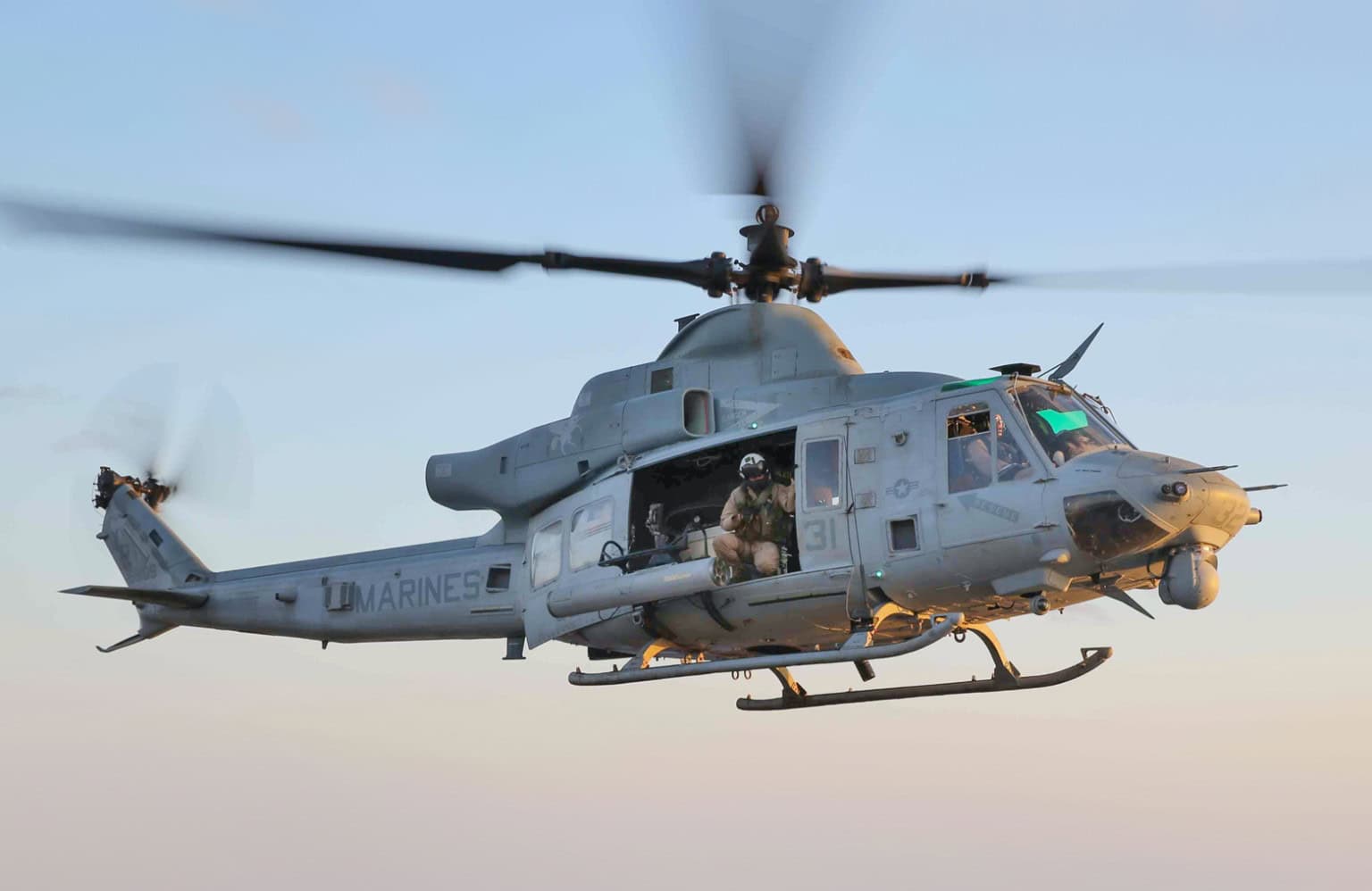
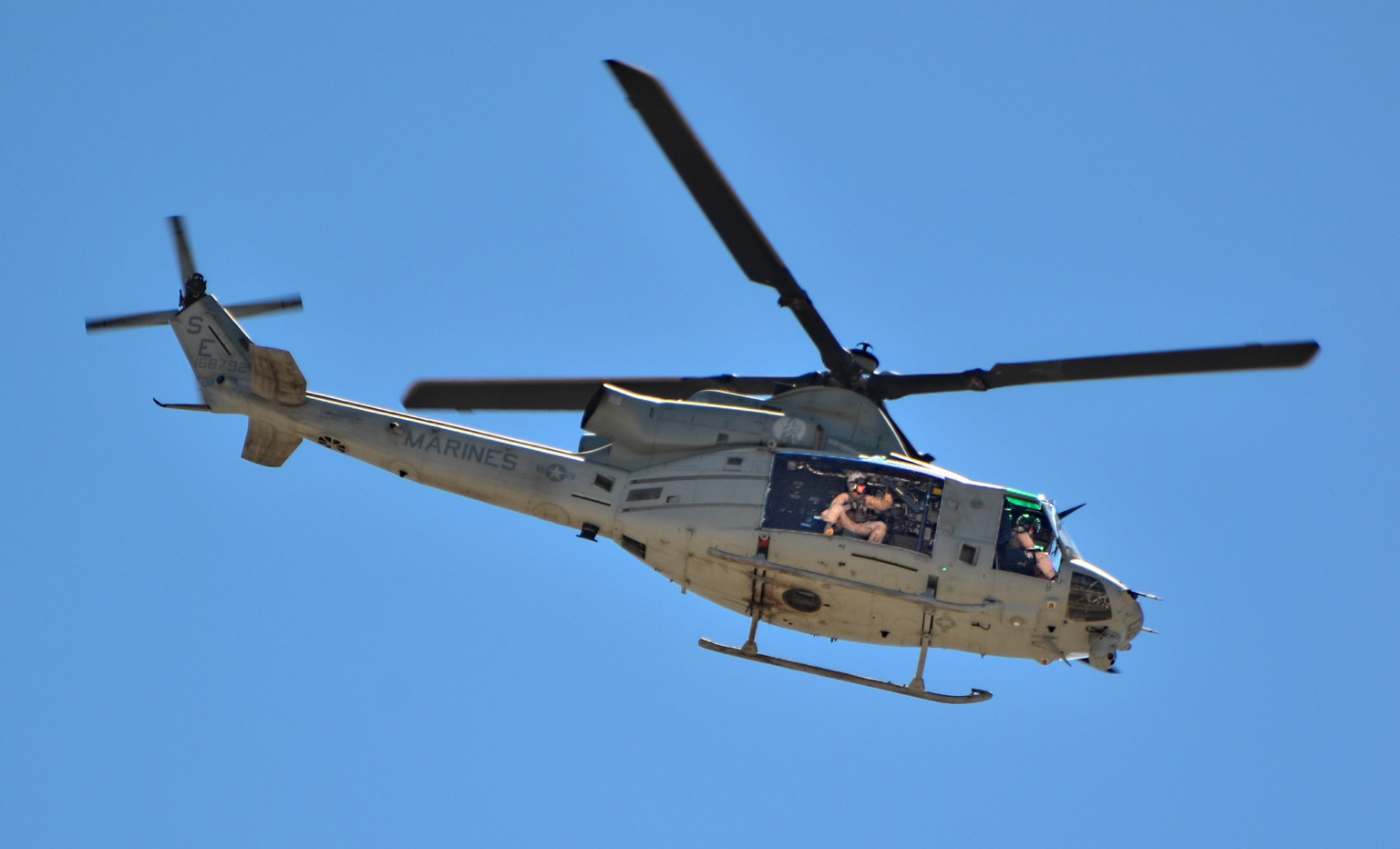


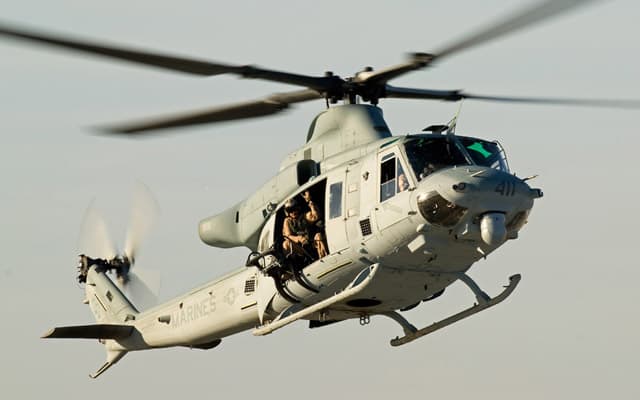
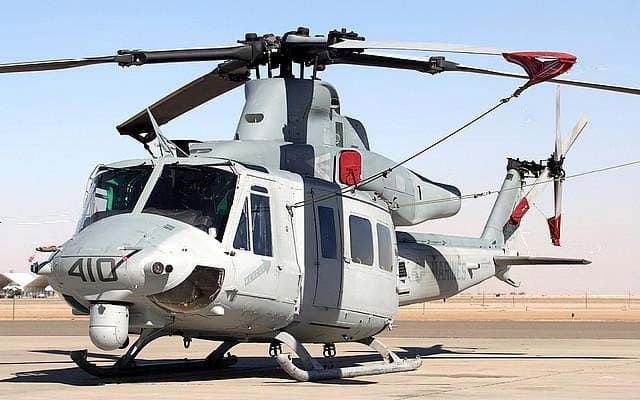

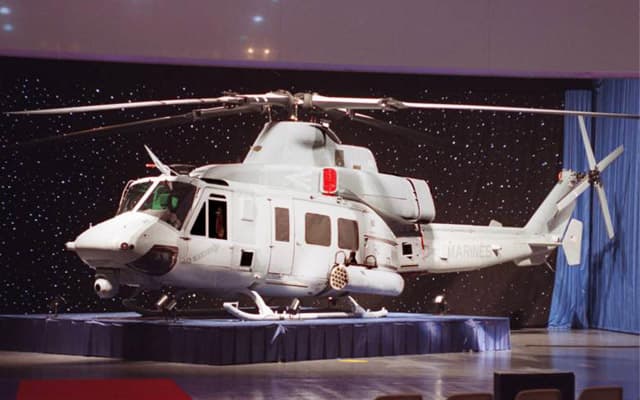
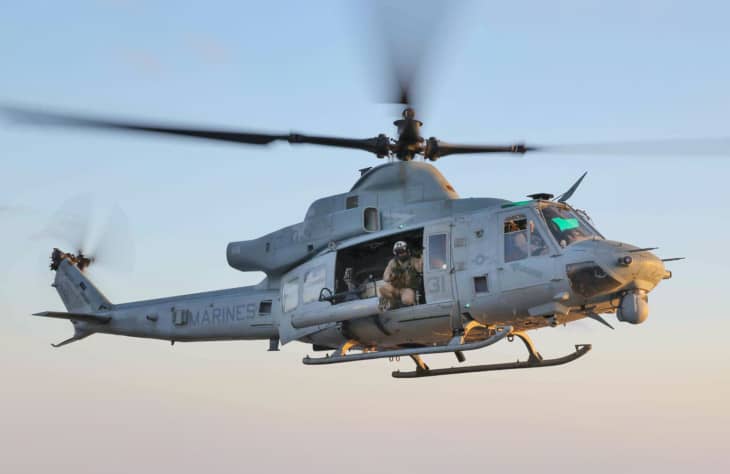
The UH-1Y Venom is known for its survivability. Built by Bell Helicopter, it is the Marine Corps utility helicopter that replaced the older UH-1N Twin Huey. Nicknamed the “Super Huey” or “Yankee,” after the phonetic pronunciation of its “Y” variant letter, it began fielding in 2008.
The Venom uses two turboshaft engines and a four-bladed, ballistically tolerant, all-composite rotor system. Compared with the old Huey, it offers greater survivability, more load-carrying capability, and roughly a 50 percent increase in speed and range. It supports command, control, and assault missions day or night and in adverse weather.
UH-1 Iroquois (Huey)

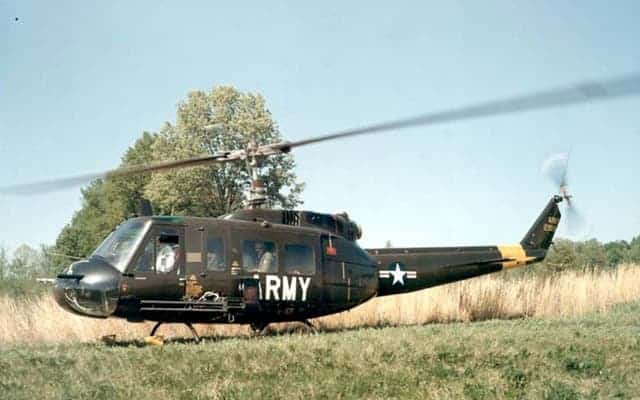

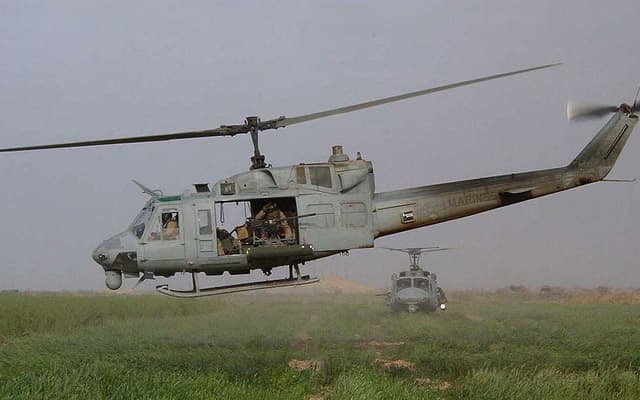
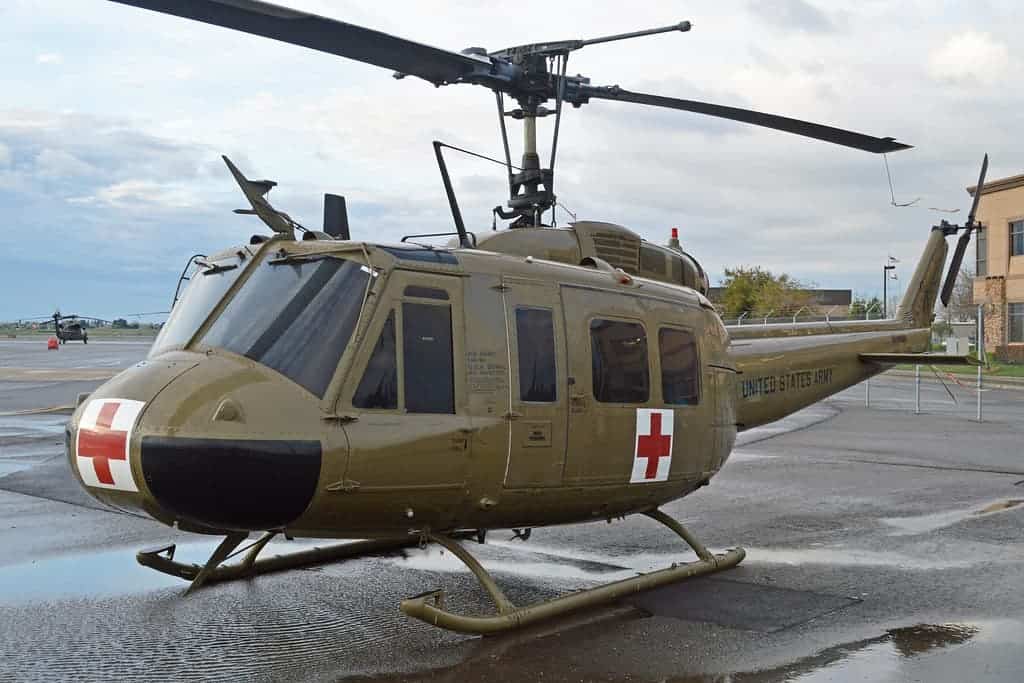
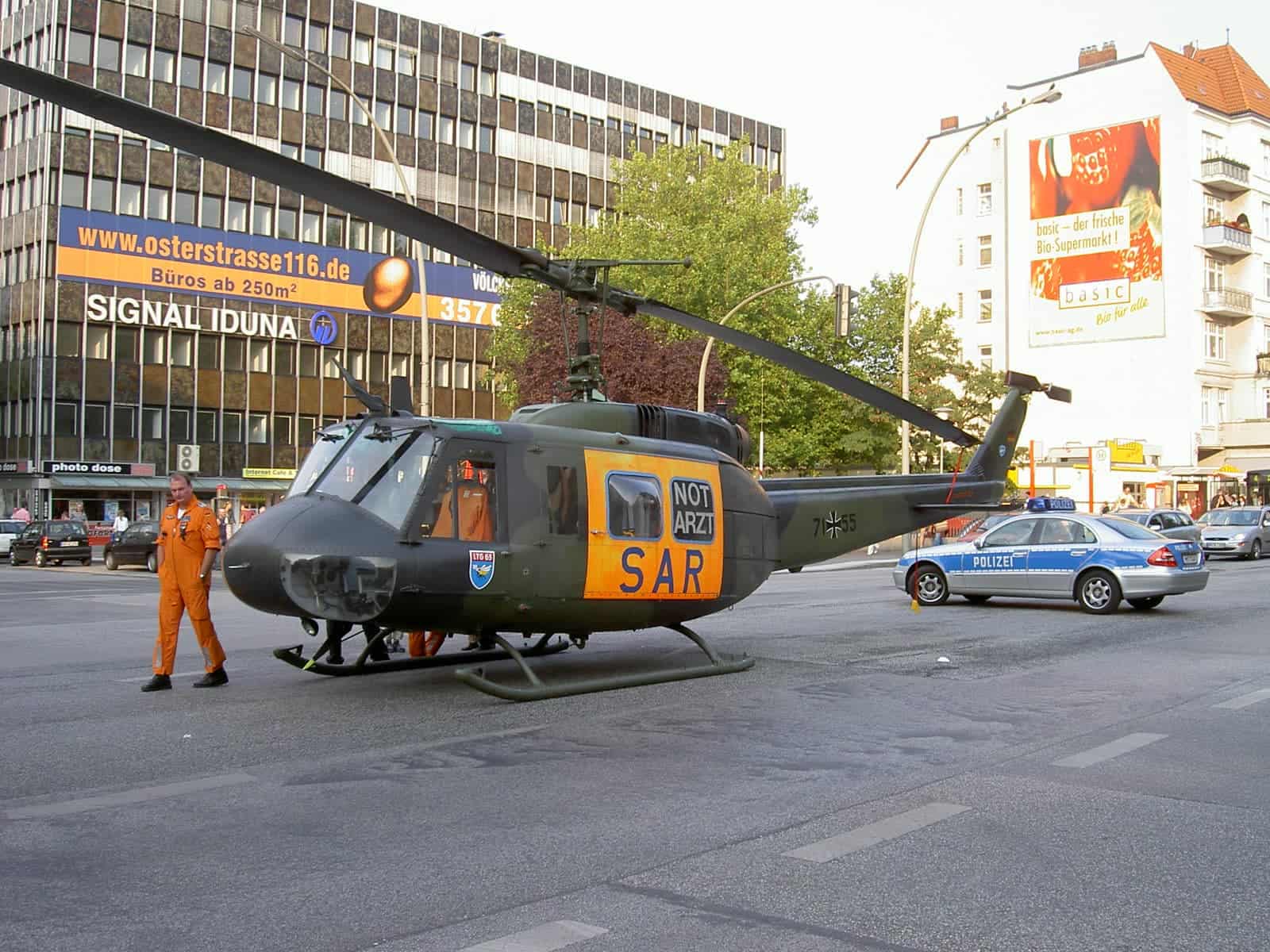

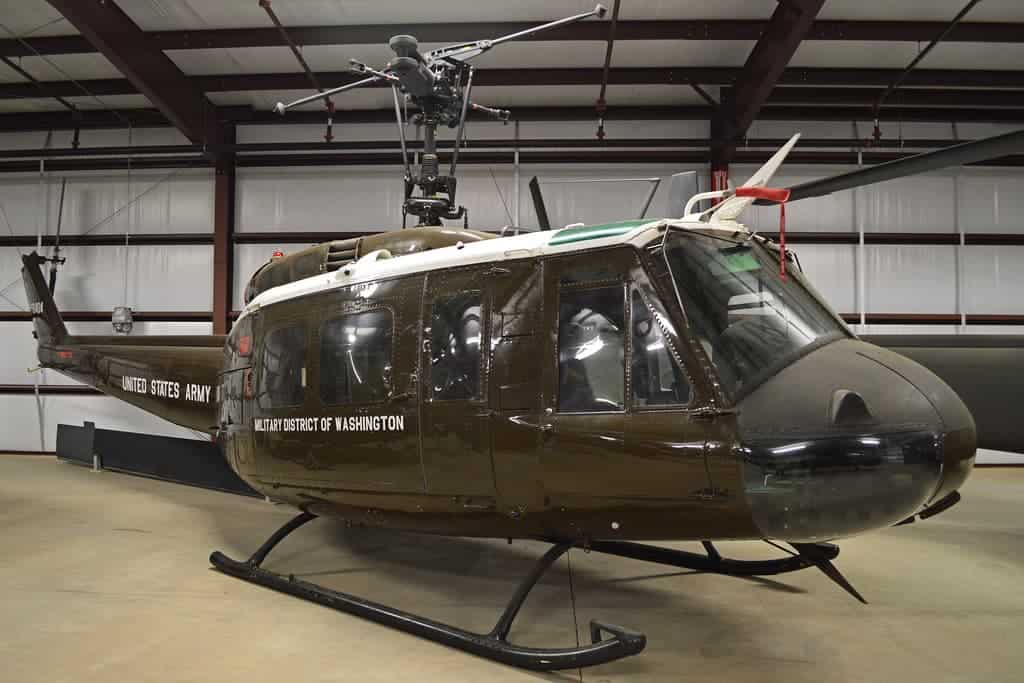
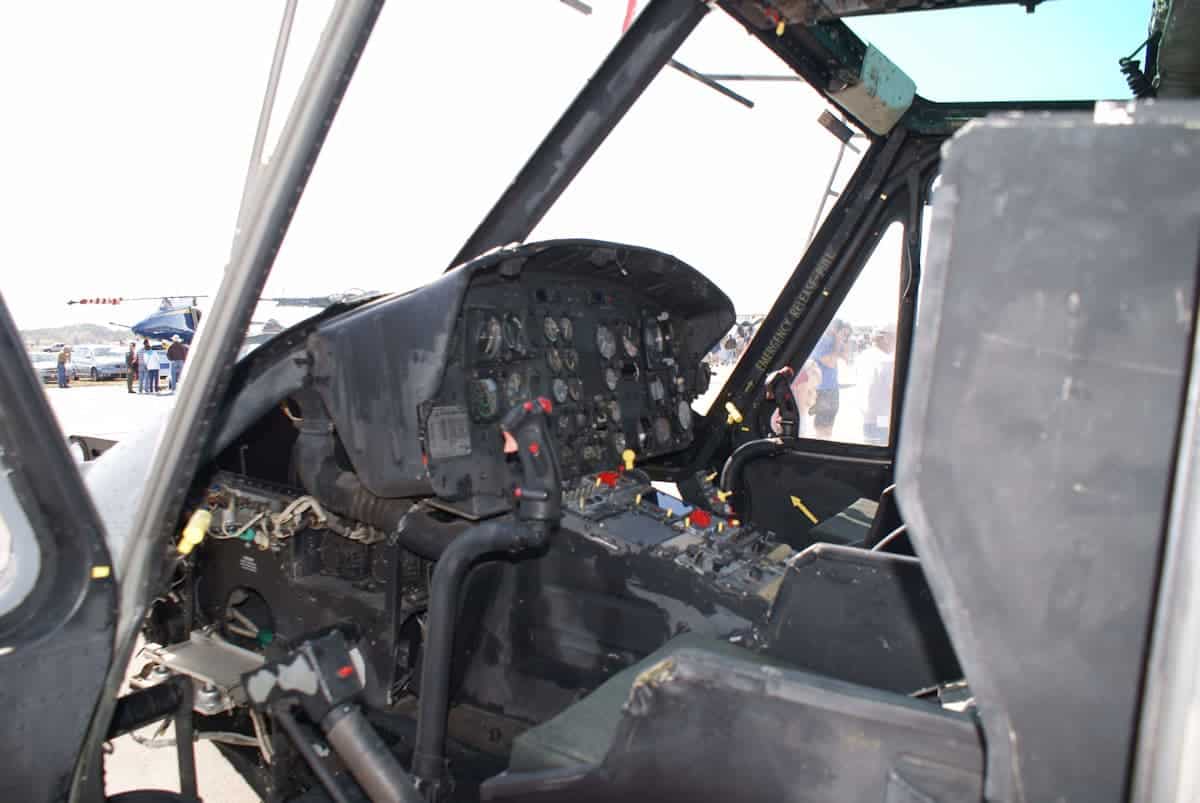


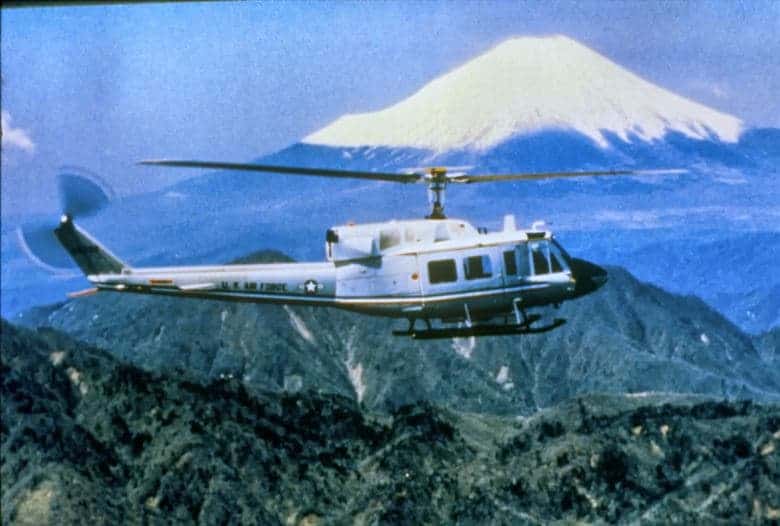
The Iroquois, better known as the Huey, is a utility helicopter of real historical importance. The UH-1 Iroquois, built by Bell Helicopter, is a single-engine, light-lift utility helicopter with two-bladed main and tail rotors. It first flew in 1956, and in 1960 it became the first turbine-powered helicopter to enter production for the US military.
The Huey first saw combat in Vietnam as a troop transport, and in 1970 the UH-1N joined the Air Force for search and rescue. More than 16,000 Hueys have been built worldwide, and the type is still used for missions ranging from utility flights to counter-narcotics support.
5. Military Maritime Helicopters
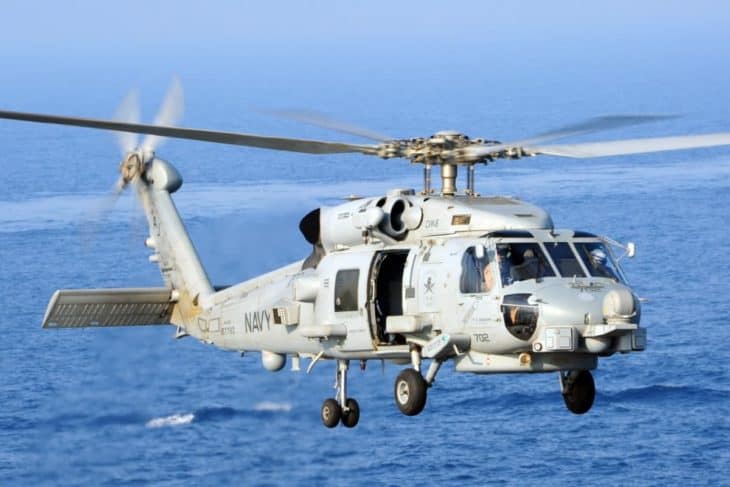
Maritime helicopters are equipped with advanced electronics and weapons systems for naval work. They handle search and rescue and surveillance, but their biggest role is anti-submarine warfare, including air-launching torpedoes.
Anti-submarine warfare has grown more important in the 21st century as submarines have become quieter and stealthier. These helicopters help locate and track submarines so that ships can respond, and they can drop torpedoes and depth charges themselves.
MH-60R Seahawk


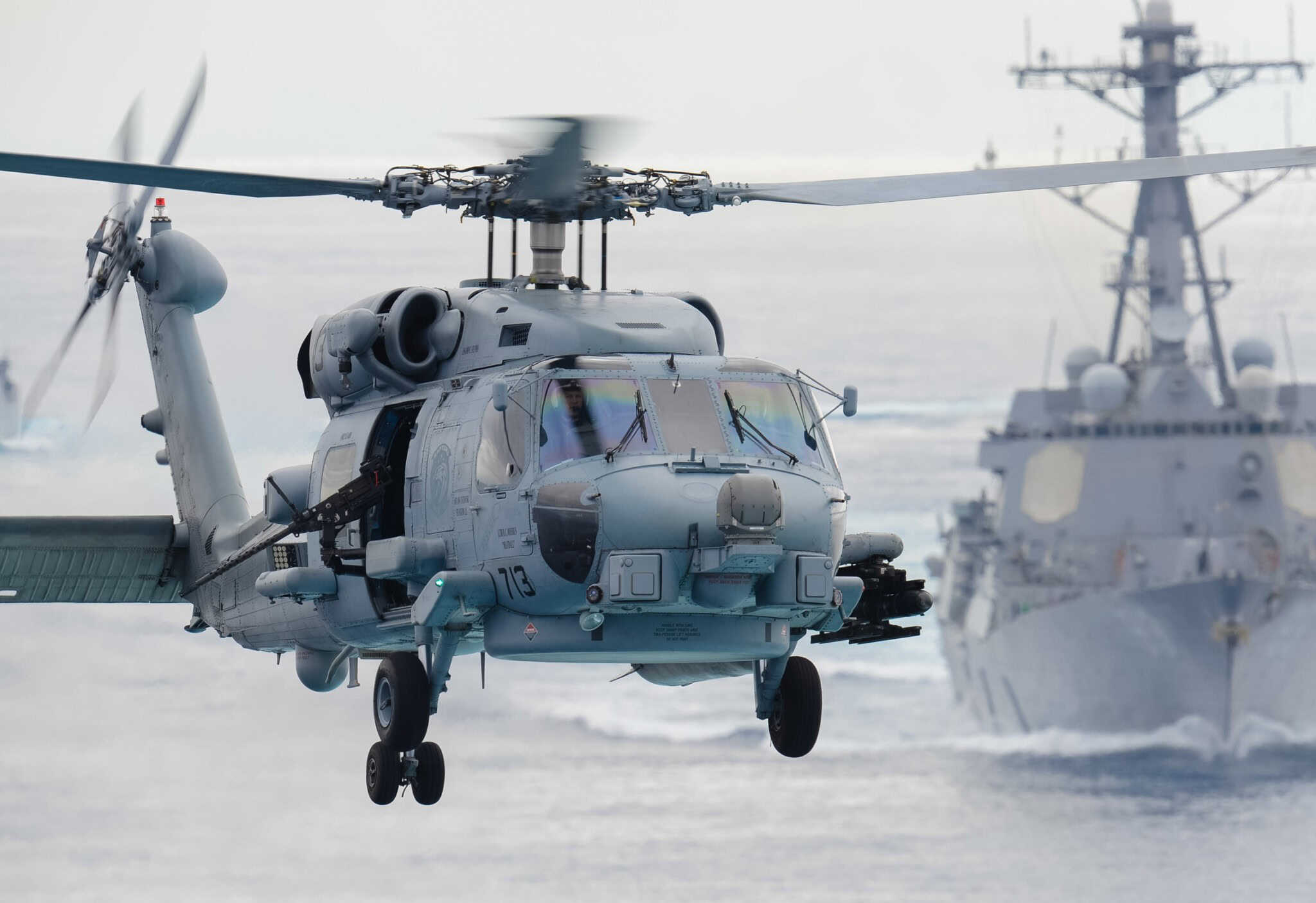

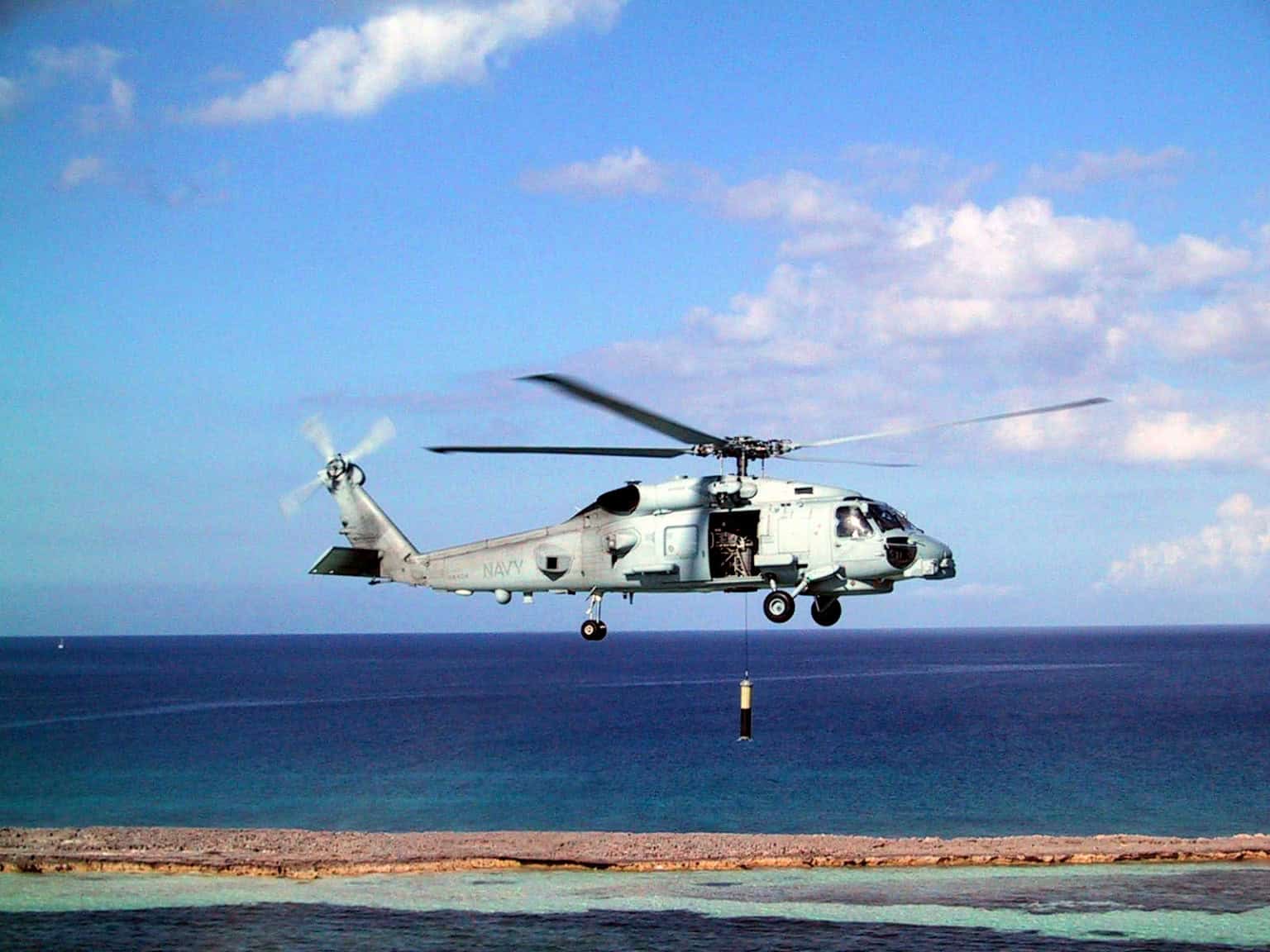

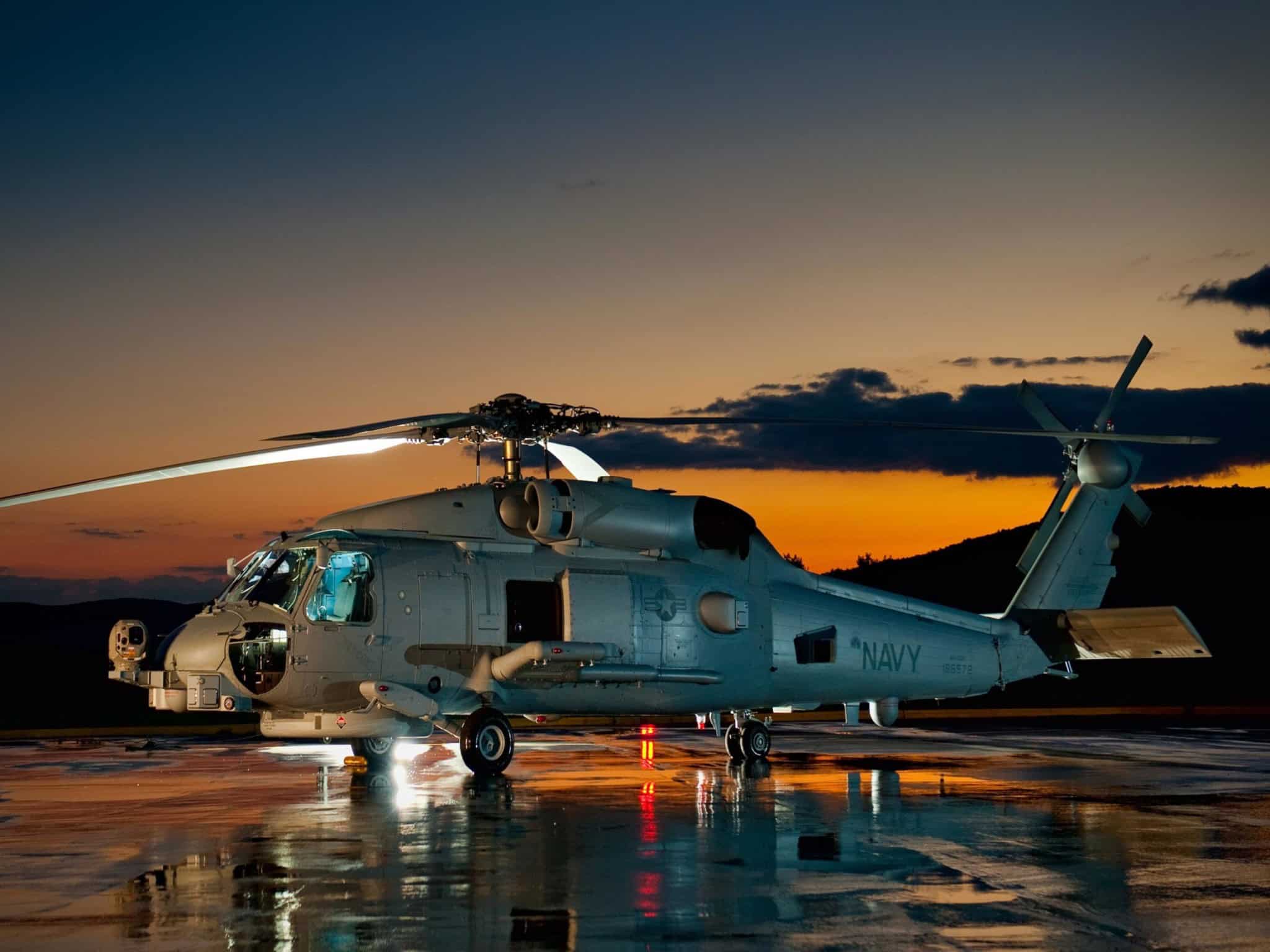

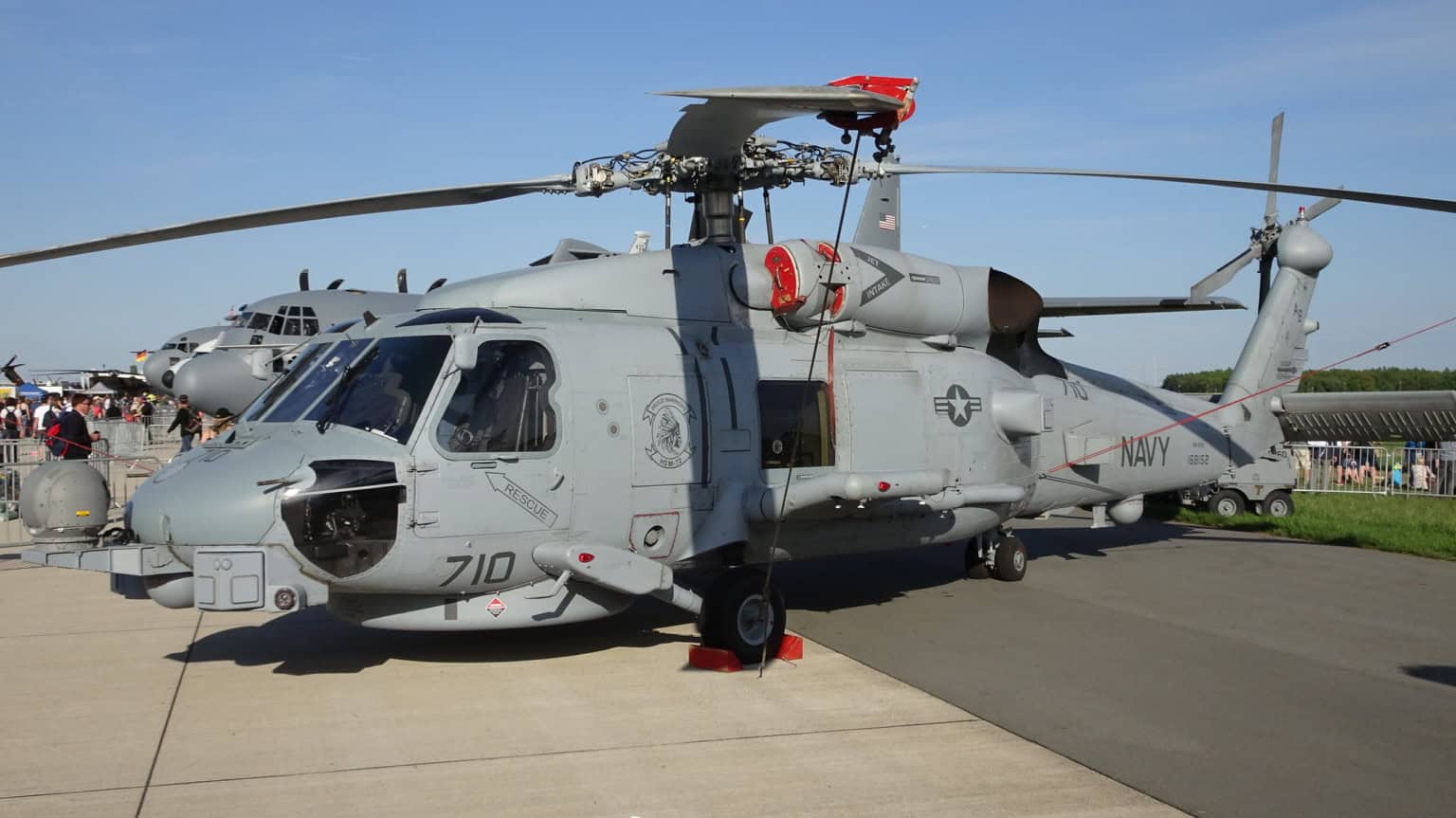


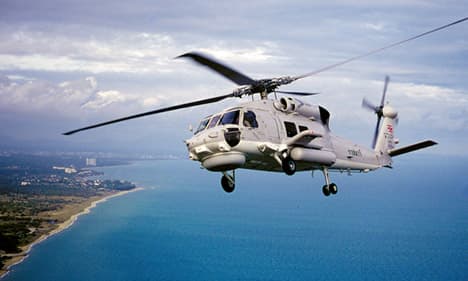
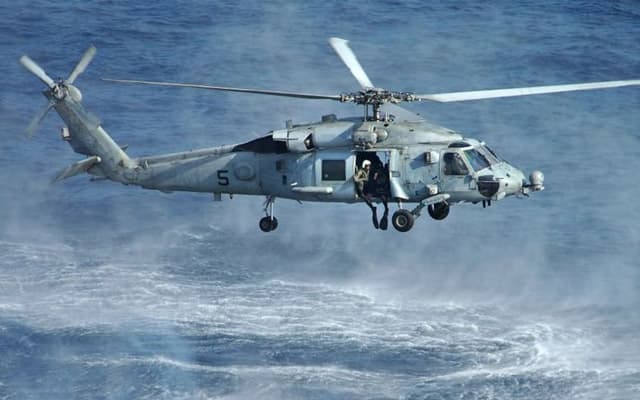
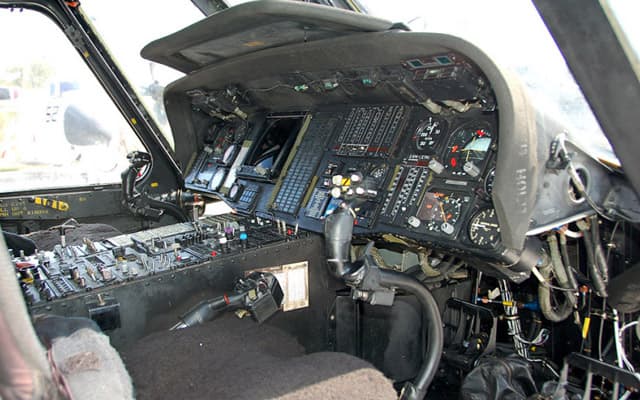
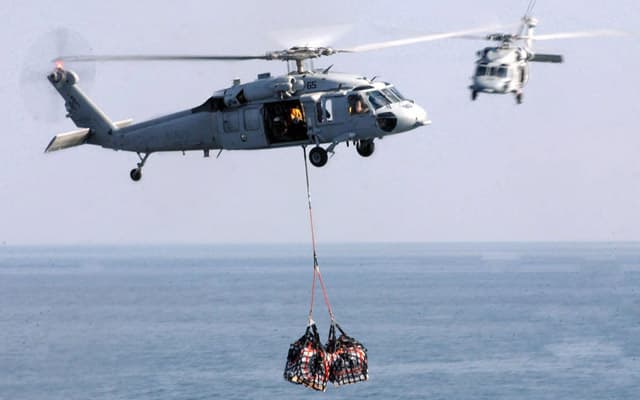
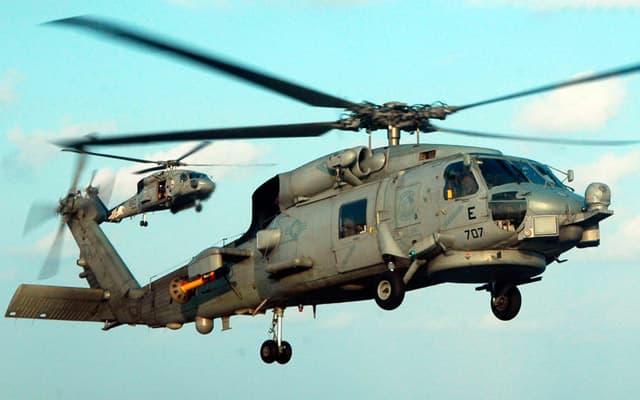
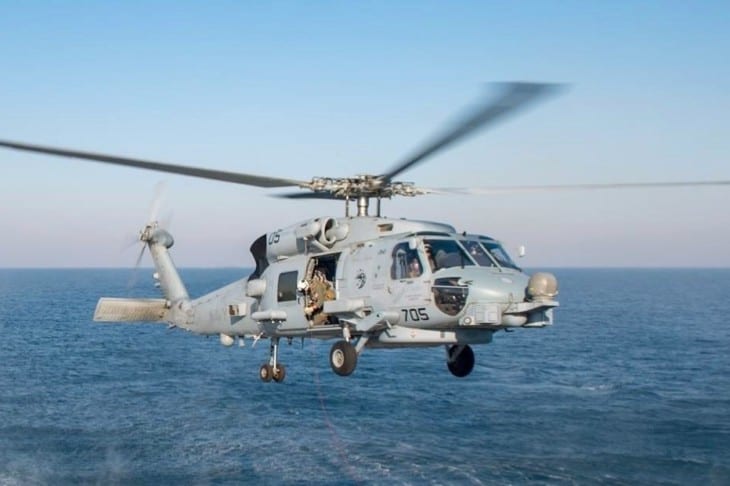
The best-known maritime helicopter is the MH-60R Seahawk. The Seahawk, also called “Romeo” for its “R” designation, is a multi-mission naval helicopter built around anti-submarine and anti-surface warfare. The US Navy considers it its most capable helicopter, using advanced sonar systems to detect submarines and other underwater targets.
Other helicopters used in anti-submarine warfare include the British Royal Navy’s Merlin, the French Navy’s Dauphin, and the Canadian CH-148 Cyclone.
6. Military Multi-Role Helicopters
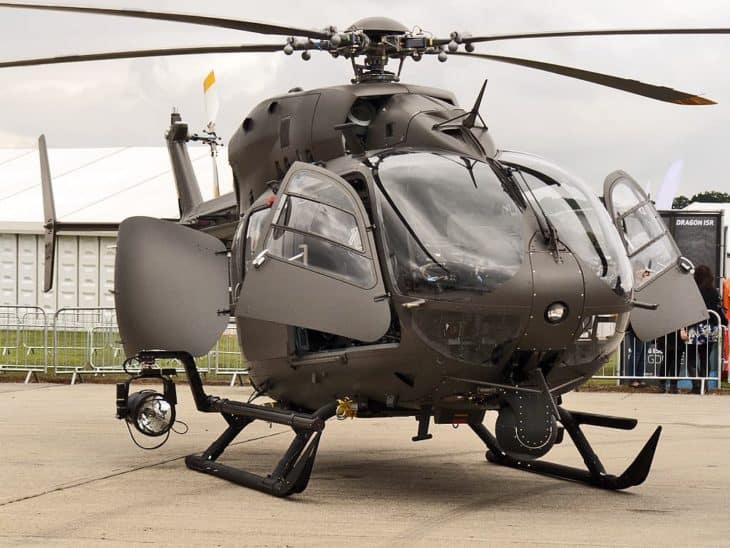
Multi-role helicopters are built to support a wide range of missions across service branches. They are called on in harsh environments and difficult terrain for rescue, medevac, and recovery. Common multi-role missions include:
- Medical evacuation (medevac)
- Anti-submarine warfare
- Armed reconnaissance
- Anti-piracy patrols
UH-72A Lakota


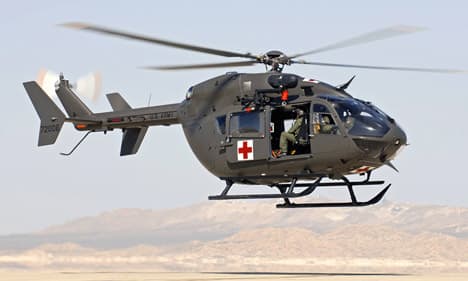


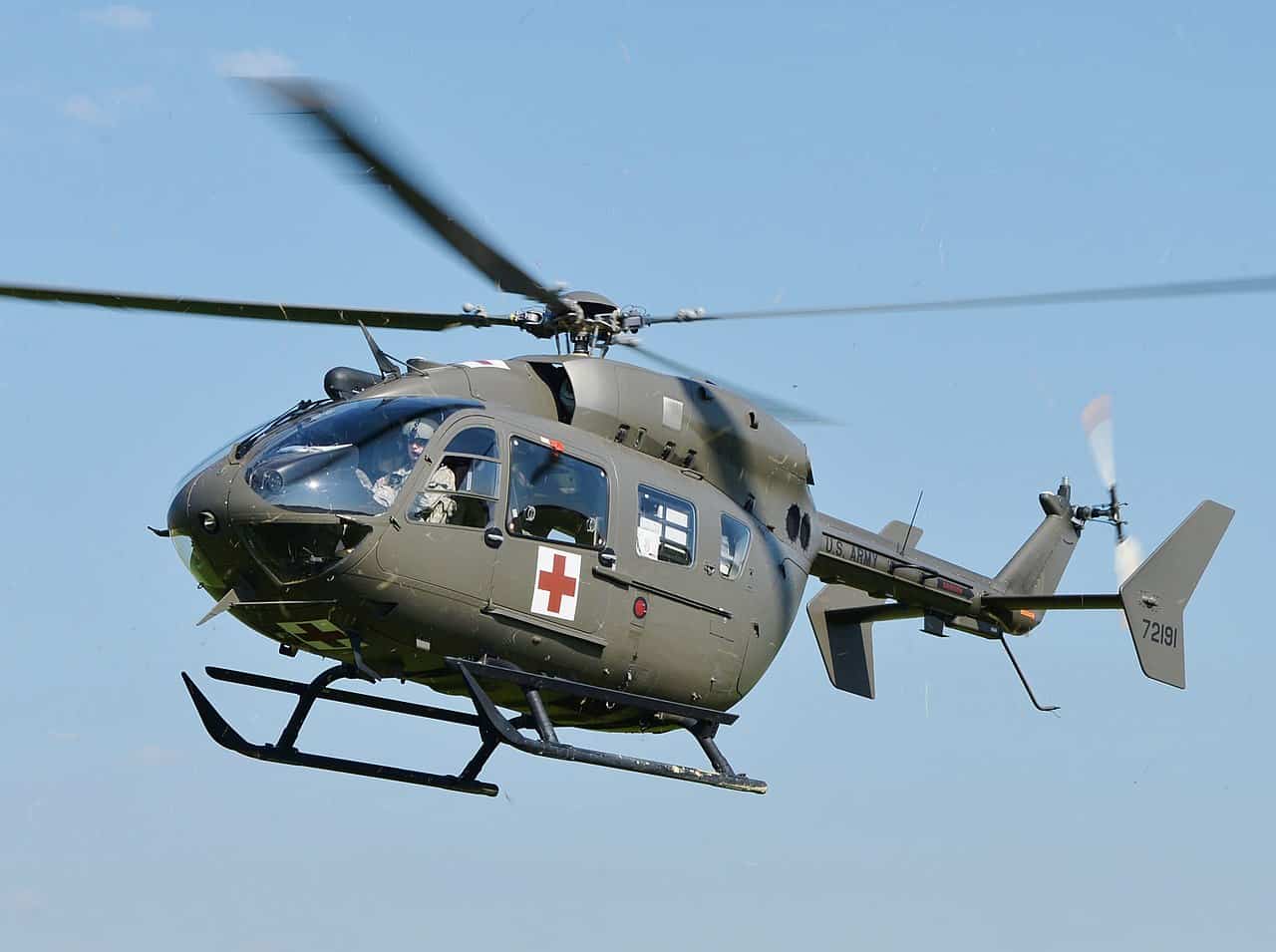

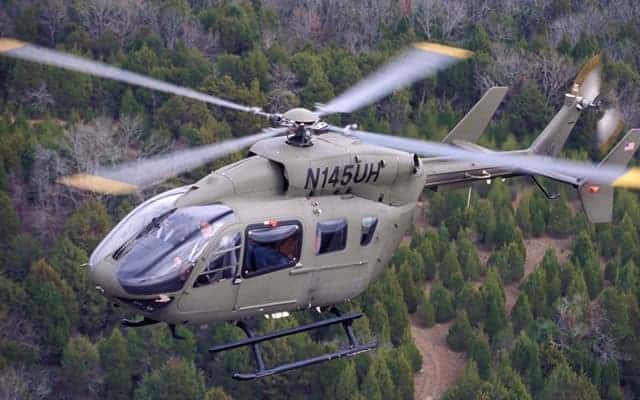
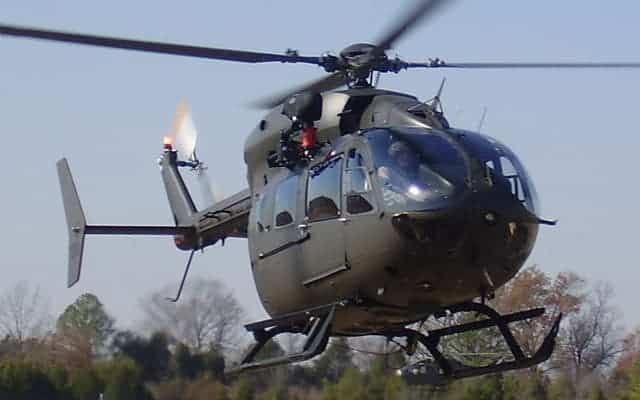

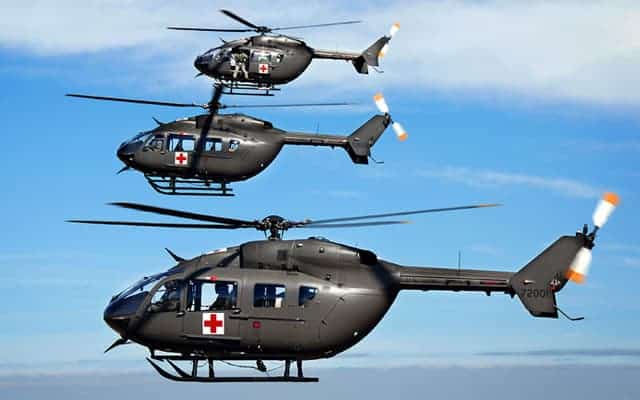
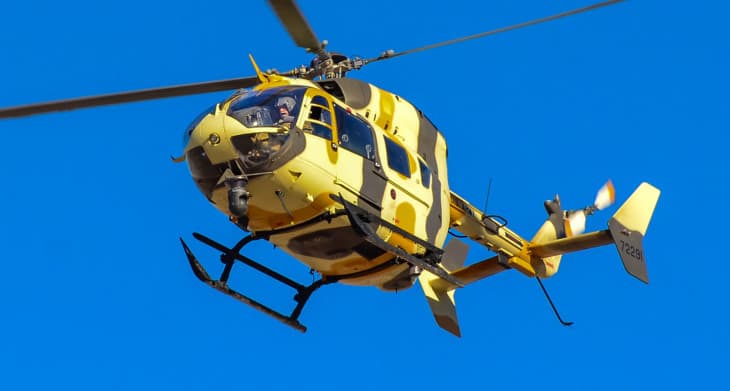
The UH-72A Lakota, built by Airbus (formerly Eurocopter), is a twin-engine light helicopter with a four-bladed main rotor and a two-bladed tail rotor. Its shrouded tail rotor allows safe cargo loading, and it is heavily used by the US Army in training and support roles.
The Lakota is an unarmed, light-duty utility helicopter used mainly for medevac and training. From 2006 the Army began using it at the National Training Center in Fort Irwin, California, to free up Black Hawks for frontline duty, and it has since become the Army’s primary initial rotary-wing trainer.
MH-60 Jayhawk
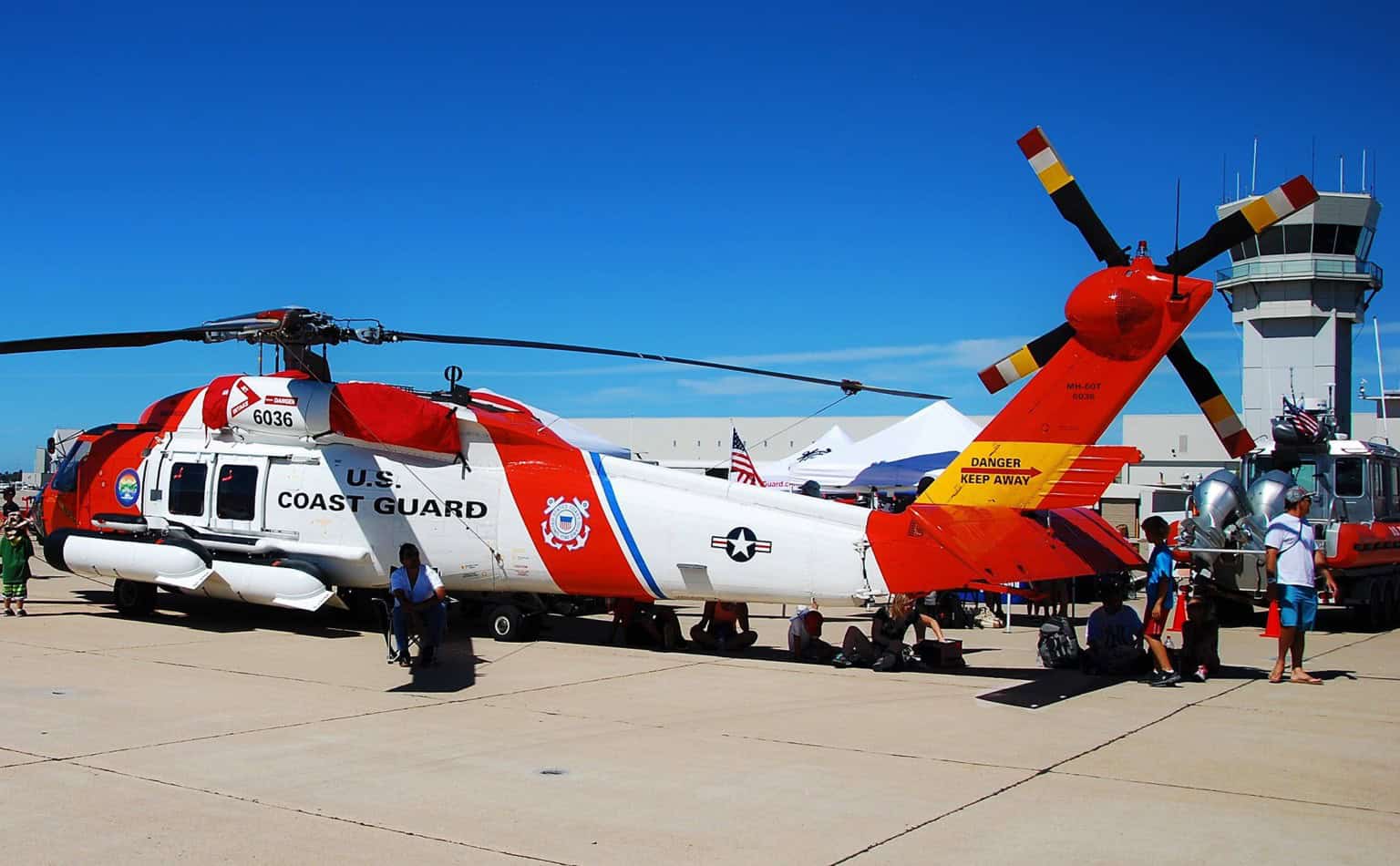


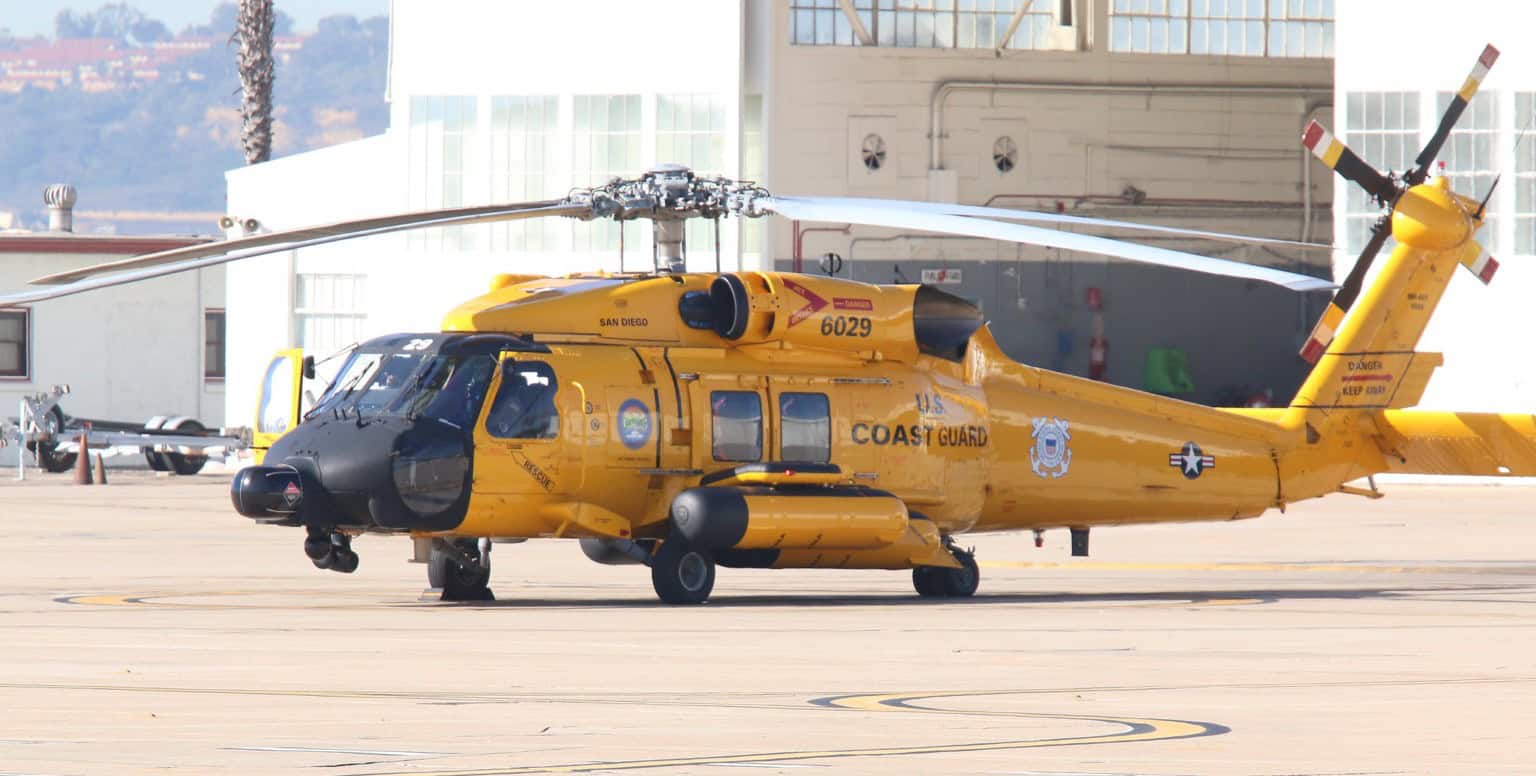
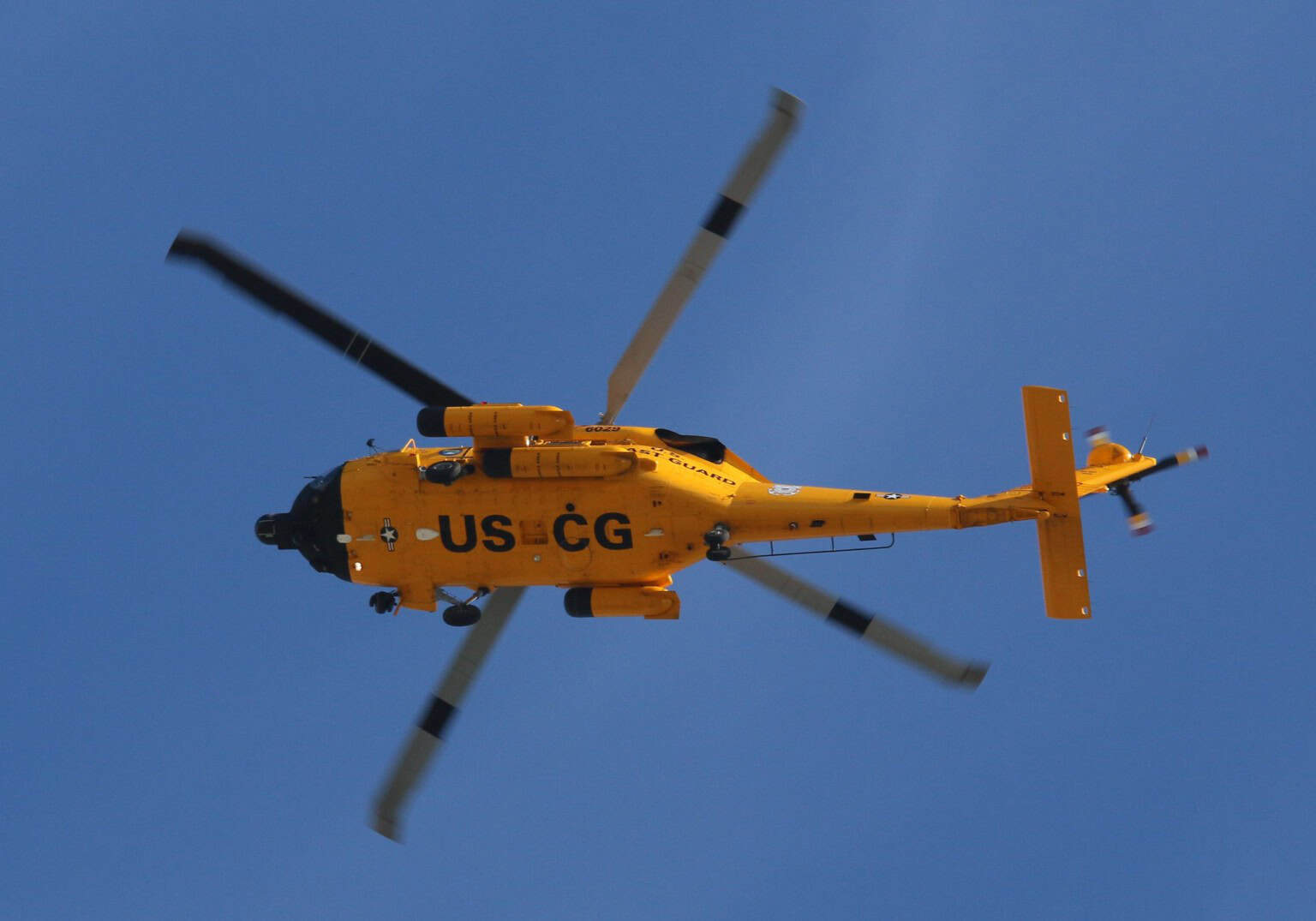


A favorite of the Coast Guard is the Jayhawk. The MH-60 Jayhawk, built by Sikorsky, is a twin-engine, medium-range, multi-mission helicopter derived from the Army’s Black Hawk.
The Coast Guard uses the Jayhawk for search and rescue, marine environmental protection, law enforcement, and drug interdiction in all weather. It has deployed in support of Operation Desert Storm, Operation Enduring Freedom, Alaskan rescues, and Hurricane Sandy relief.
First fielded in 1990, the Jayhawk replaced the now-retired HH-3F Pelican. The Coast Guard operates a fleet of roughly 45 Jayhawks, most of them upgraded to the MH-60T standard since 2008.
V-22 Osprey
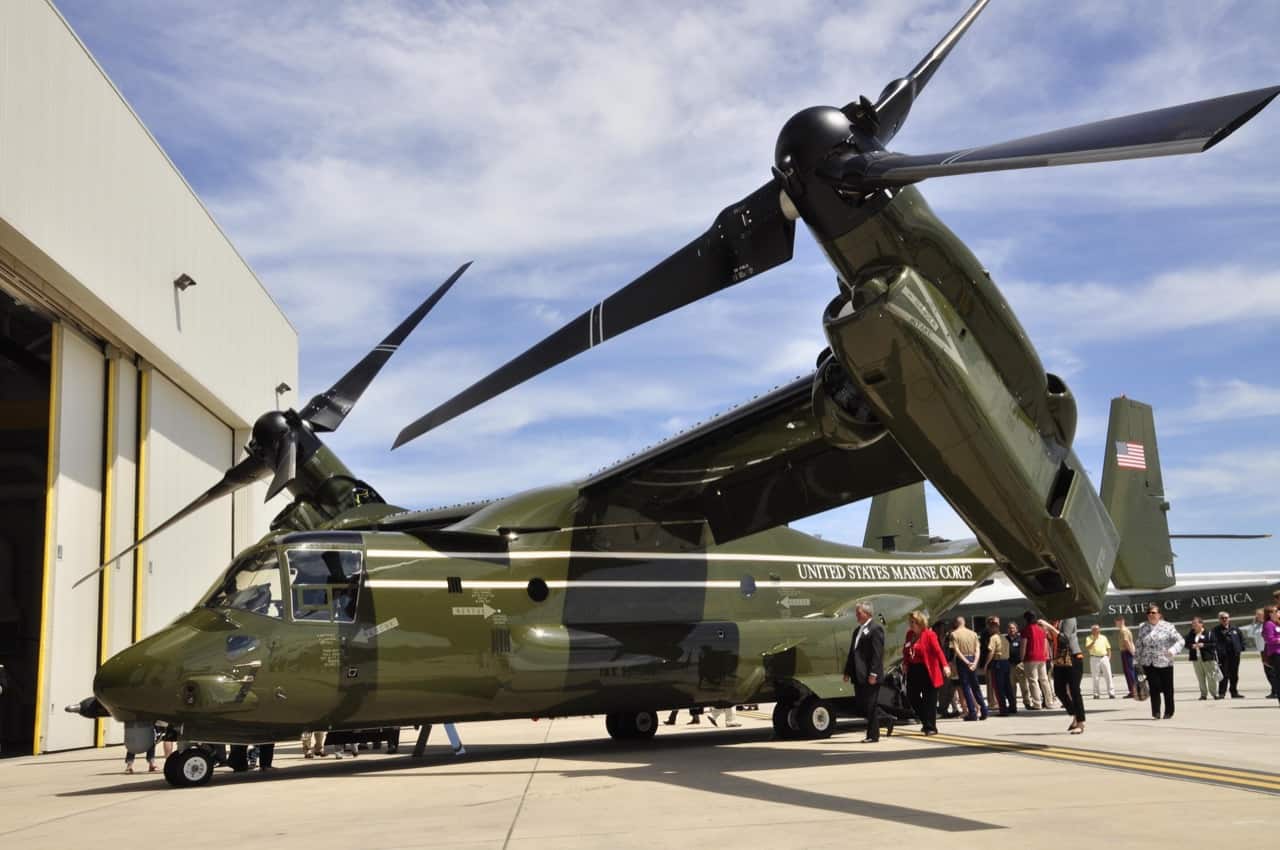
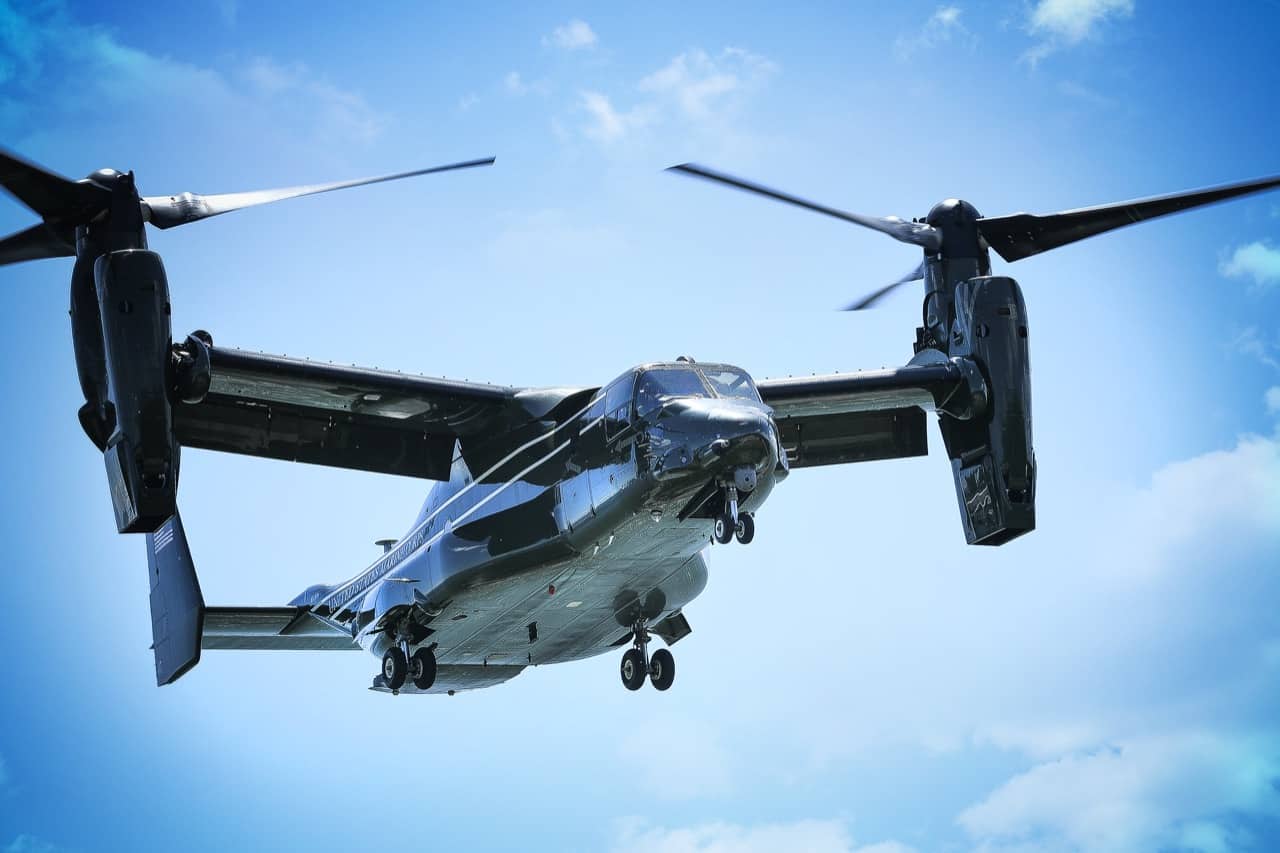
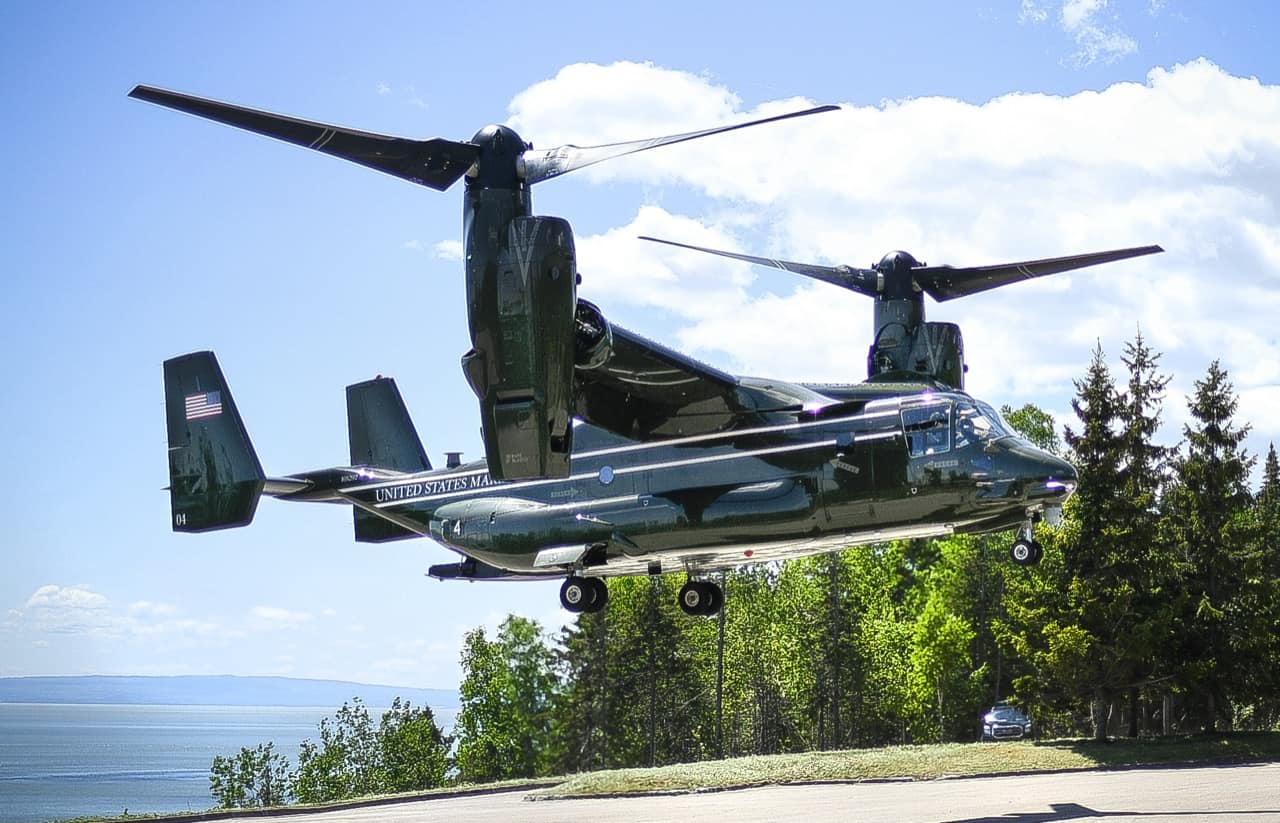
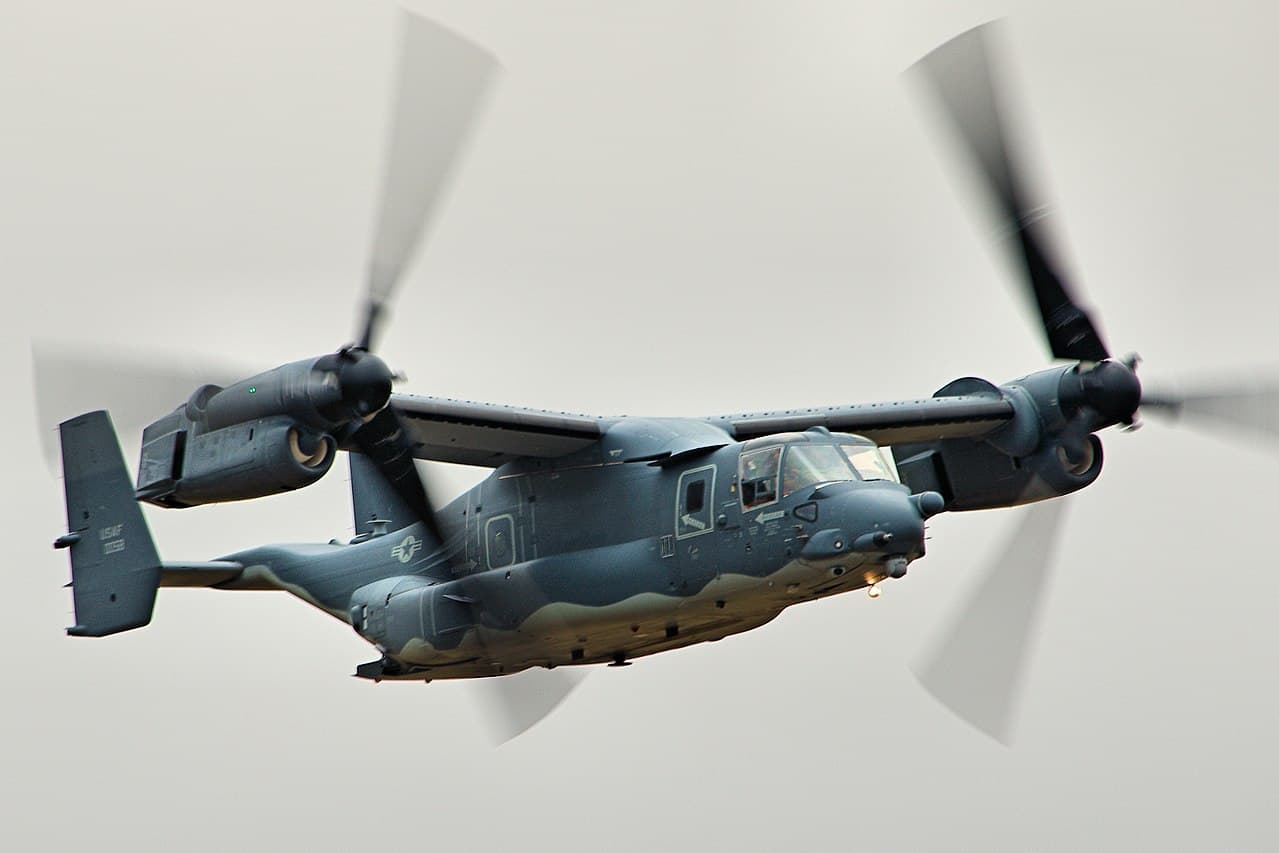

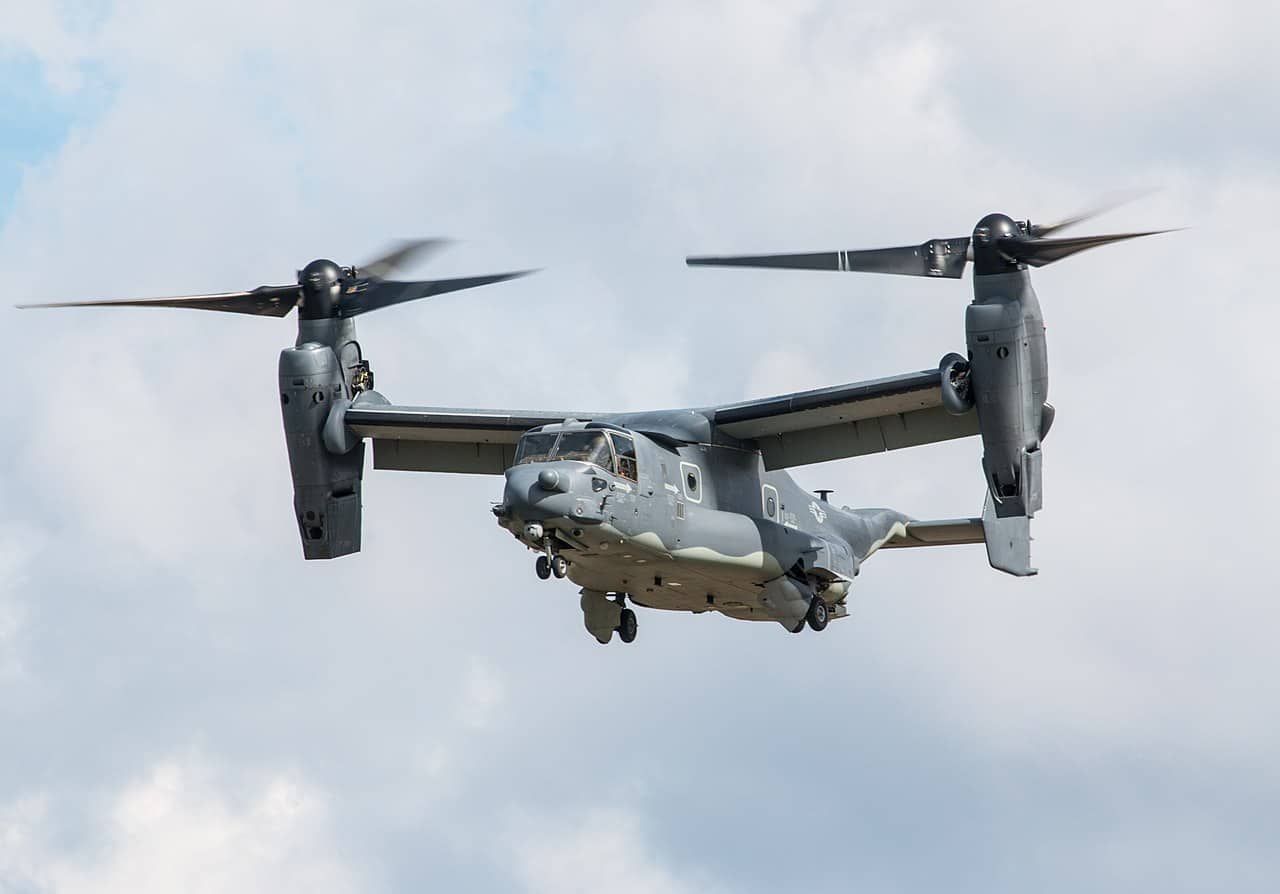
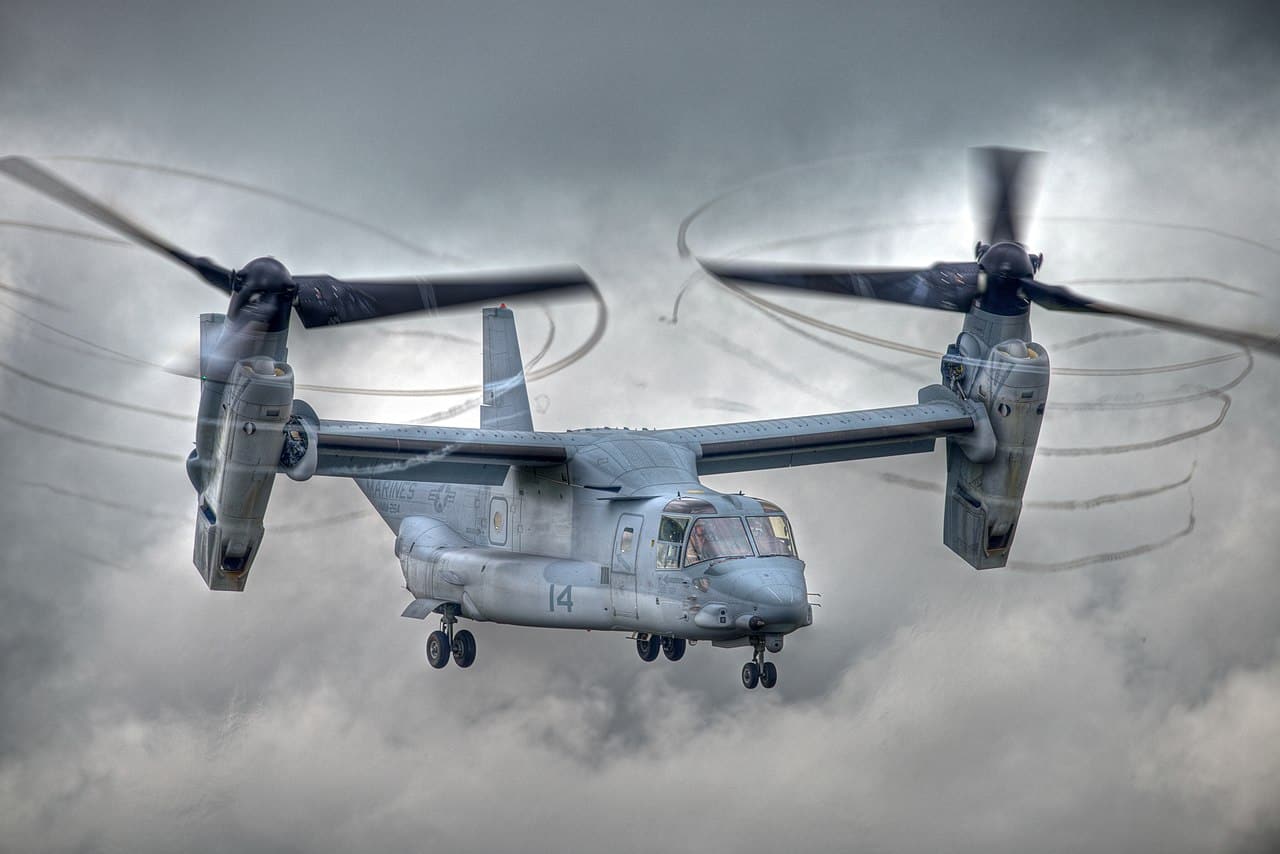


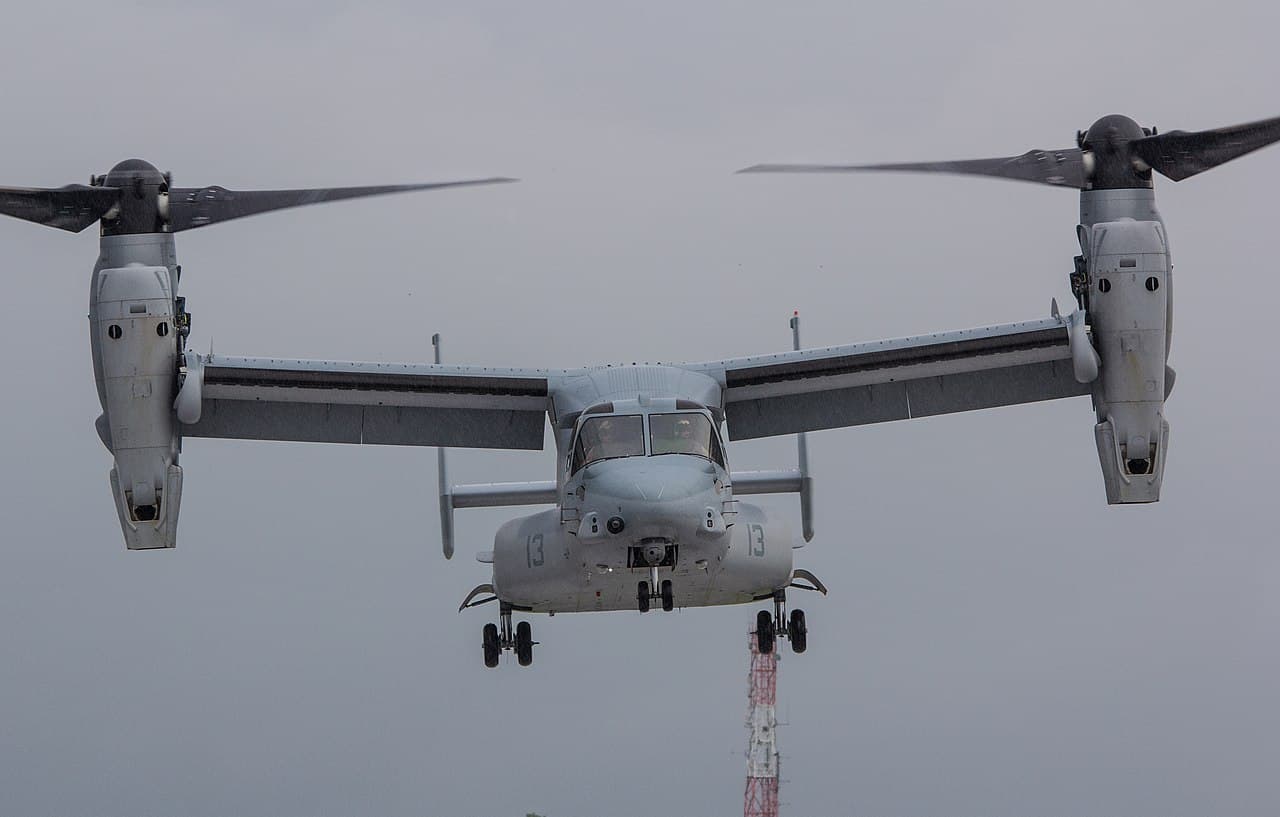

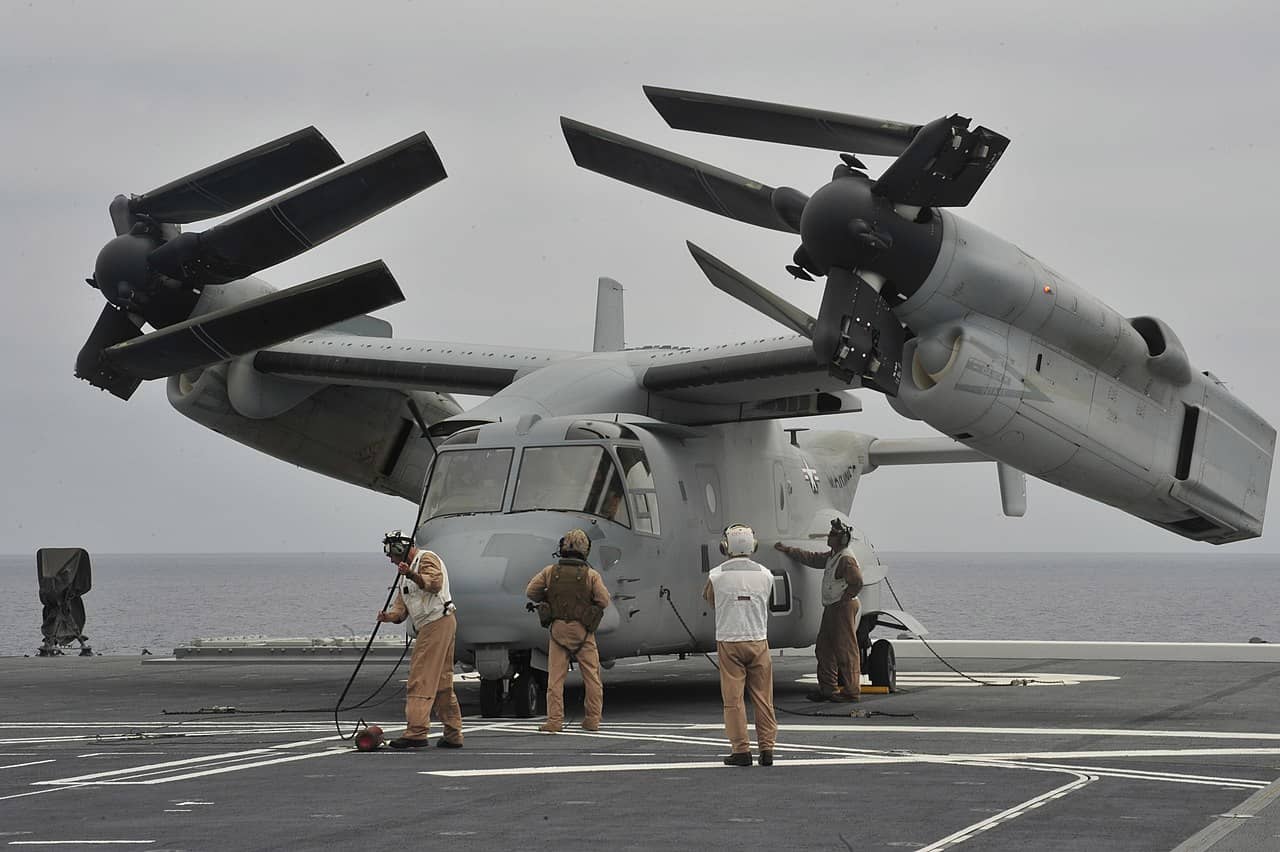

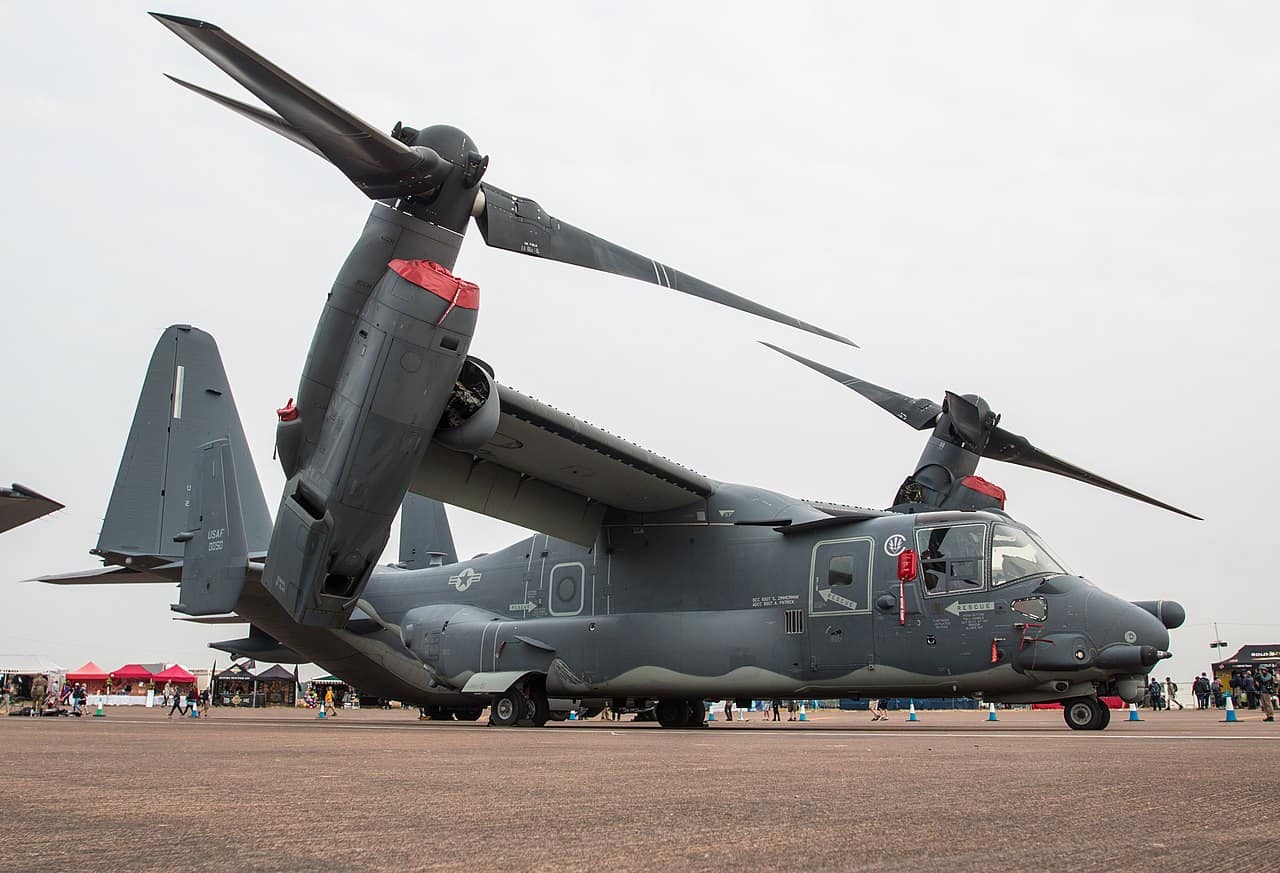
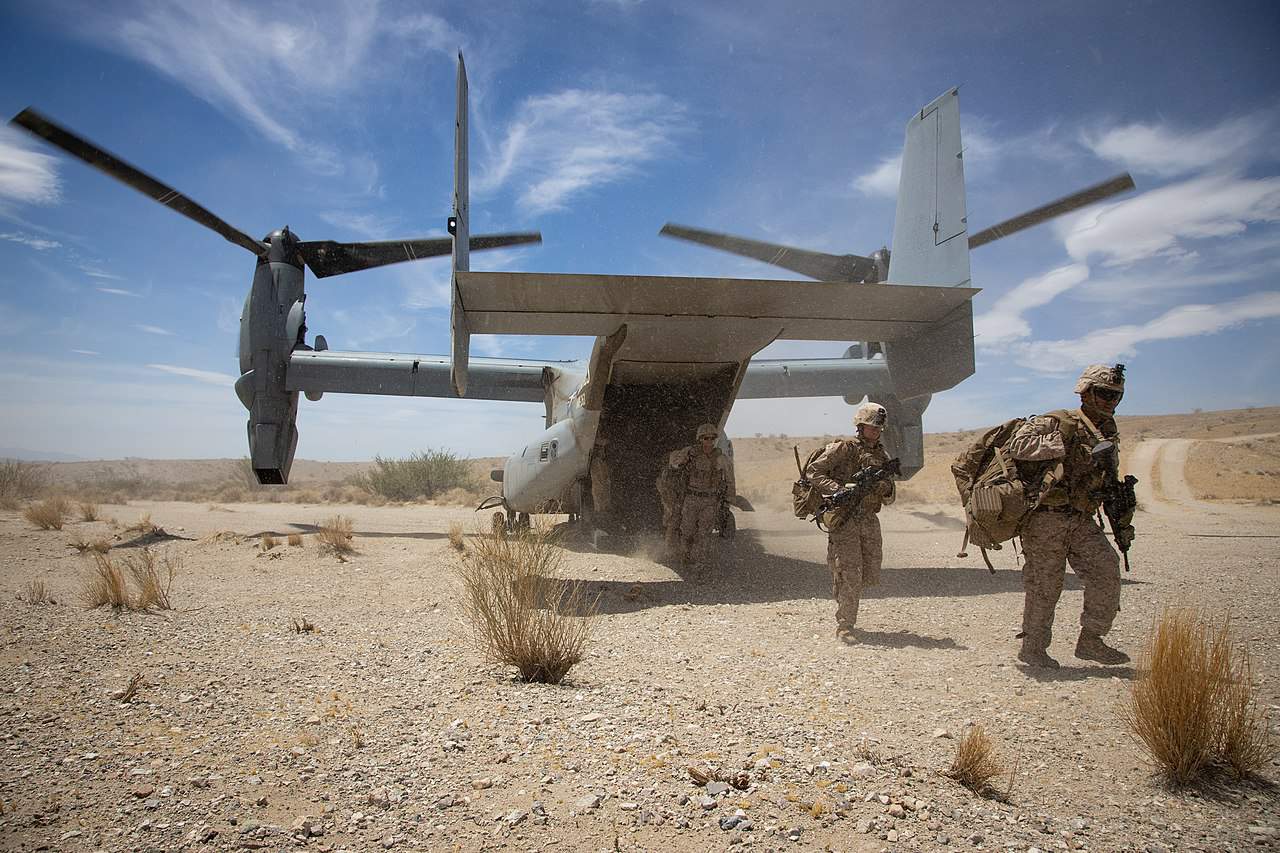


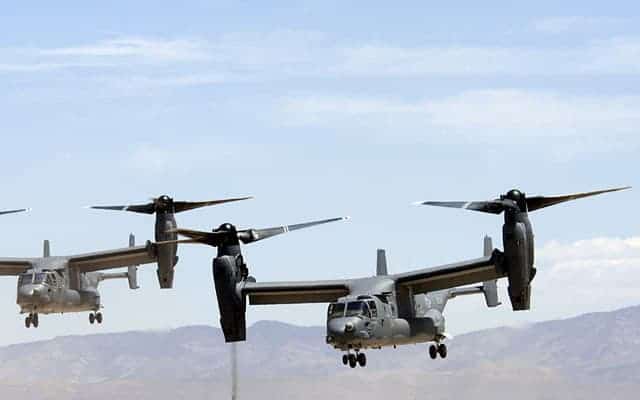
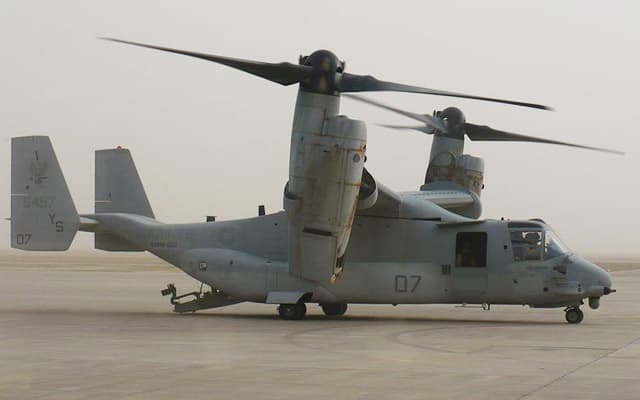
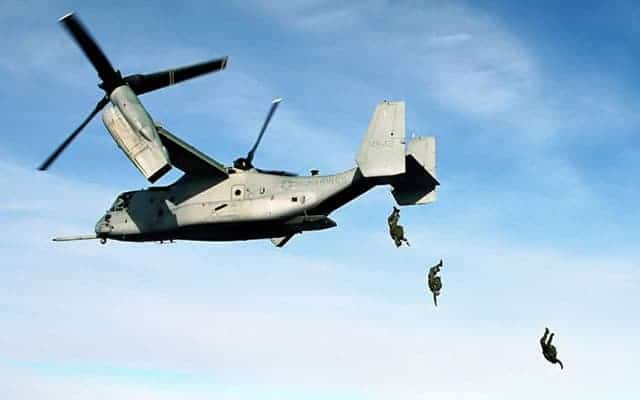
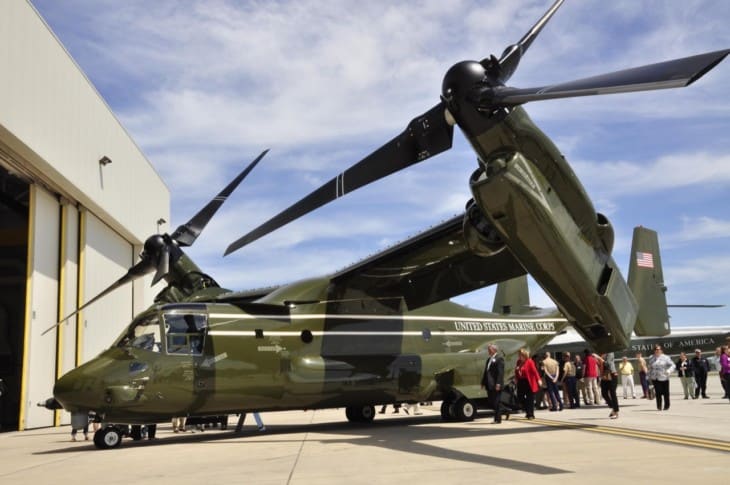
The most unusual multi-role aircraft on this list is the Osprey. The V-22 Osprey, built by Bell Boeing, takes off and lands like a helicopter but flies like a turboprop airplane, using tiltrotor technology to swivel its engines and rotors.
The Osprey is flown by the US Marine Corps, Air Force, and Navy for assault support and special operations. Its tiltrotor design gives it far greater speed and range than a conventional helicopter, and it has deployed for medevac and transport across the Middle East.
SH-3 Sea King


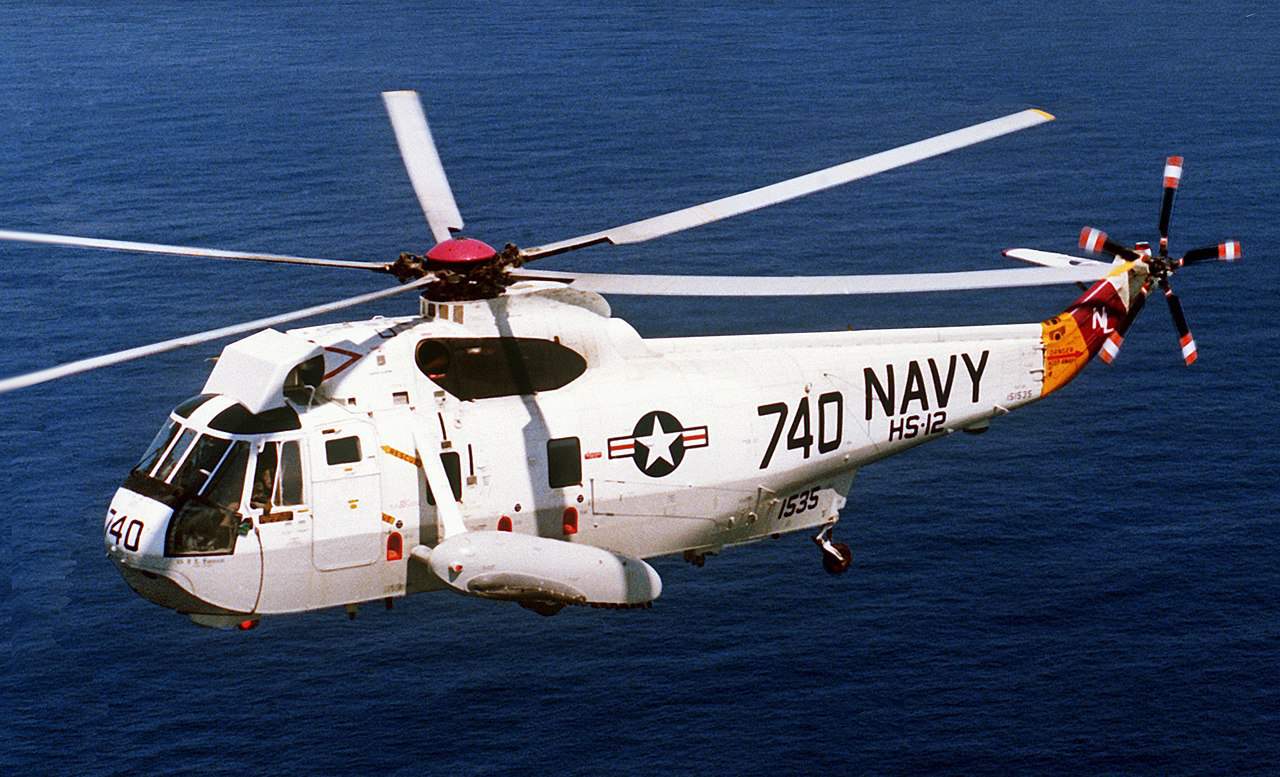
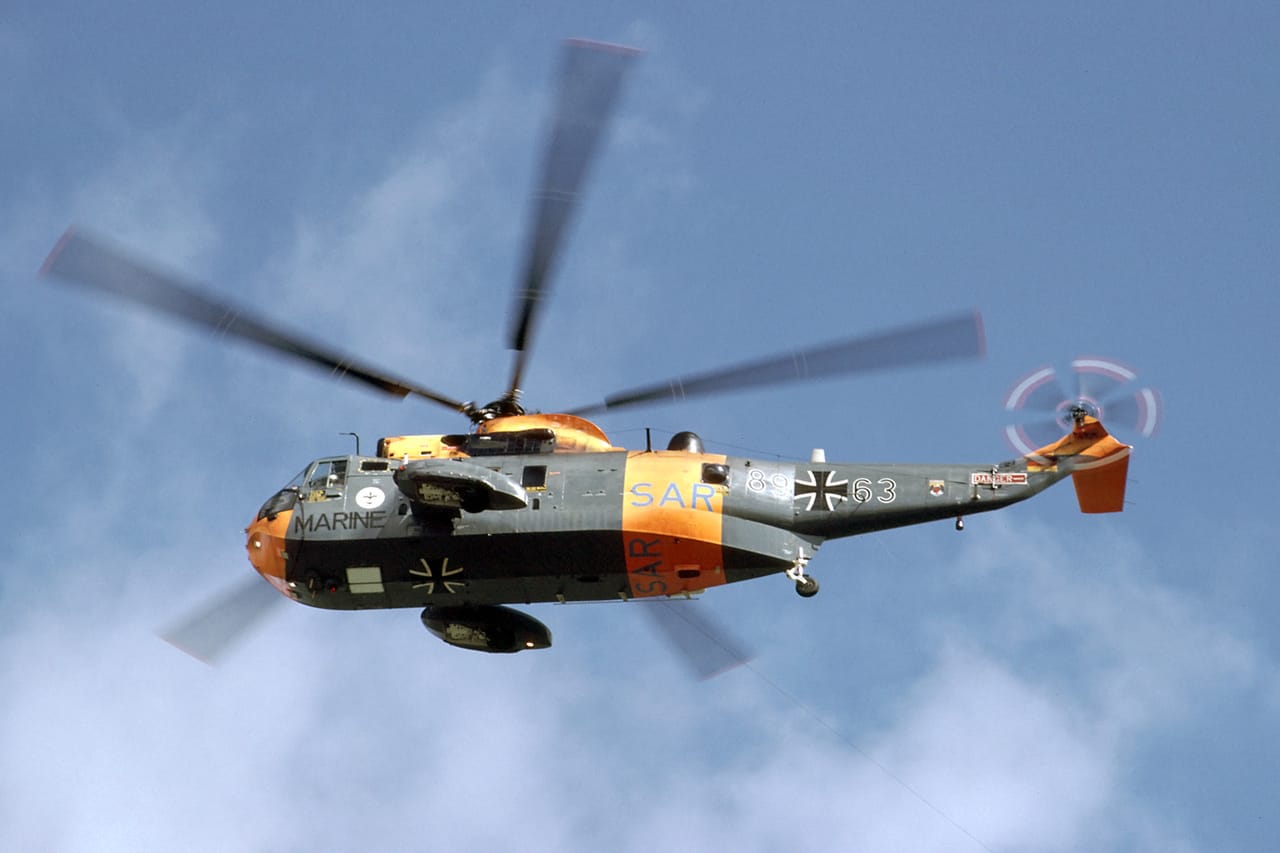


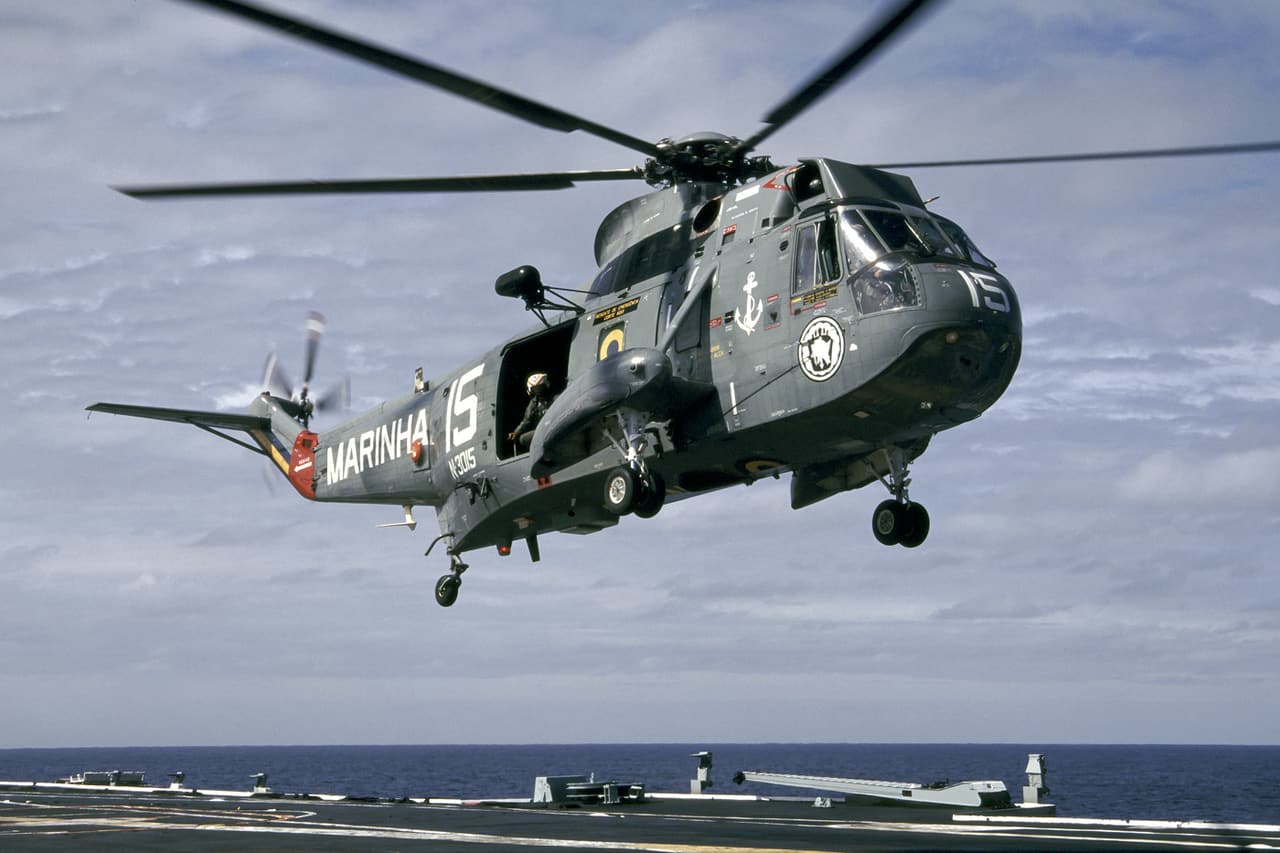


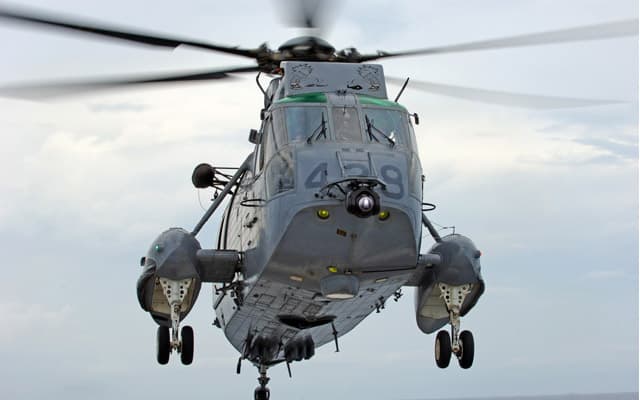
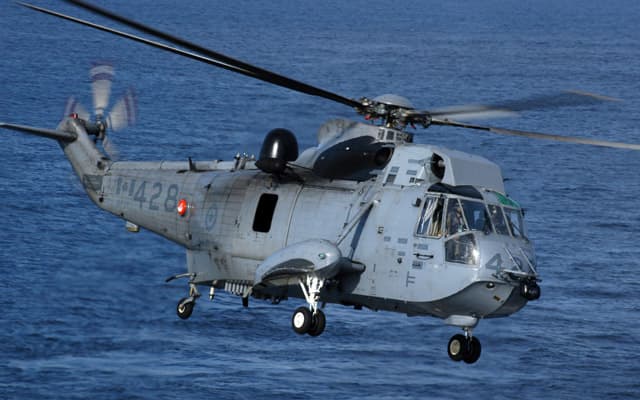

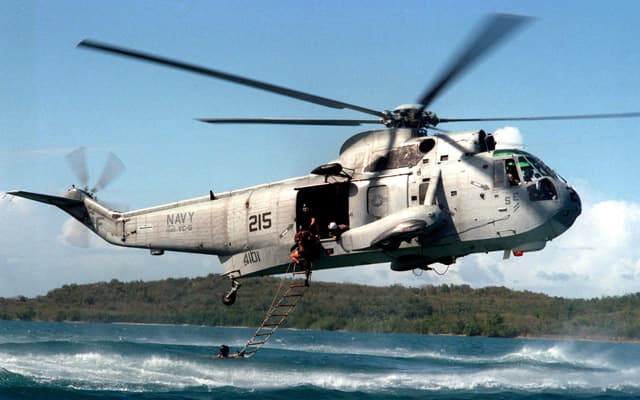
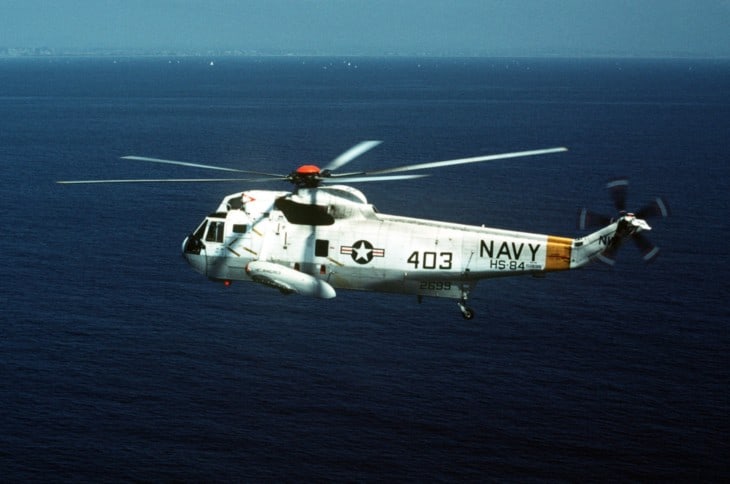
The Sikorsky VH-3D Sea King served as Marine One, the helicopter that transports the President of the United States, for more than five decades. Operated by Marine Helicopter Squadron One (HMX-1), it was among the most recognized helicopters in the world thanks to its role in coverage of every president from John F. Kennedy onward.
The SH-3 Sea King, built by Sikorsky, is a twin-engine helicopter with a boat-like hull and floats that let it make a water landing. It was the first amphibious helicopter in the world and the first of its kind for the US military. Its main role was anti-submarine warfare for the US Navy.
From its first use in 1961 through its replacement in the 1990s, the Sea King was a key anti-submarine warfare asset for the Navy. The type is no longer in production.
In 2019 the VH-3D began being replaced as the primary presidential transport by the Sikorsky VH-92A Patriot, a military version of the S-92 commercial helicopter. A few VH-3Ds were kept as backups during the transition, but the VH-92A fleet, also operated by HMX-1, now handles all presidential transport duties.
7. Military Search and Rescue Helicopters
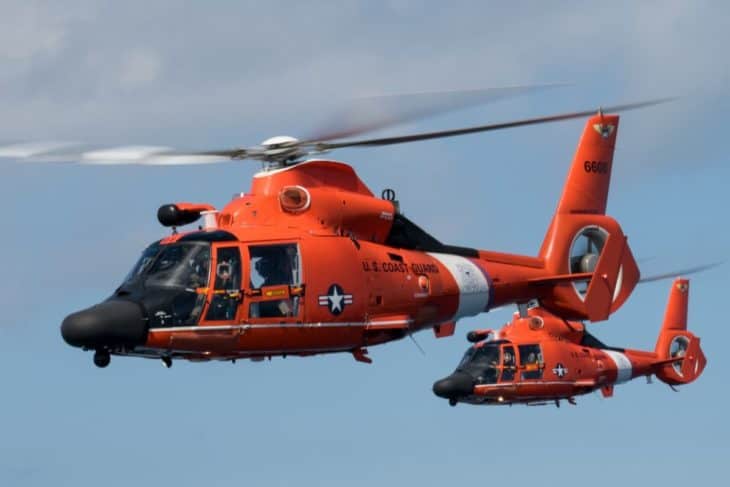
The last type we will look at is the search and rescue helicopter. These are agile, durable aircraft built to navigate any terrain and weather. Their job is to search, rescue, and recover, often in dangerous conditions, using advanced avionics and radar systems.
MH-65 Dolphin


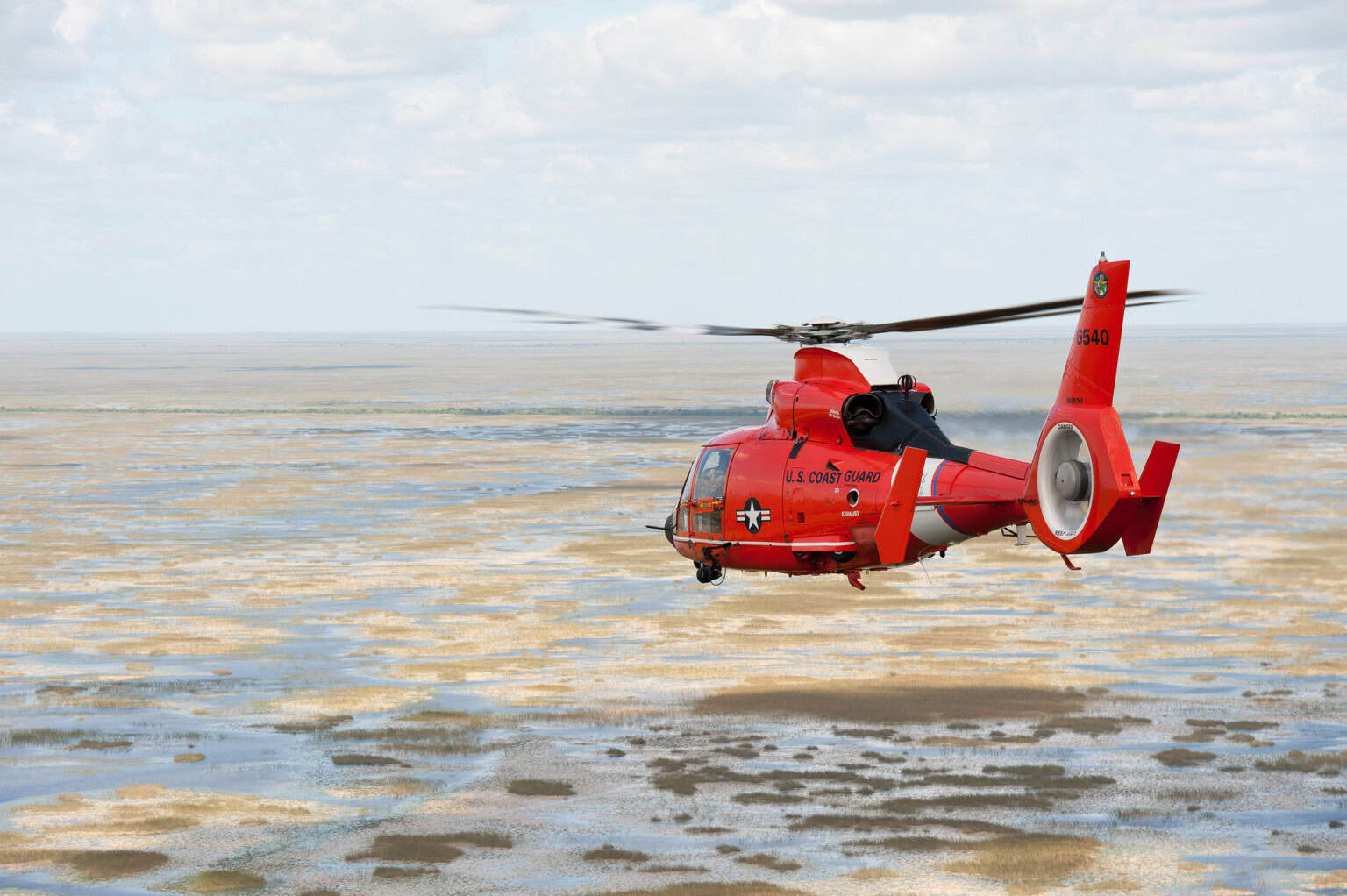

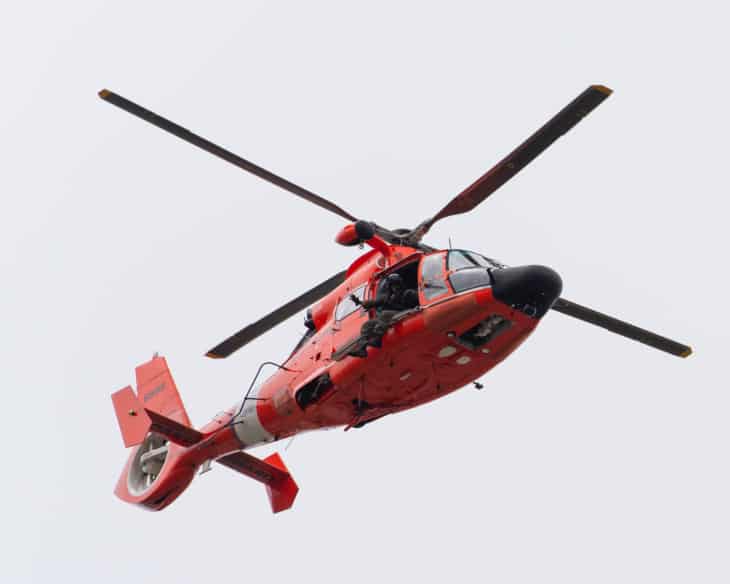
The Coast Guard’s primary search and rescue helicopter is the Dolphin. The MH-65 Dolphin, built by Airbus (formerly Eurocopter), is a twin-engine, short-range recovery helicopter, instantly recognizable in its Coast Guard orange. It operates day and night and in all weather except icing conditions.
The Dolphin joined the Coast Guard in 1984, and the service operates roughly 100 of them. Ongoing upgrades have carried the fleet to the current MH-65E standard, replacing obsolete components and modernizing the avionics and communications suite to keep the type flying into the late 2020s.
8. Military Training Helicopters
Trainer helicopters teach new pilots to fly. They are typically smaller and less powerful than frontline types, but they give students plenty of chances to practice their flying skills.
Trainers are also cheaper to buy and operate than combat helicopters, which makes them ideal for the schoolhouse. They are maneuverable and can be flown in many environments, letting trainee pilots build confidence before moving to the real thing.
Bell TH-67 Creek
The Bell TH-67 Creek was the US Army’s primary training helicopter for years. A single-engine aircraft based on the civilian Bell 206, it was powered by a Rolls-Royce 250-C20W engine and equipped with an autopilot and modern avionics that let students practice complex maneuvers.
The Army retired the TH-67 around 2020 and shifted initial rotary-wing training to the UH-72 Lakota. On the Navy side, the TH-73A Thrasher, a military version of the Leonardo AW119, replaced the long-serving TH-57 Sea Ranger as the primary trainer for Navy, Marine Corps, and Coast Guard pilots.
FAQ about Military Helicopters
Sources and references used for research and fact-checking.
Get the Newsletter
The latest aviation news and stories sent to your inbox.
About the Author
Articles credited to the AeroCorner Editorial Team are created or maintained by multiple aviation contributors working under a shared editorial framework. Content is researched using authoritative aviation sources and reviewed to ensure clarity, technical accuracy, and consistency across AeroCorner.