Military Helicopters
Eurocopter AS550 C3 Fennec
ICAO: AS50
The Eurocopter MH-65 Dolphin is the U.S. Coast Guard's short-range recovery helicopter, a French-designed Dauphin with a ducted Fenestron tail rotor that flies search and rescue and armed interdiction missions from shore bases and cutters.
Updated: by Tim de Vries
The latest aviation news and stories sent to your inbox.
The MH-65 Dolphin is the Coast Guard’s version of the Aérospatiale Dauphin. It first flew in 1980 and entered service in 1985 as the HH-65A, replacing the Sikorsky HH-52A Sea Guard. It flies search and rescue, drug interdiction and ice patrol missions, and has been upgraded from the HH-65A through the MH-65C, D and E.
Live Fleet Activity (MH-65)
Fetching live data…


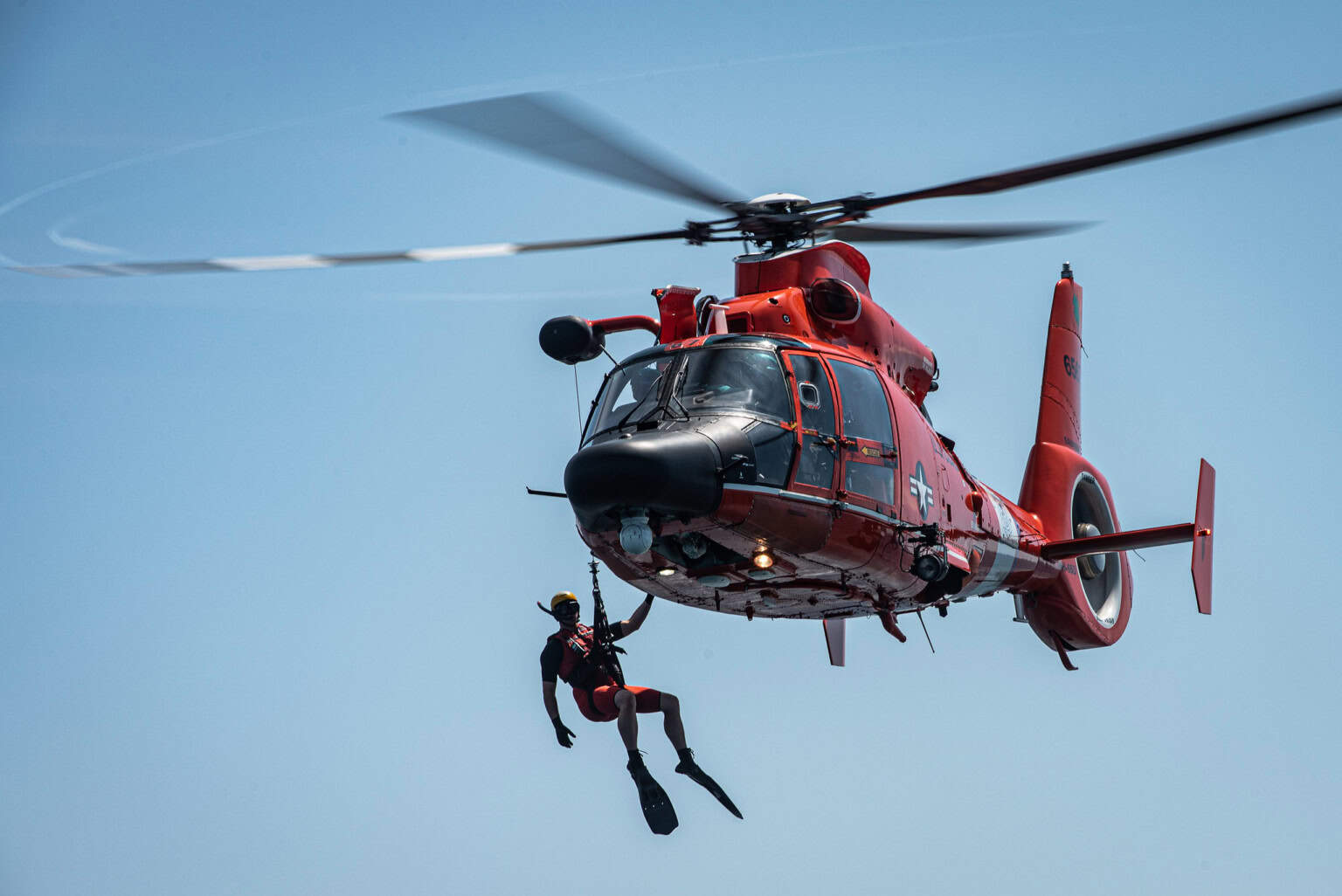


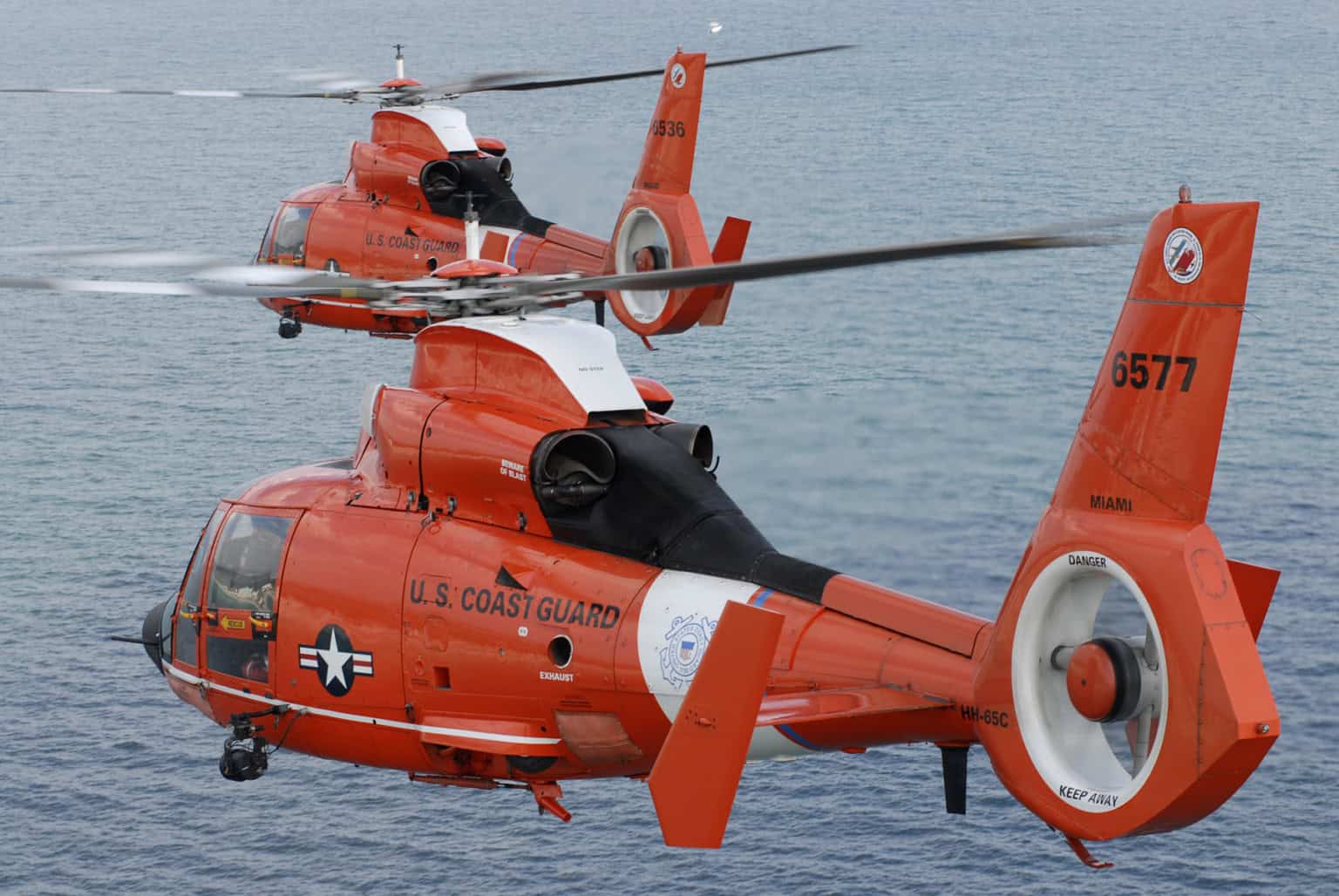


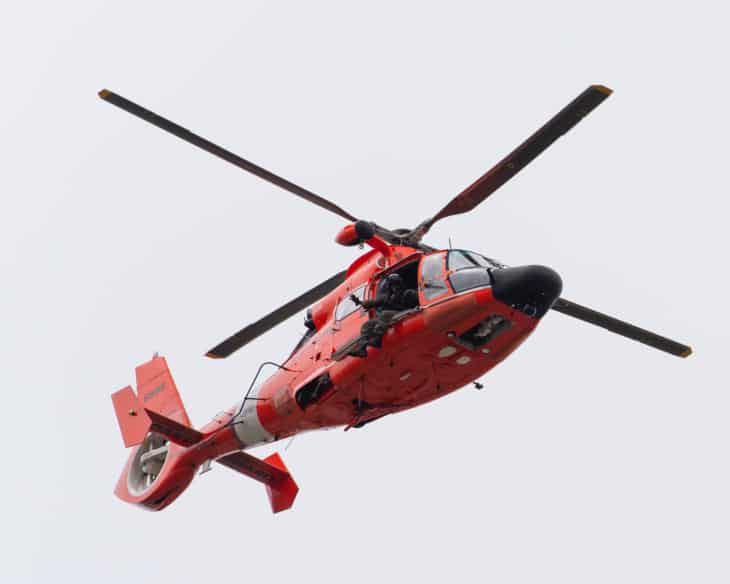
The MH-65 Dolphin is a twin-engine helicopter flown by the U.S. Coast Guard for search and rescue and armed law enforcement missions. It is a variant of the French Eurocopter (Aérospatiale) Dauphin.
The Coast Guard picked the Dauphin in 1979 as its short-range recovery helicopter, replacing the Sikorsky HH-52A Sea Guard. The first aircraft flew in 1980 and the type entered service in 1985 as the HH-65A.

The most recognizable feature is the Fenestron, a ducted fan inside the tail fin instead of an open tail rotor. Older helicopters had 11 evenly spaced blades, while newer ones have 10 unevenly spaced blades.
About 75 percent of the structure, including the rotor head, blades and fuselage, is corrosion-resistant composite.
The HH-65A was the first helicopter certified with a four-axis autopilot. It can fly an approach to the water and settle into a stable 50 ft hover, or fly search patterns automatically while the crew watches for survivors.
Unlike the HH-52A it replaced, the Dolphin cannot land on water.
American content rules meant the original Dauphin Arriel engines were replaced with Lycoming LTS101 turboshafts. Those engines had teething problems, and the loss-of-power events grew worse as the helicopter gained weight.
In March 2004 the Coast Guard chose the Turbomeca Arriel 2C2-CG, already used on the EC155. Each engine is rated at 934 shp (696 kW), about 40 percent more than the original engines.
Helicopters with the new engines became the HH-65C. The full specification table for the aircraft is on this page, so the notes below cover only the figures that need context.
The Coast Guard quotes a maximum range of 355 nm, which works out to the range shown in the table. The Dolphin can operate up to about 150 miles offshore.
Published speeds depend on the source and the variant, and the table uses the Coast Guard’s cruise figure and a published top speed.
The maximum takeoff weight in the table is 9,500 lb (4,300 kg). That is the weight of the upgraded MH-65C and later aircraft, up from 8,900 lb on the original HH-65A.

The Dolphin normally flies with four people: a pilot, a copilot, a flight mechanic and a rescue swimmer. The rescue hoist is rated for 600 lb.
Its main jobs are search and rescue, law enforcement including drug interdiction, ice patrol from polar icebreakers, pollution response and military readiness. Seven new-build MH-65Cs were bought to patrol the air defense zone around Washington, D.C.
The HH-65A was the original model with LTS101 engines. The HH-65B added an avionics upgrade, and the HH-65C added the Arriel 2C2-CG engines.
The Coast Guard redesignated its helicopters MH-65C in 2008, when the armed Airborne Use of Force package arrived. That package carries a Barrett M107 .50 caliber rifle and an M240 machine gun.
The MH-65D updated the flight navigation system, and the MH-65E added a digital glass cockpit shared with the MH-60T Jayhawk. Deliveries of the MH-65E began in 2018 and finished in 2024, with 90 aircraft delivered.

The U.S. Coast Guard is the only major operator, with aircraft based at air stations from Atlantic City to Kodiak.
The Israeli Navy also flew two used HH-65A test aircraft, operated by the Israeli Air Force from 1985. One crashed in the Mediterranean in 1996, and the last was retired a year later.
In 2025 the Coast Guard announced plans to buy Sikorsky helicopters based on the MH-60 to replace the aging MH-65 fleet over the next decade, according to Wikipedia.
The Dolphin is the U.S. Coast Guard’s name for its version of the French Dauphin helicopter. It is a twin-engine aircraft used for search and rescue and law enforcement near the coast.
The unit cost listed on this page is $9 million (2017). Prices for individual aircraft are not published, because the Coast Guard does not sell them.
Not the MH-65 itself, because the Coast Guard owns its fleet. Civil Dauphin-family helicopters do change hands on the used market, so a helicopter broker is the place to ask.
The maximum takeoff weight is 9,500 lb (4,300 kg). The rescue hoist is rated for 600 lb.
No. Unlike the HH-52A it replaced, the Dolphin is not able to perform water landings.
Sources and references used for research and fact-checking.