Military Helicopters
Sikorsky HH-3F Pelican
ICAO: HH3F
The U.S. Navy's frontline submarine hunter, built on the Black Hawk.
Updated: by Tim de Vries
The latest aviation news and stories sent to your inbox.
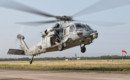
The Sikorsky MH-60R Seahawk is the U.S. Navy’s primary anti-submarine and surface warfare helicopter. Developed from the Black Hawk family, it hunts submarines with a dipping sonar and sonobuoys and attacks surface ships with Hellfire missiles. Lockheed Martin delivered the 350th to the U.S. Navy in January 2026, and navies from Australia to Norway fly it or have it on order.
Live Fleet Activity (H60)
Fetching live data…


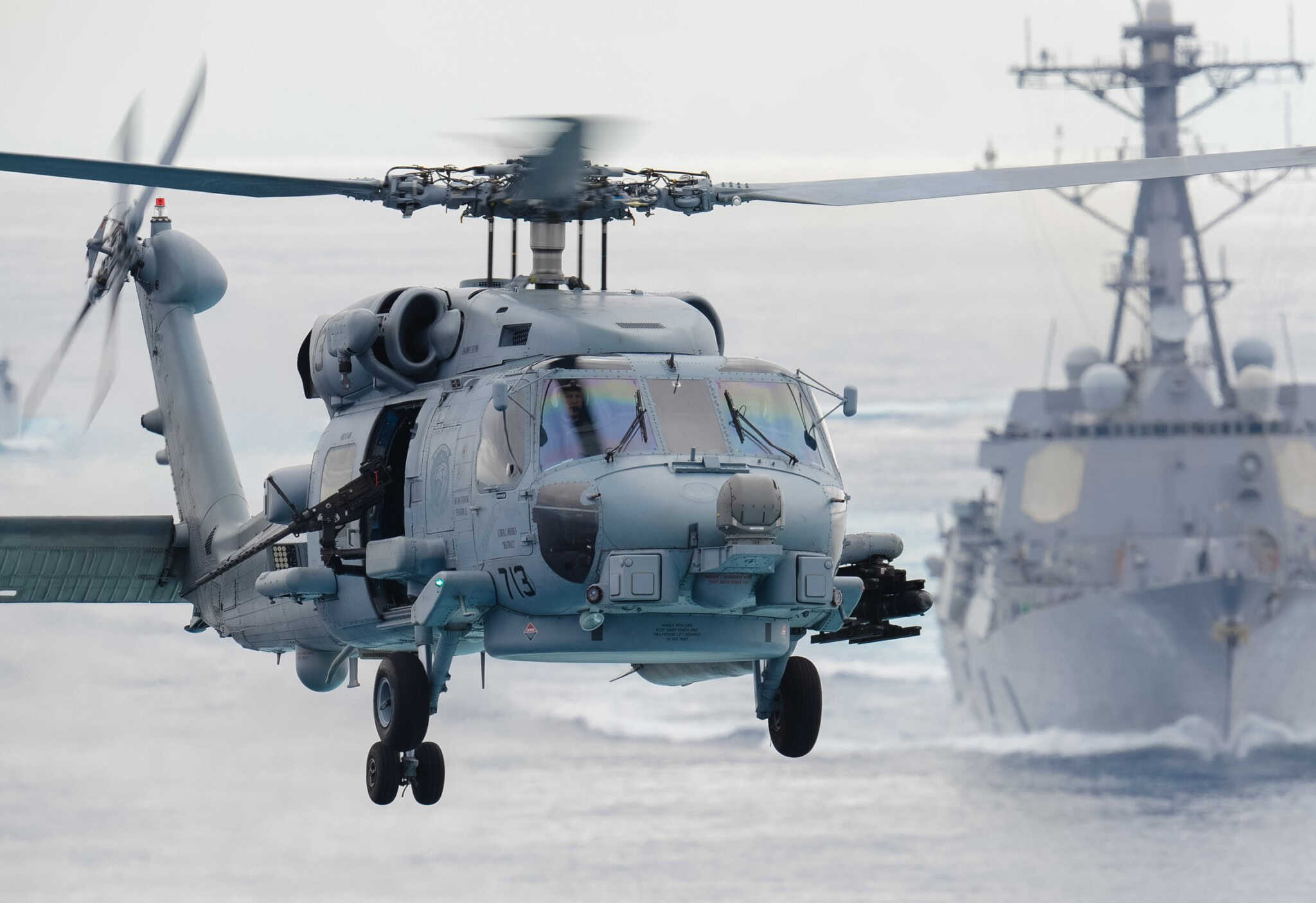


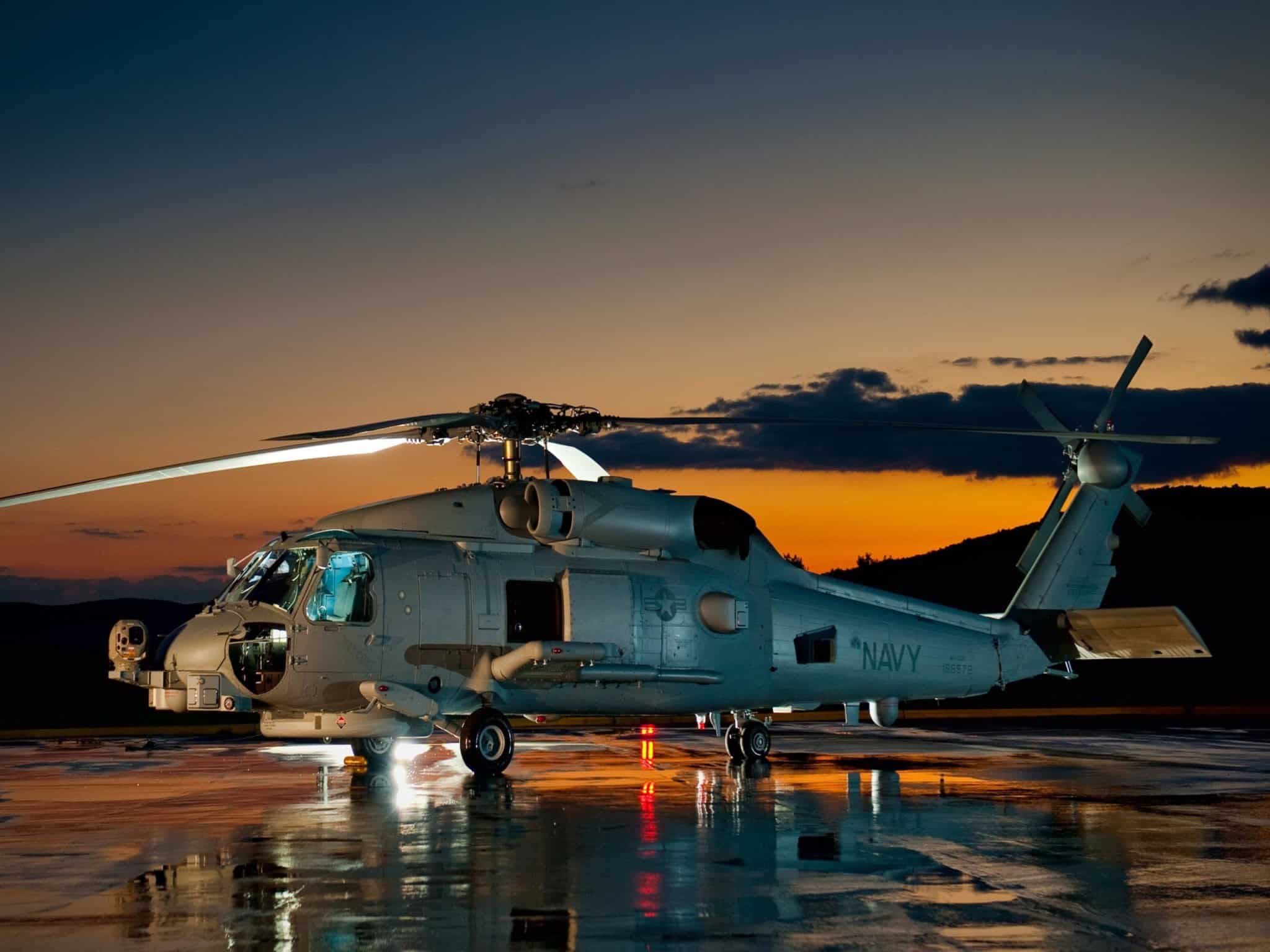

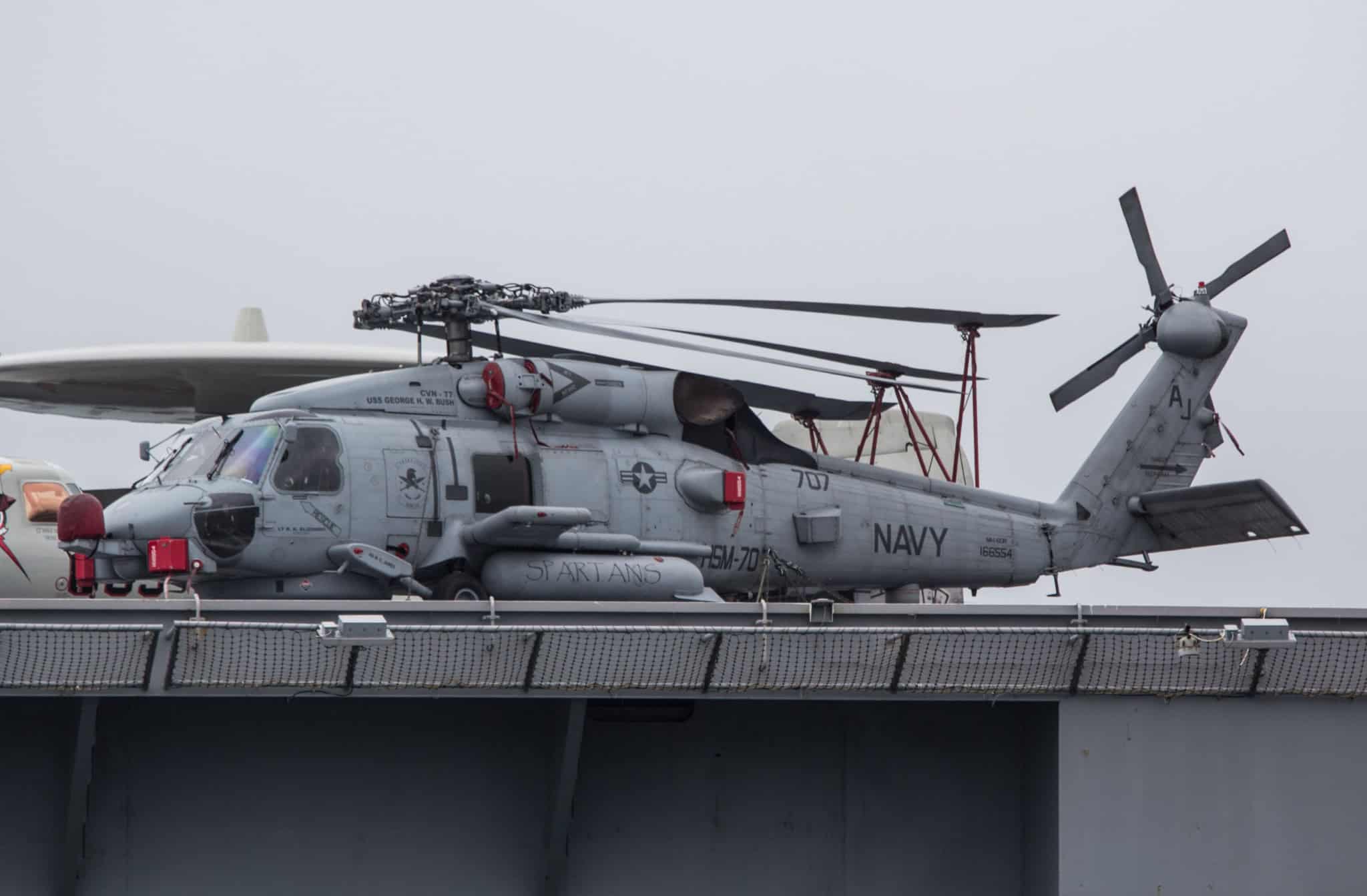

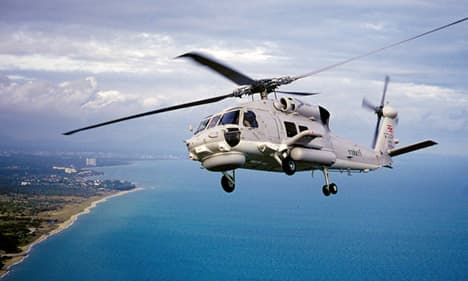
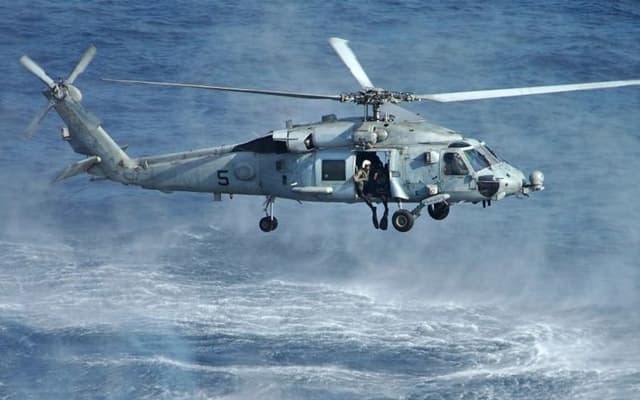
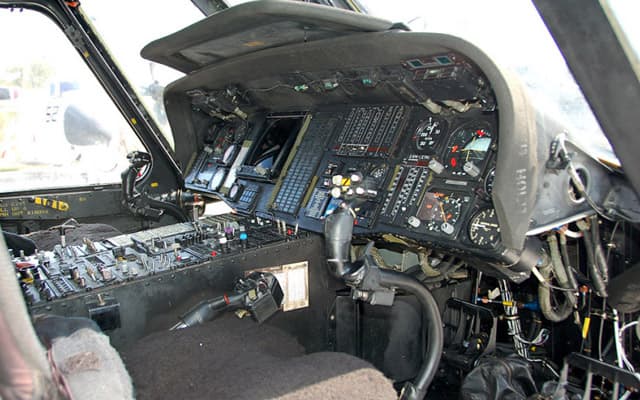
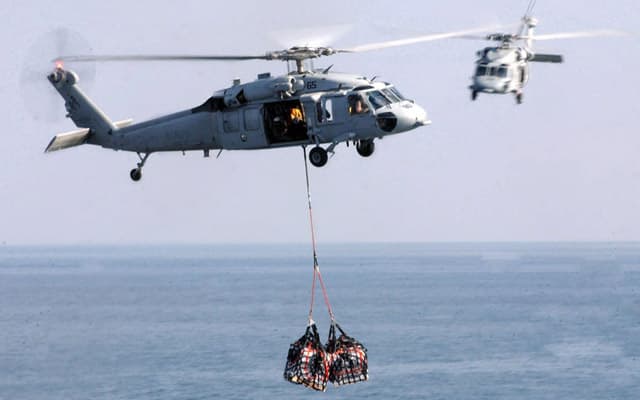
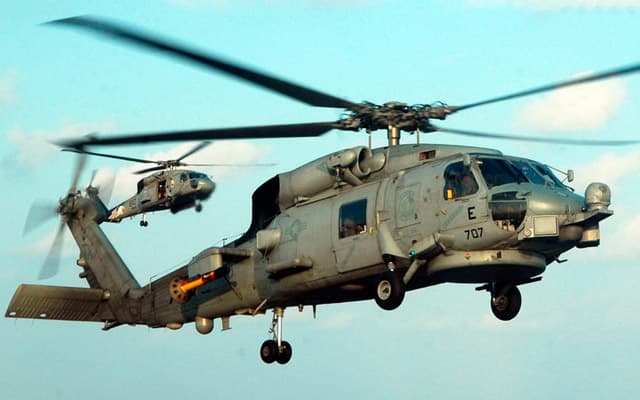
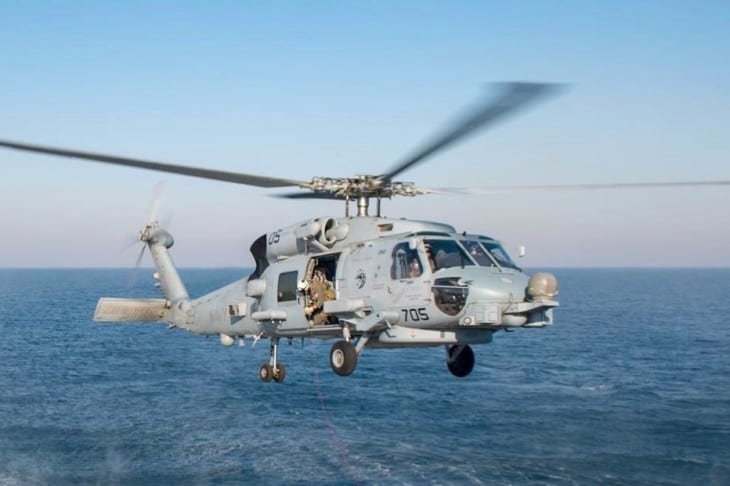
The Sikorsky MH-60R Seahawk is the U.S. Navy’s primary anti-submarine and surface warfare helicopter. It operates from warship flight decks and from shore bases, and its two core jobs are finding and attacking submarines and finding and attacking ships.
NAVAIR lists its primary missions as anti-submarine warfare, surface warfare, electromagnetic warfare, command and control, and non-combat operations. Secondary roles include search and rescue, medical evacuation, naval fire support, logistics, special warfare and intelligence gathering.
The MH-60R replaced two earlier Navy helicopters, the SH-60B and the SH-60F, and combines the jobs both used to do. It is widely known as the “Romeo,” after the R in its designation.
You will see the name written both as Seahawk and as Sea Hawk. Both refer to the same helicopter.
The Seahawk family is a navalized development of the Army’s UH-60 Black Hawk. Sikorsky’s own designation for it is S-70B, a name often used on export orders.
The first naval model, the SH-60B, kept 83 percent commonality with the UH-60A. The most important changes were folding main rotor blades and a hinged tail, which shrink the helicopter’s footprint aboard ship.
Folded for stowage, the MH-60R measures about 41 feet (12.5 m) long and 13 feet 5 inches (4.1 m) high. Unfolded, NAVAIR gives its length as 64 feet 10 inches (19.76 m).
The SH-60B conversion went well beyond folding. Sikorsky added corrosion protection, more powerful T700 engines, single-stage oleo main landing gear, two weapon pylons and a sonobuoy launcher, and deleted the left-side cabin door.
The tail wheel moved 13 feet (3.96 m) forward. Other changes included larger fuel cells, an electric blade-folding system and folding horizontal stabilators.
From a distance it still looks like a Black Hawk, but it is organized around sensors and weapons rather than cabin space. The MH-60R flies with a crew of three and has room for up to five passengers.
The full specification table for the MH-60R is on this page. Four of its figures need context, because published sources quote them in ways that do not compare directly.
The first is speed. The Royal Australian Navy and the U.S. Naval Academy both list 180 knots (207 mph) as the top speed, while Naval Technology gives a maximum cruise speed of 267 km/h, about 144 knots (166 mph). The panel’s cruise row shows the second, lower figure.
The second is range. Published figures run from about 380 nautical miles (U.S. Naval Academy) through 450 nm (reference works) to 470 nm (Royal Australian Navy), and the panel uses 450 nm, or 518 miles.
For a helicopter that hovers to dip its sonar, endurance is the more useful number. Naval Technology gives about 2.7 hours on an undersea warfare mission and 3.3 hours on a surface warfare mission.
The third is weight. NAVAIR gives an empty weight of 15,170 lb (6,881 kg) and a maximum gross weight of 23,500 lb (10,700 kg), which leaves about 8,330 lb (3,778 kg) for crew, fuel, sonobuoys and weapons.
The payload figure in the panel, about 6,000 lb (2,700 kg), is the cargo hook rating for a slung load. It is an external-load rating, not a measure of mission payload.
The fourth is engine power. Each T700-GE-401C is rated at 1,890 shp maximum power at sea level, and at 1,940 shp for 2.5 minutes if the other engine fails, so both numbers circulate. The panel shows the per-engine maximum rating, and NAVAIR lists the -401C or the -401D for the MH-60R.
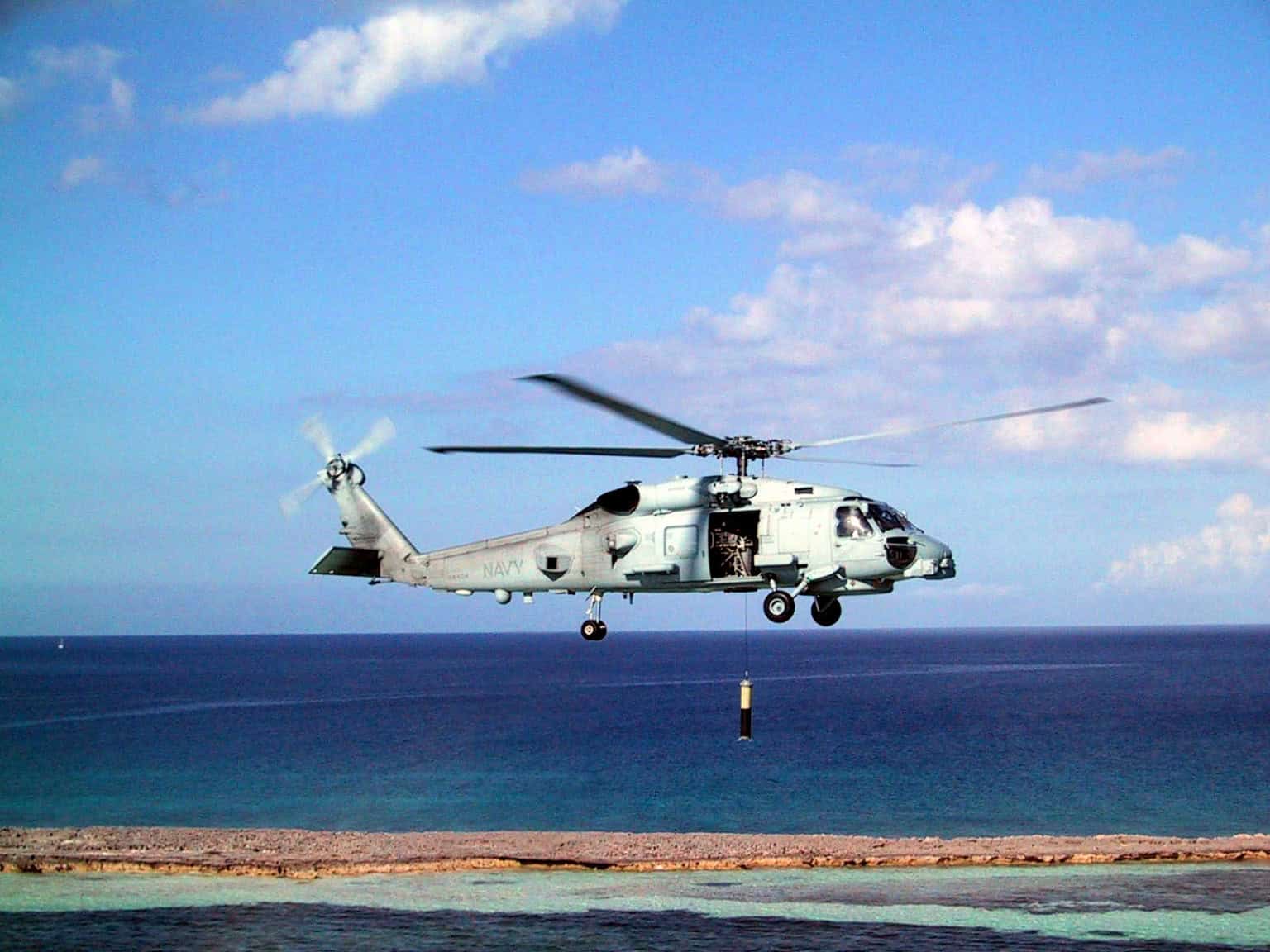
The centerpiece of the MH-60R’s anti-submarine kit is the AN/AQS-22 Airborne Low Frequency Sonar. It is a dipping sonar: the helicopter hovers and lowers it into the sea to listen for submarines.
The helicopter also drops sonobuoys, expendable listening devices that let one aircraft cover a wide stretch of ocean. The Royal Australian Navy describes the MH-60R as fusing information from its radar, sonar, electro-optical and electronic support systems into one picture.
For the surface picture it carries the AN/APS-153 multi-mode radar, which replaced the earlier APS-147, and the AN/AAS-44 electro-optical system, which pairs a FLIR camera with a laser rangefinder. The AN/ALQ-210 electronic support measures system listens for radar emissions.
It shares data over the SRQ-4 Hawklink data link. Self-protection comes from an AAR-47 missile approach warning system, an ALE-39 decoy dispenser and an ALQ-144 infrared jammer.
The crew flies from a glass cockpit with four digital displays.
The Seahawk family can carry Mk 46, Mk 50 or Mk 54 lightweight torpedoes. The MH-60R added the Mk 54 along with AGM-114 Hellfire missiles.
The Royal Australian Navy also lists the Advanced Precision Kill Weapon System (APKWS) guided rockets among its MH-60R weapons. Naval Technology adds .50 caliber guns.
Lockheed Martin groups the weapon options into four classes: torpedoes, air-to-ground missiles, rockets and crew-served guns.
The Navy flies two current Seahawk models alongside its other types of Navy helicopters, and the two are easy to confuse. The MH-60R is the submarine and ship hunter; the MH-60S, sometimes called the Knighthawk, is the fleet’s combat support helicopter.
NAVAIR lists the MH-60S missions as anti-surface warfare, combat support, humanitarian disaster relief, combat search and rescue, medical evacuation, special warfare and airborne mine countermeasures.
The two are built differently. The MH-60S is a hybrid that uses the Black Hawk’s main fuselage, with large sliding doors on both sides and a single tail wheel at the back, married to the Seahawk’s folding tail, engines, drivetrain and rotors.
The MH-60R stays on the original SH-60B naval airframe. What the two share is the cockpit, which NAVAIR says lets a pilot move from one to the other with minimal retraining.
The Seahawk grew out of the Navy’s LAMPS program, the Light Airborne Multi-Purpose System. The Kaman SH-2 Seasprite carried LAMPS Mark I, and the SH-60B was built around LAMPS Mark III.
The first YSH-60B flew on December 12, 1979. A second version, the SH-60F, came out of the Navy’s competition to replace the Sikorsky SH-3 Sea King.
The MH-60R began in 1993 as the LAMPS Mark III Block II Upgrade, developed with Lockheed Martin, formerly IBM/Loral. Two SH-60Bs were converted as prototypes, and the first flew on December 22, 1999.
The production aircraft was redesignated MH-60R to reflect its multi-mission role. Low-rate production followed, with long-lead funding for the second lot awarded in May 2003, and the first production aircraft were delivered in 2005.
HSM-41, the squadron that trains new MH-60R crews, received its first four aircraft in December 2005. The Navy approved full-rate production on March 31, 2006, planning at the time to buy 254, and the MH-60R deployed with the fleet that year.
Lockheed Martin delivered its 350th MH-60R to the U.S. Navy in January 2026. The worldwide fleet had passed one million flight hours in early 2023.
The U.S. Navy is by far the largest operator, flying the MH-60R with its Helicopter Maritime Strike (HSM) squadrons at sea and ashore.
The Royal Australian Navy took its first MH-60R on December 12, 2013 and put the type into service on January 24, 2014. It lists 23 in service and 13 on order, for an approved fleet of 36.
Australia’s aircraft fly with 808 and 816 Squadrons, with 725 Squadron as the training unit, from HMAS Albatross at Nowra, New South Wales.
India signed for 24 in February 2020, and 21 had been delivered as of July 20, 2026, according to Naval Technology. Its first squadron, INAS 334 “Seahawks,” was commissioned at INS Garuda in Kochi in March 2024.
South Korea ordered 12, and its first two entered operational service on April 1, 2026. On May 18, 2026 the U.S. approved a possible sale of 24 more, valued at $3 billion, which would take the Republic of Korea Navy’s planned fleet to 36.
Denmark flies nine, Saudi Arabia ordered 10, and Greece has seven on order, with its first three delivered in March 2024. Spain has eight on order and Norway six, and Lockheed Martin listed both as future deliveries in January 2026.
The Navy’s flyaway cost for a new MH-60R was about $34 million as of 2018, according to The War Zone. That covers the helicopter itself, not the training, spares and support that come with operating a fleet.
Export figures are much larger because they are the value of a whole foreign military sale, not the price of an aircraft. Saudi Arabia’s 10-helicopter order was valued at $1.9 billion in 2015, and the possible sale of 24 more to South Korea approved in May 2026 was valued at $3 billion.
Dividing those totals by the number of helicopters produces a per-aircraft figure several times the flyaway cost, so the two kinds of number should not be compared directly.
Two recent MH-60R crashes ended with every crew member recovered. On January 11, 2024, an HSM-41 aircraft went down in San Diego Bay off Coronado, and all six people on board survived.
On October 26, 2025, an MH-60R of HSM-73, the “Battle Cats,” went down in the South China Sea while operating with the USS Nimitz, and all three crew members were rescued. In a separate crash about half an hour apart, an F/A-18F Super Hornet of VFA-22 also went down, and both of its crew ejected and were recovered.
Both crashes were under investigation when they were reported, and no cause was given at the time.
Not every Seahawk crash involves the R. The helicopter that went down in the Arabian Sea in early July 2026 was an MH-60S of HSC-5 from the USS George H.W. Bush. Three of its four crew were recovered, and the Navy, which suspended the search after 102 hours, said there was no indication of hostile action.
NAVAIR lists the MH-60R as still in production, and Spain and Norway were still awaiting their first aircraft in January 2026. Lockheed Martin describes a Navy roadmap that keeps the helicopter relevant to 2045 and beyond.
In August 2026 the U.S. Department of War announced TALON, a prototype effort with the Royal Australian Navy to rebuild the MH-60’s digital architecture around open systems. The aim is to let MH-60R and MH-60S crews field new sensors, weapons and software faster, keeping the helicopter relevant through 2050.
The MH-60R Seahawk is the U.S. Navy’s primary anti-submarine and surface warfare helicopter. It hunts submarines with a dipping sonar, sonobuoys and torpedoes, and attacks surface vessels with Hellfire missiles. It also flies search and rescue, medical evacuation, logistics and special warfare missions, while its sister model, the MH-60S, handles combat support and mine countermeasures.
A new MH-60R cost the U.S. Navy about $34 million in flyaway terms as of 2018, according to The War Zone. Export deals are quoted as whole foreign military sale packages, so they look much larger: $1.9 billion for Saudi Arabia’s 10 in 2015, and $3 billion for a possible sale of 24 to South Korea in May 2026.
The Seahawk is the Navy’s development of the Army’s UH-60 Black Hawk, adapted to operate from ships. It adds folding rotor blades, a hinged tail, corrosion protection, new main landing gear, a relocated tail wheel, weapon pylons, a sonobuoy launcher and a submarine-hunting sensor suite. The first naval model, the SH-60B, kept 83 percent commonality with the UH-60A.
There is no official ranking, and the answer depends on the target. Our ranking of the best attack helicopters in the world puts the Boeing AH-64E Apache Guardian first. The MH-60R is a different kind of threat: it is built to find and attack submarines and ships rather than tanks.
The MH-60R is the anti-submarine and surface warfare model, with a dipping sonar, sonobuoys, radar and torpedoes. The MH-60S is the combat support model, built on a Black Hawk-style fuselage with sliding doors on both sides, and it flies rescue, medical evacuation, special warfare, mine countermeasures and anti-surface missions. The two share a common cockpit.
Romeo is the phonetic-alphabet word for the letter R. The nickname is a quick way to tell the MH-60R apart from the MH-60S in conversation.
The Royal Australian Navy and the U.S. Naval Academy list a top speed of 180 knots (207 mph). Naval Technology gives a maximum cruise speed of about 144 knots (166 mph), which is the figure shown in the specification panel’s cruise row.
Yes. NAVAIR lists the program as in production, Lockheed Martin delivered the 350th MH-60R to the U.S. Navy in January 2026, and Spain and Norway were still awaiting deliveries at that point.
Lockheed Martin lists deliveries to the United States, Australia, Denmark, Saudi Arabia, India, Greece and South Korea, with Spain and Norway to follow. The U.S. Navy is by far the largest operator.
Sources and references used for research and fact-checking.