Sikorsky Helicopter · United States · ICAO: HH3F · 1967–1994 ·
$19 million

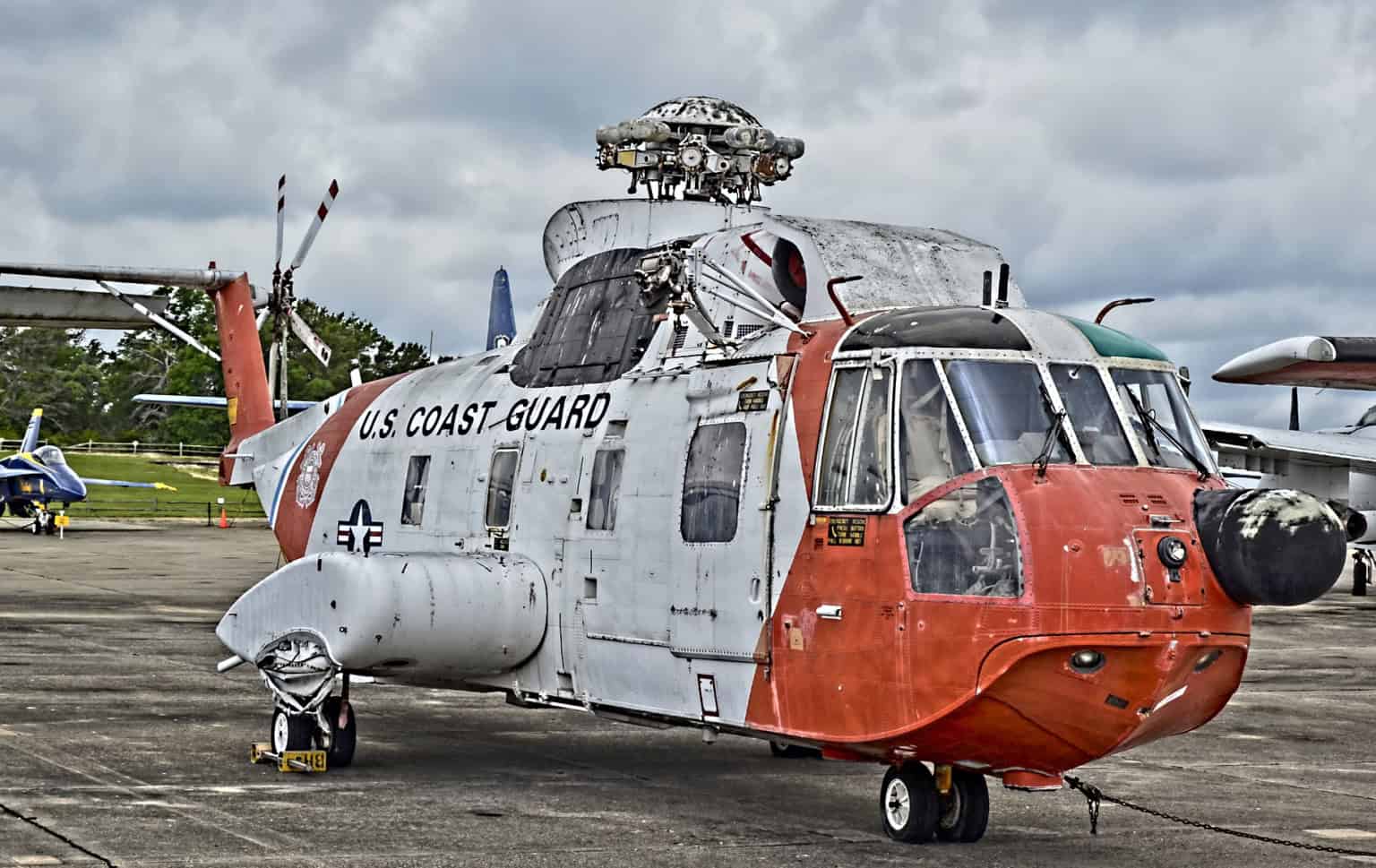
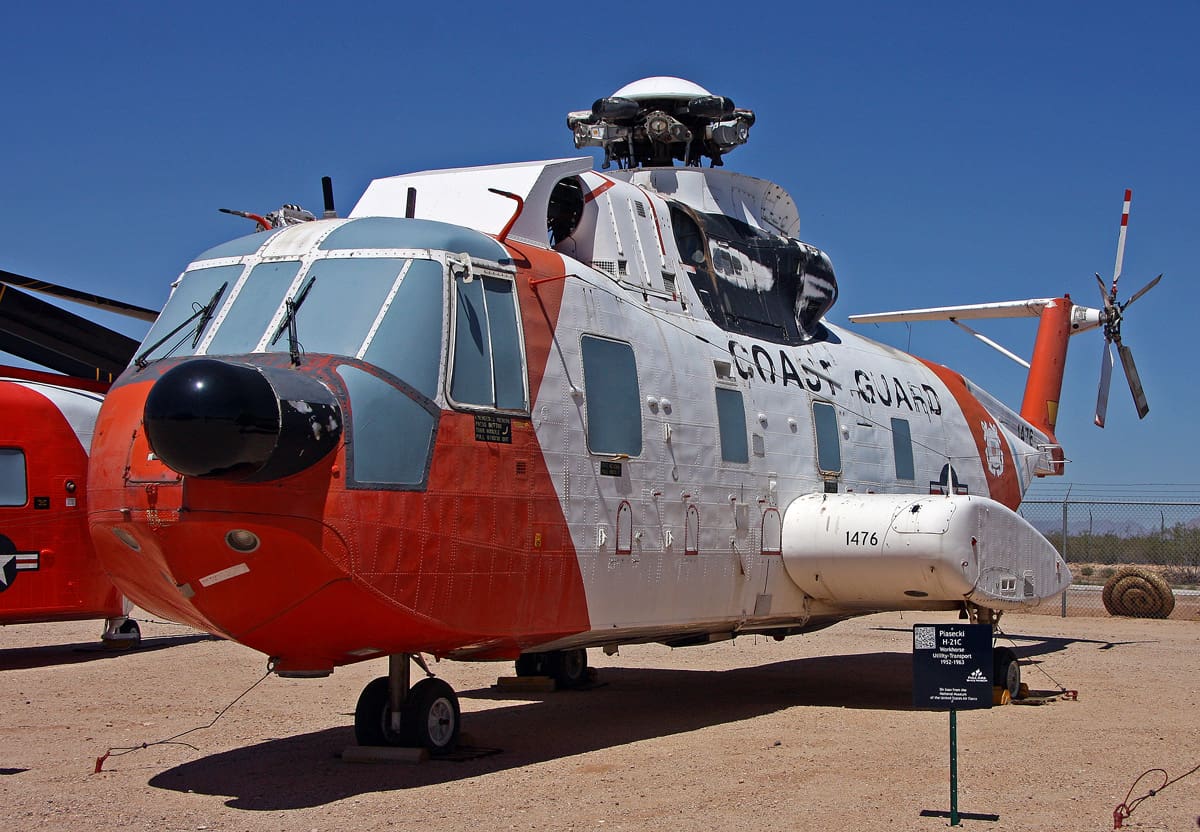
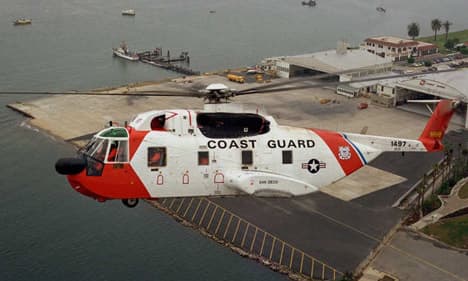
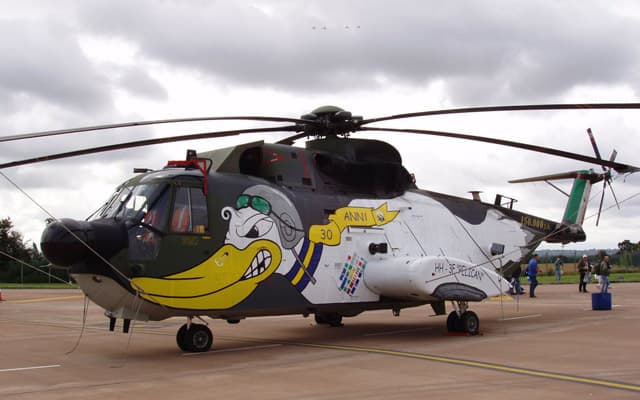
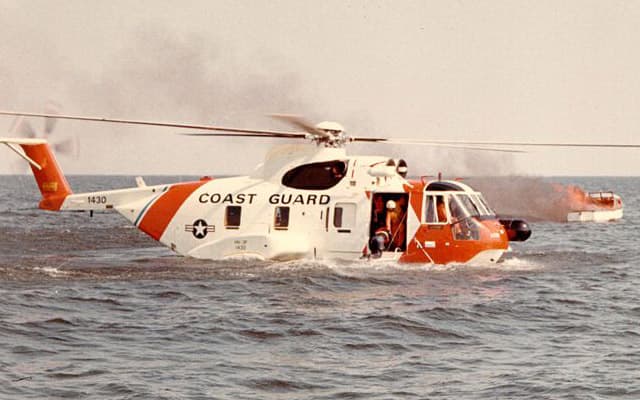
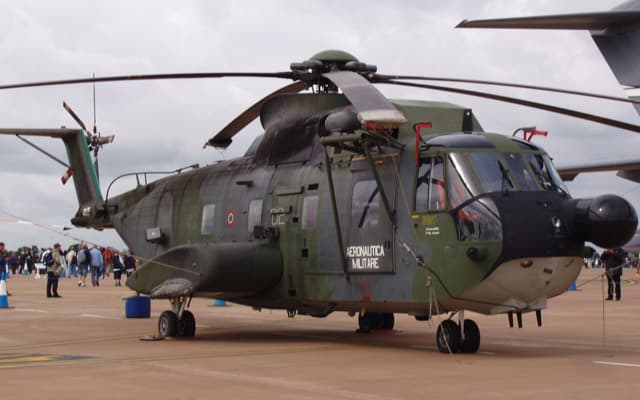
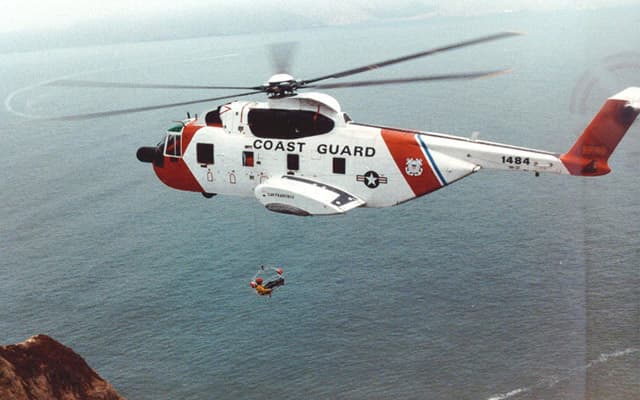
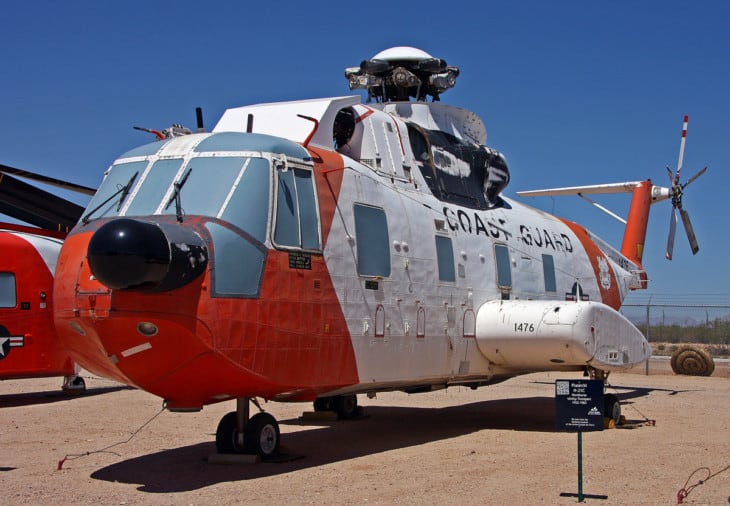
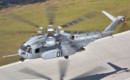
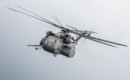
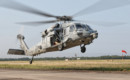
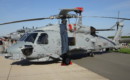
The Sikorsky HH-3F Pelican is a rescue helicopter with an extensive history and has been in operation for the past 50 years. The aircraft was introduced to the public as a prototype in 1963 and has since 1967 been used primarily by the US Coast Guard.

Live Fleet Activity
Fetching live data…
HH3F's currently in the air: --
No aircraft of this type are airborne right now.
Average speed: -- kt (-- mph / -- km/h)
Most activity in: --
Jump to Details
Engine:
2× General Electric T58-10 turboshafts
Engine type:
Turboshaft
Power:
2 × 1,500 shp  ·  1,119 kW
Wing Tips:
No winglets
Seats:
28
Cabin width:
ft 7 in · 2.00 m
Cabin height:
ft 12 in · 1.82 m
Exterior length:
73 ft 2 in · 22.30 m
Tail height:
18 ft 1 in · 5.51 m
Fuselage diameter:
ft 10 in · 2.40 m
Wing span / rotor:
62 ft 4 in · 19.00 m
Max takeoff weight:
22,100 lb  ·  10,000 kg
Max Payload:
8,000 lb  ·  3,650 kg
Fuel capacity:
1,080 gal  ·  4,100 L  ·  3,300 kg  (Jet A)
Max cruise speed:
143 kt  ·  165 mph  ·  265 km/h
Range:
780 nm  ·  900 mi  ·  1,440 km
Fuel burn:
0.63 nm/gal  ·  0.31 km/L
Ceiling:
21,000 ft  ·  6,400 m
Rate of climb:
2,220 ft/min  ·  11 m/s
Live Fleet Activity Details (HH3F)
Fetching live data…
Flight Airline Registration Altitude Speed Heading Vertical Rate Squawk Last Seen
Loading…
No aircraft of this type are airborne right now.

The Sikorsky HH-3F Pelican is the United States Coast Guard’s primary heavy-lift helicopter and has been in service since 1974. The aircraft was designed by a Sikorsky team led by Igor Sikorsky, who had also designed and manufactured the first commercial American helicopter in 1939.

It shares many design features of other Sikorsky aircraft including the S-64 Skycrane, which was developed as a heavy lifter to be used for logging operations. The HH-3F Pelican is powered by two General Electric T58 turboshaft engines, capable of producing up to 1,650 shaft horsepower each.

While it can hold up to 40 people total with crew members included, it typically carries 12-14 passengers on board at once, including crew members or patients being moved from one location to another.

Since it was designed primarily for search and rescue missions, it features multiple winches that allow it to lift heavy loads while hovering over water or ground-based obstacles like trees or buildings.

Want More of This?
We'll send you our latest and best content straight to your inbox
Featured Image