

Military Helicopters
Sikorsky HH-3F Pelican
ICAO: HH3F
The Marine Corps' three-engine heavy lifter, built to replace the CH-53E.
Updated: by Tim de Vries
The latest aviation news and stories sent to your inbox.
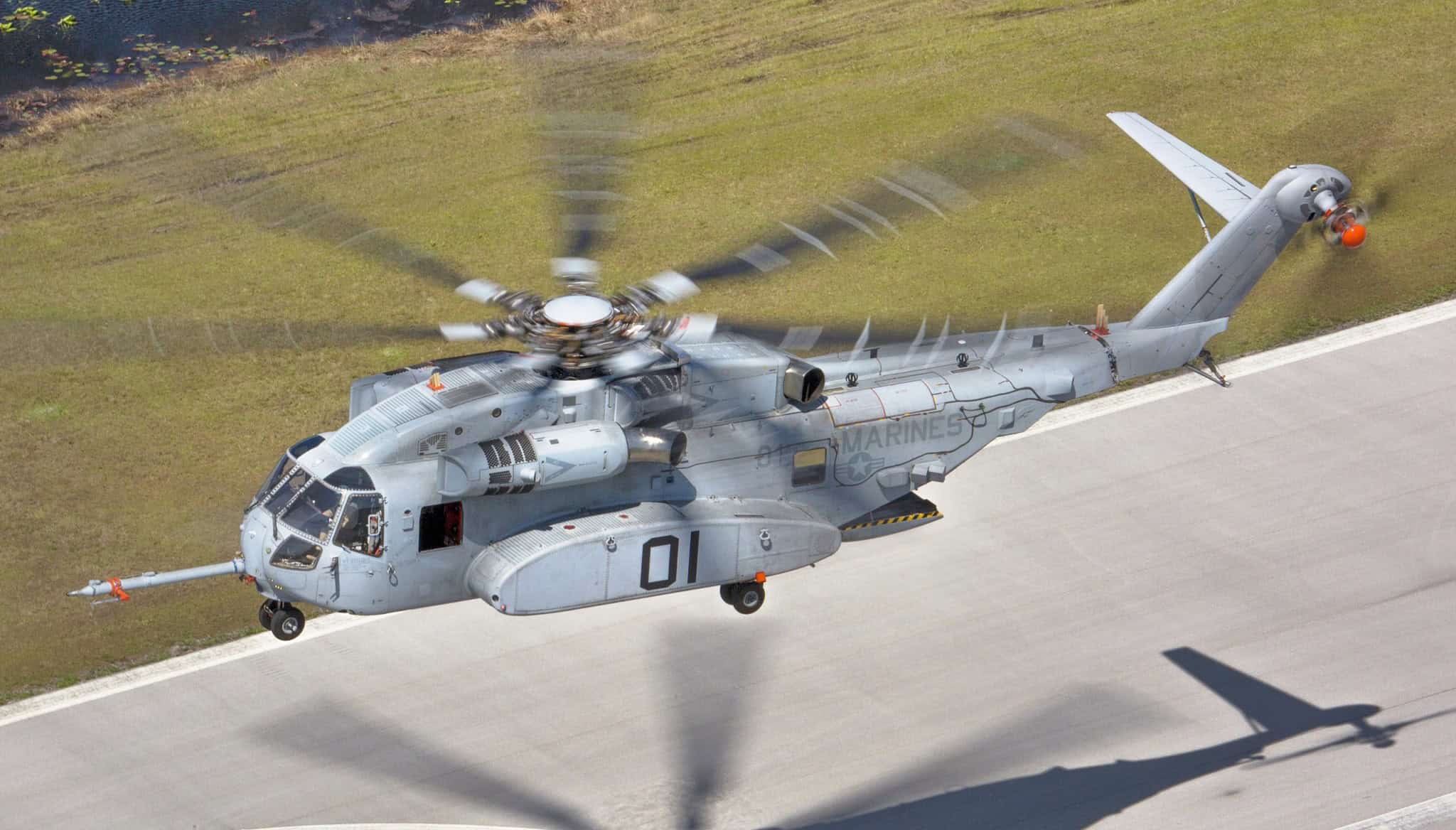
The Sikorsky CH-53K King Stallion is the U.S. Marine Corps’ three-engine heavy-lift helicopter, built to replace the CH-53E Super Stallion. It can sling 36,000 pounds under its center cargo hook, carries 30 troops in a cabin a foot wider than its predecessor’s, and reached initial operational capability in April 2022. The Marines plan to buy 200.
Live Fleet Activity (H53S)
Fetching live data…


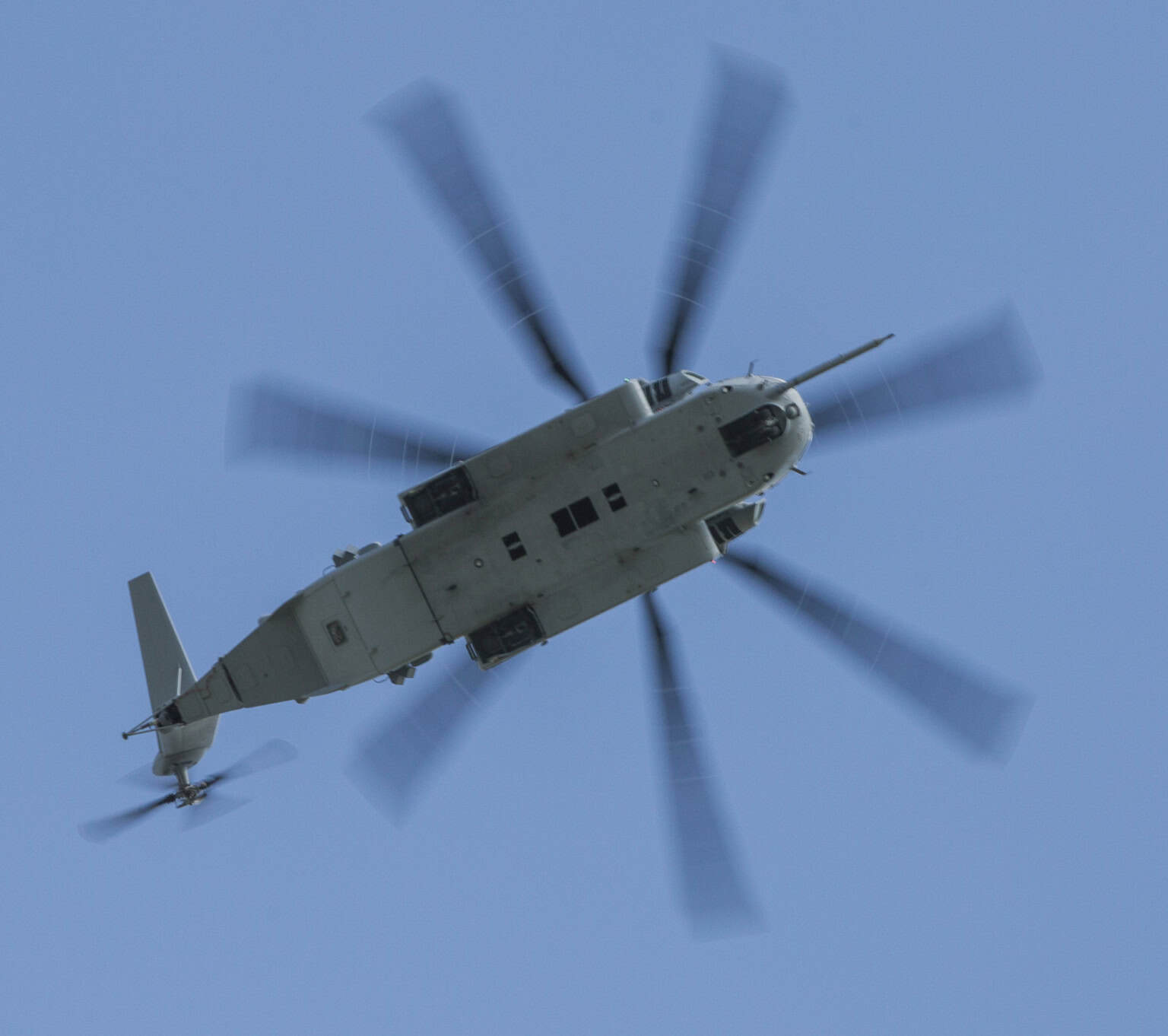


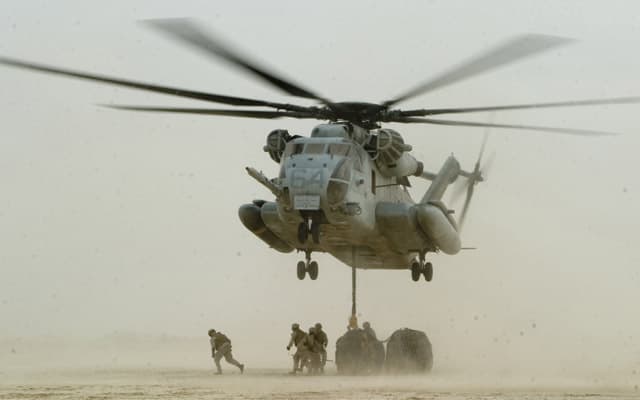
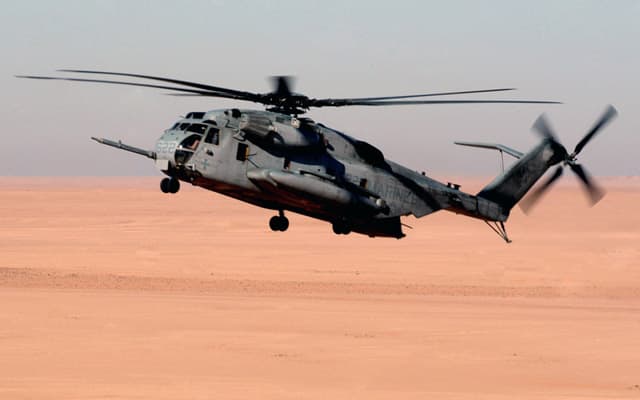

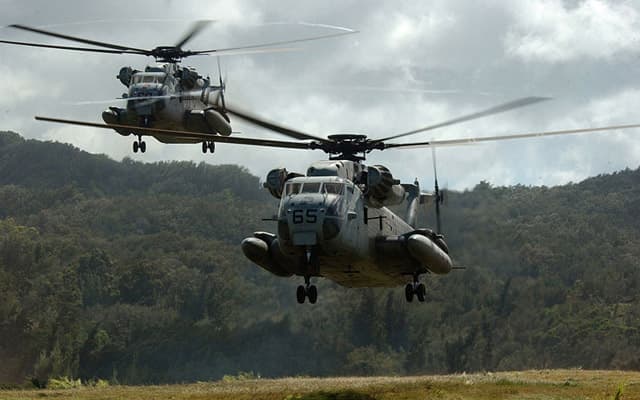
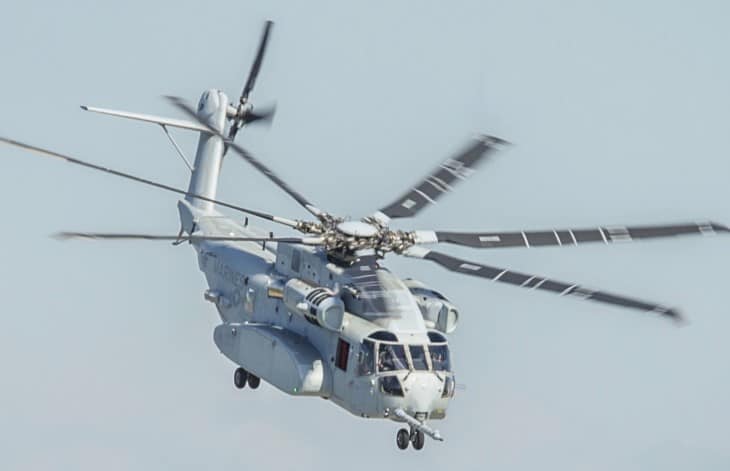
The Sikorsky CH-53K King Stallion is the U.S. Marine Corps’ heavy-lift helicopter, built to replace the CH-53E Super Stallion that has carried the Corps’ heaviest loads since 1981. It flies troops and cargo from amphibious ships to shore and slings vehicles, equipment and even other helicopters under its belly.
Three General Electric T408 engines of 7,500 shp (5,593 kW) each drive a seven-blade composite main rotor. NAVAIR, which runs the program for the Navy and Marines, calls it the most powerful helicopter in the Department of Defense.
The type first flew on October 27, 2015, and the Marines declared initial operational capability on April 22, 2022. As of April 2026, 25 King Stallions were in the Marine Corps fleet, out of a planned 200, and the first operational deployment is scheduled for fiscal 2027.
The CH-53E was running out of structural life. When the Marine Corps signed for the new helicopter in April 2006, an $18.8 billion deal for 156 aircraft, it expected to start retiring the Super Stallion in 2009 as airframes reached their limits.
Sikorsky pitched the replacement as the “CH-53X”. In August 2007 the Marines raised the planned buy from 156 to 227, and the figure later settled at 200: 196 production aircraft plus four development aircraft, according to the Pentagon’s December 2023 Selected Acquisition Report.
The King Stallion completes a three-aircraft lift mix: the MV-22 Osprey for medium lift, the UH-1Y Venom for light lift, and the CH-53K for anything heavy. The rest of the Corps’ rotary fleet is covered in our guide to U.S. Marine Corps helicopters.
The design passed its Critical Design Review in August 2010, and Sikorsky delivered the first airframe, a ground-test vehicle, on December 4, 2012. In January 2014 that test article lit its engines for the first time, spinning the rotor head without blades attached.
At the roll-out in May 2014, General James F. Amos announced the name “King Stallion”. The maiden flight followed on October 27, 2015, when Sikorsky chief experimental test pilot Stephen McCulley flew Engineering Development Model 1, Bureau Number 169019, for 30 minutes at West Palm Beach, Florida.
The program then split into test and production. Milestone C in April 2017 authorized low-rate production, and the first Lot 1 contract, for two aircraft, followed in August 2017. In March 2018 a test aircraft lifted 36,000 lb (16,300 kg) on its center hook, and the first CH-53K was delivered to the Marine Corps on May 16, 2018.
Flight testing turned up enough faults to break the schedule. A December 2018 report listed engines reingesting their own exhaust gas, limited service life for the rotor gearboxes, deficiencies in the tail rotor and driveshaft, and late deliveries of redesigned parts.
In January 2019 the program reported a breach of its baseline schedule for test completion, initial operational capability and the full-rate production decision. The Navy’s acquisition chief approved a restructure in March 2019 that prioritized finishing development and testing over the original schedule.
Marine Corps Times reported that testing in 2018 exposed more than 100 technical problems, and that by September 2020 Sikorsky had resolved 118 of 126. The December 2023 acquisition report still listed three open technical risks: a redesigned main rotor damper piston seal, a redesigned main gearbox pinion, and cold weather capability.
Production brought its own delays. The same report blamed late deliveries of low-rate aircraft on the closure of a GKN plant and on problems at major suppliers, including Spirit AeroSystems and Wellman Dynamics.
Marine Heavy Helicopter Squadron 461 at Marine Corps Air Station New River, North Carolina, became the first fleet CH-53K squadron in January 2022. Operational testing ran from July 31, 2021, to April 11, 2022, and initial operational capability was declared on April 22, 2022.
The Navy approved full-rate production in December 2022. As of April 2026 four units flew the type: HMH-461, the HMHT-302 training squadron, the HX-21 test squadron at Patuxent River and the VMX-1 operational test squadron at Yuma. The fleet had just passed 10,000 flight hours.

The first deployment has slipped more than once. It was planned for 2025, moved to 2026 so the Corps would not strip aircraft from home squadrons, and is now scheduled for fiscal 2027 with the 26th Marine Expeditionary Unit out of Camp Lejeune.
The Marines expect to retire the last CH-53Es in 2032. The acquisition report plans the King Stallion’s operational life from 2022 to 2063, at 30 years per aircraft.
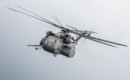
From the outside the King Stallion looks like its predecessor, and that was deliberate: it keeps the same shipboard footprint, so it fits the same amphibious ship decks. New, shorter composite sponsons cut its overall width to help it do so.

Inside is where it changed. The cabin is 12 inches wider than on legacy aircraft, which Sikorsky says gives 12% more volume, and it takes a Humvee or two full 463L cargo pallets without breaking them down. The rear ramp is 103 inches wide.
The cockpit is a digital glass cockpit with triple-redundant fly-by-wire controls, which Lockheed Martin says can hold a precision hover in 40-knot wind gusts. An integrated health monitoring system tracks the engines, gearboxes and avionics so maintenance can be done on condition rather than on a fixed schedule.
The main rotor blades are all composite, using technology similar to the UH-60 Black Hawk‘s, and fold automatically in under two minutes for shipboard stowage. The aircraft can be refueled in flight from a KC-130J tanker and carried inside a C-17 or C-5 transport.
In troop configuration it carries 30 Marines on crashworthy seats alongside two pilots and two crew. As an ambulance it takes 24 litters, stacked four high.
The CH-53K is powered by the General Electric T408-GE-400, known by the company designation GE38-1B. It was selected over the Pratt & Whitney Canada PW150 and a version of the Rolls-Royce AE 1107C that powers the V-22.
Each engine is rated at 7,500 shp (5,593 kW), and Sikorsky credits the T408 with 18% better fuel efficiency than the legacy engines. Exhaust reingestion was one of the faults found in 2018 testing; Lt. Gen. Mark Wise later described the aircraft running for 21 minutes in the worst brownout conditions “with zero degradation of the engines.”
The engines feed a split-torque main gearbox with quill shafts, a design Sikorsky began developing around 2007. It has been one of the program’s harder components, with gearbox service life flagged in 2018 and a pinion redesign still in qualification at the end of 2023.
The full specification table for the CH-53K is on this page. A few of its lift figures get quoted against each other so often that they need explaining.
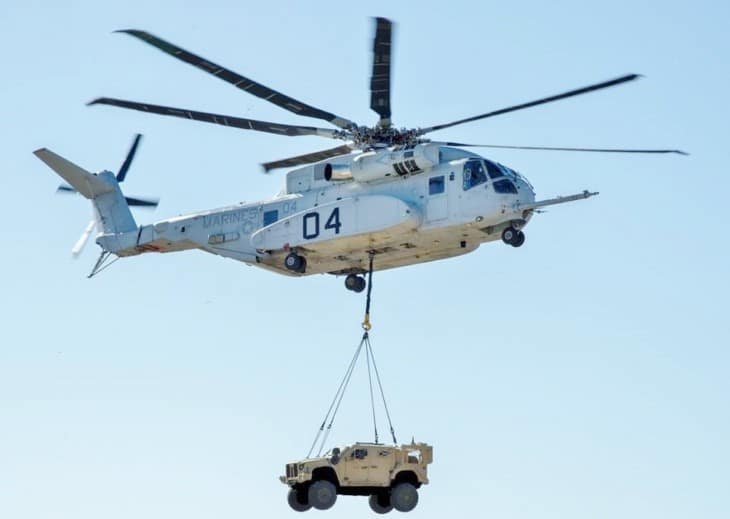
The headline number is the max payload of 36,000 lb (16,300 kg). That is the rating of the single center cargo hook; the fore and aft hooks are rated at 25,200 lb each, and the helicopter’s max takeoff weight of 88,000 lb (39,900 kg) is reached only with an external load. With the load inside the cabin, the limit drops to 74,000 lb gross.
The “three times the CH-53E” claim comes from a different measure. The Marine Corps requirement is to carry 27,000 lb of external load out to 110 nautical miles without refueling in Navy high and hot conditions, which NAVAIR says is almost triple the CH-53E’s capability on the same mission. The CH-53K met that figure in operational testing; the objective is 30,000 lb.
In April 2026 the test squadron HX-21 lifted a whole CH-53K: an early development airframe stripped of its engines, most gearboxes and tail pylon, weighing about 28,000 lb. The test was to write recovery procedures for a downed King Stallion, which the Navy’s salvage manuals did not yet cover.
Published cruise speed is 170 kt (196 mph). Sikorsky has not released an official maximum speed, and a sea-level cruise figure on maximum continuous power of 158 knots also circulates, so the two numbers describe different conditions rather than a contradiction.
Range is 460 nm (530 mi, 850 km). The number that matters to Marine planners is the 110 nautical miles radius with a 27,000 lb load, which is what the requirement above is written around.
The internal fuel shown in the panel is carried in two cells in each sponson. For long legs or to deliver fuel to forces ashore, the cabin takes up to three 800-gallon tanks, adding 2,400 gal. Sikorsky calls this setup the Tactical Bulk Fuel Delivery System.
The service ceiling is 16,000 ft (4,900 m) on a standard day and 13,200 ft on a hot day. That hot-and-high margin is what the composite blades and the extra engine power were designed to buy.
It depends on which cost you mean. In January 2022, Marine Corps Times reported a recurring flyaway cost of just under $91.6 million per aircraft, against the $87 million the Corps had expected to pay in 2017.
Earlier lots cost more. Lt. Gen. Mark Wise told Congress in 2021 that aircraft in Lot 5 cost $97 million each in fiscal 2021, with Lot 6 projected at $94 million.
Program-level figures are much larger because they include development, initial spares and construction costs. The December 2023 acquisition report estimated the whole 200-aircraft program at $36.06 billion in then-year dollars, an average procurement unit cost of $142.2 million and a program acquisition unit cost of $180.3 million.
The biggest single order is the multiyear contract signed on September 26, 2025, for up to 99 helicopters in Lots 9 through 13. NAVAIR values it at about $10.9 billion at the maximum quantity, with $1.5 billion in savings from 2025 to 2029. Our explainer on why helicopters are so expensive covers where that money goes.
Running costs are close to the old helicopter’s. The acquisition report puts annual operating and support cost at $9.65 million per aircraft in 2017 dollars, slightly below the CH-53E’s $10.0 million.
The Boeing CH-47F Chinook is the King Stallion’s main Western rival for heavy lift, and the two have met head-on in export competitions. The Chinook uses two tandem rotors and no tail rotor, while the CH-53K uses one main rotor with a tail rotor.
The CH-53K was built for ships. NAVAIR calls it the only marinized heavy-lift rotary-wing aircraft in the U.S. inventory, with corrosion-resistant structure and blades that fold for hangar decks. The Chinook is primarily a U.S. Army aircraft.
Israel picked the CH-53K over the CH-47F in February 2021. Germany went the other way in 2022, choosing the Chinook for its lower unit cost, which let it buy more helicopters for the same budget, and for interoperability with European NATO partners such as the Netherlands.
The U.S. Marine Corps is the only operator today. Israel is the first export customer: it signed a letter of acceptance for 12 aircraft in December 2021, with options for up to 18, to replace its CH-53 “Yasur” fleet. The Israeli Air Force calls the type “Pereh” and will fly it with 114 Squadron.
Israel’s first aircraft have been slow to arrive. Sikorsky began assembling the first Israeli CH-53K in August 2025, and Airforce Technology reported that month that the first helicopter was expected in Israel in 2028. As of January 2026 none had been delivered.

Germany was the one that got away. Sikorsky teamed with Rheinmetall in February 2018 to replace the German Air Force’s CH-53G fleet with around 40 King Stallions, but Berlin cancelled the competition as too expensive in September 2020 and bought Chinooks instead. Japan has reportedly shown interest, with no order announced.
The CH-53K is the largest and heaviest helicopter in the U.S. military, but not in the world. Russia’s Mil Mi-26 is bigger and heavier, as our ranking of the biggest military helicopters shows.
Among Western designs the King Stallion’s closest peers are the Chinook and its own predecessor. For the full field, see our guide to heavy-lift helicopters.
The recurring flyaway cost was just under $91.6 million per aircraft in January 2022, according to Marine Corps Times. Counting development and support, the Pentagon’s December 2023 acquisition report put the average procurement unit cost at $142.2 million and the program acquisition unit cost at $180.3 million, both in then-year dollars.
The Marine Corps had 25 CH-53K King Stallions in its fleet as of April 2026 and plans to buy 200. The older CH-53E Super Stallion is still flying alongside them and is due to retire in 2032, and Israel still flies its CH-53 “Yasur” fleet while it waits for its King Stallions.
No official like-for-like price exists, because contract figures bundle different support packages. The clearest signal is Germany’s 2022 decision: it chose the CH-47F Chinook partly because its lower unit cost bought more helicopters for the same budget.
The published cruise speed is 170 kt (196 mph), and no official maximum speed has been released. A figure of 158 knots is quoted for cruise at sea level on maximum continuous power.
Its max payload is 36,000 lb (16,300 kg), the rating of the center cargo hook. With a load on the hook, the max takeoff weight is 88,000 lb (39,900 kg). On the Marines’ benchmark mission it carries 27,000 lb out to 110 nautical miles in high and hot conditions without refueling.
Yes. The King Stallion is the largest and heaviest helicopter in the U.S. armed forces, though Russia’s Mi-26 is larger.
Its first operational deployment is scheduled for fiscal 2027, with the 26th Marine Expeditionary Unit from Camp Lejeune, North Carolina. It was originally planned for 2025.
We found no reported loss of a CH-53K through September 2026. The recent fatal “CH-53 crash” headlines involved the older CH-53E, including the February 6, 2024, crash near Pine Valley, California, that killed five Marines from HMH-361. Our list of the worst helicopter crashes covers the wider history.
Sources and references used for research and fact-checking.
.jpg)
