

Table of Contents
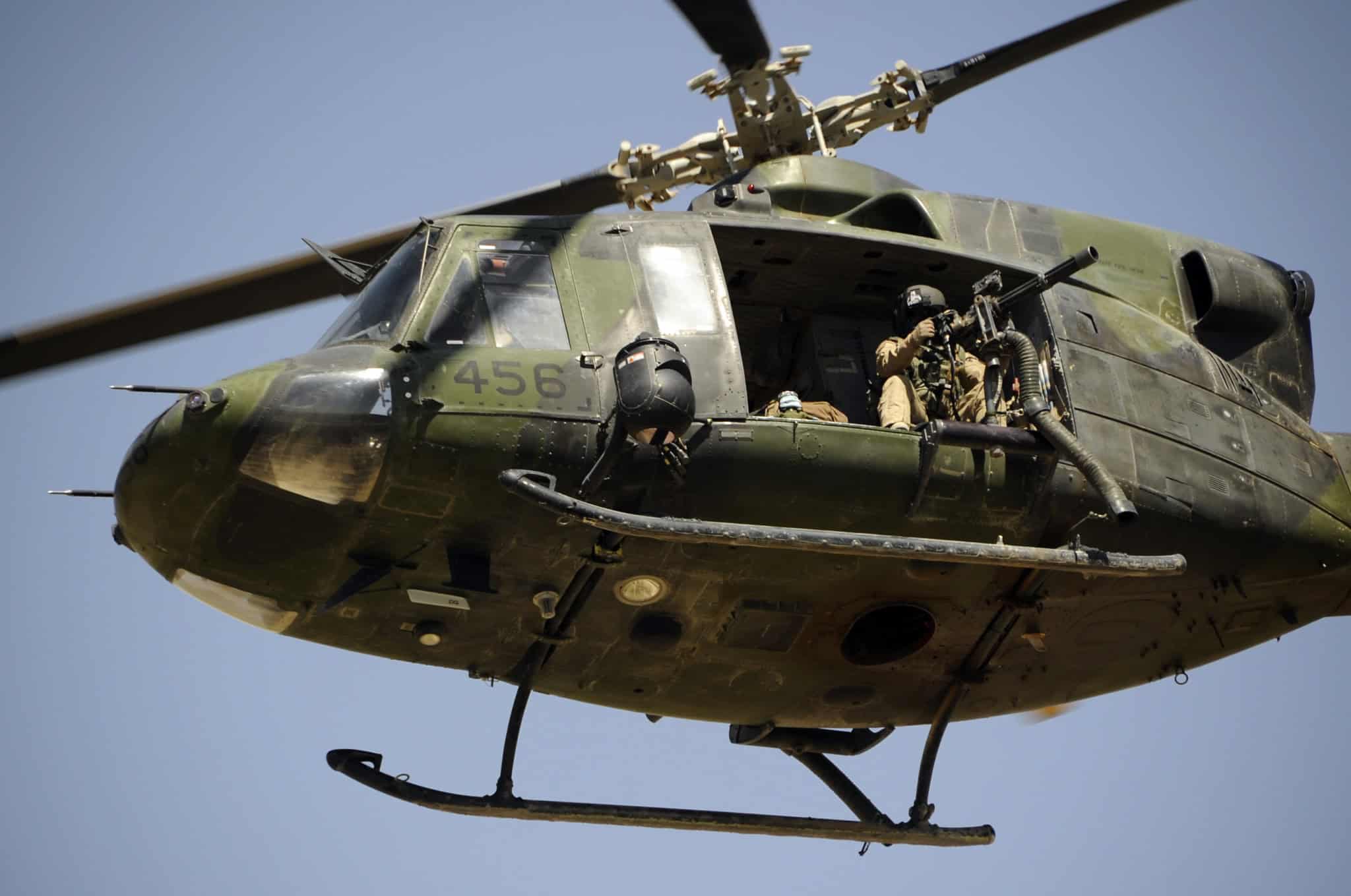
If military helicopters are flying over your house, the most likely reason is training. Military helicopter crews have to keep flying to stay current, including at night, and the routes from their bases to training areas often cross neighborhoods.
The other common explanations are a flyover for a big event, a National Guard disaster mission, a Coast Guard rescue, or an announced urban training exercise. Almost none of them mean something is wrong where you live.
Below are the eight real reasons, how to tell which helicopter you heard, why it never shows up on a flight tracking app, how low it can legally fly, and who to call if you want an answer.
| Reason | What you usually notice | How to confirm it |
|---|---|---|
| Routine training near a base | The same aircraft, often on the same path, week after week | Call the nearest base’s public affairs office |
| Night vision goggle training | Flights after dark, often for days or weeks | Base or state National Guard public affairs |
| Moving between bases | A one-off pass, often two or more helicopters in a line | Usually no announcement |
| Urban special operations training | Very low flights at night, sometimes simulated gunfire | City or police notices before and during the exercise |
| Event flyover | A formation passing toward a stadium or racetrack | The event’s schedule or local news |
| National Guard disaster mission | Black Hawks with water buckets, or search patterns | The governor’s emergency declaration and state news |
| Coast Guard search and rescue | An orange and white helicopter near a coast or lake | Coast Guard district news releases |
| Not military at all | A police, medical or news helicopter in dark paint | The markings, or the local police department |
8 Reasons Military Helicopters Fly Over Houses
1. Routine training near a base
Military aviation units train constantly, and plenty of them sit close to towns. If you live within a few dozen miles of an Army post, a Marine air station or a National Guard aviation facility, you are probably under a route its crews use to reach training areas.
Our guide to the largest military bases in the US shows how many of them are next to major cities.
Low-level flying is a skill the services have to practice. The FAA’s own Aeronautical Information Manual says military crews “must train in a wide range of airborne tactics,” including “low level” combat tactics, which is why the FAA and the Department of Defense chart Military Training Routes together.
Those charted routes are mostly built for high-speed jets above 250 knots, though. Helicopters usually fly their training legs under ordinary visual flight rules, which is why the pattern over your house can look random from the ground.
2. Night vision goggle training
Helicopters flying over your house at night are usually logging required night hours. When Utah National Guard Black Hawks and Lakotas drew complaints over the Wasatch Back in August 2023, a Guard official explained that “they’re required to fly so many night hours, all of our pilots are, to maintain that training and proficiency.”
Night training often comes in blocks. The Utah flights, for example, were expected to run for about another week when the Guard explained them.
Why it always seems to happen at night
Night flying is not optional for military helicopter pilots. They have to log a set number of hours in the dark to stay current, so a unit near you will keep flying after dark whether or not anyone complains.
3. Moving between bases
Not every flight is a training sortie. Helicopters also fly between bases, maintenance facilities, ranges and exercise sites, and a straight line between two of them often runs over town.
These are the one-off passes: two or three helicopters in a loose line, heard once and never again. They are rarely announced, because to the unit they are just a trip.
4. Urban special operations training
Sometimes the city itself is the training ground. In August 2022, U.S. Army Special Operations Command ran nightly exercises around downtown San Antonio, and the city warned residents to expect low-flying helicopters, simulated gunfire and controlled explosions, with police going door to door and texting that “this is just training.”
In April 2018, the 160th Special Operations Aviation Regiment flew MH-60 Black Hawks and MH-6 Little Birds low over Lower Manhattan overnight. Residents called 911, and the police alert came after the exercise was already underway.
These exercises are the ones that make the news, because they look exactly like a real operation. They are also the easiest to confirm: the city, the police department or the base almost always posts a notice.
5. A flyover for a big event
Sporting events and holidays draw military flyovers, and the helicopters have to get there over somebody’s roof. On March 29, 2026, two Apaches and three Chinooks from Fort Hood flew over North Austin, South Austin and Pflugerville on their way to open the MotoGP race at Circuit of the Americas.
Residents had no idea what was happening. “Yeah shook my house holy hell,” one wrote online, which is a fair description of three Chinooks at low altitude.
6. A National Guard disaster mission
Each state’s National Guard flies for its governor during emergencies. In April 2023, two Wisconsin Army National Guard UH-60 Black Hawks from Madison dropped water from large buckets on the Black River complex fires near Necedah, after Governor Tony Evers declared a state of emergency.
If you see Black Hawks with a bucket slung underneath, or helicopters flying a slow search pattern after a flood or storm, this is almost certainly the reason. State emergency declarations and local news will say so within hours.
7. Coast Guard search and rescue
The Coast Guard is a military service, and its helicopters fly search and rescue along the coasts and the Great Lakes. Its air stations are moving to an all-MH-60 Jayhawk helicopter fleet: Borinquen, Traverse City and New Orleans had completed the switch when Kodiak retired its MH-65 Dolphins in April 2024.
Coast Guard helicopters are painted orange and white, so they are easy to tell apart from Army and Marine aircraft. A low, slow pass over a beach or a lake usually means a search.
8. It is not the military at all
Many helicopters people describe as military are police, medical or news aircraft in dark paint. Police helicopters circle when officers on the ground need eyes overhead, which is the pattern that feels most like being watched: tight orbits over one spot, often with a searchlight.
How to Tell Which Helicopter Flew Over Your House
Most military helicopters over the United States are one of a handful of types, and the shape gives each one away. Our guide to the types of military helicopters covers the full list.
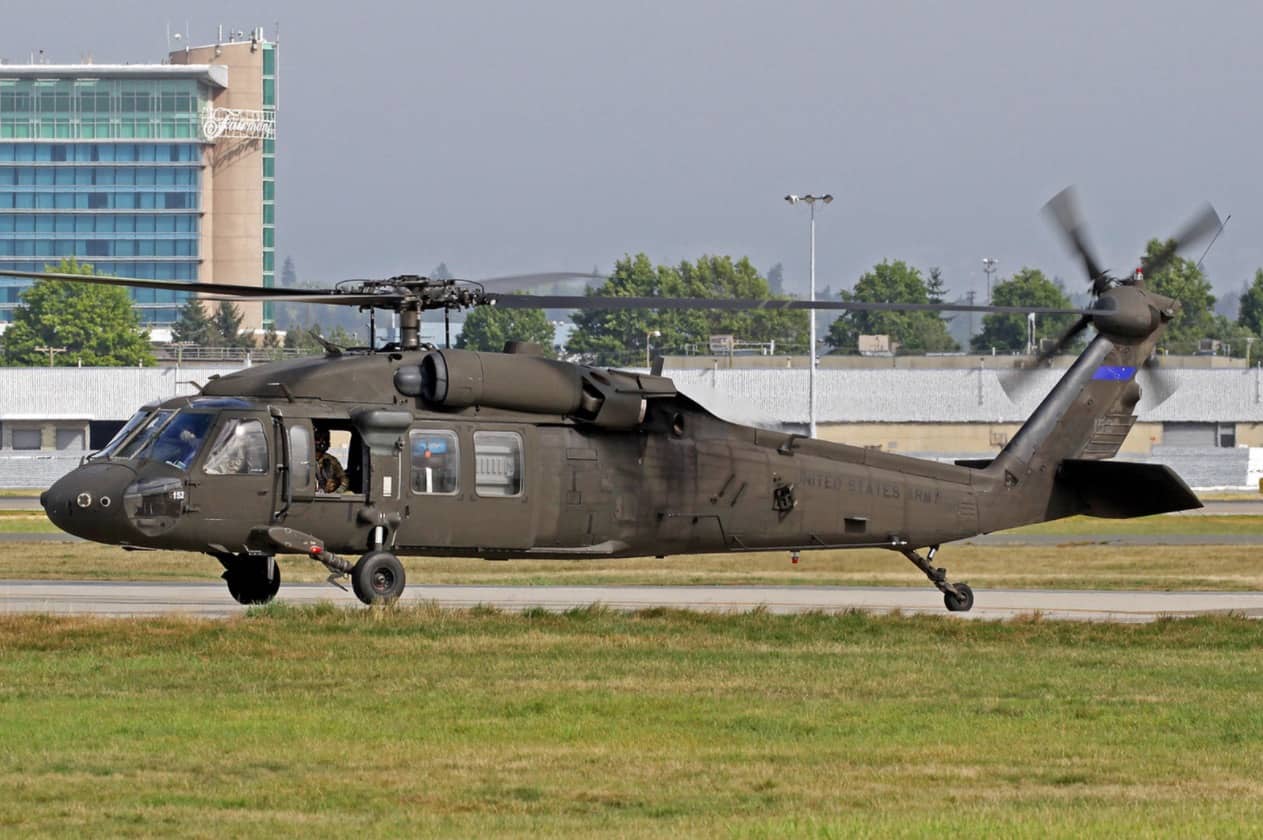
UH-60 Black Hawk. One main rotor, a long tail boom and a boxy cabin. The UH-60 Black Hawk is the Army and National Guard’s workhorse, and one of the helicopters you are most likely to see.
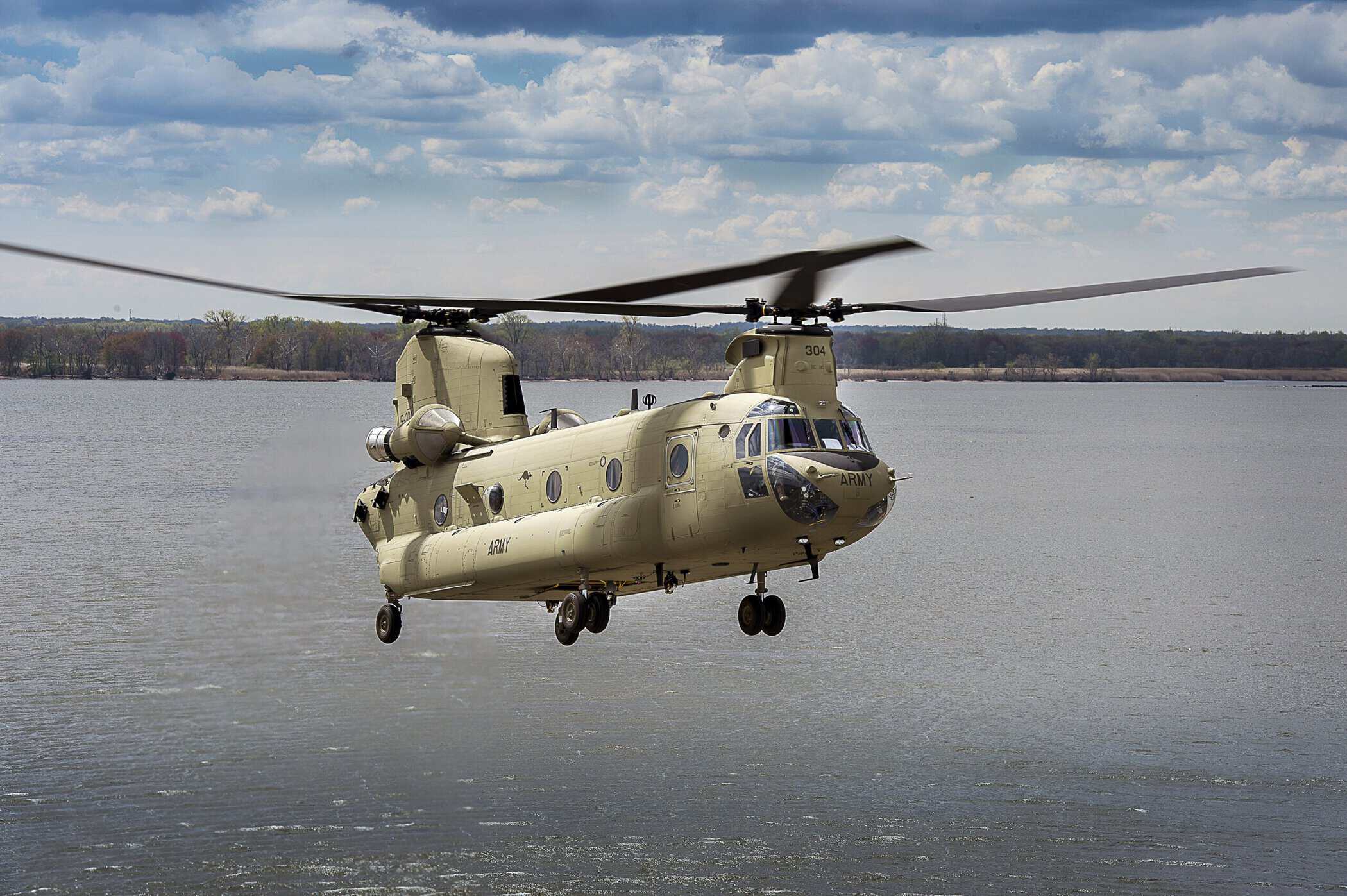
CH-47 Chinook. Two big rotors, one at each end, and no tail rotor. The CH-47F Chinook makes a deep, rhythmic thump you can feel in your windows, and it is the one behind most “it shook my house” posts.
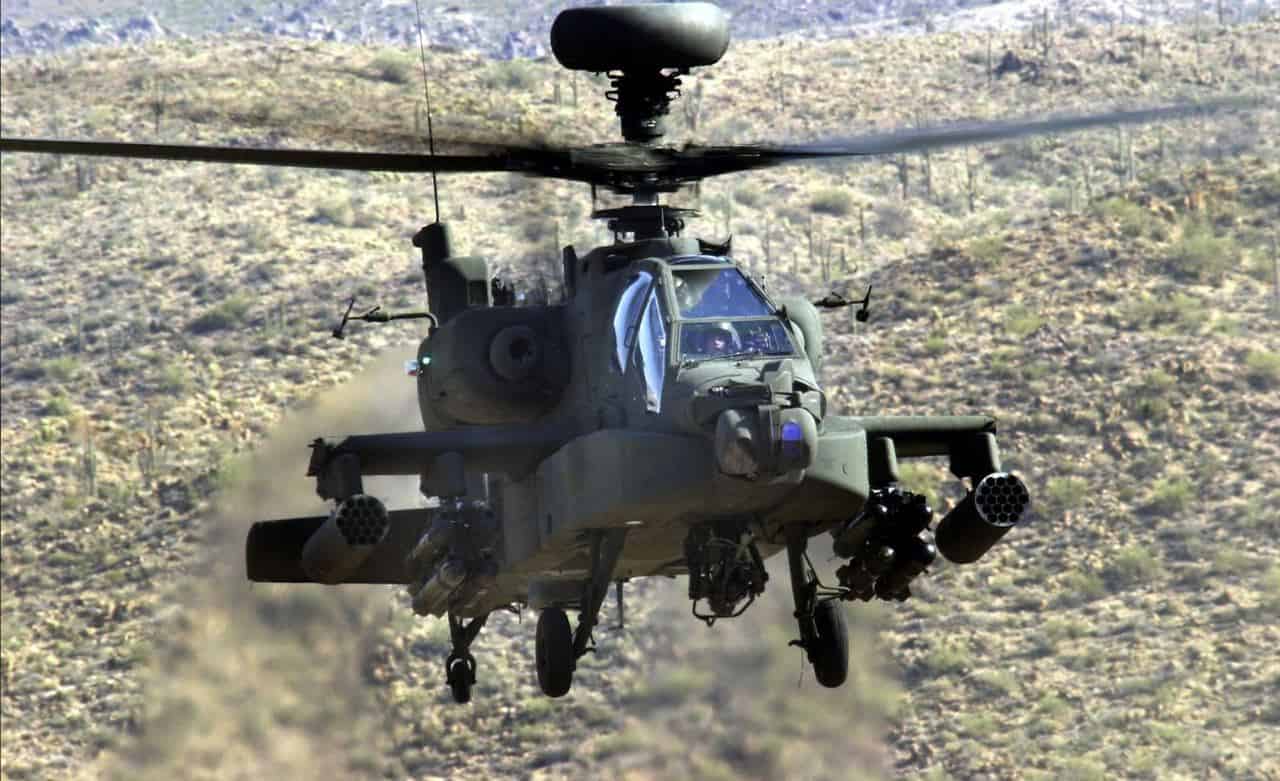
AH-64 Apache. A thin body, stub wings and two crew seated one behind the other. The AH-64 Apache is an attack helicopter, so seeing one overhead tells you nothing more than that an Army aviation unit is nearby.
UH-72 Lakota. A small, rounded helicopter, far smaller than a Black Hawk. The UH-72A Lakota is a light utility helicopter, and in the Utah night flights it flew mixed in with Black Hawks.
Coast Guard Jayhawk. Black Hawk shape, orange and white paint. That is the MH-60 Jayhawk, and it is almost always on a rescue or training flight near water.

Why It Does Not Show Up on Flight Tracking Apps
Flight tracking apps rely on ADS-B, a signal aircraft broadcast with their position. Military aircraft are allowed to fly without it. GAO warned in 2018 that adversaries “could track military aircraft equipped with ADS-B Out,” and the FAA and the Defense Department signed an agreement that August setting out how certain military aircraft may fly without broadcasting.
The FAA itself will not fill the gap. Its noise guidance says plainly that it “does not release information regarding the operations of military aircraft,” and that helicopters flying under visual flight rules do not have to file a flight plan, so track data often does not exist.
That gap became a national story after January 29, 2025, when an Army UH-60L Black Hawk and a PSA Airlines CRJ700 collided near Reagan National Airport, killing 67 people. The NTSB recommended that military aircraft keep ADS-B Out switched on in flight.
The Senate passed the ROTOR Act by unanimous consent in December 2025 to tighten those rules, but on February 24, 2026 it failed in the House, 264 to 133, short of the two-thirds majority it needed, after the Pentagon raised security and budget concerns. So a military helicopter over your house can still be missing from every app.
How Low Can a Military Helicopter Fly Over My House?
Lower than any airplane. Under the FAA’s minimum safe altitude rule, 14 CFR 91.119, airplanes must stay 1,000 feet above the highest obstacle within 2,000 feet over a congested area, and 500 feet above the surface elsewhere.
Helicopters get an exception. They may fly below both of those minimums as long as the flight is conducted “without hazard to persons or property on the surface” and follows any routes or altitudes the FAA has set for helicopters. There is no fixed number.
The FAA also says it “does not have restrictions that prevent helicopters from hovering.” What counts is safety, not noise: the agency does not treat noise from low-flying aircraft as a safety issue on its own. For the other end of the scale, see how high helicopters can fly.
Can a Helicopter See Inside Your House?
Not in any practical sense. Thermal cameras on police and military helicopters show heat on the outside of a building, not the rooms behind its walls, and a helicopter at a normal altitude looks down at your roof, not into your windows.
The law also limits what the government can do with that kind of device. In Kyllo v. United States in 2001, the Supreme Court held that using a thermal imager not in general public use to explore details of a home is a search that is “presumptively unreasonable without a warrant.”
Who to Call About Military Helicopters Over Your House
Call the military, not the FAA. The FAA tells residents to contact the nearest installation’s noise office or community relations team, and says that if that base was not responsible, it can usually point you to the one that was.
Bases ask for specifics. Keesler Air Force Base, for example, asks for the time, the number of aircraft, the direction they were flying, your location, and a description of the aircraft such as its color, markings and size.
Who handles what
Military helicopter noise or questions: the nearest base’s public affairs or community relations office. A helicopter flying in a way that looks unsafe: your local FAA Flight Standards District Office. General aircraft noise concerns: the FAA’s ANCIR online portal. A crash or an emergency: 911.
Keep your expectations realistic. A call can get you an explanation, but it will not stop a unit from training.
FAQ
Sources and references used for research and fact-checking.
- Federal Aviation Administration, Who Should I Contact with My Concern?
- Legal Information Institute, Cornell Law School, 14 CFR 91.119, Minimum safe altitudes: General
- Federal Aviation Administration, Aeronautical Information Manual 3-5-2, Military Training Routes
- KPCW, Nighttime military helicopters draw attention in Wasatch Back
- San Antonio Report, Watch: Army military exercises in San Antonio neighborhoods
- The War Zone, Night Stalker choppers freak out Manhattan with nighttime low-level training exercise
- Yahoo News (MySA), 'Shook my house': Military helicopters over Texas city
- U.S. Army, Wisconsin Guard Black Hawks respond to large wildfire
- U.S. Coast Guard, Coast Guard MH-65 Dolphin helicopters retired after 36 years of service in Alaska
- U.S. Government Accountability Office, Air Traffic Control: FAA and DOD Should Address ADS-B Security Issues (GAO-18-177)
- National Transportation Safety Board, Midair collision near Ronald Reagan Washington National Airport (DCA25MA108)
- FLYING Magazine, House votes down ROTOR Act
- AVweb, Senate unanimously passes ROTOR Act
- Legal Information Institute, Cornell Law School, Kyllo v. United States, 533 U.S. 27 (2001)
- Keesler Air Force Base, Noise complaints
Get the Newsletter
The latest aviation news and stories sent to your inbox.
About the Author

Tim is the owner and lead editor of AeroCorner since 2019, overseeing aviation content covering aircraft, airlines, airports, and the broader aviation industry. Through years of researching, writing, editing, and publishing aviation-focused content, he has developed extensive practical knowledge of commercial aviation and air travel. Based in Asia and a frequent traveler himself, Tim also brings firsthand passenger experience to AeroCorner’s coverage. Outside of publishing, he has also explored aviation firsthand through hands-on flight training in New Zealand.