Military Helicopters
Sikorsky HH-3F Pelican
ICAO: HH3F
The Coast Guard's medium-range rescue helicopter, rebuilt to fly into the 2040s
Updated: by Tim de Vries
The latest aviation news and stories sent to your inbox.
The Sikorsky MH-60 Jayhawk is the U.S. Coast Guard’s medium-range rescue helicopter, a twin-engine H-60 built to fly out to sea, hover beside a boat in bad weather and hoist survivors aboard. The first one flew on August 8, 1989, and Sikorsky built 42 of them between 1990 and 1996 as the HH-60J. Upgraded to MH-60T standard from 2007, the fleet is now being rebuilt on new airframes to keep it flying into the 2040s.
Live Fleet Activity (H60)
Fetching live data…
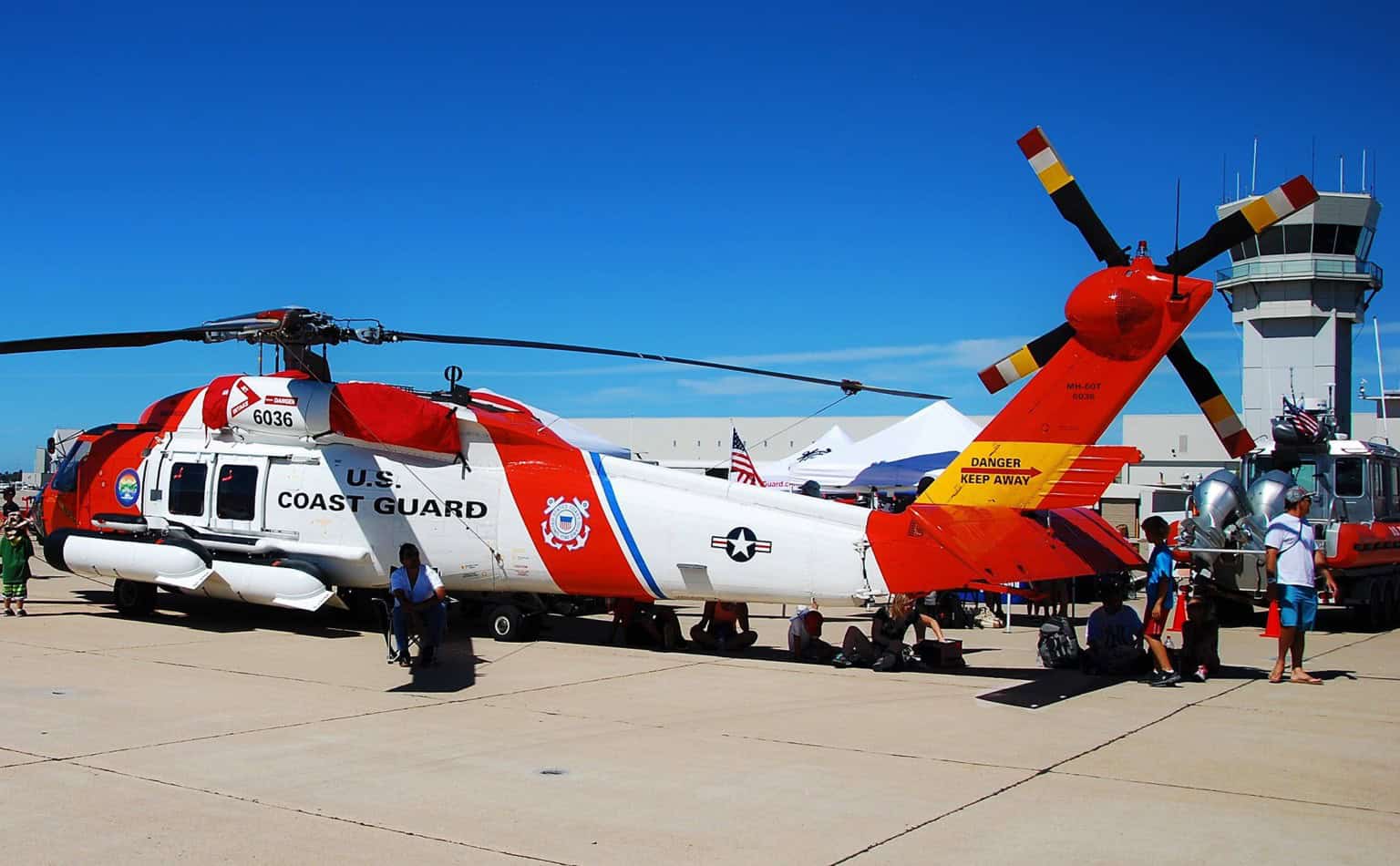


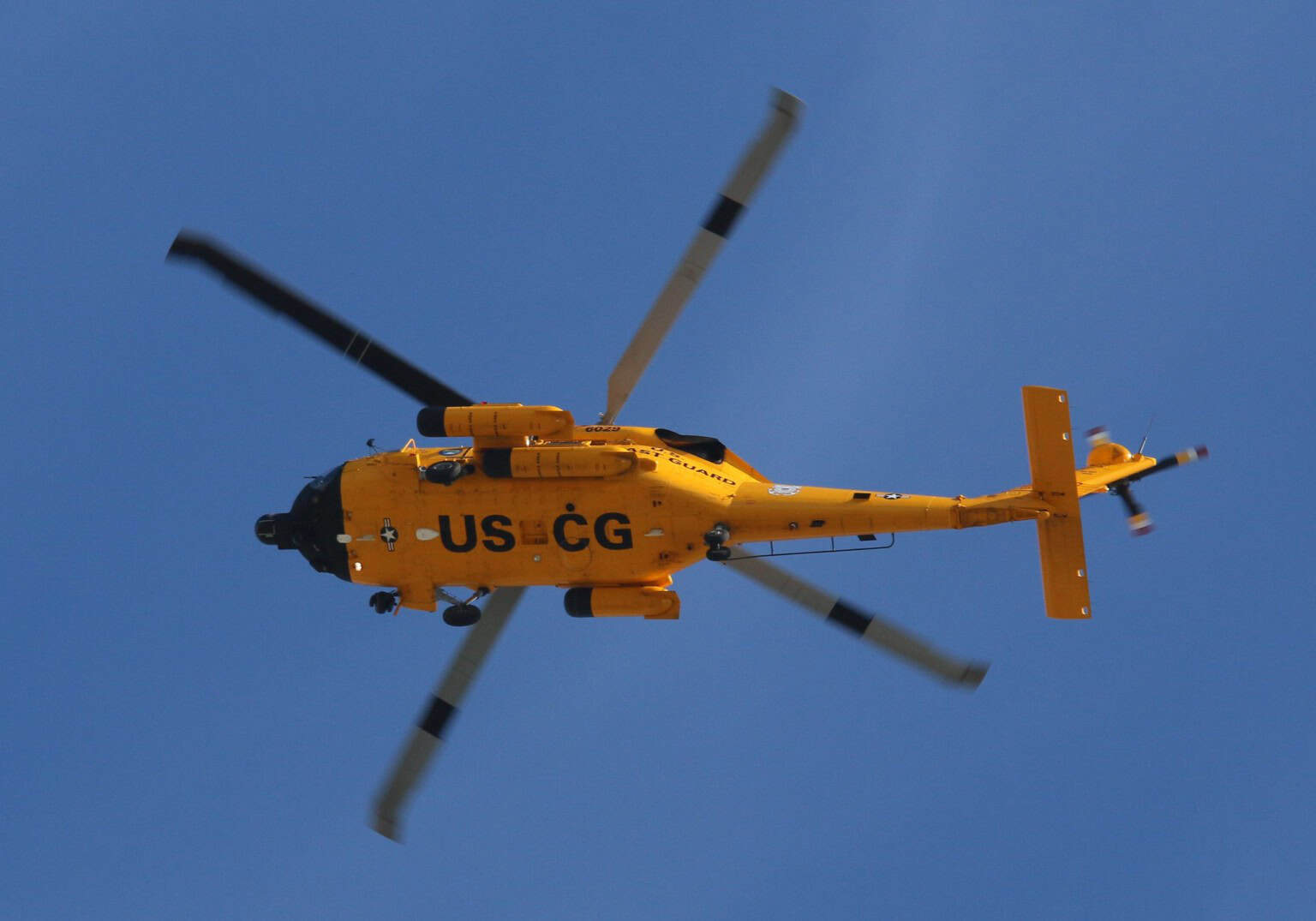


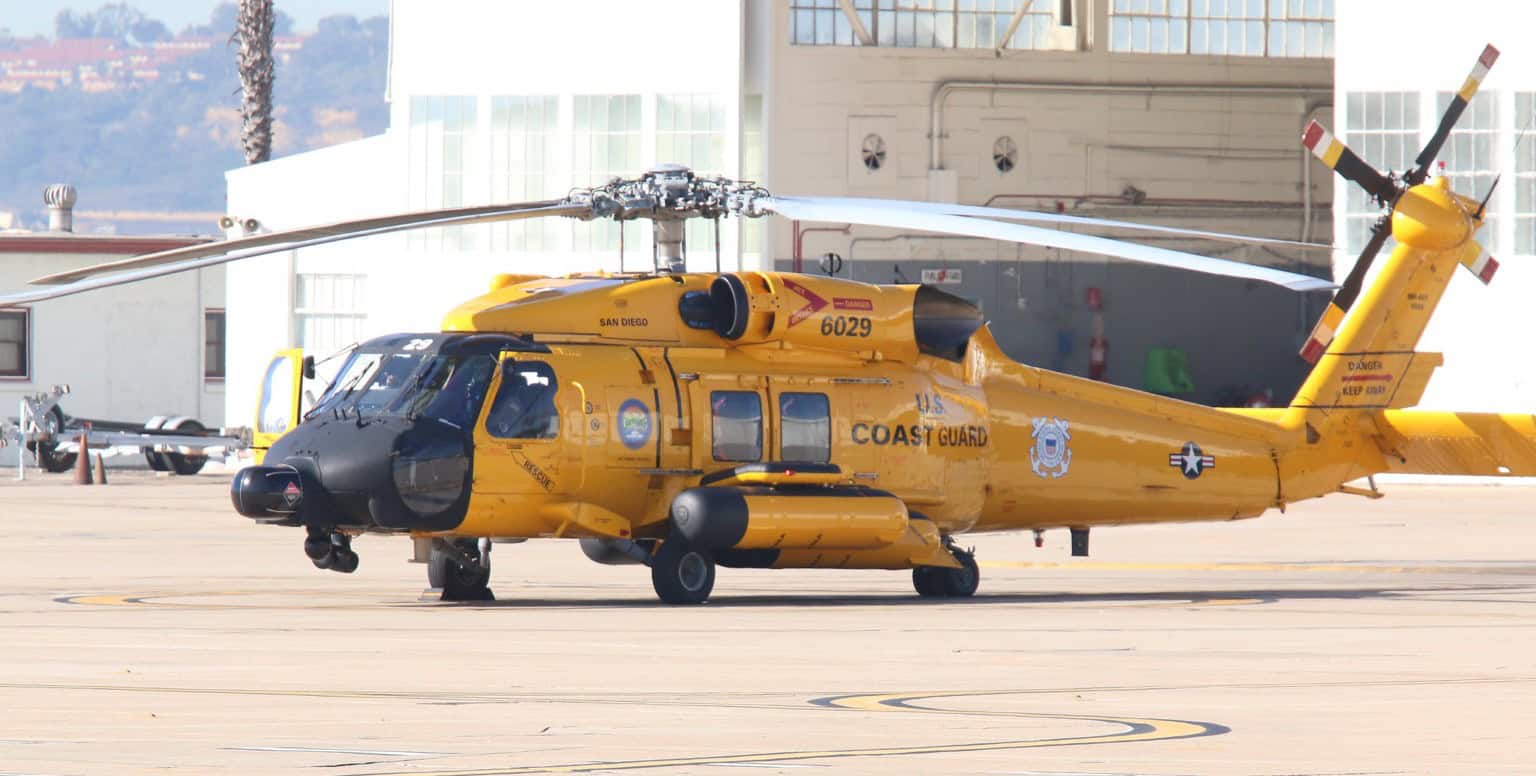
The Sikorsky MH-60 Jayhawk is the U.S. Coast Guard’s medium-range rescue helicopter. It is a twin-engine H-60 built to fly out to sea, hover beside a ship or a sinking boat and hoist people to safety.
The first Jayhawk was delivered in 1990 as the HH-60J, and the fleet was upgraded to MH-60T standard from 2007. It is now being rebuilt on new airframes so it can keep flying into the 2040s.
The Jayhawk is a member of Sikorsky’s S-70 family, based on the U.S. Navy’s SH-60 Seahawk. It was chosen to replace the Sikorsky HH-3F Pelican, which the Coast Guard had flown for more than 20 years.
Development started in September 1986, and the first aircraft flew on August 8, 1989. Sikorsky built 42 HH-60Js between 1990 and 1996.
Compared with the Pelican, the Jayhawk is lighter, faster and needs much less maintenance, and its rotor blades have a de-icing system. The price was a smaller cabin, about one-third the size of the Pelican’s, and no ability to land on water.
The ICAO type designator for the Jayhawk, shared with the rest of the H-60 family, is H60.
The Coast Guard began converting its HH-60Js to the MH-60T in January 2007. The upgrade added a digital glass cockpit, an electro-optical and infrared sensor, a surface search radar and an airborne use-of-force package.
The Coast Guard also brought in airframes from outside the original 42. Retired Navy SH-60F helicopters were rebuilt to MH-60T standard at the Coast Guard’s Aviation Logistics Center in Elizabeth City, North Carolina, starting in 2010. Sources disagree on how many, with Wikipedia saying six and Lockheed Martin saying three.
The cockpit is the Common Avionics Architecture System, with five multifunction displays and digital instruments similar to those in the Coast Guard’s fixed-wing aircraft. The engines are the same family used across the Defense Department’s H-60 fleet.
The design mission is to fly a crew of four up to 300 miles (483 km) offshore, hoist up to six more people aboard while staying on scene for up to 45 minutes, and return to base with a fuel reserve. The crew is two pilots and two flight crew.
The rescue hoist is rated at 600 lbf (2.67 kN) and carries 200 ft (61.0 m) of cable. Using it means holding a steady hover over a moving ship or open water, often in bad weather.
One Coast Guard release shows how that goes wrong and right. Off Fort Morgan, Alabama, a Jayhawk crew from Air Station New Orleans lowered its rescue swimmer to a cruise ship, but a severe squall forced them to back off while they were hoisting a nurse.
That helicopter returned to base because of the weather. A second Jayhawk crew from the same air station went back out and hoisted the patient.

A search and weather radar in the nose gives the Jayhawk its distinctive profile. A forward-looking infrared turret can be mounted below it, and the Coast Guard also lists sensor and hoist cameras and an integrated traffic collision avoidance system.
The Jayhawk is armed because the Coast Guard is a law enforcement service as well as a rescue one. The fact sheet lists a 7.62 mm machine gun and a .50-caliber rifle that can be used to disable the engines of noncompliant go-fast boats.
The full specification table for the aircraft is on this page. A few figures need context because they get quoted against each other.
Range and mission radius are different things. The Coast Guard fact sheet lists a range of 700 nm (810 mi, 1,300 km) and an endurance of 6.5 hours, while the rescue planning radius is 300 miles (483 km). The smaller number has to pay for 45 minutes on scene and the flight home.

Speed has three common figures. The panel shows a cruise speed of 140 kt, which matches the 135 to 140 knots the Coast Guard Aviation Association gives as normal cruise, and a top speed of 180 kt for short periods. The Coast Guard fact sheet and Lockheed Martin print 170 knots as the helicopter’s speed without saying whether it is cruise or maximum.
Ceiling is the other number that varies by source. The panel shows the service ceiling, 13,000 ft (4,000 m), from Lockheed Martin. Wikipedia lists 5,000 feet, but that is a hovering ceiling, a lower and different measure.
The Jayhawk fleet is running out of flight hours. Each aircraft has a service life limit of 20,000 flight hours, and in late 2023 the fleet averaged about 16,000.
Rear Adm. Michael Campbell, the Coast Guard’s director of acquisition programs, said that without a service life extension program (SLEP) the fleet would have to be grounded by 2028. An earlier extension had already raised the limit from 10,000 to 20,000 hours.
The current SLEP is a 10-year program. Sikorsky builds 45 new airframes, which the Coast Guard’s Aviation Logistics Center fits with the dynamic components, digital cockpit, mission systems and engines taken from an existing helicopter, and the aircraft keep their Coast Guard serial numbers.
Sikorsky delivered the first new airframe on November 30, 2023, under a $374 million contract for 45 airframes at 12 per year through 2027. The program is meant to keep the fleet flying into the 2040s.
The Coast Guard received approval in 2023 to move to an all-MH-60T helicopter fleet of 127 aircraft. The Coast Guard also plans to replace the smaller MH-65 Dolphin, moving its rotary-wing fleet onto a single platform.
In October 2025, the Naval Air Systems Command announced its intention to enter into an agreement with Lockheed Martin for MH-60R variant aircraft for the Coast Guard. That was a notice of intent rather than a signed contract, and it gave no quantity.
The MH-60R Seahawk is the Navy’s anti-surface and anti-submarine version of the H-60. As of October 2026, the sources reviewed for this page show no contract award or aircraft count for the Coast Guard purchase.
As of 2024, Jayhawks operate from Coast Guard air stations at Astoria, Borinquen, Cape Cod, Clearwater, Elizabeth City, Kodiak, New Orleans, San Diego, Sitka, Traverse City and Ventura, plus the Aviation Training Center in Mobile.
Sikorsky’s December 2023 release says the Jayhawk fleet has flown more than 48,300 search and rescue missions since 1990. It credits the fleet with saving more than 11,900 lives across more than 730,430 flight hours.
On June 22, 2026, a Jayhawk from Air Station Sitka crashed during a training flight near Harbor Mountain, Alaska, with four people aboard. The Coast Guard reported no deaths, and the crew survived with minor injuries.
The Alaska National Guard’s Down Aircraft Recovery Team, supported by an Army aviation team, recovered the helicopter in the week of September 8, 2026. It is being shipped to the Aviation Logistics Center in Elizabeth City, and the Coast Guard said on September 14 that the cause remains under investigation.
Wikipedia’s article counted four Jayhawks involved in crashes, two of them fatal, as of November 2023, before the Sitka crash.
Not exactly, but they are related. The Jayhawk is based on the Navy’s SH-60 Seahawk, which is based on the Army’s UH-60 Black Hawk, such as the UH-60M. The name “MH-60” is also used by the Navy’s MH-60R and MH-60S, which are different aircraft from the Coast Guard’s MH-60T.
The Coast Guard fact sheet lists an endurance of 6.5 hours and a range of 700 nm (810 mi, 1,300 km). Wikipedia says the aircraft can hold 140 knots for six to seven hours. A rescue mission is shorter, because it is planned around a 300-mile (483 km) radius with 45 minutes on scene.
The MH-60R is the Navy’s anti-surface and anti-submarine warfare helicopter. The MH-60S is a multi-mission support helicopter whose listed jobs include vertical replenishment, medical evacuation and combat search and rescue.
Neither is the Coast Guard’s Jayhawk. The Coast Guard has announced its intent to buy an MH-60R variant.
No agency ranks helicopters by difficulty, so any answer is opinion. The Jayhawk’s hardest task is not a type quirk but the mission: hovering over moving water, in weather like the squall above, while a hoist is in use.
The Coast Guard’s 2021 fact sheet put the fleet at 45 helicopters. Reports since then range from 38 to 48, so treat any single count with care.
Sources and references used for research and fact-checking.