

Military Helicopters
Mil Mi-26 “Halo”
ICAO: MI26
The Mil Mi-8 "Hip" is the Soviet twin-turbine transport helicopter that became the most-produced helicopter in history, with more than 17,000 built and still in production.
Updated: by Tim de Vries
The latest aviation news and stories sent to your inbox.
The Mil Mi-8 “Hip” first flew in 1961 and entered Soviet service in 1967. It hauls troops, cargo and stretchers, flies as a gunship or jamming platform, and works civil jobs from Arctic supply runs to firefighting. Russian factories were still building it in 2024, and it flies for more than 50 countries.
Live Fleet Activity (MI8)
Fetching live data…
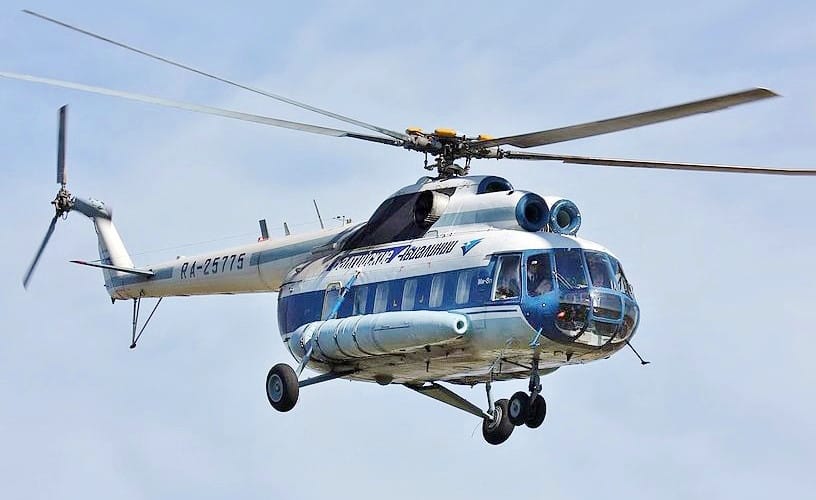


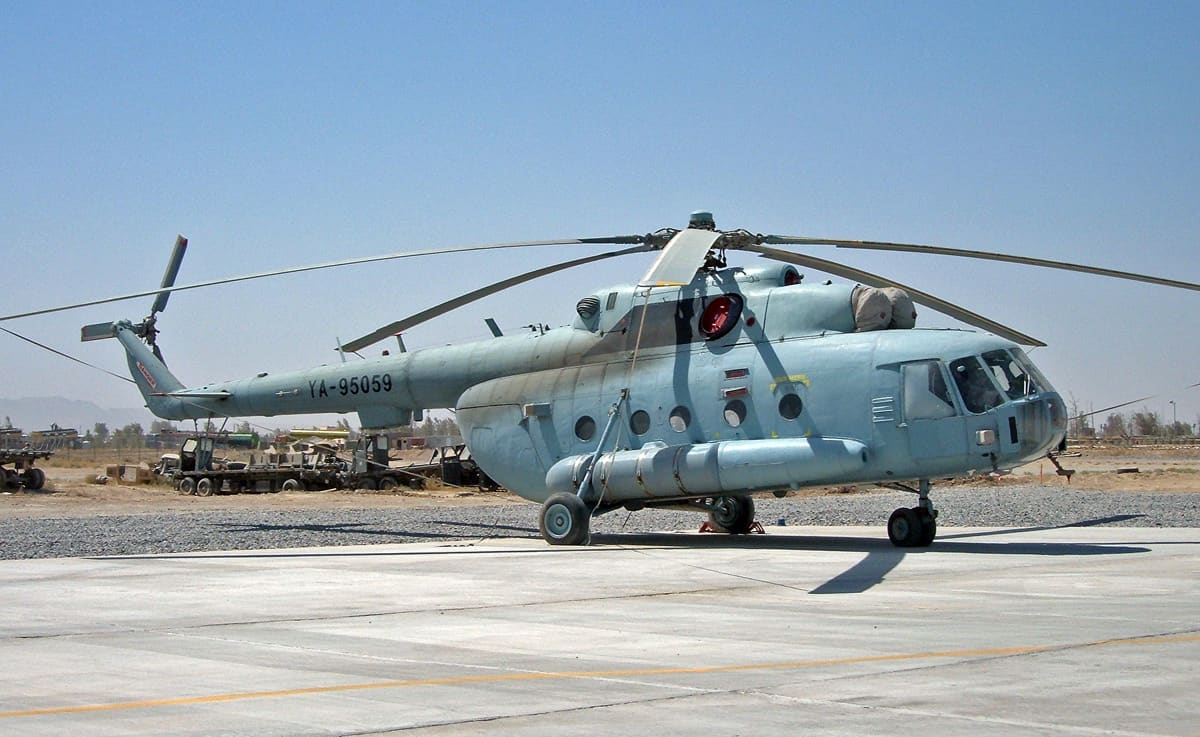
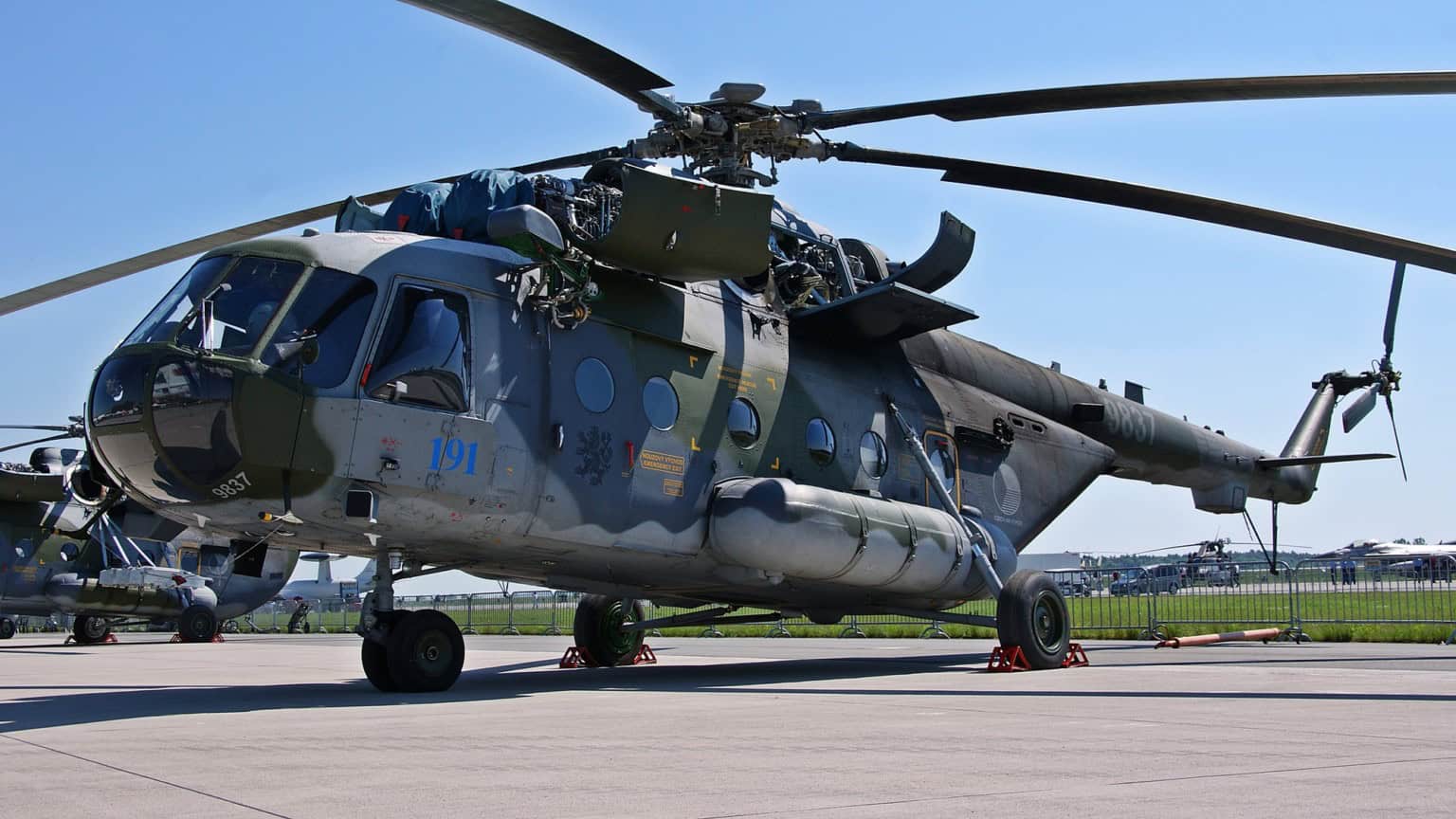
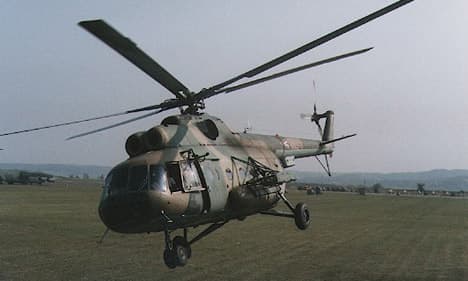


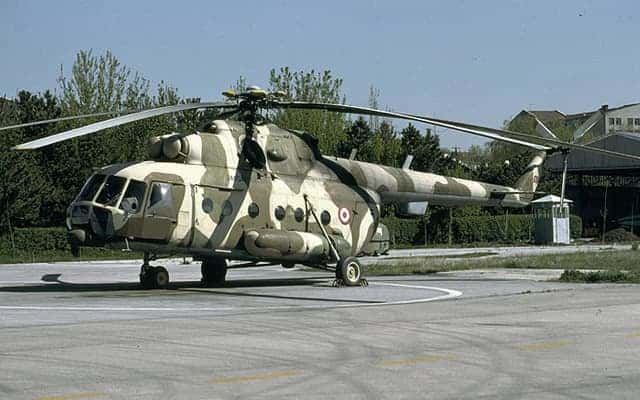
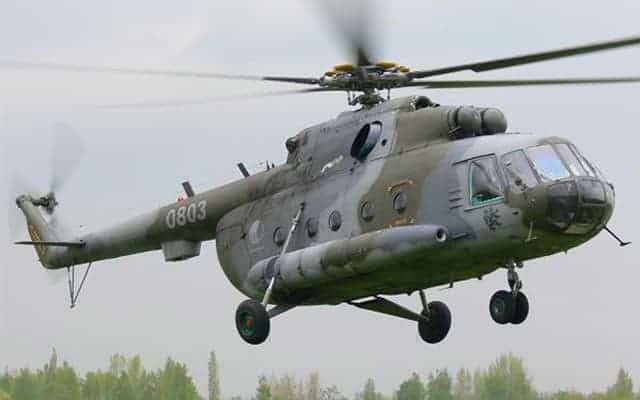
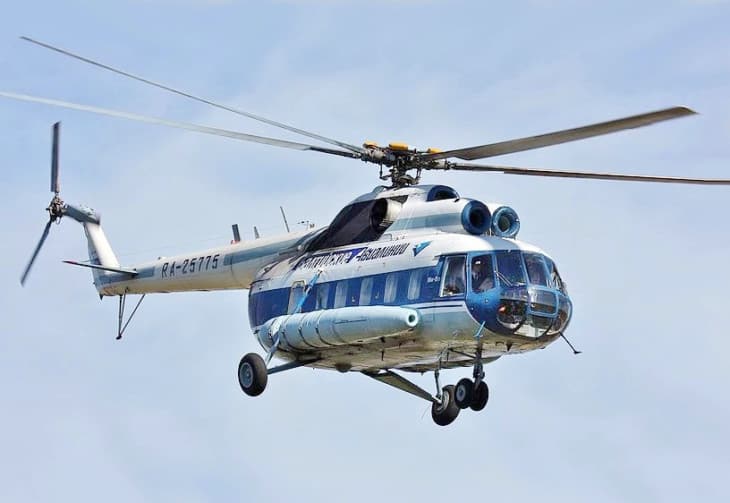
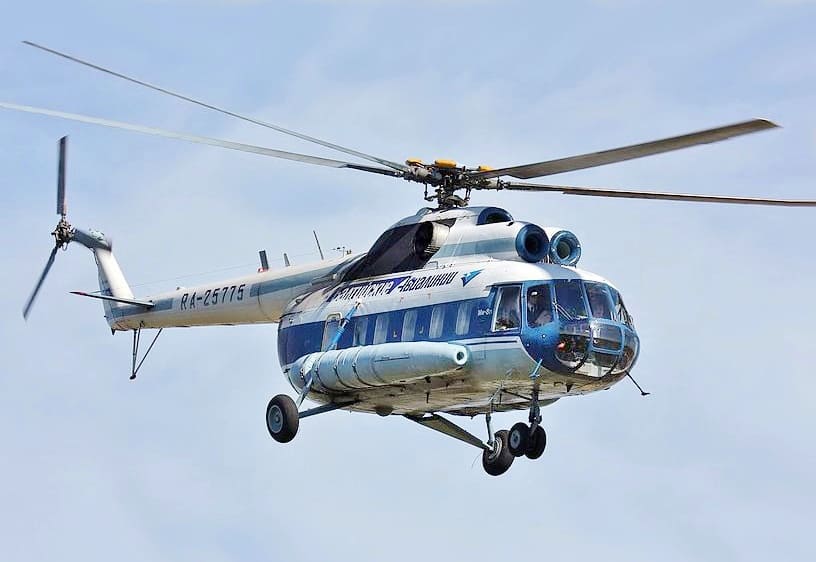
The Mil Mi-8 “Hip” is the most-produced helicopter in history, with more than 17,000 built. Its twin-turbine design first flew in 1961 and was still in production in 2024.
It carries troops, cargo and stretchers, flies as a gunship or radar jammer, and does civil work from polar supply runs to firefighting.
Mikhail Mil’s design bureau had already built the Mi-1 and Mi-4. By the late 1950s Mil saw turbine engines as the future, and he pitched the Mi-8 to a reluctant military as an evolution of the Mi-4.
The single-engine V-8 prototype first flew in 1961 with an Ivchenko AI-24V engine that suited helicopters poorly. The twin-engine V-8A, with the new TV2 engine, flew in August 1962.
Engineers also changed the main rotor from four blades to five, which cut vibration and noise. The Soviet government ordered production in late 1964, and the helicopter drew positive reviews at the 1965 Paris Air Show.
Civil operators adopted it first, and the Soviet air force followed in 1967. A second factory opened at Ulan-Ude in 1970 alongside the original plant at Kazan.
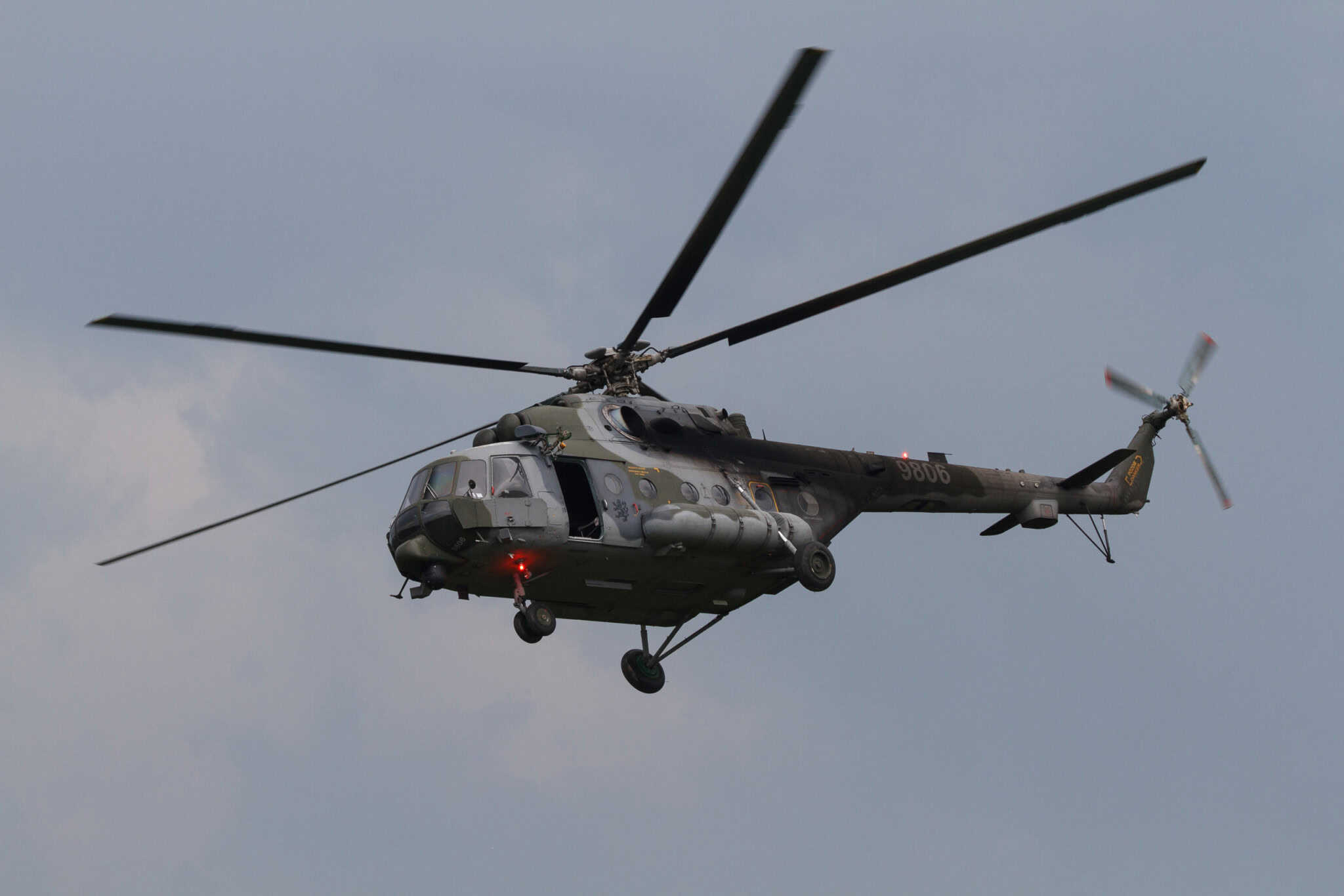
The first generation includes the Mi-8T transport, the armed Mi-8TV and the heavily armed Mi-8TBK gunship. Command post, jamming and civil passenger versions followed, including the Mi-8P airliner and the Mi-8S VIP model.
The Mi-8MT, sold abroad as the Mi-17, entered service in 1975 with more powerful TV3 engines and an improved gearbox. Hot-and-high versions can work at around 6,000 m (19,700 ft).
The third generation, the Mi-8AMT or Mi-171, debuted in 1991 with Klimov VK-2500 engines. The Mi-8AMTSh adds modern avionics and self-defense systems for military use.
The Mi-8PP is an airborne jamming platform, recognizable by six large X-shaped antennas on each side of the rear fuselage.
The full specification table for the aircraft is on this page. The Mi-8 family spans so many variants that its published figures need context.
The panel’s engine and power rows describe the TV3-117MT of the Mi-8MT. The early Mi-8T used the less powerful TV2-117A, so earlier aircraft perform differently from later ones.
The range row of 518 nm · 600 mi · 960 km is the ferry range, flown with extra fuel and no payload. Typical mission radius is shorter, and a loaded Mi-8MT is listed with a range of 308 mi (495 km).
Weights also vary by version, and the Mi-8MT is rated for a higher takeoff weight than the Mi-8T.
The Mi-8T carries up to 24 troops. The Mi-8MTV-2 raised that to 30, and the Mi-8P airliner seats up to 32 passengers.
In a medical role the cabin takes 12 stretchers plus a medical attendant.

The Soviet–Afghan War of 1979 to 1989 was the type’s combat proving ground. Mi-8s flew assault, resupply and medevac missions there, and in Ukraine they became targets for shoulder-fired missiles in 2014.
Western forces flew Hips too. Many ISAF contributors in Afghanistan after 2001 were former Warsaw Pact members that already operated them, and Canada leased a fleet it designated CH-178.
After Russia’s 2022 invasion of Ukraine, several European nations retired their Hips and donated them to Ukraine.

Civil operators took the Mi-8 first, and it still hauls heavy cargo, passengers and sling loads in remote regions. The type flew over the Chernobyl reactor in 1986 and has worked in Antarctica, jungles, high mountains and deserts.
Modern versions are rated to operate from -50 to +50 degrees Celsius.

Yes. The Mi-8 and its Mi-17 and Mi-171 relatives serve more than 50 countries, and Russian production continued as of 2024.
Since 2007 Russian Helicopters has carried the program forward. For the wider field, see our guide to the most famous helicopters.
A hit by any measure. More than 17,000 have been built, making it the most-produced helicopter in history.
The Mi-8T carries up to 24 troops, and the Mi-8MTV-2 raised this to 30. The Mi-8P passenger version seats up to 32.
Yes. It flies with more than 50 countries, and several European operators donated theirs to Ukraine after 2022.
The family is still being built. The Mi-8AMT or Mi-171 line, introduced in 1991, was in production as of 2024.
Hip is the NATO reporting name for the Mi-8. Western air forces use these names to identify Soviet and Russian aircraft.
Sources and references used for research and fact-checking.
.jpg)