Military Helicopters
Mil Mi-28 “Havoc”
ICAO: MI28
The largest helicopter ever built in series, designed to lift what no other rotorcraft can
Updated: by Tim de Vries

The latest aviation news and stories sent to your inbox.
The Mil Mi-26 ‘Halo’ is the largest and heaviest helicopter ever to enter series production. It flew in 1977, entered service in the 1980s and is still being built in Russia. Its eight-blade main rotor lets it sling or carry loads that other helicopters cannot move, from armored vehicles to wrecked Chinooks.
Live Fleet Activity (MI26)
Fetching live data…

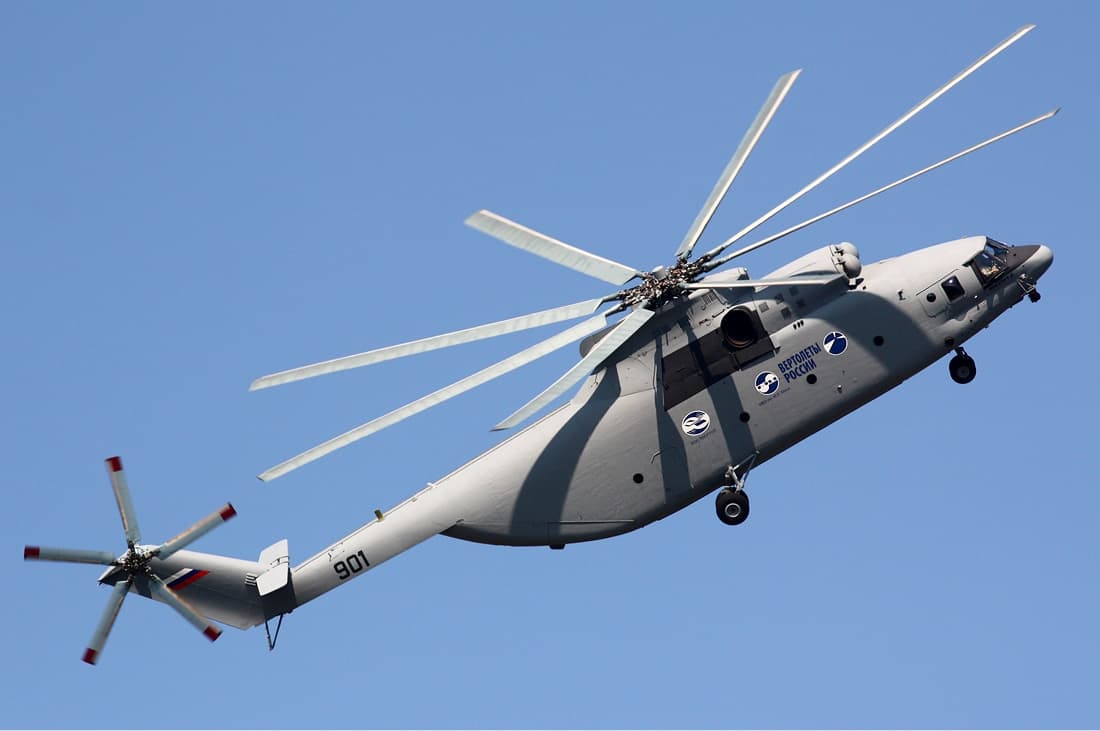
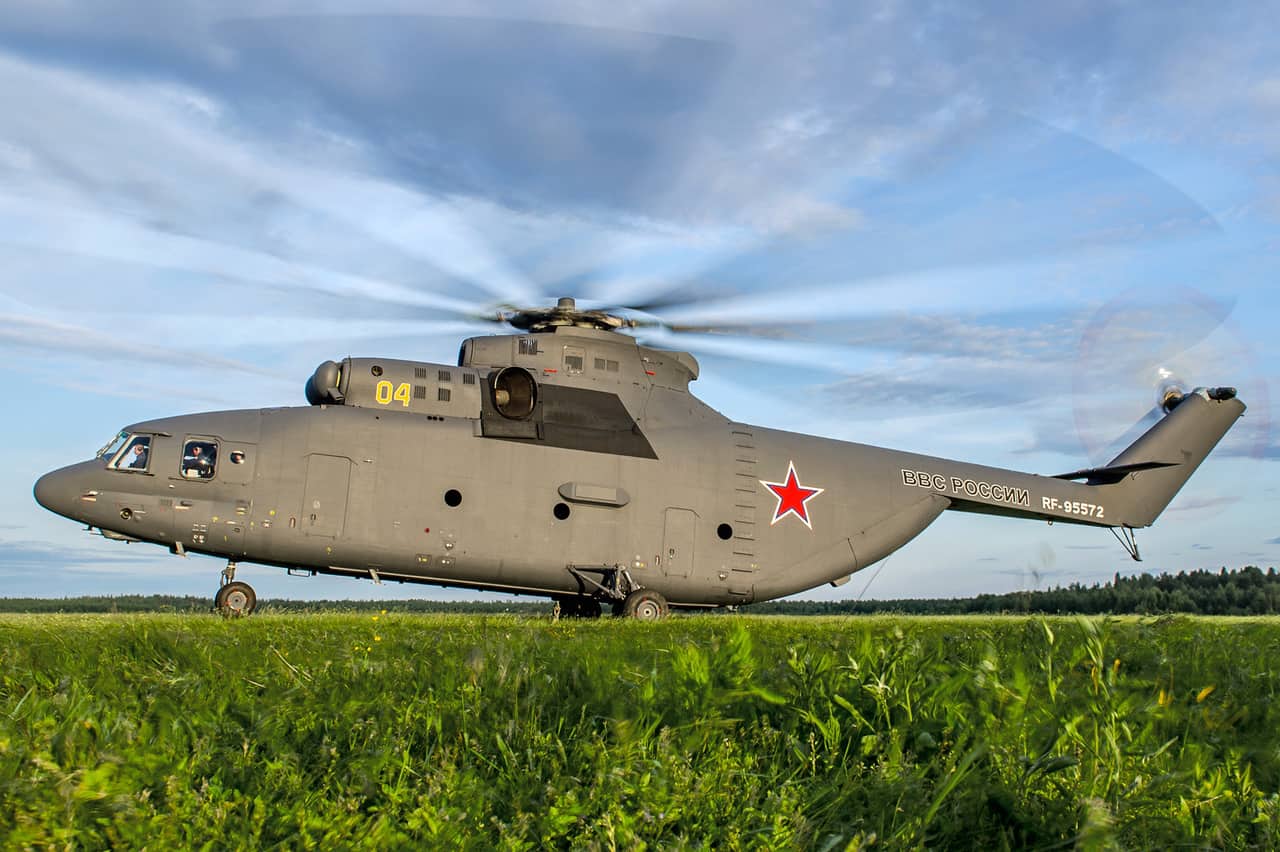
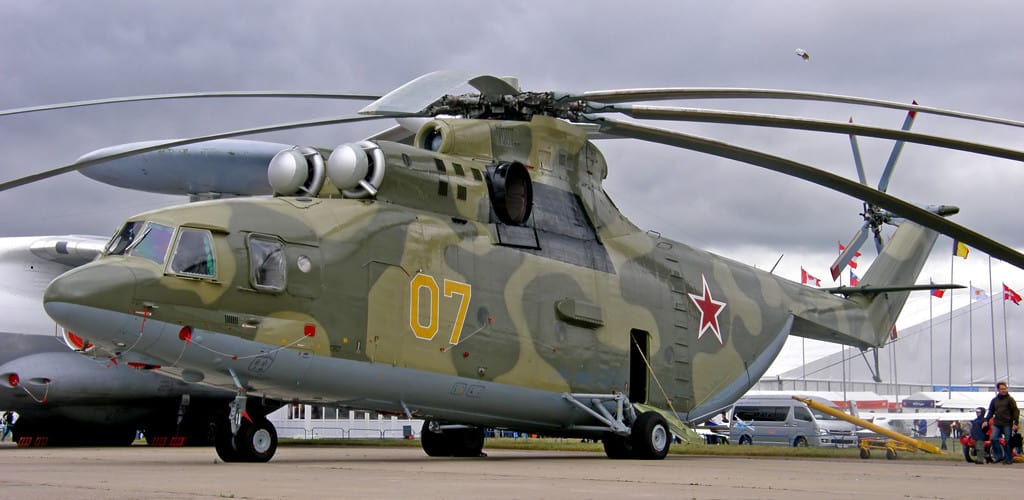


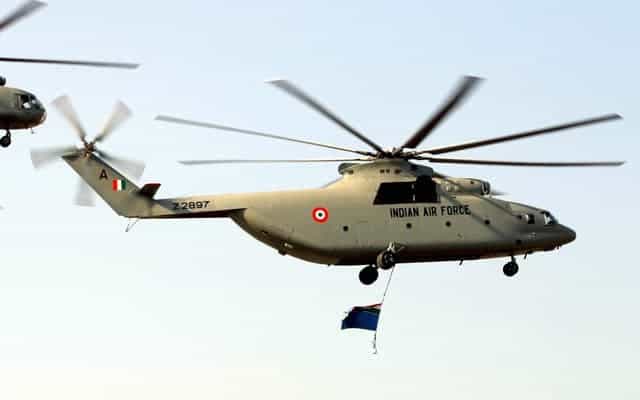
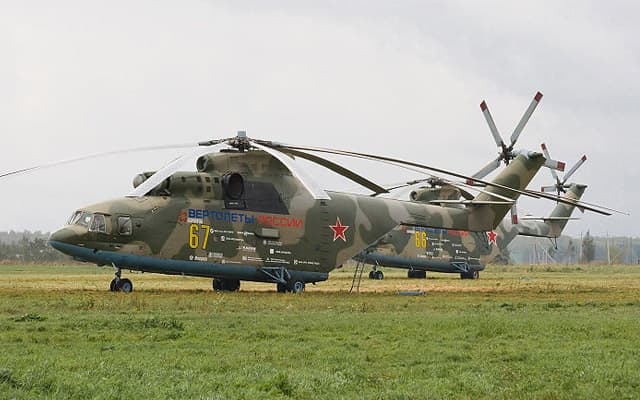
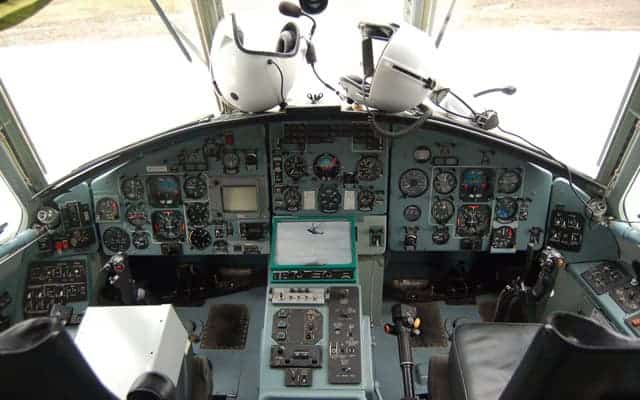
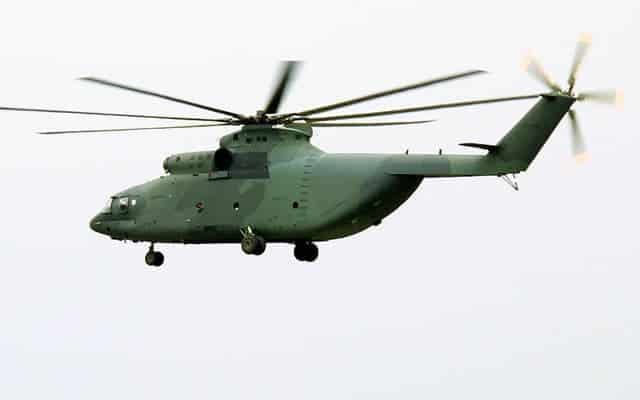
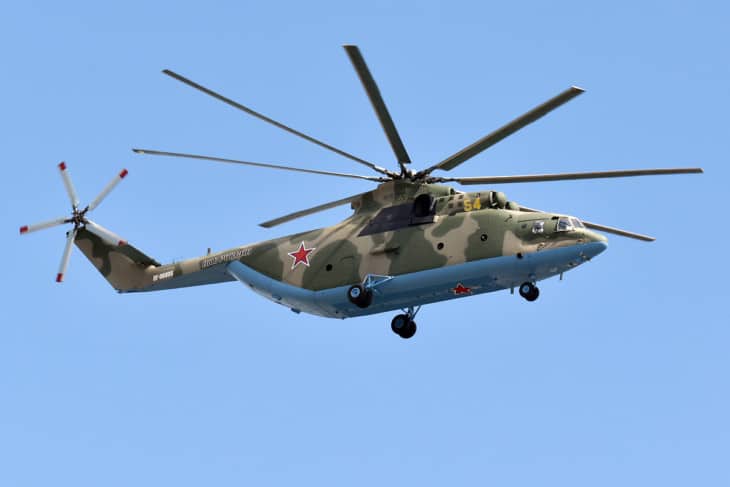
The Mil Mi-26 “Halo” is the largest helicopter ever to enter series production. It first flew on 14 December 1977, and Rostvertol in Russia still builds it today.
Only the experimental Mil V-12, which never completed development, was bigger.
The Soviet military wanted a helicopter that could carry heavy equipment to places with no runway. The target loads included 13-tonne amphibious armored vehicles and mobile ballistic missiles.
The earlier Mil Mi-6 and the giant twin-rotor Mil V-12 had not solved the problem. Designer Marat Tishchenko drew up something different: a single eight-blade main rotor, a first for a factory-built helicopter.
The first production aircraft rolled out on 4 October 1980. Development finished in 1983, and by 1985 the Mi-26 was flying with both the Soviet military and civil operators.

The design requirement was that the empty helicopter had to weigh less than half its maximum takeoff weight. The Mi-26 can carry about 44,100 lb (20,000 kg) of cargo inside or under a sling.
Two Lotarev D-136 turboshafts drive the rotor through a gearbox Mil designed itself, because its usual supplier could not build one. The main gearbox weighs 8,023 lb (3,639 kg) yet can absorb roughly 19,700 shp.
An engine load-sharing system lets the helicopter keep flying after losing one engine, depending on the weight it is carrying. In 1982 an Mi-26 lifted 125,000 lb (56,769 kg) to 6,562 ft (2,000 m), which the Fédération Aéronautique Internationale still lists as the greatest mass lifted by a helicopter to that height.
The full specification table for the aircraft is on this page. A few figures need context, because they are easy to misread.
The cargo cabin is 39 ft 8 in (12.10 m) long, which is larger than the hold of a C-130 Hercules according to Simple Flying. The whole helicopter is 131 ft 4 in (40.03 m) long, and its main rotor spans 105 ft 0 in (32.00 m).
Range is the figure most often quoted wrongly. The ferry range is 1,037 nm (1,190 mi, 1,920 km), and that needs auxiliary tanks. With 17,000 lb (7,700 kg) of cargo, Wikipedia’s Jane’s-based data gives about 270 nmi (500 km, 310 mi).
The Mi-26 is built to carry weight, not to hurry. It tops out at 159 kt (183 mph, 294 km/h).
Its normal cruise speed is 138 kt (159 mph, 256 km/h).
The service ceiling is 15,100 ft (4,600 m). At maximum gross weight, Wikipedia lists a hover ceiling of only 5,000 ft (1,524 m).

The Mi-26 was used at Chernobyl. In 1986 about 30 of them dropped insulating material on the damaged reactor, and a hastily built Mi-26S carried filters and shielding for the crew.
In October 1999 one carried a 23-tonne block of frozen soil holding a 23,000-year-old woolly mammoth out of the Siberian tundra. The weight was so great that the helicopter was sent back to the factory to check for airframe and rotor warping.
In 2002 a leased civilian Mi-26 recovered a U.S. Army MH-47E Chinook from a mountain in Afghanistan. The Chinook weighed about 26,000 lb (12 tonnes) once stripped, more than the 20,000 lb (9.1 tonne) payload of a CH-53E Super Stallion at that altitude. The lease cost $300,000.
The same type has also hauled a Norwegian Sea King off a mountain in 2012 and carried earth-moving tractors to the quake lakes after China’s 2008 Sichuan earthquake.
It has a darker record too. On 19 August 2002, Chechen separatists hit an overloaded Mi-26 with a missile, and 127 people on board died, the greatest loss of life in the history of helicopter aviation.
The base Mi-26 is the military transport, NATO name Halo-A. The Mi-26T is the civil freight version, in production from 1985.
The Mi-26TP carries 15,000 liters of fire retardant, and the Mi-26MS is a flying ambulance for up to 60 stretcher cases. The Mi-26P is a 63-seat passenger version.
The newest are the Mi-26T2, in serial production since 22 May 2015 with a modern electronic flight system, and the military Mi-26T2V, which first flew in August 2018 with new avionics and a defensive suite called Vitebsk. A proposed airborne command post, the Mi-27, got only two prototypes in 1988.

Wikipedia lists the Russian Aerospace Forces as the main user, with the Algerian Air Force, UTair and Russia’s emergencies ministry among the larger operators. Other military operators include Jordan, Kazakhstan, Mexico, North Korea and Venezuela.
India has retired its Mi-26s. After a 2010 crash at Jammu, the Indian Air Force dropped its remaining three, because two needed very expensive overhauls, and chose the Chinook instead.
Wikipedia puts the number built at over 300 as of 2026, though other references give far lower totals, so treat any single count with care.
The type is also at war. Russian Mi-26s moved reinforcements near Izium and Kupiansk during the 2022 Kharkiv counteroffensive. In December 2025 Ukraine’s SBU released footage of a drone strike on an Mi-26 parked at an airfield in occupied Crimea, which the outlet Militarnyi said was likely hit in June.
The Mi-26 is far larger than the CH-47F Chinook, and the 2002 Afghanistan recovery is the clearest proof. A Chinook is a medium-heavy twin-rotor helicopter, while the Mi-26 is a single-rotor giant that once lifted a stripped Chinook as cargo.
The Mi-26 wins on pure lift. The price is size and upkeep: Wikipedia notes India retired its Mi-26s partly because two needed very expensive overhauls, which come around often because the machine runs near the strength limits of its materials.
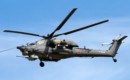
The Russian attack helicopter Mi-28N Havoc comes from the same Mil design family, but it is a completely different machine.
Rostvertol does not publish a price. Secondary sites repeat a 2013 range of $15 million to $18 million, but we could not trace it to a primary source.
The nearest hard number is a lease. A 2002 Afghan Chinook recovery used a leased Mi-26 for $300,000,, which tells you what a single heavy lift can be worth, not what the aircraft costs.
Mi stands for Mil, the design bureau founded by Mikhail Mil. The bureau’s helicopters carry the prefix, from the Mi-6 and Mi-8 to the Mi-26 and Mi-28.
The Mil Mi-26 is the largest helicopter to enter series production. The experimental Mil V-12 was bigger, but only prototypes were built and it never entered service.
It can carry about 44,100 lb (20,000 kg) of cargo inside the cabin or on an external sling. That is roughly twice the payload of the Mi-6 it replaced.
Yes. Rostvertol began serial production of the upgraded Mi-26T2 on 22 May 2015, and the military Mi-26T2V was reported delivered as of 2023. We found no confirmed 2026 delivery figures.
Civil Mi-26T helicopters have been sold to and leased by operators in several countries. No official price list is published.
Russia, Algeria, Jordan, Kazakhstan, Mexico, North Korea and Venezuela operate it, along with civil operators such as UTair. India has retired its fleet.
Sources and references used for research and fact-checking.