

Military Helicopters
Mil Mi-26 “Halo”
ICAO: MI26
The Mil Mi-28 Havoc is Russia's night-capable tandem-seat attack helicopter, built to hunt tanks with a 30 mm cannon and Ataka missiles, and now one of the most-watched gunships of the war in Ukraine.
Updated: by Tim de Vries
The latest aviation news and stories sent to your inbox.
The Mil Mi-28 “Havoc” is a Russian two-seat attack helicopter that first flew in 1982 and only became a front-line type after the all-weather Mi-28N entered service in 2009. It pairs a chin-mounted 30 mm cannon with Ataka anti-tank missiles and rockets, and it protects its crew with armor and energy-absorbing seats rather than ejection seats. Exported to Algeria, Iraq and Uganda, it has flown in Syria and Iraq and is now a regular in the fighting in Ukraine.
Live Fleet Activity (MI28)
Fetching live data…


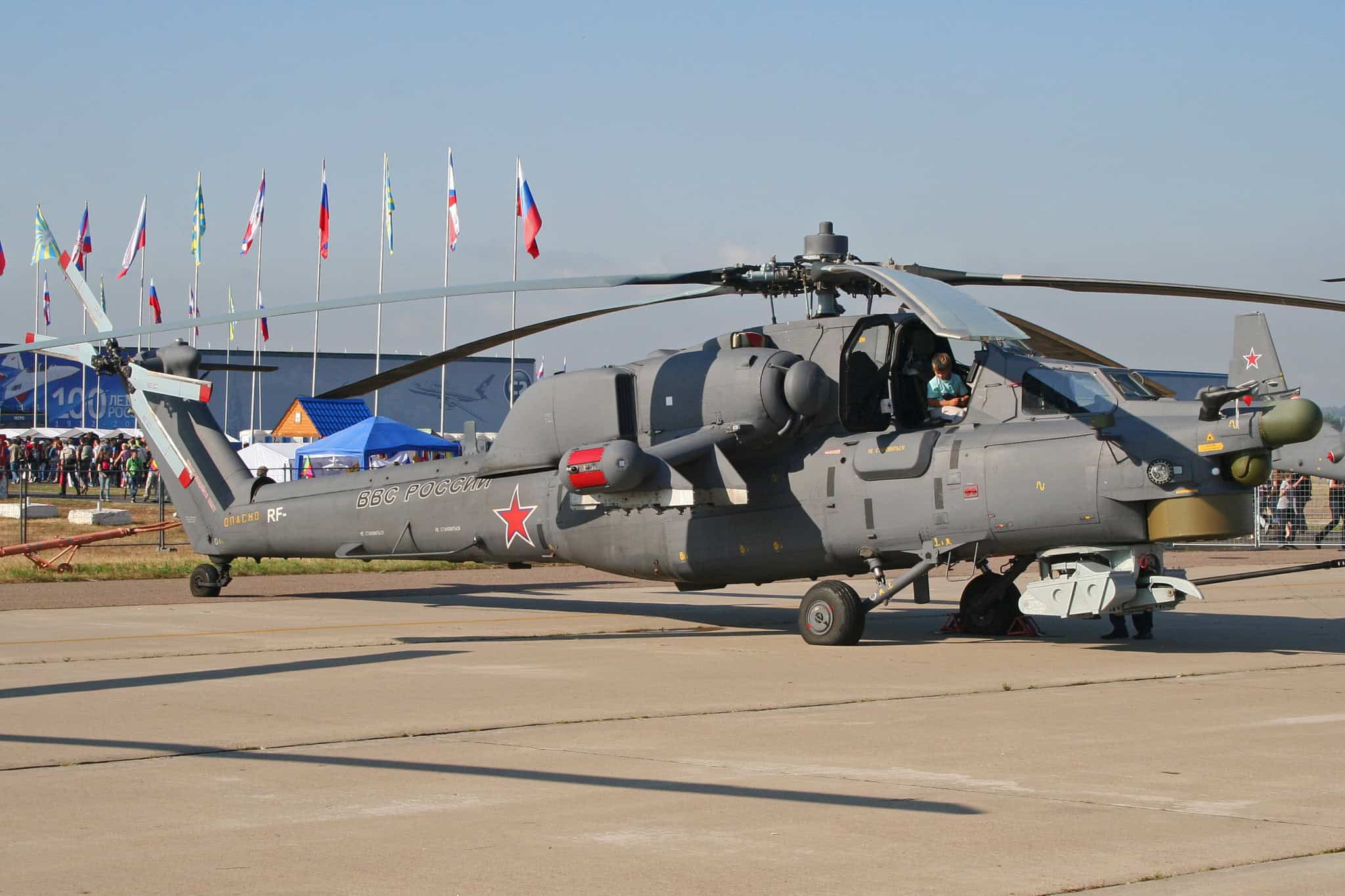


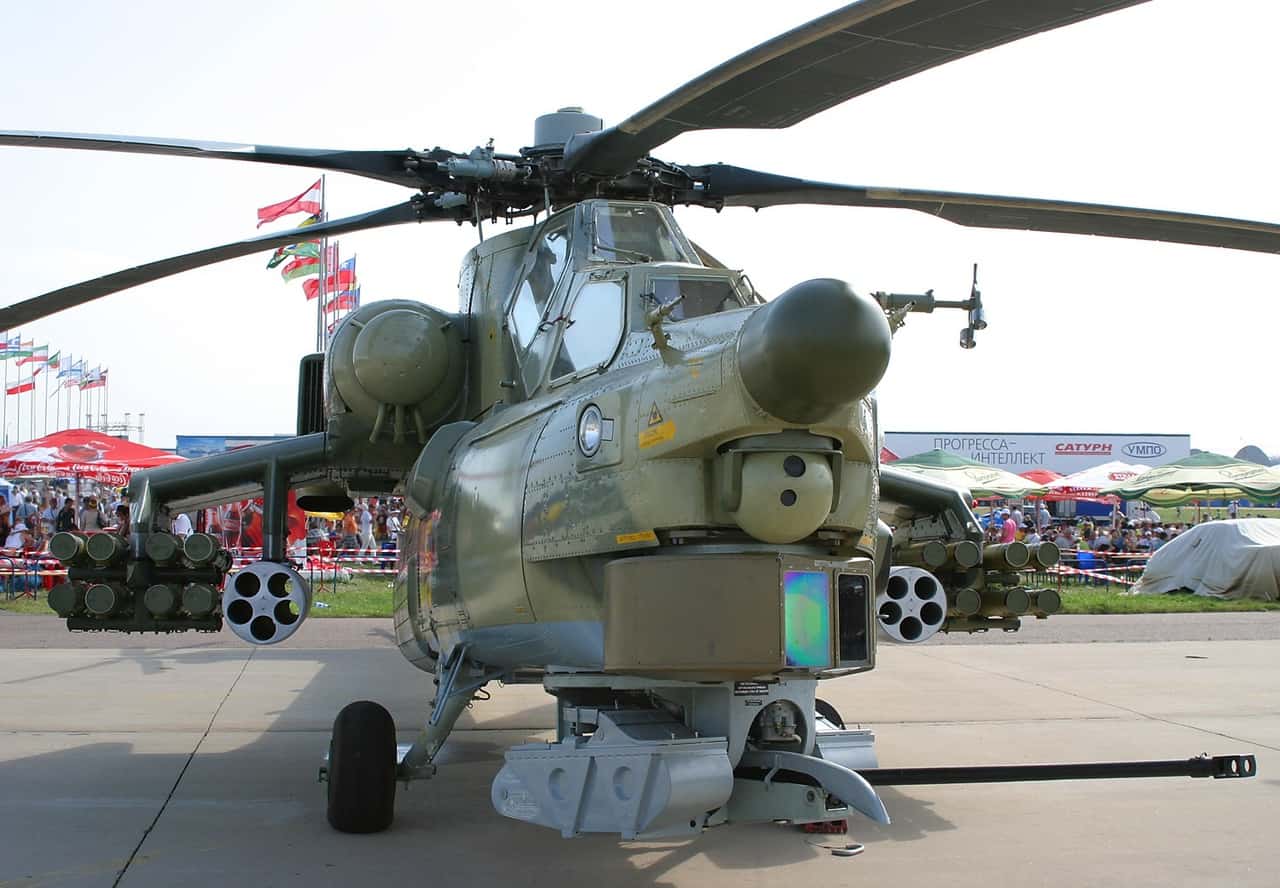
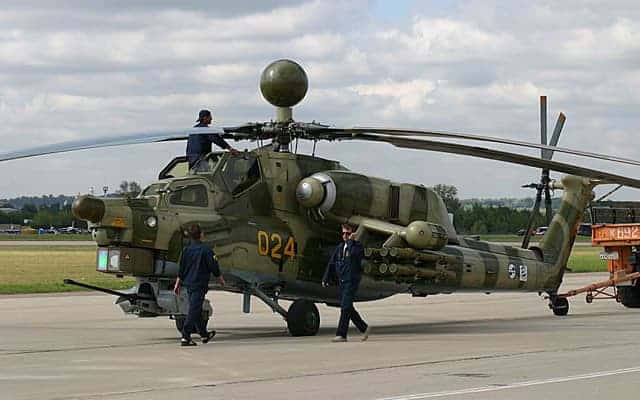
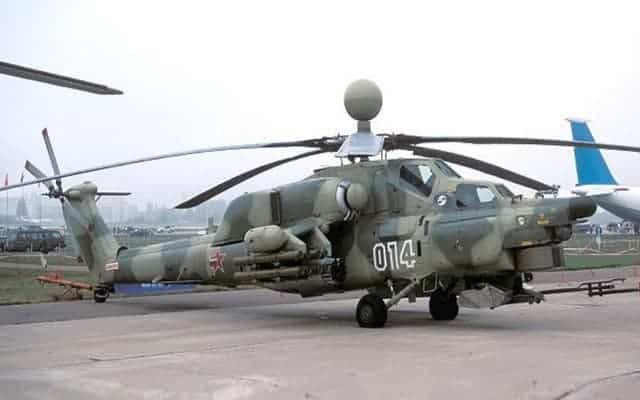
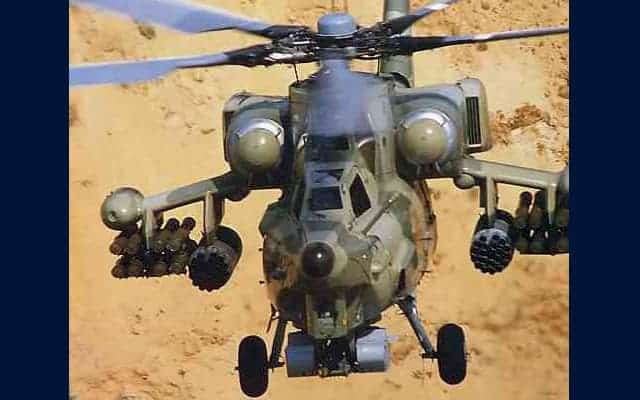
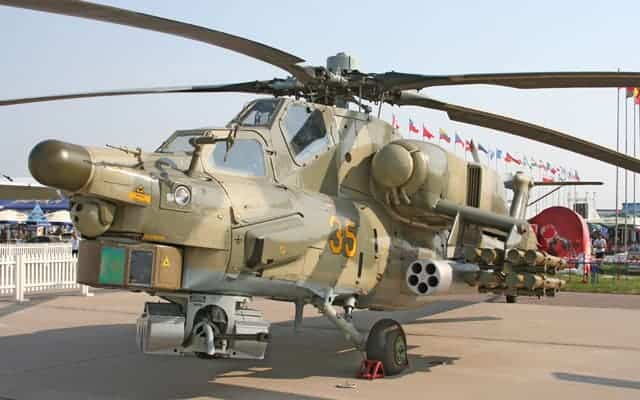
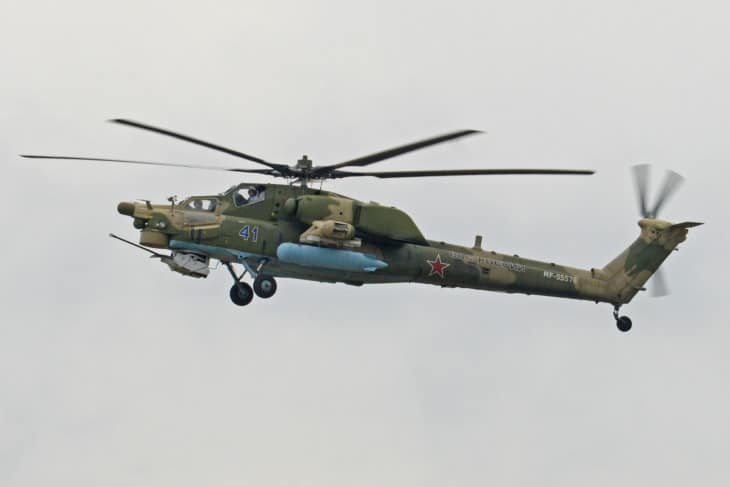
The Mil Mi-28 (NATO reporting name “Havoc”) is a Russian tandem-seat attack helicopter built to destroy tanks and other ground targets day or night. The pilot sits in the rear seat and the weapons systems officer in the front.
The version that matters today is the Mi-28N “Night Hunter”, which the Russian military formally adopted on 15 October 2009. Its upgraded successor, the Mi-28NM, is now replacing it on the production line.
Work began in 1972 on a Soviet attack helicopter to sit alongside the Mi-24 Hind, and designer Marat Tishchenko led the design from 1980. The first prototype flew on 10 November 1982.
The Soviet Air Force picked the rival Kamov Ka-50 in October 1984, but Mil kept developing the Mi-28. A production version, the Mi-28A, appeared in 1988 and was shown at the 1989 Paris Air Show.
The Mi-28A was cancelled in 1993, partly because it could not fly in all weather. Mil answered with the Mi-28N, which first flew on 14 November 1996 and added a mast-mounted radar, thermal imaging and a laser rangefinder.
The first serial Mi-28N reached the Russian Army in mid-2006, and the type entered service in 2009. The upgraded Mi-28NM flew in October 2016, and Russian Helicopters announced serial production in October 2020.
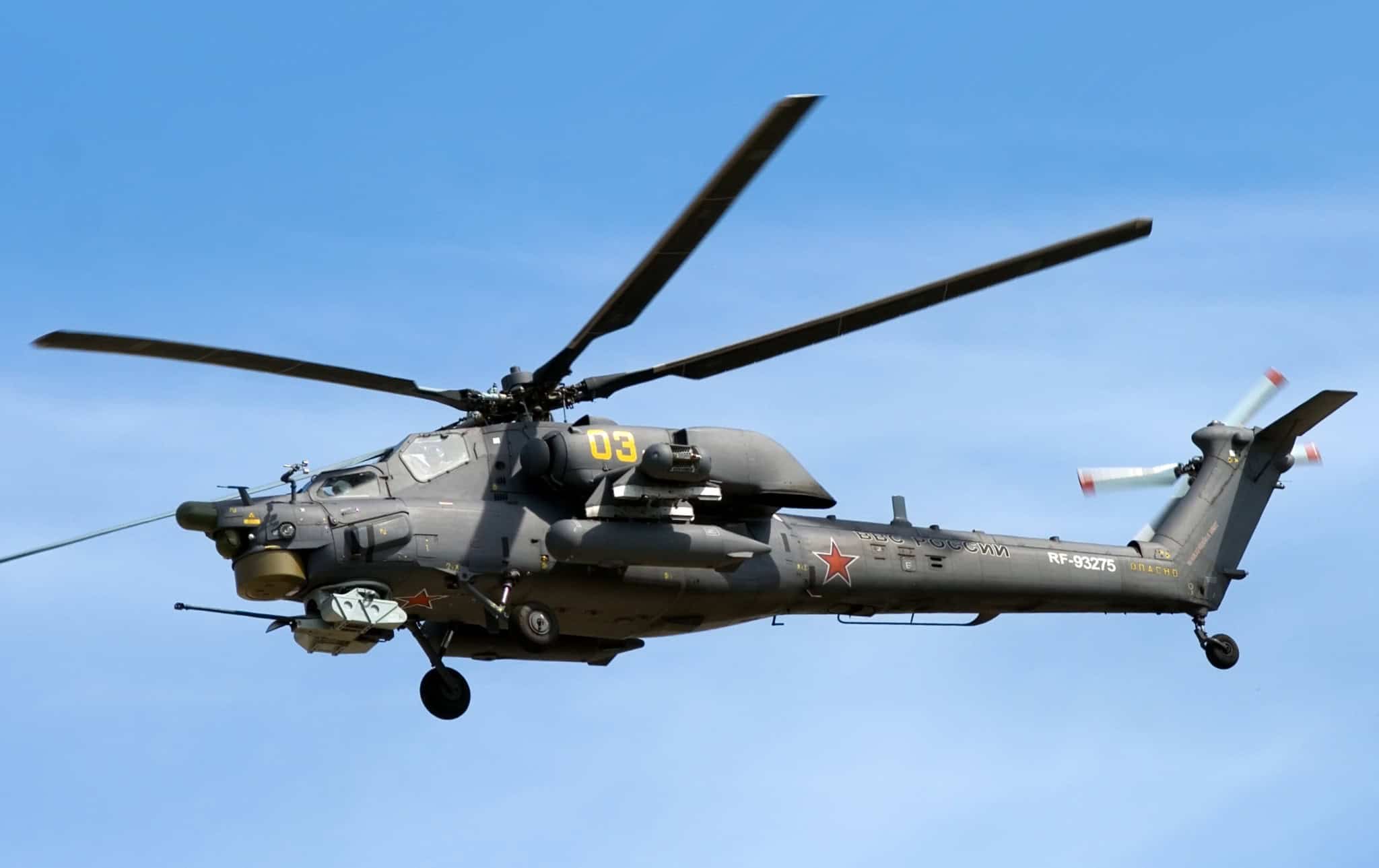
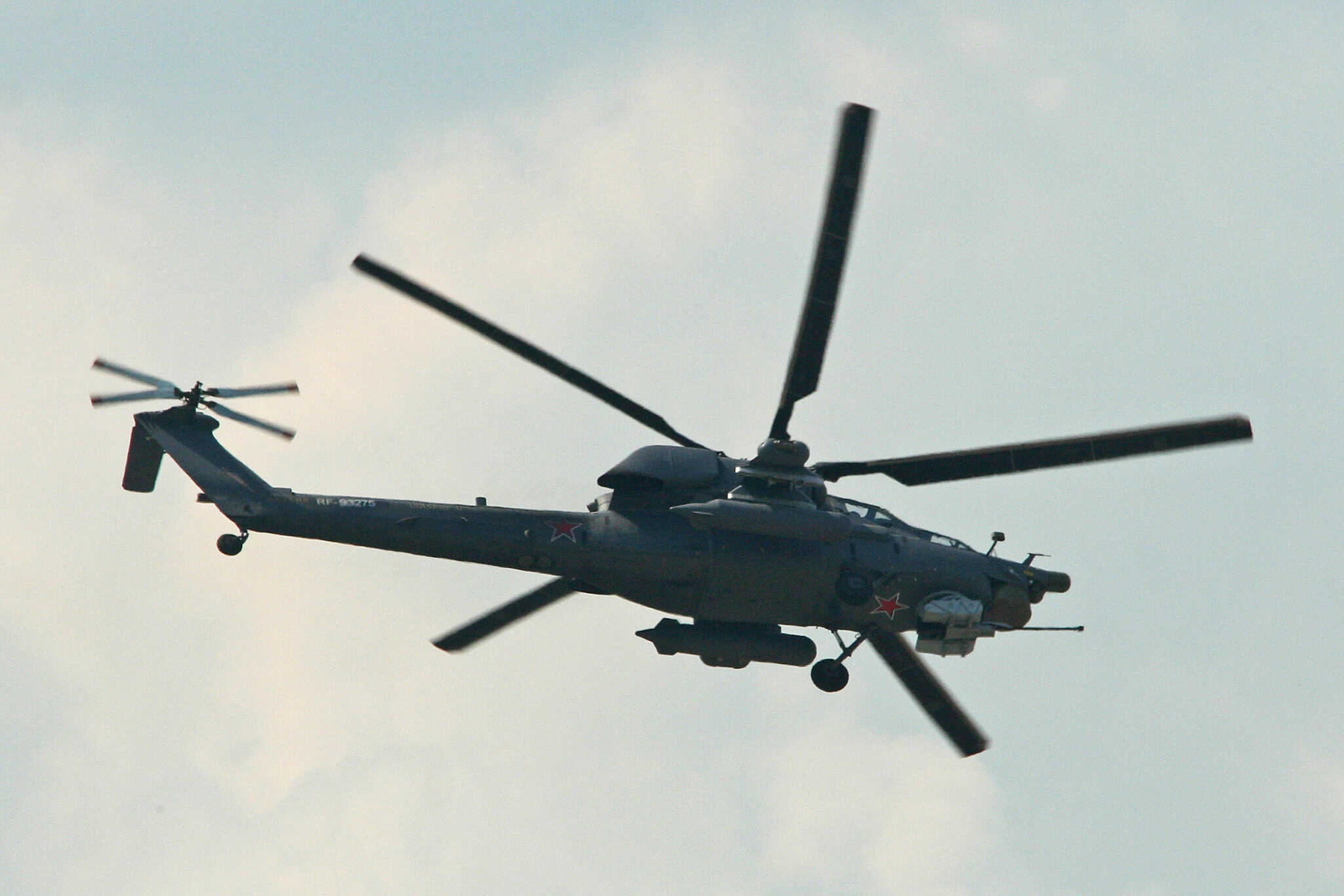
The Havoc is a conventional single-rotor gunship. Its tail rotor is an unusual X-shaped pair of blades set at 35 and 145 degrees, a layout that cuts noise compared with a standard in-line design.
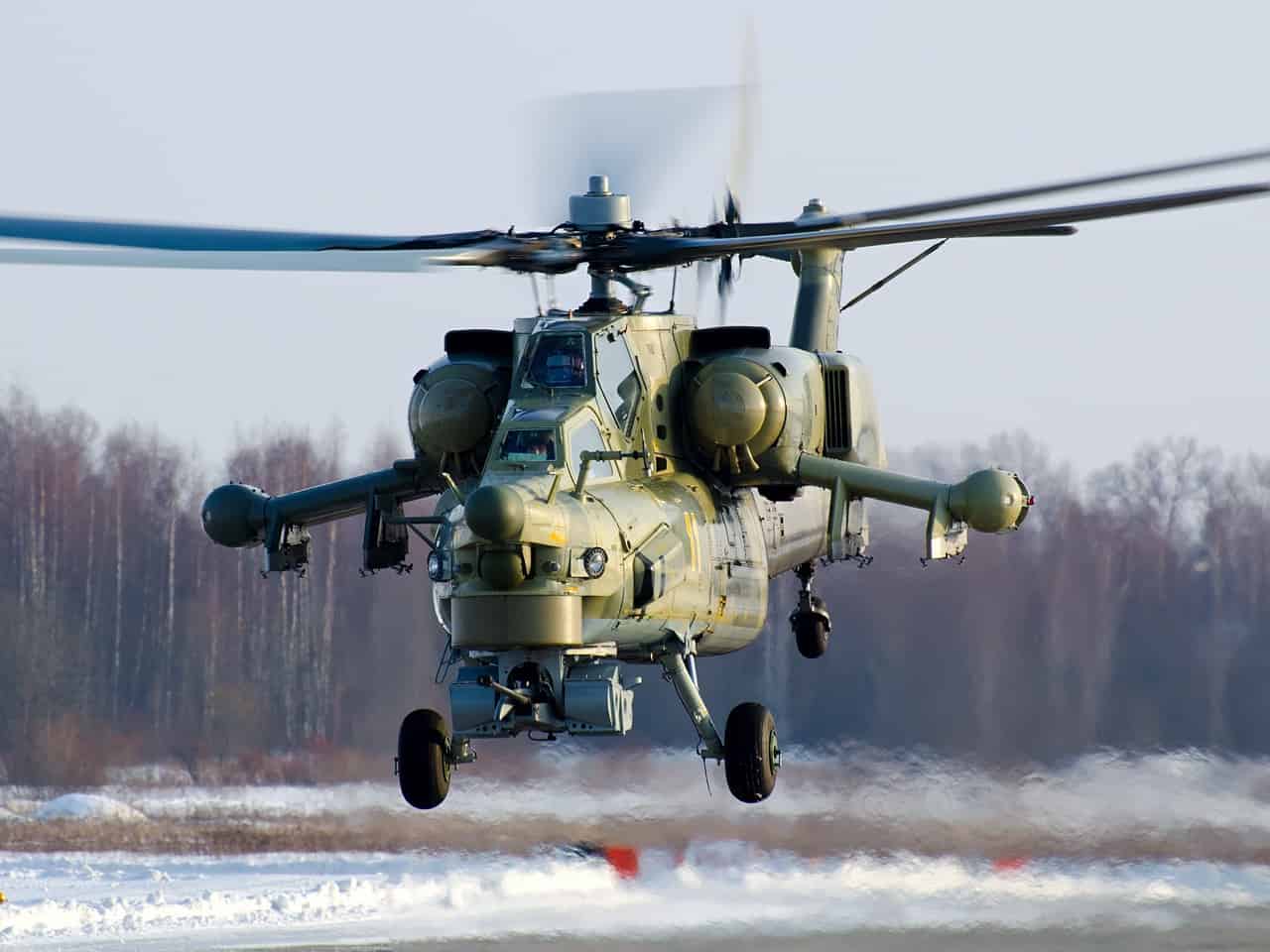
It has stub wings to carry weapons and a fixed landing gear. The crew sit in separate armored cockpits, and the seats are built to absorb energy in a hard landing.
The Havoc has no ejection seats. The planned escape sequence blew off the cockpit doors, jettisoned the stub wings and inflated a sleeve on the door sill so the crew could drop clear and parachute down, but The War Zone reports it apparently never became operational.
Behind the cockpits sits a small compartment for two or three people. It was meant for recovering a downed crew from the same flight, and it is unusual among attack helicopters, but the same report calls it suited only to emergencies.
The main gun is a 30 mm Shipunov 2A42 cannon in a chin turret. It reaches roughly 1.0 mile (1.5 km) against ground targets and about 1.6 miles (2.5 km) against air targets.
The primary anti-tank weapon is the 9M120 Ataka radio-guided missile, with up to 16 on two racks and eight being a more typical load. Versions include a tandem-warhead anti-armor round, a thermobaric warhead and an expanding-rod round aimed at helicopters.
The four underwing pylons also take S-8 and S-13 rocket pods, and the helicopter can carry R-73 air-to-air missiles, Kh-25 missiles and bombs. Russia’s Ugroza program is moving the rocket loads to laser-guided S-8Kor and S-13Kor versions.

On the Mi-28N, the round dome above the rotor head holds a millimeter-wave radar. The Mi-28NM drops the nose antenna and moves to a new radar, VK-2500P engines with digital controls and improved rotor blades.

The full specification table for the aircraft is on this page. A few figures need context because they are quoted against each other.
The range in the table, 680 mi (1,100 km), is the ferry range with four drop tanks. Wikipedia gives the range with standard fuel as 270 miles (435 km), with a combat radius of about 125 miles (200 km) and a 10-minute loiter.
The table’s wing span is the main rotor diameter. The stub wings that carry the weapons span only about 16 ft (4.88 m).
The length in the table includes the rotor blades. The fuselage alone is about 56 ft (17.01 m), and that is the figure to use when comparing the Havoc’s size against other helicopters.
Wikipedia counts more than 190 Mi-28s built as of May 2025. The Russian Air Force operates the largest fleet, listing 94 Mi-28N and NM helicopters plus 19 Mi-28UB trainers, with more on order.
Algeria is the biggest export customer with 42 Mi-28NE, followed by Iraq with 17 and Uganda with four. Iran has reportedly received a small number as well.
Other reported deals never materialized. Venezuela agreed in 2010 to order 10 but no contract was signed, and India chose the AH-64E Apache instead.
The Mi-28 reportedly saw combat in Iraq in 2014, days after arriving there, and flew in Syria during the 2016 battle for Palmyra. In both cases it used S-8 rockets and Ataka missiles against Islamic State positions.
In Ukraine the picture is harder. Russia began the full-scale invasion with about 110 Mi-28s of all versions, and the Oryx open-source tally reached 19 losses according to The War Zone, with Oryx counting only visually confirmed ones.
Attack helicopters in that war are exposed to man-portable air defense systems and, more recently, drones. Many individual loss claims come from Ukrainian sources and have not been independently verified.
The type has also had peacetime accidents. A Mi-28N crashed at a 2015 display in Russia, killing one pilot, and a hydraulic failure was reported, which led to a fleet grounding.
Its closest Russian rival is the Kamov Ka-52, a two-seat development of the Ka-50 that beat the Mi-28 in the 1984 Soviet competition. The Kamov uses coaxial rotors with side-by-side seats, while the Mi-28’s conventional layout is closer to the American AH-64 Apache.
The older Mi-24 Hind also carried troops inside its cabin, a role the Mi-28 largely gave up in favor of armor and firepower. You can compare the Havoc directly with other gunships on the AeroCorner aircraft pages.
The price in the specification panel is about $16.8 million per aircraft. Published unit costs vary by variant and buyer, and the newer Mi-28NM is likely to cost more than an early Mi-28N.
The Mi-24 Hind is an older gunship that can carry troops in its cabin. The Mi-28 is a purpose-built attack helicopter with two armored cockpits and no troop cabin, only a small emergency compartment.
Yes. It uses an X-shaped tail rotor with blades set at 35 and 145 degrees, a layout designed to reduce noise.
Mi stands for Mikhail Mil, the founder of the Moscow Helicopter Plant. Its design bureau still carries the Mil name.
The Mi-28NM is the upgraded version. It has a redesigned nose without the nose antenna, a new radar, VK-2500P engines with digital controls and improved rotor blades, which Wikipedia says raise top speed by about 13 percent.
No. The crew sit in energy-absorbing seats, and the planned escape system, which jettisons the doors and stub wings, apparently never became operational.
Russia, Algeria, Iraq and Uganda are the confirmed operators, and Iran has reportedly received a small number.
Sources and references used for research and fact-checking.
.jpg)

