

Light Helicopters
The Agile Little Hermit — Russia’s Civilian Helicopter with a Military Heart.
The latest aviation news and stories sent to your inbox.
In the late Cold War years, when Soviet engineers were focused on heavy transports and gunships, the Mil Mi-34 “Hermit” emerged as something different — a light, nimble helicopter designed for training, patrol, and civil use. Compact yet capable, it became the Soviet answer to the Western light helicopter market.
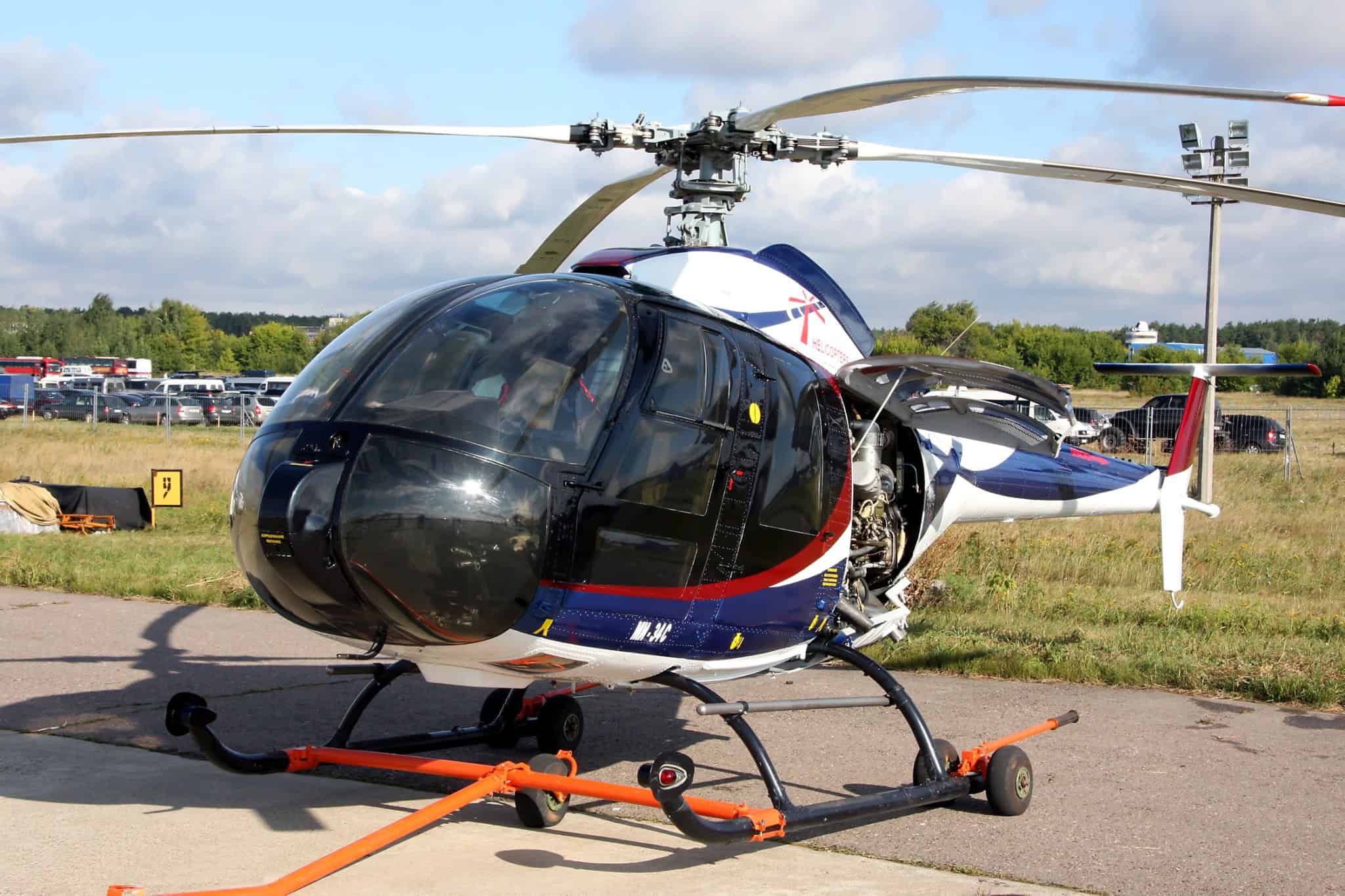

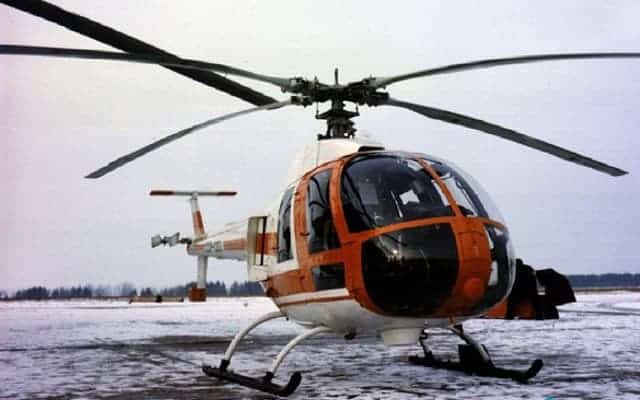
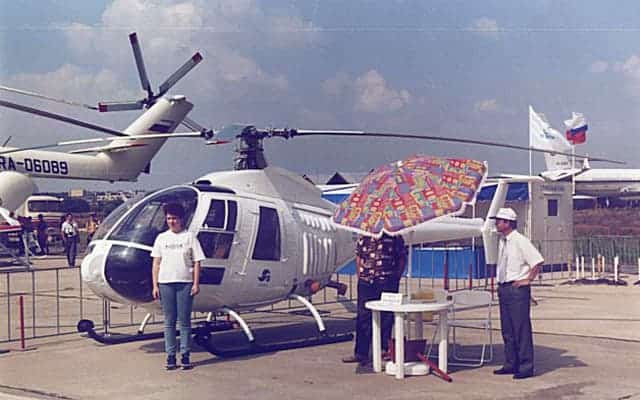
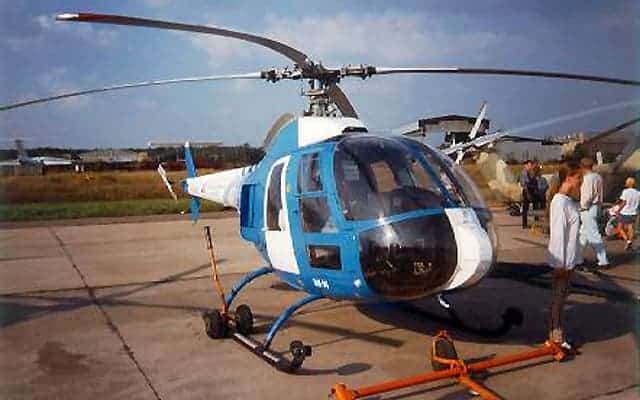

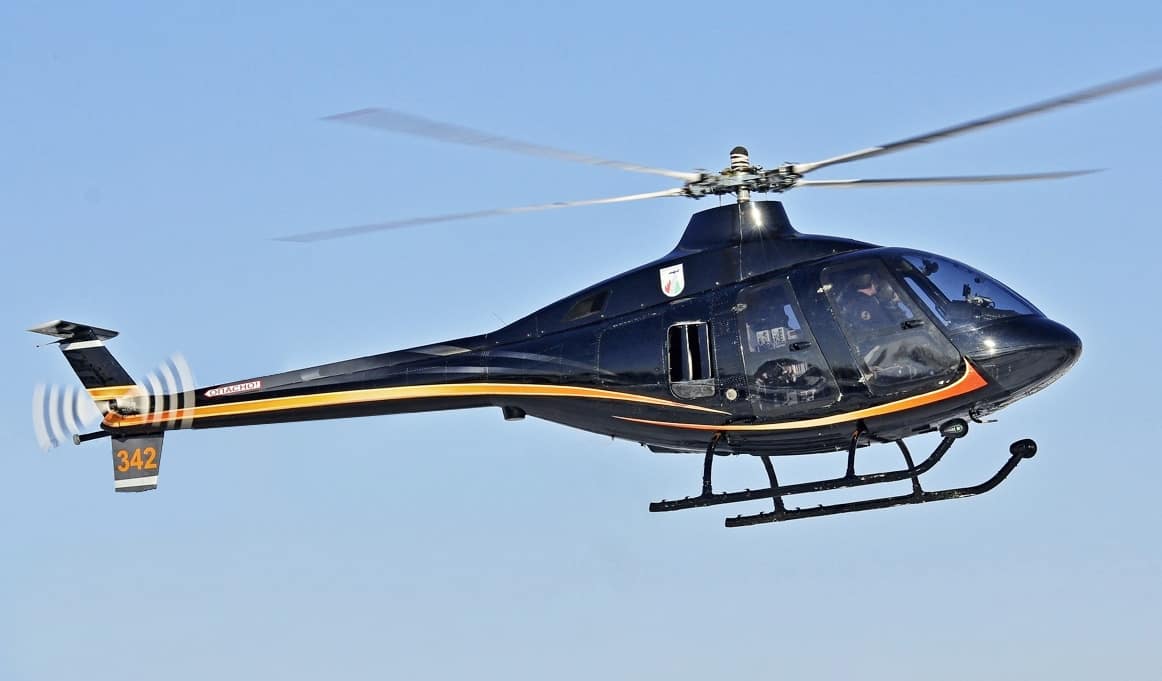
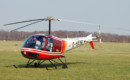
The Mil Mi-34, NATO reporting name “Hermit,” was a light, piston-engine helicopter developed by the Mil Moscow Helicopter Plant in the 1980s. Intended as a modern, multipurpose aircraft for training, liaison, sport flying, and law enforcement, it marked a departure from Mil’s traditional focus on large military rotorcraft such as the Mi-8 and Mi-24.
The Mi-34 first flew on November 17, 1986, and was publicly unveiled in 1987. Its design drew inspiration from the Mil Mi-24 Hind, scaled down into a compact, two-blade main rotor configuration with a conventional tail rotor. The initial production version, the Mi-34S, was powered by a 360 hp Vedeneyev M-14V-26 radial engine, giving it a top speed of about 135 mph (215 km/h), a range of roughly 280 miles (450 km), and a service ceiling of 10,000 ft (3,000 m).
The helicopter could carry up to four occupants, making it suitable for training, aerial patrol, and light transport. Later variants, including the Mi-34S1 and Mi-34S2 “Sapsan”, introduced modern avionics and optional turboshaft engines, improving performance and reliability.
Despite its agility and responsive handling — characteristics praised by pilots — the Mi-34 faced limited production due to cost and the economic collapse following the breakup of the Soviet Union. Only a small number were built through the 1990s and 2000s, primarily for civilian operators in Russia and Eastern Europe.
Today, the Mil Mi-34 “Hermit” stands as an intriguing symbol of late-Soviet innovation — a helicopter that blended military engineering discipline with the simplicity and versatility of a light civilian aircraft.
.jpg)