

Open a flight search for a weekend in Malaga and London does something no other city quite does to you. It offers the same trip from six different airports, and three of them are barely in London at all.
Heathrow, Gatwick, Stansted, Luton, London City and Southend all carry the city’s name. Two of them sit more than 30 miles from the centre. One is closer to the North Sea than to Big Ben.
No one sat down and planned a six-airport city. The real reason London ended up with this many gateways is a single decision made about one runway pair, and the decades of pressure that decision released everywhere else. Here is how it actually happened.
The short answer
London has six airports because Heathrow filled up and was never allowed to grow. It has run two runways at almost their legal limit for years, and it cannot simply add more flights.
When the busiest hub in the country hits a hard ceiling, the demand does not vanish. It spills outward to whichever fields have spare room, and each of those fields then grew into a different kind of airport serving a different kind of traveller.
The answer at a glance
Heathrow’s two runways have been capped at 480,000 flights a year for decades, and expansion has been blocked politically since the 1970s. With the main hub full, demand overflowed into Gatwick, then Stansted, Luton, London City and Southend, each of which specialised: long-haul hub, leisure gateway, low-cost fortress, business shuttle. The result is the busiest city airport system on Earth, built by accident rather than design.
Heathrow’s ceiling is the engine of the whole story
Heathrow is the fourth busiest airport in the world, handling about 83.9 million passengers in 2024. It does this on just two runways, which is extraordinary and also the heart of the problem.
Those two runways are capped at 480,000 aircraft movements a year, a limit set in planning rules, not by physics. Heathrow runs at roughly 98 percent of that ceiling, so on a normal day there is almost no spare slot to sell.
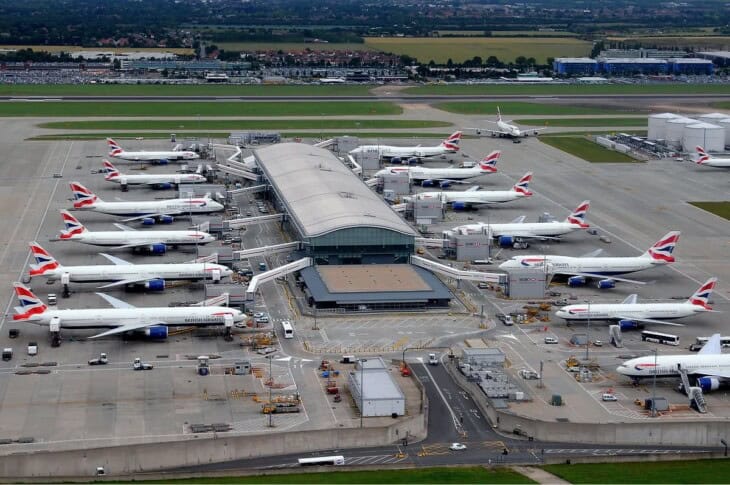
A third runway has been debated since the 1970s and blocked at every turn by noise, politics and the sheer density of west London around the airport. As of mid-2026 the government has revived it: a draft national policy statement was published in June 2026, with planning permission targeted for 2029 and a runway possibly open around 2035. Even in the best case, that is another decade away.
So for half a century, airlines that wanted to serve London and could not get a Heathrow slot had to go somewhere else. That single constraint is what turned a normal big-city airport into a six-airport region.
Six airports, six different jobs
The overflow did not produce six copies of Heathrow. Each airport found a niche that the others were not serving, which is why they coexist instead of simply competing on the same routes.
Gatwick took the leisure and charter traffic, and later the long-haul carriers who wanted London access without Heathrow’s slot war. It is now the busiest single-runway airport in the world, moving 43.2 million passengers in 2024 on one strip of tarmac.
Stansted and Luton became the low-cost fortresses. Stansted is Ryanair’s largest base and handled a record 29.8 million passengers in 2024, while Luton grew up around easyJet and Wizz Air. Both trade on cheap fares and fast turnarounds rather than connecting convenience.
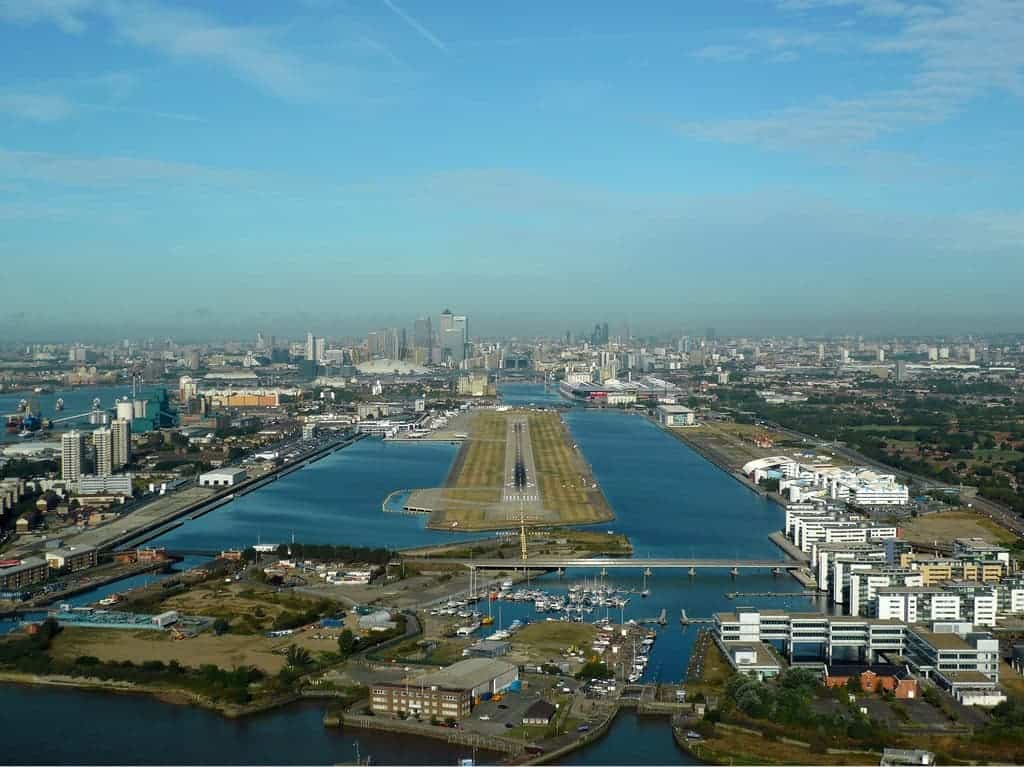
London City is the outlier. Built in the Docklands in 1987 for business travellers, it has a short runway and a steep approach that only certain aircraft can fly, which keeps it small, close-in and premium. Southend, the sixth, is the smallest and most volatile, nearly emptied out a few years ago and then revived when easyJet based three aircraft there in March 2025.
| Airport | Code | Passengers (2024) | What it is really for |
|---|---|---|---|
| Heathrow | LHR | 83.9 million | Intercontinental hub, slot-constrained, full |
| Gatwick | LGW | 43.2 million | Leisure and long-haul, busiest single-runway airport |
| Stansted | STN | 29.8 million | Ryanair’s largest low-cost base |
| Luton | LTN | 16.7 million | easyJet and Wizz low-cost base |
| London City | LCY | 3.6 million | Close-in business shuttle, steep approach |
| Southend | SEN | 0.3 million | Small low-cost field, reviving since 2025 |
Passenger figures for calendar year 2024; source: Civil Aviation Authority and airport reports. Southend has grown sharply since, passing 750,000 in the year to January 2026.
Add those together and London handled roughly 177 million passengers across its airports in 2024. That is more than any other city system on the planet, ahead of New York and Tokyo.
The world's busiest airport system
No single London airport tops the global charts. Heathrow ranks fourth. But taken together, London’s airports moved about 177 million passengers in 2024, more than New York’s three-airport system or Tokyo’s. London is not the biggest single airport in the world; it is the biggest airport city.
The deeper reason: geography and history pulled them apart
Heathrow’s cap explains why demand overflowed, but not why it landed in exactly these six places. That comes down to where usable land and old airfields already sat around a huge, sprawling city.
Several of these airports began as wartime or early-aviation fields, not as parts of a plan. Stansted was a US bomber base. Luton and Southend were regional airfields long before budget travel existed. When airlines needed capacity, it was cheaper to grow an existing runway than to build one from scratch.
Geography did the rest. London is ringed by the M25 motorway, and the airports are scattered around that ring in different directions: Heathrow to the west, Gatwick to the south, Stansted and Luton to the north, City and Southend to the east. A traveller’s nearest airport depends entirely on which side of the city they live on.
That is also why the low-cost airports sit so far out. Stansted is about 30 miles from central London and Southend around 40, because cheap land and spare runway capacity were never going to be found in the middle of one of the most expensive cities in the world.
The myth: that they are overflow or duplicates
The common assumption is that London’s smaller airports are just overflow, spare terminals that catch the flights Heathrow cannot fit. That gets the relationship backwards.
Myth: the other five are just Heathrow's spillover
They are not interchangeable. You cannot usually move a Ryanair Stansted route to Heathrow, or a Heathrow long-haul flight to Luton. Each airport is locked into a different business model, airline mix and cost base. They specialised precisely because they could not compete with Heathrow head-on, and that specialisation is now what keeps all six alive.
A budget carrier’s whole economic model depends on cheap airport fees and 25-minute turnarounds, which the low-cost fields provide and Heathrow does not. A long-haul network airline needs the connecting passengers and premium demand that only Heathrow concentrates. Neither would survive by swapping places.
So the six airports are not one airport split into pieces. They are six different businesses that happen to share a city, each filling a gap the others left open. If tomorrow you merged them onto one mega-site, most of the traffic would not fit, and much of it would simply disappear because the cheap fares that created it depend on the cheap airports that host it.
The picture is not frozen, either. Gatwick won approval in September 2025 to bring its standby northern runway into routine use, and Heathrow’s third runway is back on the table. Both could shift the balance in the 2030s, but neither changes the reason six airports exist today.
Next time a flight search hands you six versions of the same trip, you are not looking at redundancy. You are looking at 50 years of one runway pair being full, and a whole city rearranging itself around that fact.
If you want the raw numbers, compare the profiles for London Heathrow, London Gatwick and London Stansted side by side. For why a hub filling up matters so much, see how a single crowded route works in why Seoul to Jeju is the busiest route in the world, why the cheap fares that built Stansted and Luton are priced the way they are in how airline ticket pricing actually works, and how another world city solved the same problem in Tokyo’s Haneda versus Narita split.
Sources and references used for research and fact-checking.
- Greater London Authority, London's airports: data analysis, October 2025
- Civil Aviation Authority, UK Airport Passenger Statistics 2024
- GOV.UK, New consultation sets foundations for Heathrow expansion to take off
- Air Cargo News, Government approves Gatwick Airport northern runway plans
- London Southend Airport, London Southend Airport hits passenger record as 2025 becomes busiest in six years
Get the Newsletter
The latest aviation news and stories sent to your inbox.
About the Author

Tim is the owner and lead editor of AeroCorner since 2019, overseeing aviation content covering aircraft, airlines, airports, and the broader aviation industry. Through years of researching, writing, editing, and publishing aviation-focused content, he has developed extensive practical knowledge of commercial aviation and air travel. Based in Asia and a frequent traveler himself, Tim also brings firsthand passenger experience to AeroCorner’s coverage. Outside of publishing, he has also explored aviation firsthand through hands-on flight training in New Zealand.