Military Helicopters
The naval trainer helicopter built for primary rotary-wing instruction.
The latest aviation news and stories sent to your inbox.
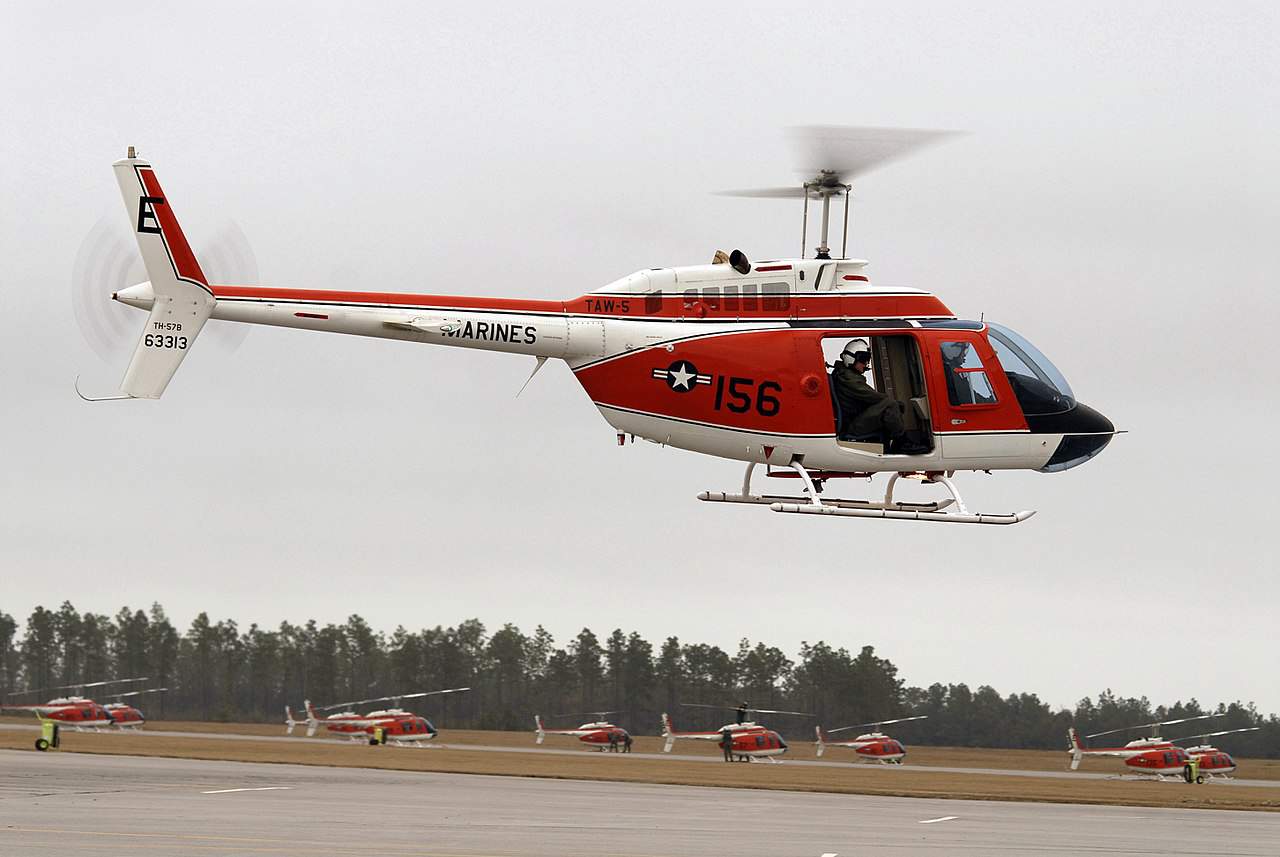
The Bell TH-57 Sea Ranger is a military training helicopter derived from the Bell 206 JetRanger. Introduced in the late 1960s, it has been used by the U.S. Navy for rotary-wing pilot training. The aircraft remains a foundational training platform.
Live Fleet Activity (B06)
Fetching live data…
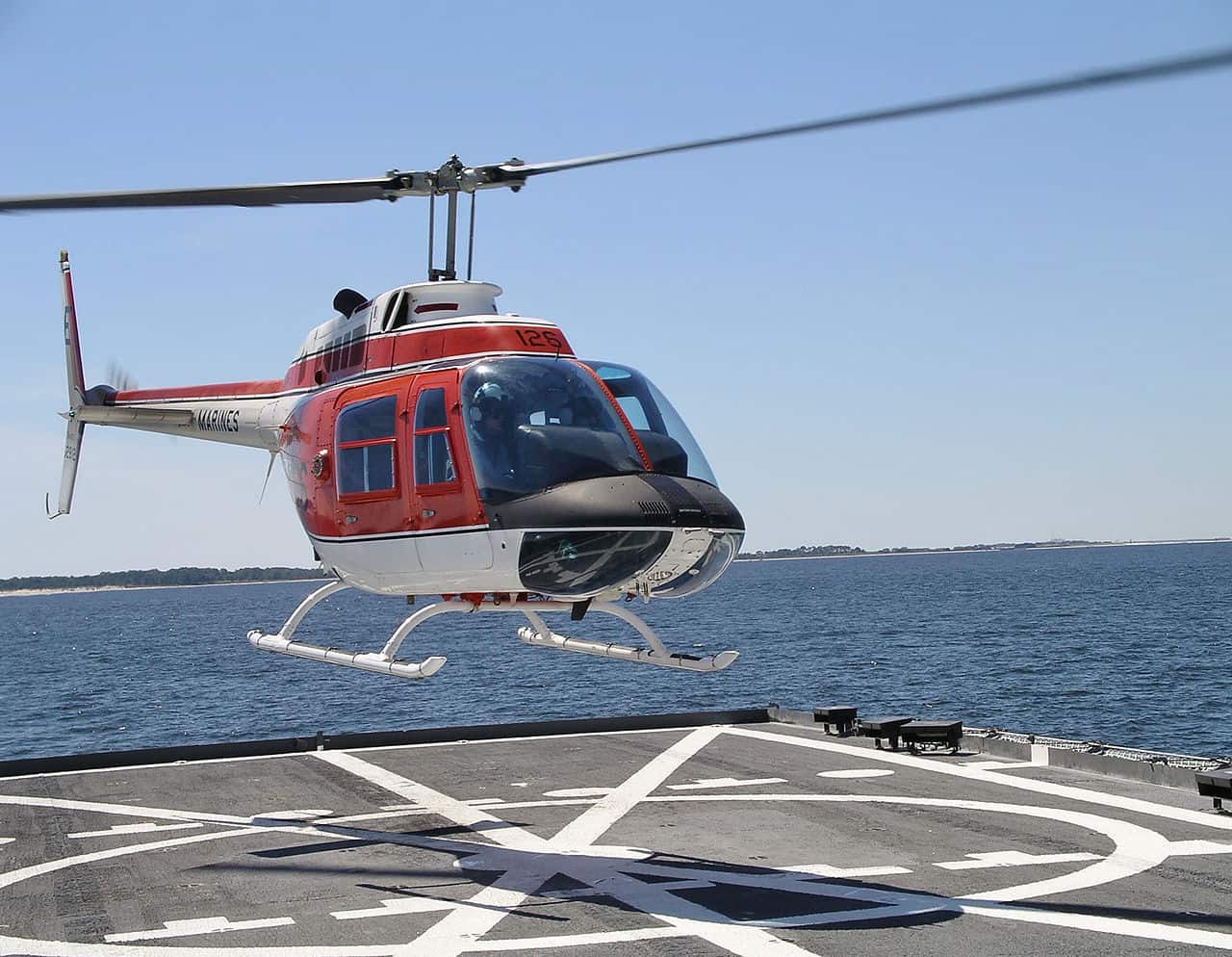
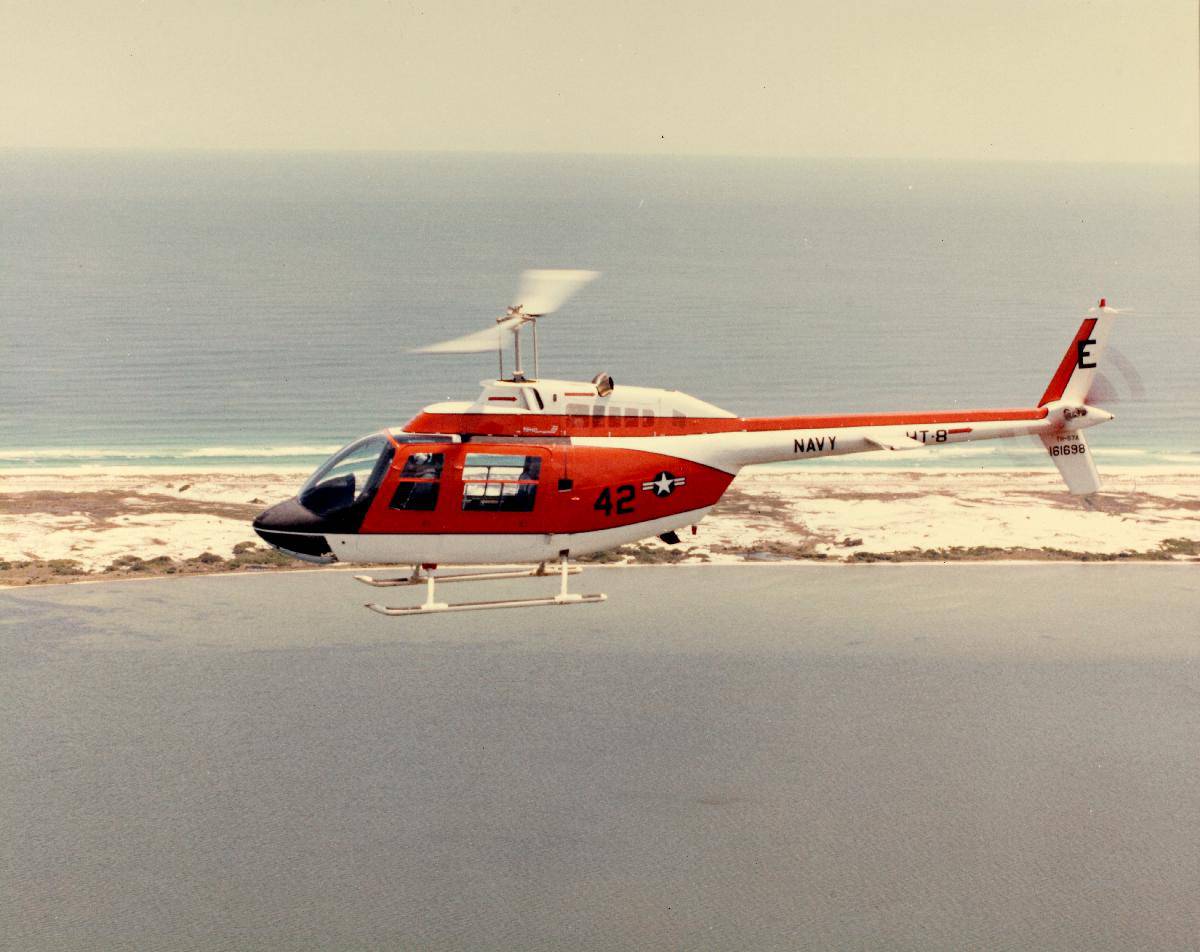
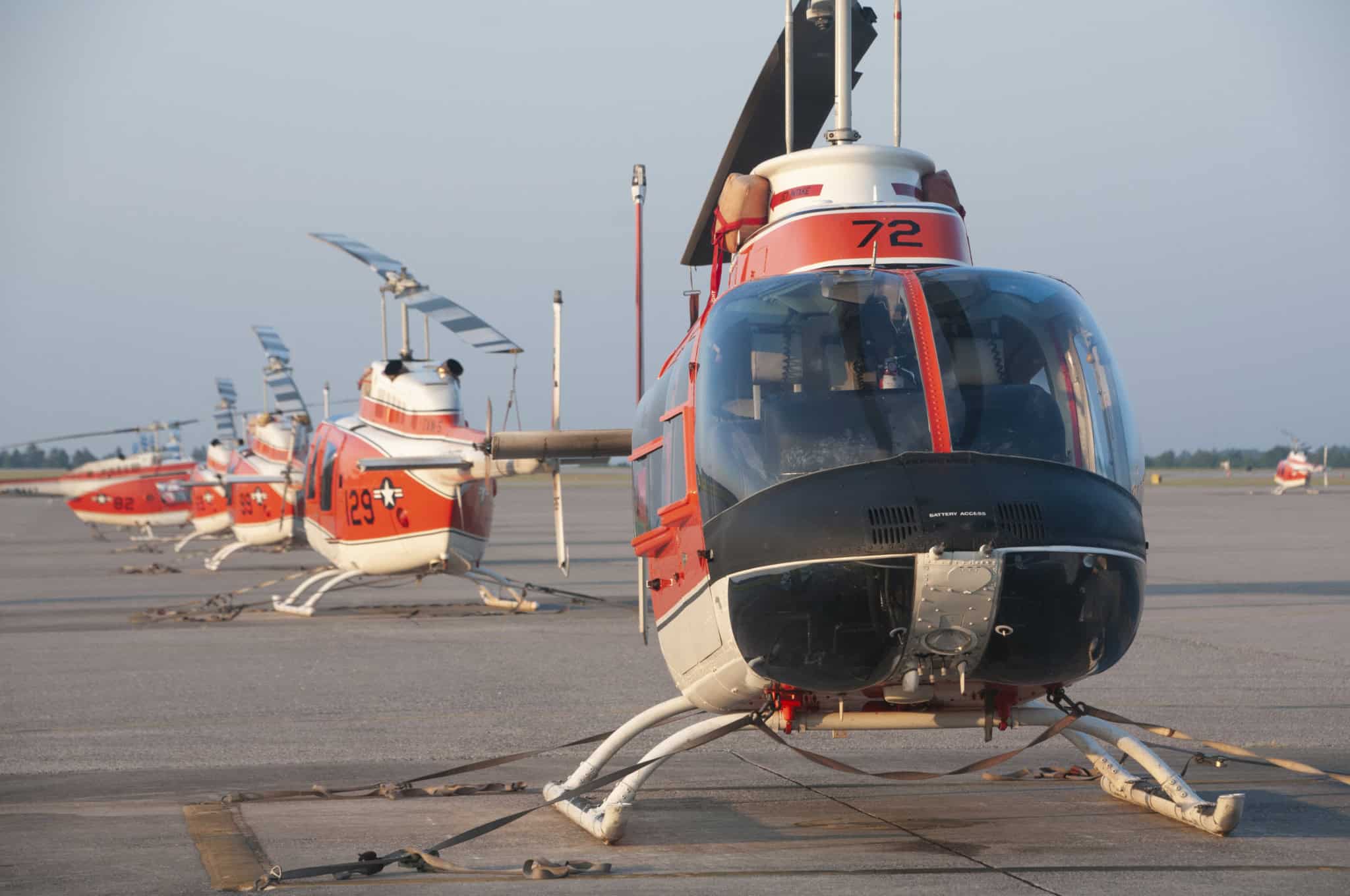
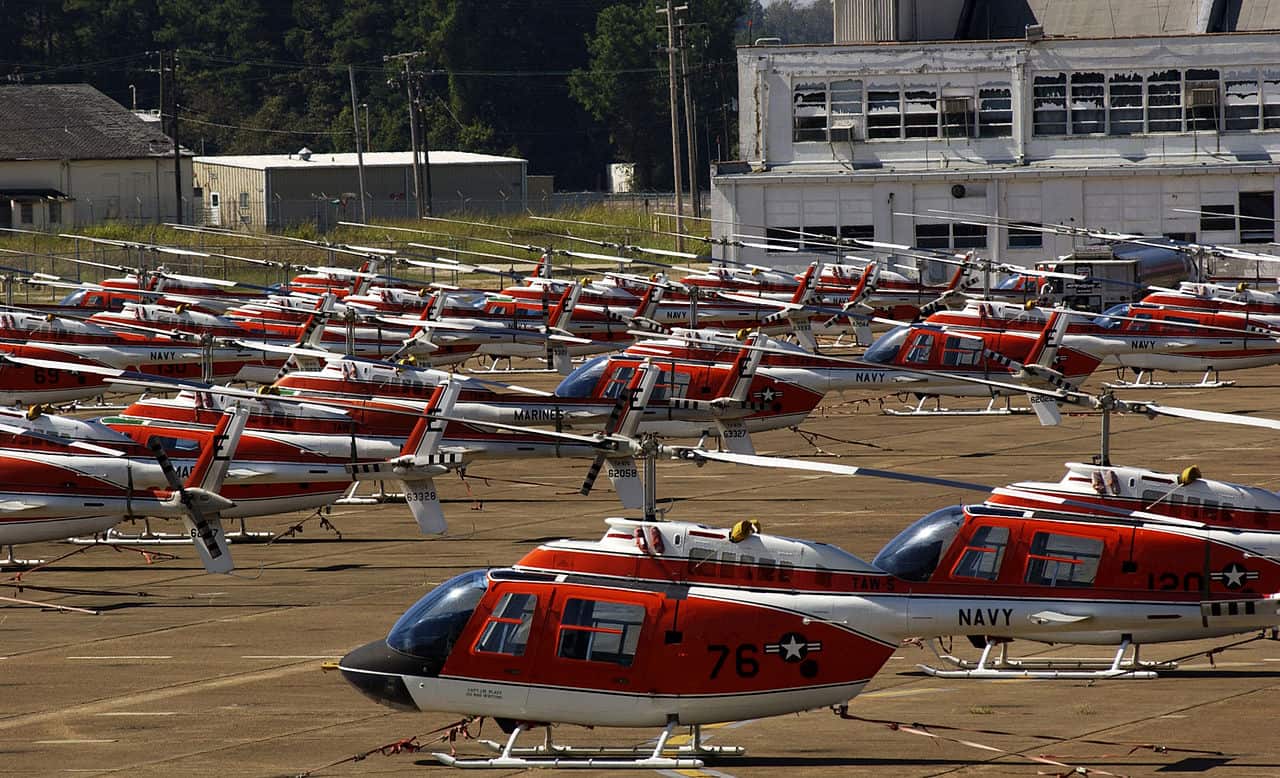
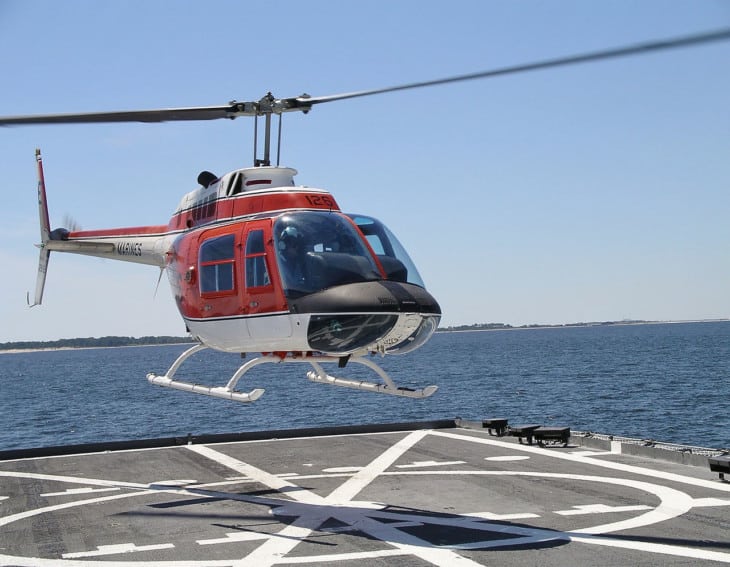
The TH-57 first flew in 1967 and entered service shortly thereafter. It is based on the Bell 206 airframe with modifications for military training requirements. The helicopter features a two-blade main rotor and skid landing gear.
Powered by a Rolls-Royce 250 turboshaft engine producing approximately 420 shaft horsepower depending on variant, the TH-57 cruises at around 110 knots (204 km/h). Maximum takeoff weight exceeds 3,200 pounds (1,451 kg). The cockpit accommodates an instructor and student pilot.
The TH-57 has trained generations of naval aviators. Its reliability and simplicity make it well suited for primary instruction. The aircraft continues to serve in training roles, though replacement programs are underway.
The Sea Ranger program began as a requirement to provide a turbine-powered platform tailored to naval primary flight instruction. The intent emphasized a straightforward, economical aircraft that would introduce students to helicopter aerodynamics and cockpit procedures before transition to more complex types. Procurement emphasized commonality with established light helicopters to reduce risk.
Manufacturer testing validated airframe robustness for repetitive training cycles and the ability to tolerate student handling. Qualification trials focused on controllability, safety margins during autorotation, and maintainability under high sortie rates. Modifications to the production line prioritized simplified ground servicing and parts interchangeability for a training environment.
Production deliveries were scheduled to support expanding rotary-wing training pipelines. Logistic planning included dedicated maintenance training, tooling, and spares provisioning to sustain intensive utilization. Field feedback from early squadrons informed incremental equipment and support changes intended to reduce downtime and maximize flight hours per airframe.
The Sea Ranger cabin emphasizes visibility with extensive glazing to support instruction in visual maneuvers and traffic scanning. Cockpit ergonomics place instructor and student within close proximity for direct demonstration and immediate intervention, while retaining additional space for instrumentation or a small aft observer station when required by syllabus tasks.
Structurally the airframe balances light weight with durability to withstand frequent training cycles. Panels and access points are arranged for rapid inspection and component replacement. Corrosion-resistant treatments and protective finishes are applied where exposure to maritime environments is expected, reflecting naval service requirements for overwater operations.
Systems architecture favors mechanical simplicity over complexity to facilitate student learning and reduce maintenance burdens. Flight controls are direct and conventional, delivering predictable feedback. Hydraulic or electrical assist systems are kept minimal so that fundamental piloting skills remain central to instruction without excessive system abstraction.
Avionics installations reflect a training-first philosophy. Early aircraft carried basic flight instruments adequate for visual navigation. Selected airframes received upgraded instrument and navigation suites to support night and instrument training. Avionics layout emphasizes redundancy in pilot-facing instruments and straightforward annunciation to aid instructor monitoring during simulated failures.
Performance characteristics support the primary training mission rather than heavy operational payloads. The aircraft provides stable low-speed handling and straightforward autorotation behavior suitable for teaching emergency procedures. Climb and cruise capabilities are sufficient for typical training profiles that include pattern work, local navigation, and basic instrument tasks.
Endurance and range match typical sortie lengths used for primary instruction, permitting repeated short flights and daylong schedules at training bases without complex refueling logistics. The single-engine configuration imposes operational considerations for extended overwater missions and high-density altitude environments, where payload or performance margins are reduced.
Operational limitations include reduced capacity for advanced utility roles and constrained hot-and-high performance relative to larger multi-engine types. Environmental factors such as high temperatures and high elevation airfields progressively limit payload and climb performance, necessitating adjustments to lesson planning and safety margins during training sorties.
The Sea Ranger fleet was issued under multiple naval designations that reflected equipment fit and role emphasis rather than major aerodynamic changes. Distinctions between types typically centered on instrumentation packages, mission avionics, and selected mission equipment intended to match different phases of the training syllabus.
Some designations corresponded to aircraft fitted for basic visual instruction, while others incorporated instrument flight capabilities and enhanced navigation equipment for night or instrument phases. Structural alterations between types were generally limited to avionics racks, cockpit panels, and wiring harnesses to accommodate upgraded systems without altering core flight characteristics.
Over service life several airframes underwent avionics modernization programs to extend instrument training capability and to improve maintainability. Upgrades sought to standardize cockpit interfaces across the training fleet and to incorporate more modern radios and navigation aids while preserving the platform’s fundamental handling qualities.
The Sea Ranger served as the Navy’s principal primary rotary-wing trainer for an extended period. It was employed across multiple naval air training locations where it formed the foundation of the initial helicopter syllabus. Training roles included basic handling, emergency procedures, navigation, and introductory instrument work for students destined for advanced helicopter training.
Fleet operators reported that the type delivered high operational availability when supported by dedicated maintenance and spare parts programs. The aircraft’s service profile emphasized rapid turnaround between sorties and predictable maintenance cycles, which facilitated the high tempo required by large training pipelines and instructor rotations.
Beyond scheduled instruction the aircraft was occasionally used for ancillary tasks within training bases, including liaison flights, range support, and light utility tasks. These secondary roles exploited the platform’s low operating cost and ease of ground handling without placing demands beyond its intended training envelope.
The Sea Ranger was not designed as a combat helicopter and saw no role as a frontline attack platform. Its mission equipment and structural design focused on instruction and utility functions. Where deployed outside the training environment the platform performed noncombat tasks such as observation, communications, and base support.
Training aircraft retained limited self-defense or external stores capability. Operational doctrine restricted their use in hostile environments or in missions requiring armor or weapons carriage. Any employment outside the training environment adhered to conservative risk assessments given the platform’s single-engine configuration and training-oriented fit.
The principal operator of the Sea Ranger was the United States Navy, which used the type to provide the annual pipeline of new rotary-wing pilots. Naval flight training squadrons equipped with the Sea Ranger administered primary rotorcraft instruction as part of the broader naval aviation training continuum.
Flight test and maintenance communities within naval aviation also maintained pools of Sea Ranger airframes for developmental inspections and maintenance technique validation. Other military or civil operators may have used similar light turbine helicopters, but the Sea Ranger designation remained primarily associated with U.S. naval training units.
Extended fleet use produced a substantial operational record of training throughput, maintenance practices, and life-cycle sustainment for light turbine trainers. That record informed subsequent decisions about avionics standardization, support concepts, and the balance between simplicity and capability in primary training aircraft procurement.
Service life extensions and periodic avionics updates demonstrated the cost-benefit of incremental modernization for a stable training platform. Maintenance regimes and support infrastructure developed for the Sea Ranger provided a practical template for sustaining similar light helicopter fleets in intensive training roles.
The Sea Ranger’s prolonged employment highlighted the trade-offs between a simple, forgiving training platform and evolving requirements for instrument flight and overwater safety. Experience gained from its operation contributed to requirements discussions for later training acquisitions that sought to address those specific operational limitations.
Sources and references used for research and fact-checking.