Military Helicopters
The Marine Corps gunship built to fight from the deck of a ship.
Updated: by Tim de Vries
The latest aviation news and stories sent to your inbox.
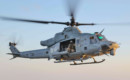
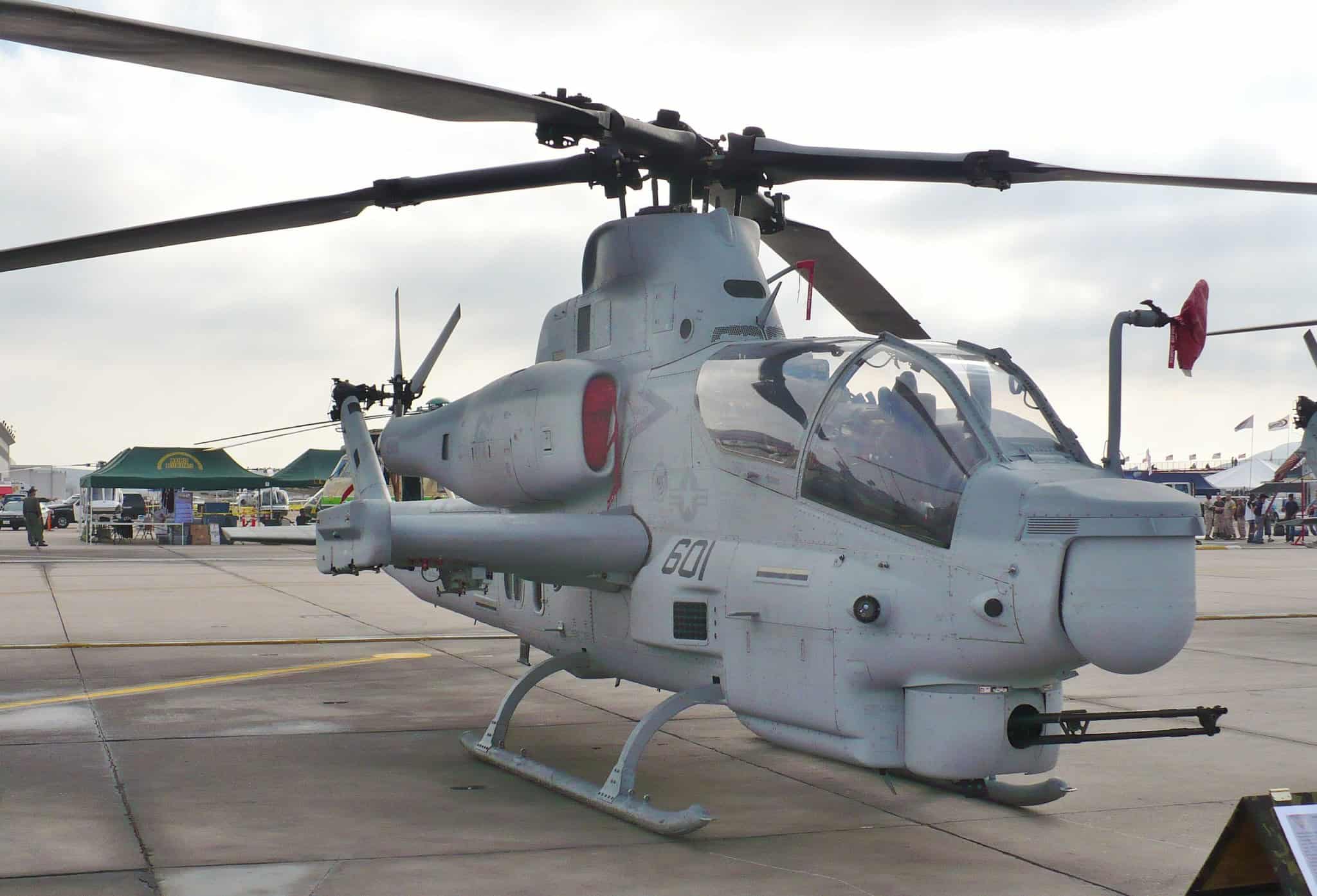
The Bell AH-1Z Viper is the United States Marine Corps’ attack helicopter, and the final development of the Cobra gunship line. Built under the H-1 upgrade program, it pairs a four-blade composite rotor with a stabilized Target Sight System and six weapon stations carrying up to sixteen Hellfire-class missiles. It shares about 85 percent of its components with the UH-1Y Venom, and it is the rare attack helicopter built to live aboard ship. Marine Corps deliveries ended at 189 aircraft in November 2022, but the Amarillo line stays open for export customers in Bahrain, the Czech Republic and Nigeria.
Live Fleet Activity (SUCO)
Fetching live data…
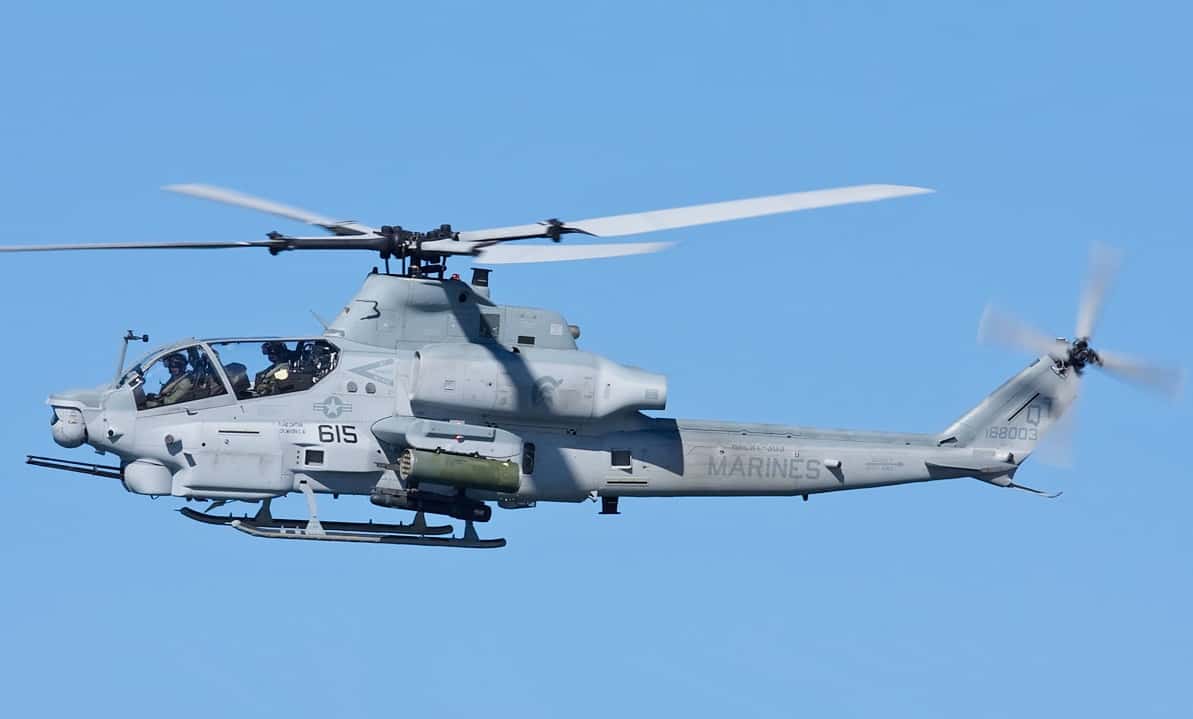


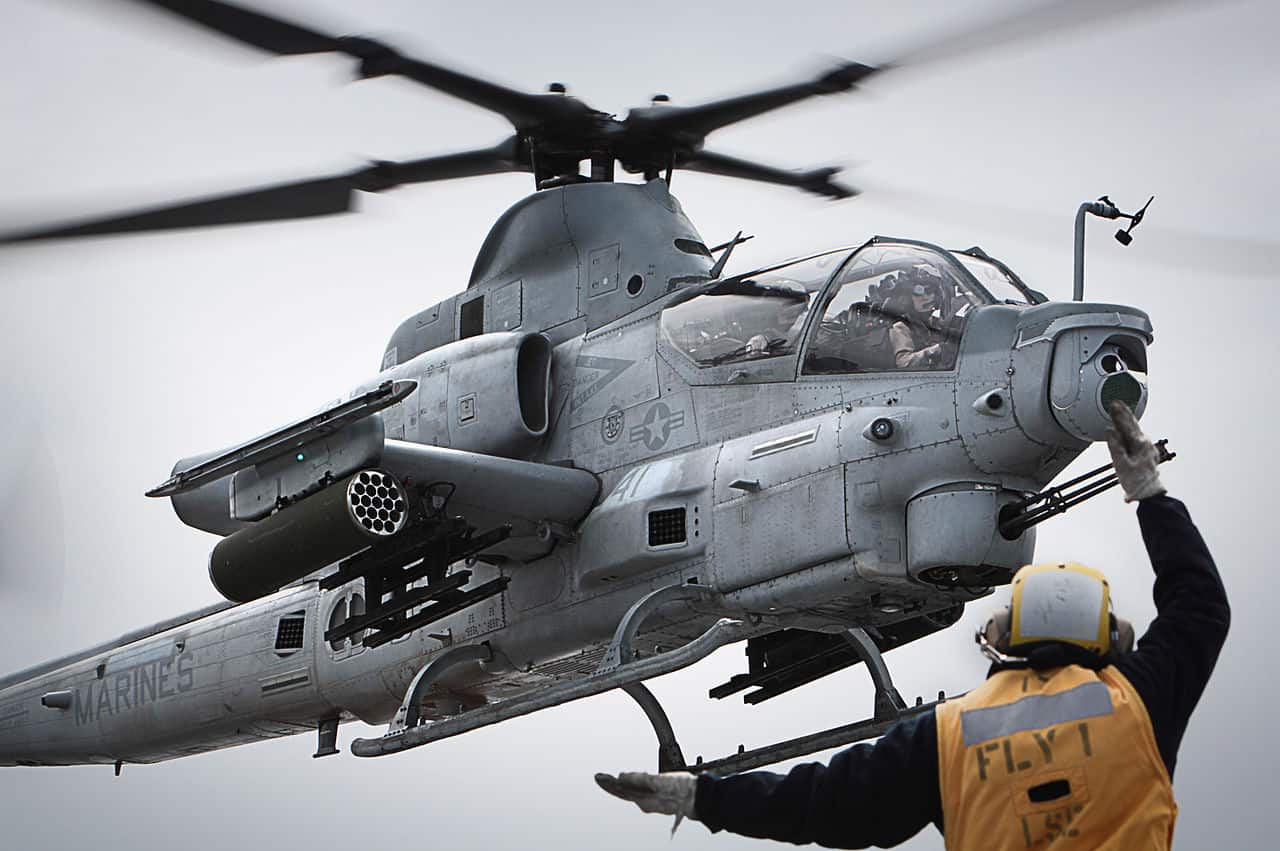
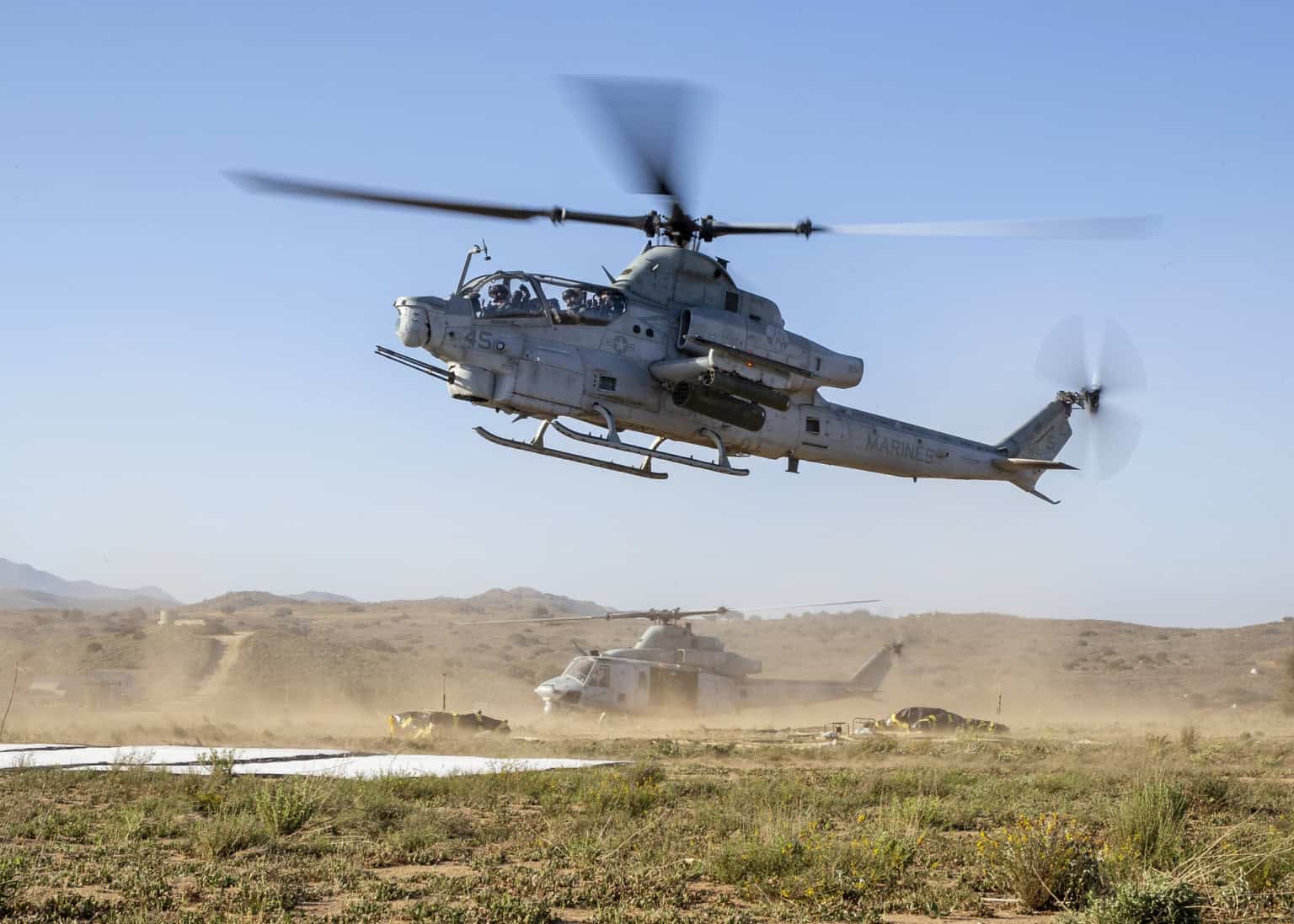


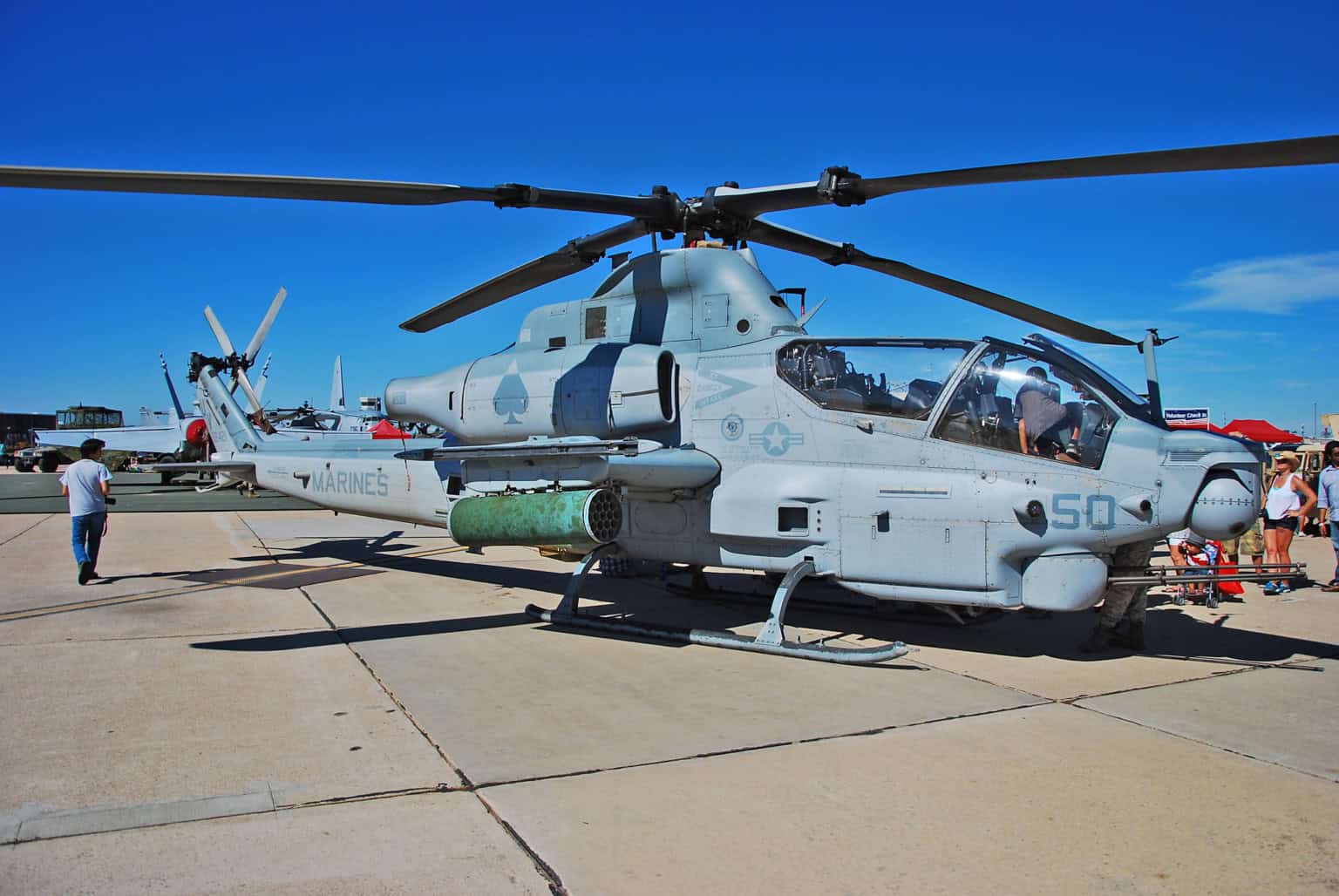
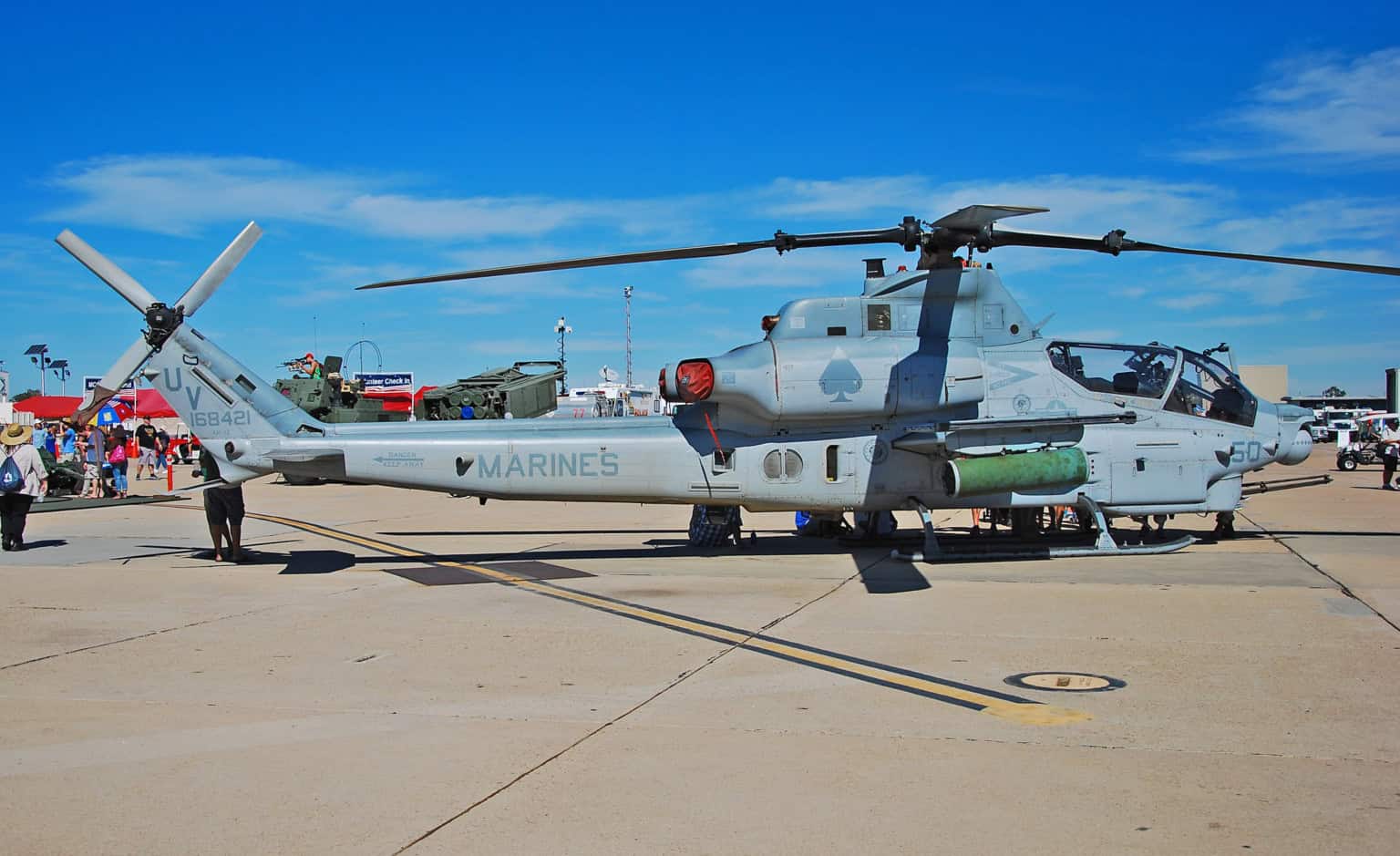

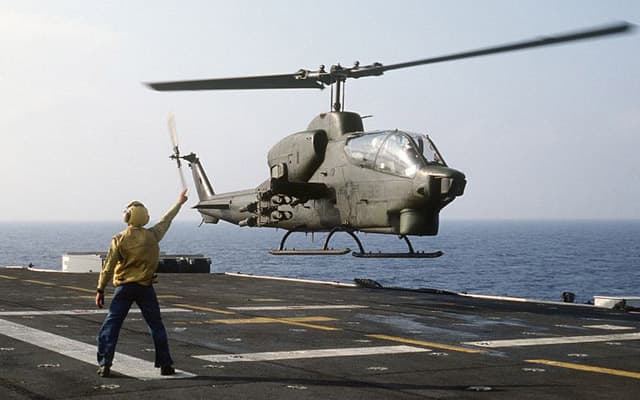
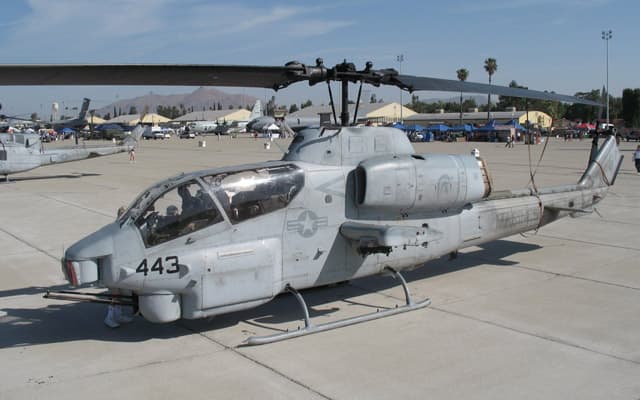

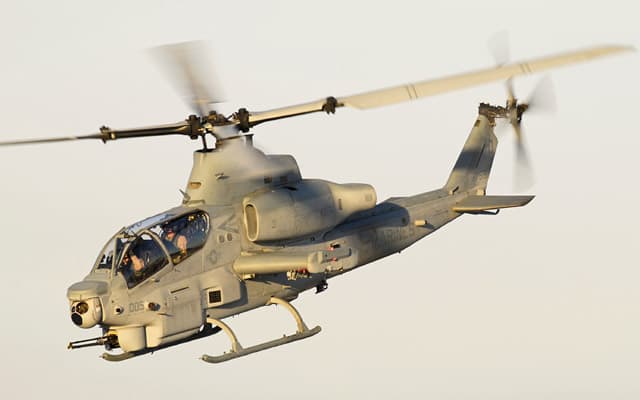
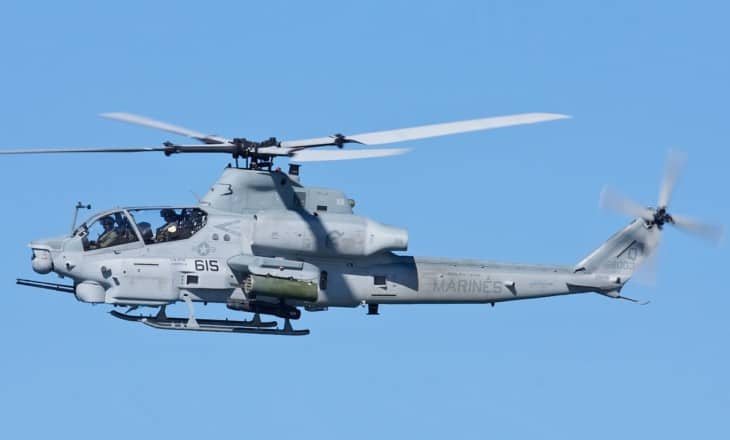
The Bell AH-1Z Viper is the United States Marine Corps’ attack helicopter, and the last aircraft in a gunship line that runs back to the AH-1 HueyCobra of the 1960s. Crews call it the Zulu Cobra, after the phonetic alphabet reading of its variant letter.
It is a two-seat, twin-engine machine built around a four-blade composite rotor, a stabilized targeting turret, and six weapon stations that can carry up to sixteen Hellfire-class missiles. Bell markets it as the only attack helicopter in the world with fully integrated air-to-air missile capability.
The Marine Corps took its 189th and final Viper in late 2022, which closed the U.S. program of record. The production line never shut down, because by then the export orders had started arriving.
The Viper exists because of a 1996 decision to modernize rather than replace. The Marine Corps launched the H-1 upgrade program that year, contracting Bell to turn 180 AH-1W SuperCobras into AH-1Zs and 100 UH-1N Twin Hueys into UH-1Ys.
The idea was a rebuild: strip the airframe, fit a new rotor system, drivetrain and cockpit, and hand it back. Keeping the two types mechanically identical wherever possible was the point, because a shared parts bin is cheaper to deploy aboard ship than two unrelated fleets.
The AH-1Z first flew on December 8, 2000, and low-rate initial production began in October 2003. Bell delivered three prototypes to Naval Air Systems Command at NAS Patuxent River in July 2002 for the flight test phase.
Rebuilding turned out to be the harder path. In February 2008 the Navy changed the contract so the last 40 aircraft would be new-build airframes instead of conversions, and the mix kept shifting toward new production from there.
The Navy’s own FY2022 budget justification records where it landed: 37 AH-1Ws converted into AH-1Zs, and 152 built new. That is the cleanest statement of the split, and it differs from the figures that circulate in secondary references.
The Marine Corps declared the type combat ready on September 30, 2010. Full-rate production followed in December 2010.
The most visible change is the rotor. The AH-1W used the two-blade semi-rigid system the Huey family had carried since the 1950s; the AH-1Z uses a four-blade, bearingless, all-composite head turning a 48 ft (14.6 m) disc.
Four blades spread the lift across more surface, which raises the weight the aircraft can pick up and cuts the vibration that two-blade rotors are known for. Bearingless hubs also delete a large population of greased, inspected, time-limited parts.
The tail rotor went to four blades as well, and the transmission was uprated to match. None of this is cosmetic: it is what lets an 18,500 lb (8,400 kg) helicopter operate off an amphibious assault ship in the heat.

The AH-1Z has two crew: a pilot in the rear and a co-pilot/gunner in the front. What is unusual is that both stations have virtually identical controls, so the aircraft can be flown and fought from either seat.
Both positions use a hands-on-collective-and-stick side-arm layout, which keeps the most-used functions under the fingers rather than on a panel. In a helicopter flying low and fast under fire, moving a hand off the controls to reach a switch is time the crew does not have.
Targeting runs through the third-generation Target Sight System, a stabilized turret that finds and tracks targets at the ranges the missiles can actually reach. Crews wear the Thales TopOwl helmet-mounted sight and display, which projects symbology onto the visor so they can keep their heads out of the cockpit.
Under the nose sits an A/A49E-7 turret carrying a 20 mm M197 three-barrel rotary cannon with 750 rounds. It is the same calibre earlier Cobras carried, but with a higher muzzle velocity and a flatter trajectory, and it accepts M50-series air-to-air ammunition.
The stub wings carry six pylon stations. A typical anti-armor fit is sixteen AGM-114 Hellfire missiles, or eight AGM-179 Joint Air-to-Ground Missiles, which reached initial operational capability on the Viper in March 2022 and are replacing the Hellfire.
Rockets come in two forms from the same launcher: unguided 2.75 in Hydra 70s, or the same rocket fitted with an APKWS laser-guidance section. Guided rockets matter more than they sound, because they let a crew service a light target without spending a Hellfire on it.
The wingtips are the interesting part. They carry AIM-9 Sidewinders, which is why Bell describes the Viper as the only attack helicopter in the world with fully integrated air-to-air missile capability. That is the manufacturer’s claim rather than an independently audited one, but no rival Western gunship advertises an equivalent fit.
That capability has stopped being theoretical. In July 2026, an AH-1Z of Marine Medium Tiltrotor Squadron 163 (Reinforced), 11th Marine Expeditionary Unit, was photographed approaching USS Boxer carrying what appeared to be an AIM-9M-series Sidewinder, in a theater where one-way attack drones are the routine threat.
A Sidewinder-armed helicopter can engage a slow reconnaissance or attack drone well outside a ship’s own defensive perimeter, and can escort MV-22s and transport helicopters without borrowing a fighter to do it.

The AH-1Z and the UH-1Y Venom were designed as a pair, and Bell puts their component commonality at 85 percent. They share the tailboom, engines, rotor system, drivetrain, avionics architecture, software, controls and displays.
For an expeditionary force this is the whole argument. A Marine Expeditionary Unit deploying with both types carries one set of spares, trains one pool of maintainers, and can move a pilot between the two with far less conversion training than two unrelated aircraft would need.
It also explains why the Czech Republic and other buyers have tended to order both together rather than the gunship alone.

The full specification table for the aircraft is on this page. Three figures in it are worth unpacking, because the AH-1Z’s published numbers get quoted against each other in ways that do not compare.
The first is range. Bell’s current figure is 310 nm, and it comes with stated assumptions: eight Hellfires, fourteen 70 mm rockets, 650 rounds of 20 mm, 120 expendable countermeasures and a 20-minute fuel reserve. That is a genuinely armed helicopter, not a clean one.
An older Bell figure of 370 nm still appears in most references, including Wikipedia’s specification block, which cites a Bell page archived in 2013. The assumptions behind it were never published, so the two numbers are not directly comparable and the newer, documented one is the better guide.
Bell also publishes a combat radius of 131 nm, which is the more useful planning number, because a radius is a there-and-back distance with time to work at the far end.
Wikipedia separately lists a 125 nmi combat range with a 2,500 lb (1,100 kg) payload. That is labelled a range rather than a radius, so the two should not be read as the same measurement.
The second is speed. Bell publishes 200 KIAS as the maximum and 139 KTAS as the cruise. Separately, the type’s never-exceed speed is listed at 222 knots, which is a structural limit rather than a speed the aircraft cruises at, and it is the source of the 255 mph figure that turns up in search results.
The third is weight. Bell gives a maximum gross weight of 18,500 lb (8,400 kg) and a maximum payload, which it calls useful load, of 5,750 lb (2,600 kg). That single figure has to cover fuel, ammunition, missiles and countermeasures at once, which is why range and weapon load trade against each other so sharply on this aircraft.
These two compete for nearly every export order, and the honest answer is that they were built for different jobs.
The AH-64 Apache is a heavier, longer-ranged, land-based attack helicopter. It carries more, flies further, and in its Longbow form has a mast-mounted fire-control radar that the Viper has never had.
The AH-1Z is lighter and marinized throughout to U.S. Navy specification, because it is designed to live on a ship in salt air and fold into a hangar deck. It also carries an integrated air-to-air missile that the Apache does not.
Cost separates them too. Using the U.S. Department of Defense Comptroller’s FY2022 reimbursable rates, the Polish defense outlet MILMAG put the AH-1Z at roughly $4,500 per flight hour against about $6,500 for the AH-64E, a gap of nearly a third.
Buyers have gone both ways on exactly those grounds. South Korea chose the AH-64E over the Viper in 2013, and Australia did the same in 2021; Bahrain, the Czech Republic and Nigeria went the other way.
The AH-1Z shares a designation and a silhouette with the AH-1 Cobra, but almost nothing else. The original single-engine Cobra was a 9,500 lb aircraft with one 1,100 hp turboshaft, a two-blade rotor and an optical sight.
The AH-1W SuperCobra added the second engine and the Hellfire, which is the version the Viper was derived from. The Z then replaced the rotor system, the transmission, the tail rotor, the landing gear, the cockpit and the sensors.
The Marine Corps retired the last AH-1W in October 2020, leaving the Viper as the service’s only attack helicopter.
The Marine Corps is the dominant operator, with 189 aircraft delivered between 2010 and November 2022. Some of those went into long-term storage at the 309th Aerospace Maintenance and Regeneration Group in Arizona from May 2021, even as deliveries continued, as part of a wider restructuring of Marine aviation.
Bahrain was the first export customer. The State Department approved twelve aircraft in April 2018 at an estimated $911.4 million, Bahrain confirmed the order that November, and Bell completed production of the Bahraini aircraft in December 2022.
The Czech Republic ordered four AH-1Zs alongside eight UH-1Ys, with that contract completed in June 2024. A further six Vipers and two Venoms were approved as Excess Defense Articles, but those deliveries have slipped from 2025-2026 to 2027-2028, which will eventually take the Czech fleet to ten of each.
Czech Vipers flew their first NATO deployment in June 2026, when two aircraft from the 22nd Helicopter Air Base at Náměšť nad Oslavou went to Poland on a counter-drone rotation prompted by Russian unmanned systems crossing Polish airspace.
Nigeria is next. Twelve aircraft were notified to Congress in April 2022 at a $997 million ceiling, and Bell holds a $455 million production contract. The first Nigerian airframe formally entered production at Amarillo on September 16, 2026, with deliveries running to early 2029.
Two prospective operators did not happen. Pakistan was approved for fifteen Vipers in 2015, but deliveries were blocked over political tensions and the completed airframes have sat at AMARG ever since. Slovakia was approved for twelve in July 2024, then chose twelve second-hand UH-60L Black Hawks in December 2024, largely on price.

With production for the Marine Corps finished, the fleet’s future runs through a modernization program called SPINE, for Structural and Power Improvements for NextGen Effects. It was renamed in 2026 from the less quotable Structural Improvement and Electrical Power Upgrade, or SIEPU.
The work does two things: it reinforces the airframe structure, and it substantially increases the electrical power the aircraft can generate and distribute. Neither is glamorous, and together they are the precondition for everything else.
Modern weapons and sensors are electrically hungry. Long-range munitions, air-launched effects and non-kinetic systems cannot be bolted onto an airframe that has no spare power or structural margin, which is the wall many long-serving aircraft eventually hit.
Bell completed the first two SPINE aircraft, one AH-1Z and one UH-1Y, on March 17, 2026, after a 19-month modification at the Amarillo Assembly Center. Both went to NAS Patuxent River for flight testing to settle the final configuration before the Marine Corps commits to fielding it across the fleet.
Yes. It is the U.S. Marine Corps’ only attack helicopter, and it also serves with the Royal Bahraini Air Force and the Czech Air Force. Czech Vipers flew their first NATO deployment, a counter-drone rotation in Poland, in June 2026.
Yes, for export customers. U.S. Marine Corps deliveries ended with the 189th aircraft on November 2, 2022, but the Amarillo line stayed open and started Nigeria’s first airframe in September 2026, with deliveries scheduled through early 2029.
The Navy’s FY2022 budget justification puts the flyaway cost of the Marine Corps’ 189 aircraft at $5.45 billion, which works out to roughly $28.8 million each in then-year dollars. Counting support equipment, training gear and technical publications raises that to $33.1 million per aircraft.
Export packages cost far more, because they bundle weapons, spares and years of support. Nigeria’s twelve-aircraft deal was notified at a $997 million ceiling, but Bell’s production contract for the aircraft themselves is $455 million.
It depends on where the aircraft has to operate. The AH-64 Apache carries more, flies further, and can be fitted with a fire-control radar; the AH-1Z is marinized for shipboard use, carries integrated Sidewinders, and costs roughly a third less per flight hour.
For a navy or marine force operating from ships, the Viper is the more practical aircraft. For a land-based army with long distances to cover, the Apache generally wins, which is how most head-to-head competitions have gone.
Bell publishes a maximum speed of 200 KIAS and a cruise of 139 KTAS. The type’s never-exceed speed is 222 knots, or about 255 mph (411 km/h), which is a structural limit rather than a cruising figure.
There is no objective answer, and the question is really about reputation rather than measurable capability.
The AH-64 Apache is the most widely used Western attack helicopter and has the longest combat record of the current generation. The Russian Mi-24 and Mi-35 family has served with more air forces over a longer period, and the AH-1Z is the one built to operate from a ship.
The Marine Corps received 189. Bahrain’s twelve were completed in December 2022, and the Czech Republic has taken four new-build aircraft with six more due from U.S. stocks.
Nigeria’s twelve entered production in September 2026, and a batch built for Pakistan remains undelivered in storage in Arizona.
A 20 mm M197 three-barrel cannon with 750 rounds in a chin turret, up to sixteen AGM-114 Hellfire or eight AGM-179 JAGM missiles, 2.75 in Hydra 70 rockets in unguided or APKWS laser-guided form, and two AIM-9 Sidewinder air-to-air missiles on the wingtips.
Sources and references used for research and fact-checking.